Tromsø vs Reykjavík for aurora — honest 2026 comparison
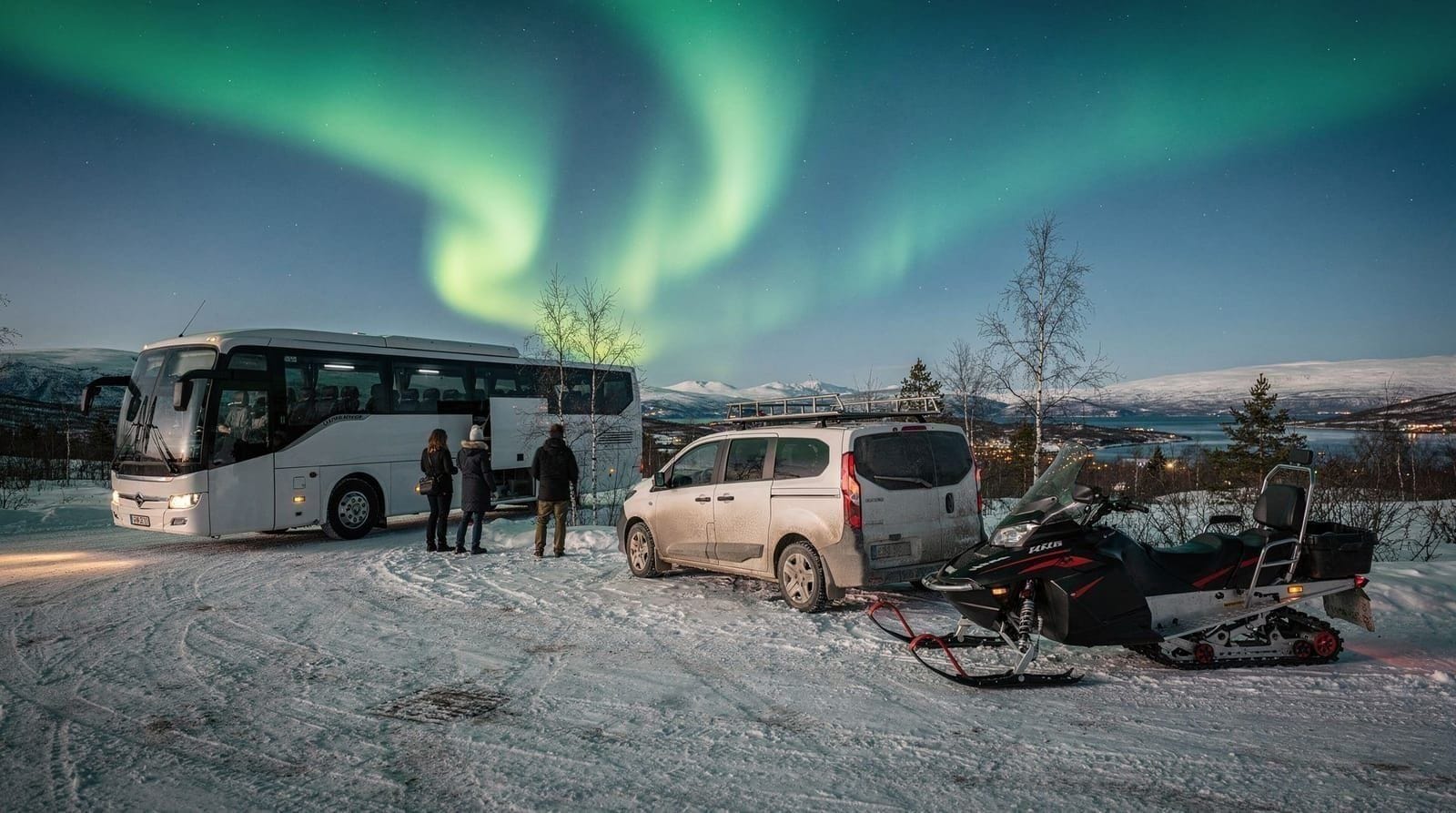
Tromsø: Northern Lights Pioneer Tour with Photos Included
Duration: 6 hours
Is Tromsø or Reykjavík better for seeing the northern lights?
Tromsø has a meaningful statistical advantage for aurora viewing due to lower cloud cover probability and better operator infrastructure for cloud-chasing. Reykjavík is easier to reach from North America and Western Europe, and cheaper overall. For aurora as the primary goal, Tromsø edges ahead. For a complete city break with aurora as a bonus, Reykjavík works well.
The Iceland vs Norway debate for aurora seekers
| Aurora odds | Tromsø slightly better (40–50 clear nights vs Iceland’s 25–40) |
| KP threshold needed | Tromsø: KP1–2; Reykjavík: KP3–4 |
| Getting there | Reykjavík easier from North America; Tromsø easier from Europe |
| Cost | Iceland typically 10–25% higher for a 5-night trip |
| Winter whale watching | Tromsø only — no Iceland equivalent in winter |
Iceland and Norway’s Tromsø region are the two most popular European aurora destinations for international travellers. Both are inside the auroral oval. Both have functioning tour operator ecosystems. Both have direct flights from major European hubs. And both are expensive enough that the choice between them matters financially.
This comparison is built around what most aurora-seeking travellers actually need to know, not what the destination marketing boards want you to believe.
Aurora probability: the cloud problem in Iceland
Iceland sits in the middle of the North Atlantic on the boundary between Arctic and sub-Arctic air masses. This creates a weather system that is highly variable, frequently cloudy, and characterised by rapid change. The Icelandic Meteorological Office reports that Reykjavík area receives clear skies (less than 20% cloud cover) on approximately 25–35 nights per year in the aurora season (September–March).
Tromsø, despite also being on the North Atlantic coast, has somewhat different dynamics. The Norwegian mountains to the east create a partial barrier to some Atlantic weather systems, and crucially, the ability to drive east 2–4 hours into the Swedish or Finnish interior provides access to the continental interior weather that is frequently clearer than the coast.
Honest probabilistic assessment:
- Clear-sky nights (aurora window): Tromsø 40–50 per year; Iceland varies enormously by location but capital area 25–40
- Cloud-chasing option (driving inland): Tromsø can drive to Sweden/Finland in 3–4 hours. Iceland has limited inland escape options (all roads eventually hit ocean or mountains)
The gap is real but should not be overstated. On a 5-night trip to either destination, you are working with similar uncertainty.
What Tromsø does better
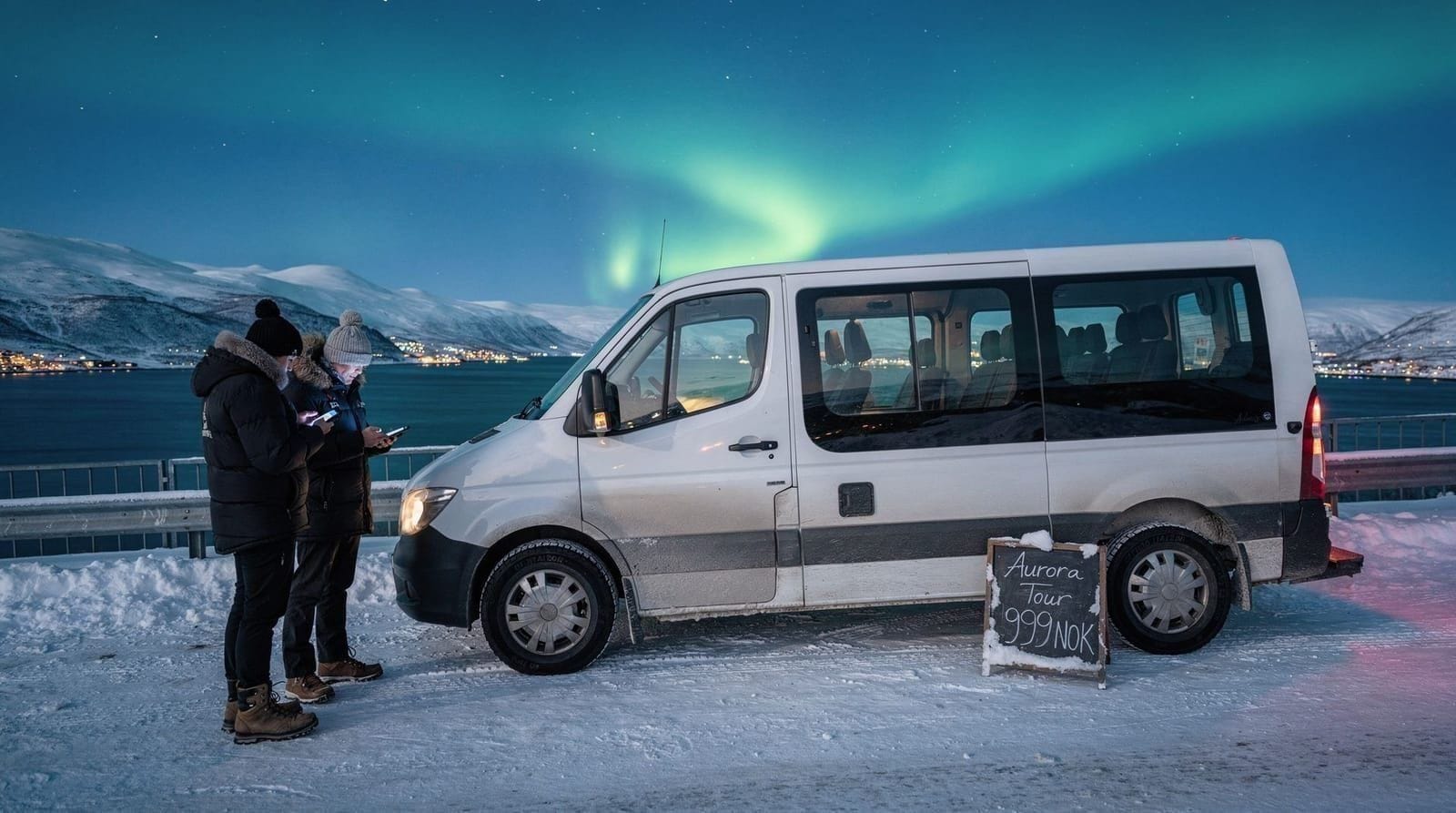
Cloud-chasing flexibility: The single biggest aurora probability advantage. When Tromsø’s coast is clouded, professional operators drive east toward Finland’s continental air mass. Iceland’s operators have nowhere to go — the whole island is often under the same weather system.
Whale watching (winter): Iceland has excellent summer whale watching (April–October) from Húsavík. Tromsø has winter orca watching (November–February) near Skjervøy. These do not overlap — if you want winter Arctic whale watching with orca, Tromsø wins by default. See whale watching season in Tromsø and best whale watching operators.
Dog sledding and winter activity depth: Tromsø’s winter activity ecosystem (Camp Tamok dog sledding, Lyngen Alps snowmobiling, Sami reindeer experiences) is broader and better-developed than Iceland’s. Iceland has dog sledding and snowmobile options but fewer operators and less variety.
Light pollution for aurora: Tromsø’s operators know dozens of viewpoints within 30–60 minutes where light pollution is minimal. Iceland’s capital region has improving dark-sky access (Reykjanes Peninsula, Þingvellir) but the capital itself has growing light pollution.
All-inclusive aurora hunt from TromsøWhat Reykjavík does better
Flight accessibility from North America: Keflavík International Airport (Reykjavík) is Iceland’s hub and receives direct flights from New York (JFK), Boston, Toronto, and other North American cities on Icelandair and other carriers. For North American visitors, getting to Iceland is straightforward. Reaching Tromsø from North America requires a European hub connection (typically Oslo, Amsterdam, or London).
Urban atmosphere: Reykjavík has a sophisticated small-city culture (200 000 metro population) with international restaurants, live music, design shops, excellent museums, and a genuinely vibrant nightlife culture. Tromsø (78 000) has a pleasant city centre but nothing comparable in urban depth.
Icelandic unique landscapes: The aurora-specific Iceland advantage is backdrop. Photographing aurora over a glacier lagoon (Jökulsárlón), volcanic fields (Námaskarð), or black-sand beaches (Reynisfjara) is a different aesthetic from Norwegian fjords. Both are spectacular; neither is objectively “better” — this is a personal preference question.
Mid-range tourist infrastructure: Iceland’s tourist industry has been operating internationally longer and has a more complete range of quality-assessed accommodation, tour operators, and eating establishments. Tromsø is catching up but Iceland’s infrastructure is more uniform.
Summer puffins and other wildlife: Not relevant to aurora, but if combining aurora (spring/autumn, September–October or February–March are shoulder overlaps) with summer wildlife, Iceland’s puffin colonies, whale watching, and midnight sun hiking are excellent complementary experiences.
Cost comparison (approximate, 2026)
| Category | Tromsø | Reykjavík |
|---|---|---|
| Budget hostel | 400–550 NOK (€35–50) | ISK 5 000–8 000 (€35–55) |
| Mid-range hotel | 1 800–2 800 NOK (€160–250) | ISK 28 000–45 000 (€195–315) |
| Aurora tour | 1 800–2 500 NOK (€160–225) | ISK 12 000–20 000 (€84–140) |
| Restaurant main | 250–400 NOK (€22–36) | ISK 3 000–5 500 (€21–38) |
| Beer in bar | 80–120 NOK (€7–11) | ISK 1 200–1 800 (€8–13) |
Both are expensive. Iceland aurora tours are sometimes cheaper in ISK terms but accommodation and beer are comparable or more expensive. The overall cost difference for a 5-night trip is typically 10–25% higher in Iceland. For a broader sense of whether Tromsø’s costs are justified, see is Tromsø worth the cost, and for how Tromsø’s aurora tour prices compare against each other, aurora tour overpricing in Tromsø and northern lights tours compared.
Aurora photography: the backdrop question
For aurora photography, the backdrop is as important as the aurora itself. The two destinations offer fundamentally different aesthetics:
Iceland backdrops: Volcanic, geological, dramatic. Lava fields, waterfalls, glacier tongues, black sand beaches. The colours tend toward stark black-white-green contrast.
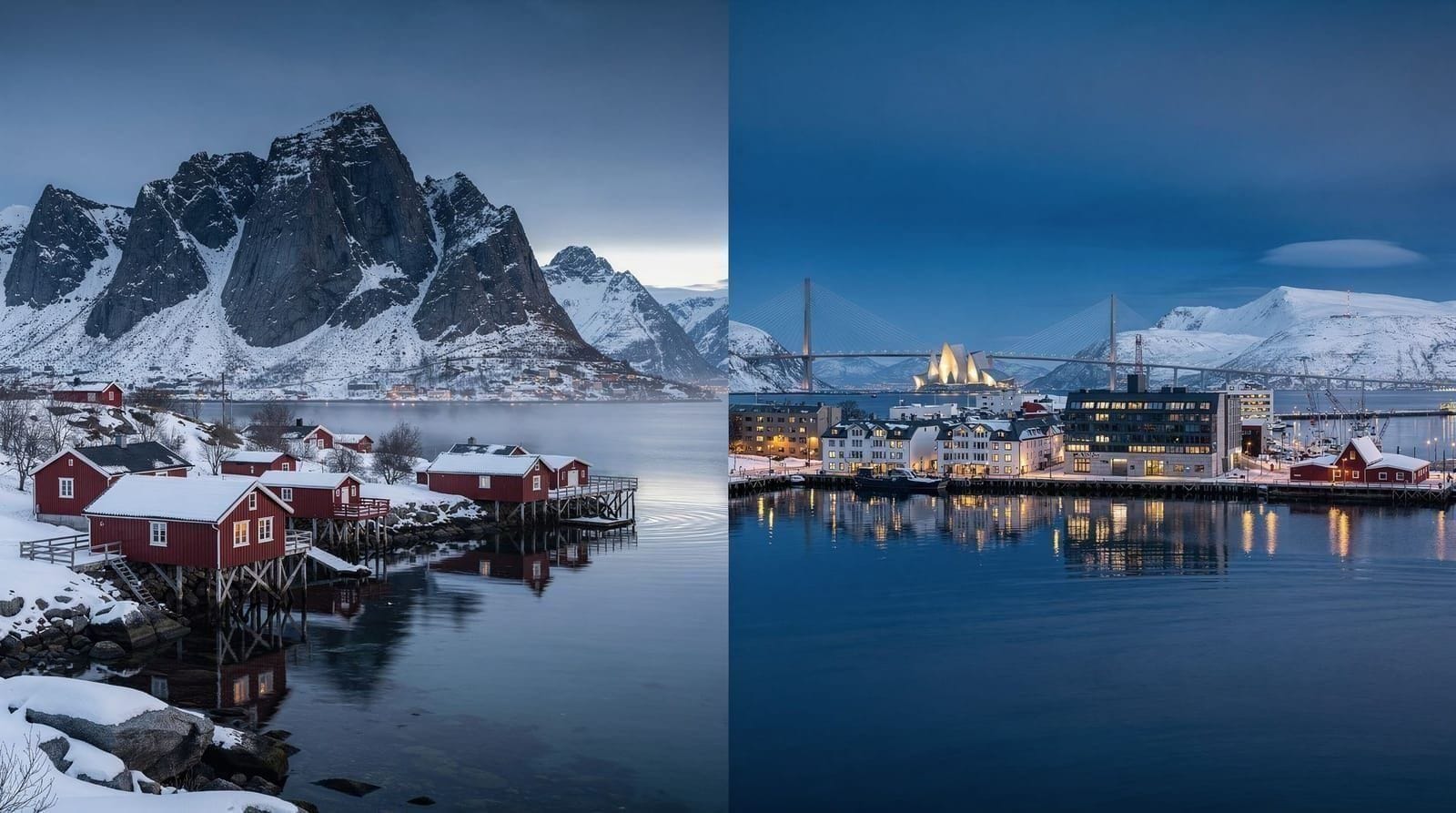
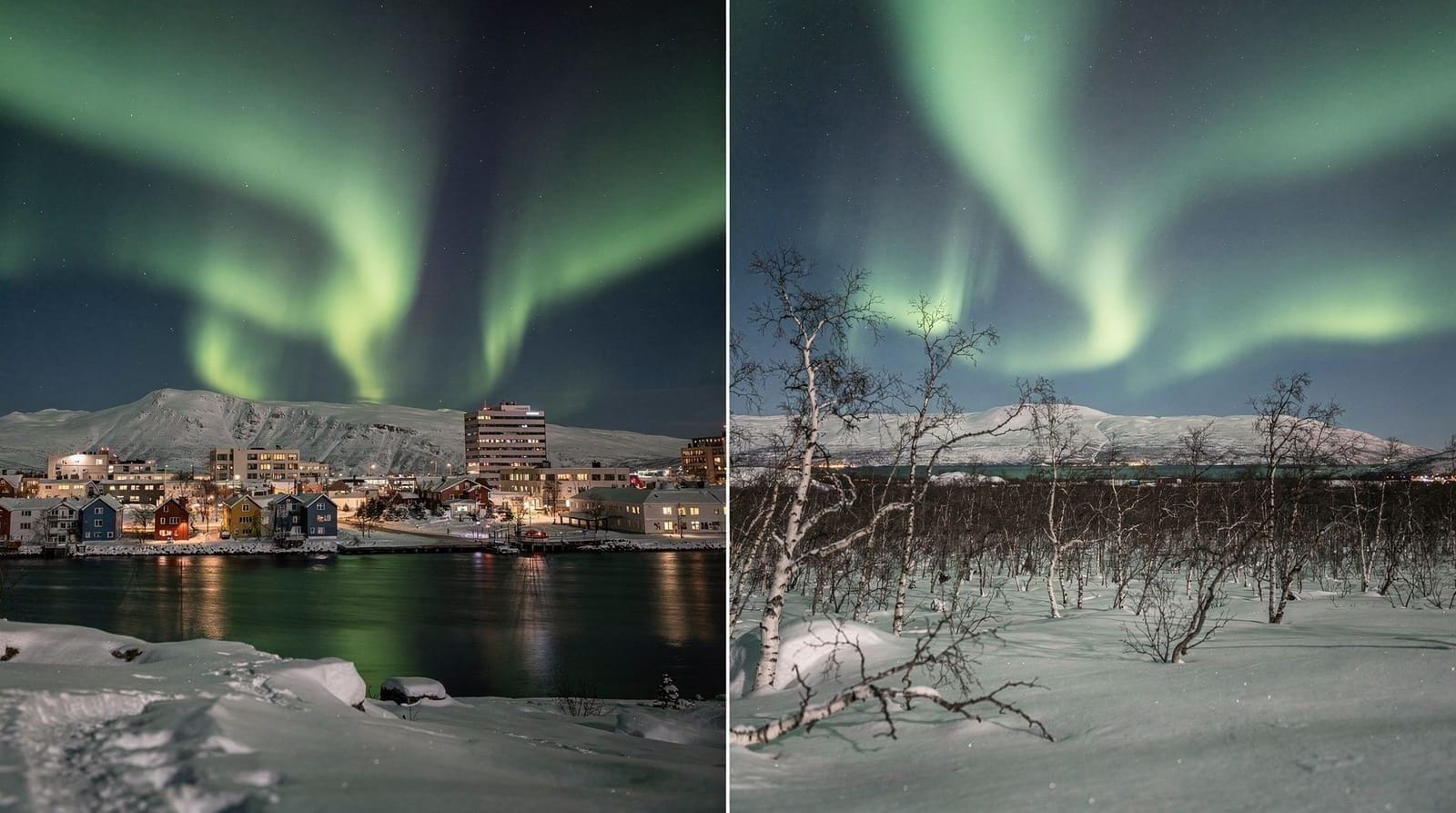
Tromsø backdrops: Arctic maritime, softer landscape. Fjords, wooden fishing villages, snow-covered mountain silhouettes, reflected aurora in still water.
Neither is superior for aurora photography in absolute terms — but they look different, and what draws you is a matter of photographic preference.
Northern lights tour with professional photosCombining both: realistic or overambitious?
Flying between Iceland and Norway is practical. Keflavík to Oslo (then Oslo to Tromsø) is a common combination for 10–14 day Scandinavian itineraries.
A workable combined trip:
- Days 1–5: Reykjavík and Iceland (golden circle, aurora attempts, city)
- Day 6: Fly KEF–OSL–TOS (full day of transit, 8–9 hours total)
- Days 7–11: Tromsø (aurora, whale watching, Senja, Lyngen)
This is feasible but expensive (two sets of accommodation at Northern European prices) and the transit day is tiring. For most visitors choosing between the two, a longer single-destination trip is more rewarding than splitting time.
Aurora dinner cruise — Tromsø’s distinctive catamaran experienceVerdict by traveller type
| Traveller type | Recommended destination |
|---|---|
| North American visitor, short trip (5 nights) | Reykjavík (easier to reach) |
| European visitor, dedicated aurora hunter | Tromsø (better cloud-chasing infrastructure) |
| Urban culture + aurora blend | Reykjavík (better city; aurora as bonus) |
| Wildlife (winter whale watching) priority | Tromsø (orca season, no Iceland equivalent) |
| Dog sledding, reindeer, Sami culture | Tromsø (far broader winter activity offering) |
| Aurora photography, geological backdrops | Iceland (unique volcanic landscape backdrops) |
| Budget traveller | Marginal Iceland advantage (more budget accommodation density) |
If you’re comparing Tromsø against other Norwegian or Nordic aurora bases rather than Iceland specifically, see Tromsø vs Lofoten and Tromsø vs Abisko for how those trade-offs compare.
Frequently asked questions about Tromsø vs Reykjavík for aurora
Is Iceland’s aurora season longer than Tromsø’s?
Both have aurora potential from approximately September to March (dark nights needed). Iceland’s southern latitude (64°N vs Tromsø at 69.6°N) means slightly shorter polar nights and somewhat less extreme darkness. Both have the aurora in similar quantities geomagnetically — the difference is cloud cover probability, not aurora frequency.
Does Tromsø have geothermal hot springs like Iceland?
No. Geothermal activity is uniquely Icelandic. Norway has no geysers, no Blue Lagoon equivalent, and no volcanic hot springs. If soaking in naturally heated geothermal water is on your list, Iceland is the destination. Tromsø has saunas (including some excellent fjord-side sauna experiences) but that is a different experience.
Is the aurora visible from Reykjavík city?
Occasionally, when the aurora is very strong (KP 5+), it is visible from the Reykjavík waterfront despite the city light. For reliable viewing, you need to drive 30–60 minutes out of the city. The same dynamic applies to Tromsø — strong displays are visible from the city; reliable viewing requires 20–30 minutes out.
Which country has better public transport for getting around?
Neither. Both Norway and Iceland require a rental car to access the best aurora spots and landscape views. Public transport in both countries is limited in rural aurora-hunting territory. Budget for a rental car at both destinations.
Is Iceland safer for aurora tours than Tromsø?
Both countries have excellent safety records for aurora tourism. Iceland’s roads can become hazardous in sudden storm conditions; Norway’s roads are similarly challenging in blizzards. The risk level is comparable. Tour operators in both countries have comprehensive safety protocols and vehicles appropriate for Arctic conditions.
What KP level do you need to see aurora in both locations?
At 69.6°N (Tromsø), aurora is visible with KP 1–2 in good conditions (dark, clear sky). At 64°N (Reykjavík), you need KP 3–4 for a reliable display. Tromsø’s more northerly position means it is inside the auroral oval more frequently and sees aurora at lower geomagnetic activity levels. This is one of Tromsø’s genuine astronomical advantages.
Is one destination better for bringing children on an aurora trip?
Both work for families, but the logistics differ — Tromsø’s shorter cloud-chasing drives and broader daytime activity menu (dog sledding, Polaria) give children more to do between aurora attempts. See what age for aurora for Tromsø-specific guidance on planning around children’s sleep schedules for late-night tours.
Which destination is better for serious aurora photographers?
Both offer excellent conditions, but the choice comes down to backdrop preference and gear logistics rather than technical superiority. Tromsø’s lower KP threshold means more frequent shooting opportunities; see aurora camera settings for the technical setup that applies at either location.
Top experiences
Bookable activities with verified prices and instant confirmation on GetYourGuide.