Is Tromsø worth it? An honest answer for 2026
Tromsø: Northern Lights Chase with Local Guide & Free Photos
Is Tromsø worth visiting?
Yes, for the right visitor. If you want genuine Arctic wilderness, world-class aurora or whale watching, and authentic Nordic culture, Tromsø is excellent. If you are going primarily for the Instagram version of the northern lights and expecting them on demand, you will likely be disappointed.
The question nobody on the Tromsø tourism website will answer honestly
Every travel blog written about Tromsø reads like a press release. Glowing lights, hushed tundra, steaming reindeer stew. The reality is more nuanced: Tromsø is expensive, the aurora is unreliable, and the city centre is smaller than most visitors expect.
That does not mean Tromsø is not worth visiting. It means the value proposition depends enormously on which version of Tromsø you are visiting, how long you stay, and whether your expectations are calibrated to Arctic reality rather than social media.
| Where | Northern Norway, above the Arctic Circle |
| Cost | around 4 000–6 200 NOK/day mid-range, 1 500–2 000 NOK/day budget |
| Time needed | 5–7 nights minimum for a fair verdict |
| Getting there | Direct flights from Oslo, seasonal routes from other European hubs |
| Best time | November–March for aurora, June–August for midnight sun |
The honest case for Tromsø
Let us start with what is genuinely excellent here.
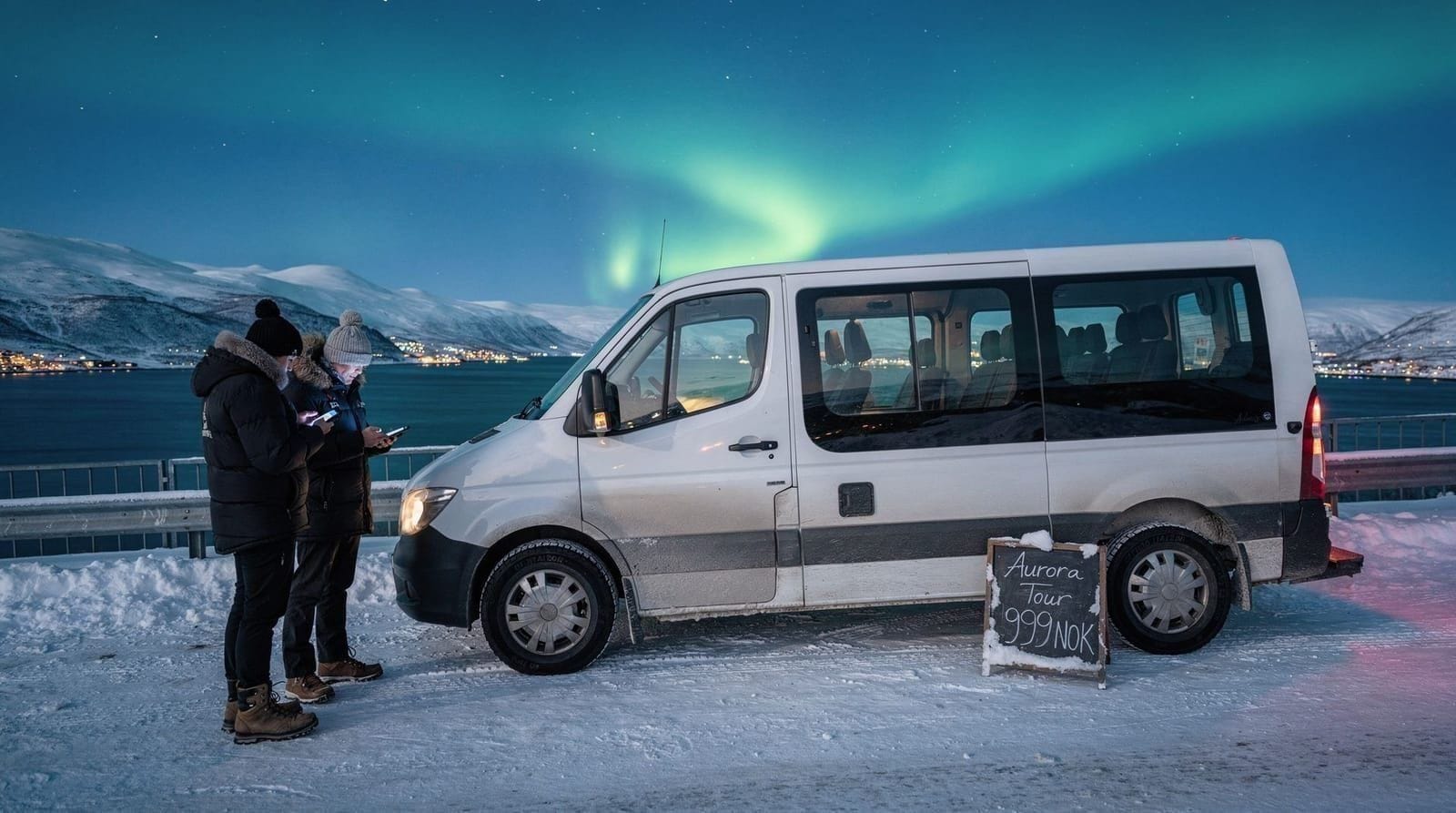
The aurora, when it happens, is extraordinary. A KP 5 aurora over Lyngenfjorden on a clear February night — green curtains moving across the sky while the fjord reflects the display below — is one of the great natural spectacles on earth. There is no adequate photograph of it. You have to be there, and it justifies the cost of the entire trip when it happens.
The whale watching in Skjervøy is world-class. The concentration of orca and humpback whales in the Kvænangen Fjord between November and January is among the highest of any easily accessible location in the world. A good boat trip to Skjervøy will put you within 50–100 metres of feeding orca. No other destination in this guide does that.
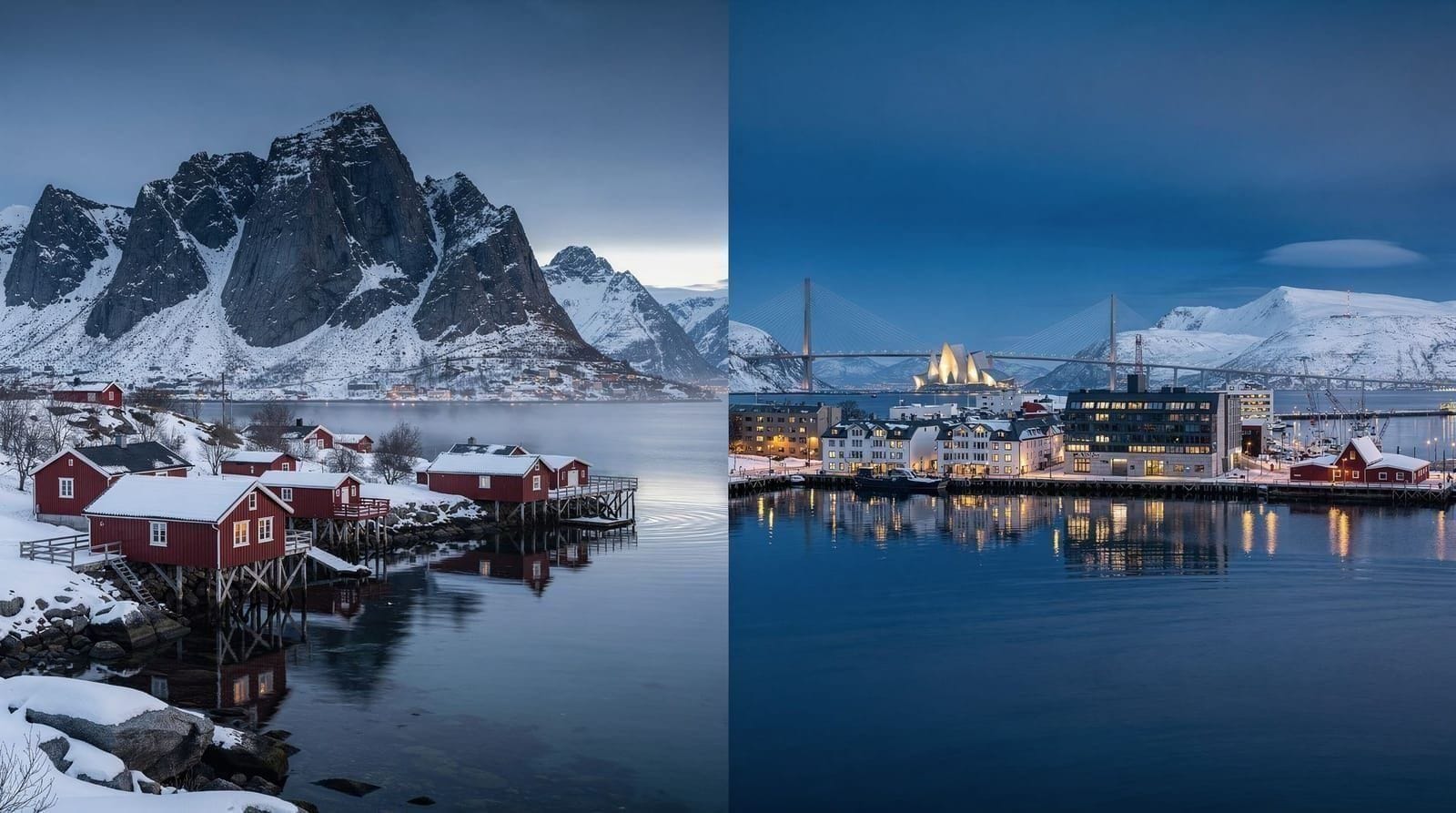
Senja is genuinely beautiful. The island of Senja — 2.5–3 hours from Tromsø — has landscape that competes with Lofoten for dramatic coastal scenery: sea stacks, arctic beach, winter birch forests, and coastal cliffs with no crowds. If you drive Senja in winter, you will often have the National Scenic Route to yourself.
The Lyngen Alps are accessible and dramatic. Most mountain regions of this quality (glaciated peaks above 1 800 m overlooking Arctic fjords) require expedition-level access. From Tromsø, the Lyngen Alps are 1.5–2 hours by car and ferry.
Dog sledding at Camp Tamok is not a tourist gimmick. The Tamokdalen valley operation runs 40–80 dogs year-round. The huskies are working dogs with genuine drive. A full-day self-drive sledding experience in the valley is physically demanding, emotionally memorable, and hard to replicate elsewhere.
What disappoints people
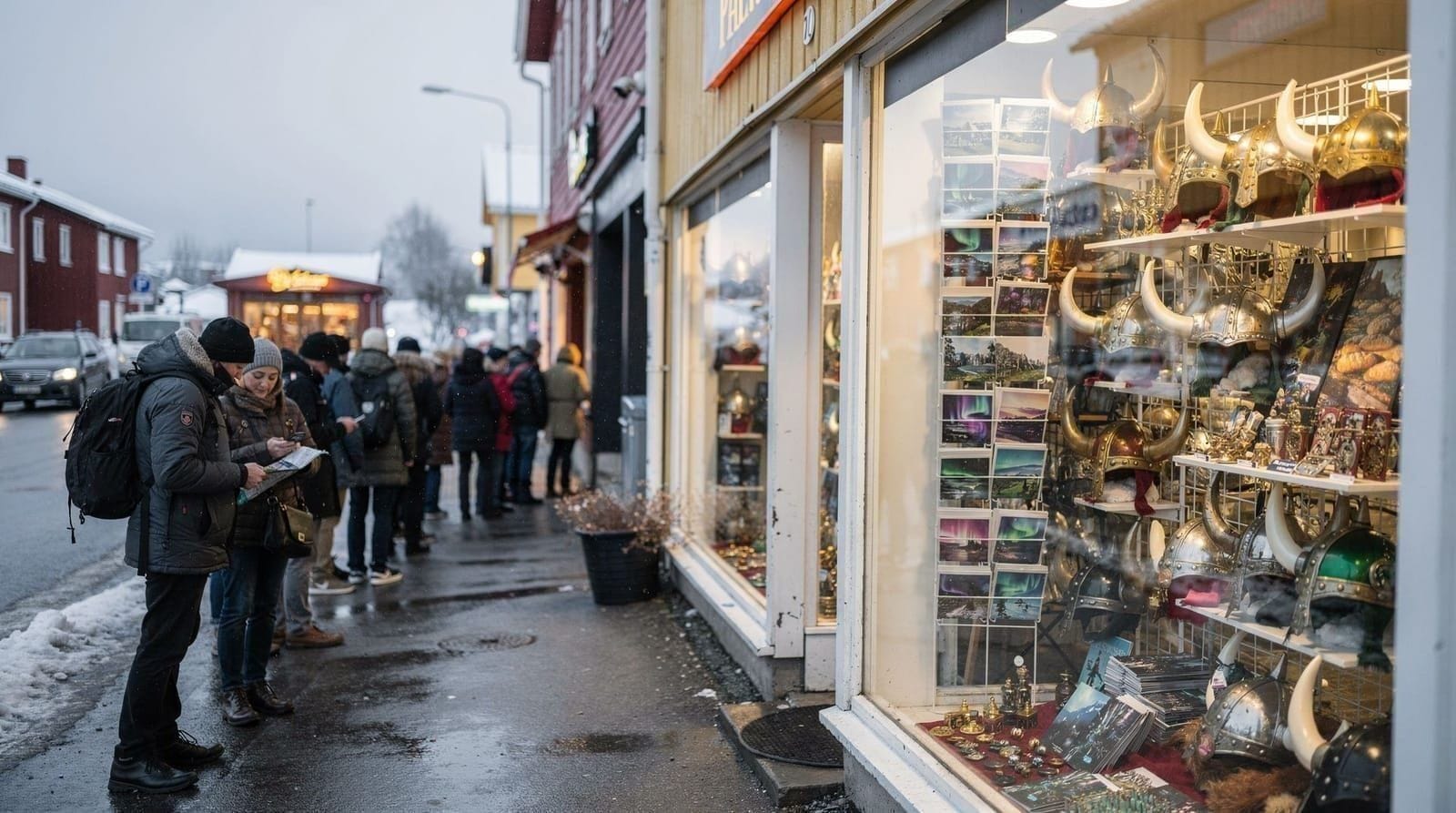
The city centre is modest. Tromsø is a city of 78 000 people. The pedestrian centre around Storgata is perhaps 400 metres long. It has a few good restaurants, the Mack Brewery, a string of outdoor clothing shops, and some tourism offices. Visitors expecting a dramatic Nordic city are frequently surprised by how ordinary the urban core feels.
Aurora nights with no aurora are the majority. In peak season (November–January), the probability of seeing a significant aurora display on any given night is around 30–40% (accounting for cloud cover plus geomagnetic activity requirements). Most 3-night visitors do not see it. This is not a failure of Tromsø — it is the physics of space weather and Norwegian winter cloud patterns.
Activity costs add up fast. A mid-winter week in Tromsø including accommodation, one whale watching trip (1 690 NOK), two aurora hunting nights (2 × 2 000 NOK), one dog sledding day (2 950 NOK), and meals runs easily to 25 000–35 000 NOK per person for 5 nights. That is €2 200–3 100 — comparable to a long-haul tropical holiday.
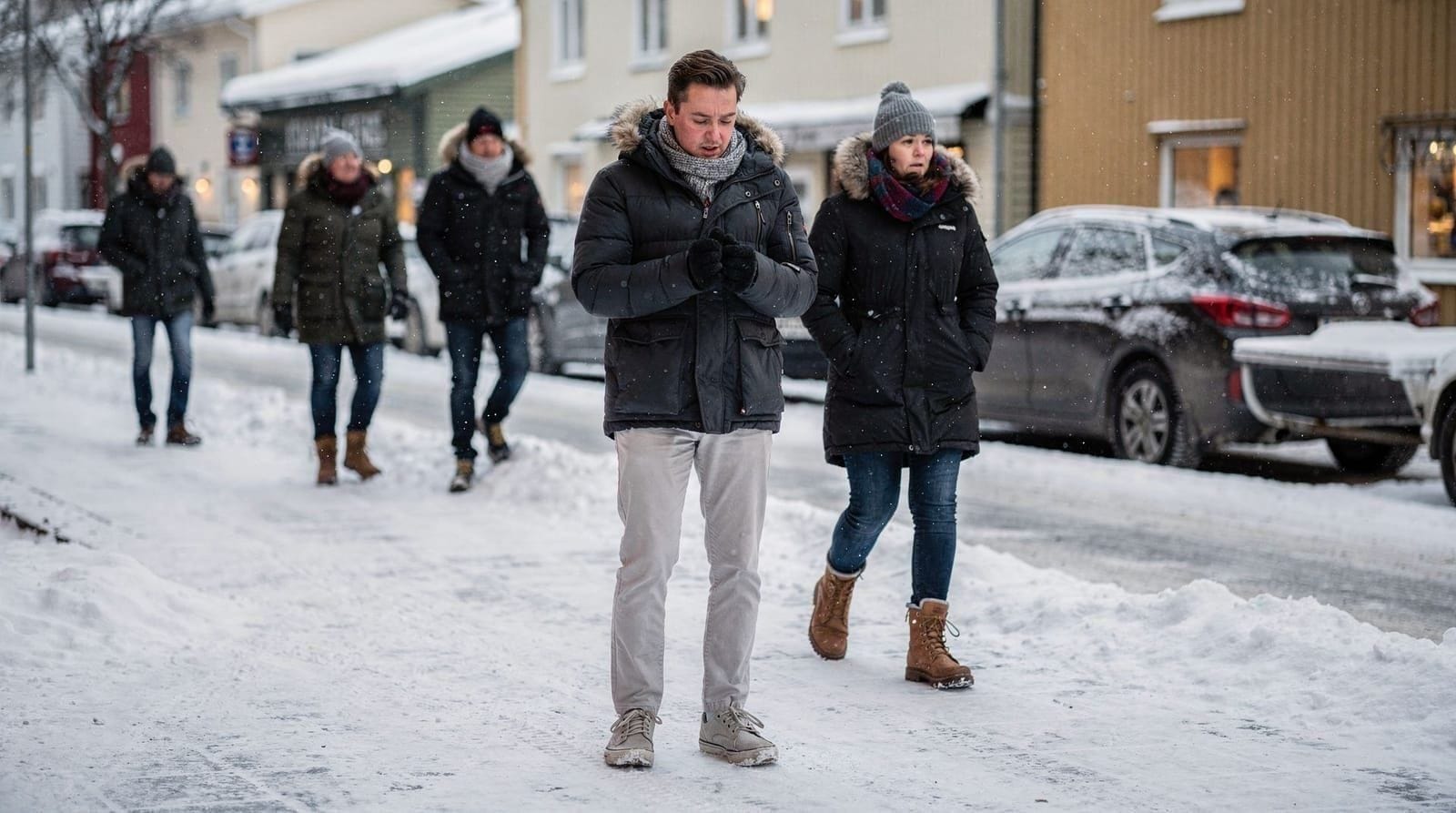
Weather can make the region inaccessible. Storm days in November–February occasionally close the main road to the airport, cancel ferry crossings, and make all outdoor activities impractical. Factor in one or two days of weather disruption for any winter trip of 5+ days.
Worth it by type of traveller
For aurora hunters specifically
Worth it — but only with 5+ nights and flexibility. The aurora infrastructure (operators, forecasting, vehicle access) is better here than in Iceland or Finnish Lapland. You need time to wait out cloud cover. Plan 5–7 nights minimum for a statistically good chance of a memorable display.
For wildlife photographers
Highly worth it. Orca encounters in Skjervøy, seabirds on Senja, reindeer in Tamok valley, and winter coastal landscapes that are genuinely world-class for Arctic wildlife photography.
For adventure / active travellers
Excellent in both seasons. Winter: dog sledding, snowmobiling, snowshoeing, ski touring in the Lyngen Alps. Summer: sea kayaking around Sommarøy, hiking in the Lyngen Alps and Tromsdalstinden, midnight sun fjord cruises.
For urban / culture travellers
Moderate. Tromsø has a good food scene (once you get past the tourist restaurants), the Polar Museum and Polaria are worth half a day each, and Ølhallen is a genuinely atmospheric old pub. But it is not a city destination in the same way as Copenhagen or Reykjavík. Culture here is primarily outdoor and Arctic-flavoured.
For budget travellers
Challenging. Tromsø is expensive by European standards. A basic hostel costs 350–500 NOK per night for a dorm bed; a budget double room starts at 900–1 200 NOK. Food in supermarkets (Rema 1000, Kiwi, Coop) is standard Norwegian prices (expensive by European comparison). Aurora tours cannot be replicated free of charge. A genuine budget visit is possible — see Tromsø daily budget — but requires aggressive self-catering and free-activity planning.
Worth it by trip length
2–3 nights: Marginal. Enough time for one aurora attempt, the Fjellheisen cable car, and a walk around Storgata, but not enough buffer for weather disruption or a second aurora chance if the first is clouded out. Better suited to a stopover on a longer Norway trip than a standalone destination.
4–5 nights: The practical minimum for a satisfying trip. Enough nights to give the aurora two or three real attempts, plus one full-day excursion such as Senja or Skjervøy whale watching, and a spare day if weather closes the roads.
7+ nights: The version of Tromsø that delivers on the marketing. Time for aurora patience, a Lyngen Alps day, a Senja road trip, whale watching in season, and slower days in the city without rushing. If cost allows, this is where “worth it” becomes an easy yes rather than a qualified one.
Worth it by season
Winter (November–March): The classic version — aurora, snow activities, dog sledding, snowmobiling. Also the most expensive and coldest, with real risk of weather-cancelled activities. Worth it for aurora and snow, but calibrate expectations for both cost and cloud cover.
Shoulder (September–October, April–May): Fewer crowds, lower accommodation prices, and aurora is still possible in September–October and again in early spring on dark, clear nights. Missing: reliable snow for sledding and snowmobiling. A strong value season for travellers who don’t need snow activities.
Summer (June–August): Midnight sun, hiking, sea kayaking around Sommarøy, and mild temperatures, but zero chance of aurora — the sky never gets dark enough. Worth it as a completely different trip, not a substitute for the winter experience.
The Instagram vs reality gap
The Instagram version of Tromsø shows aurora filling a perfectly clear sky above dramatic mountain reflections. What the photo does not show:
- The 9 previous nights of cloud before this shot was taken
- The 40-minute drive at −15 °C to reach this viewpoint
- The photographer who took 300 shots over 4 hours for 3 usable images
- The 14-layer outfit and heated gloves
None of this is a reason not to go. It is a reason to go with accurate expectations. The aurora experience in Tromsø is genuinely extraordinary when it works. The key word is “when.”
Northern lights chase tour with free photosThe cost question, honestly answered
Can you do Tromsø cheaply? Yes, with significant constraints (hostel accommodation, supermarket meals, free activities, no tours). Budget: 1 500–2 000 NOK per day.
What does a realistic mid-range trip cost? Hotel double room (1 800–2 500 NOK/night) + meals (800–1 200 NOK/day) + one activity (1 500–2 500 NOK) = 4 000–6 200 NOK per person per day.
Is it cheaper than Reykjavík? Marginally. Oslo is slightly more expensive than Tromsø for accommodation; Reykjavík is roughly comparable. Both cities are in the top tier of European travel costs.
Is there a “cheap” season? October (before aurora season fills) and late March–April (after whale season, shoulder season) offer meaningfully lower accommodation prices. Aurora viewing is still possible in October and March.
Practical value assessment
| Experience | Worth it? | Cost (NOK) |
|---|---|---|
| Aurora hunting (small-group) | Yes, with patience | 1 800–2 500 |
| Whale watching (Skjervøy) | Yes | 1 500–2 000 |
| Dog sledding (Camp Tamok) | Yes | 2 500–3 500 |
| Fjellheisen cable car | Yes | 295 |
| Senja day trip | Yes | 1 200–1 800 |
| Polaria aquarium | Yes | ~200 |
| Magic Ice Bar | No | 299–350 |
| Tourist-strip restaurant | No | 900–1 300 for two |
Frequently asked questions about whether Tromsø is worth it
Is Tromsø worth it for just one night?
One night is not enough to meaningfully experience Tromsø. The transfer time from most origins, the accommodation cost, and the one-night aurora probability (30–40%) combine to make a single-night visit poor value. Minimum meaningful stay: 3 nights. Recommended: 5–7 nights.
Is Tromsø worth it without seeing the aurora?
Yes. The whale watching, dog sledding, Senja, and Lyngen experiences are all excellent independent of the northern lights. Many visitors who do not see aurora still rate their Tromsø trip as one of the best they have taken. Do not make aurora the only goal.
When is Tromsø not worth the trip?
If you are visiting in mid-May to mid-July expecting any outdoor Arctic darkness experience, Tromsø is the wrong destination (midnight sun, no darkness at all). If your trip is 2 nights in December with aurora as the only goal and you cannot extend, the probability of seeing significant aurora is simply too low to justify the cost.
Is Tromsø worth it compared to Svalbard?
Svalbard (Longyearbyen) offers more extreme Arctic — polar bears, 24-hour winter darkness, more remote wilderness. It is also significantly more expensive and has fewer warm, accessible experiences. Tromsø is more “liveable” and offers better aurora hunting infrastructure. Svalbard is better for true wilderness and wildlife photography. They are not interchangeable.
Is the Tromsø card worth buying?
The Tromsø card covers the cable car, public buses, and some museum entries. It costs approximately 270–320 NOK for 24 hours. It is only worthwhile if you use the cable car (295 NOK alone) plus multiple bus rides and a museum visit in a single day. For most visitors, paying individual prices is more flexible.
What is the number one thing that makes Tromsø worth it?
The combination of accessibility and genuine Arctic experience. There is no other easily accessible place where you can, in a single week, watch orca feed, see the northern lights, drive a dog sled, visit the Lyngen Alps, and eat king crab pulled from the sea that morning. That combination is uniquely Tromsø.
Is Tromsø worth it for a family with young children?
Yes, with adjustments. Dog sledding, Polaria, and the cable car all work well for children, and the Tromsø with kids winter guide covers age-specific planning. The main constraint is cold-weather stamina for very young children on longer outdoor activities — plan shorter days and more indoor breaks than an adult-only itinerary.
Is a weekend break to Tromsø ever worth it?
Only as a taste of the destination, not a full verdict. A 2-night weekend can work for a stopover between other Norway destinations or a first scouting trip before committing to a longer aurora-focused visit later. Treat expectations accordingly — see the common mistakes guide for what short-stay visitors get wrong most often.
Top experiences
Bookable activities with verified prices and instant confirmation on GetYourGuide.