Whale watching season in Tromsø — when to go and what to expect
Tromsø: Whale Watching Tour by Hybrid-Electric Boat
When is whale watching season in Tromsø?
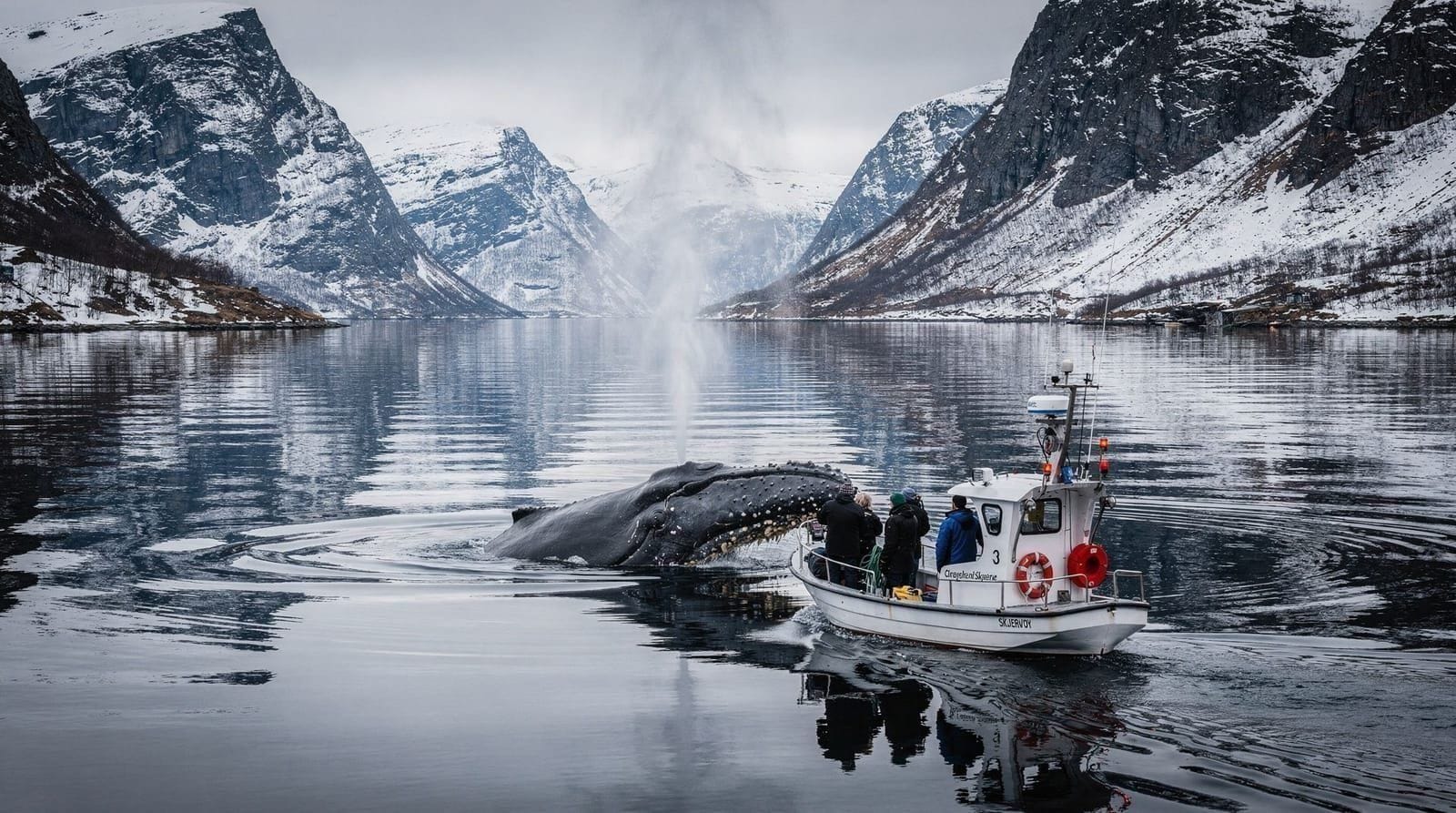
The main season runs from late October through early February, peaking in November and December. Most action happens around Skjervøy, about 2 hours north of Tromsø, where herring shoals draw orca and humpback whales into the fjords.
When to go: Late October to early February, peaking November–January near Skjervøy. Most tours cost around 1,690 NOK. Polar night (27 Nov–15 Jan) means low light, not no trips — whales surface regardless of the sun.
| Where | Skjervøy, 2 hours north of Tromsø |
| Season | Late October–early February, peak Nov–Jan |
| Cost | Around 1,690 NOK/person baseline |
| Duration | 3–5 hours on the water in peak season |
| Booking | 4–6 weeks ahead for Nov–Dec |
Season at a glance
| Period | Whale activity | Light conditions | Booking pressure |
|---|---|---|---|
| Mid-October | Building, occasional sightings | Full daylight | Low |
| November | Peak begins, 95–98% sighting rate | Daylight, shortening | High — book early |
| December | Excellent, density often highest | Polar night from 27 Nov | Highest of the season |
| January | Still good, winding down | Polar night until 15 Jan | Moderate |
| February+ | Sporadic, unreliable | Returning daylight | Low, but riskier bet |
Why winter is the only whale watching window
Tromsø has no summer whale season. The entire spectacle depends on one thing: Atlantic herring. Every autumn, vast herring shoals migrate into the fjords of northern Norway to overwinter in the relatively warmer, deeper water. They arrive in Kvænangen — the large fjord system east of Skjervøy — from mid-October onward.
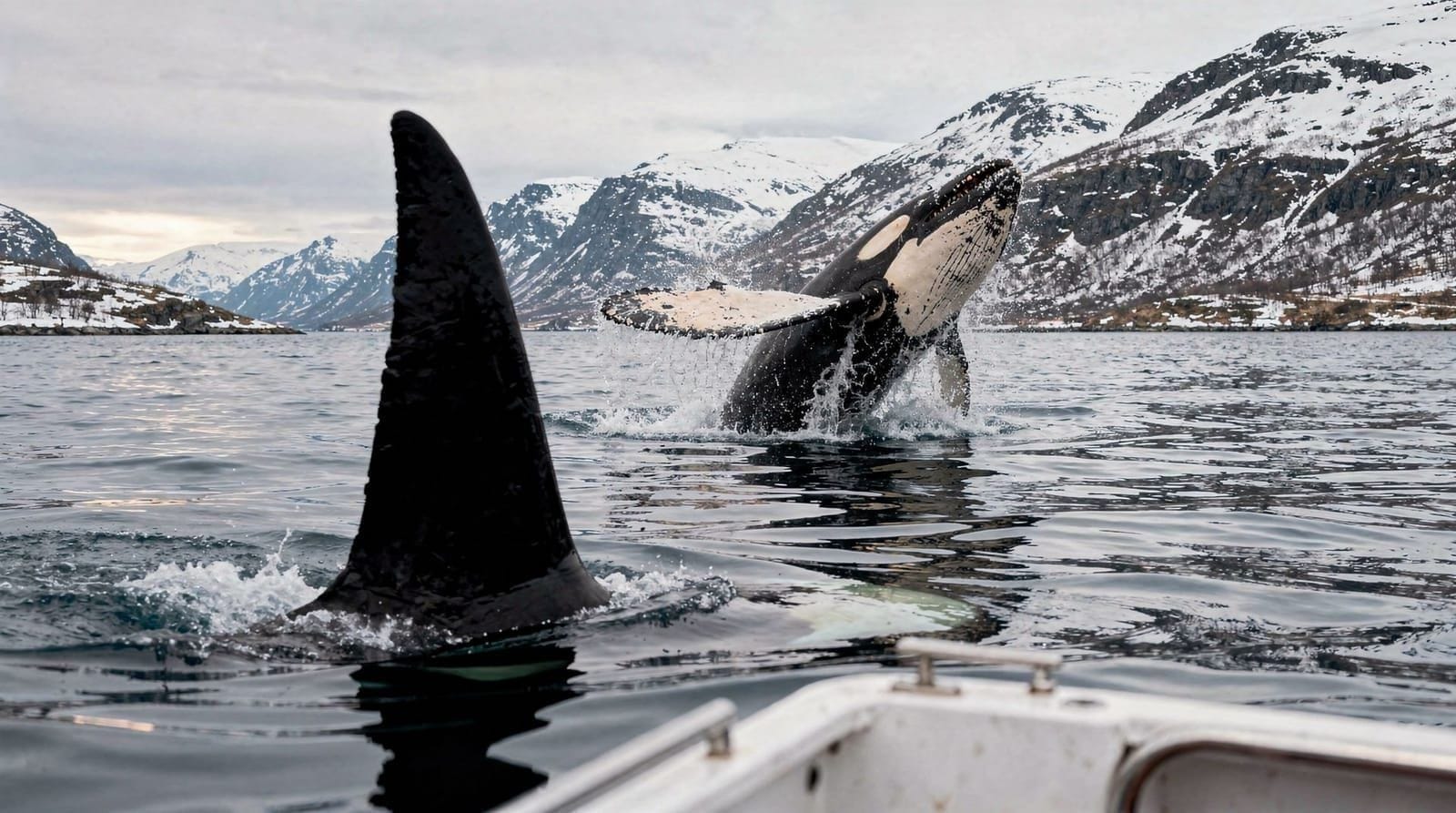
Where herring go, orca follow. A pod of orca can consume tonnes of herring per day using carousel feeding — driving the fish into a tight ball near the surface and slapping them stunned with their flukes before swallowing. Humpback whales arrive a few weeks after the orca, also feeding on the herring. By late January to early February, the shoals typically move on, and with them the whales.
This is why every local operator tells you: if you want to see whales near Tromsø, you must come between November and January.
The full season timeline
Mid-October: First herring scouts and occasional orca sightings. Tours may launch, but density is lower. Prices are sometimes slightly cheaper.
November: Peak whale activity begins. Orca pods are concentrated; humpbacks start appearing. Sighting rates are high (operators quote 95–98%). This is the sweet spot for combining whale watching with northern lights tours since aurora season is in full swing.
December: Excellent conditions continue, though polar night sets in on 27 November. Expect 2–3 hours of blue twilight rather than darkness during the midday departure window. The whale density can be slightly higher in December than November as more pods arrive.
January: Still good, but the season is winding down. Some years the herring linger; others they move on by mid-January. A December-or-earlier visit is safer if you have a choice.
February and later: Sightings become sporadic. Do not book expecting active whale watching in February unless you have checked current conditions with operators directly.
Where the action actually happens: Skjervøy
Most people assume whale watching leaves from Tromsø harbour. Technically, some do — there are tours departing from the city centre on hybrid electric boats or catamarans. But these typically spend a significant portion of transit time getting to where the whales are, limiting actual whale time to 1–2 hours.
The serious whale watching hub is Skjervøy, a small fishing island 2 hours north of Tromsø by car or 3 hours by public bus. Tours that depart from Skjervøy put you on the water in the feeding grounds within minutes, not hours. See the dedicated comparison: Skjervøy vs Tromsø whale watching.
For those without a car, many Tromsø-based operators include the return transfer from the city in the tour price. It is worth confirming exactly what is included before booking.
How trustworthy are the quoted sighting rates?
Operators commonly advertise 95–98% sighting rates for November–December. This figure is broadly consistent with reports from multiple independent sources and reflects real herring-driven predictability rather than marketing inflation — but “sighting” can mean anything from a distant fluke to a close-range carousel-feeding display. Ask specifically what counts as a sighting in an operator’s guarantee policy, and check recent reviews for detail on actual encounter quality, not just whether whales were seen at all.
Book a hybrid electric whale watching boat from TromsøReal prices in NOK (2025–2026 season)
- Standard day trip from Tromsø (transfer + whale watching): 1,500–1,800 NOK (~€130–155)
- RIB safari from Skjervøy: 1,200–1,500 NOK (~€105–130)
- VIP boat with hot lunch: 2,000–2,500 NOK (~€175–215)
- Combined northern lights + 24h whale cruise: 2,500–3,500 NOK
Prices have risen ~10% each season since 2022 due to demand. The days of cheap whale watching around Tromsø are behind us. Budget at least 1,690 NOK per person as a baseline.
Children aged under 4 often ride free; ages 4–15 pay 50–60% of the adult price, but check per operator.
Choosing the right boat type
Operators use three main vessel types, each with trade-offs:
Hybrid electric or large catamaran (60–100 passengers): Quietest on the water (important for not disturbing whale behaviour), heated cabin, often a café on board. More stable in choppy seas. Best for families and anyone prone to seasickness. Slightly slower to manoeuvre.
RIB (rigid inflatable boat, 8–12 passengers): Fast, nimble, closer to the water, more exhilarating. You get very close to the animals. Very cold — full thermal drysuits are provided. Not for those with back problems or motion sickness. Better photo angles in some conditions.
Traditional wooden boat (MS Gabriele, MS Keiser Wilhelm etc.): Atmospheric, small-group feel. Slower pace, quieter engines. Can feel cramped in bad weather if you must stay below deck.
Read more in best whale watching operators in Tromsø for a ranked breakdown.
What you will actually see
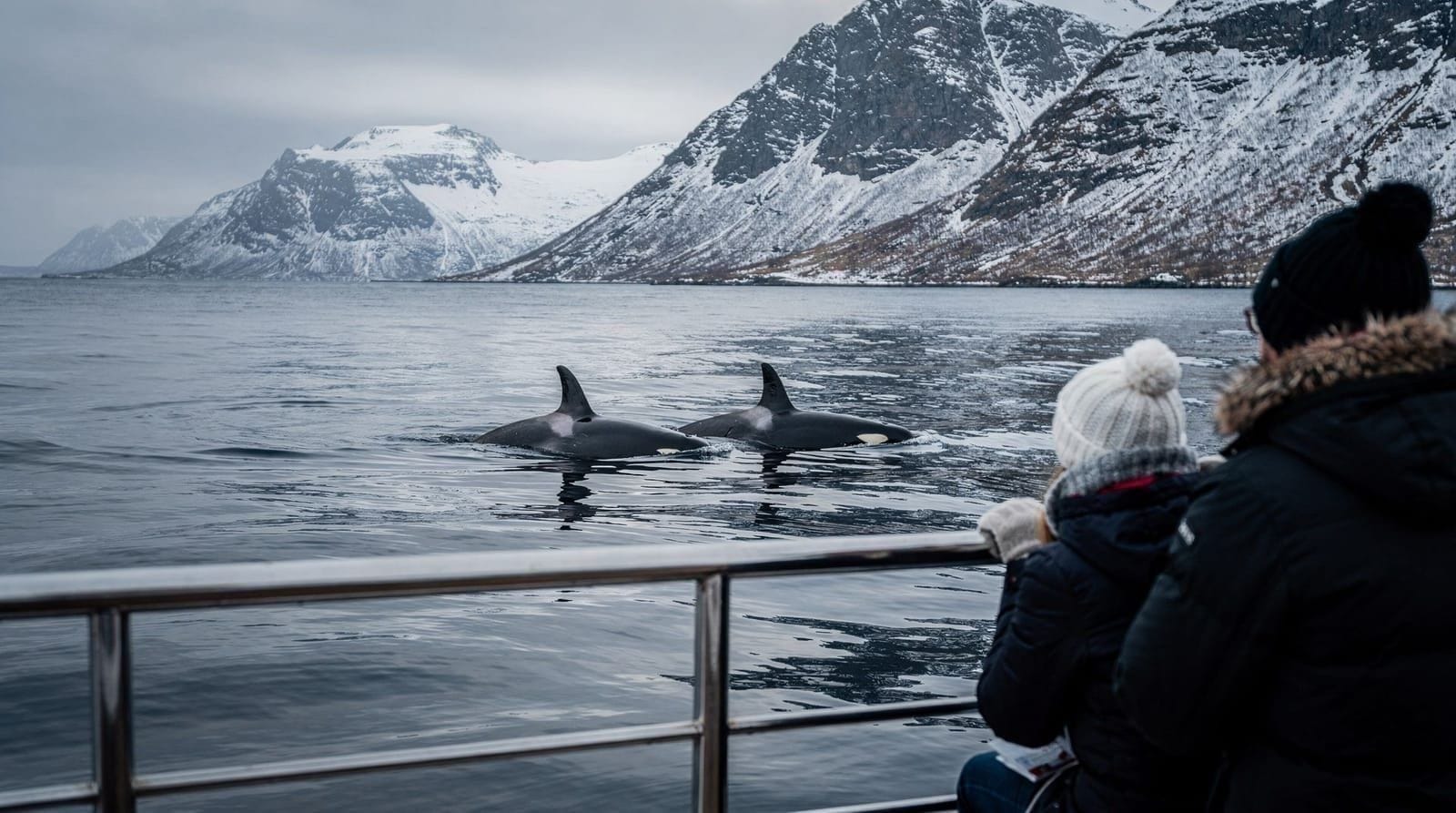
On a good day in November–December you can watch orca pods working a herring ball from just metres away. The carousel feeding behaviour — orca circling at speed, then the explosive fluke slap — is one of wildlife photography’s most dramatic spectacles.
Humpback whales behave differently: slower, more predictable surface-breathing cycles, regular fluking as they dive. Their sheer size (15 metres, 30 tonnes) makes even a distant sighting impressive.
Expect 3–5 hours on the water during peak season, with multiple encounters. Low season (early October, late January) might yield 1–2 brief sightings. See orca vs humpback in Tromsø for a detailed species guide.
Practical planning tips
Book early. November and December sell out 4–6 weeks ahead. Do not assume you can walk in.
Check the cancellation policy. Reputable operators cancel in genuine storms (Beaufort 7+) and offer rebooking or refunds. Some operators have a “we go out in all conditions” attitude that results in unpleasant, fruitless trips. Ask specifically.
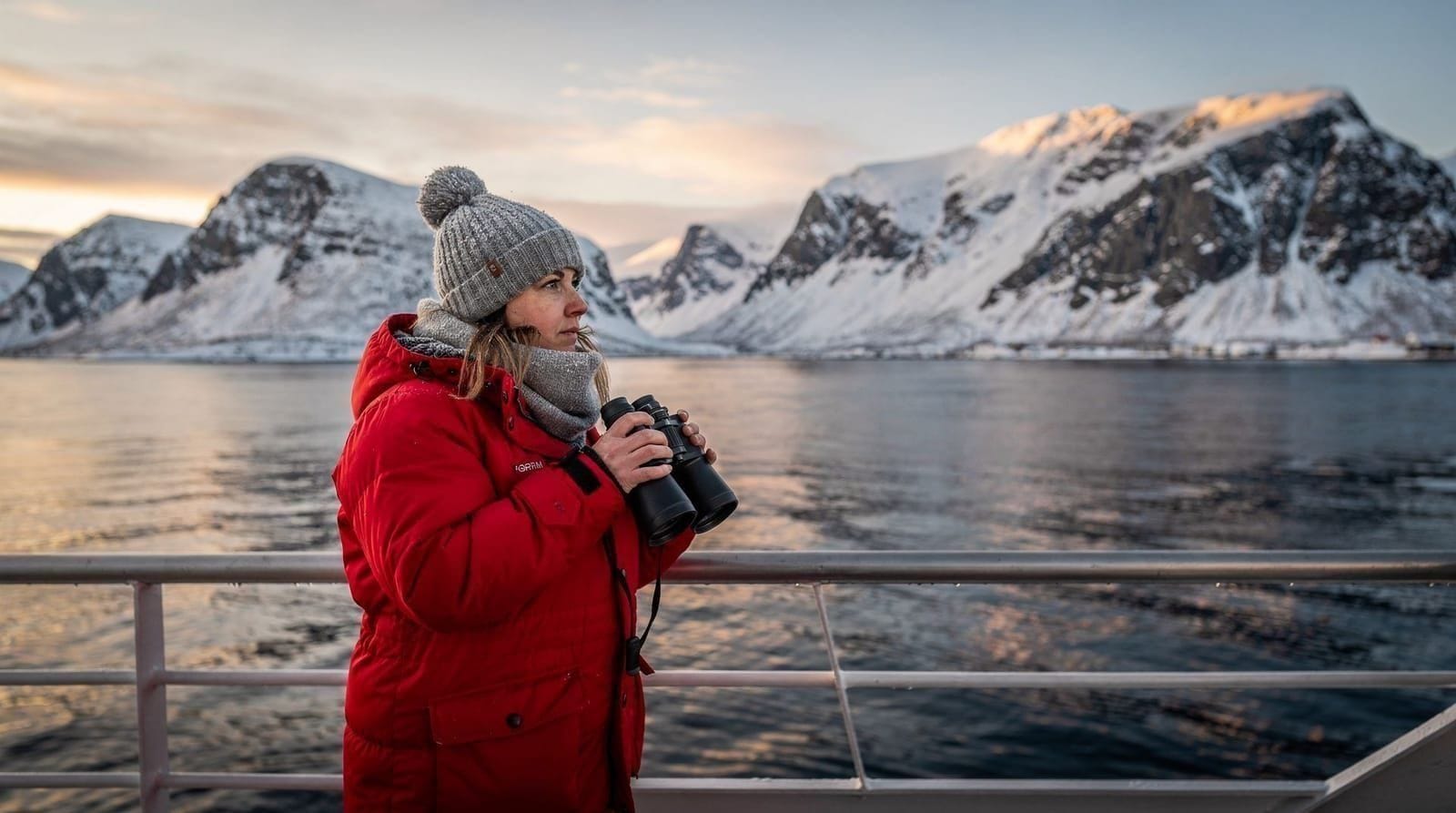
Layer up. Even on heated boats, you will spend time on deck. See what to bring on a whale watching trip.
Travel insurance. Always worth it for Arctic trips — weather delays and cancellations happen.
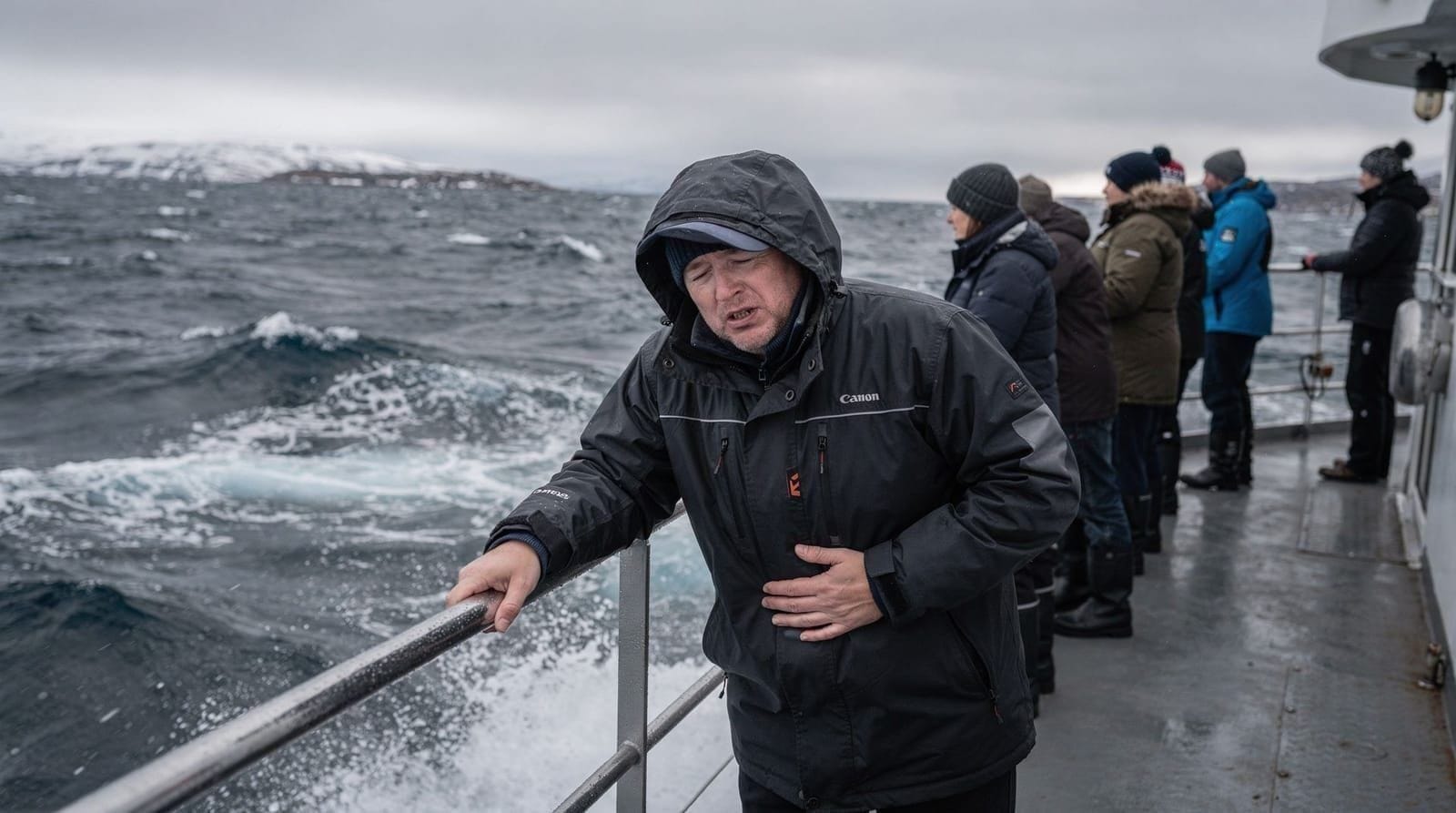
If you get seasick: Take medication the night before, not on the morning of the trip. Choose a larger vessel. See whale watching seasickness.
Orca whale watching on a heated boat — book nowCombining whale watching with other Tromsø activities
The whale season (Nov–Jan) coincides almost perfectly with the aurora season (Sept–Apr, peak Nov–Feb), the polar night (27 Nov–15 Jan), and the prime northern lights tours window. Many visitors build a 4–7 day itinerary around both.
A 3-day Tromsø winter itinerary typically combines one whale watching day with one aurora chase evening and one snow-activity day (dog sledding or snowmobile). The Skjervøy day trip can be done as a standalone whale watching excursion from Tromsø.
Choosing your operator and boat honestly
Once your dates are set, the two decisions that matter most are the vessel type (see above) and whether the operator’s approach practices are genuinely responsible — not every operator in this crowded market handles the animals equally well. See whale watching ethics in Tromsø for what to check before booking, and if seasickness is a concern, read whale watching and seasickness before choosing between a RIB and a catamaran.
Frequently asked questions about whale watching season in Tromsø
When exactly does the 2026–2027 whale season start?
Based on consistent historical patterns, expect first reliable sightings from mid-to-late October 2026. Peak conditions run from mid-November through December. Book from late October onward for best results, and always confirm current conditions with your operator close to your trip.
Are whale watching tours suitable for children?
Yes, most operators accept children from age 4–6 upward. Large catamaran boats are most suitable for families. RIB safaris can be physically demanding and are better for teens and adults. See northern lights with kids for general family Arctic trip advice.
Can I see whales from shore?
Occasionally, in exceptional years when herring move into shallow fjords very close to Skjervøy, whales can be spotted from the island’s waterfront. However this is unpredictable and rare. A boat tour is the reliable method.
What happens if the tour is cancelled?
Reputable operators will cancel in Beaufort 7+ conditions (gale force wind) and offer a full refund or free rebooking. In practice, cancellations are uncommon in November–December — the winds are often calmer than you might expect. Always ask for the written cancellation policy before booking.
Is ethical whale watching possible in Tromsø?
Yes, with the right operator. See whale watching ethics for a full breakdown of what responsible operators do and which practices to avoid.
Can I do whale watching and northern lights in the same day?
Some operators offer combined whale watching by day plus a northern lights evening cruise. These 24-hour expeditions exist and are popular, though expensive (2,500–3,500 NOK). The quality of the whale watching element varies — check reviews carefully.
What if I only have one day?
If whale watching is your top priority and you have just one day, aim for a full-day tour departing Tromsø early morning (around 07:00–08:00) and returning by 18:00–19:00. Do not try to squeeze whale watching into a half day — the travel time to feeding grounds does not compress.
Is the season ever longer or shorter than usual?
Yes. Herring movement is driven by ocean temperature and prey distribution, which vary annually. In some years (2019–2020) the whales shifted to different fjords and tours had to reposition. Follow local operators’ social media from September onwards for real-time updates on where the shoals are forming.
How much of a sighting-rate claim can I trust?
Quoted 95–98% rates for November–December are broadly credible given how predictable the herring-driven feeding is, but “sighting” is not always close-range. Check recent reviews for encounter quality, and ask the operator directly what counts toward their published rate.
Top experiences
Bookable activities with verified prices and instant confirmation on GetYourGuide.