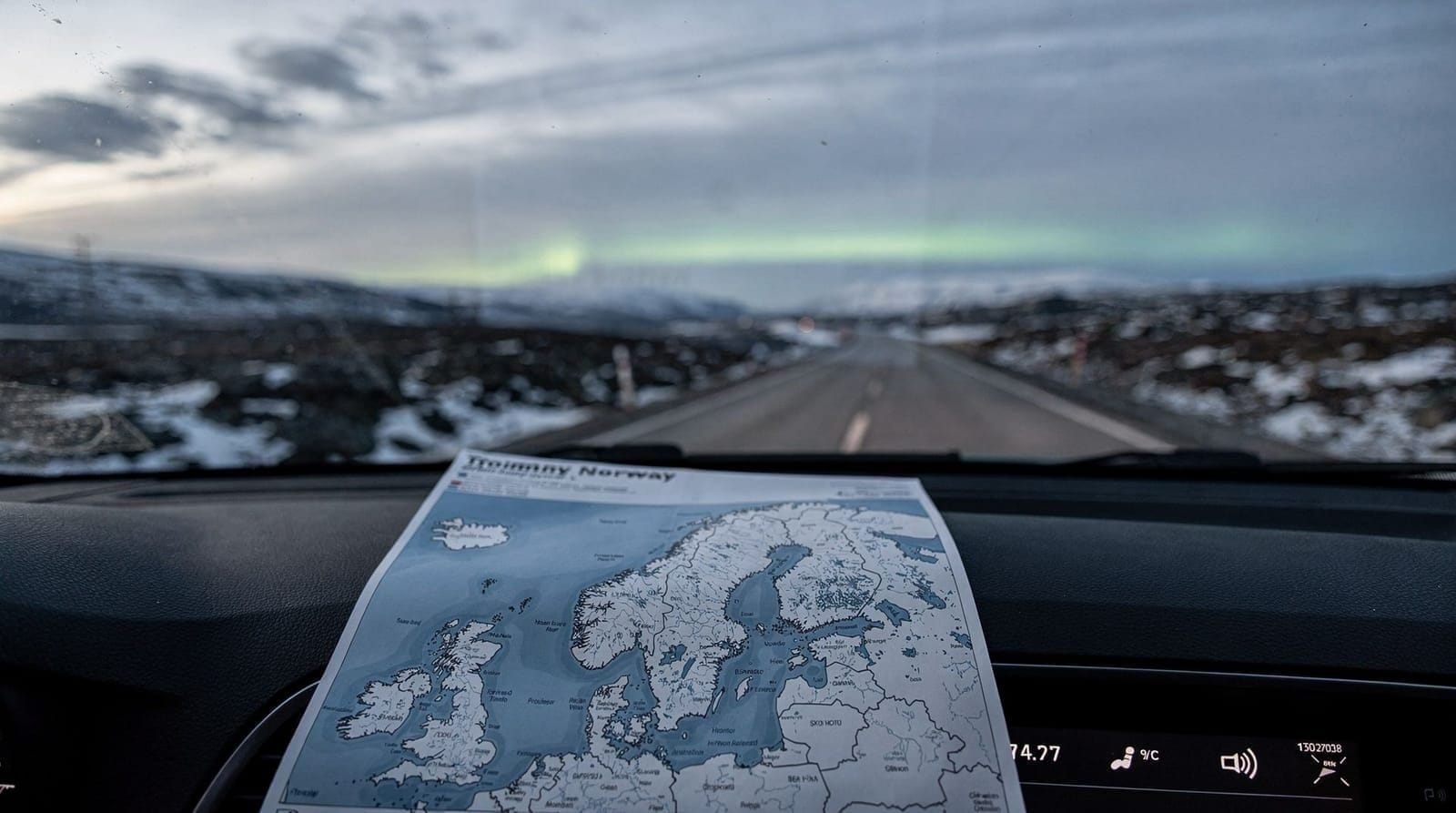
Best aurora photography locations near Tromsø
Tromsø: 4x4 Small-Group Northern Lights Photography Tour
What are the best photography locations for northern lights near Tromsø?
Ersfjord beach (30 km, dramatic mountains), Sommarøy (65 km, ocean foreground), Tamok Valley (50 km, dark skies), Lyngen eastern shore (90 km, mountain reflections), and Tromsø bridge (in-city, city light foreground). Each location suits different conditions and foreground preferences.
Quick answer: Top 5 aurora photography locations near Tromsø: Ersfjord (30 km, fjord mountains), Sommarøy (65 km, ocean reflections), Tamok Valley (50 km, dark skies), Lyngen eastern shore (90 km, mountain reflections), and Tromsø north tip (15 min drive, city accessible). Choose based on cloud forecast and your foreground preference.
| Where | Ersfjord, Sommarøy, Tamok Valley, Lyngen or the Tromsø bridge |
| Cost | Free if self-driving (own car/taxi); guided photography tours from around 1,500–2,500 NOK |
| Time needed | 3–5 hours per outing, including drive time and waiting for clear skies |
| Getting there | Self-drive (winter tyres essential) or a small-group photography tour with transport included |
| Best time | Late September–early April, on nights with a clear coastal or inland forecast |
Location 1: Ersfjord, Kvaløya — closest dramatic spot
Distance from Tromsø: ~30 km west
Drive time: 35–40 minutes
Parking: Free beach parking area at Ersfjord beach
Ersfjord is the most popular aurora photography spot among Tromsø locals and visiting photographers because it combines proximity to the city with a genuinely dramatic setting. The fjord is flanked by steep mountains that create strong vertical shapes in compositions. A small beach gives access to water-level shooting with potential for reflections on calm nights.
Best composition: Low-angle on the beach, mountains framing the left and right of the frame, aurora above the fjord. At high tide with calm water, reflections extend into the foreground. At low tide, exposed rocks create leading lines.
Light pollution: Minimal — the village of Ersfjord has small residential lighting, nothing significant. Dark enough for Bortle 3–4 conditions.
Cloud note: Ersfjord shares the coastal weather pattern with Tromsø. On overcast Tromsø nights, Ersfjord is typically also overcast. Best used on nights with a clear coastal forecast.
Accessibility: The Rv862 to Ersfjord is maintained in winter. Normal AWD or winter-tyre 2WD accessible. The beach parking is unsealed but manageable with winter tyres.
Location 2: Sommarøy — ocean foreground specialist
Distance from Tromsø: ~65 km west
Drive time: 55–70 minutes
Parking: Village parking near the Sommarøy bridge and beach
Sommarøy offers a completely different foreground type to Ersfjord — open ocean to the north and west, with aurora above the horizon rather than mountains. The iconic Tromsø aurora-over-ocean image typically comes from here.
Best composition: Stand on the northern shore rocks, aurora above the ocean horizon, dark water below. At KP 3+, aurora sits high enough in the sky to be dramatic over the flat ocean horizon. Include the distinctive flat rocks (polished by ancient glaciers) as foreground interest.
Unique advantage: When aurora is at low KP (1–2), the ocean horizon creates a long stretch of aurora visible from east to west across the sky in a way that enclosed mountain fjords don’t show.
Cloud note: Sommarøy’s western exposure makes it vulnerable to the same Atlantic weather as Tromsø. However, on clear winter high-pressure nights, the ocean air is clear and the site is exceptional. Works best in February–March stable weather.
Accessibility: Rv862 to Sommarøy via the Rv72 turnoff — maintained winter road. The island bridge to Sommarøy is narrow but manageable.
Location 3: Tamok Valley — dark sky specialist
Distance from Tromsø: ~50 km southeast
Drive time: 45–55 minutes
Parking: Near Camp Tamok, valley road laybys
Tamok Valley is the primary cloud-escape destination for Tromsø guides and also an excellent photography location on its own merits. The valley sits inland, away from coastal light pollution, with dark sky above and mountain walls on either side.
Best composition: Open valley view with mountain silhouettes framing the sky. The valley orientation (roughly north-south) means aurora above the north end of the valley with mountains as context. No water reflections, but snow-covered trees and valley floor create textured foreground in winter.
Unique advantage: Most reliable clear skies of any accessible location. When coastal cloud is present, Tamok is frequently 50–80% cloud probability lower than Tromsø. Photography tours regularly end up here by default when other locations are covered.
Light pollution: Excellent — valley has no commercial lighting except around Camp Tamok facilities. True dark sky beyond the camp area.
Location 4: Lyngen eastern shore — mountain reflection location
Distance from Tromsø: ~90–100 km east
Drive time: 1.5–2 hours via E8 and E6
Parking: Various pulloffs along the Rv868 east Lyngen shore
The Lyngen Alps rise to 1,800 m and create dramatic peaks. The eastern shore of Lyngen has small fjord beaches with the peaks reflected in the water — one of the most striking aurora photography foregrounds in Norway.
Best composition: Low-angle on the fjord shoreline, Lyngen peaks as backdrop, aurora above — with perfect calm the peaks reflect in the dark fjord water. The geometry of narrow peaks and wide sky creates excellent compositional tension.
Unique advantage: The highest mountain drama of any accessible Tromsø-area location. At dawn, the peaks catch the first light against an aurora-lit sky — a genuinely rare combination during polar night.
Challenge: The drive is 1.5–2 hours. In very bad weather, the road around Lyngen is occasionally closed or difficult. This location requires planning and is better suited to 4x4 vehicles.
Location 5: Tromsø bridge and north tip
Distance from Tromsø centre: 5–15 minutes
Drive time: Immediate
Parking: North tip pulloffs and roadside laybys
For in-city aurora photography, two accessible options:
Tromsøya north tip: Drive north on Tromsøysundveien to the end of the island. North-facing with a view across the Tromsøysund strait and the Lyngen mountains visible on the horizon. Moderate light pollution from the city behind, but sufficient distance for decent dark-sky conditions. Good for impromptu sessions without driving far.
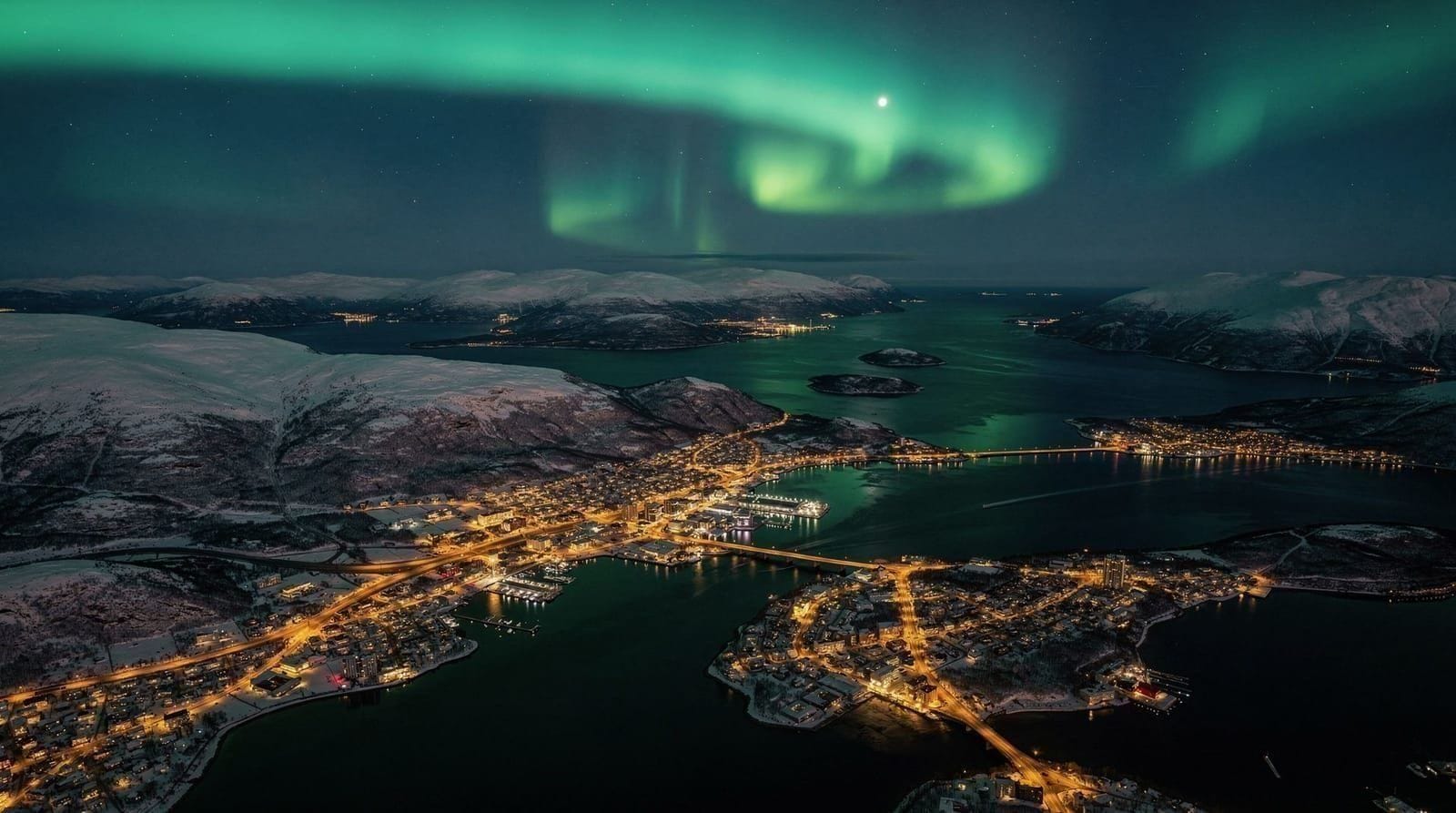
The bridge viewpoint: The Tromsøysund bridge, seen from the north end, creates an architectural leading line with aurora above. A classic composition in Tromsø photography — the orange bridge lights contrasting with the green aurora. This works best when the aurora is directly overhead rather than at low angle.
Location 6: Breivikeidet fjord — mid-route stop
Distance from Tromsø: ~40 km east
Drive time: 35–45 minutes
Parking: Ferry terminal and roadside
Breivikeidet at the Lyngen ferry crossing has a north-facing fjord view with the Lyngen Alps across the water. It’s a natural stop on the drive toward Lyngen and a decent photography location if conditions clear here.
Best for: KP 3+ events where aurora is high in the sky — the mountains across the fjord create silhouette composition with the aurora above.
Choosing which location on a given night
The cloud forecast determines location priority:
| Forecast situation | Best location choice |
|---|---|
| Tromsø clear, whole coast clear | Ersfjord or Sommarøy |
| Coast partly cloudy, inland clearing | Tamok Valley |
| Heavy overcast coast, clearing inland | Tamok Valley or Lyngen |
| Everything clear, settled high-pressure | Lyngen for best scenery |
| Only local cloud over Tromsø city | North tip of Tromsøya |
Photography-specific tips by location
Ersfjord: Arrive 20 minutes before aurora is expected. Set up tripod on beach with horizontal foreground. Use long axis of beach for leading-line compositions. The mountains are tall — use a 14–16 mm focal length to capture both mountain peaks and aurora above.
Sommarøy: Focus infinity for the ocean horizon — there’s nothing close to focus on except rocks at water’s edge. Include the rocks at f/8 with focus stacking or use hyperfocal distance if you want foreground sharpness as well as sharp aurora. The ocean foreground at calm night is reflective — minimise your own footprint on wet rocks before the tide and wait for flat water.
Tamok Valley: Use trees as foreground elements — snow-covered birch trees silhouetted against aurora create strong compositions. The valley floor is open snowfield that can work as a simple white foreground. Experiment with headtorch light-painting of trees in a 20-second exposure.
Lyngen: Timing critical — arrive early enough to scout the fjord shore for reflection access. The mountain reflections only work in the brief window of perfect stillness. Wind even at 2 km/h ruins the mirror reflection. Winter conditions here can be more extreme — bring extra warm gear and an emergency supply.
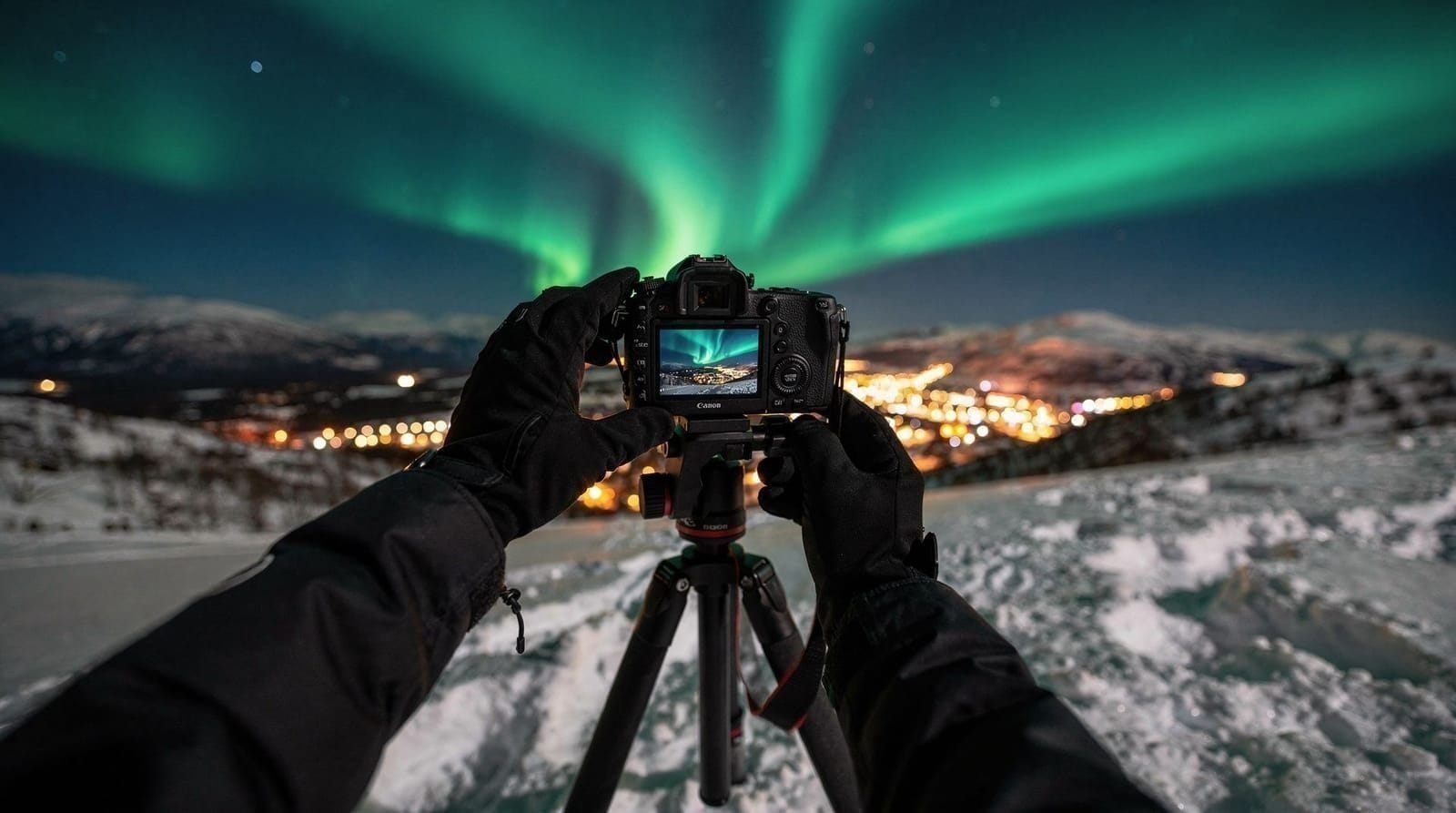
Dedicated northern lights photography tours from Tromsø are run by photographers who know these specific locations, their access conditions in winter, and which foreground works best on a given cloud-escape night.Self-drive vs guided: which suits your goals
Photographers with their own manual-mode camera skills and a rental car with winter tyres often prefer self-driving — it means unlimited time at a chosen location and no group compromises on where to go. The trade-off is that you do the forecast-reading, the driving on unfamiliar Arctic roads, and the risk management yourself. A guided small-group photography tour costs more per outing but removes all three: the guide reads the forecast, drives, and typically knows which laybys and access points are safest in current conditions. If this is your only Tromsø trip and you don’t already shoot manual long exposures regularly, a guided tour is the more reliable route to a usable photo. If you’re staying a week or more and want to build your own portfolio at your own pace, renting a car and working through this location list yourself makes sense.
Fuel, warmth and logistics between locations
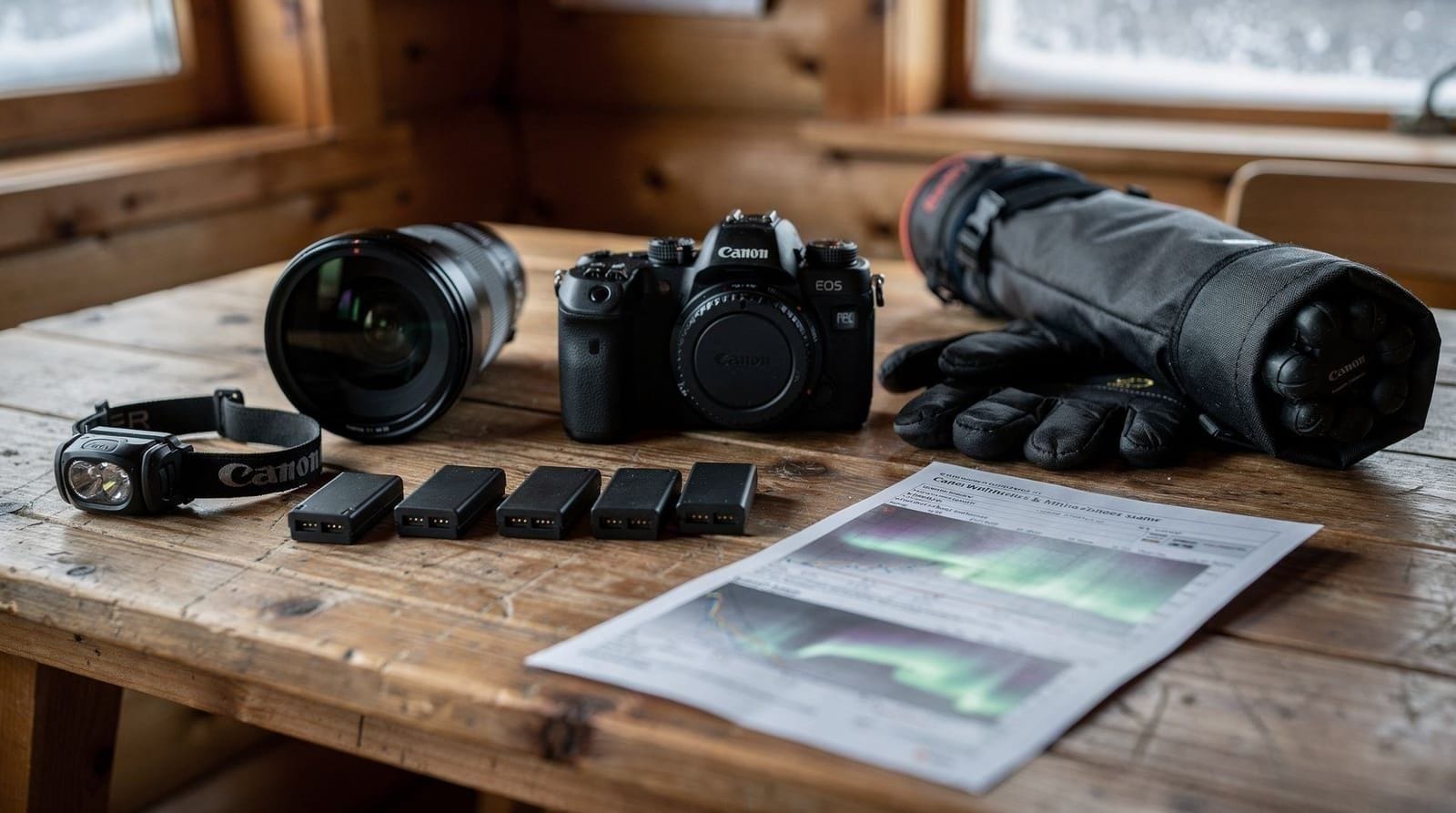
Chasing between multiple locations in one night means managing the car and yourself, not just the camera. Fill the fuel tank before heading out — stations thin out past the city limits, and running the engine intermittently for heat between shoots burns more than expected. Keep a thermos of hot drink and simple snacks in the car; you will be standing still in sub-zero temperatures for long stretches between exposures, and the cold accumulates faster than it feels in the moment. If you’re self-driving rather than joining a guided tour, check road conditions on vegvesen.no before setting out toward Lyngen or Sommarøy, since the Rv862 and Rv868 can ice up quickly after fresh snow. For a broader read on what to pack for a night outdoors in Arctic winter, see the Tromsø winter packing guide.
Combining locations with an aurora forecast strategy
None of these six locations is reliably “the best” on any given night — the right call depends entirely on the cloud-cover forecast and the aurora’s KP index. Cross-reference the aurora forecast and KP index guide with the cloud-escape table above before committing to a drive; the cloud-escape strategy guide goes deeper into how guides use hourly satellite imagery to pick a location mid-evening rather than in advance. If you’d rather not manage this logistics puzzle yourself, a guided tour handles the forecast-reading and driving so you can focus purely on composition.
Frequently asked questions about aurora photography locations
Do I need permission to photograph on Ersfjord beach?
No. Ersfjord beach is public access (allemannsretten applies to all uncultivated land in Norway). The parking area is free and public. You can set up a tripod anywhere on the beach without permission.
Is Sommarøy accessible in deep winter conditions?
The main road to Sommarøy (Rv862) is maintained in winter. The bridge to the island is narrow but kept clear. In major snowstorms, the road may be temporarily closed — check vegvesen.no before driving in severe conditions.
Are there aurora photography spots at altitude near Tromsø?
Fjellheisen cable car at 421 m is the most accessible high-altitude spot. Above the treeline, the view opens up considerably. The cable car runs until around 01:00 in winter. Beyond Fjellheisen, the Storsteinen summit at 790 m requires hiking (3–4 hours round trip in winter conditions, with headtorches). Not recommended for solo winter night hiking.
Can I hike to better photography spots in winter?
Only with proper winter mountaineering skills, navigation, avalanche awareness, and winter gear. The day-hike trails in Tromsø area are not always safe at night in winter. Stick to road-accessible locations for aurora photography unless you have specific Arctic mountaineering experience.
Are there guided photography workshops in Tromsø?
Yes — several local photographers run 2–5 day workshops covering aurora and landscape photography in winter. These workshops combine location scouting, technique instruction, and post-processing guidance. More expensive than a single tour (8,000–15,000 NOK for a multi-day workshop) but the learning intensity is much higher.
What is the best location for aurora reflection photography?
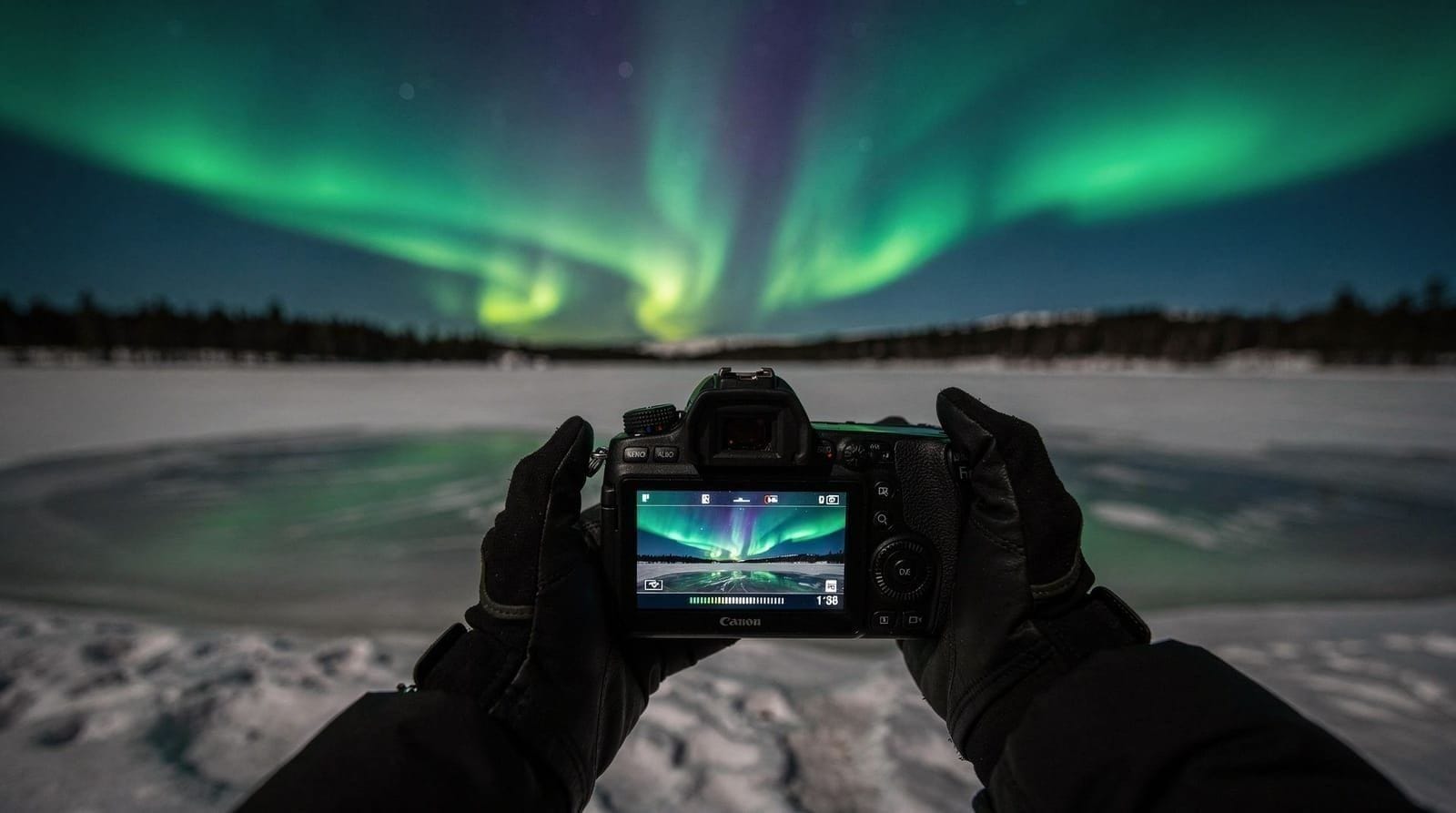
Lyngen eastern shore with calm fjord conditions is the best for mountain reflections. For ocean reflections, Sommarøy’s north shore on a still night. Reflections require wind below 5 km/h — check the wind forecast specifically. On windy nights, reflections are impossible regardless of how good the aurora is.
Can I photograph aurora and the midnight sun from the same location?
No — they don’t overlap. Aurora requires complete darkness (October–April). Midnight sun occurs May–July. You can photograph the same location in both seasons but not simultaneously.
What phone camera apps help identify composition opportunities?
The Photopills app (iOS/Android, approximately €10) shows the aurora oval position, Milky Way arc, and moon rise/set for any location and time. It’s the primary planning tool used by professional Arctic photographers for positioning. The AR night-sky view is particularly useful for scoping foreground positions during the day before a night shoot.
Top experiences
Bookable activities with verified prices and instant confirmation on GetYourGuide.