Sommarøy — Arctic white-sand beaches at 70° north
Sommarøy — Arctic white-sand beaches 1 hour from Tromsø. Drive directions, sea kayaking, midnight sun, and an honest account of what to expect.
Tromsø: All-Inclusive Arctic Fjords and Sommarøy Scenic Tour
Quick facts
- Best time
- May–September (beaches, kayaking, midnight sun)
- How to get there
- Drive Rv862 west via Kvaløya; or join a guided day trip
- Drive time from Tromsø
- Approx. 1 hour (66 km)
- Ideal length
- Half day to 1 full day
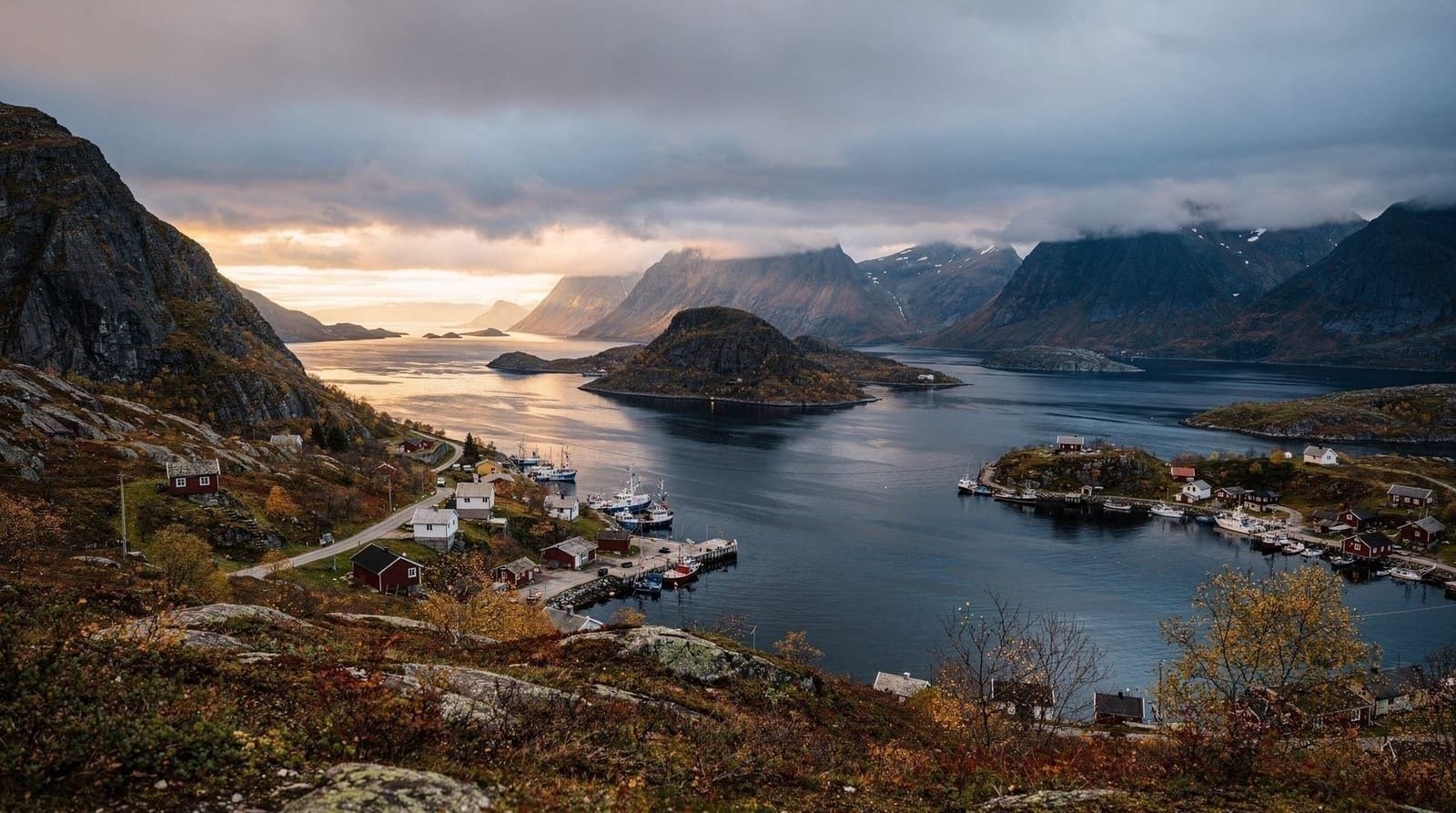
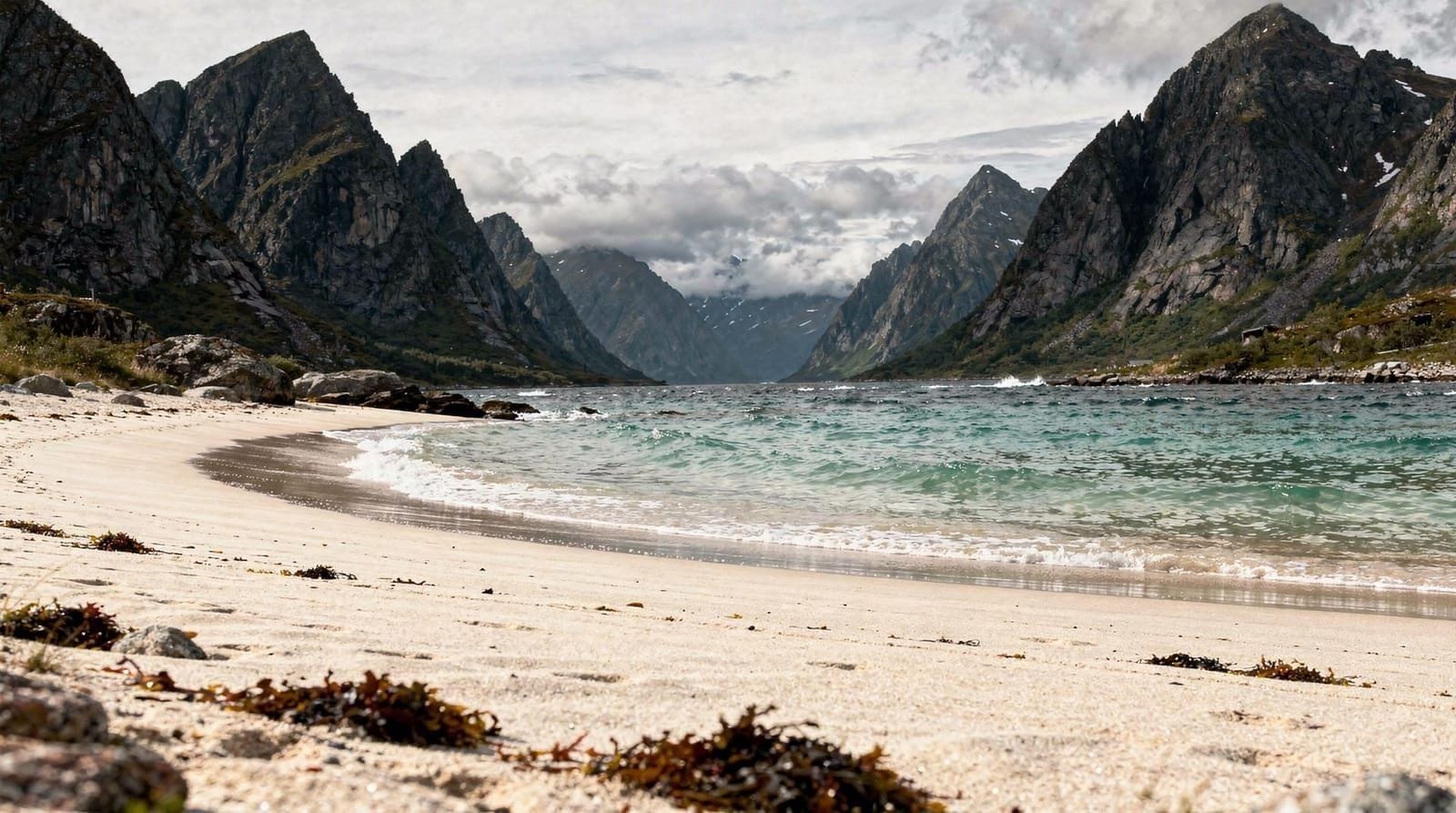
Quick answer: Sommarøy (“Summer Island”) is a small fishing community spread across a cluster of low islands about 66 km west of Tromsø, connected by bridges and causeways. Despite sitting well above the Arctic Circle, it has genuine white-sand beaches and water that turns turquoise green in bright summer light. It is the most-photographed natural scene near Tromsø and the anchor point for most guided Arctic coastal day trips. The drive takes about 1 hour each way.
| Where | 66 km / 1 hr west of Tromsø via Kvaløya |
| Cost | Guided day trip 700–1 100 NOK; taxi one way 700–900 NOK |
| Time needed | Half day minimum; a full day if combining with Ersfjord/Kvaløya |
| Getting there | Self-drive, guided tour, or taxi — no public bus |
| Best time | June–August (beaches, midnight sun); winter for aurora over open sea |
Getting to Sommarøy
The route is: Tromsø → Sandnessund Bridge to Kvaløya → Rv862 west → causeway bridges to Sommarøy. The road is signposted throughout and passes through Ersfjord along the way. In summer the drive is beautiful — in winter the outer sections between Ersfjord and Sommarøy can be icy and narrow, requiring careful driving.
No public bus reaches Sommarøy. Your options are: rent a car, join a guided day trip, or take a taxi (expect 700–900 NOK one way from central Tromsø). Guided tours from Tromsø cost 700–1 100 NOK per person including transport and usually a light lunch.
Fjords and Sommarøy with salmon picnic — one of the better-value guided day trips, includes a smoked salmon picnic at the beach.
The beaches and what to expect
The main beach at Sommarøy — sometimes called Hamna Beach — is on the north-facing inner shore of the main island. The sand is genuinely white and soft, and the water colour in full sun is surprisingly vivid. Water temperature in summer reaches 13–17°C — cold by Mediterranean standards but swimmable for the determined.
Be honest about expectations: Sommarøy is not a tropical beach. There are no beach bars, no sun loungers, no facilities. In the height of summer it can be windy. But the combination of white sand, green water, dramatic mountain backdrop, and a sun that does not set is genuinely striking and unlike anywhere else in the world.
The village itself has about 300 permanent residents. There is one hotel (Sommarøy Arctic Hotel), a small café and a fish factory. The fishing culture is still active — the traditional red and yellow fish drying racks (hjell) are dotted around the islands.
Sea kayaking
Sea kayaking around Sommarøy’s outer islands is one of the highlights of summer in the Tromsø region. The sheltered passages between islands are ideal for beginners; the outer coast is more exposed but gives views of the open Norwegian Sea. Guided tours depart from Tromsø and arrive at Sommarøy by van, then paddle the islands for 3–5 hours.
Midnight sun sea kayaking at Sommarøy — 5-hour guided tour, small group, departs late evening so you paddle in the midnight sun; includes gear and a warm drink.
The midnight sun kayaking tour — paddling at 23:00 with the sun still high — is one of the most popular summer activities sold from Tromsø. Book at least 1–2 weeks ahead in June and July.
Sommarøy midnight sun tour — small-group van tour timed for the midnight sun at the beach, without the kayaking element; a good option if paddling isn’t for you.
Midnight sun at Sommarøy
Sommarøy is an exceptional midnight sun viewpoint because it faces west over open water with no obstructions to the horizon. At the summer solstice, the sun sets symbolically around 23:40 and rises again at 00:02 — it barely dips to the horizon, painting the sea orange and pink. Local folklore says the villagers once unofficially declared themselves a “time-free zone” during the midnight sun period, collecting their watches and hanging them on the bridge — a story that circulates online. It is charming whether or not the whole village actually participated.
The best midnight sun viewpoint on Sommarøy is the hill above the main village, about 15 minutes walk from the main car park. The bridge between the main island and Hillesøy is also a popular photography spot.
Combining Sommarøy with Ersfjord and Kvaløya
Most visitors pair Sommarøy with a stop at Ersfjord (25 km before Sommarøy on the same road). The Ersfjord beach is different in character — a narrow sandy bay inside a steep mountain fjord, dramatic and sheltered. Combining both takes about 4–5 hours total driving and exploring.
For a full island day, start with the dog sledding or a hike at Kvaløya, stop at Ersfjord for lunch, and arrive at Sommarøy for the afternoon. Our Kvaløya day trip guide has a detailed itinerary.
What is worth the detour
The road out to Hillesøy — the smaller island further west of Sommarøy — is an extra 10 minutes by car but gives the most dramatic ocean views in the area. Very few guided tours go there. The viewpoint at the end of the Hillesøy road looks out over the open Norwegian Sea with the Lofoten mountains barely visible on the clearest days.
Sommarøy Arctic Hotel has a restaurant serving local seafood at around 280–380 NOK per main — reasonable by Tromsø standards and the only proper restaurant in the area. Call to confirm opening hours before the trip.
Sommarøy in winter
Most first-time visitors do not consider Sommarøy in winter, assuming the beach experience is the point. But the island has a different kind of appeal from November to March. The roads are open (though the last stretch from Ersfjord can be icy), the village is quiet, and the aurora views over the open ocean horizon to the northwest are among the best in the Tromsø region.
On clear nights in January, standing at the bridge between the main island and Hillesøy and watching the aurora reflect in the open sea is a remarkable experience. Because Sommarøy faces the open Norwegian Sea rather than a sheltered fjord, the aurora can appear above an infinite dark-water horizon — a different visual than the mountain-reflection aurora seen from inland sites.
Winter visit logistics: the Sommarøy Arctic Hotel is open year-round and can be booked for overnight stays in winter. The drive from Tromsø is manageable in winter daylight (1 hour), but should be timed to avoid returning in the dark on an icy road unless you are fully confident in winter driving. Most aurora tour operators do not go to Sommarøy specifically — they prefer the Tamok/Malangen corridor — so this is primarily a self-drive destination in winter.
The traditional fishing economy
The drying racks (hjell) visible throughout the Sommarøy archipelago are not decorative. This is an active cod fishing community that has supplied stockfish to European markets for centuries. The fish are caught in winter when the cod migrate, split, and hung on the outdoor racks for 2–3 months of freeze-dry curing in the Arctic air. Norwegian dried cod (tørrfisk) is exported to Italy, Nigeria, and beyond. In spring you will see the drying racks full; by summer they are empty and cleaned for the next season.
The experience of seeing this industry alongside the white-sand beaches and turquoise water is distinctly Sommarøy: a place that does not exist for tourists but happens to be extraordinarily beautiful.
Paddleboarding and other water activities
Beyond sea kayaking, stand-up paddleboards can be rented from the Sommarøy Arctic Hotel’s activity desk in summer (June–August). The sheltered inner channels between islands are ideal for paddleboarding — flat water, no current, spectacular scenery. Cost: around 400–600 NOK for 2 hours.
Boat trips departing from Sommarøy harbour (ask locally — not formally ticketed) occasionally take guests out to view the sea eagle colonies on the outer islands. Norway has the world’s largest population of white-tailed sea eagles and the Sommarøy archipelago has several active pairs.
What to skip
The organised “Arctic day trip” packages that visit Sommarøy for 45 minutes before driving back are poor value — you spend 2 hours driving for less than 1 hour at the destination. If you go to Sommarøy, commit to a half-day minimum. The packages that combine Sommarøy with Kvaløya and include 2–3 hours at the islands are better structured.
Kvaløya and Sommarøy fjord tour with lunch — a well-structured combined itinerary covering both islands with a proper lunch stop, rather than a rushed drive-by.
See also: day trip guide from Tromsø to Sommarøy.
How Sommarøy compares to Ersfjord and Grøtfjord
Three beach-and-fjord stops sit along the same western Kvaløya road, and each offers something different. Ersfjord, 25 km before Sommarøy, is a small, dramatic beach ringed tightly by mountains with essentially no facilities. Grøtfjord, further north on Kvaløya, is longer and flatter with a more open setting. Sommarøy is the most developed of the three — an actual village with a hotel, a restaurant, and organised activities — and has the best claim to genuine white-sand-and-turquoise-water scenery. If you only have time for one stop, Sommarøy offers the most complete experience; if you want the most dramatic single photograph, Ersfjord’s tight fjord geometry usually wins.
Frequently asked questions about Sommarøy
Is Sommarøy worth the 1-hour drive from Tromsø?
Yes, in summer (May–September) — the beach and midnight sun scenery genuinely justify the detour. In winter it is less compelling: the beaches are snow-covered, the road can be icy, and there is not much to do. For a winter visit, Lyngen Alps or Tamok Valley are more rewarding.
Can you swim at Sommarøy beach?
Technically yes — water temperature in July reaches 13–17°C. Most people wade in and take the photo rather than swimming lengths. There are no lifeguards, no changing facilities, and the water is very cold by most standards.
Are there restaurants at Sommarøy?
One — Sommarøy Arctic Hotel’s restaurant. It is the only option in the area, serving fish and local dishes at 280–380 NOK per main. In summer, bring a packed lunch from Tromsø if you want to keep costs down; the picnic setting is better anyway.
How do you get to Sommarøy without a car?
Guided day tours are the only practical option — all depart from central Tromsø. Prices range from 700–1 100 NOK per person including transport and a light meal. A taxi one way costs 700–900 NOK. See our full list of Sommarøy day trips.
What time does the midnight sun peak at Sommarøy?
Around the summer solstice (21 June), the sun barely dips to the horizon at around 23:45–00:05 local time. The orange-pink light on the water is at its most dramatic from 23:00 to 00:30. This is the same light throughout the night from late May to late July, but the lowest sun angle produces the warmest colours.
Is Sommarøy accessible in winter?
The road is kept open year-round, but the outer section from Ersfjord westward is occasionally closed briefly after heavy snow. Winter visits are possible but the village is quiet and most of the beach scenery is snow-covered. The main winter reason to visit would be aurora photography — the ocean horizon is excellent for aurora views on clear nights.
Is Sommarøy or Ersfjord the better single beach stop?
If you have time for only one, Sommarøy offers more to do (a real village, restaurant, kayaking, paddleboarding) and the more famous white-sand look. Ersfjord is a faster, simpler stop with a more dramatic mountain-and-fjord composition but nothing else once you’ve taken the photo. Many day trips combine both since they are only 25 km apart.
Can I see sea eagles at Sommarøy?
Yes, informally — locally arranged boat trips out to the outer islands sometimes pass active white-tailed sea eagle nesting areas, though this is not a formally ticketed tour. Ask at the harbour or your hotel for current options; Norway holds the world’s largest sea eagle population and several pairs are resident around the Sommarøy archipelago.
Top experiences
Bookable activities with verified prices and instant confirmation on GetYourGuide.