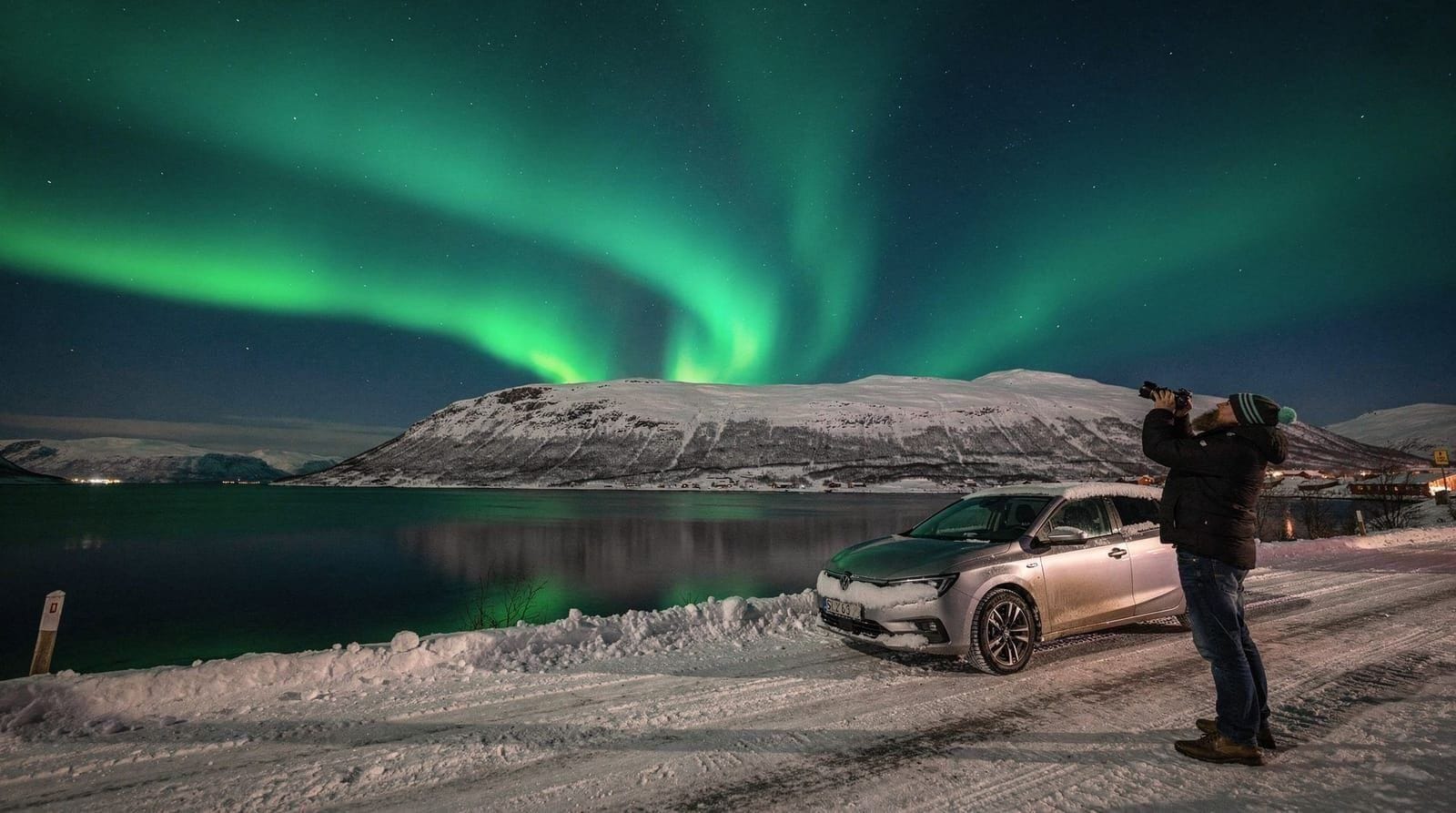
Aurora forecast and KP index explained for Tromsø visitors
Tromsø: Expert Aurora Hunt - Thermal Gear, Food, Campfire
What KP level do you need to see aurora in Tromsø?
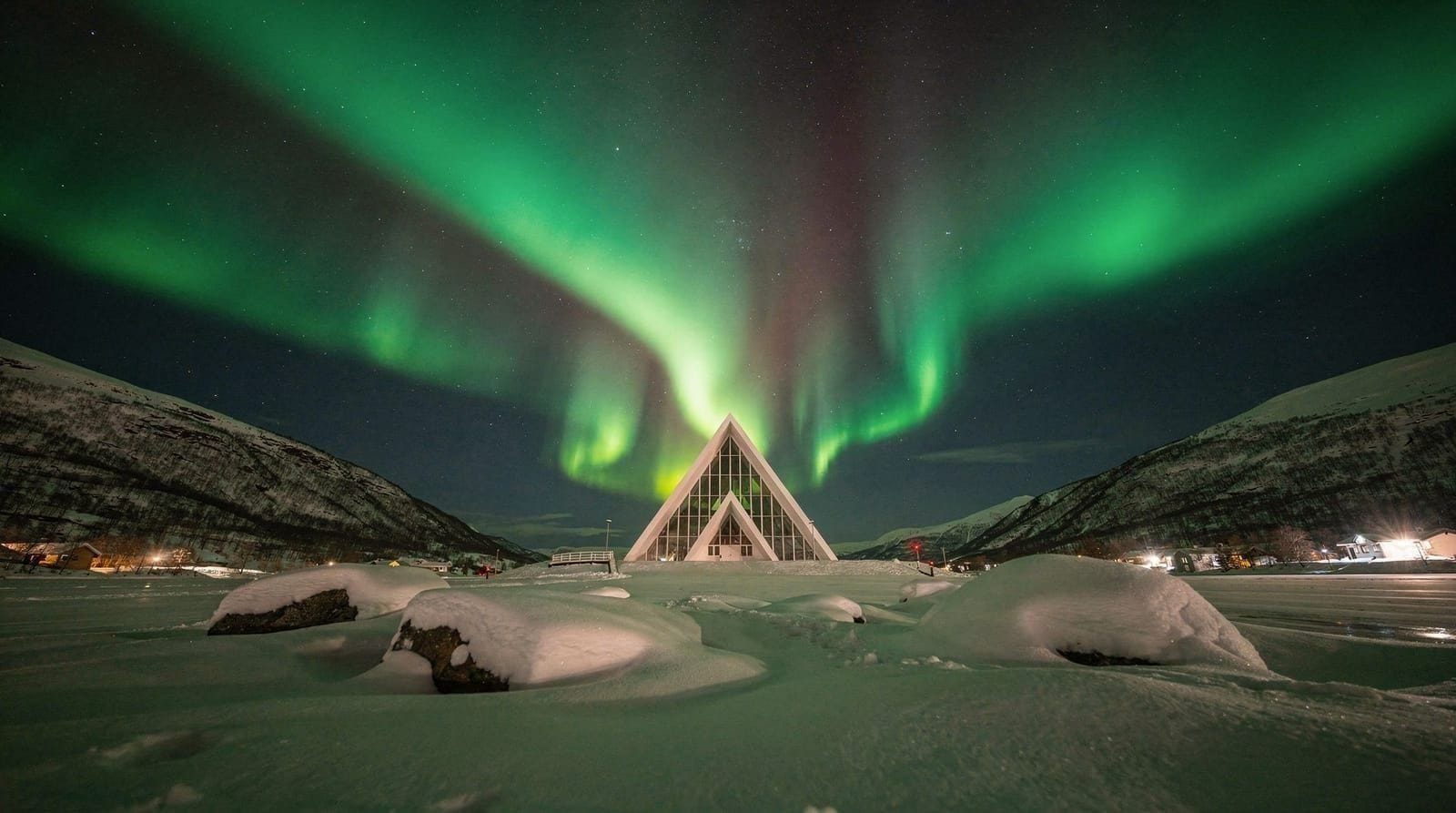
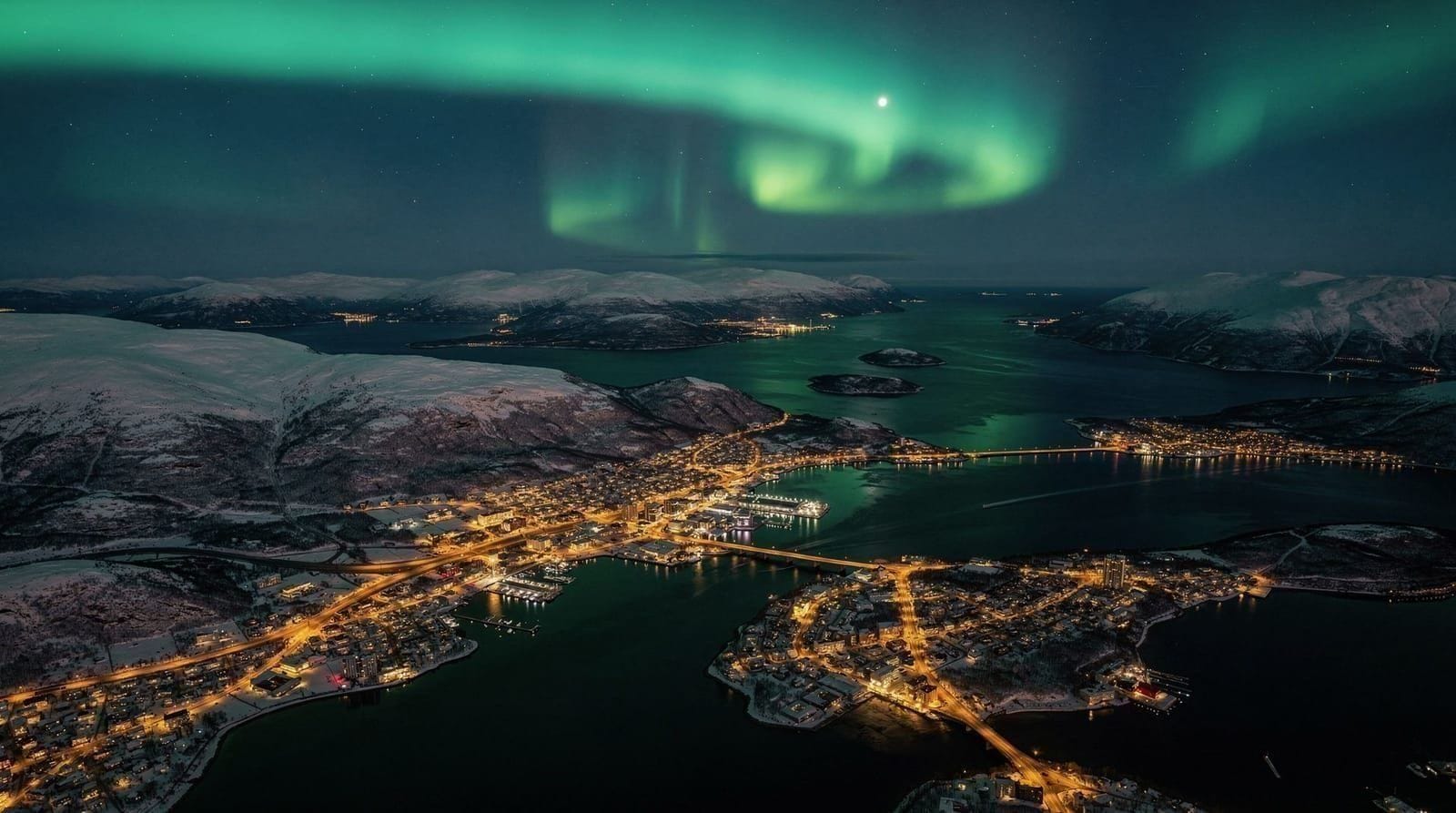
Tromsø sits inside the auroral oval at 69.6°N. Aurora is visible at KP 1–2 on clear dark nights. KP 3+ produces reliable displays. You don't need to wait for KP 5 the way observers at mid-latitudes do.
Quick answer: Tromsø is inside the auroral oval — aurora is visible at KP 1–2 on clear nights. KP 3+ gives reliable displays. The 3-day NOAA storm forecast and the yr.no cloud forecast are the two tools that matter most. Cloud cover is the bigger enemy than KP level at this latitude.
| Minimum KP needed | 1–2 at Tromsø’s latitude (69.6°N) |
| Key tools | NOAA 3-day outlook, SpaceWeatherLive, yr.no, TGO all-sky camera |
| Cost | Free — all forecast tools are free to use |
| Lead time | 1–2 days for major storms; real-time Bz for the final hour |
| Bigger obstacle | Cloud cover, not low KP |
How aurora forecasting works
The northern lights are caused by charged particles from the sun — primarily electrons and protons — colliding with gases in Earth’s upper atmosphere (90–300 km altitude). The intensity and geographic extent of aurora depends on the strength of the solar wind and how well it couples with Earth’s magnetic field.
Forecasting aurora is a two-part problem:
- Predicting solar wind conditions (days in advance, for major events)
- Real-time monitoring (minutes to hours ahead, for exact intensity)
Understanding both helps you plan your Tromsø nights intelligently.
The KP index — what each level means at 69°N
KP is measured at ground magnetic stations worldwide and averaged every 3 hours. The scale runs 0–9:
| KP level | Global description | What this means in Tromsø |
|---|---|---|
| 0–1 | Very quiet | Faint glow, often only on camera. Visible at zenith on dark clear nights. |
| 2 | Quiet | Pale arc or band visible to the naked eye. Photogenic with 8–15 second exposures. |
| 3 | Unsettled | Active arcs, some curtain motion. Clearly visible, bright on camera. |
| 4 | Active | Bright structured display, possible rays and curtains. Outstanding viewing. |
| 5 | Minor storm (G1) | All-sky display possible, lower-latitude aurora begins. Dramatic. |
| 6 | Moderate storm (G2) | Visible to Scandinavia’s south, intense multi-colour display at Tromsø. |
| 7–9 | Strong–extreme storm | Visible across Europe and parts of North America. Rare and spectacular. |
The key insight for Tromsø: you are inside the auroral oval. The oval is the ring around the magnetic pole where aurora is most intense. At lower latitudes (London, Paris), you need KP 6+ for sightings. At Tromsø (69.6°N), the oval passes directly overhead at normal KP 2–4 conditions.
This is why “I’ll wait for a KP 5 before going out” is a common and wasteful mistake for Tromsø visitors.
How to read aurora forecast apps
NOAA 3-day forecast (swpc.noaa.gov)
The most authoritative source for storm predictions. The National Oceanic and Atmospheric Administration runs 24/7 space weather monitoring via the ACE and DSCOVR satellites at the L1 Lagrange point (1.5 million km from Earth, 30–60 minutes upwind of Earth in solar wind terms).
The 3-day outlook rates conditions as G1–G5 (geomagnetic storm scale) or “no storm.” G1 storms (KP 5) are predicted with useful accuracy 1–2 days ahead when associated with a coronal mass ejection (CME). G2+ storms from CMEs are often predicted 2–3 days ahead.
Limitation: Coronal hole streams (recurring, predictable) are easier to forecast. CMEs (sudden explosive events) can surprise even when the 3-day forecast shows quiet. A seemingly quiet night can produce a KP 5 storm from an unexpected CME in transit.
SpaceWeatherLive (spaceweatherlive.com)
User-friendly dashboard showing:
- Current real-time Bz (magnetic field orientation)
- Current KP and 3-hour update
- Solar wind speed and density
- Planetary alerts and storm history
The Bz value is the most useful real-time indicator. When Bz turns strongly negative (southward-pointing, ideally below -10 nT), solar wind couples efficiently with Earth’s field and aurora intensifies. Watch for Bz going negative as a 15–30 minute heads-up that activity is increasing.
My Aurora Forecast (app, iOS and Android)
Simplified app that translates the NOAA data into a location-specific visibility estimate. Gives a probability percentage for your GPS location. Useful for non-technical users. The aurora oval map updates in real-time and shows whether Tromsø is inside the active region.
yr.no (Norwegian weather)
The Norwegian Meteorological Institute’s weather service — cloud cover forecast is what matters here, not solar conditions. Yr.no’s local forecast for Tromsø (and surrounding areas like Tamok, Lyngen) is the most accurate for 24–48 hour cloud prediction. Check the “wind and cloud” layer specifically.
Tromsø Geophysical Observatory
The University of Tromsø runs an all-sky camera in Tromsø that updates every few minutes. Direct link: tgo.uit.no — shows actual current conditions above Tromsø without app interpretation. If the camera shows green aurora, there is aurora. If the camera shows cloud, drive east.
Cloud cover — why it matters more than KP in many situations
At Tromsø’s latitude, aurora exists at KP 1–2 most nights during aurora season. The question is not “will there be aurora?” but “can I see through the clouds?”
Tromsø receives significant maritime influence from the Norwegian Sea — warm, moist Atlantic air creates frequent cloud cover. The statistical average is 170+ overcast or partly cloudy days per year. When a weather system sits over the coast, the inland areas east and southeast of Tromsø frequently clear.
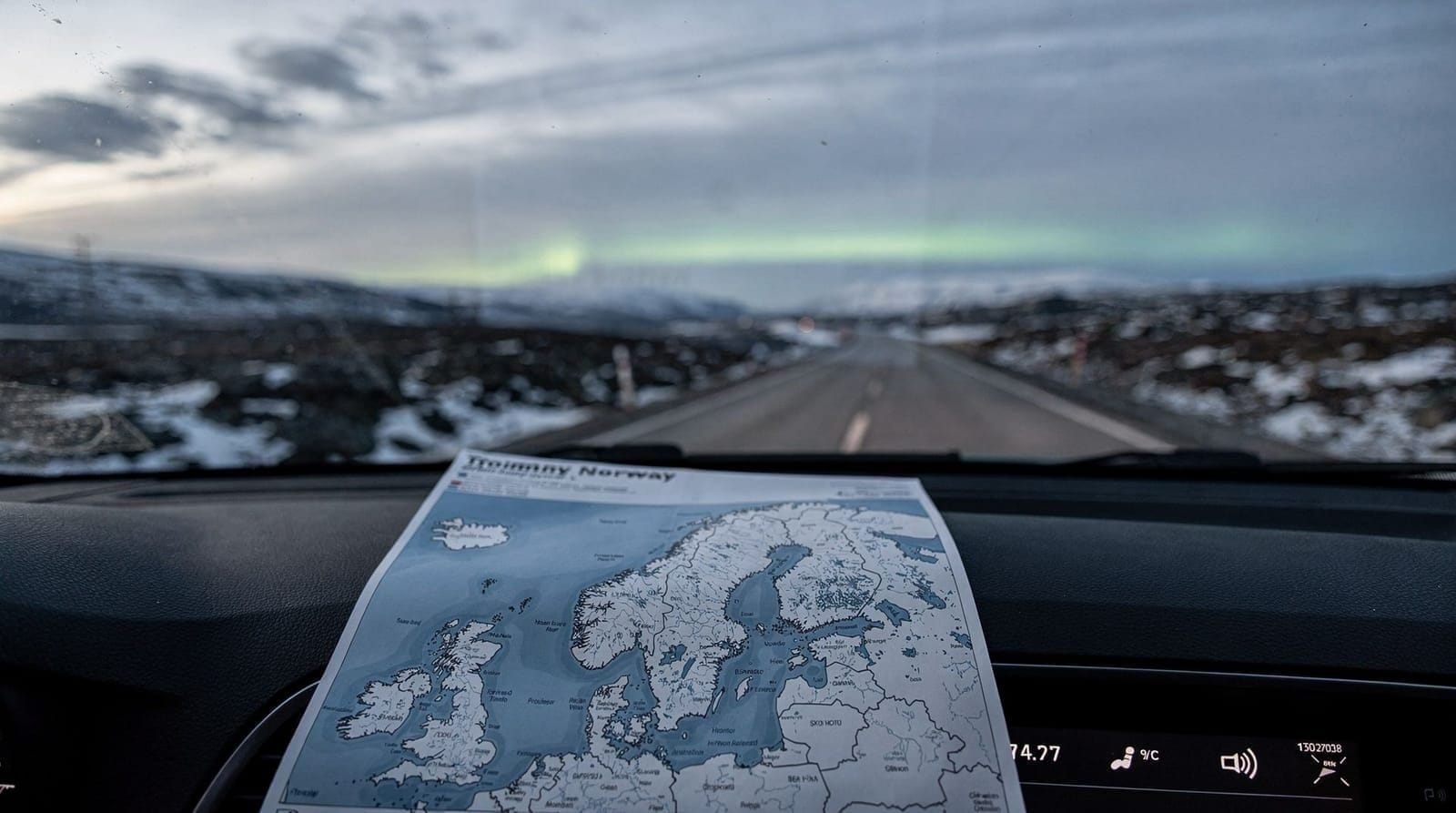
The Tamok Strategy: Drive 50 km southeast on E8 and Rv91 to Tamok Valley. The valley sits behind a mountain range that blocks much of the maritime cloud. This is the first cloud-escape route used by experienced guides.
The Finnish Option: The 200 km drive to the Finnish border area (Kilpisjärvi or beyond) takes you to a subarctic continental climate — statistically drier and clearer. Some Tromsø tour operators cross the border when Norwegian conditions are poor.
See our full aurora cloud strategy guide for the complete cloud-escape approach.
Forecast tool comparison
| Tool | Type | Lead time | Best for |
|---|---|---|---|
| NOAA 3-day outlook | Solar/geomagnetic | 1–3 days | Planning which nights to prioritise |
| SpaceWeatherLive | Real-time Bz, KP | Minutes | Deciding whether to go outside right now |
| My Aurora Forecast (app) | Simplified visibility % | Hours | Non-technical users wanting a quick check |
| yr.no | Cloud cover | 24–48 hours | The single most important tool for Tromsø |
| TGO all-sky camera | Live conditions | Real-time | Confirming what’s actually visible right now |
Reading a forecast — practical example
Suppose your aurora-hunting evening is in 36 hours. Here is the decision process:
- Check NOAA 3-day outlook — Is a G1+ storm predicted? If yes, plan to be outside all evening.
- Check SpaceWeatherLive — Current Bz and solar wind speed. Is the solar wind “on” or dormant?
- Check yr.no cloud forecast for Tromsø, Tamok, and Lyngen — Compare expected cloud cover at each location. If Tromsø will be overcast but Tamok shows gaps, plan to drive east.
- At the actual evening, 30 minutes before going out — Check the TGO all-sky camera and SpaceWeatherLive Bz in real-time. This is your final go/no-go for which location to target.
Solar maximum 2025–2026 — what it means for your trip
The sun follows an approximately 11-year cycle of activity. Solar maximum — peak sunspot count, most frequent flares and CMEs — was reached around 2024–2025. The cycle 25 maximum was stronger than most forecasters predicted. The 2025–2026 aurora seasons benefit from this elevated activity, making major storm events (G2+) more frequent than during the quiet years of 2017–2019.
This doesn’t guarantee aurora every night, but it does mean the background probability is elevated. Even KP 3–4 nights in 2025–2026 are more likely to escalate to KP 5+ briefly due to co-rotating interaction regions and CME combinations.
Turning a forecast into a plan
Reading the tools is only half the job — the other half is deciding what to do with the information. If the forecast looks strong but Tromsø’s own sky is cloudy, the answer is not to wait: see the aurora cloud strategy guide for the specific driving routes that escape coastal cloud. If you’re deciding between self-driving and a guided tour to act on the forecast, the self-drive aurora guide and the northern lights tours compared guide cover the trade-offs in flexibility, cost, and local knowledge.
For the best statistical odds across your whole trip rather than a single night, the best time to see the northern lights guide gives the month-by-month breakdown of both KP frequency and cloud probability — useful for deciding when to book if your travel dates are still flexible. And if you’re unsure where in the Tromsø region to actually stand once conditions look good, the where to see northern lights guide lists specific viewpoints.
Frequently asked questions about aurora forecasts and KP
Is the 27-day KP forecast reliable?
No. 27-day outlooks are based on coronal hole recurrence patterns and are very rough estimates. They are useful for loosely gauging activity probability but not for making day-specific travel decisions. The 3-day CME track forecast is far more reliable.
Why didn’t I see aurora when the KP was 4?
Cloud cover is the most common culprit. A KP 4 aurora under overcast skies is invisible. The second possibility: the KP forecast was for a future 3-hour window that hadn’t arrived yet, or aurora was active at a different local time than you were outside.
Does aurora activity follow a daily pattern?
Yes, weakly. Geomagnetic activity has a slight statistical peak around local magnetic midnight (roughly 23:00–01:00 for Tromsø). However, this is a long-term average and individual nights deviate dramatically. A major CME arrival can trigger aurora at any time of day or night.
What is the relationship between KP and aurora altitude?
Aurora occurs at different altitudes depending on the energy of the particles: 90–150 km for typical green (oxygen emission at 557.7 nm), 150–300+ km for red aurora (oxygen emission at 630 nm), and 90–130 km for blue/violet (nitrogen molecules). High-altitude red aurora is only visible at KP 5+, explaining why high-KP storms produce multi-colour displays.
Are aurora forecasts available for free?
Yes, all the tools mentioned in this guide are free. NOAA space weather center, SpaceWeatherLive, yr.no, TGO all-sky cameras — all free, no subscription required.
Should I book a tour based on the forecast?
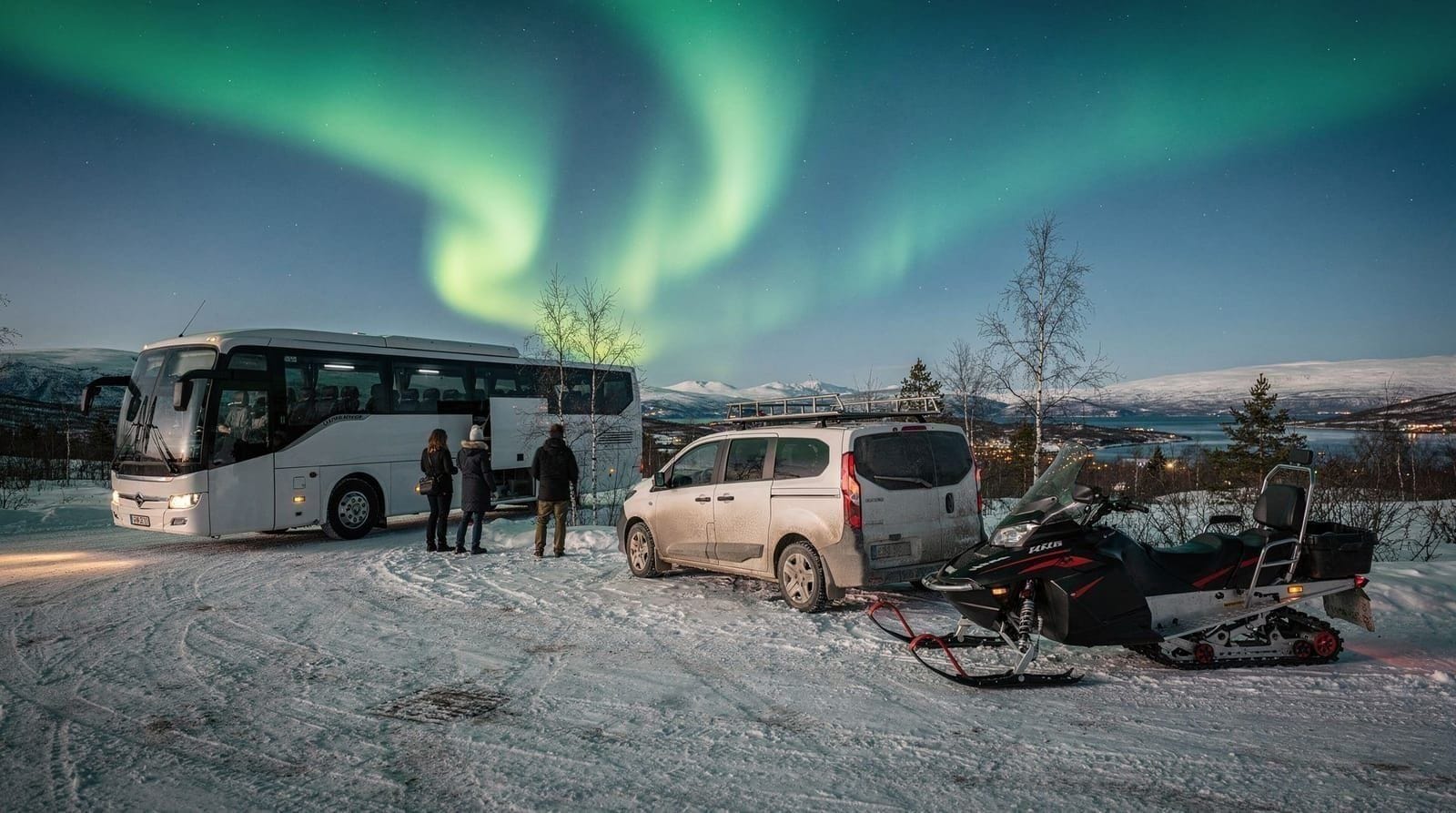
Most tours run regardless of forecast because conditions change and the guide can adapt the route. If a major storm (KP 5+) is predicted on a specific night with clear skies, that night is the most in-demand and fills fastest. Conversely, don’t cancel a tour because the KP forecast is low — at Tromsø’s latitude, even quiet aurora is worthwhile.
What does “substorm” mean for aurora?
An auroral substorm is a sudden intensification of auroral activity that can produce dramatic corona or curtain displays lasting 20–40 minutes. Substorms occur independent of KP level — a moderate KP 3 night can include a brief KP 5+ substorm. This is why guides stay outside for hours rather than checking the KP, seeing it’s low, and giving up.
Is it worth checking the solar cycle phase before booking a Tromsø trip?
For aurora enthusiasm, yes — planning your trip during solar maximum (2025–2026) gives better baseline activity. However, great aurora has occurred even at solar minimum. A well-planned trip with cloud-escape strategy beats a poorly planned trip at solar maximum.
Which single tool should I check if I only have time for one?
yr.no’s cloud forecast for Tromsø and Tamok. Given that cloud cover is the more common obstacle at this latitude, knowing whether the sky will be clear matters more on a single-check basis than the KP number. If you have time for two, add SpaceWeatherLive for the real-time Bz reading before heading out.
Do forecast apps account for Tromsø’s specific latitude?
Not automatically — most apps show a generic KP-to-visibility mapping calibrated for lower latitudes. My Aurora Forecast is one of the few that adjusts for your exact GPS position, which is why it tends to show higher visibility percentages for Tromsø than a naive KP reading would suggest.
Top experiences
Bookable activities with verified prices and instant confirmation on GetYourGuide.