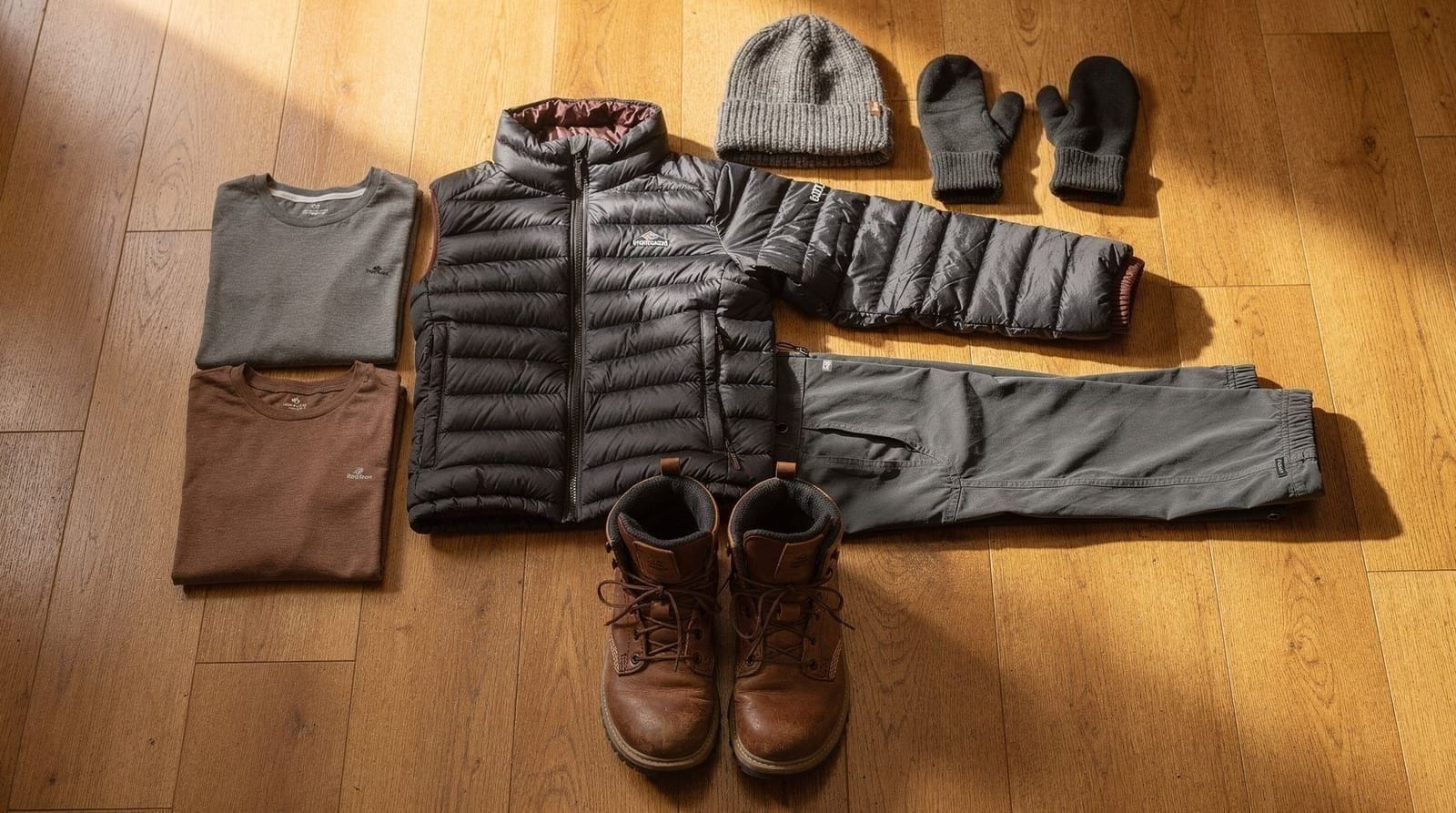
What to wear for the northern lights in Tromsø
Tromsø: Expert Aurora Hunt - Thermal Gear, Food, Campfire
What should you wear for a northern lights tour in Tromsø?
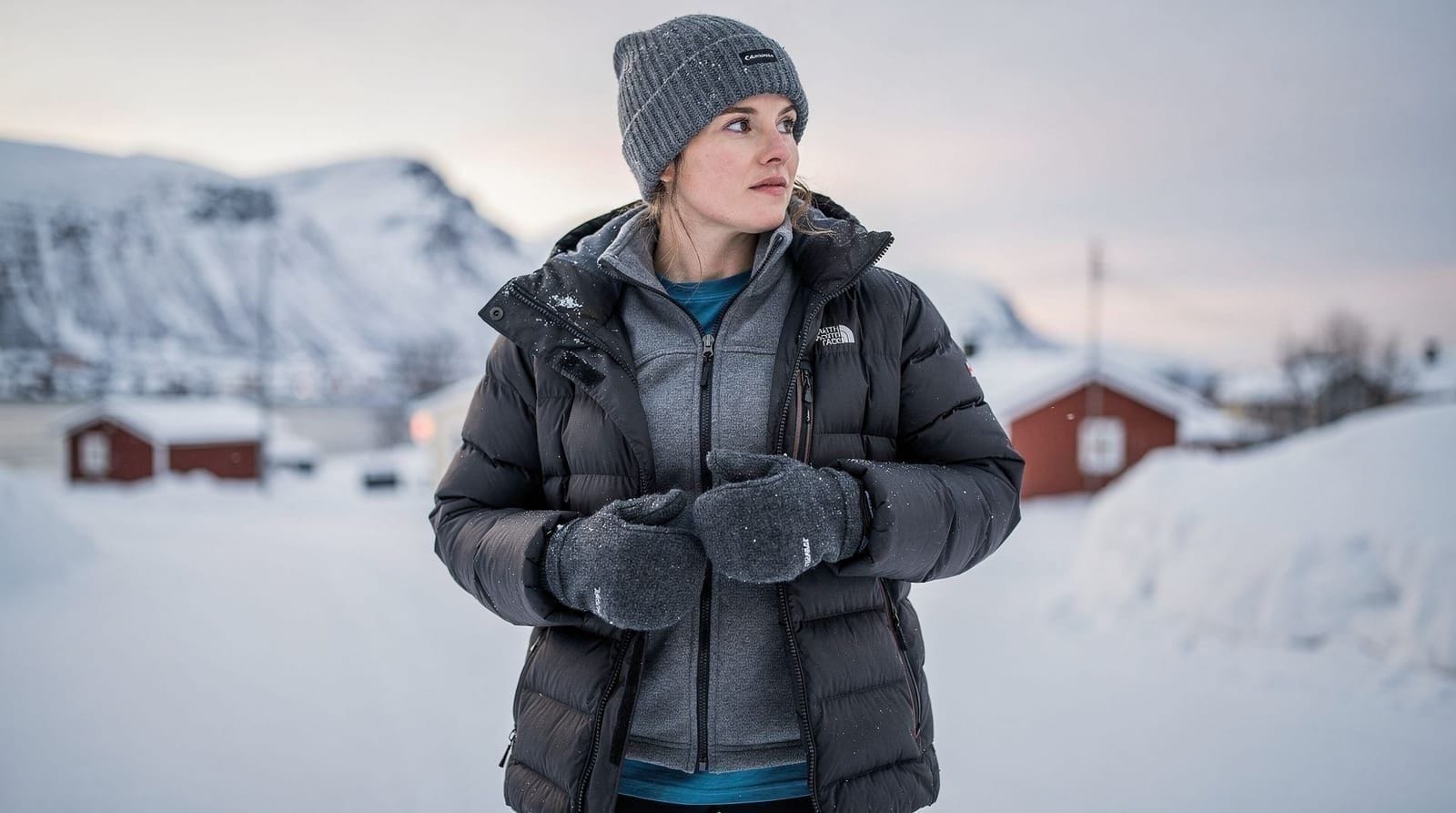
A three-layer system is essential — merino wool base layer, fleece mid-layer, and waterproof outer shell. Boots rated to -30°C, mittens over inner gloves, balaclava. Most tours loan thermal suits, but wear full layers underneath. Cotton is banned — it kills insulation when damp.
Quick answer: Wear a three-layer system: merino wool base layer, fleece mid-layer, waterproof outer shell. Boots rated to -30°C. Mittens over inner gloves. Balaclava. Never cotton. Most tours loan a thermal suit as an outer layer — wear your full layers underneath it, not instead of them.
| System | 3 layers: merino base, fleece mid, waterproof outer |
| Boots | Rated to -30°C |
| Provided by most tours | One-piece thermal suit (~75% of tours) |
| Rent locally | Storgata outdoor shops, 200–400 NOK/day |
| Biggest mistake | Inadequate footwear |
Why clothing matters more than most visitors realise
Standing still outdoors at -10°C for 40 minutes to watch aurora is fundamentally different from walking from a hotel to a restaurant. Walking generates body heat. Standing stationary in an Arctic wind does not. Even visitors who consider themselves cold-hardy are sometimes surprised by how quickly the cold penetrates when you stop moving.
The consequences of inadequate clothing on an aurora tour are not just discomfort — they range from a miserable ruined evening to genuine hypothermia risk in extreme conditions. Getting this right allows you to focus entirely on the aurora. Getting it wrong means retreating to the warm bus after 10 minutes.
The three-layer system explained
Layer 1: Base layer — the foundation
Material: Merino wool (preferred) or synthetic thermal fabric. Never cotton.
Why merino? It insulates even when damp, wicks moisture from skin to mid layer, is naturally odour-resistant (useful on multi-night trips), and regulates temperature across a wide range.
Synthetic base layers (Patagonia Capilene, Under Armour ColdGear, etc.) are cheaper and also perform well. Avoid cotton blend thermals — the cotton loses insulation when damp from sweat.
Coverage: Full-length top and bottom. Prioritise fit — snug but not tight. Baggy base layers reduce thermal efficiency.
Example products: Icebreaker Oasis 200, Smartwool Merino 250, Patagonia Capilene Thermal Weight.
Layer 2: Mid layer — insulation
Material: Fleece or down.
A fleece jacket (100–200 weight, e.g., Polartec 200) and fleece trousers form the standard mid layer. Fleece maintains insulation even when damp, is breathable, and is easy to add/remove.
Down or synthetic fill jackets are an alternative mid-layer option and provide more insulation at less bulk — useful in extreme cold (-15°C and below) as an additional insulation layer under your outer shell.
Coverage: Jacket, trousers (fleece lined ski trousers work well as combined mid + outer bottom layer).
Layer 3: Outer layer — wind and waterproof shell
Material: Waterproof/windproof membrane (Gore-Tex or equivalent).
The outer layer keeps wind and precipitation out while being breathable enough to let moisture escape. Aurora conditions range from dry and clear to light snow — waterproofing is important.
Most tours provide: A one-piece thermal suit as an outer layer loan. These suits typically cover layers 2–3 simultaneously and are rated to -20°C with proper underlayers. Do not substitute the borrowed suit for your underlayers — wear them together.
Some photography-specific aurora tours provide insulated suits and dedicated photo equipment time — the suit quality on these tours is typically better than basic bus-tour loans.Extremities — where most people underdress
Feet
This is where most people fail. Feet go cold first because they’re farthest from your core and in contact with frozen ground.
Minimum standard: Boot rated to -30°C, waterproof exterior, insulated interior. Thick wool socks (merino).
Brands that work: Sorel Caribou/Conquest, Baffin Tundra, Kamik Nationplus, Merrell Thermo series.
Do not use: Regular hiking boots, fashion boots, sneakers with warmers added.
Chemical toe warmers (adhesive, placed on top of socks over toes) add 5–8 hours of warmth. Activate 10 minutes before going outside.
Hands
Hand cold is the most common complaint on aurora tours and the most disruptive to photography.
System: Thin inner glove (wool or fleece) + waterproof outer mitten. The mitten traps a significant air layer and prevents wind penetration that gloves alone don’t stop.
For photographers: Fingerless inner gloves (with fold-back mitten) allow camera operation without removing the outer mitten entirely. Remove the outer mitten only for camera work, replace immediately.
Chemical hand warmers in your outer mittens provide 6–8 hours of heat. Keep spares in your inside pocket.
Head and face
Balaclava: Covers head, neck, and face with openings for eyes and nose. Essential in wind. An open-face balaclava with a nose flap that can be lowered works well.
Hat: Wool or fleece hat over balaclava, or a helmet liner.
Face: At -15°C and below, exposed skin on cheeks can show frostnip within 20–30 minutes in wind. A balaclava that covers the cheeks is the simplest solution.
Eyes: Glasses fog. If you wear glasses, anti-fog wipes (available at pharmacies) help. Ski goggles are overbuilt for aurora tours but are comfortable in extreme wind.
What most tours actually provide
| Item | Typically provided? |
|---|---|
| One-piece thermal suit (outer) | Yes, ~75% of tours |
| Boots | Rarely |
| Gloves/mittens | Sometimes |
| Balaclava/hat | Rarely |
| Base and mid layers | No |
| Hot drinks | Yes, usually |
| Campfire | Yes, usually |
Always confirm with your specific operator what is included. Some provide full kit (suit, boots, mittens), others provide only the outer suit.
Packing checklist for an aurora tour
Essential:
- Merino or synthetic base layer top and bottom
- Fleece jacket
- Fleece or insulated trousers
- Waterproof outer jacket and trousers (or ski jacket + salopettes)
- Boots rated -30°C
- 2x wool socks (one in boots, one spare)
- Thin inner gloves
- Outer mittens (waterproof)
- Balaclava
- Wool hat
- Chemical hand and toe warmers (extra supply)
Camera accessories:
- Camera battery (cold drains batteries fast — keep spare in inside jacket pocket)
- Fingerless inner gloves for camera operation
- Lens cloth (condensation when returning to warmth)
What to do if you get cold on a tour
Identify the issue quickly: feet cold = toe warmers or return to vehicle; hands cold = extra warmers or inside vehicle; core cold = add chemical hand warmer to inside jacket pocket (not great, but helps); all-over cold = return to vehicle completely and warm up before going out again.
Do not “push through” severe cold. Cold hands make you miserable and unable to operate a camera. Cold feet can progress to frostnip in 20–30 minutes at -15°C. The vehicle is warm and you can return to it and go out again — the aurora is not going anywhere in the next 15 minutes.
Does the right clothing differ by tour format?
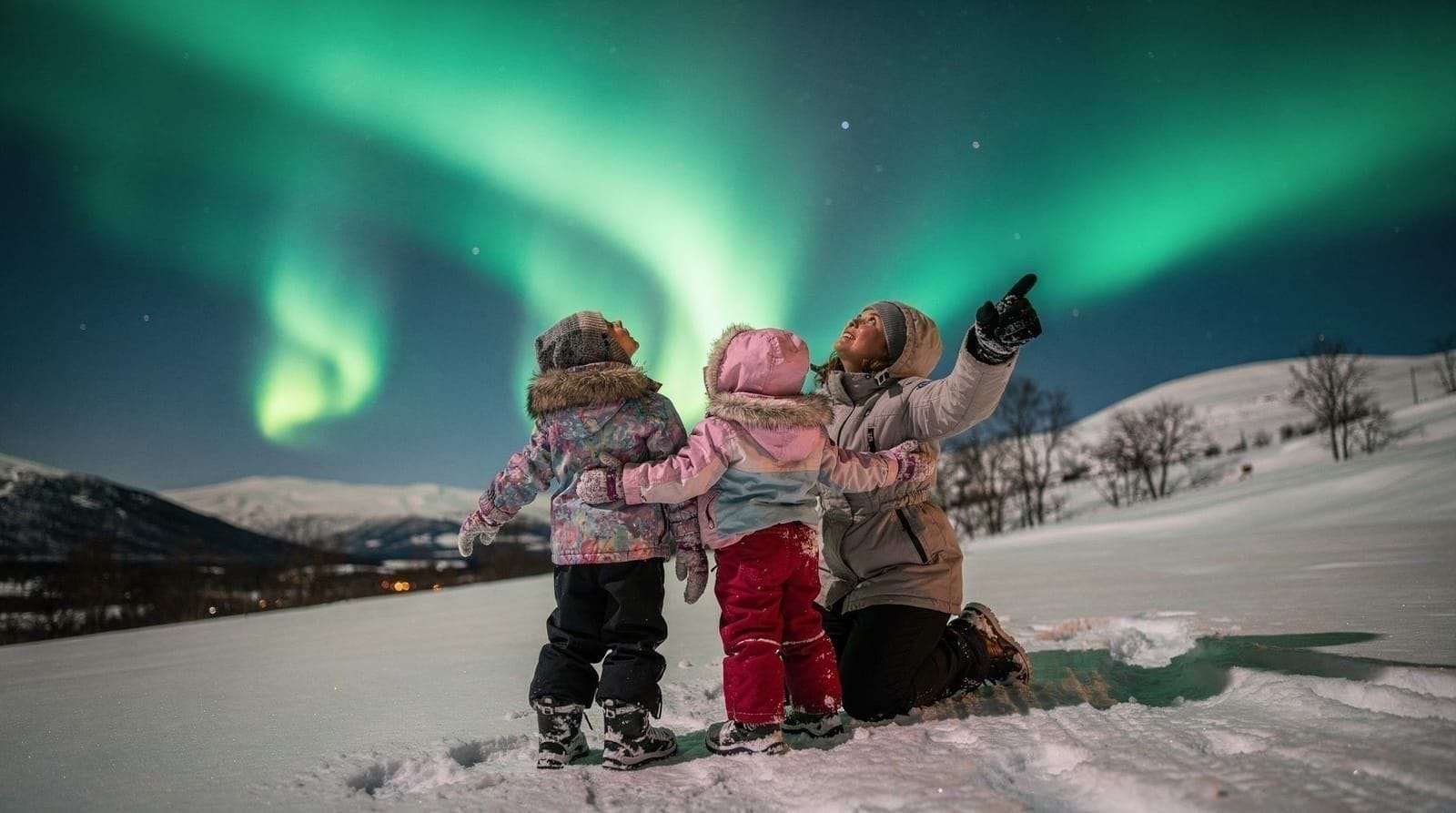
Not fundamentally, but the amount of time you actually spend stationary outdoors varies by tour type, which affects how much margin you want in your layering. See northern lights tours compared for how chase tours, camp-based tours, and minibus tours differ in outdoor exposure time. If you’re travelling with children, the northern lights with kids guide covers the extra margin needed for smaller bodies that lose heat faster, and the what age for aurora guide addresses whether a late-night tour suits your child’s age at all.
Clothing needs by month
Aurora season runs September through April, but conditions differ meaningfully between the shoulder months and deep winter. Early and late season (September, March–April) rarely drop below -10°C, so the three-layer system without the heaviest boots is often sufficient. Midwinter (December–February) is where the full -30°C-rated boot and maximum layering genuinely matter. See best time to see northern lights in Tromsø for the month-by-month breakdown of conditions, and pack accordingly rather than assuming worst-case gear is needed for a September trip.
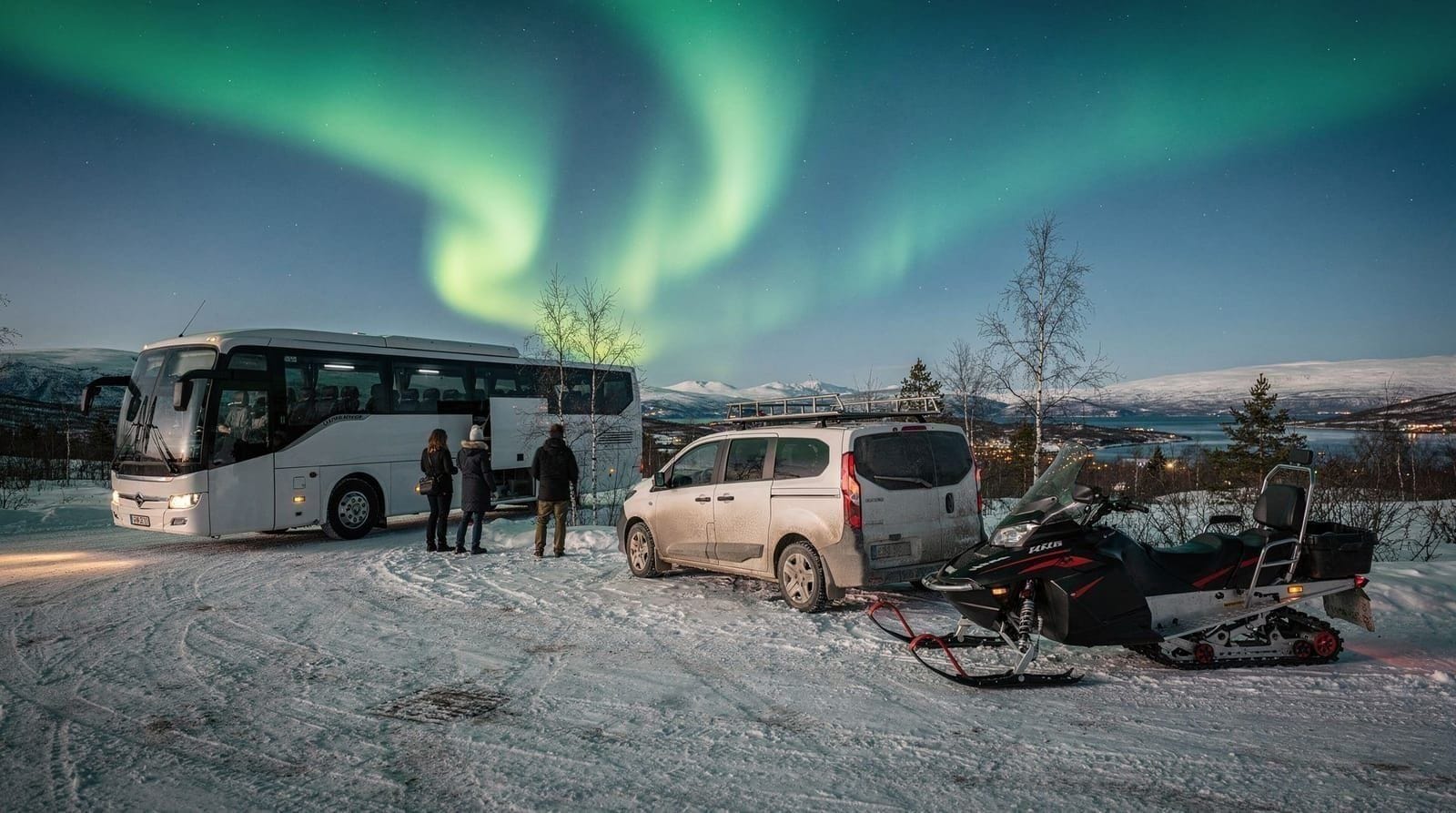
Small-group minibus aurora tour — more outdoor stops than a large coach tour, so layering matters moreFrequently asked questions about what to wear for northern lights
Can I borrow Arctic clothing in Tromsø?
Several outdoor shops in Tromsø rent complete winter kits. The Tromsø outdoor sport shops on Storgata and surrounding streets offer daily rentals. Expect 200–400 NOK per day for a complete kit (jacket, trousers, boots). Book rentals ahead if visiting peak season (December–January).
What’s the difference between -20°C rated boots and -30°C rated boots?
The temperature rating refers to the minimum temperature the boot insulation is designed for during light activity. Standing still on aurora tours is lower-activity than walking — effectively adding 5–10°C of cold. A -20°C rated boot standing still in -12°C conditions may let your feet get cold. A -30°C rated boot standing still at -12°C keeps feet comfortable. Err on the warmer rating.
Is my ski jacket adequate?
Standard ski jackets are designed for skiing — active movement in temperatures around -5°C to -15°C. They work adequately for aurora tours at similar temperatures. In extreme cold (-20°C and below) while standing stationary, a ski jacket alone may be insufficient — add a down mid-layer for these conditions.
Should I wear ski trousers?
Insulated waterproof ski trousers (with or without salopette bib) are ideal for aurora tours. They combine wind/waterproof outer and insulation in one garment. Wear thermal base layer underneath. Uninsulated shell trousers (for skiing where you generate heat) require a fleece trouser layer underneath for aurora use.
How do I keep my camera battery warm?
Store spare batteries in an inside jacket pocket against your body. Swap batteries when the shooting battery drops to 20–30%. Cold batteries report as dead when they have remaining charge — allow them to warm up and they often recover capacity. Lithium batteries handle cold better than standard alkaline.
Do I need snow goggles for an aurora tour?
Not essential unless conditions are blizzard-level. A balaclava protects eyes from cold air. In heavy snowfall or strong wind, ski goggles add comfort and protect the eyes from drifting snow particles. Most aurora tours don’t require goggles, but they are worth packing if you have them.
Can I wear a down jacket as my outer layer?
Down jackets are excellent insulation but most are not waterproof without a separate shell. If snow or moisture can reach the down, it loses insulation rapidly. Either use a waterproof shell over your down jacket, or choose a down jacket with a waterproof outer (e.g., Patagonia Fitz Roy Down Hoody, Arc’teryx Thorium).
What is the single biggest clothing mistake tourists make?
Inadequate footwear is the most common error. Visitors arrive in fashionable winter ankle boots, cold-weather trainers, or regular hiking boots and spend the aurora tour in misery with frozen feet. Boots are the one item worth renting or buying specifically for this trip if you don’t own Arctic-capable footwear.
Do I need the full -30°C system in September or April?
Usually not. Shoulder-season temperatures rarely drop below -10°C, so the three-layer system without the heaviest boots is often enough. See best time to see northern lights in Tromsø for typical conditions by month.
Does the tour format change how much I need to layer?
Yes — chase tours, camp-based tours, and minibus tours differ in how much time you actually spend stationary outdoors. See northern lights tours compared for the breakdown.
Is the same clothing suitable for general winter sightseeing too?
Largely yes — the same base and mid layers work for city walking and other winter activities. See what to wear in Tromsø in winter for the broader wardrobe if aurora watching is one part of a longer trip.
Top experiences
Bookable activities with verified prices and instant confirmation on GetYourGuide.