Tromsø packing guide — what to actually bring
Tromsø: Expert Aurora Hunt - Thermal Gear, Food, Campfire
What should I pack for Tromsø?
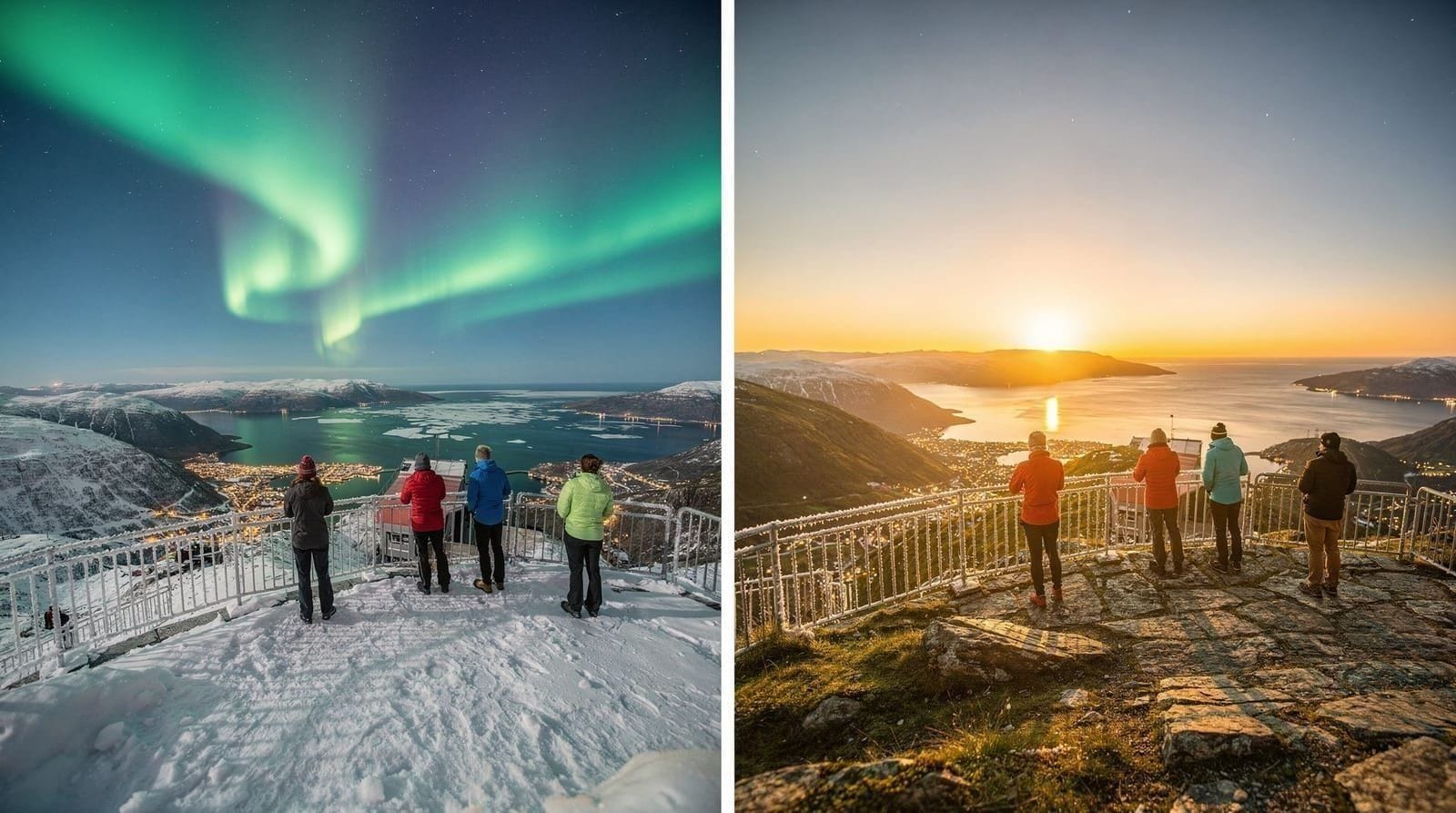
For winter (Nov–Mar), pack a down or synthetic jacket rated to at least -20°C, wool or synthetic base layers, waterproof trousers, insulated boots, and rubber ice grippers for icy pavements. Most aurora tours provide outer suits if you book a reputable operator. For summer (May–Aug), pack waterproofs, layers for temperature swings, sun protection, and a sleep mask for midnight sun.
Packing for Tromsø: the key principle
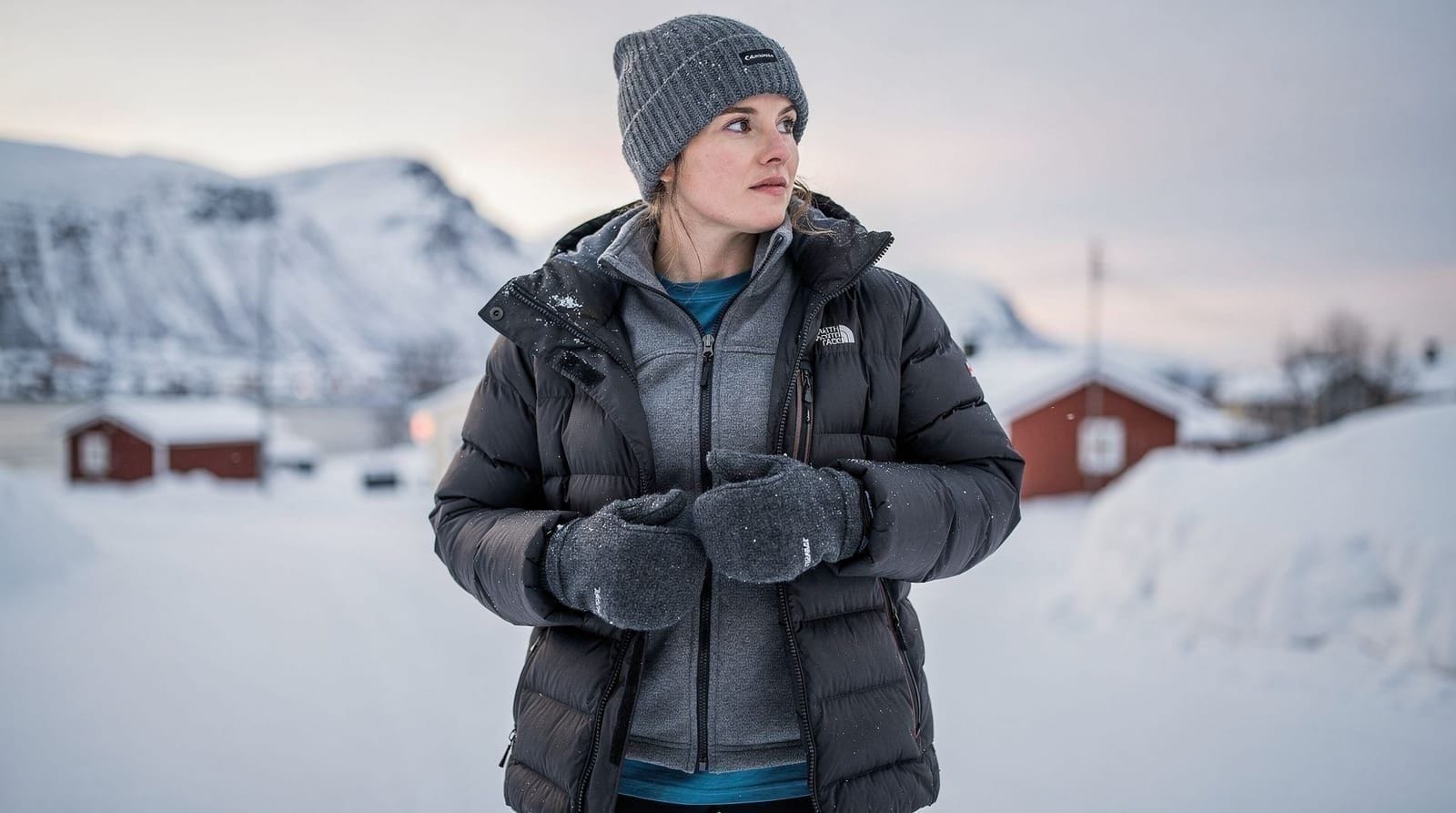
Tromsø packing is governed by one rule: the layering system. Forget anything about single-piece solutions (a “warm coat”) and think in three independent layers — a moisture-wicking base, an insulating mid-layer, and a wind/waterproof shell. This system lets you regulate temperature as you move between cold outdoors, heated buses, restaurants, and tour vehicles.
The second key principle: your tour operator covers the extreme cold. If you book a reputable aurora tour, dog sledding experience, or snowmobile safari, they supply Arctic outer suits that are rated for standing still at -25°C. You do not need to buy those. What you need is the under-layer system to stay comfortable moving through the city and switching between environments.
| Season | Winter (Nov–Mar) needs full Arctic layering; summer (May–Aug) is lighter |
| Cost to buy locally | Ice grippers, hats, wool socks around 100–300 NOK each if you forget them |
| Checked luggage | 23kg checked + 10kg cabin is standard for a winter trip |
| What tours provide | Outer suits, boots for most aurora/dog sledding/snowmobile tours |
| What you must bring yourself | Base layers, mid layer, own boots for city walking |
Winter vs summer packing at a glance
| Winter (Nov–Mar) | Summer (May–Aug) | |
|---|---|---|
| Core layers | Base + mid + waterproof shell | Base layer + light fleece |
| Footwear | Insulated boots rated -20°C + ice grippers | Waterproof hiking boots |
| Extremes | -10°C to -20°C, wind chill | 2°C nights to 18°C midday |
| Special item | Neck gaiter/balaclava | Sleep mask for midnight sun |
| Sun protection | Lip balm SPF, snow glare | SPF 50, insect repellent |
For the seasonal detail behind each column, see Tromsø in January for deep winter and what to wear in Tromsø in winter for the full clothing breakdown.
Winter packing list (November–March)
Clothing
Base layer (×2): Wool or synthetic (Merino wool or Polartec), long-sleeve top and long underwear bottoms. Avoid cotton — it absorbs moisture and loses insulation when damp. Icebreaker, Smartwool, and Devold make excellent Merino options. Synthetic (Patagonia Capilene, Helly Hansen Lifa) dries faster.
Mid-layer: A fleece or down mid-layer jacket. This is your primary insulation when wearing the provided outer suit. It should be packable so you can remove it in warm interiors.
Shell jacket (outer layer): A waterproof and windproof shell. Gore-Tex or equivalent. This goes over the mid-layer when walking the city; it is replaced by the outer suit during guided activities. Note: if your tour provides full suits, you may not need your shell during activities.
Trousers: Waterproof softshell or ski trousers for walking in the city. Jeans are genuinely unsafe — cotton freezes when damp and offers no insulation. Even in the city, you may encounter wind-blown snow or ice melt.
Wool socks (×3–4 pairs): Thick wool hiking socks. Your feet are the first thing to get cold, and cotton socks fail quickly in the wet/cold mix.
Insulated winter boots: Rated to -20°C or lower, waterproof, with a non-slip sole. If your tour provides boots, bring lighter city boots as a supplement — walking around the city in full Arctic boots is heavy.
Winter hat: Covers ears fully. Wool or fleece. Multiple thin layers under a hat work if you do not own a proper winter hat.
Neck gaiter or balaclava: Essential for activities and exposed walks. Wind at -5°C without neck coverage feels brutal.
Gloves (×2 pairs): Liner gloves (thin, touchscreen-compatible) and heavier insulated mittens. You need the liner gloves for using your phone; the mittens go on when you stop moving.
Ice grippers: Small rubber over-sole attachments for your boots. Available in Tromsø at Intersport and XXL for 100–200 NOK. Pack them if you own them; buy them on arrival if not.
If you’re specifically packing for aurora nights or dog sledding, the activity-specific guides go further than a general list can: see what to wear for northern lights and what to wear dog sledding for gear tailored to those exact conditions.
Electronics
Camera: A mirrorless or DSLR with manual settings for aurora photography. Phone cameras have improved significantly but struggle in very dark, cold conditions. The sensor size and low-light performance of a dedicated camera is still noticeably better.
Extra batteries (×2–3): Cold kills batteries fast. A phone battery that lasts 12 hours at room temperature may last 2–3 hours at -15°C. Keep a spare battery in an inside pocket.
Tripod: Essential for aurora photography. A lightweight carbon fibre travel tripod (Joby GorillaPod, Peak Design Travel Tripod) is easier to carry than a heavy studio tripod.
Power bank: A high-capacity model (20,000 mAh) for keeping devices charged through long tour nights. Keep it in an inside pocket for warmth.
Universal adapter: Norway uses the standard European type C/F plug. UK visitors need an adapter.
Toiletries and health
Lip balm with SPF: Even in winter, UV reflects off snow. Lips chap rapidly in dry Arctic air. Moisturiser: Cold dry air and heated hotel interiors are a severe combination for skin. Prescription medications: With pharmacies (Apotek) in the city, minor medications are available, but bring adequate supply of anything prescription. Hand warmers (chemical): The disposable HeatMax-style packets are useful backup for extreme cold photography sessions. Available at Tromsø sports shops.
Summer packing list (May–August)
Summer Tromsø is a different challenge. Temperature swings are large (2°C at night, 18°C midday) and the midnight sun creates unique sleep disruption.
Waterproof jacket: Essential year-round in northern Norway. Summer rain is frequent. Fleece or light down: For cool evenings and early morning hikes. Hiking boots: Waterproof, with ankle support for any trails (Tromsdalstinden, Kvaløya, Senja). Light base layers: Synthetic or merino for hiking. Sun protection: SPF 50 sunscreen. The sun at midnight at low angle is deceptive — serious burns have happened on midnight sun hikes. Sleep mask: Hotel blackout blinds are standard but imperfect. A sleep mask is a useful backup. Insect repellent: Mosquitoes are active in summer in the valleys and marshland areas. Bring DEET-based repellent for Tamok Valley and forested areas.
If summer hiking on Senja or around Kvaløya is on your itinerary, check the hiking gear guide for trail-specific additions beyond this general list, and if a whale watching trip is planned, what to bring whale watching covers the boat-specific layering that differs from land-based activities.
What you do not need to pack
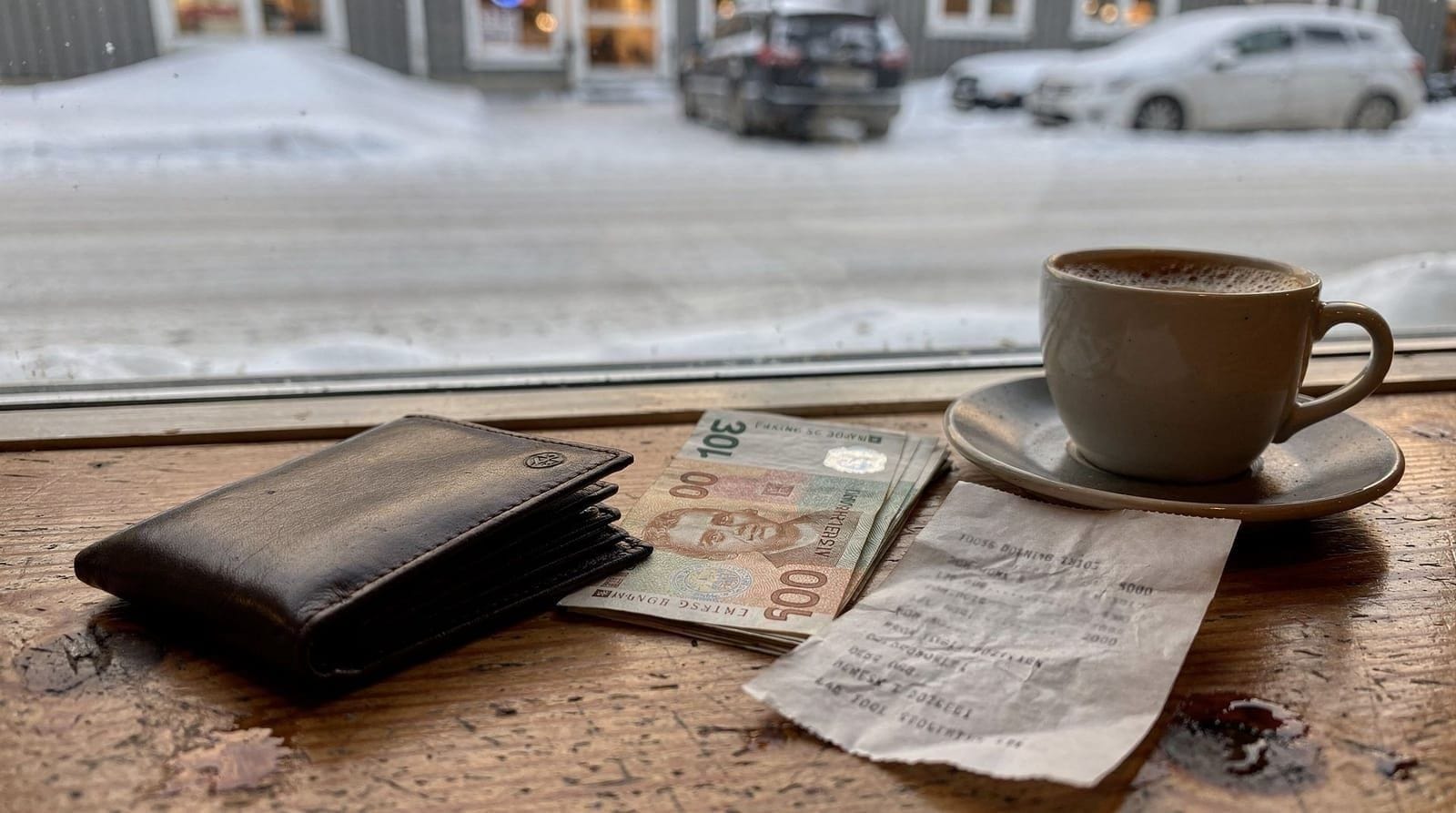
Full Aurora outer suit: Provided by most reputable tour operators. Ski boots: Tours provide these for activities that require them. Huge amounts of cash: Norway is effectively cashless; see the daily budget guide. Voltage converters: Norwegian sockets run 230V/50Hz, standard European.
Aurora tour with thermal gear provided — one less thing to packWhat to buy in Tromsø if you forget it
Brodder (ice grippers): Kitch sporting goods, Intersport, XXL at Sane shopping centre. Quality wool socks: Woolpower and Dæhlie socks are excellent and widely available. Warm hat or balaclava: Every outdoor shop and most convenience stores stock them. Sunscreen: Pharmacies (Apotek 1, Vitusapotek) — widely available. Camera battery: Camera shops or order online to your hotel before arrival.
Luggage strategy
A standard wheeled 23 kg checked bag plus a 10 kg cabin bag is the practical allowance for a winter Tromsø trip. If you are on Norwegian’s cheapest fare (Lowfare), you only have a small personal item for free — add a carry-on or checked bag when booking.
For 4–5 night trips, most travellers manage with a 60 L backpack or a medium wheeled case (22 kg) — winter clothing takes volume but is surprisingly compressible with packing cubes. For guidance on how many days actually make sense for your trip length, see how many days in Tromsø.
If you’re driving yourself rather than joining tours, winter tyres and cabin gear are a separate consideration — see car rental and winter driving in Tromsø for what to check before you leave the rental lot.
Frequently asked questions about packing for Tromsø
Do I really need wool base layers or will synthetic work?
Both work well. Wool (Merino) is better at odour management (you can wear it 2–3 days between washes), naturally temperature-regulating, and comfortable against skin. Synthetic dries faster and is cheaper. Many experienced Arctic travellers use synthetic base layers with wool mid-layers as a compromise.
Can I rent outdoor gear in Tromsø?
Some outdoor shops and tour operators offer gear rental — particularly boots and outer layers. Confirm availability before relying on this; rental inventory can be limited in peak season. The tour operator’s provided Arctic suits are a form of rental included in the tour price.
Is there anything I should not wear in Tromsø in winter?
Cotton in all forms (jeans, cotton hoodies, cotton socks) — it absorbs moisture, dries slowly, and loses insulation when damp. Leather-soled shoes — they provide zero grip on ice. Thin fashion boots — even waterproof ones with thin soles are uncomfortable below -5°C. UV-reactive or very light-coloured lens sunglasses — winter sun glare off snow is real; a standard tinted lens works fine.
How do I pack for both aurora nights and daytime sightseeing?
The key is packing modular. Your base layers and mid-layers do double duty — they are your city walking outfit (under a shell) and your tour outfit (under the provided Arctic suit). You do not need separate wardrobes for “Aurora tour” and “city walking.” The arc of a good winter trip is: base + mid + shell for city; base + mid + operator’s outer suit for activities.
Does the packing list change much between December and January?
Not significantly — the core layering system is the same across the deep winter months. The main difference is daylight rather than gear: see Tromsø in December and Tromsø in January for how the darkness and crowd levels differ, since that affects how many hours you’ll actually spend outdoors after dark.
Should I pack differently for a short 2–3 day trip versus a week?
The gear list is identical regardless of trip length — you need the same layering system whether you’re there for two days or ten. What changes is how many spare base layers and socks you pack, since laundry access is limited on a short trip; bring one set per 2 days as a rule of thumb.
Top experiences
Bookable activities with verified prices and instant confirmation on GetYourGuide.