Snowshoeing in Tromsø — guided tours, terrain, and honest comparisons
From Tromsø: Snowshoeing Hike with Picnic Lunch and Photos
Is snowshoeing in Tromsø worth it?
Yes, for the right visitor. Snowshoeing is the easiest way to access Arctic mountain terrain in winter without skiing skills. Guided tours from Tromsø run November–April, cost 900–1500 NOK per person, and typically include snowshoes, poles, and transport. Most routes are suitable for beginners; the views on a clear day are exceptional.
Snowshoeing is the lowest-barrier way to walk through the Arctic winter landscape. No technique, no rental skis, no prerequisites beyond reasonable fitness. Strap the frames to your boots, adjust the poles, and you are immediately in the mountains in a way that ski lifts and cable cars do not replicate — on foot, at pace, in snow.
In Tromsø, snowshoeing tours run from November to April, operating in the mountains of Tromsøya, Kvaløya, and Tamok Valley. This guide covers what to expect, how to compare operators, and honest assessments of which tours suit which types of visitor.
| Where | Tromsøya, Kvaløya, or Tamok Valley (45–60 min drive) |
| Cost | Around 900–2,000 NOK per person |
| Time needed | 3–6 hours including transport |
| Fitness | Moderate — able to walk 5km on flat ground |
| Best time | November–April, best snow December–March |
What snowshoeing is (and isn’t)
Snowshoes are frames attached to your boots that distribute your weight over a larger surface area, preventing you from sinking into soft snow. Modern snowshoes are lightweight, fast to put on, and require no practice. The adjustment to your gait is minor — you walk slightly wider to avoid stepping on the shoe frames.
This is not a technical activity. The limiting factors are:
- Fitness: You still walk uphill in snow, which is more effort than summer walking. A 400 m elevation gain on snowshoes in 2 hours is hard work.
- Cold: Fingers, toes, and face are exposed. Proper layering matters more than technique.
- Terrain choice: On flat or gentle slopes, anyone can snowshoe. On steep slopes, it becomes a traction exercise and guides must know which slopes are avalanche-safe.
Guided tours in Tromsø — what’s available
Small-group snowshoeing with picnic lunch
The most complete beginner-friendly option. Transport from Tromsø, 2–4 hours of snowshoeing on terrain selected for snow quality and safety, a hot drink and picnic in the snow, guided return. Suitable for anyone who can walk 5 km on flat ground.
Cost: 1500–2000 NOK per person. Duration: 4–6 hours including transport.
Shorter scenic snowshoe hike (3 hours)
A shorter version without the picnic — transport, 2–3 hours of guided snowshoeing, return to Tromsø. Better for those with limited time or those combining with another activity the same day.
Arctic snowshoe hike
Slightly more active tours targeting terrain with better views — typically requiring moderate fitness. Duration 4–5 hours.
Snowshoeing plus ice domes at Camp Tamok
Camp Tamok in Tamokdalen valley (45 minutes from Tromsø) is a winter activity camp with the only guided ice domes in the Tromsø region. The combo tour — snowshoe hike plus guided walk through ice structures — is a distinctive experience, particularly good for those who want variety.
Snowshoeing plus husky camp visit
A combination of snowshoe hike with a visit to a husky kennel on Kvaløya. The hike component is typically 2–3 hours; the kennel visit includes time with the dogs and a hot drink.
Snowshoeing with reindeer
A snowshoe hike combined with a visit to grazing reindeer, guided by a local herder who explains Sami reindeer husbandry. A gentler pace than the picnic-lunch tour, with more time spent with the animals. Typically 3–4 hours including transport.
What terrain do snowshoe tours use?
Most guided tours around Tromsø operate in one of three main areas:
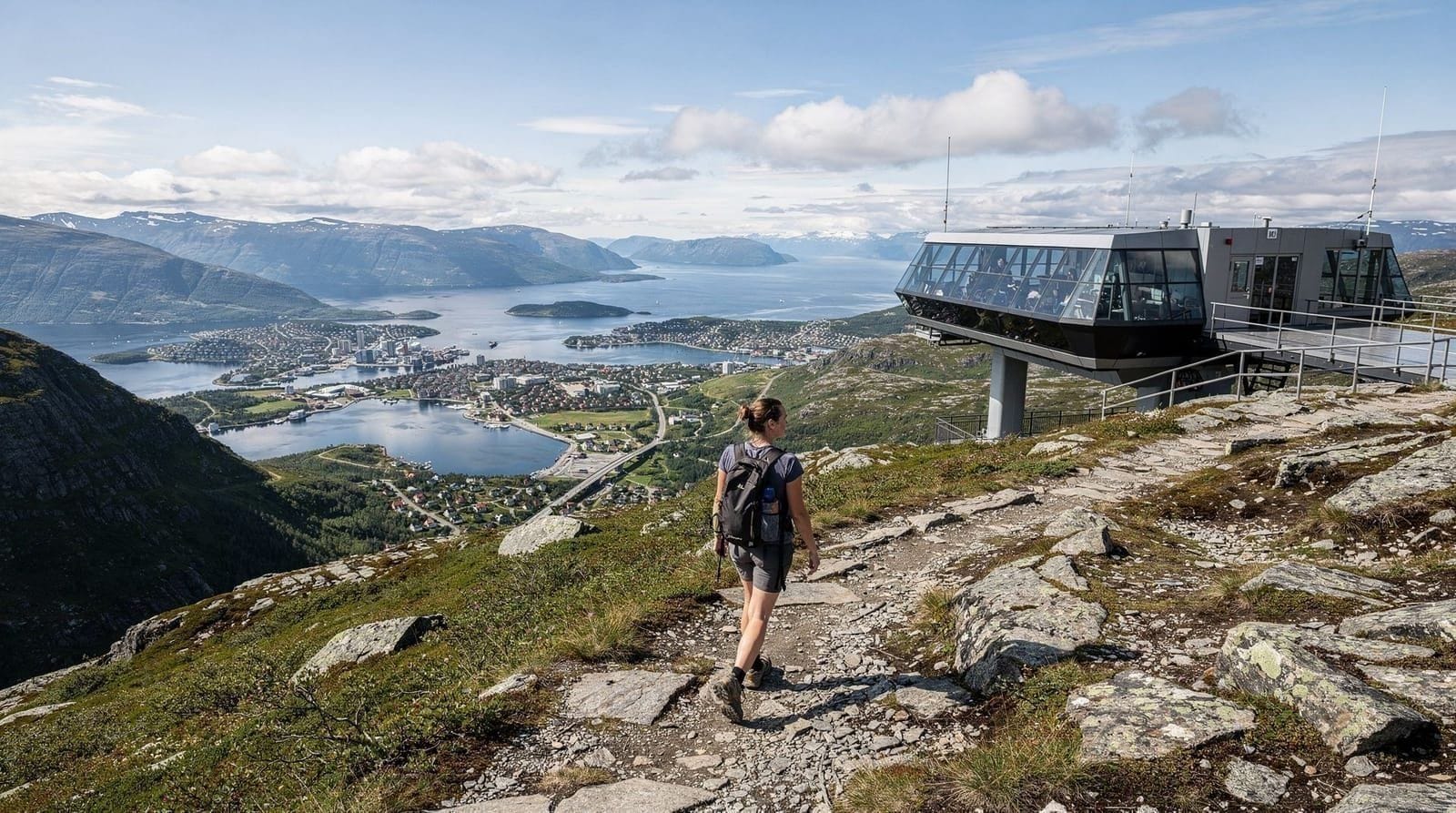
Tromsøya (the city island itself): Small hills above the cable car area. Close to the city, limited elevation, but quick access and less driving. Good for very short tours.
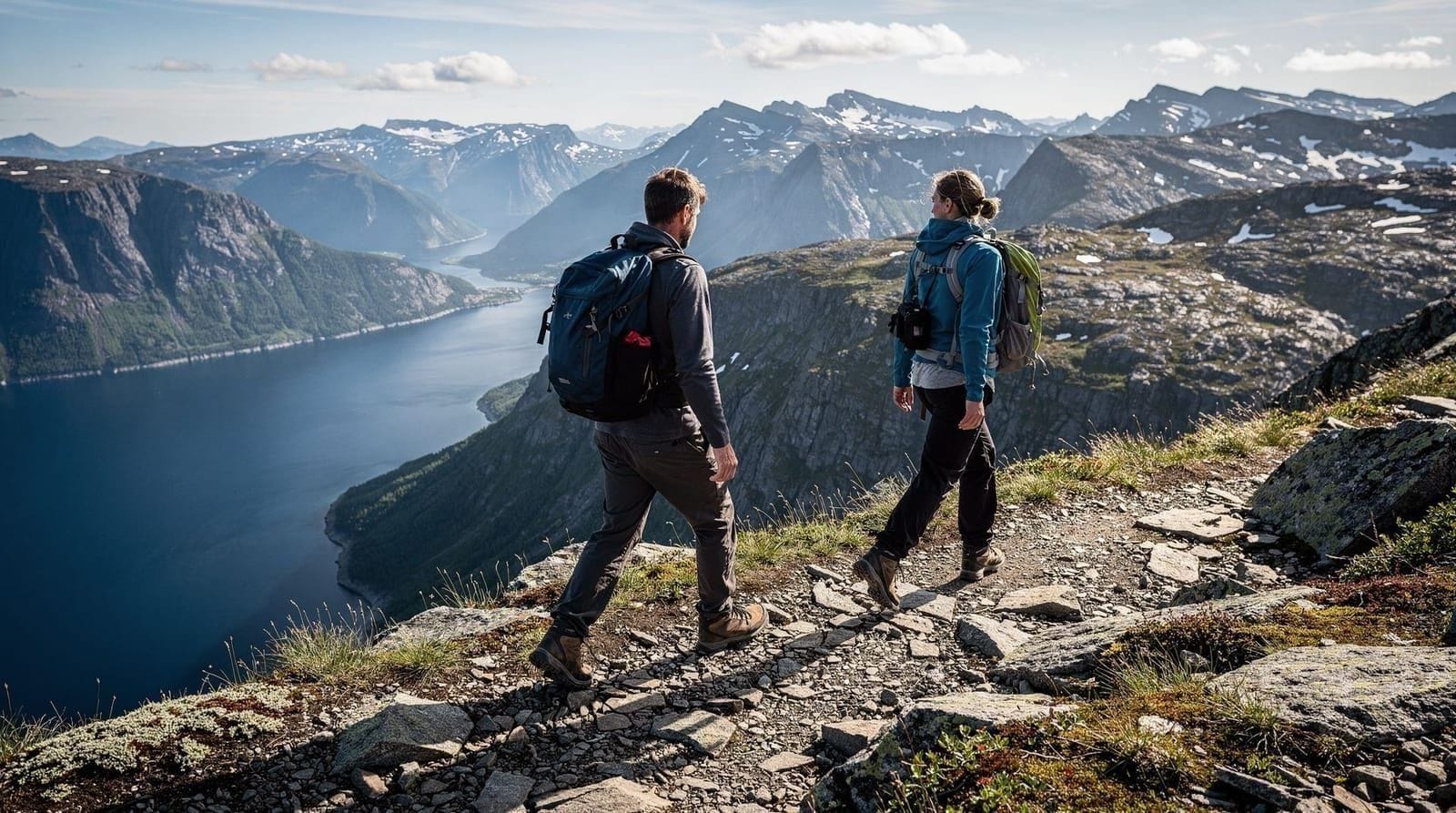
Kvaløya: The large island west of Tromsøya. 20–30 minute drive. Open moorland above the treeline at 200–400 m elevation. Popular for longer tours with fjord views.
Tamok Valley: 45–60 minutes from Tromsø. Valley terrain with higher surrounding peaks. Home to Camp Tamok. Terrain is more dramatic but more driving required.
Self-guided snowshoeing — is it safe?
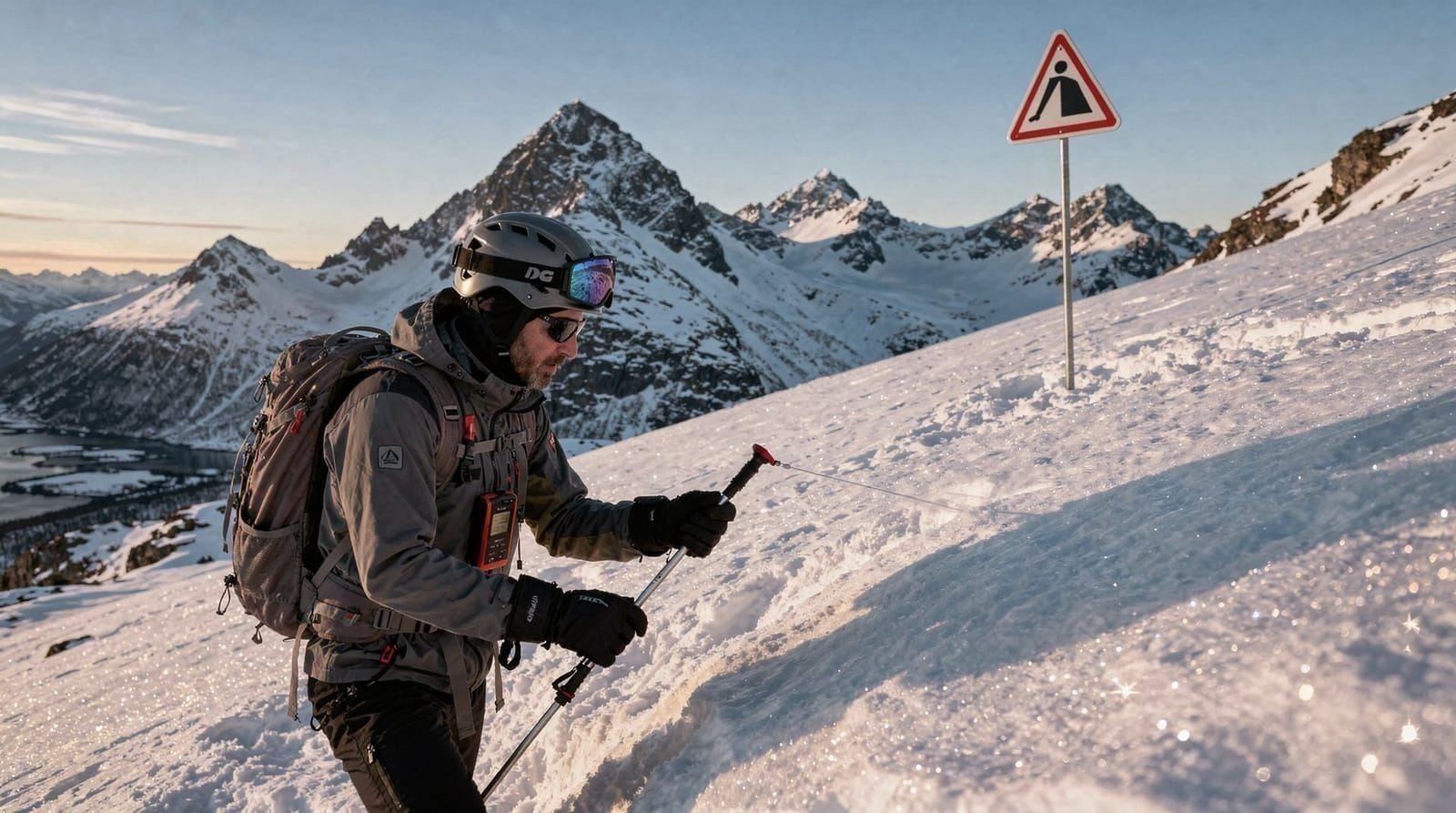
Low-angle terrain well within forested or moorland zones is generally safe for self-guided snowshoeing. What requires caution is:
- Slopes above 30 degrees: These can avalanche in unstable snow conditions
- Crossing below convex rolls in the snow: May indicate wind-loaded slabs above
- Unknown terrain: If you don’t know the drainage patterns and slope aspects, you can’t assess avalanche risk
Read our hiking safety and avalanche guide before going solo. Check varsom.no (Norwegian Avalanche Warning Service) for daily danger ratings in your intended area.
If renting snowshoes independently from a Tromsø outdoor shop, ask specifically about safe areas in current snow conditions — shop staff often have local knowledge.
What to wear for snowshoeing
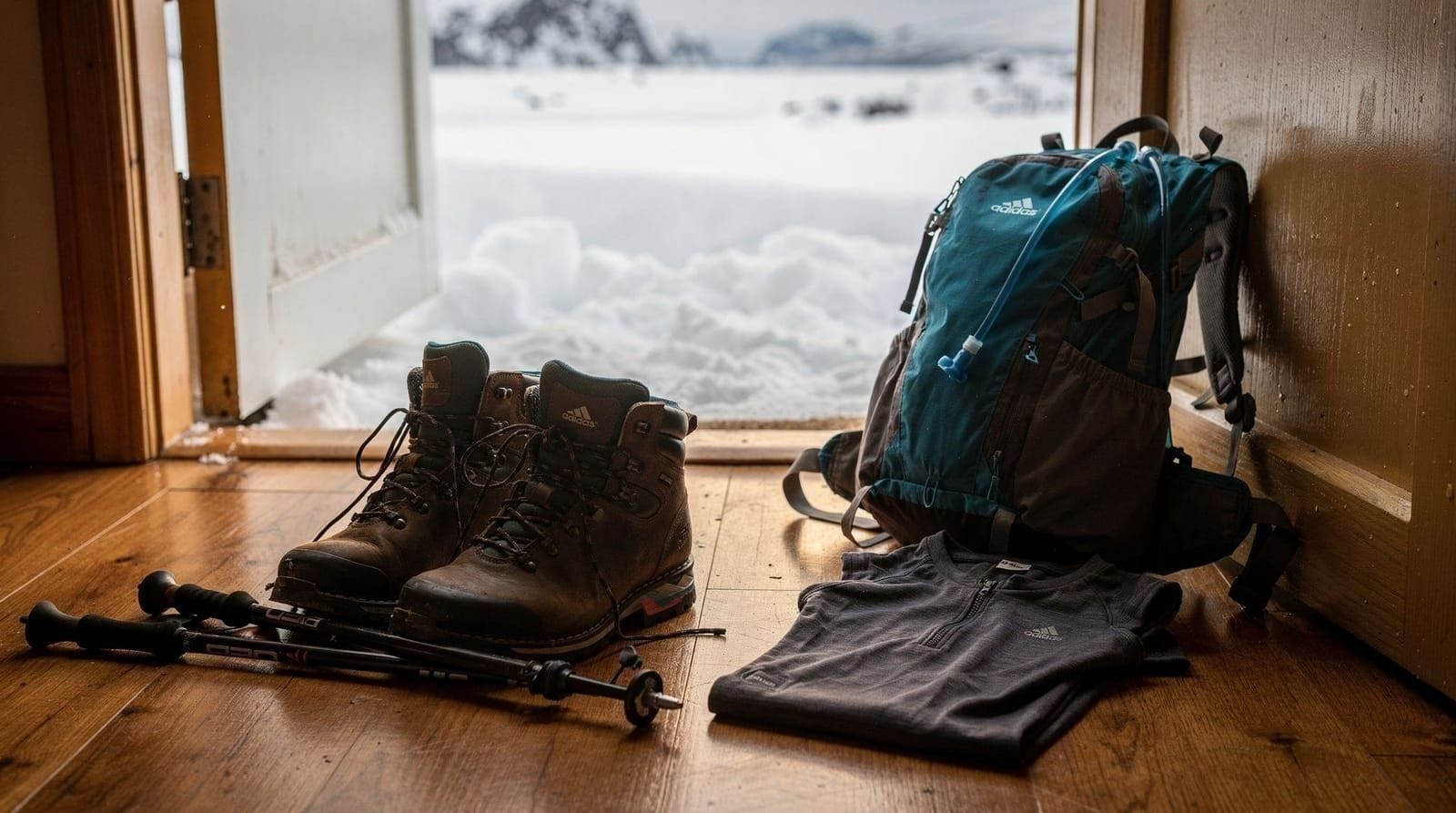
Getting cold is the main comfort risk. Getting wet (from sweat on the inside, or from falling in snow) compounds it. The layering principle:
Base layer: Merino wool or synthetic moisture-wicking — not cotton. A sweaty cotton base layer in -10°C is a hypothermia risk.
Mid layer: Fleece or light down. Zippable to regulate temperature on uphill sections.
Outer layer: Wind/waterproof jacket. Also waterproof trousers — you will be in snow.
Hands: Thin liner gloves plus a warm outer mitten. Fingers get cold on poles.
Head: A hat that covers your ears. A balaclava for polar night temperatures below -10°C.
Feet: Waterproof hiking boots or winter boots with good ankle support. Guides usually check your footwear before setting off. Thin wool sock liner plus a thicker outer sock.
Gaiters: Not essential on guide-led tours to maintained terrain, but very useful for deeper powder.
Full kit list at our hiking gear guide for Tromsø.
When to book
December–February: Best snow conditions, polar night atmosphere (if that appeals to you), cold (-5 to -15°C). Tours may operate in limited daylight or blue twilight — unusual and atmospheric.
March: The transition month. Longer daylight returns (4–6 hours by mid-March). Snow is often at its most stable and best quality.
April: Daylight returns significantly. Snow at lower elevations starts melting; higher terrain still has excellent conditions. Popular for longer tours to higher elevations.
Snowshoeing in polar night — what to expect
During polar night (27 November–15 January), snowshoe tours operate without direct sunlight. The sky is a blue-grey twilight for a few hours around midday; tours often operate in headtorch conditions in early morning or evening slots.
This is not a problem — it is an attraction for many visitors. Snowshoeing through a silent, dark Arctic forest with headtorches on, then emerging into the blue twilight of a mountain plateau, is one of the distinctive winter experiences that Tromsø offers. If northern lights appear while you are above the treeline, the effect is exceptional.
Snowshoeing in polar night — the atmosphere factor
Snowshoeing during polar night (27 November–15 January) is a different experience from the same activity in February or March. During polar night, there is no direct sunlight at any point in the 24-hour period. Tours that run in the morning slot (09:00–12:00) operate in a blue-purple twilight; tours in the afternoon operate in complete darkness with headtorches.
This sounds like a drawback. For some visitors it is; for others, it is the point. Snowshoeing through a silent, snow-covered birch forest at midnight with headtorches on — your breath visible, the snow blue-white, complete silence except for the crunch of your shoes — is one of the most distinctively Arctic experiences available in Tromsø. If the sky clears above the treeline, the Milky Way is visible with a clarity that is impossible from any urban area.
When the northern lights appear during a polar night snowshoe tour, the effect is exceptional. You are already above the treeline, on snow, in darkness — the best possible viewing conditions.
Snowshoeing vs other winter activities
How does snowshoeing compare to the other winter activity options in Tromsø?
| Activity | Cost (approx) | Physical demand | Skill needed |
|---|---|---|---|
| Snowshoeing | 900–1500 NOK | Moderate | None |
| Dog sledding | 2400–3500 NOK | Low | None (passenger) |
| Reindeer sledding | 1000–1800 NOK | Very low | None |
| Aurora tour | 900–2500 NOK | Low | None |
| Snowmobile | 1500–2500 NOK | Low-moderate | Minimal |
Snowshoeing sits in a useful middle ground — it is active (you move through the landscape on foot rather than being transported), affordable relative to dog sledding or snowmobile, accessible to beginners, and gives you an hour or more of genuine mountain terrain exposure. For visitors who want more than an observation experience but are not experienced winter mountaineers, it is often the ideal fit.
Snowshoeing routes — what terrain is used
Most guided snowshoe tours from Tromsø use three main terrain types:
Forest and birch treeline zones (200–400 m elevation): Protected from wind, pleasant snow quality, scenic in both polar night (snow-loaded birch branches, headtorch ambience) and late winter (low sunlight through bare branches). Suitable for all fitness levels.
Open moorland above treeline (400–600 m): This is where the views open up — fjord below, mountain ridges around, the city visible in the distance. Wind exposure increases significantly. At these elevations in February–March, the alpine glow (short windows of pink-orange light on the mountain peaks) is outstanding.
Valleys with mountain backdrops (Tamok, some Kvaløya routes): The most dramatic scenery but requires more driving. Camp Tamok at 45–60 minutes from Tromsø has valley terrain flanked by the Tamok Alps — excellent backdrop for photographs.
What distinguishes good from mediocre snowshoe tours
Tromsø has numerous operators. The differences between them:
Guide quality: A good guide identifies wildlife tracks in the snow, explains Norwegian mountain ecology, adjusts pace to the group, and monitors conditions continuously. A less engaged guide just walks and waits.
Group size: Tours of 6–8 people allow the guide to maintain group cohesion and give individual attention. Tours of 12–20 people become harder to manage on narrow terrain.
Equipment quality: Modern lightweight snowshoes (MSR, Atlas) are significantly better than older heavy aluminum frames. Check photos of the operator’s equipment before booking.
Terrain selection: An operator who adjusts their route based on current snow conditions and avalanche risk (rather than running the same route regardless) is demonstrably safer and more professional.
When comparing options on booking platforms, read reviews specifically mentioning guide knowledge and group size rather than just overall rating.
If you want more speed or more comfort
Snowshoeing sits deliberately in the middle of the winter-activity range. If you want to cover more ground faster and don’t mind engine noise, a snowmobile safari trades quiet immersion for distance and speed — the driving-licence and safety rules are covered in our snowmobile safety and licence guide. If you’d rather stay warmer and let animals do the work, dog sledding is the closest low-effort alternative with a similar Arctic-forest setting.
Frequently asked questions about snowshoeing in Tromsø
How much does a snowshoeing tour cost?
Guided tours cost 900–1500 NOK for standard options, up to 2000 NOK for longer tours with lunch. Prices usually include snowshoe rental, poles, and transport from central Tromsø.
Do I need experience?
No — snowshoeing is beginner-accessible. If you can walk 5 km on flat ground, you can join most guided tours.
When is the snowshoeing season?
November–April. December–March has the most reliable snow. April has the best daylight-to-snow combination.
Can I rent snowshoes independently?
Yes, from outdoor retailers in Tromsø. Independent snowshoeing on low-angle terrain is safe; check varsom.no for avalanche risk before going above 400 m on steeper terrain.
Are snowshoe tours family-friendly?
Most operators welcome children from age 6–8. Children’s snowshoes are available. Check minimum age with your specific operator.
What’s the best snowshoe tour combo?
Snowshoeing plus ice domes at Camp Tamok is the most distinctive. Snowshoeing plus husky camp is good for families who want dog interaction.
Top experiences
Bookable activities with verified prices and instant confirmation on GetYourGuide.