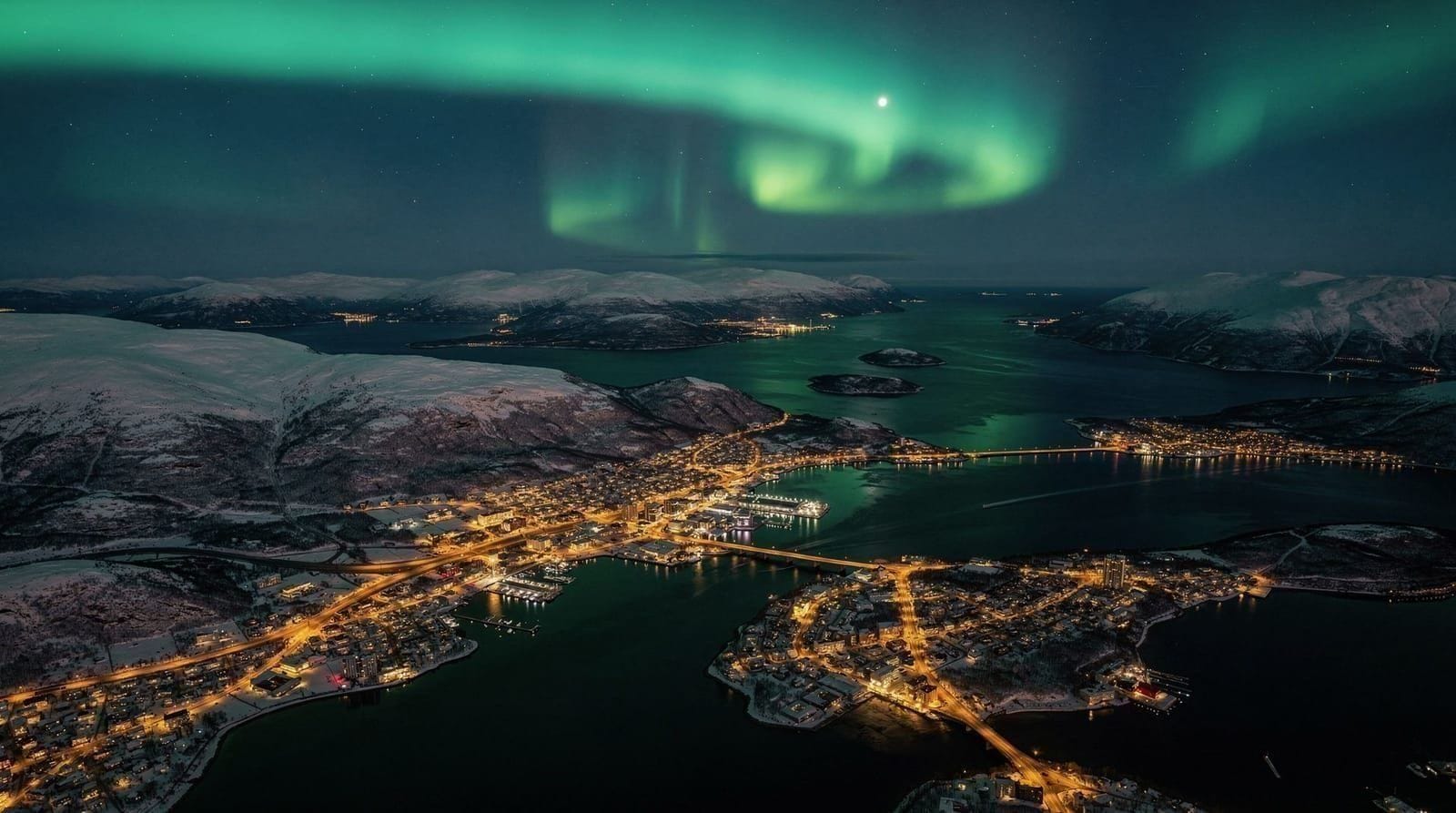
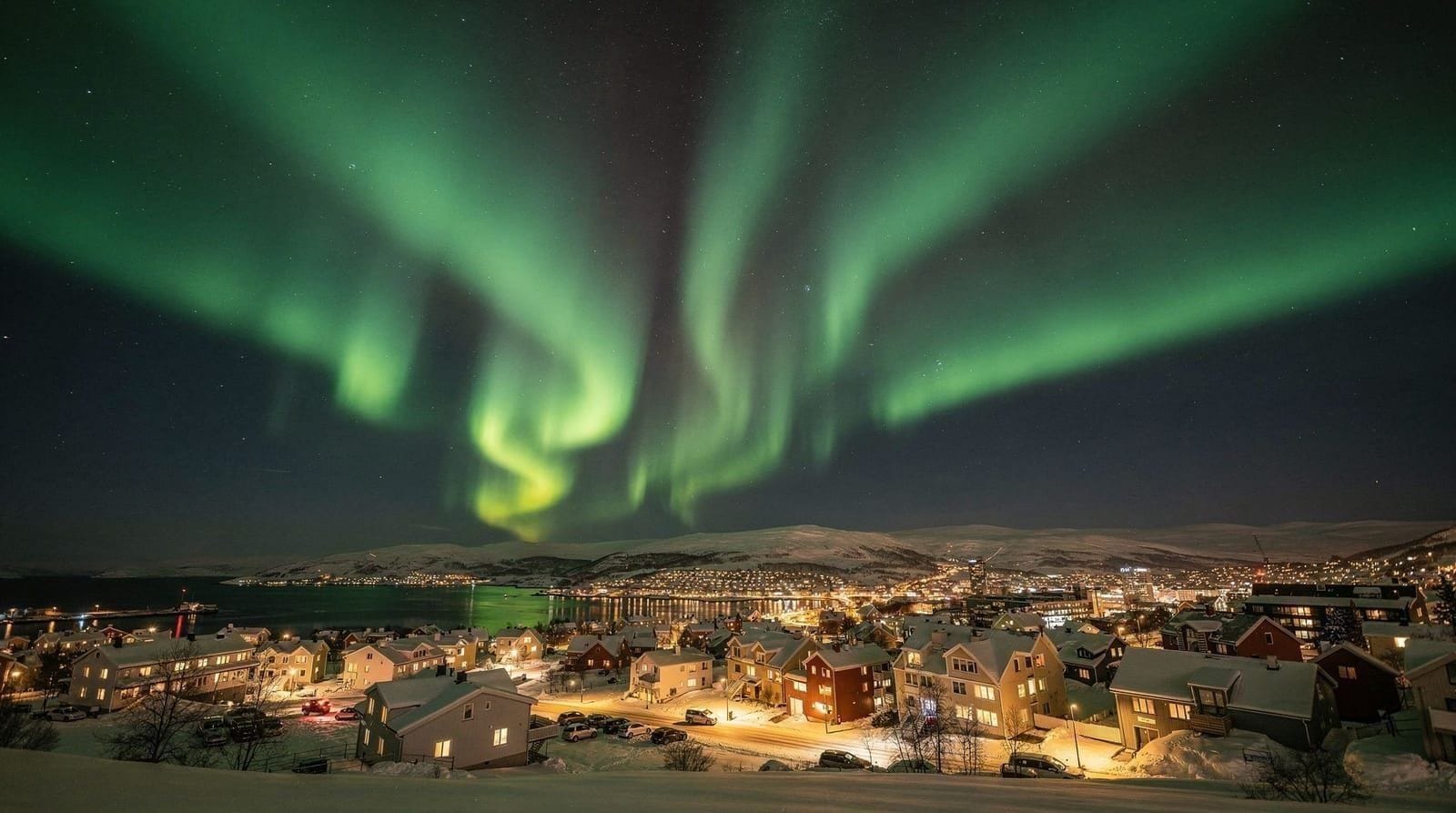
Best time to see the northern lights in Tromsø
Tromsø: Expert Aurora Hunt - Thermal Gear, Food, Campfire
When is the best time to see the northern lights in Tromsø?
The statistical sweet spot is November through January, when polar night gives you 18+ hours of darkness and solar activity peaks coincide with clear Arctic air. September and February–March are strong alternatives with more daylight for daytime activities.
Quick answer: The best months to see the northern lights in Tromsø are November through January, when polar night delivers up to 18–19 hours of darkness per night. September and February–March are close runners-up and combine good aurora odds with some daylight for sightseeing.
| Where | Tromsø and surrounding areas, 69.6°N inside the auroral oval |
| Cost | Around 1,700–2,200 NOK for a standard guided tour; 2,500–3,500 NOK for photography or luxury cruise options |
| Time needed | One evening minimum (6–8 hours); a 3–5 night stay improves your odds significantly |
| Getting there | Guided minibus tour, self-drive, or catamaran cruise from central Tromsø |
| Best time | November–January for maximum darkness; February–March for the best balance of clear skies and daylight |
Understanding the aurora season calendar
Tromsø sits at latitude 69.6°N, squarely inside the auroral oval — the ring around the magnetic pole where geomagnetic storms produce the most intense displays. This means aurora is theoretically visible on almost any clear, dark night from September through April.
The word “theoretically” is doing heavy lifting there. The real-world variables are:
- Darkness — you need it to be genuinely dark
- Solar activity — the sun has to be cooperating
- Cloud cover — the most unpredictable variable
The season begins in practice around mid-August, when Tromsø finally gets dark enough after midnight for a faint glow. Most operators start running tours in mid-September. The season officially closes when the midnight sun returns around 20 May, though April sightings require a strong storm.
Month-by-month breakdown
September: Darkness returns after the midnight sun. Aurora is active but sky conditions are mixed — warm and cold air masses clash and produce cloud. Sighting probability on a given night is perhaps 30–40% with a tour that chases clear skies. Read our dedicated September aurora guide for this month’s specific approach.
October: Days shorten fast. By mid-October, civil twilight ends by 18:00. Good aurora month, underrated, often cheaper accommodation. Snow hasn’t consolidated in the mountains yet.
November–December: Polar night begins 27 November and lasts until 15 January. The sun does not rise above the horizon for 49 days. This is peak darkness and the most dramatic conditions — deep blue twilight by midday, then absolute night. Statistically the best window. Downside: you’ll have little to do during “daylight” hours unless you embrace the dark (dog sledding, snowmobiling, Fjellheisen cable car to see the purple twilight arc).
January: Polar night ends 15 January. Still excellent for aurora, and the first glimmers of returning sunlight make for striking landscape photos. Temperatures often reach -15°C to -20°C in calm periods — dress accordingly.
February–March: Many aurora veterans argue this is the best overall period. Solar activity statistically peaks around the equinoxes. Daylight is back — 6–8 hours in February, 12+ by late March — meaning you can combine proper daytime activities with evening aurora hunts. Prices stay high but skies tend to be clearer than November.
April: The season winds down. Light evenings arrive quickly. Aurora is still possible on dark clear nights but requires KP 3+ and luck. Most tours operate through mid-April, then stop.
What actually controls your sighting odds
Solar activity (KP index)
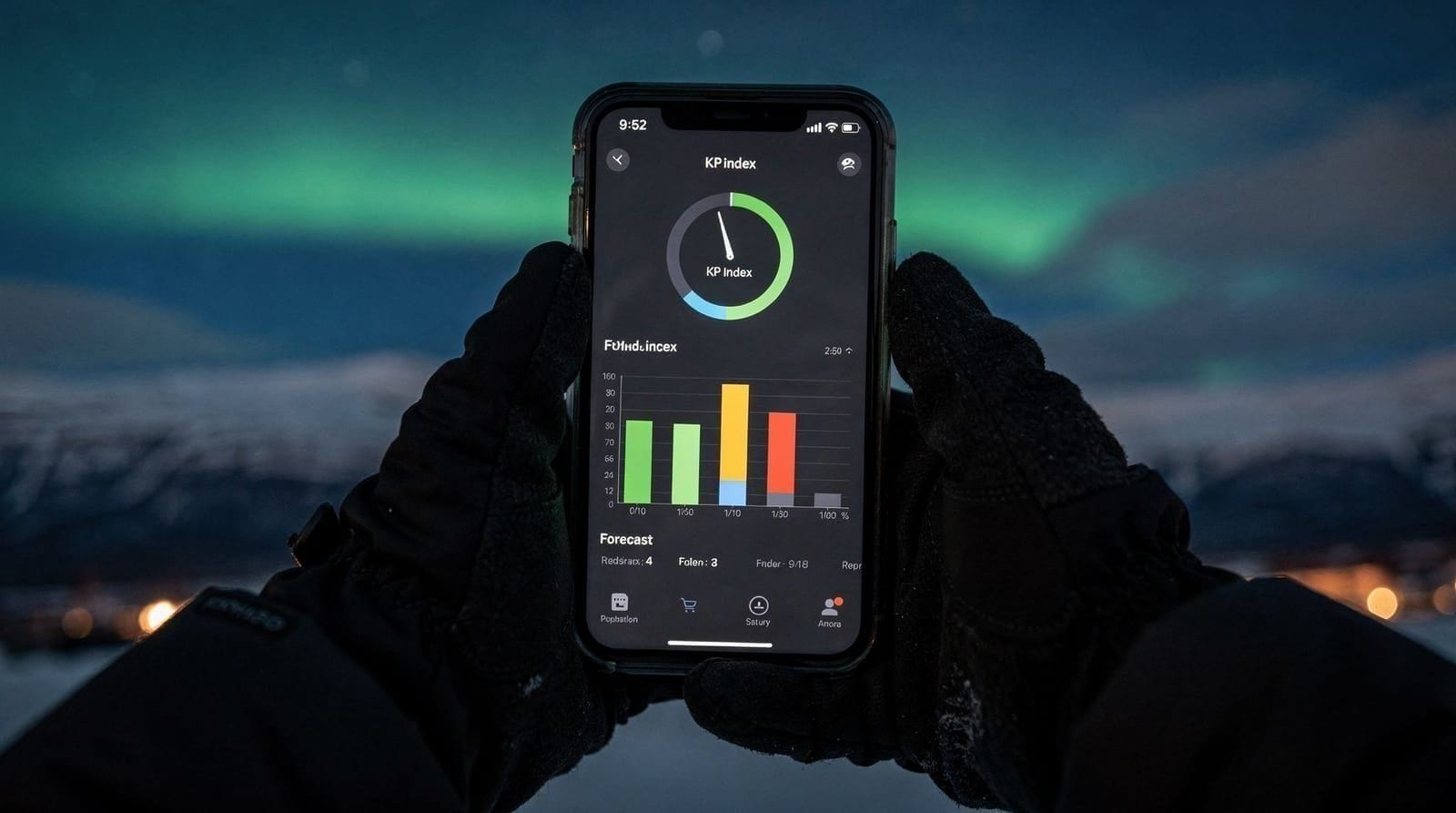
The KP index runs from 0 to 9 and measures geomagnetic disturbance globally. At Tromsø’s latitude, aurora is visible at KP 1–2 under dark clear skies. KP 3–4 gives bright, structured displays. KP 5+ (minor storm) can produce all-sky displays visible even through thin cloud.
The sun follows an approximately 11-year cycle. Solar maximum — peak sunspot and flare activity — is expected around 2025–2026, meaning the next several seasons are among the best in a decade for raw solar output. See our aurora forecast and KP explained guide for how to read the apps.
Polar night and darkness hours
| Month | Darkness window |
|---|---|
| September | ~8–10 hours dark |
| October | ~13–15 hours dark |
| November | ~18–19 hours (polar night begins) |
| December | Polar night (no sunrise) |
| January | Polar night ends 15 Jan; ~16 hours by month end |
| February | ~13–14 hours dark |
| March | ~11 hours dark (equinox) |
| April | ~8 hours dark |
More darkness means more chances per night. November–January wins on this metric.
Cloud cover — the real obstacle
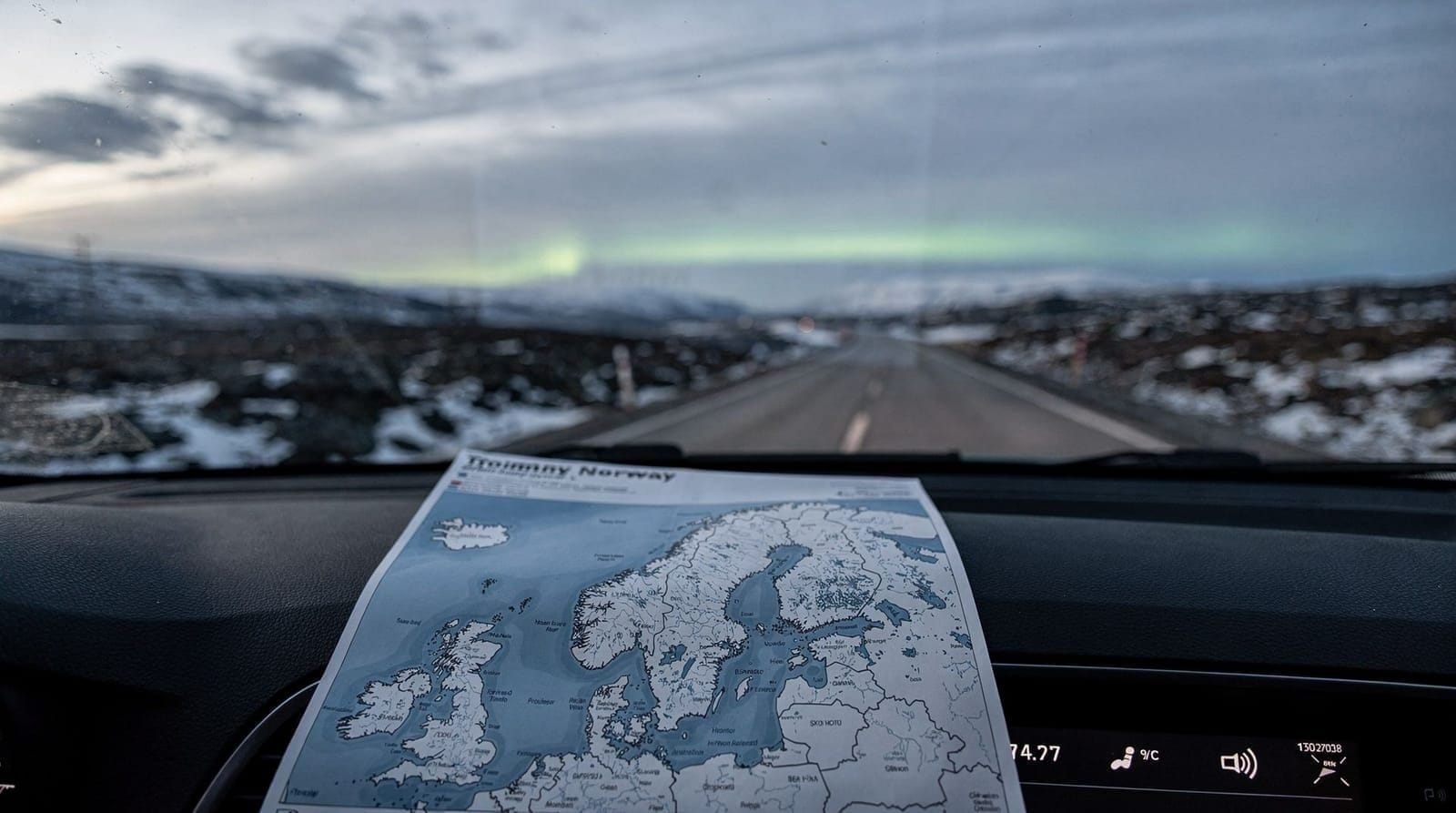
Tromsø averages around 170 cloudy days per year. The fjord position means maritime air masses bring frequent overcast. The escape strategy: drive inland. Tamok Valley 50 km southeast, the plateau near Lyngen Alps, and the Finnish border region all experience clearer skies when Tromsø is socked in.
This is why guided tours that drive flexibly often outperform staying in one scenic spot and hoping for a hole in the clouds. Read our aurora cloud strategy guide for the full approach.
Tour vs. self-drive in each season
Expert aurora hunt tours include thermal suits and campfire — essential in November–January when temperatures drop to -10 to -20°C.In September, self-drive is genuinely viable — roads are dry, visibility is normal, and you can follow cloud-break forecasts on yr.no. In November–January, unless you have experience driving on snow-covered Arctic roads, a guided tour is the wiser choice. Operators carry safety gear, know the road conditions, and have local intelligence on where the cloud gaps are.
Small-group minibus tours are the most flexible — a good guide can divert 100 km to find clear skies, something you can’t easily do solo at midnight on an icy road.For those who want the ship-based experience, cruise aurora tours work year-round through the season — getting out onto the fjord eliminates coastal cloud patches. See our northern lights from cruise ships guide.
What to budget for
Standard guided aurora tour: 1,700–2,200 NOK per person for a 6–8 hour minibus tour with thermal suit loan, hot drinks, and campfire. Photography-focused small-group tours run 2,500–3,500 NOK. Luxury catamaran cruises: 2,200–3,500 NOK.
All-inclusive hunts averaging 7–8 hours cover more ground and typically have the best second-chance guarantee terms.Peak season (Dec–Jan) prices are highest. September and March tend to be 10–20% cheaper with similar or better sighting odds.
Practical: when to book
Book at least 4–8 weeks ahead for December and January — popular tours fill months in advance. September and March have more availability. Look for free-cancellation options in case the forecast turns bad during your stay.
The tromso aurora chooser tool on this site compares tour types by month and helps you match budget and timing.
How many nights should you plan for?
A single night can absolutely deliver a spectacular display, but aurora hunting is fundamentally a probability game, not a guarantee. Statistically, a 3-night stay during peak season (November–January) with an active chase strategy gives you a meaningfully better chance of at least one strong sighting than a single night — most operators quote something close to an 80%+ chance of aurora visibility over three nights of active searching, weather permitting. If your schedule allows it, budgeting three or more nights specifically for aurora, rather than one night squeezed between other activities, is the single biggest lever you control. See the how many days in Tromsø guide for how this fits into a broader itinerary alongside whale watching, dog sledding, or a Fjellheisen visit.
Where you stay affects your odds too
Location matters beyond just picking the right month. Staying in Tromsø city centre is convenient for tours and restaurants but means more ambient light pollution if you try to spot aurora casually from your window. If you’re self-driving and chasing clear skies independently, staying somewhere with easier access to Kvaløya or the road toward Tamok Valley can shave 20–30 minutes off a spontaneous late-night dash when the forecast suddenly clears. For most visitors relying on guided tours, this matters less — the guide does the driving regardless of where you’re staying.
Frequently asked questions about the best time to see northern lights
Is November or January better for aurora in Tromsø?
Both are inside polar night and are excellent. November tends to have slightly more cloud; January can be colder (-15°C is common) but with returning light in the second half of the month adds a bit of variety. January is marginally preferred by photographers for the dramatic twilight backdrop.
Do northern lights appear every night in winter?
No. Even in peak season, a given night’s aurora depends on both solar activity (which can be forecast 1–3 days out) and clear skies (much harder to predict). In a 7-night trip in December, statistically expect 2–4 sighting nights if you actively chase with a tour. Some visitors see aurora on 5 out of 7 nights; others see nothing.
Can you see aurora in the daytime?
No. The lights are only visible in darkness. During polar night that means effectively all afternoon and evening; in September it means the late evening window.
Is aurora visible from Tromsø city itself?
Yes, when conditions are strong enough (KP 3+) and the sky overhead is clear, the lights can be seen from the city waterfront. Light pollution reduces contrast — drive 10–20 km out of town for best results, or join a tour that positions you away from city glow.
Should I pick a boat tour or land tour?
Land tours offer flexibility to chase clear skies over large distances. Boat tours get you away from coastal cloud and fjord-fog. Both are legitimate strategies; choose based on whether you prefer cozy hot-drink-by-campfire (land) or being out on the water (boat). Read our northern lights tours compared guide for a full breakdown.
What if I only have one night?
Focus the entire evening on maximizing conditions: check the yr.no forecast, pick a tour that drives flexibly, and stay outside from dusk to midnight. One good night is enough — plenty of visitors see spectacular displays on a single attempt.
Are aurora forecasts reliable?
The NOAA 3-day forecast is reliable for large storms (KP 5+). The spaceweather.com short-term forecast is good 1–2 hours ahead. At Tromsø’s latitude even a KP 2 can produce visible aurora, so don’t write off a night just because the forecast is low.
What is the aurora season start date each year?
Tromsø gets dark enough for aurora viewing around mid-August, though tours typically start running in mid-September when there’s a reasonable window of darkness and when solar activity justifies the cost. September 10–15 is a reliable “start of practical season” marker each year.
Top experiences
Bookable activities with verified prices and instant confirmation on GetYourGuide.