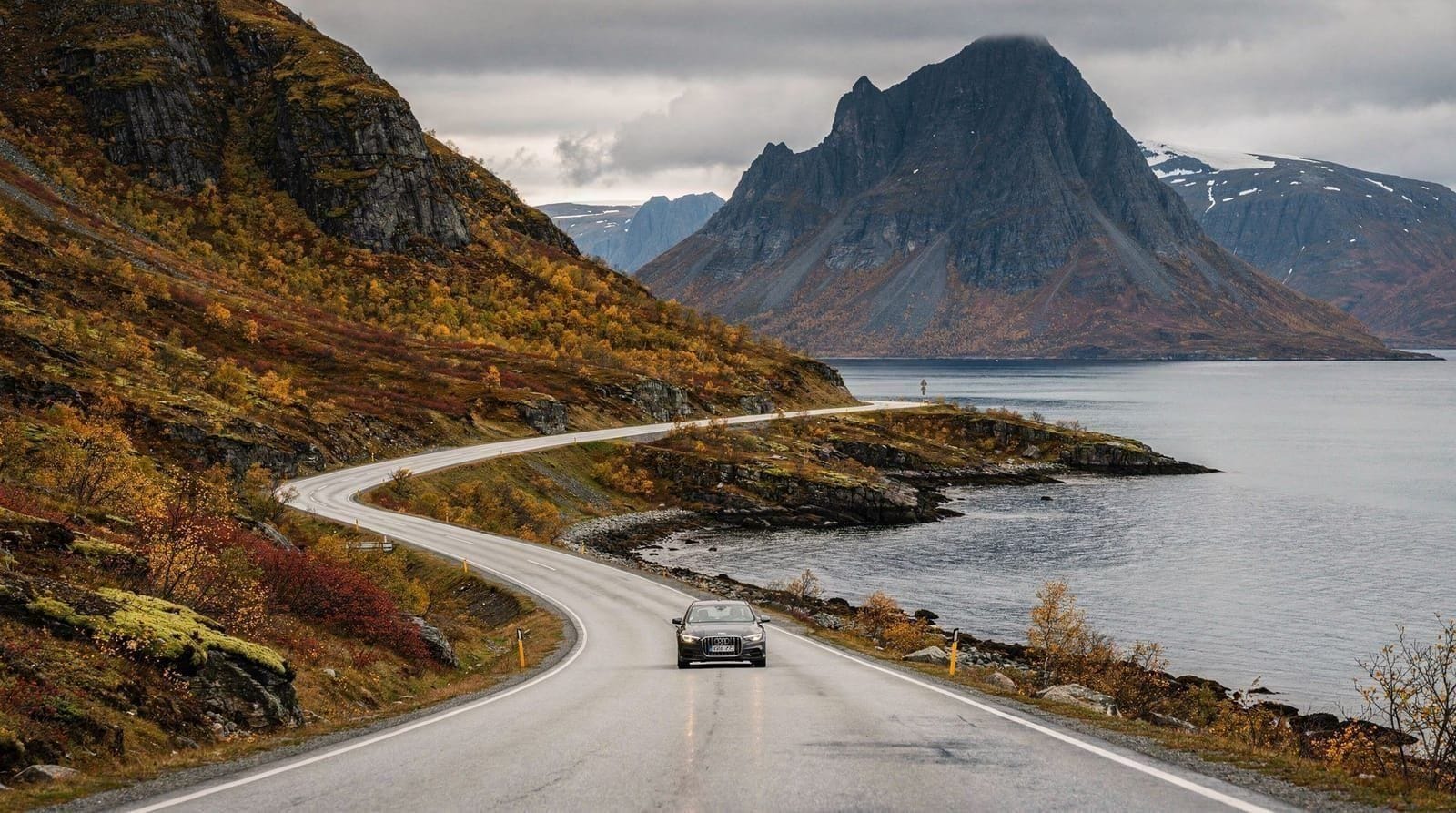
Car rental and winter driving in Tromsø — the honest guide
Tromsø: Lyngen Alps Sightseeing Tour with Lunch
Is it safe to rent a car and drive yourself in Tromsø in winter?
Yes, but it requires preparation. All rental cars come with studded winter tyres from November to April. Roads in the city are well-gritted. Mountain passes to Lyngen and Senja can close in heavy storms, but major roads are ploughed quickly. Drive slowly, give extra braking distance, and you will be fine.
Why driving yourself makes sense around Tromsø
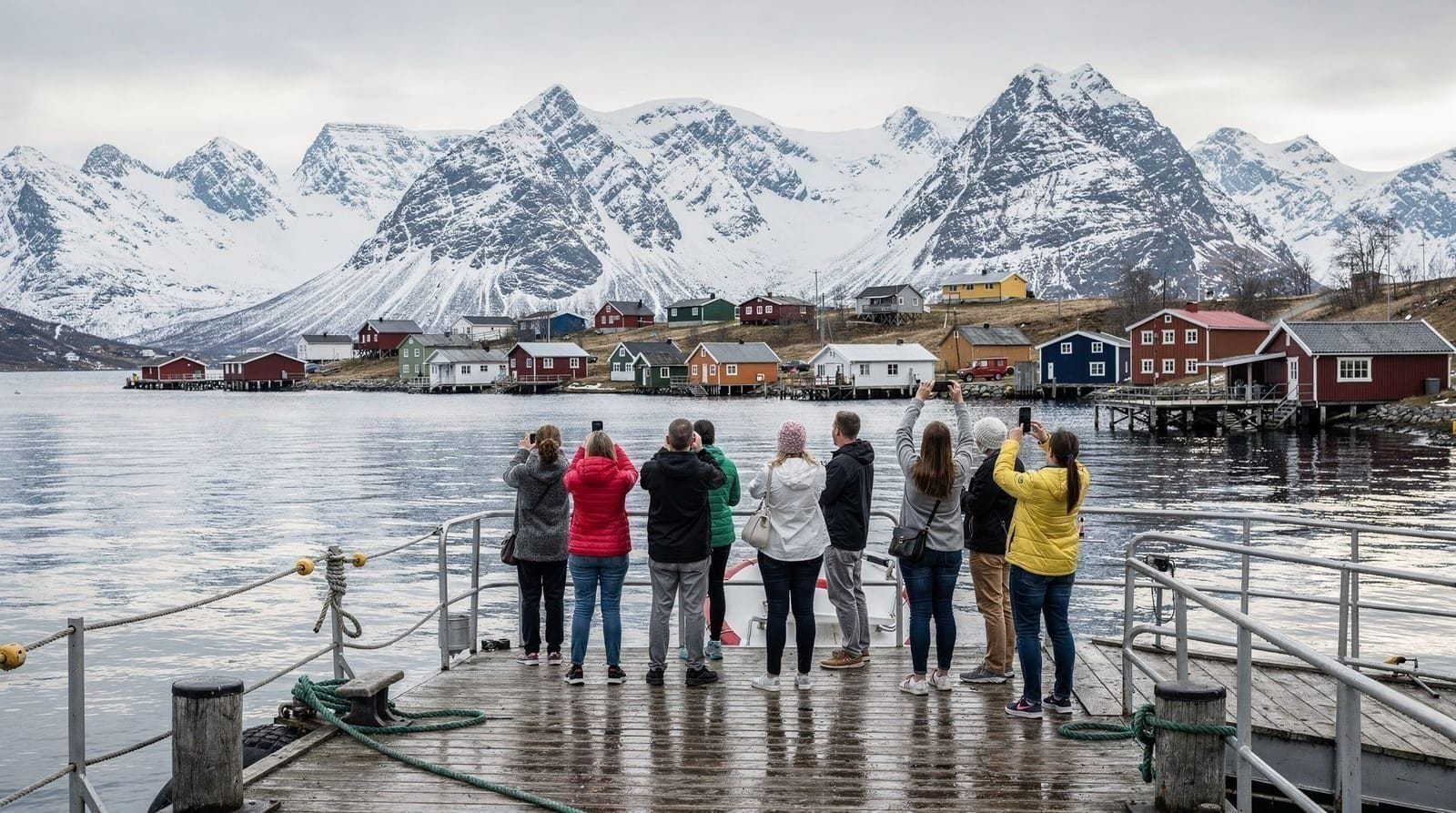
Tromsø’s greatest landscapes are not in the city. Lyngen Alps (1.5–2 hours east), Senja (2.5–3 hours southwest), Sommarøy (1 hour west), and Ersfjord (45 minutes) are all accessible only by car or organised tour. Public transport to these areas is minimal and almost non-existent in winter.
If you want to see aurora borealis away from Tromsø’s light pollution, to hike on Senja in summer, or to drive into the Lyngen Alps in winter, you need a car. That said, self-driving in the Arctic requires a few skills and preparations that do not apply to typical European road trips.
| Cost | around 700–1,800 NOK/day depending on class and season |
| Winter tyres | studded, included on all rentals Nov–Apr |
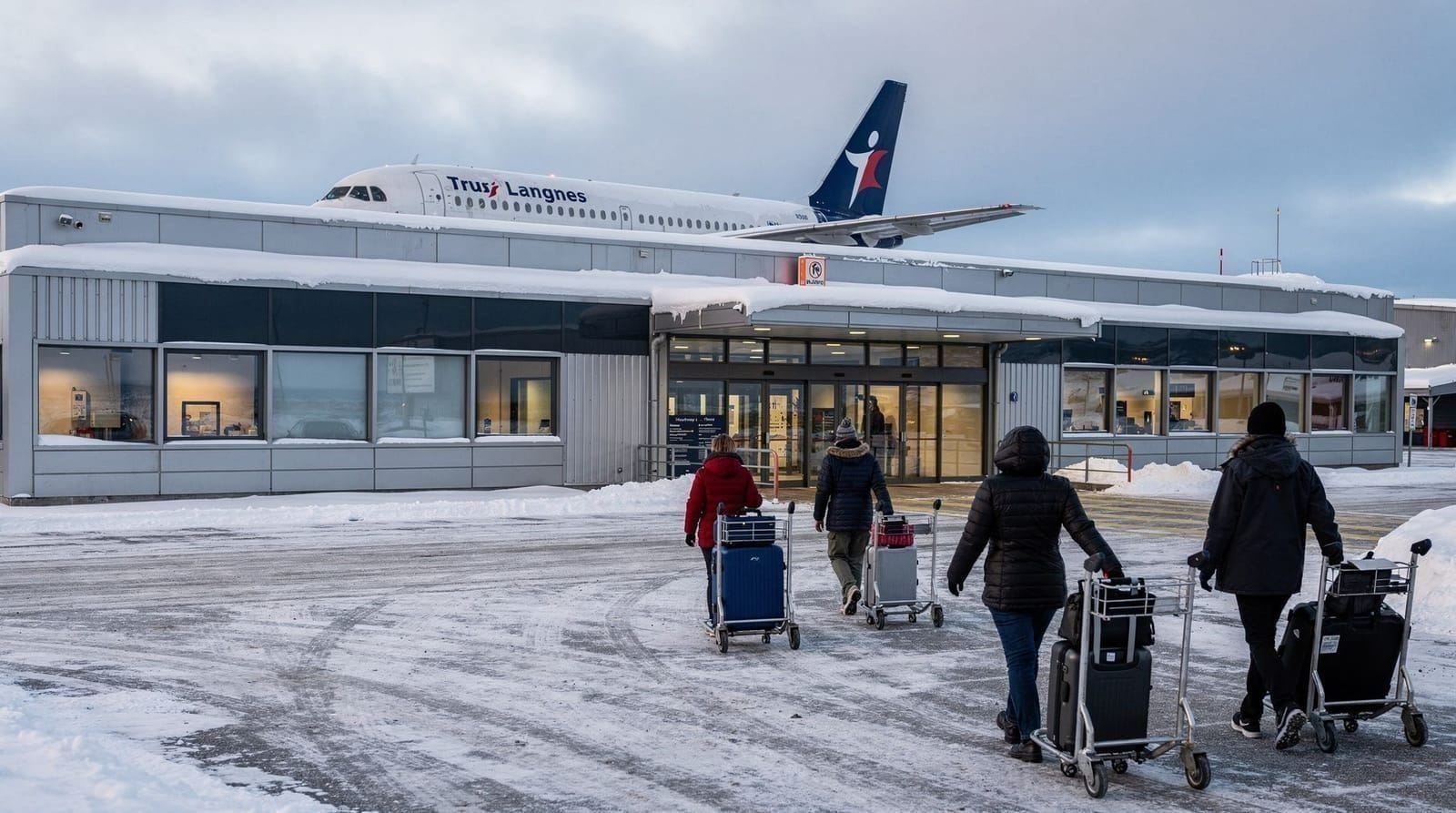
| Pickup | Tromsø Airport (TOS) arrivals hall, all major companies |
| Best for | Lyngen, Senja, Sommarøy, Ersfjord self-drive |
| Watch for | black ice on bridges, mountain-pass closures |
Self-drive vs guided: how the seasons compare
Conditions on the same route change dramatically across the year, which affects whether self-driving makes sense.
| Period | Daylight | Road grade (typical) | Best approach |
|---|---|---|---|
| Deep polar night (Dec–Jan) | under 4 hours | 3–4, frequent black ice | Guided, or experienced winter drivers only |
| Late winter (Feb–Mar) | 6–10 hours, growing | 2–3, well-gritted | Self-drive comfortable with studded tyres |
| Shoulder (Apr, Sep–Oct) | 10–14 hours | 1–2, occasional early/late snow | Self-drive easy, fewer tourists on the road |
| Midnight sun (May–Jul) | 24 hours | 1, dry roads | Self-drive easy, book accommodation early |
For a deeper look at what daylight actually does to an aurora or road-trip itinerary, see the chasing vs camp aurora comparison, which covers the same daylight math from a hunting angle.
Rental companies at Tromsø Airport
All five major companies operate desks inside TOS arrivals:
| Company | Notes |
|---|---|
| Avis | Reliable fleet, good winter vehicles. Studded tyres confirmed on all winter rentals. |
| Budget | Avis sister brand, same vehicles. Often slightly cheaper for identical cars. |
| Europcar | Good AWD availability. Winter supplement is transparent. |
| Hertz | Widest vehicle selection including 9-seat vans for groups. |
| Sixt | Competitive pricing but read CDW terms carefully — excess can be high. |
City pick-up locations exist (Scandic hotels, downtown) but airport collection is most convenient when you are landing with luggage.
Book online in advance. Walk-in rates at TOS in January are often 40–60% higher than pre-booked online rates. Vehicles can also run out — Tromsø airport has a limited fleet and demand peaks from November to February during aurora season.
Realistic costs in 2026
A small economy car (VW Polo, Ford Fiesta class):
- Online pre-booked rate: 700–1 000 NOK per day
- Winter supplement: 150–250 NOK per day (covers studded tyres, snow clearing kit)
- CDW collision damage waiver: 200–400 NOK per day if not covered by credit card
- Fuel: Petrol costs around 19–22 NOK per litre in Tromsø (approx. €1.70–€2.00)
A compact SUV (Volkswagen Tiguan, Skoda Karoq class):
- Online pre-booked rate: 1 200–1 800 NOK per day
- Same supplements as above
For one day driving to Senja and back (500 km round trip), budget 1 500–2 500 NOK total including fuel.
Credit card CDW coverage: Many premium Visa and Mastercard cards provide CDW for rental cars automatically if you pay with that card. Check your card terms before buying the rental company’s own CDW. The saving can be 200–400 NOK per day.
Understanding Norwegian winter road conditions
Road condition levels (Vegmeldingstjenesten)
Norway’s Statens vegvesen (national road authority) grades roads on a 1–5 scale:
- 1 – Bare and dry: Ideal conditions
- 2 – Partly wet/slippery: Normal in Tromsø October–April
- 3 – Slippery, ice or compressed snow: Common on mountain sections
- 4 – Very slippery/difficult: Drive slowly, consider postponing
- 5 – Road closed or requires chains/AWD: Check alternatives
Check vegvesen.no/vegkart before any mountain drive. The site is in Norwegian but the map and colour coding are self-explanatory.
Driving on ice: the basics
Novice winter drivers make predictable mistakes in Tromsø. Here is what you need to know:
Braking distance triples on ice. At 50 km/h on a wet road, you stop in roughly 30 metres. On packed ice, expect 80–100 metres. Always increase following distance and brake far earlier than feels necessary.
Studded tyres grip ice; they do not eliminate ice. The studs bite through the top layer of ice to find grip on the surface below. But the tyre must be moving to work — sliding a locked wheel produces zero grip. Brake gently and progressively.
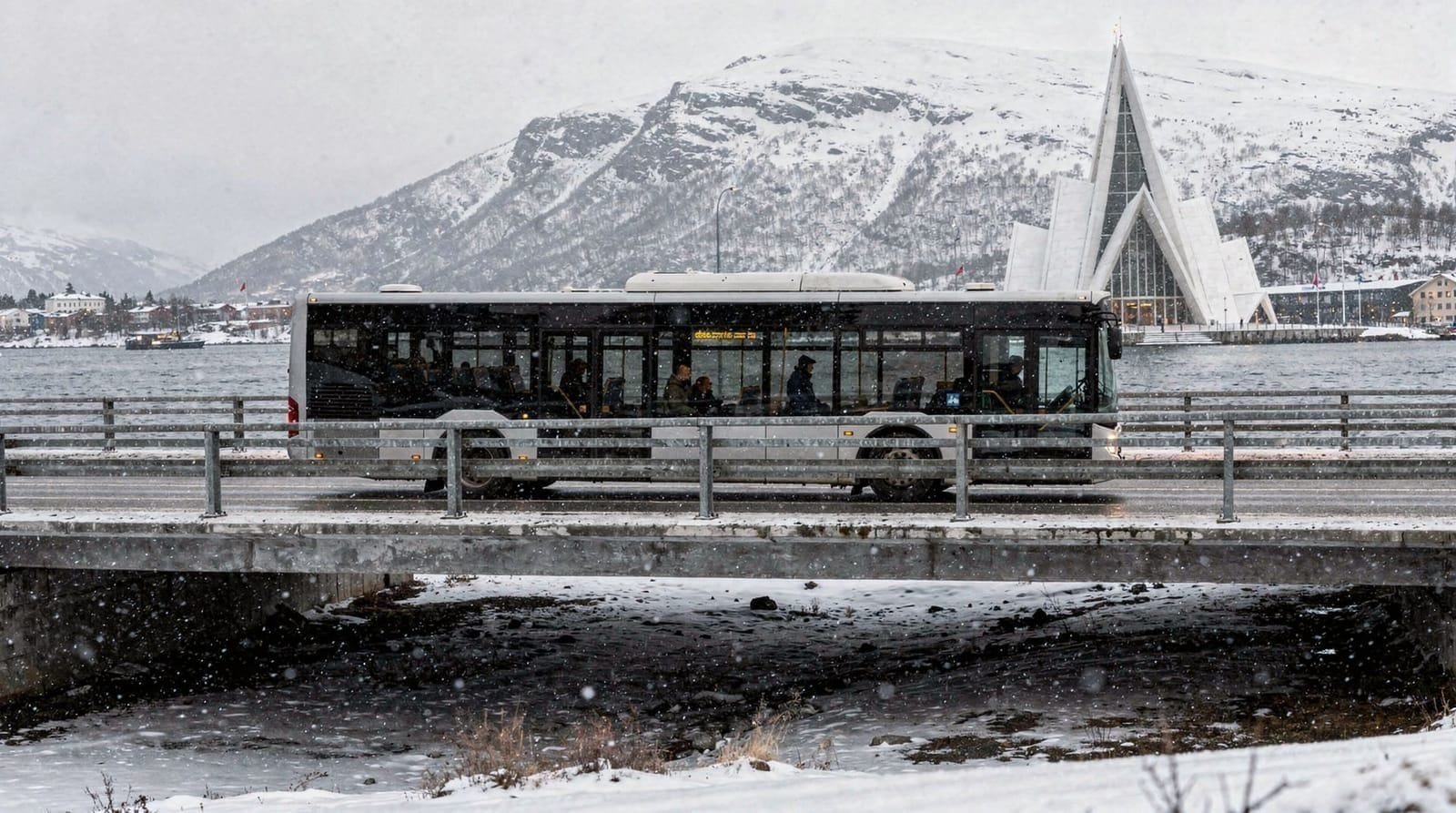
Black ice (svart is) is invisible. It forms when temperatures hover around 0 °C and moisture freezes on roads that seem dry. Bridges, shaded road sections, and the Tromsøysundbrua bridge are notorious for black ice. Reduce speed approaching bridges.
Do not use cruise control on icy roads. On ice, cruise control can apply sudden throttle to maintain speed through a corner, causing a slide. Turn it off in any condition below 5 °C.
Downhill in the Lyngen Alps: Mountain roads into the Lyngen valley drop steeply. Use engine braking (low gear) on descents rather than riding the brakes, which can overheat brake pads on ice.
Key routes and their challenges
E8 Tromsø → Skibotn (Lyngen gateway, 80 km, 1.5 h)
The main highway east toward Finland runs along the fjord. Maintained year-round. Occasional closures at Nordkjosbotn in heavy snowfall. The turn-off into Lyngen (toward Lyngseidet ferry or Lyngen Alps viewpoints) involves a mountain climb — typically grades 2–3 in winter.
E8 Tromsø → Svensby (Lyngen ferry, 50 km, 55 min)
Easier than the full Skibotn route. Svensby has the ferry terminal to Lyngseidet — see ferries to Lyngen and Senja for crossing details. Road condition is usually grade 2 in winter.
Rv862 → Senja (via tunnel, 150 km, 2.5 h)
The route to Senja runs through Tromsø Airport and Breivika, then along the coast via Lenvik to Senja island. The Senja island internal road (National Scenic Route 86) is narrow and winding with several unsigned tight bends. Grade 3 in mid-winter. An AWD vehicle is recommended for the Senja hike approaches.
Rv862 → Sommarøy (65 km, 1 h)
Straightforward, crosses the Sandnessund bridge to Kvaløya then follows the coast. Grade 2 standard. Two-wheel drive with studded tyres is adequate in most conditions.
When to hire a guide instead
Self-driving is not always the best choice. Consider a guided day trip if:
- You are arriving without prior experience of ice driving
- There are fewer than 4 hours of daylight (deepest polar night, December–January)
- You want to maximise photography time on Senja without navigating
- Your group is large enough that a private guide vehicle costs less than multiple rental cars
Parking in Tromsø
Tromsø city centre has metered on-street parking (40–60 NOK/hour) and several car parks:
- P-hus Alfheim (north of city centre, 50–70 NOK/hour)
- Pyramiden parking (Stakkevollvegen, cheaper at 35 NOK/hour)
- Tromsø Lufthavn — short stay 180 NOK/24h, long stay 80 NOK/24h
Most attractions outside the city (Fjellheisen, Polaria) have free parking. In the Lyngen Alps, parking at popular viewpoints like Oteren is free but limited — arrive before 09:00 in winter if you want a spot.
Snow clearance zones: Many Tromsø streets are designated alternate-side clearing zones in winter. Parking violations during snow clearing operations result in towing (typically 1 200–1 800 NOK to retrieve the vehicle from the pound). Look for orange “snøbrøyting” signs before parking overnight on city streets.
Fuel stations around Tromsø
The main Tromsø fuel stations are:
- Circle K Tromsø Sentrum (Strandvegen 30) — open 06:00–23:00
- Circle K Tromsø Breivika — near the airport, 24 hours
- Uno-X Tromsø (Sjøgata) — competitive pricing
Beyond Tromsø, fuel stations become sparse. On the Senja route, refuel in Lenvik (Finnsnes) before reaching the remote western coast. On the Lyngen route, there is a station at Storsteinnes (approximately 60 km east of Tromsø) before the roads into the mountains.
Running out of fuel in the Lyngen Alps in mid-winter is a genuine risk — do not attempt remote mountain driving with less than a half tank.
What to keep in the car
Standard Norwegian practice for winter driving near Tromsø:
- Ice scraper and snow brush (supplied with rentals)
- Warm blanket (in case of breakdown in −15 °C conditions)
- Phone charger / power bank (cold drains phone batteries rapidly)
- Physical printed map or downloaded offline map (mobile coverage is patchy in Lyngen valleys)
- High-visibility vest (legally required in some breakdown situations)
- Emergency snacks and water — if you are stuck on a mountain pass, help can be 30–60 minutes away
Comparing pickup points: airport vs city centre
Most visitors collect at Tromsø Airport (TOS) straight off the plane, which is the most convenient option and avoids a taxi into town first. All five major companies staff the arrivals hall, and cars are ready as soon as you check in. City-centre pickup (Scandic hotels, downtown depots) suits travellers who arrive by bus or ferry, or who want to spend a day or two exploring on foot before starting to drive — it also lets you delay the rental cost if you are not driving on day one. The trade-off is limited opening hours at some city depots (often closing by 16:00–17:00 on weekdays), so confirm your exact pickup time rather than assuming a late arrival works.
Reading the road before you leave
Beyond the 1–5 Vegmeldingstjenesten grade, two other sources are worth checking each morning of a drive. The Norwegian Meteorological Institute’s yr.no gives hourly forecasts down to specific valleys, which matters because weather in the Lyngen Alps can differ completely from weather in Tromsø city 40 km away. NRK’s regional traffic updates (in Norwegian, but place names are recognisable) flag accidents and temporary closures faster than the official vegvesen map updates. Building a two-minute check of both into your morning routine before a Lyngen or Senja drive catches most surprises before you are on the road.
Driving with kids or older passengers
Winter self-driving works fine with children, but plan differently. Build in more stops than you think you need — icy-road driving is more tiring than it looks, and a 2.5-hour drive to Senja can feel much longer when you are concentrating hard the whole way. Car seats are not always included with rental bookings in Norway; request one explicitly when booking, and confirm the exact type (infant, toddler, booster) since availability is limited in peak winter. For older or anxious passengers, the shoulder-season months (April, September–October) offer the easiest combination of daylight and manageable road grades — see the seasonal table above. If driving yourself with young children feels like one variable too many, dog sledding with kids and similar activities near the city avoid the need for a long drive altogether.
Frequently asked questions about car rental and winter driving in Tromsø
Can I drive to the aurora without a tour?
Yes. Self-drive aurora hunting is a legitimate strategy and often more successful than bus tours. You can drive out of Tromsø’s light bubble in 20–30 minutes on the E8 toward Skibotn or south on Rv91. For a detailed strategy, see self-drive aurora in Tromsø.
Is an SUV necessary, or will a small car do?
A small car with good studded tyres handles all main roads around Tromsø including E8, E6, and Rv862. For Lyngen mountain tracks, Senja’s remote forest roads, and any planned off-piste photography, an AWD SUV adds meaningful safety margin. Not strictly necessary, but recommended for first-time winter drivers.
What if I have an accident on an icy road?
Move the car to the side of the road if safe. Put on your high-vis vest. Call 112 (emergency) if anyone is injured. Call your rental company’s 24-hour assistance number — given in your rental agreement. Do not drive a damaged car without checking oil, coolant, and tyre condition first.
Are petrol prices cheaper outside Tromsø?
Marginally. Tromsø fuel typically runs 19–22 NOK/litre. Smaller towns on the E6 further north or south may be 1–2 NOK cheaper. Not worth detouring for, but fill up in Finnsnes if passing through on the way to Senja.
Can I take a rental car on the Lyngen ferry?
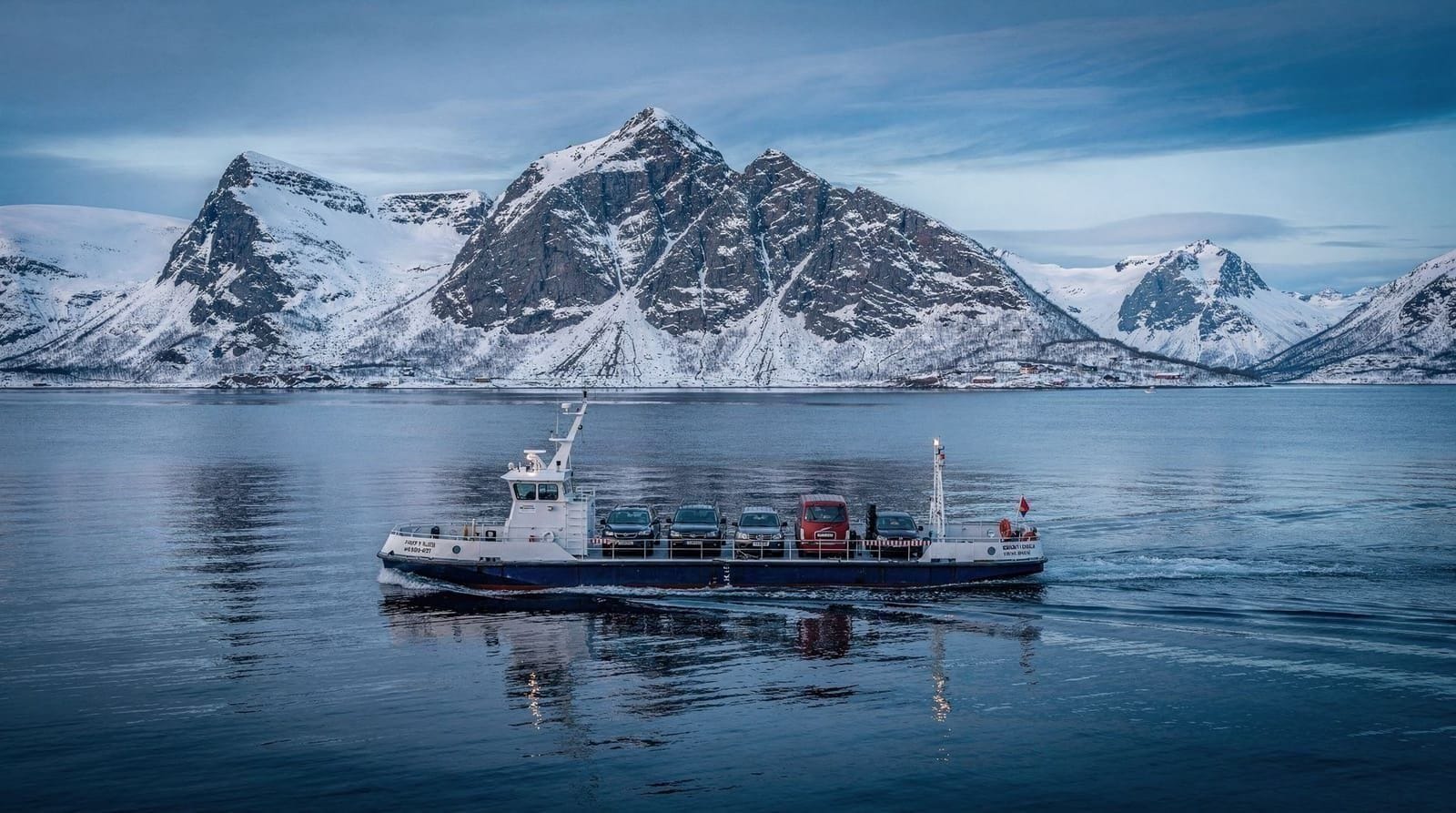
Yes. The car ferries operated by Boreal (Svensby–Lyngseidet, Breivikeidet–Svensby) accept rental cars. No restrictions from any of the major rental companies in Tromsø. See ferries to Lyngen and Senja for the crossing schedule and booking details.
Do I need snow chains?
Norway does not require snow chains on private vehicles (unlike some Alpine countries). All rental cars come with studded tyres, which are more effective than chains on Norwegian ice roads. However, some car passes may carry temporary chain requirements during extreme conditions — check vegvesen.no.
What happens if the road closes while I am in the Lyngen Alps?
Road closures in the Lyngen Alps are typically temporary (2–6 hours) due to avalanche risk or storm ploughing. Norwegian road authorities clear priority routes quickly. If you are caught in a temporary closure, pull over safely, keep the engine running for heat, and monitor the Statens vegvesen app. Do not attempt to drive through a closed barrier.
Top experiences
Bookable activities with verified prices and instant confirmation on GetYourGuide.