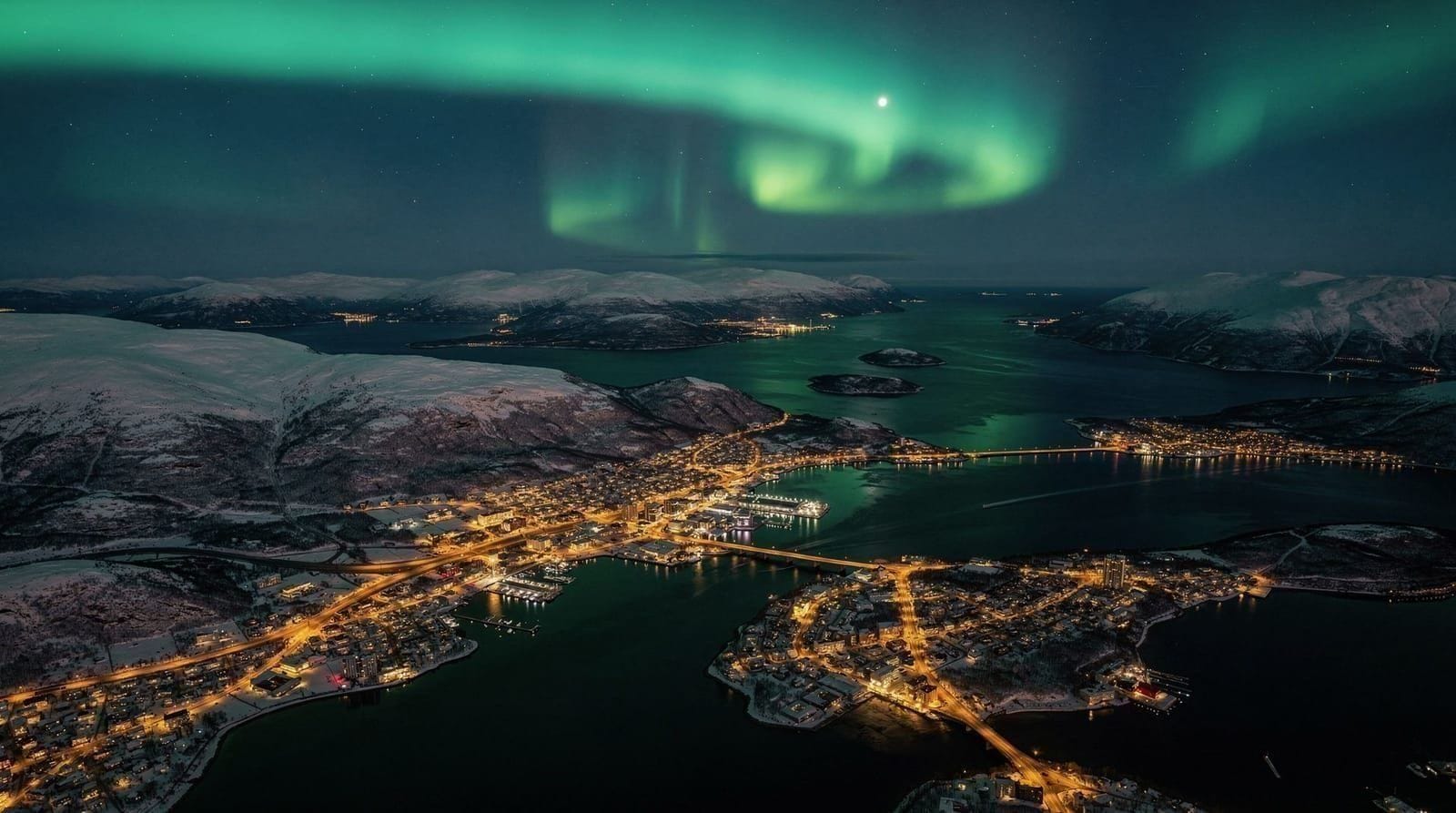
September aurora in Tromsø — what to expect
Tromsø: Northern Lights Chase with Local Guide & Free Photos
Can you see the northern lights in Tromsø in September?
Yes. Aurora season effectively starts around September 10–15 when nights are dark enough. September has active solar conditions and lower tour prices than peak winter. The main drawback is unpredictable autumn cloud — expect a 30–40% success rate per night with a chase strategy.
Quick answer: September aurora in Tromsø is real and achievable, starting around September 10–15. The equinox period (around September 22) is statistically active. Expect mild temperatures (+5 to +12°C), shorter dark windows than winter, and variable cloud. Tours cost 10–25% less than peak winter rates.
| Best window | September 18 – October 5 (equinox effect + usable dark hours) |
| Dark hours | 3h (early September) growing to 7h (late September) |
| Temperature | Around +5 to +12°C evenings |
| Tour style | Chase tours, 22:00–02:00 start (later than winter) |
| Gear needed | Standard autumn layers — no Arctic-grade clothing |
| Car rental | Standard vehicle, no winter tyres required |
September’s position in the aurora calendar
The midnight sun ends in Tromsø around July 22, but it takes weeks for the sky to get dark enough for aurora to be visible. By late August, a faint glow can occasionally appear after midnight. By September 10–15, there is a genuine dark window of 2–3 hours that allows aurora viewing. By late September, dark hours increase to 5–6 hours per night.
This timing is important: September is not “too early” the way August is. From mid-September onward, conditions are genuinely viable for aurora hunting.
Why September is underrated
Most visitors think of December and January as the prime months (which they are for darkness), but September has real advantages that are rarely discussed:
The September equinox effect
Around the autumn equinox (September 22–23), Earth’s magnetic geometry is particularly favourable for absorbing solar wind energy. This “Russell-McPherron effect” is a well-documented phenomenon in space physics — the angle between the solar wind’s interplanetary magnetic field and Earth’s magnetic dipole optimises energy transfer around equinox dates.
In practical terms: KP storms are statistically more frequent and more intense in the 2–3 weeks around the September equinox than in the adjacent August or October periods. Combined with actual darkness, this makes late September a legitimately strong aurora window that most visitors miss.
Cost savings
September is low season for Tromsø aurora tourism. Hotels cost 20–40% less than peak winter. Flights from Oslo or Copenhagen show significant discounts. Tour prices drop 10–20% from peak rates. For budget-conscious travellers, a well-timed September trip can deliver equivalent aurora chances at substantially lower total cost.
Milder conditions
September temperatures (+5°C to +12°C evenings) mean no Arctic gear required. You’re uncomfortable in a light jacket for 30 minutes outside — not dangerously cold. This makes self-drive aurora much more practical: stop anywhere, get out, look up.
No ice on roads means self-drive is accessible to anyone with a normal driving licence — no winter tyre requirement (mandatory from November 1 in Norway). Rental cars in September are standard vehicles at standard prices.
Daylight for activities
Late September has 11–12 hours of daylight. You can hike Storsteinen by day, see the autumn colours on the hillsides, visit Sommarøy beaches (spectacular in September’s low light), and then go aurora hunting after 22:00.
The combination of meaningful daylight activities + genuine aurora chances makes September a 2-for-1 proposition that pure winter visits cannot match.
What actually happens in September — honest view
The dark window limitation
The dark window in September is short. In early September (1–10), true astronomical darkness arrives only after 23:00–23:30 and lasts until 02:00–03:00 — a 3-hour window. This is tight. If you’re joining a tour, it will run 22:00–02:00 rather than the 18:00–01:00 format of winter tours.
By late September (21–30), the dark window extends: darkness from around 21:30 to 04:30 — 7 hours. Much better.
Cloud volatility
September weather in Tromsø is unsettled. The transition from summer to winter brings Atlantic lows moving through 2–3 times per week. A clear warm day can turn overcast by evening with little warning.
Self-drive is the most effective September strategy because road conditions are safe and you can react quickly to cloud-break opportunities. Check yr.no by 18:00, identify the clearest forecast location within 100 km, and drive there.
Chase tours in September cover similar ground to winter tours but with easier road conditions — guides’ local knowledge still adds significant value over solo exploration.What KP levels occur in September
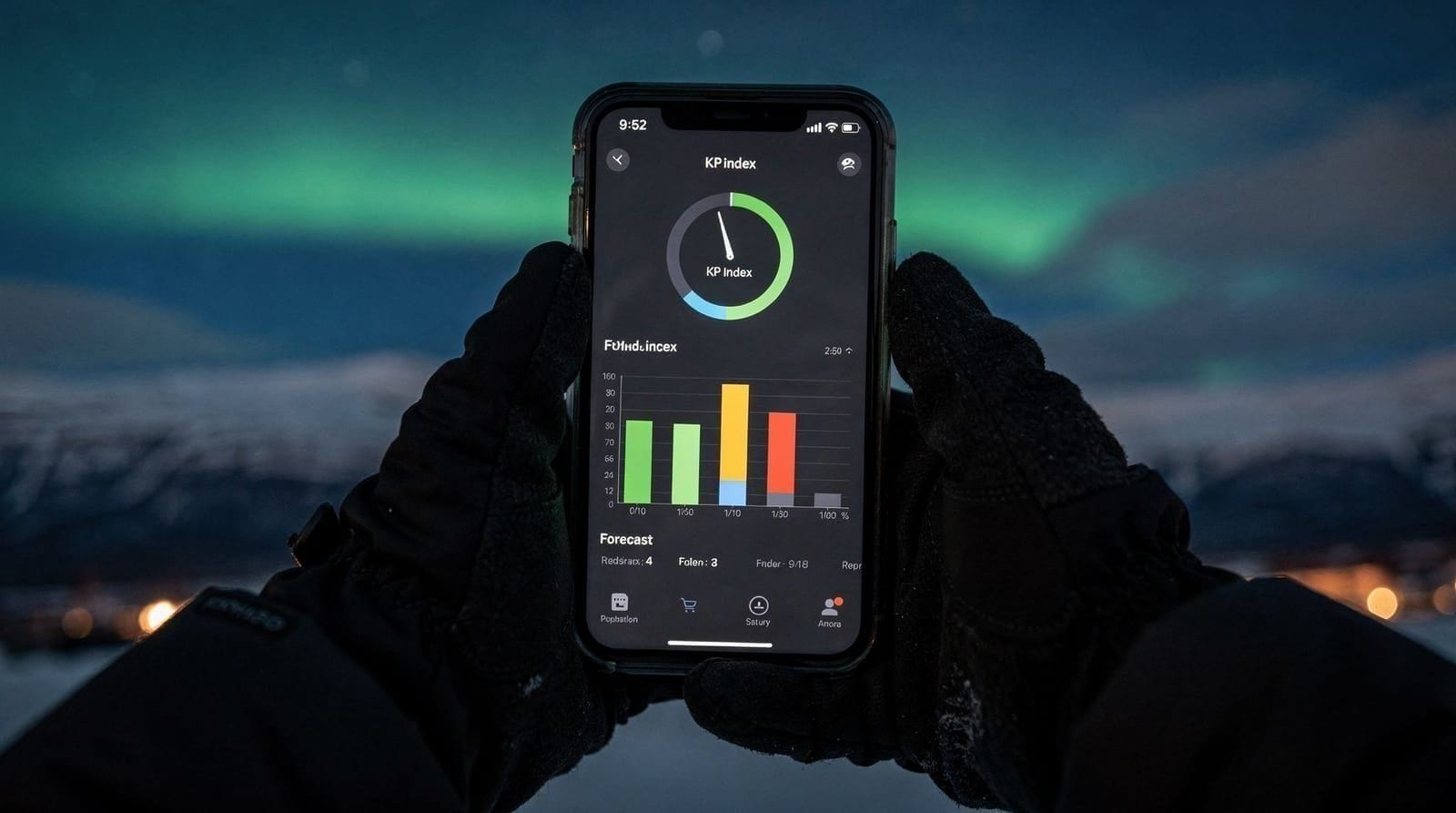
Solar activity in September can be high, medium, or quiet — KP does not follow a seasonal pattern the way cloud does. The equinox enhances the probability of KP 3–5 storms in the equinox window but cannot guarantee them. Check spaceweatherlive.com in the weeks before your trip for context.
In solar cycle 25 (the current cycle, peaking around 2025–2026), September aurora events have included notable KP 5–6 storms that produced all-sky displays visible across Scandinavia. This elevated baseline helps September visitors. Our aurora forecast and KP explained guide walks through reading these numbers before you commit to a chase.
Self-drive or guided tour in September?
September actually tilts the self-drive-versus-guided decision compared with winter. Dry roads and no winter-tyre requirement remove the biggest reason travellers hire a guide in January. If you’re a confident night driver, self-drive in September is genuinely lower-risk than in midwinter. That said, guides still bring local cloud-reading experience and know which side roads stay open. See our full self-drive vs guided aurora comparison and the aurora cloud strategy guide for the reasoning behind the “drive toward the gap” approach either way.
If you’re planning a longer stay around the equinox, our 4-day Tromsø aurora itinerary can be shifted a couple of weeks earlier into September with the daylight-hike days swapped for the golden hillside walks described above.
Late summer to early winter: a month-by-month comparison
Deciding between September and the following months is a common dilemma. Here’s how the shoulder-season options actually compare, honestly:
| Month | Dark hours | Typical weather | Tour prices | Best for |
|---|---|---|---|---|
| Late August | 1–2h, faint only | Mild, changeable | Low | Not recommended yet |
| Early September | 2–3h | Mild, unsettled | Low | Budget + hiking combo |
| Late September | 5–7h | Cooling, equinox storms | Low–mid | Best shoulder-season value |
| October | 8–10h | Cold snaps begin, whale season starts | Mid | Aurora + first whale tours |
| December–January | 18–20h | Coldest, snow-covered | Peak | Full winter experience, snow activities |
If your priority is value and daylight hiking, aim for the last ten days of September. If you want snow, dog sledding and ice domes alongside aurora, you’ll need to wait for midwinter conditions instead.
September aurora self-drive — route options
Self-driving in September for aurora is practical and recommended if you’re comfortable driving at night.
Route 1: E8 east toward Skibotn — exactly as in winter, but on dry roads. 70 km east takes you behind coastal cloud patterns and into the Skibotn valley area. Turn off the main road onto the Fjordgård/Storfjord side roads for dark parking spots away from traffic.
Route 2: Sommarøy west — In September, the Rv862 to Sommarøy is scenic and the dark island beaches provide a dramatic backdrop when clear. Only about 60 km from Tromsø. Best when cloud fronts are coming from the east (less common, but it happens).
Route 3: Kvaløya north end — Kvaløya has several north-facing beaches accessible via the island road. Less light pollution than Tromsø city on clear nights. 30–40 minutes from centre.
See our full self-drive aurora guide for parking spots and route planning.
September tips for aurora photography
September aurora photography has specific characteristics:
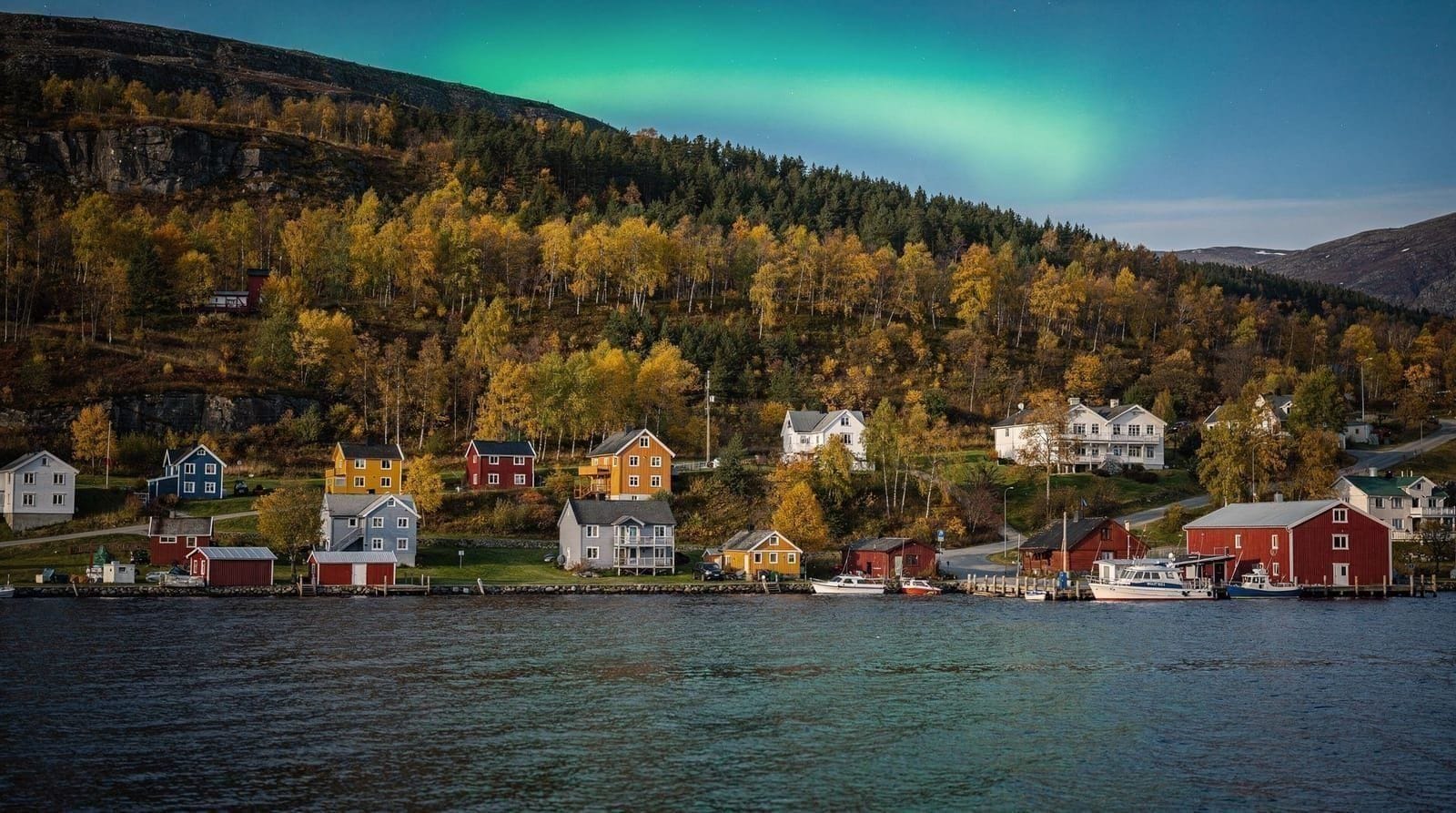
Foreground choice: The landscape in September is greener/autumnal rather than snow-covered. This changes foreground options — red and gold hillsides, dark rock beaches, autumn tundra colours instead of white snow. The contrast of green/yellow foliage with green aurora is unusual and beautiful.
Settings: September temperatures are mild enough that batteries don’t drain as fast as in winter. Normal aurora camera settings apply (ISO 1600–3200, f/2.8, 6–15 seconds). The milder temperatures make outdoor photography more comfortable — you can shoot for 2–3 hours without discomfort.
See our aurora photography settings guide and aurora photography gear guide for full equipment recommendations.
What to do in Tromsø in September besides aurora
September is excellent for hiking and outdoor activities:
- Storsteinen via Fjellheisen — cable car + hiking in golden autumn light
- Sommarøy day trip — warm enough for a swim if you’re hardy; beautiful in September low light
- Senja day trip — 2.5–3 hours by car, the Senja coast in autumn colours is dramatic
- Lyngen Alps day hike — trails clear of snow through late September
See our Tromsø in September guide for a full seasonal breakdown.
Practical planning for a September aurora trip
Accommodation: Hotels are cheaper and more available than winter. Book 2–3 weeks ahead for September rather than months ahead as in winter.
Tours: Book 1–2 weeks ahead. Demand is lower in September. Some operators haven’t launched their full autumn season yet in early September — check availability for your specific dates.
Clothing: Standard European autumn gear — warm jacket (down or synthetic), fleece, waterproof outer, warm trousers. Jeans and a winter jacket is actually sufficient in September — the temperatures are mild.
Car rental: Standard car available — no AWD or winter tyres required in September (required from November 1). Regular cars perfectly adequate.
Small-group September tours operate with the same cloud-escape strategy as winter tours but in easier conditions — guides can cover more ground per night with confidence on dry roads.Frequently asked questions about September aurora in Tromsø
What time does it get dark in Tromsø in September?
Early September: true darkness from ~23:30. Mid-September: darkness from ~22:30. Late September: darkness from ~21:30. Civil twilight (outdoor activities possible) ends around an hour earlier than true darkness. For aurora, you need true astronomical darkness — the times above are your practical start.
Is September too early for aurora in Tromsø?
The first week of September has only a very short dark window and poor conditions. From September 10–15 onward, conditions are genuinely viable. Late September is better than early September. If flexibility allows, September 18–October 5 is an ideal window — equinox activity plus decent dark hours.
What should I wear on a September aurora tour?
A warm jacket (down or synthetic fill), fleece mid-layer, and a waterproof outer. Warm trousers (not jeans). Waterproof walking boots. Light gloves and a hat. Standard autumn outdoor clothing is sufficient — no Arctic gear needed.
Are there any disadvantages to a September trip vs. winter?
Yes: shorter dark windows, more cloud volatility, no snow landscape (different aesthetic), and some tour types (dog sledding, snowmobile, ice domes) aren’t running yet. The advantages are: lower prices, better hiking, milder temperatures, and the equinox effect.
How many clear nights can I expect in a September week?
Statistical average for Tromsø in September: approximately 3–4 nights with at least partial clearing per week. With a cloud-chase strategy (driving east when coastal cloud hits), you can convert 2–3 of those into usable aurora windows. Expect to see aurora on at least 1–2 nights of a 5-night trip.
Is September aurora suitable for families with children?
The milder temperatures make September particularly good for families with young children — far less brutal than -15°C January. The short dark window is a minor constraint: tours that start at 22:00 are late for younger children, but the drive to Sommarøy or Ersfjord for a self-drive attempt from 21:30 is perfectly manageable.
Are whale-watching tours available alongside aurora in September?
Not yet in September — whale watching season begins in October/November when herring migrate to the Skjervøy area. See our whale watching season guide for the overlap with aurora season.
Can I see the midnight sun AND aurora on the same trip in September?
No. The midnight sun ends around July 22 and the sky doesn’t get dark enough for aurora until mid-September. There is no overlap in September or any other month.
Top experiences
Bookable activities with verified prices and instant confirmation on GetYourGuide.