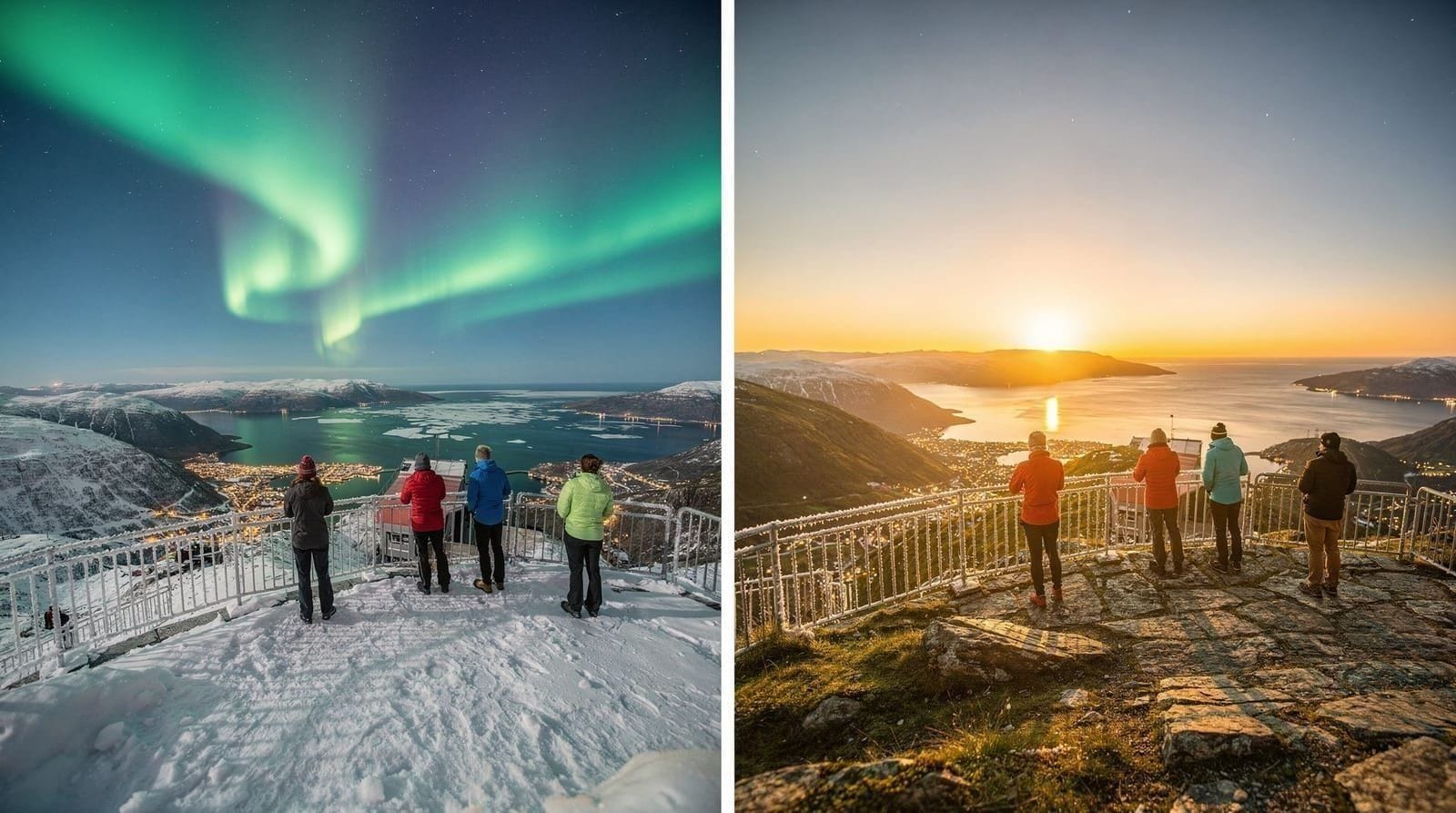
Summer vs. winter in Tromsø — which season is right for you?
Tromsø: Midnight Sun Experience with Scenic Stops and Lunch
Should I visit Tromsø in summer or winter?
Winter (Nov–Mar) if aurora, dog sledding, whale watching, or reindeer experiences are your priority. Summer (late May–Jul) if you want midnight sun hiking, sea kayaking, quiet fjords, and lower prices. Both are genuinely rewarding — they are essentially different destinations within the same city.
Two completely different destinations
Tromsø is unusual in that it genuinely functions as two different travel experiences depending on when you arrive. Winter Tromsø (October–April) is an Arctic adventure destination built around darkness, snow, and wildlife. Summer Tromsø (May–August) is a sub-Arctic outdoor destination built around perpetual light, coastal nature, and hiking.
The city’s geography — a small island surrounded by fjords and mountains — is the same in both seasons. The atmosphere, the activities, the light, and even the crowd dynamics are entirely different.
| Best for aurora | Winter, Nov–Feb, dark clear nights |
| Best for midnight sun | Summer, late May–late Jul |
| Cheapest | Summer and shoulder months (Sep–Oct, Mar–Apr) |
| Most guided-tour dependent | Winter — dark Arctic roads favour booked tours |
| First-timer pick | Winter for the aurora bucket-list draw; see how many days in Tromsø either way |
What winter gives you that summer cannot
Northern lights (aurora borealis)
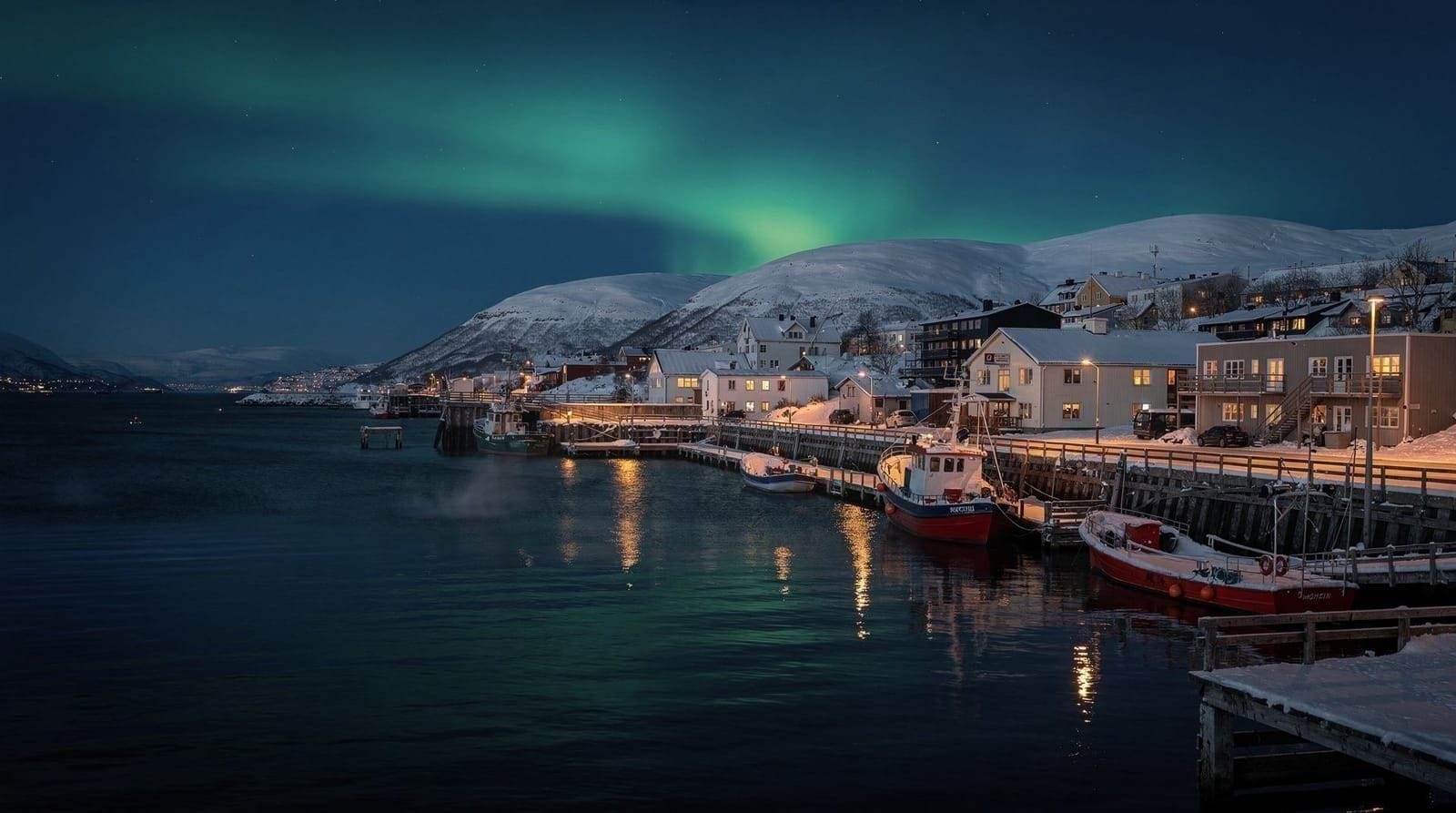
The defining Tromsø bucket-list experience requires darkness. Aurora season runs September to April, with the peak window from November to February (polar night). You cannot see the aurora in summer — the midnight sun prevents it entirely.
Aurora tours in Tromsø typically run 4–8 hours, departing in the evening and chasing clear skies by vehicle. Cost: 1,800–2,200 NOK for group tours.
Northern lights safari with expert guides — winter onlyDog sledding and husky experiences
Dog sledding requires snow — typically November through March. Self-drive husky tours (you steer a team of 6–12 huskies) are one of the most popular Tromsø experiences and are available exclusively in winter. Cost: 2,500–3,200 NOK.
Whale watching
Orcas and humpback whales follow herring shoals into the fjords near Skjervøy from late October through early February. Whale watching tours are a winter-only activity from Tromsø. Cost: 1,500–1,900 NOK.
Polar night atmosphere
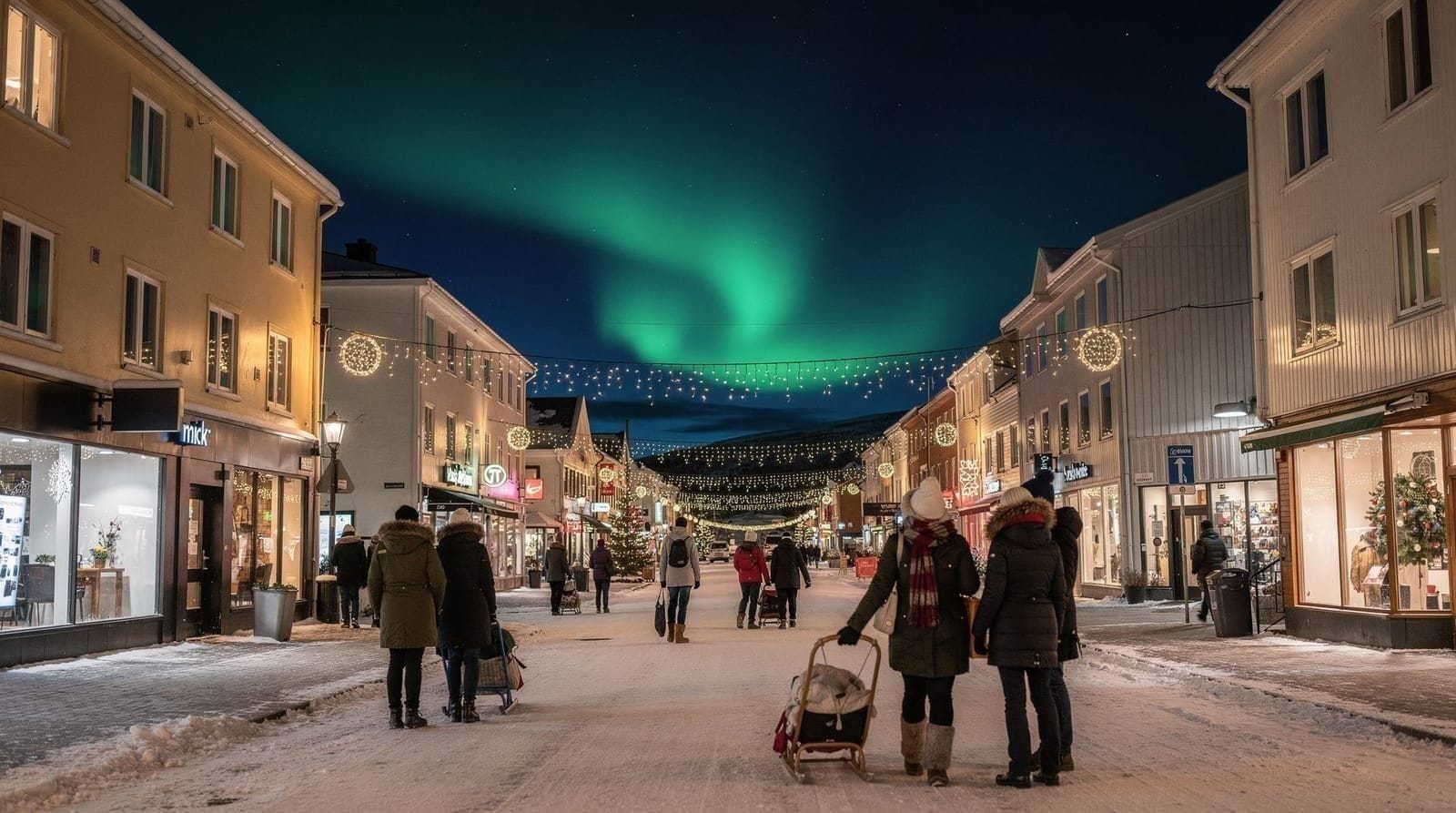
From 27 November to 15 January, the sun does not rise in Tromsø. The deep blue midday twilight, the lit harbour with snow, the warm light of cafés against the darkness — this atmosphere has no summer equivalent. Some visitors find it oppressive; many find it one of the most atmospheric experiences they have had anywhere.
Dog sledding, snowmobile safaris, reindeer experiences, ice domes
All winter-only activities. The ice domes at Camp Tamok (a network of snow and ice rooms, tunnels, and accommodation in Tamok Valley) operate only in the coldest months (approximately December–March).
What summer gives you that winter cannot
Midnight sun
From approximately 20 May to 22 July, the sun circles above the horizon continuously. This is not just an aesthetic novelty — it fundamentally changes what is possible. You can hike Tromsdalstinden at 11 p.m. in full light. You can kayak at Sommarøy at 2 a.m. on a calm sea. You can do a fjord cruise at midnight. The schedule becomes irrelevant.
Midnight sun experience with scenic stops and lunchSea kayaking and watersports
Winter kayaking is available but challenging and expensive (guided only, in survival suits). Summer sea kayaking at Sommarøy, Ersfjord, and along the Kvaløya coast is accessible, beautiful, and one of the most memorable summer activities in northern Norway. Cost: 700–1,200 NOK for guided tours.
Sommarøy midnight sun sea kayaking tourHiking (proper hiking)
Trails are snow-free and accessible from late May through September. The hiking possibilities around Tromsø are extensive — Tromsdalstinden (1,238 m), the ridge walks on Lyngen Alps, the coastal paths of Kvaløya, the dramatic scenery of Senja. In winter, these same routes are under deep snow and require snowshoe or ski access.
Lower prices
Summer hotel rates in Tromsø are 30–60% lower than peak winter. A mid-range hotel double in July costs roughly 1,100–1,600 NOK versus 2,000–3,000 NOK in January. Activity costs are similar or lower in summer.
The city feels more local
Summer Tromsø draws fewer international tourists than the November–February aurora rush. The city feels more genuinely Scandinavian in summer — locals cycling, cafés with outdoor seating, university life, the harbour market. The aurora-tourist crush (large tour groups, multiple languages, every hotel full) is absent.
Side-by-side comparison
| Factor | Winter (Nov–Mar) | Summer (Jun–Aug) |
|---|---|---|
| Aurora | Yes (peak Nov–Feb) | No |
| Midnight sun | No | Yes (May–Jul) |
| Dog sledding | Yes | No |
| Whale watching | Yes (Oct–Jan) | No |
| Snowmobile | Yes | No |
| Sea kayaking | Limited (expert) | Excellent |
| Hiking | Snowshoe only | Full trails open |
| Reindeer/Sami | Yes (winter format) | Summer formats |
| Temperatures | -8 to +2°C | 8 to 18°C |
| Hotel prices | High (Dec–Jan peak) | Moderate |
| Crowds | High (Nov–Feb) | Moderate |
| Photography | Aurora, snow, blue light | Midnight sun, fjords |
The shoulder seasons: best of both?
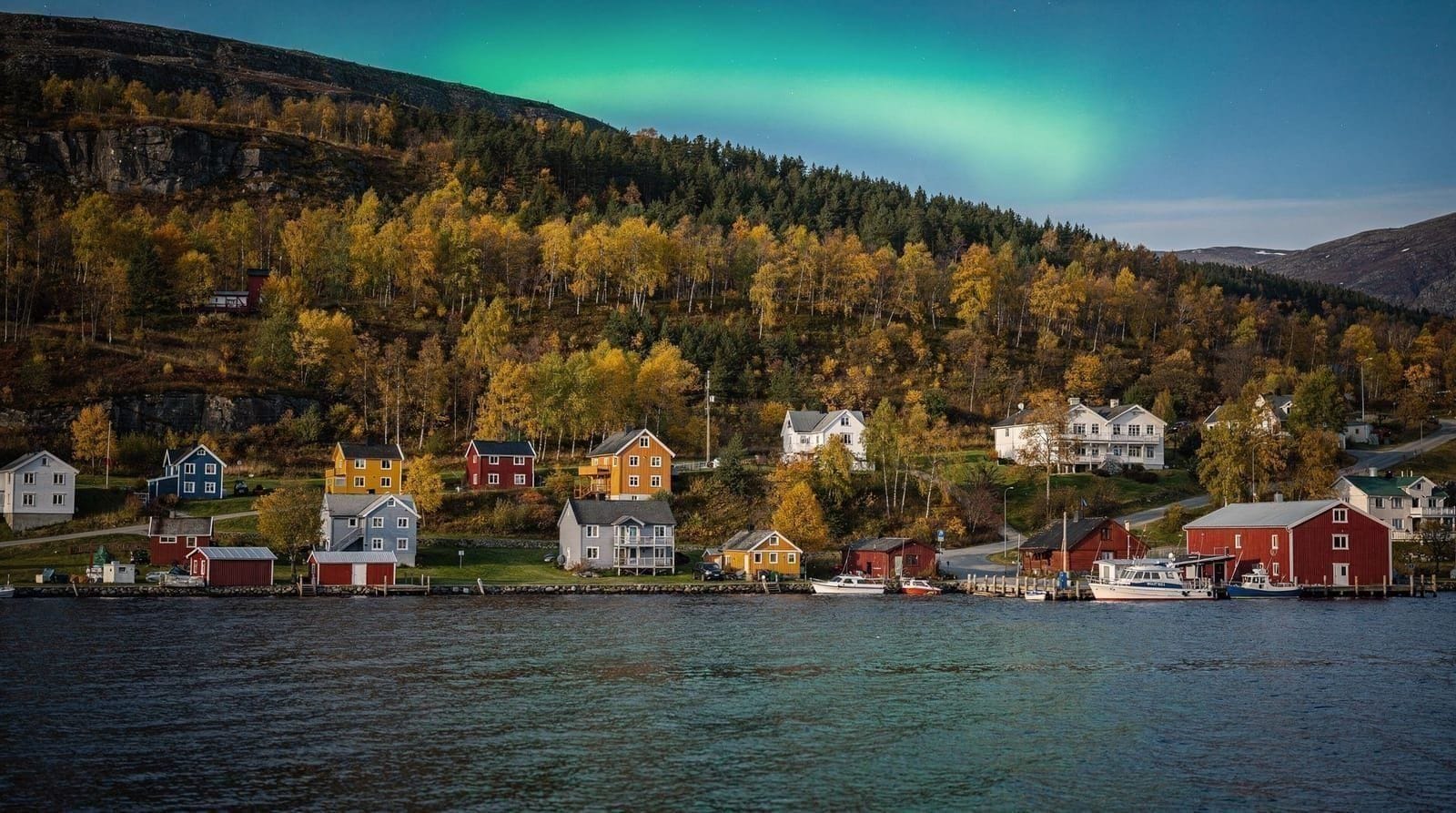
September–October: Growing darkness means aurora possible from mid-September; hiking still accessible; autumn colours; much cheaper than winter. But dog sledding and whale watching have not started yet.
March–April: Snow still deep enough for dog sledding and snowmobile; aurora still possible in early March; daylight growing rapidly. Best-value window for combining winter activities with proper light.
These shoulder months are genuinely the value sweet spots for travellers willing to accept some trade-offs in activity availability. For a month-by-month breakdown, the best time to visit Tromsø guide covers all twelve months rather than just the two extremes, and the dedicated Tromsø in September guide and Tromsø in February/March guide go deeper on those specific windows.
Budget impact of the season you choose
Season is the single biggest lever on trip cost in Tromsø, more than accommodation class or number of activities. Winter aurora tours, dog sledding, and whale watching all sit above 1,500 NOK per person, and hotel rates climb through December–January. Summer swaps those costs for cheaper hotels and lower-cost hiking and kayaking days. The Tromsø daily budget guide breaks down realistic daily spend for both seasons, and is worth reading before you commit to travel dates.
Packing differently for each season
The two seasons require almost entirely different kit. Winter demands proper Arctic layering — thermal base layers, an insulated outer shell, waterproof boots rated for -20°C, and warm accessories; the Tromsø packing guide has the full list. Summer needs far less: a light waterproof shell for the frequent rain, layers for temperature swings between 8–18°C, and a sleep mask for the midnight sun. Do not assume a “Norway packing list” written for winter applies to a July trip, or vice versa.
How to decide
Choose winter if:
- Aurora is a primary goal
- Dog sledding, whale watching, or snowmobile are on your list
- Polar night atmosphere appeals
- You are prepared for cold (down to -20°C in inland areas) and proper clothing
Choose summer if:
- Midnight sun hiking or kayaking appeals
- You prefer mild temperatures for outdoor activities
- Budget is a significant factor
- You find the polar night psychologically difficult
- You want to experience Tromsø as a local rather than an aurora-tourist city
Both seasons are valid, rewarding, and very different. The honest answer is: if you can visit twice, do both.
Honest verdict
Frequently asked questions about summer vs. winter in Tromsø
Is Tromsø worth visiting if I cannot see the northern lights?
Absolutely. Even without aurora, winter Tromsø offers dog sledding, whale watching, snowmobile, reindeer experiences, polar night atmosphere, and some of the most dramatic Arctic scenery in Europe. And summer Tromsø — midnight sun hiking, kayaking, fjord drives — is an entirely different compelling destination.
Which season has better food in Tromsø?
Year-round quality is similar at the top restaurants. Summer brings some seasonal Arctic ingredients (cloudberries, fresh herbs, summer king crab). Winter brings traditional slow-cooked dishes (bidos reindeer stew, lamb, stockfish). Both seasons have excellent food at places like Fiskekompaniet, Risø, and Emmas Drømmekjøkken.
Can I sleep with the midnight sun in Tromsø?
Hotels fit blackout blinds in summer rooms. A sleep mask is useful as a backup. Most visitors adapt to the constant light within a day or two. The more common summer complaint is not the light itself but the temptation to stay active until 3 a.m. because it looks like 6 p.m.
Is the summer tourist season in Tromsø actually crowded?
Moderate by global standards, very busy by Tromsø standards. Cruise ships bring day-visitor surges in June–July. The city can feel genuinely crowded on peak summer weekend afternoons. By contrast, summer weekday mornings are peaceful. Late August is noticeably quieter than July.
Do I need a guided tour in summer as much as in winter?
Less so. Summer hiking and kayaking are independently accessible with basic outdoor competence. You do not need a guide to hike Tromsdalstinden or kayak at Sommarøy (with appropriate experience). Winter guided tours are more essential because driving on dark Arctic roads in polar night conditions is not recommended for tourists, and the aurora chase is logistically complex.
Which season is cheaper overall for a Tromsø trip?
Summer, by a meaningful margin. Hotel rates run 30–60% lower than the December–January peak, and independent hiking or kayaking days cost nothing beyond gear you may already own. The Tromsø daily budget guide has full figures for both seasons if cost is the deciding factor.
Can I do a short winter trip and still see the aurora?
Yes, but a short trip raises the risk of missing it to weather — aurora sightings depend on clear skies as much as solar activity. Three to four nights gives a reasonable chance; two nights is a gamble. See how many days in Tromsø for realistic trip-length planning around aurora odds.
Top experiences
Bookable activities with verified prices and instant confirmation on GetYourGuide.