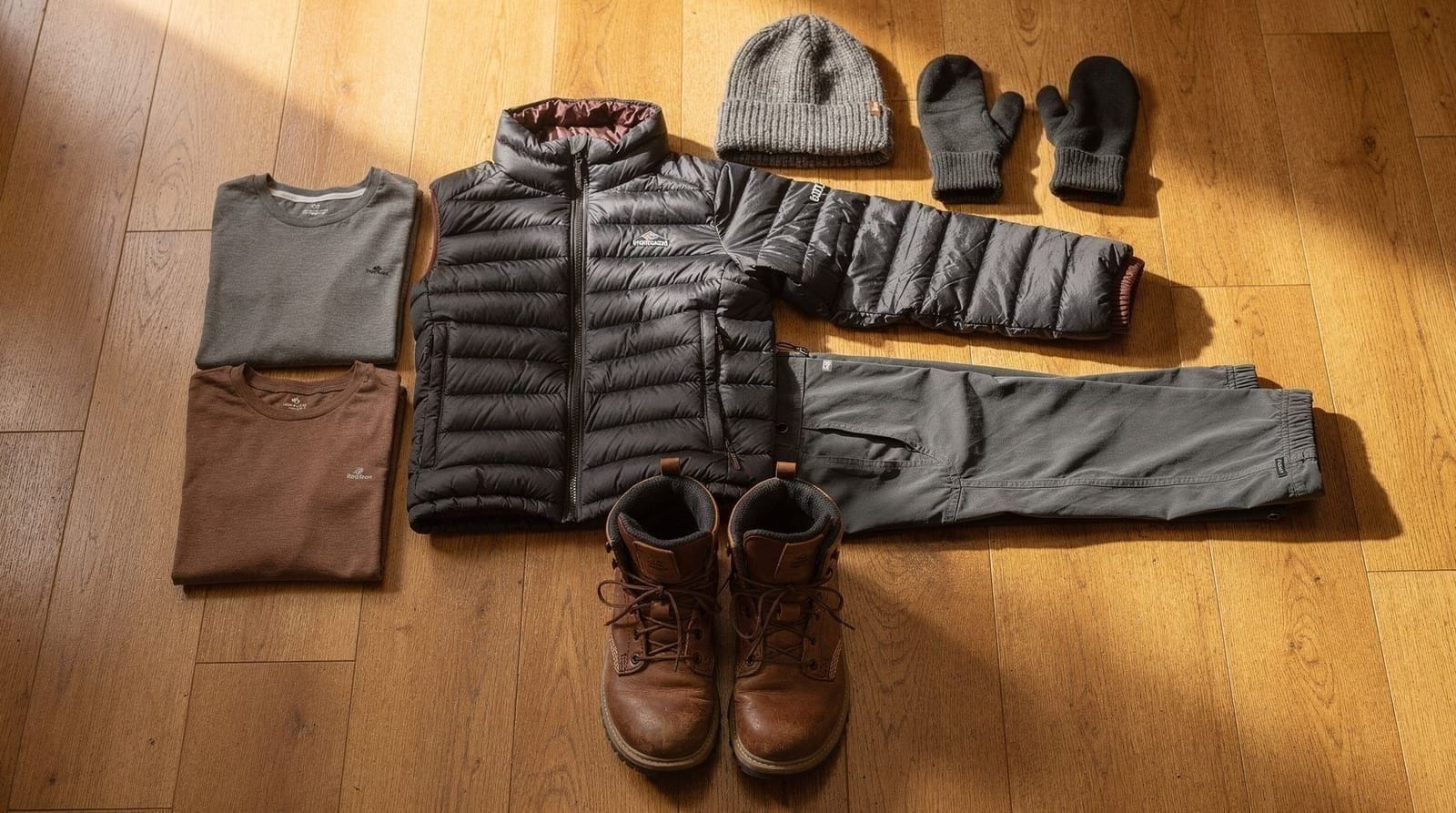
Hiking gear for Tromsø — what to pack for Arctic trails in every season
From Tromsø: Snowshoeing Hike with Picnic Lunch and Photos
What gear do you need for hiking around Tromsø?
The essentials for any Tromsø hike are waterproof boots with ankle support, a wind/waterproof jacket, a warm mid-layer, trekking poles, and enough water. In winter (Oct–Apr), add micro-spikes or crampons, insulating base layers, hat, gloves, and on steep terrain above 400 m, avalanche safety equipment. Cotton is not appropriate in Arctic conditions.
| Core rule | no cotton, ever, in any season |
| Footwear | trail shoes (summer, low trails) to insulated boots + spikes (winter) |
| Rent locally | snowshoes, micro-spikes, crampons, 100–300 NOK/day |
| Bring from home | waterproof jacket, hiking boots |
| Buy in Tromsø | Norrøna (premium), Intersport (mid-range), Clas Ohlson (budget) |
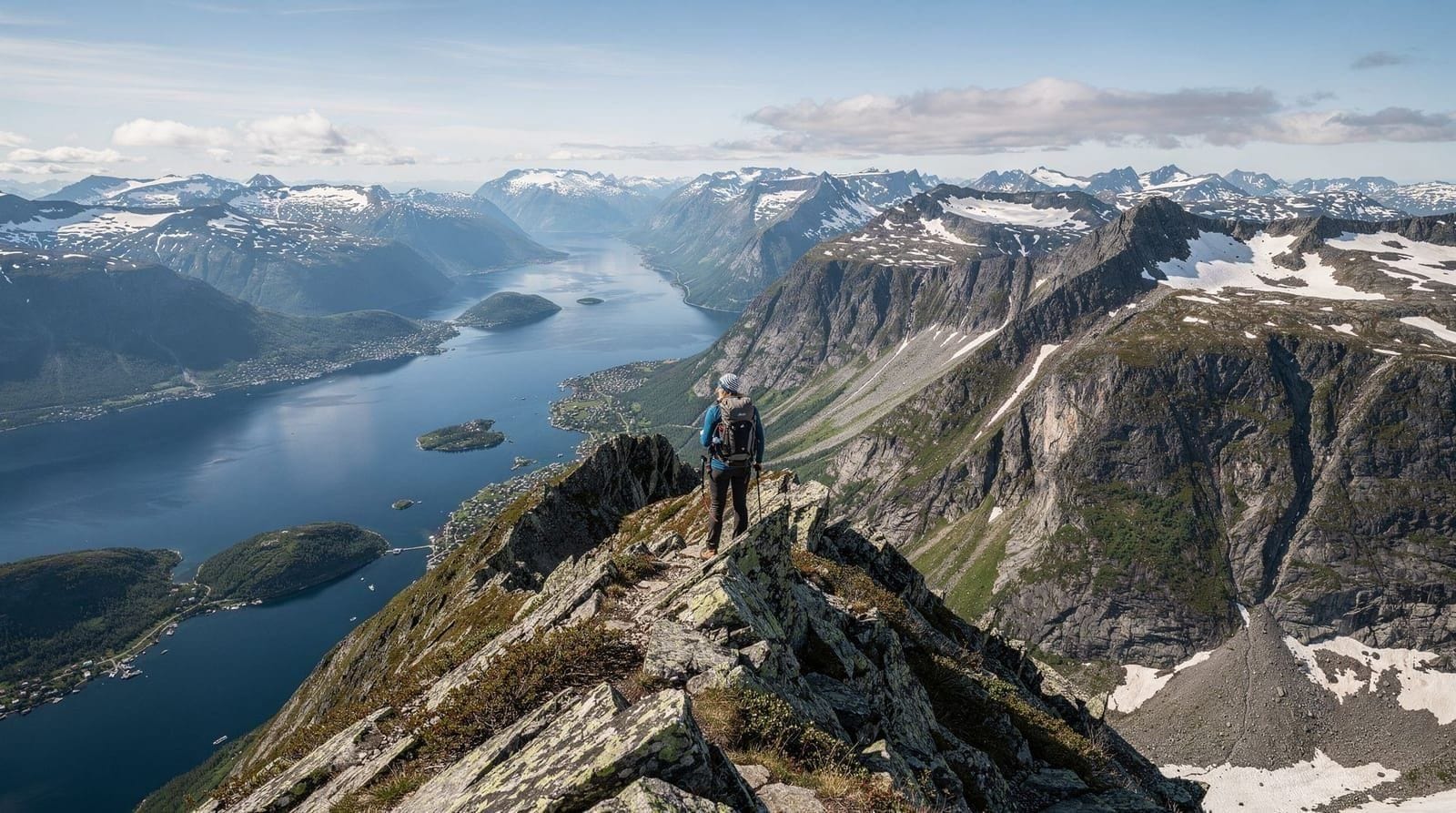
The mountains around Tromsø are genuinely arctic — not in a marketing sense, but in the practical sense that the weather can be wet, cold, and windy in any month, that snow covers most trails above 400 m from October to May, and that under-prepared hikers get into trouble every season. This guide gives you an honest packing list, explains why each item matters in the specific context of Tromsø’s environment, and tells you what you can rent locally rather than bringing.
The single most important principle: no cotton
Cotton absorbs moisture, provides no insulation when wet, and takes a long time to dry. In Arctic conditions — rain, fog, or sweat on a steep climb followed by a cold windy descent — a cotton base layer can be a hypothermia risk. Every layer touching your skin should be either merino wool or a synthetic moisture-wicking fabric. This is not a preference; in Tromsø’s climate, it is a safety decision.
Footwear
Summer (June–September) lower trails (below 400 m, non-scree): Trail running shoes with reasonable grip work on the Storsteinen Sherpa trail and coastal walks on Kvaløya and Sommarøy.
Summer — Tromsdalstinden, Senja Segla, or any loose-scree terrain: Ankle-support hiking boots are required. The loose scree sections on these routes demand lateral stability. Look for boots with a stiff sole (for stepping on rock edges), firm ankle cuff, and waterproof membrane.
Winter / shoulder seasons (Oct–May): Waterproof hiking boots with some insulation (or combined with thick wool socks). The boots must accommodate traction devices. Thin trail shoes on icy stone steps are genuinely dangerous — the consequences of slipping on Tromsdalstinden’s upper section are serious.
Traction devices:
- Micro-spikes: Lightweight chain-and-spike devices that stretch over your boot. Excellent on icy paths and moderate slopes. Suitable for Storsteinen trail, coastal winter walks.
- Crampons: Full rigid frames with longer spikes. Required for steep icy slopes, ice climbing, or glacier approach. Heavier and more technical to fit.
Renting micro-spikes in Tromsø: available from outdoor retailers on Storgata for around 100–150 NOK per day.
Layering system — the three-layer model
Layer 1 — Base: moisture management
Function: move sweat away from your skin to prevent cooling.
Best options: Merino wool (e.g. Icebreaker, Woolpower, Smartwool) — naturally odour-resistant, good insulation even when damp, comfortable. Or synthetic base layers (Helly Hansen, Patagonia Capilene, Odlo) — faster drying than merino.
Weight: For summer hiking, a midweight base layer (150–200 g/m²) is versatile. For winter, heavyweight merino (250 g/m² or Woolpower 400 series) makes a significant difference.
Layer 2 — Mid: insulation
Function: trap warm air close to your body.
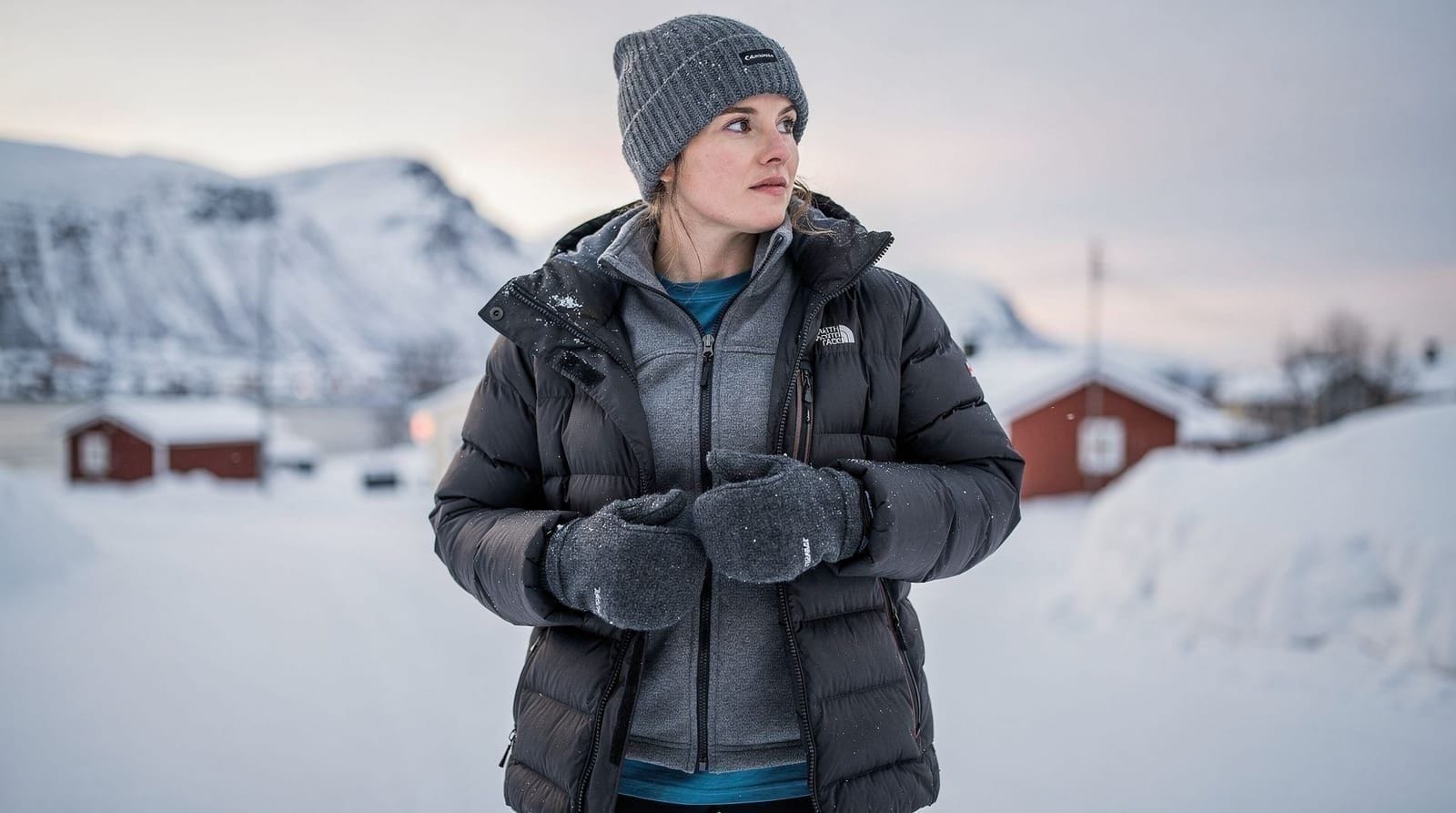
Best options: Fleece (Patagonia R1/R2, Salewa Puez, Norrøna) — excellent warmth-to-weight and maintains function when wet. Or light down (Patagonia Nano Puff, Arc’teryx Cerium) — lighter but loses most insulation when wet, so only appropriate under a waterproof shell.
For winter hiking, a medium-weight fleece worn under the shell is more practical than down, because you will sweat on uphills and need the insulation to maintain some value in damp conditions.
Layer 3 — Outer: wind and waterproofing
Function: block wind and repel rain.
Non-negotiable in Tromsø. The mountains can produce horizontal rain, sleet, or wet snow in any month. A “water resistant” soft shell is not sufficient for Tromsdalstinden or the Lyngen Alps.
What to look for: Gore-Tex or equivalent waterproof-breathable membrane. Sealed seams. Helmet-compatible hood. Pit zips for ventilation on uphills.
In summer: Even a lightweight hardshell (Marmot Precip, Patagonia Torrentshell) is fine for most day hikes.
In winter: A more robust hardshell with inner insulation layer, or paired with a heavyweight fleece mid.
Trousers
Summer: Softshell hiking trousers or waterproof trousers. Jeans are entirely inappropriate — they become cold and heavy when wet. Shorts work below treeline in good weather but have no place in a pack above 400 m without backup.
Winter: Waterproof trousers over thermal leggings. In deep cold, insulated ski-style trousers are more comfortable. On snowshoe tours, waterproof outer trousers are essential.
Trekking poles
Optional on flat terrain and the lower Sherpa trail. Valuable on Tromsdalstinden’s scree sections (both up and down). Essential for:
- Any descent on loose rock or scree
- Icy terrain in winter (with removable rubber tips replaced by sharp carbide tips)
- Steep snowshoe terrain
- Anyone with knee issues
Modern foldable poles (Black Diamond, Leki, CAMP) collapse small enough to stash in a pack when not needed. Fixed-length poles are more rigid but less convenient.
Hydration and food
Water sources above the treeline in Tromsø’s mountains are not always reliable in summer. Bring at least 1.5–2 litres per person for any full-day hike. In winter, water sources are frozen — carry everything you need plus a hot thermos.
Food: High-calorie dense foods outperform elaborate picnics in cold weather. Nuts, chocolate, energy bars, hard cheese, crispbread. One real sandwich is fine. A hot drink in a thermos raises morale significantly in polar night or cold conditions.
Navigation
Essential tools:
- Ut.no app (Norwegian hiking app — download regions offline before leaving Tromsø)
- yr.no (Norwegian weather service — more accurate for Norwegian mountains than international apps)
- Paper 1:50,000 Statens Kartverk map of Tromsø/Kvaløya
Mobile signal is unreliable above the treeline on most Tromsø area peaks. Download everything before you leave.
Safety kit
Minimum for any mountain hike:
- Whistle
- Emergency foil blanket (mylar) — packs to 50g, can save a life in emergency shelter situation
- First aid kit: plasters, bandage for sprains, ibuprofen
- Headtorch (even in summer — you may be out longer than planned)
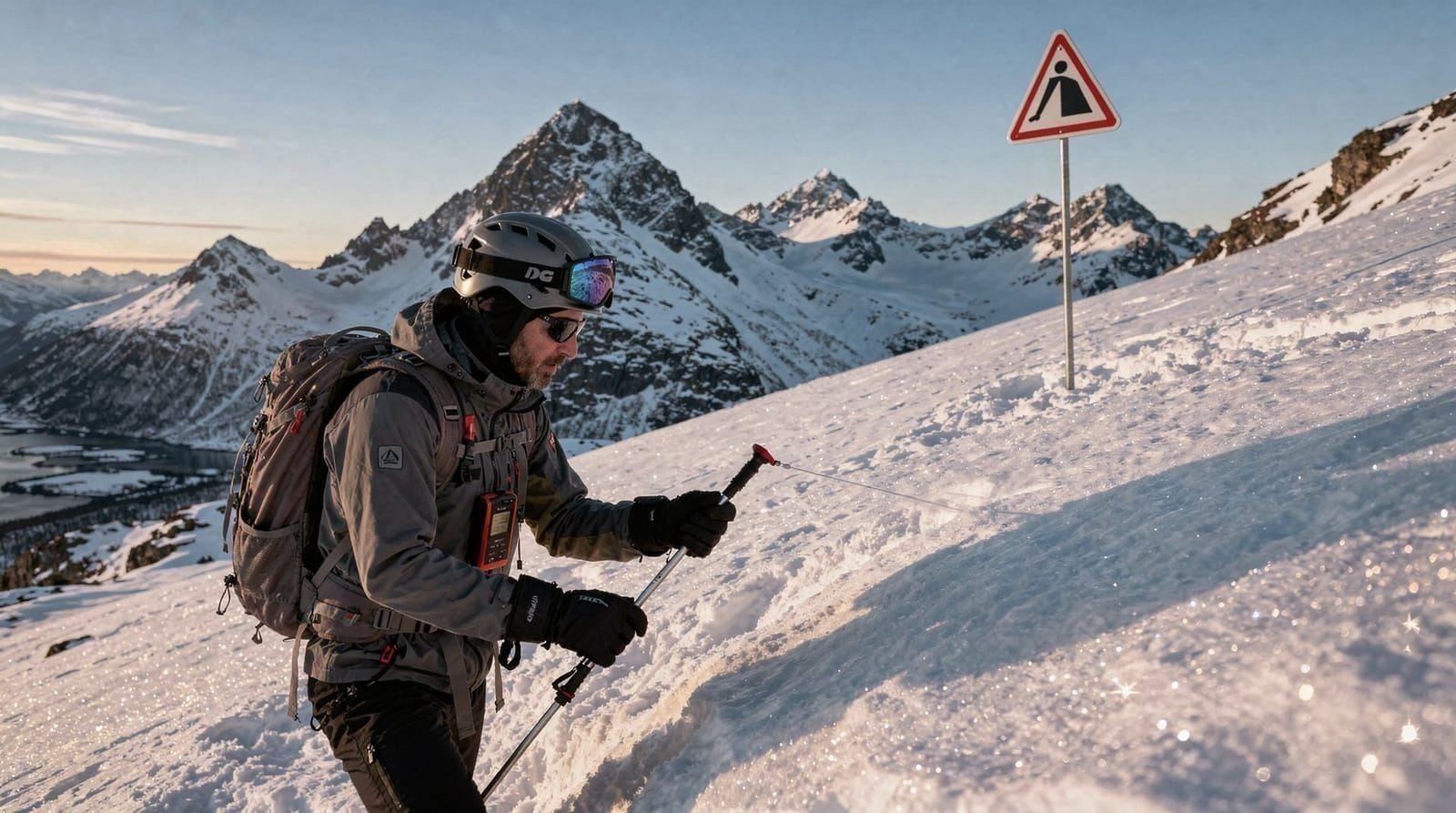
Winter mountain hiking (October–April above 400 m, avalanche terrain):
- Avalanche transceiver (worn on body, not in pack)
- Avalanche probe
- Collapsible shovel
- Plus all of the above
See our avalanche safety and hiking guide for how to use this equipment.
What to rent in Tromsø vs bring from home
| Item | Rent locally | Bring from home |
|---|---|---|
| Snowshoes | Yes | Only if you have them |
| Micro-spikes | Yes | Compact enough to bring |
| Crampons | Yes | Depends on trip type |
| Hiking poles | Yes | Compact folders travel well |
| Waterproof jacket | Bring — not rentable | Yes |
| Hiking boots | Bring | Yes |
| Thermal suits (for tours) | Included in most tours | No need |
Outdoor retailers in Tromsø: Norrøna on Storgata, Intersport in the city centre, and Clas Ohlson for budget items. Prices are Norwegian — expect 300–600 NOK for base layers, 1200–2500 NOK for quality waterproof jackets.
Guided snowshoe tours — gear included
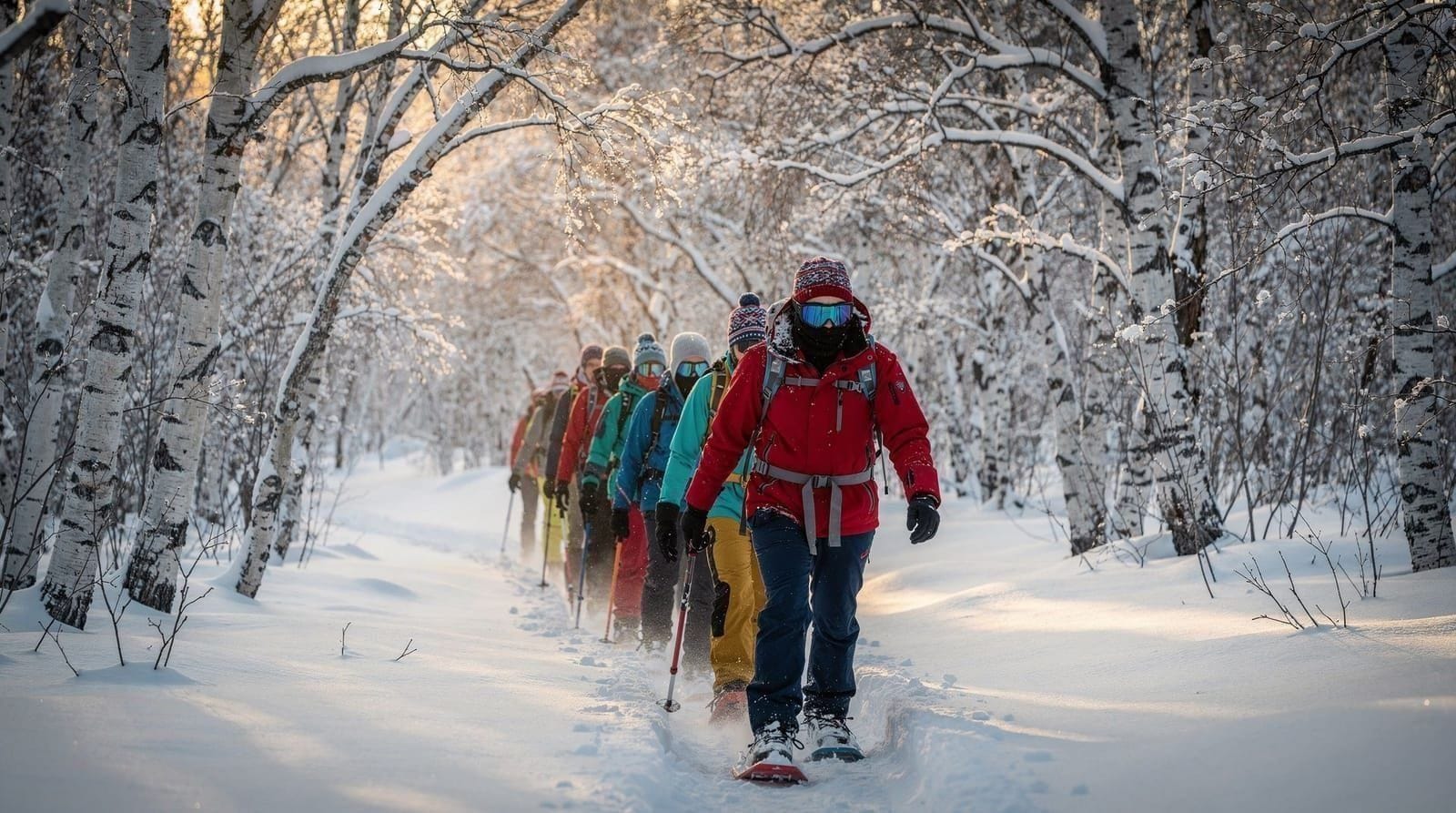
If you book a guided snowshoe tour, the operator typically provides snowshoes, poles, and sometimes insulated overalls. You need your own base layers, mid-layer, waterproof outer, boots, hat, and gloves.
Buying gear in Tromsø — what is available and at what price
Tromsø has a reasonable selection of outdoor gear retailers for a city of 75,000 people. If you need to purchase items on arrival (or if you forget something at home), the main options:
Norrøna Store, Storgata: The premium Norwegian outdoor brand. Expensive (jackets 3000–6000 NOK) but genuinely high quality. The staff know their products and Tromsø’s conditions specifically. Worth visiting even just to ask for recommendations.
Intersport, Tromsø Storsenter: Broader range of brands and price points. Mid-range hiking boots, waterproof jackets, base layers, trekking poles, sleeping bags. More affordable than Norrøna. The staff are helpful but may not have the same depth of local mountain knowledge.
XXL (if currently operating in Tromsø): Large format sports/outdoor retailer with competitive prices on mainstream brands. Good for budget items — base layers, basic waterproofs, camp food.
Clas Ohlson: Electronics and practical items. Not a gear retailer but useful for headtorches, batteries, small kit items at reasonable prices.
Renting vs buying: For items you will use only in Tromsø and not take home, rental is often more economical. Snowshoes, micro-spikes, and crampons rent for 100–300 NOK per day — buying equivalent equipment in Norway costs 800–2000 NOK.
Packing for a combined winter activities trip
Many visitors combine multiple winter activities in a 4–7 day Tromsø trip: aurora chasing, dog sledding, snowshoeing, and perhaps a fjord cruise. Gear requirements for these activities overlap significantly.
The overlap:
- The thermal layers you need for aurora nights are the same as for snowshoeing
- The waterproof jacket you need for snowshoeing is the same as for the fjord cruise deck
- The wool socks you wear for hiking serve in winter boots for dog sledding
What operators provide (and what you still need to bring):
- Dog sledding: thermal suits and boots provided; but you need your own base layers, hat, and thin gloves
- Snowshoeing: snowshoes and poles provided; you need your own layering system and boots
- Aurora tours (vehicle-based): operators may provide blankets and hot drinks but not clothing; you wear your own
A Tromsø winter packing list is one of the most important pre-trip planning tasks. Our Tromsø packing guide covers the full multi-activity scenario.
Weight management on longer hikes
For day hikes in Tromsø’s mountains, pack weight matters. An overloaded pack creates fatigue that increases fall risk on the descent. Some guidance:
Minimum viable pack for a summer day hike to Tromsdalstinden:
- Waterproof jacket: 500–900g
- Warm mid-layer: 300–500g
- 2L water (2kg)
- Food: 500g–1kg
- First aid: 300g
- Headtorch + emergency blanket: 200g
- Trekking poles: 300–500g (carried on the body)
Total: 4–6 kg. This is a reasonable load for a full-day mountain hike.
Common mistakes:
- Bringing too much food (you eat one good meal on a hike, not three)
- Carrying heavy DSLR gear on technical terrain without a hip belt to distribute weight
- Multiple liters of spare clothes “just in case” — one spare base layer is sufficient
Trekking poles: The weight saving of poles is in energy, not physical weight. Poles reduce the impact load on knees on descents by 20–30% — the equivalent of the weight reduction of shaving grams off your kit. Invest in poles before worrying about base layer gram weights.
Seasonal gear checklist by trail difficulty
| Trail type | Example | Summer gear | Winter gear |
|---|---|---|---|
| Easy, low elevation | Sherpa trail to Storsteinen, Kvaløya coastal walks | Trail shoes, light jacket | Micro-spikes, insulated boots |
| Moderate, scree | Tromsdalstinden | Ankle-support boots, poles | Not recommended without avalanche gear |
| Coastal/beach | Sommarøy walks | Trail shoes, wind layer | Insulated boots, hat, gloves |
| Alpine, avalanche terrain | Lyngen Alps routes | Boots, poles, weather layer | Full avalanche kit — see below |
For anything above 400 m between October and May, pair this packing list with our avalanche awareness and safety guide before you commit to a route — gear alone does not manage avalanche risk.
Packing for the specific hikes covered on this site
Different named trails around Tromsø call for slightly different kit emphasis. The Fjellheisen and Storsteinen hike is forgiving in summer but needs micro-spikes on the stone Sherpa steps from October onward. Midnight sun hikes run late into the evening when temperatures drop even in June — bring a mid-layer regardless of how warm the afternoon felt. For snowshoeing tours, most operators supply the snowshoes and poles but expect you to arrive with your own base layers and waterproof outer shell already covered above.
Guided scenic snowshoeing tour with equipment included — a low-gear-investment way to try winter hikingFrequently asked questions about hiking gear for Tromsø
Do I need special boots for Tromsø hiking?
Ankle-support waterproof hiking boots are recommended for any route above 400 m or on loose scree (Tromsdalstinden, Senja Segla). October–April, add micro-spikes or crampons. Trail shoes are insufficient in winter.
What is the layering system for Arctic hiking?
Three layers: moisture-wicking base (merino or synthetic — never cotton), insulating mid (fleece), windproof/waterproof outer (hardshell). In winter, all three are typically in use; in summer, you carry the outer in your pack.
Can I rent gear in Tromsø?
Yes — snowshoes, micro-spikes, and crampons can be rented from outdoor retailers. Guided tours often include specialist equipment in the price.
Do I need avalanche safety equipment?
For winter hiking on terrain with slopes above 30 degrees or below steep faces — yes. Transceiver, probe, and shovel are the minimum. Only useful if you have training.
What is the worst gear mistake for Tromsø?
Wearing cotton as a base layer. Merino wool or synthetic is required for all layers in Arctic conditions.
What traction devices do I need?
Micro-spikes for icy paths (most winter hikes). Full crampons for steep ice or glacier terrain. Micro-spikes are available to rent locally.
Do I need different gear for the Sherpa trail versus Tromsdalstinden?
Yes. The Sherpa trail to Storsteinen is manageable in trail shoes with micro-spikes in winter. Tromsdalstinden requires ankle-support boots year-round because of loose scree, and full avalanche gear in winter conditions.
Can I get by with rented gear for a single guided hike?
Yes — most guided snowshoe and hiking tours supply snowshoes, poles, and sometimes thermal outerwear. You still need your own base layers, waterproof jacket, boots, hat, and gloves.
Top experiences
Bookable activities with verified prices and instant confirmation on GetYourGuide.