Winter driving in Arctic Norway: what nobody tells you before you rent
I want to be specific about what Arctic winter driving involves, because the standard car rental briefing — “winter tyres are included, good luck” — leaves out most of the relevant information. I drove around Tromsøya, Kvaløya, and into the Tamok Valley over a ten-day period in February. Here is what I learned.
| Where | Tromsøya, Kvaløya, Tamok Valley, and beyond via ferry to Senja/Lyngen |
| Cost | Rental around 700–1,100 NOK/day; fuel around 22–24 NOK/litre |
| Time needed | Factor extra time for winter road conditions vs. normal driving times |
| Getting there | Rental cars available at TOS airport, studded winter tyres standard |
| Best time | Winter tyres mandatory 1 November–first Sunday after Easter |
Winter tyres are mandatory — and already fitted
Every rental car in Norway is legally required to have winter tyres from 1 November to the first Sunday after Easter. Reputable rental companies (Hertz, Budget, Enterprise at TOS airport) fit studded winter tyres as standard. You do not pay extra for this. What you do pay for is the mandatory winter equipment: ice scraper and snow brush (usually in the car), and whether you want the optional winter driving kit some companies offer.
Studded tyres grip ice dramatically better than standard all-season tyres. On a packed-snow road at -10°C, a car with studded tyres behaves reasonably normally. On ice-sheet road conditions — which happen on bridges, shaded stretches, and descents after thaw-freeze cycles — even studded tyres can slide.
The relevant rule: always assume that bridges, shaded road sections, and descents are icier than the road you just drove.
The road condition you should most fear: black ice on a descent
The E8 toward Sweden, the road over Kvaløya toward Sommarøy, and several mountain roads near Lyngen have significant descents. After a day of near-zero temperatures followed by overnight freeze, these descents become ice sheets that are invisible until your car starts moving sideways.
The technique: brake before the descent, not on it. Engage low gear. Accept that you will travel at 20–30 km/h. Never use cruise control in winter conditions.
If the car starts to slide: steer into the slide (not against it), release the brake, and wait for traction to return. Do not hit the brakes again until you have traction. This is counterintuitive and hard to do when frightened — which is why practicing it mentally before you need it matters.
Road conditions: the Statens vegvesen app
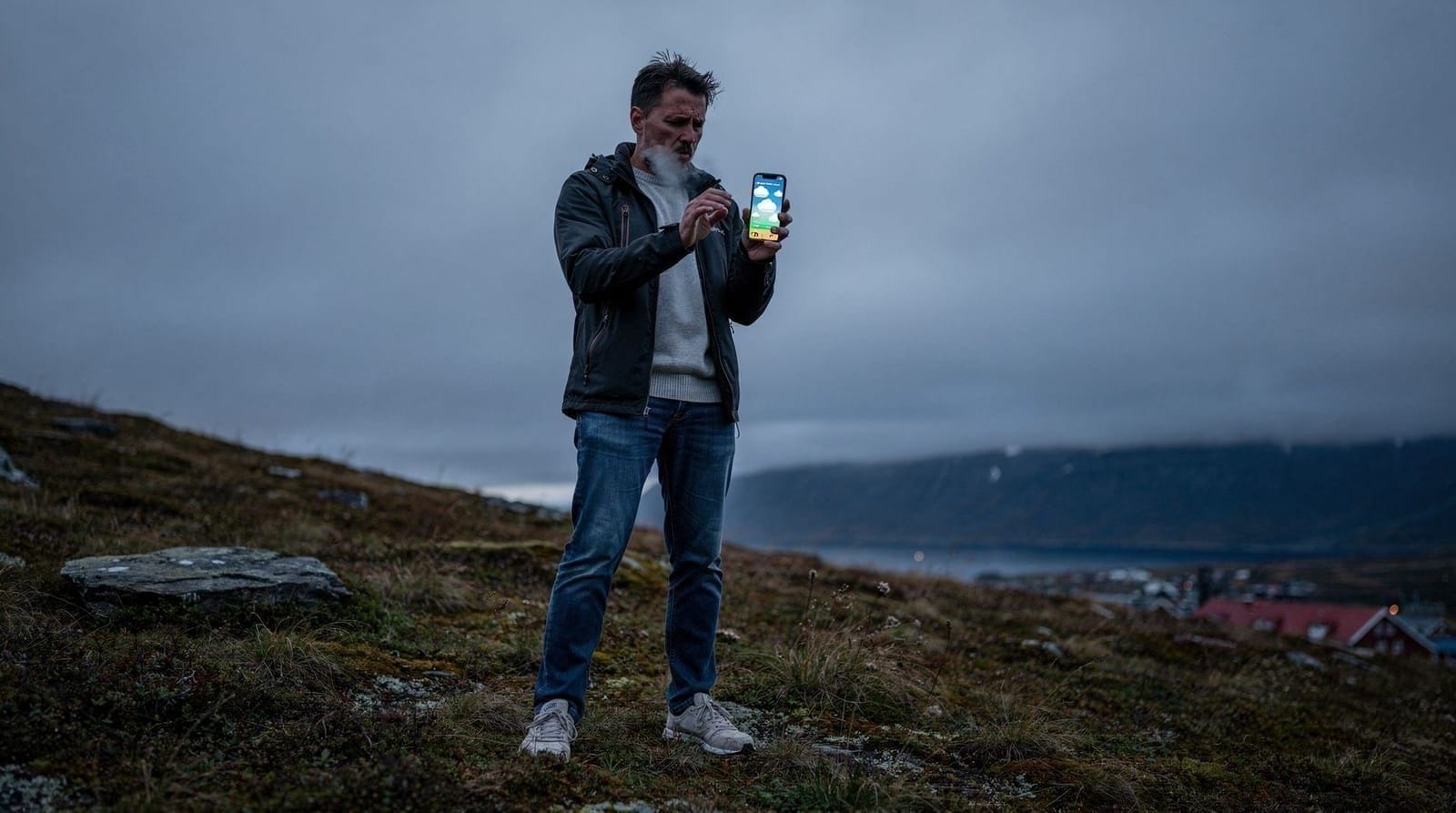
The Norwegian Public Roads Administration (Statens vegvesen) publishes real-time road condition updates, including closed roads, ice warnings, and ploughing schedules. The app is called “Vegmeldinger” and has an English-language interface. Before driving any mountain road — particularly the Lyngen ferry approach, the road over to Tamok Valley, or the Senja road — check this app.
Some mountain roads in the Lyngen area close when wind speeds exceed certain thresholds. The E69 to North Cape (not directly relevant to Tromsø but the pattern is the same) closes multiple times each winter due to avalanche risk. The getting around Tromsø guide includes links to the relevant resources.
Reindeer on the road
This is not a folkloric warning. Reindeer graze near roads throughout the Tromsø region, and they are most active at dawn and dusk — which in winter is basically all day. They do not behave like deer: they do not flee from headlights. They stand in the road. They follow each other in single file across the road. They sometimes follow a scent trail that happens to run along the tarmac.
A reindeer struck at 80 km/h will total your rental car and may enter the windscreen. This is not hyperbole. Drive at 60–70 km/h on rural roads in Tromsø county rather than the posted 80 km/h limit, especially during the hours of twilight.
If you see one reindeer, assume there are more behind it. Stop. Wait. Do not drive through the herd.
Aurora hunting by car: the specific challenges
Self-drive aurora hunting requires driving on dark, rural roads in winter conditions to reach dark-sky sites. This is manageable but has specific risks that daytime tourist driving does not:
You cannot see ice in the dark. The headlights illuminate black tarmac that may be wet, may be polished ice, or may be fine. Drive slower than you think necessary on any rural road after dark.
Parking areas at dark-sky sites are sometimes on slopes. If you park on a slope and the ground is ice, you may find that the car slides when you try to leave. Park perpendicular to any slope, engine pointing uphill.
Temperatures drop fastest on clear nights. A clear aurora night might start at -8°C and reach -18°C by 1 a.m. This affects tyre pressure (drops in cold, affecting grip) and battery performance (older batteries fail in extreme cold). Warm the car for 5 minutes before driving if it has been stationary for more than 2 hours at temperatures below -15°C.
What to do if you get stuck
Rental cars in Norway typically come with a basic emergency kit. What they often do not include: a proper traction board or sand bag. If you drive off the main road onto a viewpoint or pull-out area and the ground turns out to be softer than it looked, you can sink the front wheels into snow.
The technique: clear snow from around the tyres manually, rock the car gently between reverse and first gear to compact the snow under the tyres, and try to exit in the direction of least resistance. If this does not work within five minutes, stop — spinning the wheels only digs you deeper.
The emergency number in Norway is 112. Your rental car’s roadside assistance number should be in the glove compartment. In my experience, Norwegian roadside assistance is fast — typically 30–60 minutes outside urban areas.
The ferry question
Getting to Lyngen and Senja involves car ferries. The Lyngen ferry crosses from Breivikeidet or Svensby; Senja is accessed via the bridge from E6 but some of the best roads require ferry connections. Ferries in northern Norway run year-round and are generally reliable, but check the Statens vegvesen ferry schedule app (Ferjedrift) and note that high winds can cause cancellations on the smaller crossings.
The Senja day trip guide and Lyngen day trip guide cover the logistics with current ferry information.
The car rental economics
Car rental at TOS airport in winter costs roughly 700–1100 NOK per day depending on vehicle class, length of rental, and lead time. Book at least two weeks ahead in peak season (December–February). Smaller hatchbacks handle winter roads adequately; you do not need a 4WD unless you are planning off-piste driving, which you should not be doing without specific experience.
Fuel in Norway is expensive: approximately 22–24 NOK per litre for petrol in 2026. A day of driving around Tromsøya and Kvaløya (150–200 km) costs roughly 150–200 NOK in fuel for a small car.
The car rental guide covers insurance specifics, which matter: the standard excess on Norwegian rentals can be 15,000–25,000 NOK, which is a significant financial risk on icy roads. Collision damage waiver is worth purchasing.
Comparing self-drive vs. guided alternatives
| Self-drive | Guided tour | |
|---|---|---|
| Cost | 700–1,100 NOK/day + fuel + excess risk | Fixed price, no driving risk |
| Flexibility | High — own pace and route | Fixed schedule |
| Skill needed | Winter driving confidence | None |
| Best for | Confident winter drivers, multi-stop trips | First-timers, single destinations |
If the driving conditions above sound like more than you want to take on, a guided 4x4 day trip covers similar ground — Kvaløya’s fjords and mountain roads — without the risk calculus falling on you.
Book a guided Kvaløya 4x4 Arctic road trip insteadFrequently asked questions about winter driving in Arctic Norway
Do I need a special licence to drive in Norway in winter?
No. A standard car licence from any country recognised by Norway is sufficient. No special winter driving training or certificate is required.
Are rental cars equipped with winter tyres?
Yes, legally required from 1 November to first Sunday after Easter. Studded tyres are standard at most Tromsø rental companies.
Is a 4WD necessary for winter driving around Tromsø?
Not for typical tourist routes (city, Kvaløya, Senja main road, Lyngen approach). A front-wheel-drive car with studded tyres handles these roads. 4WD is only relevant if you plan off-piste driving.
What is the speed limit on Norwegian roads in winter?
Posted limits apply year-round, but local convention — and police enforcement — tolerates and encourages lower speeds in actual winter conditions. Drive to conditions, not the sign.
What happens if I hit a reindeer with a rental car?
You are legally required to report it to police (112) and remain at the scene. The owner of the reindeer must be notified. Your rental’s collision coverage typically applies; the excess still applies. Never leave the scene.
Is it worth paying for a guided tour instead of self-driving?
For first-time winter drivers, yes — it removes the risk calculus entirely and lets you focus on the scenery rather than the road. Confident winter drivers with time to spare often prefer the flexibility of self-driving instead.
How do I check road and ferry conditions before I go?
Use the Statens vegvesen “Vegmeldinger” app for road conditions and “Ferjedrift” for ferry schedules — both have English-language interfaces and are the most reliable sources for real-time closures and delays.