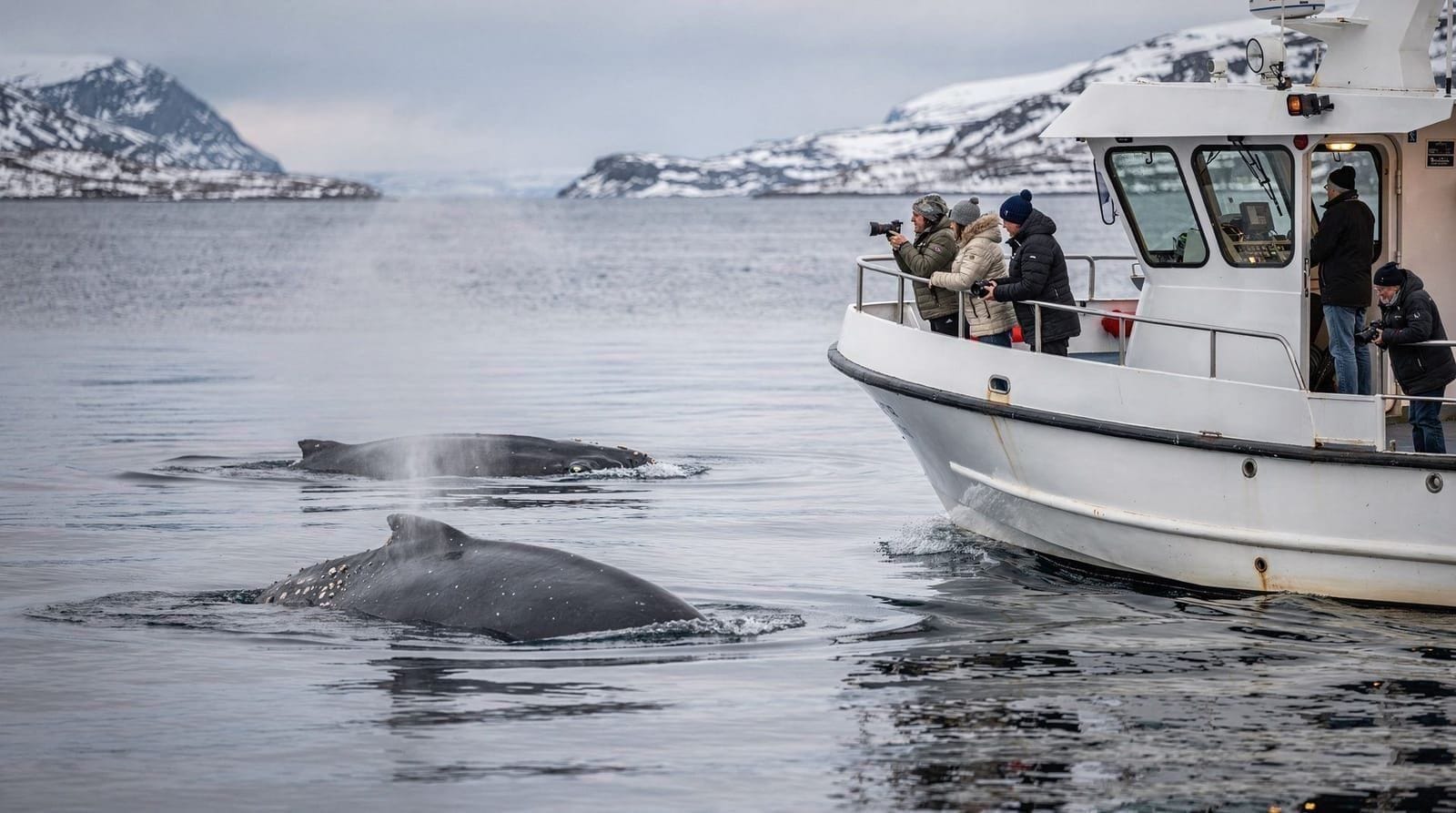
Skjervøy vs Tromsø whale watching — which base is better?
Tromsø: Skjervøy RIB Whale Watching Tour
Is it better to whale watch from Skjervøy or Tromsø?
Skjervøy puts you on the water in the feeding grounds within minutes. Tromsø tours spend 2 hours each way in a van before boarding. If whales are your main reason for visiting, staying in Skjervøy one or two nights is worth it — but Tromsø has far better accommodation and infrastructure.
Bottom line: Skjervøy gives more whale time per hour on the water. Tromsø is more practical for logistics. If you have only one day, a Tromsø-based full-day tour with van transfer included is the simplest solution. If you have two nights to spare, basing in Skjervøy from late November to late December is superior.
| Skjervøy base | 5–7h on water, best for photographers and 2+ night stays |
| Tromsø base | 3.5–5h on water, best for one-day visits and easier logistics |
| Season | Late October–early February, peak November–January |
| Price gap | Tromsø tours ~1,500–1,800 NOK vs Skjervøy-direct ~1,100–1,500 NOK |
| Booking | 2–4 weeks ahead for December dates, either base |
The geography problem with Tromsø whale watching
Most visitors to Arctic Norway base themselves in Tromsø — and for good reason. The city has excellent flights (TOS airport, 4 km from centre), a wide range of hotels from 800 NOK hostels to 3,000+ NOK design hotels, good restaurants, and dozens of tour operators.
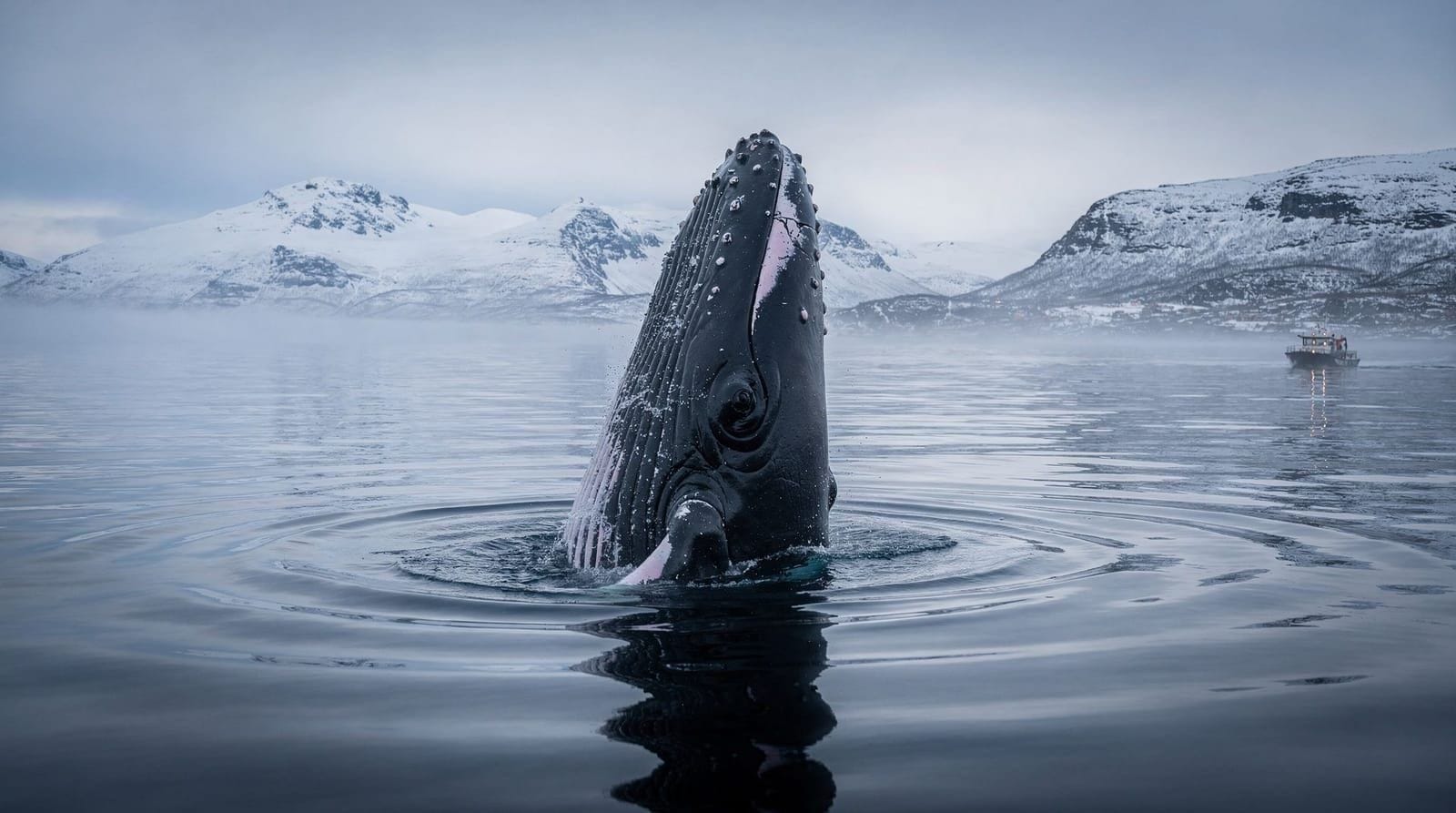
The problem is that whales do not reliably appear in Tromsøysundet (the strait beside the city). The feeding action happens in Kvænangen fjord and the surrounding waters near Skjervøy — approximately 120 km to the northeast.
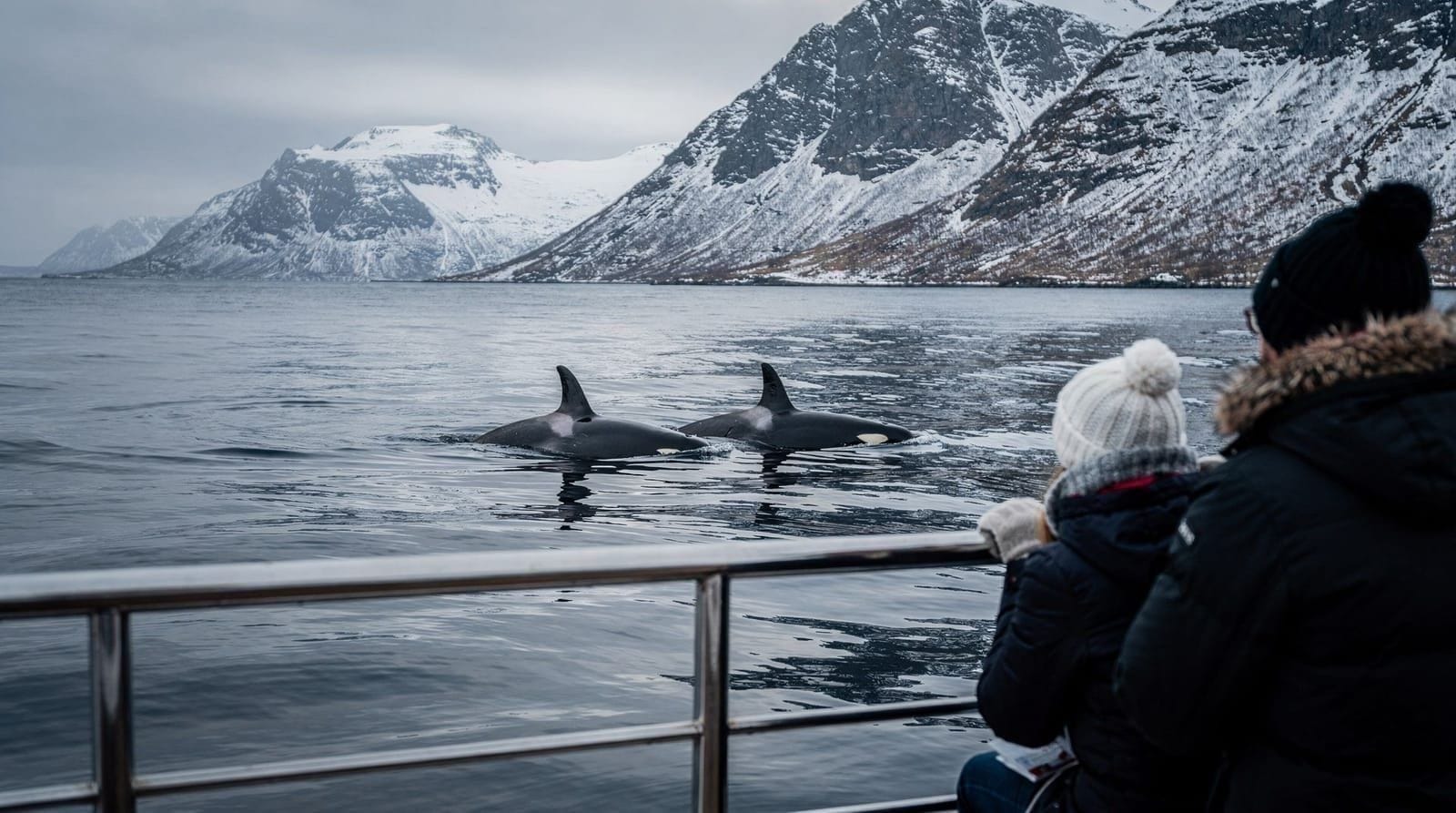
So every whale watching tour from Tromsø involves at minimum a 1.5–2 hour van transfer before you even board a boat. On a standard 10-hour day tour, you might spend 3–4 hours total in a minibus and only 4–5 hours on the water. From Skjervøy, you board in the village harbour and are in the feeding grounds in 10–20 minutes.
Time-on-water comparison
| Departure point | Transfer time | Time on water | Return time |
|---|---|---|---|
| Tromsø centre | ~1.75h each way | 3.5–5h | ~1.75h each way |
| Skjervøy village | 10–20 min each way | 5–7h | 10–20 min each way |
On a full day tour, Skjervøy-based departure typically delivers 1.5–2 extra hours of whale watching. That matters when animal behaviour is unpredictable — more time on water means more chances to encounter feeding activity.
RIB whale watching departing directly from SkjervøyPrice comparison
Tours from Tromsø typically cost 1,500–1,800 NOK when the transfer is included. Tours departing from Skjervøy directly are often 1,100–1,500 NOK because operators save the fuel and driver costs of the city transfer.
If you drive yourself to Skjervøy:
- Car hire for one day: 600–900 NOK
- Fuel for the round trip (240 km): ~200–250 NOK
- Local tour from Skjervøy: 1,200–1,500 NOK
- Total: roughly 2,000–2,650 NOK per person if sharing a car with two people
This compares to 1,690 NOK for a standard Tromsø-departure tour with transfer included. The cost advantage of self-driving is modest unless you have 3–4 people sharing one car, in which case the per-person cost drops significantly.
Accommodation reality check
Skjervøy has around 2,500 inhabitants and limited visitor infrastructure. The main options are:
Skjervøy Hotel: The most reliable option, basic rooms from around 1,200 NOK/night. Books out November–December weeks in advance. Do not assume you can book last minute.
Guesthouses and cabins: A handful of private rentals. Check availability early.
If you cannot secure Skjervøy accommodation, some visitors stay in Nordreisa (around 40 minutes south of Skjervøy) which has slightly more room availability, though it is still a small town.
By contrast, Tromsø has 40+ accommodation options from budget to luxury, and rooms are generally bookable even a week in advance outside of peak aurora season weekends.
When Tromsø-based tours make more sense
Despite the time-on-water advantage of Skjervøy, Tromsø-based tours are better in several scenarios:
You have only one day and do not want to self-drive. A full-day Tromsø tour with included van transfer handles all logistics, is often led by the same guides as Skjervøy trips, and requires no planning beyond booking one tour.
You are combining whale watching with other Tromsø activities. If you want to do a northern lights chase in the evening after your whale tour, staying in Tromsø makes that easy. See northern lights tours compared.
Poor winter driving confidence. The E6 north of Tromsø can have black ice, packed snow, and requires winter-tyre-equipped vehicles. Hiring a car for winter driving in Norway is not beginner-friendly.
The herring have moved. In some seasons operators abandon Skjervøy entirely and chase herring to Kaldfjord (30 minutes from Tromsø) or elsewhere. In those years, being in Tromsø is no disadvantage at all.
Hybrid electric whale watching — full day from Tromsø with transferWhen Skjervøy makes more sense
You have 2+ nights to spare. A night in Skjervøy lets you do an early-morning and late-afternoon trip across two days, maximising chances of seeing both orca feeding frenzies and quieter humpback encounters.
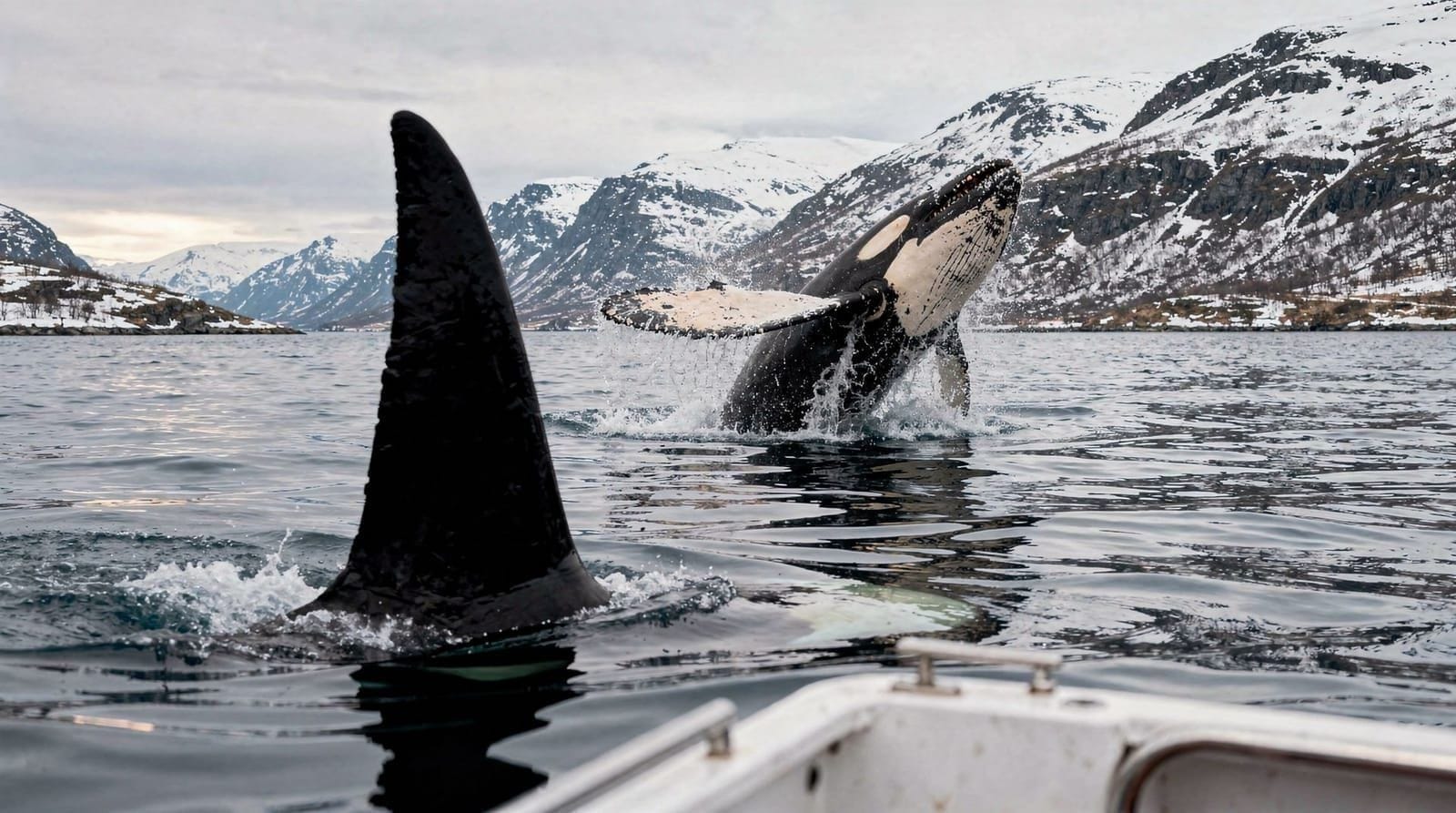
You are a wildlife photographer. Extra hours on the water, closer to feeding activity, matters enormously for camera work. The RIBs departing Skjervøy also get you closer to the animals than large catamarans.
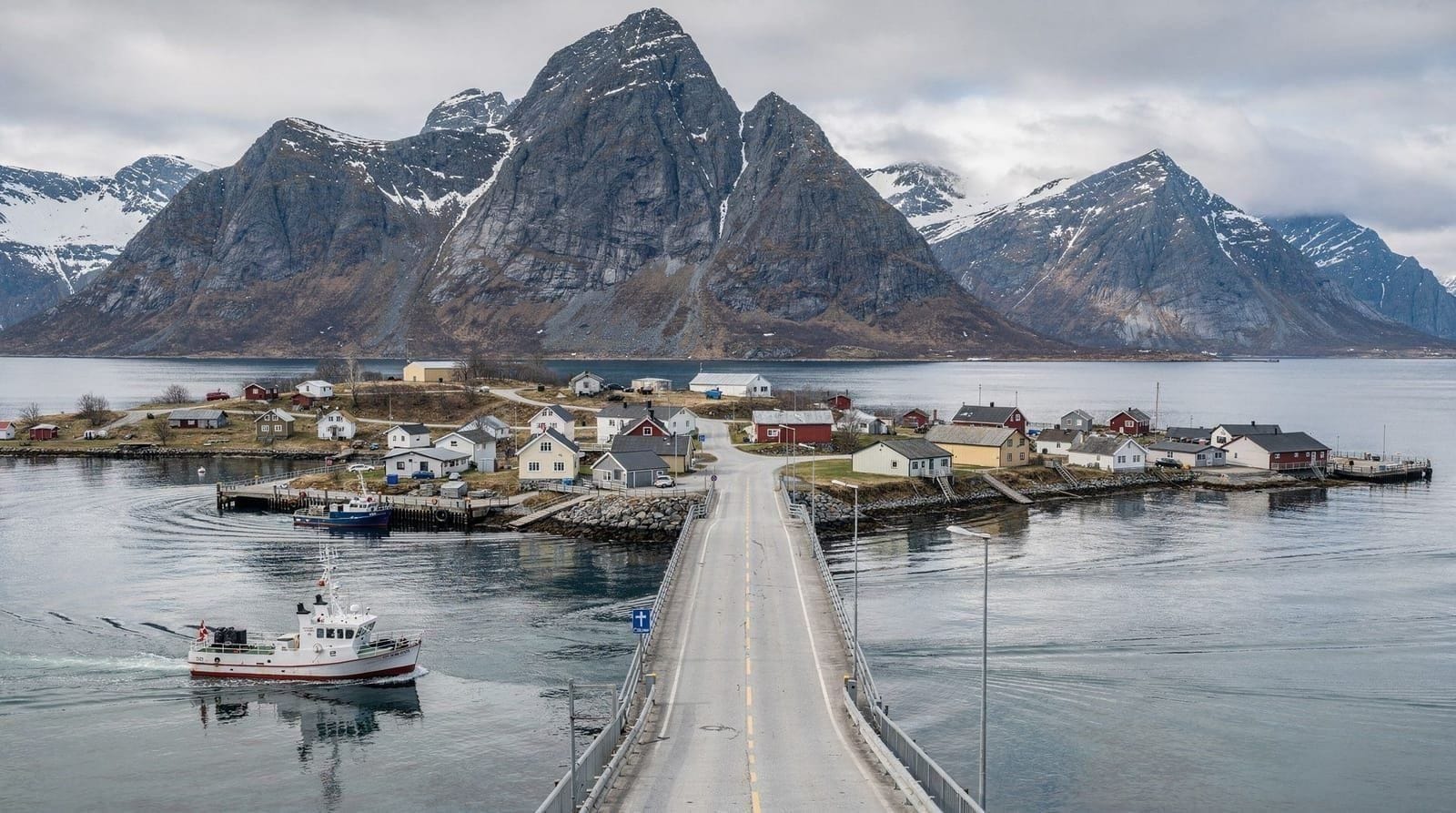
You want a quieter, more local experience. Skjervøy is an authentic fishing village, not a tourist hub. Lunches in the local café, conversations with fishermen, the absence of souvenir shops — it is a very different atmosphere from Tromsø’s busier tourist centre.
You are visiting in December when demand is highest. Skjervøy tours sometimes have more availability than the sold-out Tromsø departures.
The honest verdict
For most visitors, a full-day Tromsø-based tour with included transfer is the pragmatic choice. You lose some water time but gain ease and flexibility.
For anyone willing to plan ahead and spend an extra night or two, a Skjervøy base from mid-November to late December offers a more immersive whale watching experience. Book your Skjervøy accommodation before your flights — the rooms go fast.
Whatever you choose, the whale watching season window is narrow. Do not visit expecting to see whales in February or September — the herring simply are not there.
See the Skjervøy day trip guide for what else to do on the island besides whale watching.
Which operators to compare either way
Whichever base you choose, operator quality still matters more than departure point alone. Our best whale watching operators in Tromsø guide ranks options on guide experience, boat type and group size, and the whale watching ethics guide explains the approach distances every reputable operator should respect regardless of where you board. If seasickness is a concern on either route, see what to bring whale watching for practical prevention tips before you commit to a 5+ hour day on the water.
Frequently asked questions about Skjervøy vs Tromsø whale watching
Can I take public transport to Skjervøy?
Yes. Bus 300 runs from Tromsø bus station to Skjervøy, taking approximately 2.5–3 hours. Departures are limited — check Troms Fylkestrafikk timetables. The last return bus means you cannot combine a late afternoon tour with an evening departure back to Tromsø.
Do Skjervøy tours include meals?
Some do — especially the VIP boat with lunch options (Lyngen whale watching VIP). Standard RIB tours are typically half-day and do not include meals. Skjervøy village has a petrol station café and one or two local eating options.
Are whale watching tours from Alta also an option?
Yes. Alta (2.5 hours from Tromsø) has a small whale watching operation, typically using Kvænangen fjord. This can work if you are already in Alta for the northern lights. See the Alta northern lights guide for context.
What happens in years when the herring don’t come to Kvænangen?
This happens occasionally. Operators track herring movements via fish finder technology and fishing boat reports, and will redirect tours to where concentrations are found. In some seasons tours have operated from Tromsø’s own fjords. It is unpredictable — book with operators who communicate transparently about this.
Is it possible to see whales from the ferry to Skjervøy?
There is no public ferry direct to Skjervøy — it is bridge-connected to the mainland. However, fjord ferries in northern Norway occasionally have whale sightings incidentally. This is luck, not a strategy.
Should I book with a Tromsø operator or a local Skjervøy operator?
Both are valid. Tromsø operators handle logistics from the city. Local Skjervøy operators often have more local knowledge and slightly lower prices, but you must arrange your own transport to the island. Some of the best experiences come from small local operations with 1–2 boats.
Top experiences
Bookable activities with verified prices and instant confirmation on GetYourGuide.