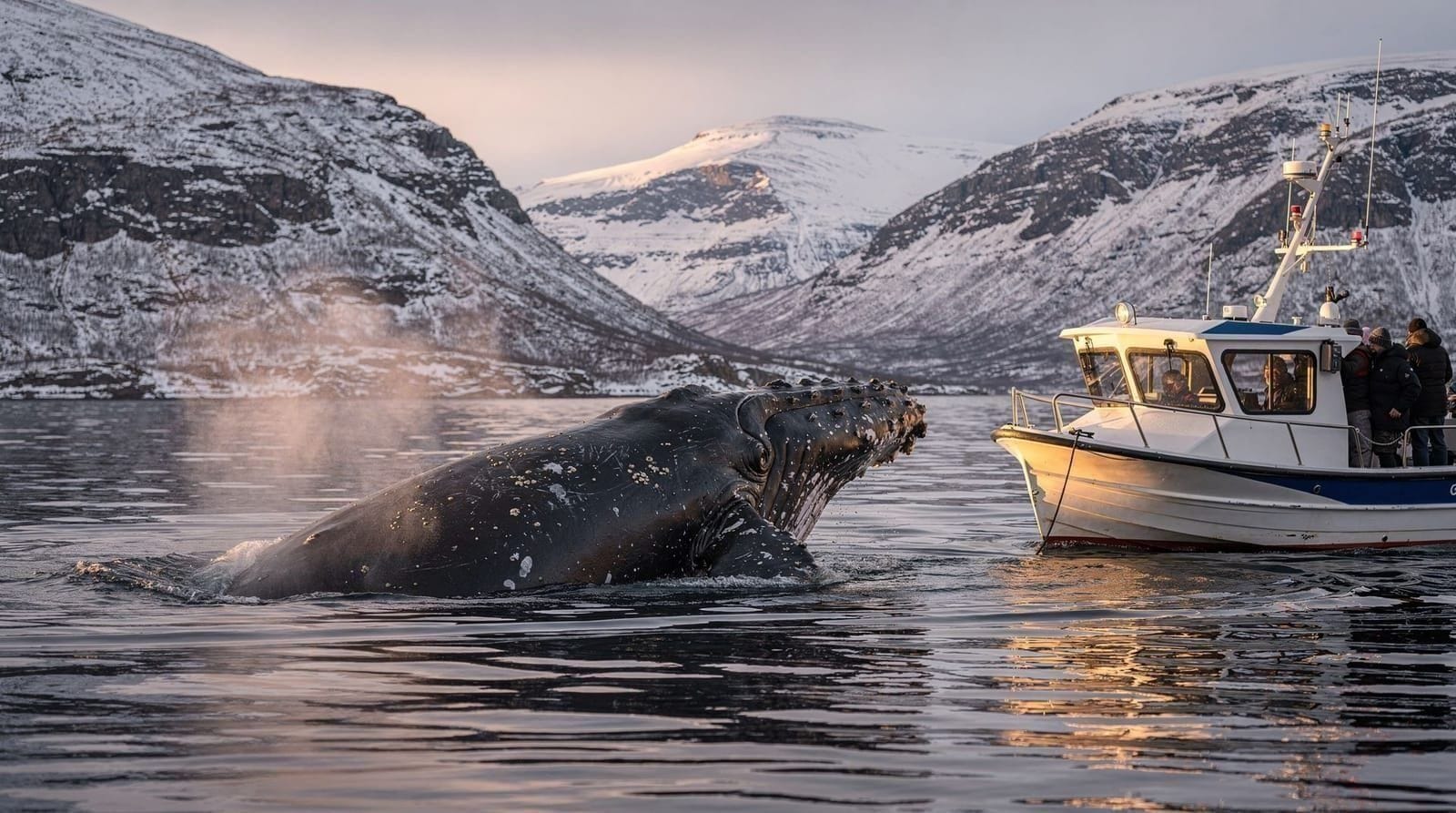
Whale watching from Tromsø: an honest review after a full day at Skjervøy
The bus left Tromsø at 6:15 am. I want to be upfront about that. The whale watching season centres on Skjervøy, which is about 130 km north of Tromsø — roughly 2.5 hours each way in winter, longer if the E6 has ice patches. By the time we pulled out of the Radisson parking lot in the dark, I had already been up for ninety minutes and consumed two coffees.
This is a long day. Factor that in before you book.
| Where | Skjervøy, roughly 130 km / 2.5 hrs north of Tromsø |
| Cost | Around 1,690 NOK for the Tromsø-departure package |
| Time needed | 10–12 hours door to door |
| Getting there | Included bus transfer from central Tromsø hotels |
| Best time | Late October–early February, peaking mid-November–January |
What the trip actually involves
The standard Skjervøy whale watching package from Tromsø is roughly:
- 6–6:30 am departure from Tromsø
- 2.5-hour drive north to Skjervøy
- 3–4 hours on the water
- Return drive (another 2.5 hours)
- Back in Tromsø around 5–6 pm
Total time commitment: 10–12 hours, most of it travelling. The boat time is the point, and it is roughly 20–25 percent of the day.
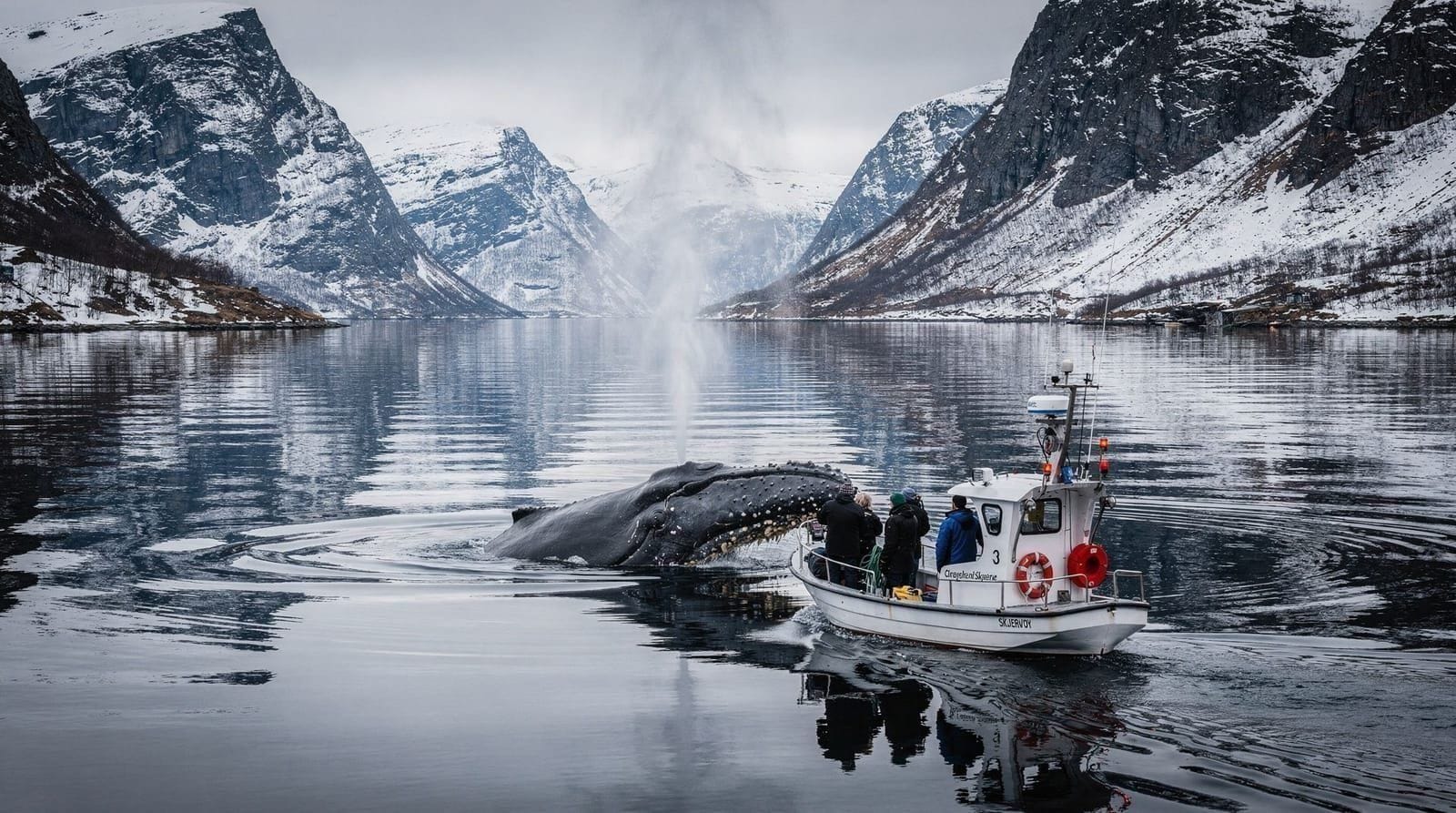
The boat itself on the tour I took was a heated vessel holding about 35 people — the kind of boat that spends most of its year doing other fjord work. Seating was mixed: benches below deck (warm, but poor sightlines) and an open upper deck (excellent sightlines, genuinely cold). Most people started below and migrated up when the guide announced a sighting.
What we saw
In a word: orcas. Two small pods, probably 8–10 individuals total, working the herring schools near the surface. We were stationary for about 25 minutes while the pods circled within 40–80 metres of the boat. The dorsal fins were unmistakable — the largest male had a fin nearly as tall as I am.
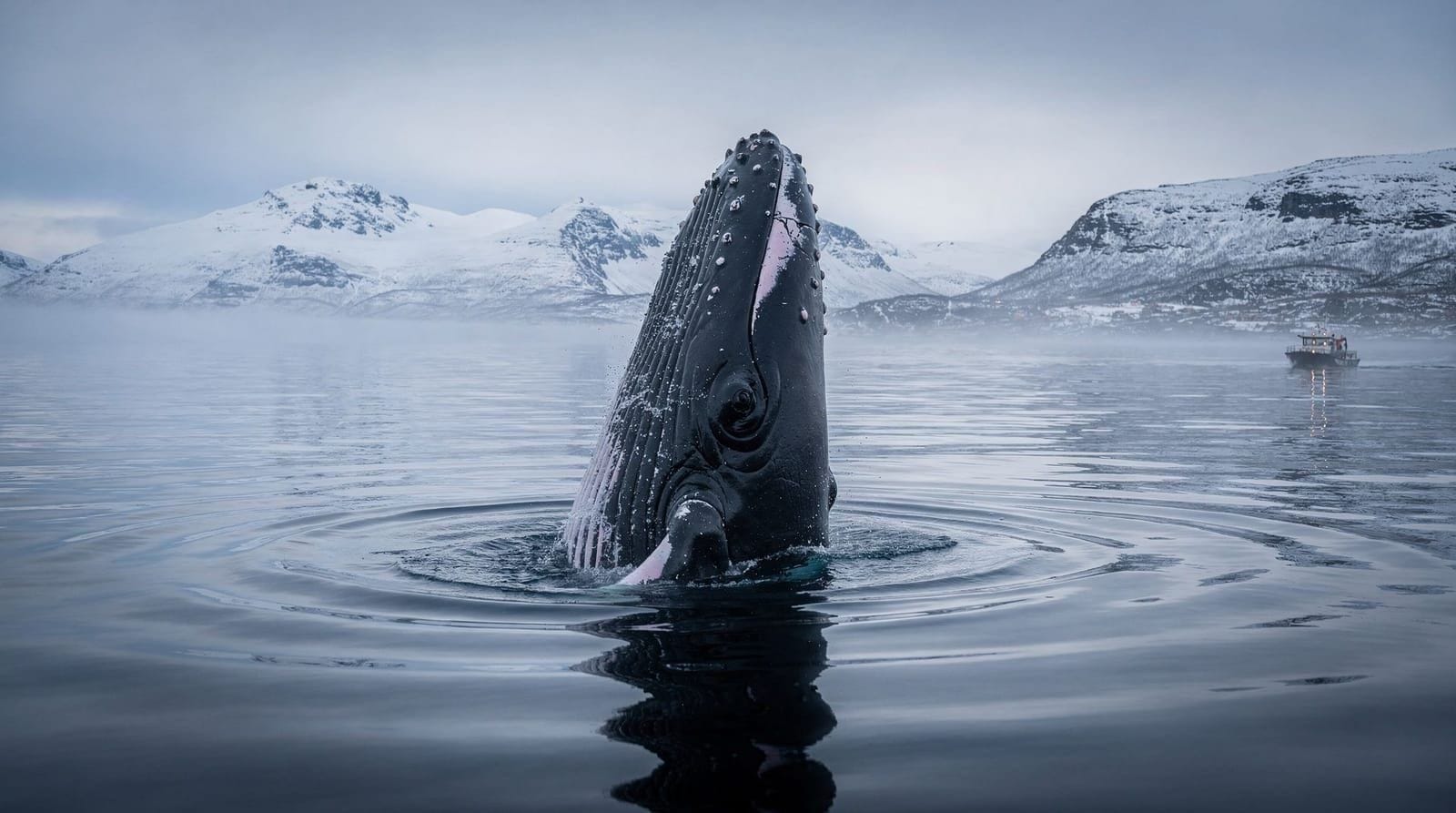
We did not see humpbacks, though the guide said they had been present in the area the previous two days. Humpbacks and orcas often appear in the same feeding grounds during the November–January peak — orcas herd the herring, humpbacks lunge through the balled-up schools. Some days you get both species; some days one; some days none.
There are no guarantees. The whale watching operators are honest about this, and most offer a partial refund or rebook if no whales are sighted. Ask specifically about their policy before booking.
The other sighting worth noting: white-tailed eagles. Three of them. Picking off fish that had been pushed to the surface by the orca activity. If you are not thinking about birds in Norway, you should be — the raptors here are casually enormous.
The boat experience: comfort vs. sightlines
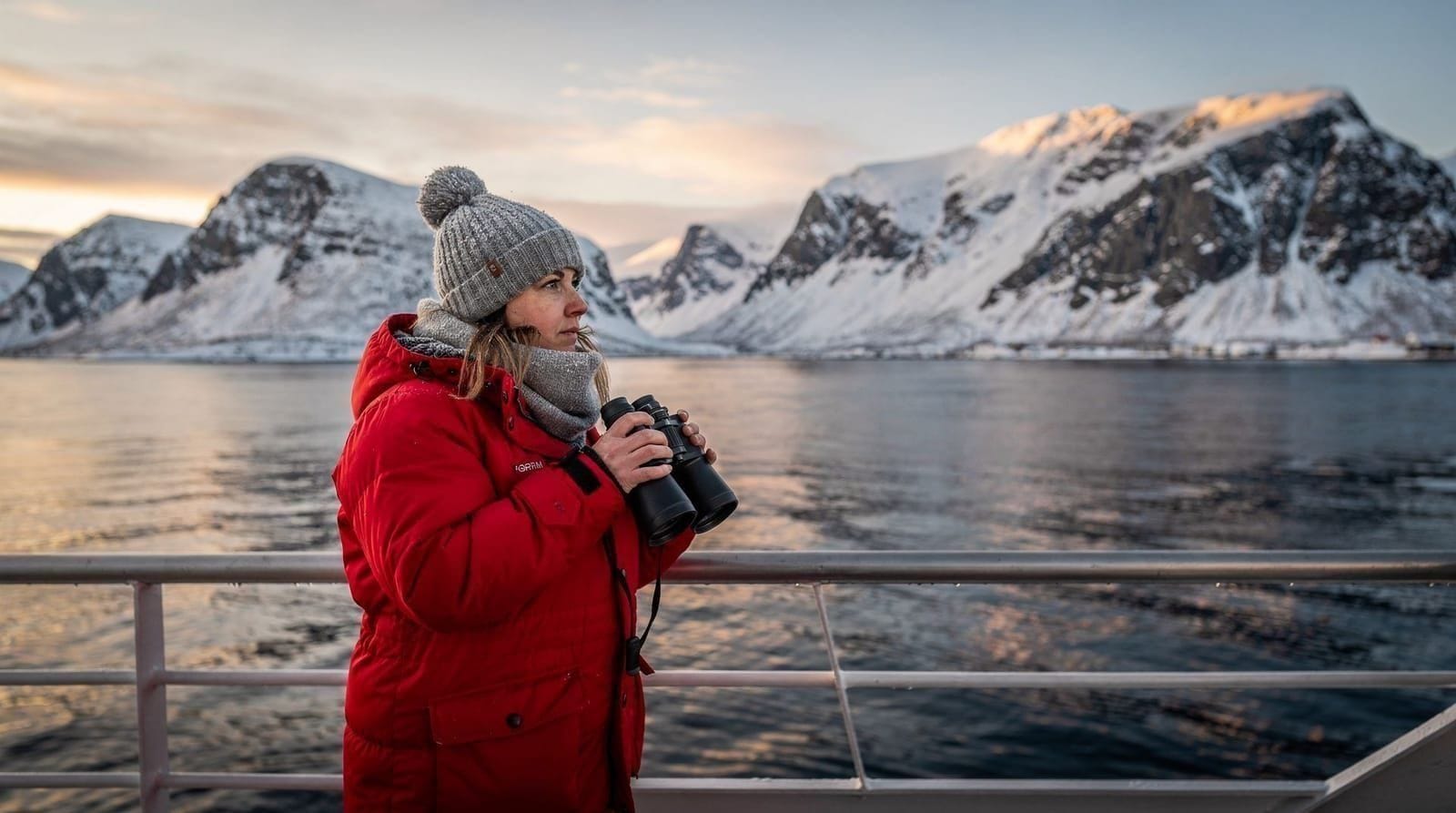
The main trade-off on most whale watching boats is warmth versus visibility. Being inside is comfortable but you miss the approach of dorsal fins until everyone runs to the window. Being outside means you spot sightings first and have unobstructed views, but you need to be properly dressed for 10°C wind chill on moving water.
Read the what to bring whale watching guide before packing. The key items: waterproof jacket (even if it is not raining — sea spray), insulated gloves that you can still operate a phone or camera with, and footwear with grip. Rubber-soled boots are better than hiking boots on a wet deck.
I brought a neck gaiter but not proper gloves. My hands were useless for photography for the last forty minutes of the boat section. Do not make this mistake.
Is it worth 1,690 NOK?
That is roughly €145 or £125. Here is my honest breakdown:
What you are paying for: a 3–4 hour boat trip with experienced guides and a guaranteed transfer from Tromsø, plus the 12-hour commitment of the day.
What you might see: orcas, humpbacks, white-tailed eagles, dramatic Arctic fjord scenery, deep blue winter light. Skjervøy as a location is genuinely striking — a small fishing island with mountains rising directly from the water.
The alternatives: If budget is a priority, there are shorter boat tours that depart from Tromsø harbour itself and operate in the Tromsdalfjord. These run about 3–3.5 hours total and cost 900–1,200 NOK. Sighting rates are lower — most of the herring and whale activity is further north in the Kvænangen fjord system near Skjervøy — but the time investment is much smaller.
Skjervøy whale watching RIB tour — orcas and humpbacksThe RIB boats are faster, cover more ground, and have better sightlines. They are also more exposed to the elements and rougher if there is any chop. For seasickness-prone travellers, the larger heated boats are substantially more comfortable.
The seasickness question
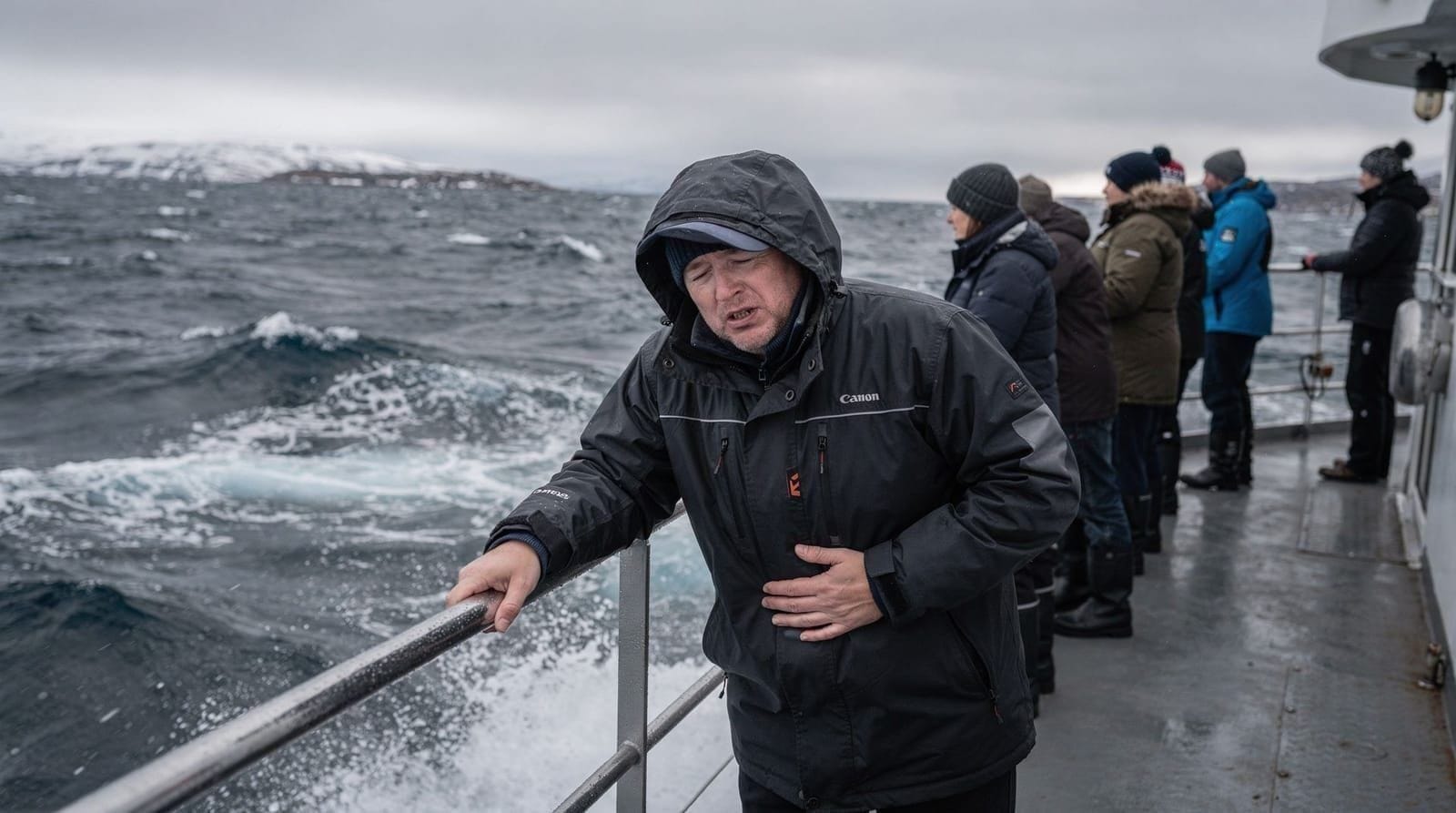
I asked the guide — he said roughly one in ten passengers experiences some nausea on rougher days. Winter conditions in the Kvænangen fjord can be calm (when the fjord is glassy and mirror-flat) or choppy (when a westerly wind pushes through). Check the conditions the morning of your trip.
If you are at all prone to motion sickness, take a prophylactic tablet the night before (Dramamine or Sea-Legs). Do not wait until you are on the boat. Sit outdoors and look at the horizon rather than at your phone. The fresh air helps; the close quarters below deck do not.
Self-drive vs. guided tour for Skjervøy
The Skjervøy vs. Tromsø whale watching comparison covers this properly, but the brief version: self-driving to Skjervøy in winter requires winter tyres (mandatory in Norway from November to April), confidence on icy mountain roads, and a car with studded tyres or proper all-seasons. The E6 north of Tromsø is generally well-maintained but can have ice patches on bridges and shaded sections.
If you rent a car, specify winter tyres explicitly — Norwegian rental companies provide them as standard in winter season but it is worth confirming. Factor 5 hours of driving in addition to the boat time. You still need to book the boat separately.
The guided tour takes the driving entirely off your plate. For most visitors, especially those without experience on winter roads, the peace of mind is worth the premium.
What I would do differently
- Bring proper insulated gloves rated for below-zero temperatures.
- Eat a real breakfast before 6 am. We stopped at a petrol station north of Tromsø but the options were limited to pre-wrapped sandwiches.
- Book the earliest available date of my trip, not the last. You want a rebook option if conditions are poor.
- Download the WhatsApp of the operator — several guides communicate last-minute sightings and conditions via group message the morning of departure.
Ethics and how close is too close
Norway regulates minimum approach distances for whale watching boats, and the operators I have seen in Skjervøy generally respect them — the whales come close on their own terms, following the herring, rather than being chased. The whale watching ethics guide covers what responsible operators do differently, including cutting engines near a pod and never boxing animals in. If a boat is aggressively pursuing or crowding whales, that is a red flag regardless of how good the photos might be.
Boat type comparison
| Type | Comfort | Sightlines | Best for |
|---|---|---|---|
| Large heated boat | High — indoor seating, warm | Good from open upper deck | Families, seasickness-prone, comfort priority |
| RIB (rigid inflatable) | Low — fully exposed | Excellent, faster, covers more ground | Photographers, thrill-seekers, ages 10-12+ |
| Tromsø-departure small boat | Moderate | Good | Budget-conscious, shorter day |
Frequently asked questions about whale watching from Tromsø
When is whale watching season in Tromsø?
Late October through early February, peaking from mid-November through January. The herring schools move into the fjords near Skjervøy in autumn, followed by orcas and humpbacks.
What is the difference between a Tromsø-departure and Skjervøy-based tour?
Skjervøy-based tours put you closer to the feeding grounds and spend more time on the water. Tromsø-departure tours include a long bus transfer. Sighting rates for both are broadly similar because the boat time is spent in the same feeding areas — the difference is how long the day is.
How cold does it get on the boat?
Wind chill on the open deck can reach −10 to −15°C on calm days with the boat moving. Dress as if standing still in those temperatures. Thermal base layer, mid-layer, waterproof shell, insulated gloves, buff or balaclava.
Is this suitable for children?
Most operators welcome children 6 and older on the large heated boats. The long drive and early start are the main difficulty. RIB tours typically require participants to be at least 10–12 years old due to the rougher ride.
Do operators guarantee whale sightings?
No reputable operator guarantees sightings, but most offer a partial refund or free rebook if none are seen. Confirm the specific policy before booking — it varies between operators.
Is a RIB tour or a heated boat better for photography?
RIBs have better sightlines and cover more ground, which helps with photography, but the exposure to wind and spray makes handling a camera genuinely difficult. A heated boat with an open upper deck is a reasonable middle ground for most photographers.