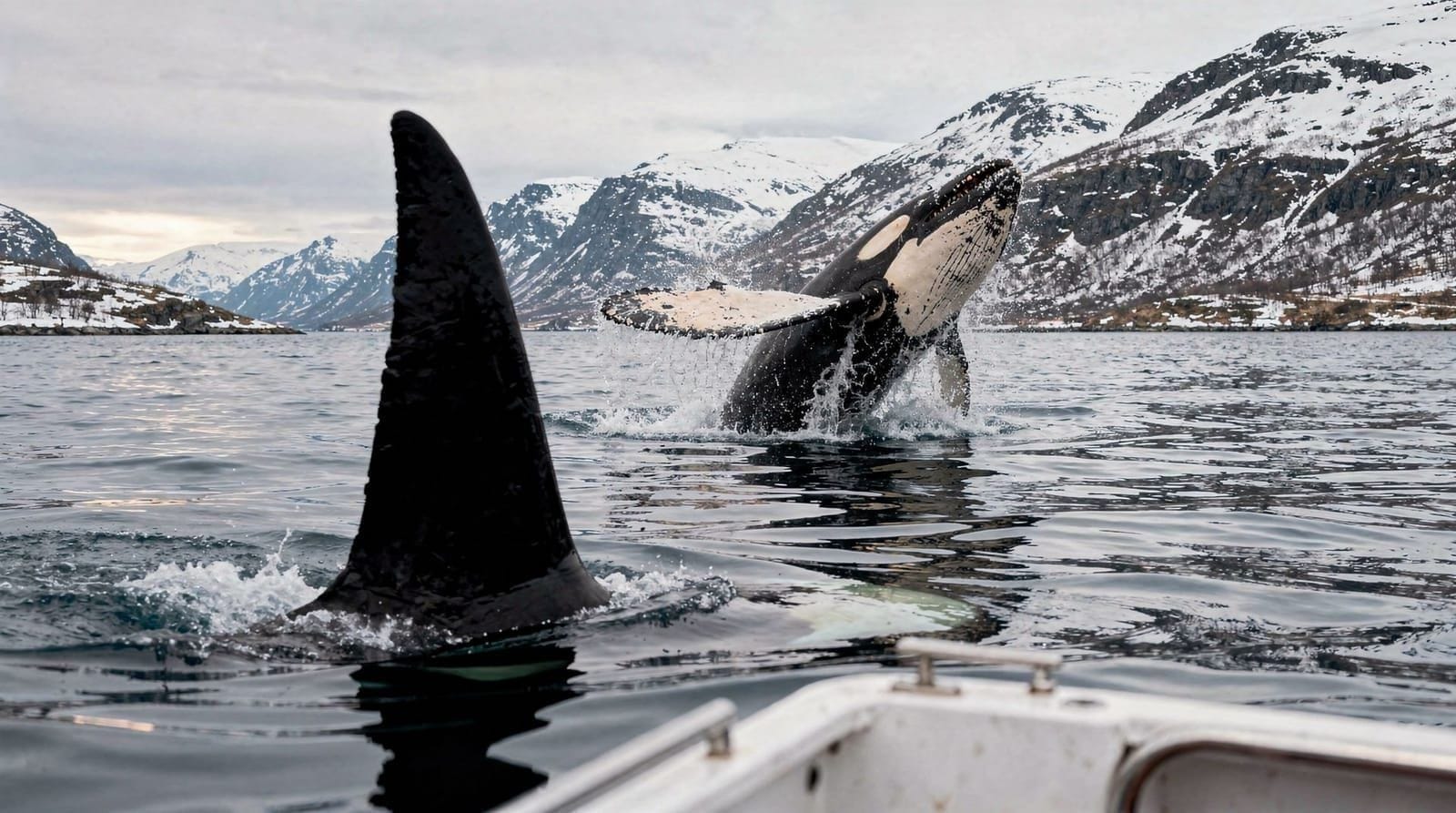
Silent electric whale watching boats near Tromsø — are they worth it?
Tromsø: Whale Watching Tour by Hybrid-Electric Boat
Are electric whale watching boats better than diesel boats near Tromsø?
For the whales, yes — electric and hybrid-electric engines create far less underwater noise, reducing acoustic disturbance to orca echolocation and communication. For passengers, the experience is also quieter and cleaner. The technology is newer and typically means a more modern, comfortable vessel.
Short answer: Yes, electric and hybrid-electric boats are meaningfully better for whale welfare and marginally better for passenger experience (quieter, no diesel fumes). Choose them when the itinerary is otherwise comparable. The premium, if any, is typically modest (100–200 NOK).
| Where | Departs Tromsø, transits north toward Skjervøy waters |
| Season | Roughly October–January, peak activity December |
| Cost premium vs diesel | Around 100–200 NOK per person, when a premium applies |
| Duration | Typically 6–8 hours including transit |
| Booking | 1–2 weeks ahead in December; earlier for named electric vessels |
The acoustic problem with whale watching boats
Every time a diesel engine runs near a whale, it adds noise to the whale’s acoustic environment. This matters for orca in particular, whose echolocation system operates in the same frequency range most disrupted by engine noise.
Orca use echolocation to locate herring schools, coordinate carousel feeding with pod members, and communicate within their social group. Research on Norwegian orca has found that increased vessel noise correlates with changes in foraging behaviour — the animals spend more time at depth, take longer between surfacing, and shift feeding areas when noise levels are high.
A single boat with a well-managed diesel engine is a minor factor. But in peak December conditions, with 15–20 vessels operating near the same herring aggregation simultaneously, the cumulative acoustic footprint is significant. This is where electric propulsion makes a material difference.
How electric and hybrid systems work on whale boats
Fully electric vessels carry large lithium battery packs (typically 200–500 kWh) that power electric motors connected to the propeller shaft. The only noise at sea is water movement — no engine rumble, no exhaust vibration. Recharging happens at harbour between tours. Range limits mean most are purpose-built for short-range coastal use.
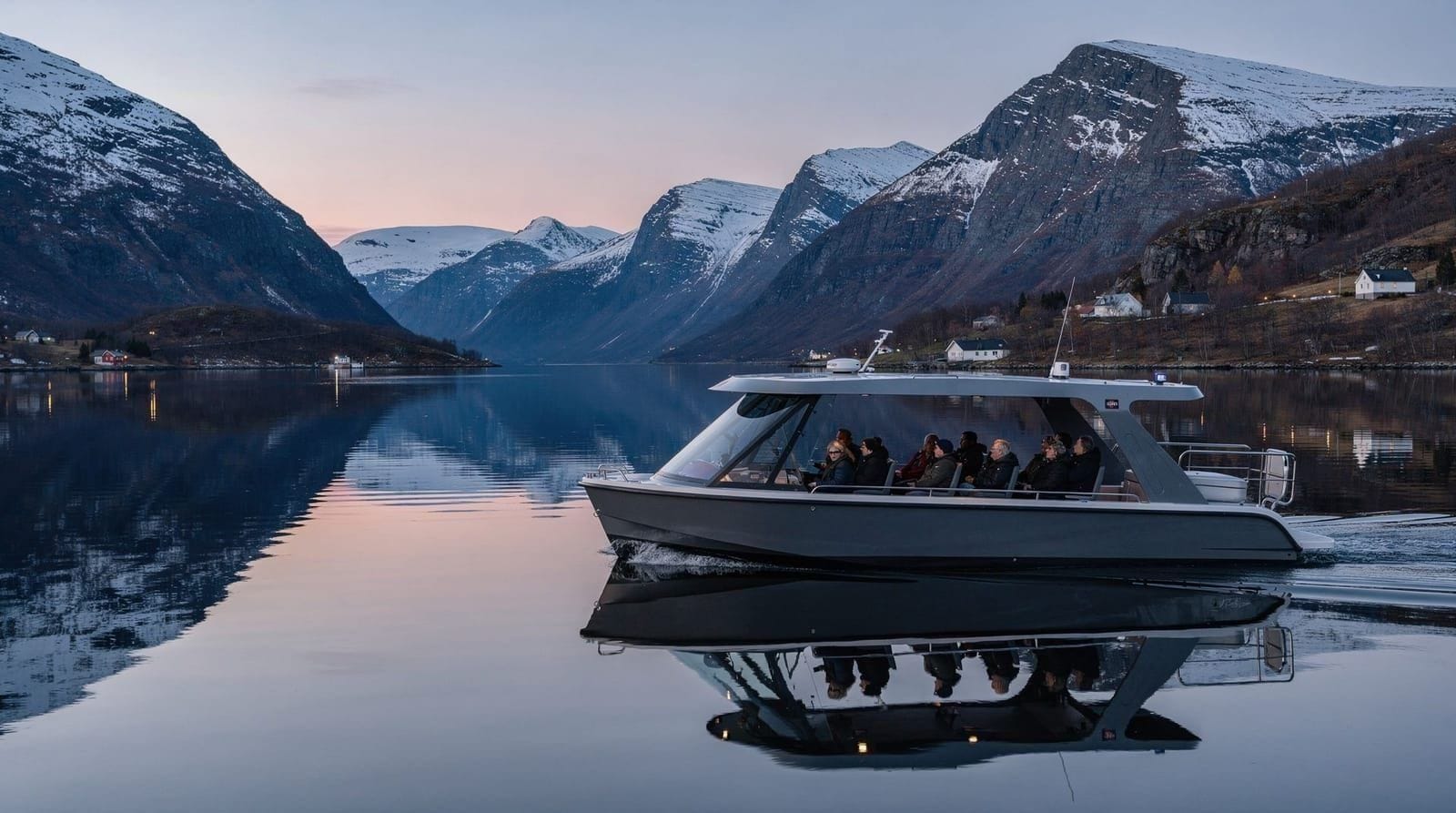
Hybrid-electric vessels add a diesel generator or combustion engine as a range extender. The operational mode near wildlife is electric; diesel is used for transit at higher speeds or longer distances. Most Tromsø-area operators using “electric” whale watching boats are actually operating hybrid systems — which is still a large improvement over conventional diesel.
Electric-assist or electric maneuvering systems are fitted on some vessels primarily for harbour maneuvering and low-speed approach. These are a minimal upgrade but not what is meant by “electric whale watching” in any meaningful sense.
When evaluating operators, ask specifically: “What propulsion system do you use when near the whales?” The answer should be “electric motors only” or “hybrid-electric in silent mode.”
Book the hybrid-electric whale watching catamaran — quieter on the waterWhat the passenger experience is like on an electric boat
The most immediate difference passengers notice is the silence. On a diesel vessel, a constant low-frequency rumble passes through the deck and hull even when the engine is idling. On an electric vessel, there is no vibration, no mechanical background noise.
This also means:
- Whale vocalisations can sometimes be heard through hydrophones placed below the hull — some operators now offer headphone listening to whale calls while on the water
- Guide commentary is clearer without engine noise competing
- The overall atmosphere is calmer and more meditative
- No diesel fumes on deck, which is genuinely pleasant and reduces nausea for seasickness-prone passengers
The onboard environment is also typically more modern — operators investing in electric or hybrid propulsion tend to have invested in their broader passenger facilities at the same time.
The environmental case
Arctic marine tourism is a carbon-intensive industry by nature — most passengers fly to Tromsø on jets. The local boat transfer is a minor portion of each tour’s total carbon footprint. Nevertheless, reducing local emissions matters for air quality in Tromsø fjord and for the health of the marine environment that attracts visitors in the first place.
Electric boats eliminate local NOx and particulate emissions entirely during operation. Hybrid boats reduce them. The broader energy source matters too — Norway’s electricity grid is over 90% hydropower, meaning electric vehicle charging is genuinely low-carbon in this specific context.
Electric vs diesel whale boats at a glance
| Aspect | Electric / hybrid | Diesel |
|---|---|---|
| Underwater noise near whales | Minimal in electric mode | Constant engine noise |
| Diesel fumes on deck | None or greatly reduced | Common, worsens seasickness for some |
| Passenger vibration | Negligible | Low to medium |
| Vessel age/facilities | Typically newer, more modern | Varies |
| Typical price | Comparable, occasional small premium | Baseline |
| Range/transit speed | Can be limited in full-electric mode | Generally unrestricted |
If seasickness is a concern, the calmer engine vibration and lack of diesel fumes on electric vessels are a genuine (if secondary) reason to prefer them, on top of the animal-welfare case.
How this fits the wider whale-watching decision
Propulsion type is one factor among several worth weighing before you book. Our best whale watching operators in Tromsø guide ranks operators on more than just engine type, and the whale watching ethics guide covers approach distances and behaviour beyond noise alone. If you’re also deciding on timing, see whale watching season in Tromsø for when the herring — and therefore the orca — actually arrive.
Some visitors also compare a Tromsø-based trip with day tours further north; our Skjervøy vs Tromsø whale watching guide explains the trade-offs, including that many “Tromsø” tours already transit to Skjervøy waters regardless of departure port.
Are they actually better for whale watching success?
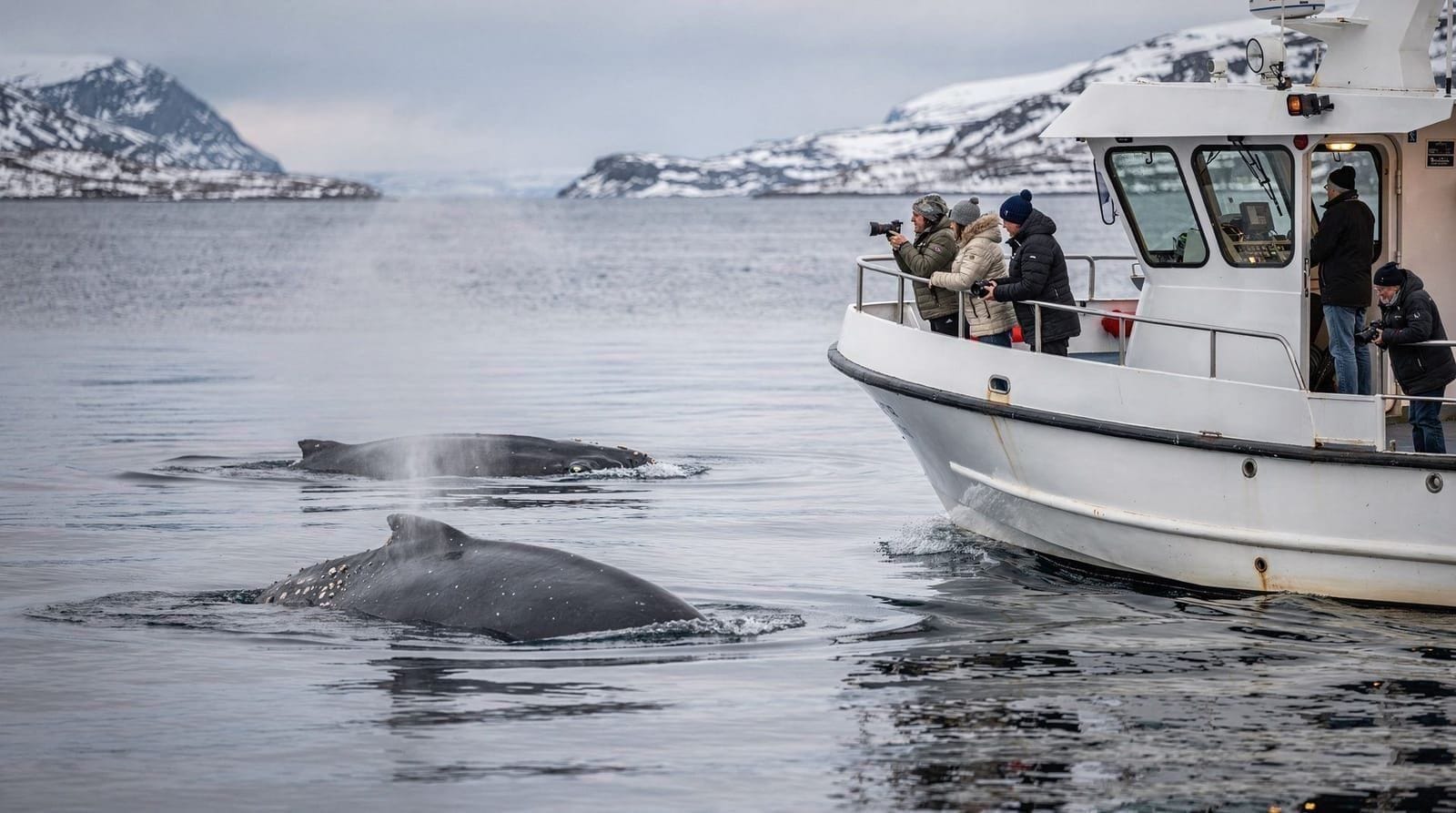
There is anecdotal operator evidence and preliminary research suggesting that electric vessels achieve longer, calmer whale encounters because the animals are less disturbed and do not alter course as quickly when the boat approaches. Some photographers who have used both electric and diesel vessels report that electric boats allow closer, longer observation before animals dive or move away.
This has not been definitively proven in peer-reviewed research specific to the Tromsø area, so treat these claims with appropriate scepticism. What is well-documented is the acoustic improvement. The behavioural benefit seems plausible but is harder to measure precisely.
Electric vessels for fjord cruises
The same electric and hybrid technology is expanding into fjord cruise tourism around Tromsø, where silent navigation allows wildlife observation during summer and winter cruise routes without disrupting seabirds, seals, and coastal fish populations. The overlap in vessel type between whale watching and fjord cruising is significant — many operators run the same hybrid catamaran on both.
Northern lights electric cruise — same technology applied to aurora toursWhat to ask operators about their electric credentials
Before booking any tour marketed as “electric” or “eco”:
- “What propulsion mode do you use when within 200 metres of whale feeding areas?”
- “Is the vessel fully electric or hybrid-electric?”
- “What is the battery capacity and how long can you operate in electric mode?”
- “Do you switch to diesel for the transit to/from Skjervøy?”
Honest operators will answer these questions directly. Operators using “electric” or “eco” as pure marketing without substance will give vague or evasive answers.
Frequently asked questions about electric whale watching boats in Tromsø
Do electric boats get as close to whales as RIBs?
Proximity to whales is governed by approach guidelines (50 metres minimum) and animal behaviour, not by propulsion type. An electric catamaran is typically larger than a RIB and sits higher above the water, so the viewing angle is slightly different. The reduced noise may mean whales stay calmer and closer voluntarily.
Are there electric whale watching options specifically for large groups?
Yes. Most of the large hybrid-electric catamarans carry 40–80 passengers. Corporate or group bookings of 20+ people can often charter these vessels. Contact operators directly for group rates — these are not always listed on booking platforms.
Do other wildlife tours in Norway use electric boats?
Yes. Electric and hybrid-electric vessels are being adopted for fjord cruises, bird watching in the Svalbard archipelago, and safari tours in several Norwegian coastal locations. The Tromsø whale watching market has been at the forefront of this adoption.
Is there a certification or label I should look for?
Norway’s “Naturarv” (Natural Heritage) tourism certification covers some wildlife tour operators and includes sustainability criteria. The Eco Lighthouse certification covers various environmental practices. Neither is a guarantee of responsible wildlife approach specifically. Independent research (asking the questions above) remains the most reliable method.
Will electric boats become the standard near Tromsø?
Industry trends suggest yes, over a 5–10 year window. Norwegian government incentives and tourist demand are pushing operators toward electric and hydrogen propulsion. Several operators have publicly committed to fully electric fleets by 2030. The transition is gradual — diesel boats remain dominant in 2026 by vessel count, though electric boats now carry a significant share of passengers.
Does the northern lights cruise I’m booking use an electric boat?
Some of the northern lights cruise operators also operate electric vessels. See northern lights tours compared for a breakdown. The aurora dinner cruise catamaran is one example of electric vessels being used for combined experiences.
Top experiences
Bookable activities with verified prices and instant confirmation on GetYourGuide.