Car rental in Tromsø — what you need to know for Arctic driving
From Tromsø: Senja Discovery Arctic Day Trip with Lunch
Duration: 11 hours
Should I rent a car in Tromsø?
Rent a car if you want flexibility to reach Senja (2.5–3h), Lyngen Alps (1.5–2h), Sommarøy (1h), or Tamok Valley (2h) on your own schedule. You do not need a car for the city centre itself. Expect to pay 800–1,500 NOK per day including mandatory winter tyres in winter, plus 15–20 litres of petrol per day of driving.
Why rent a car in Tromsø?
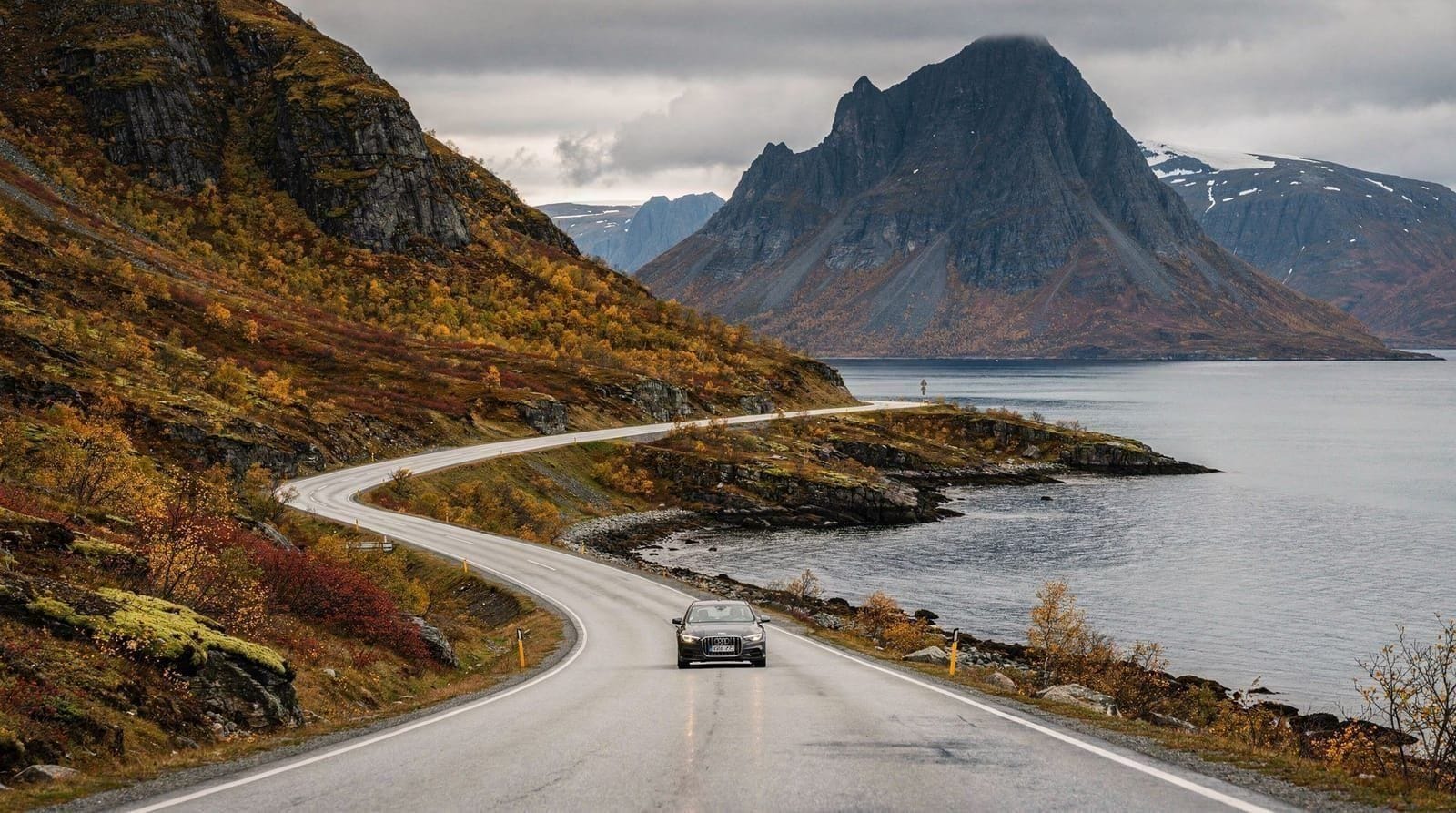
Tromsø city centre is walkable, but the surrounding landscape is the real draw — and most of it is 1–3 hours away by road. A rental car turns a standard 4-night Tromsø trip into an Arctic road trip. Without one, you depend on guided tours or infrequent public buses for day trips to destinations like Senja, Sommarøy, and the Lyngen Alps.
The honest trade-off: guided tours handle the driving so you can focus on the scenery (or sleep on the way). A rental car gives you flexibility but demands awareness of Arctic road conditions, especially in winter. If you would rather have someone else drive, see our self-drive vs guided aurora comparison, which applies to most day trips beyond aurora hunting too.
| Where to book | Tromsø Airport (TOS) arrivals hall or city-centre depots |
| Cost | around 800–1,500 NOK/day, more in peak winter |
| Winter tyres | mandatory 1 Nov–first Sunday after Easter, included |
| Best for | Senja, Lyngen Alps, Sommarøy, Tamok Valley day trips |
| Not needed for | central Tromsø sightseeing (walkable) |
Where to pick up a rental car in Tromsø
Tromsø Airport (TOS) is the most practical pickup point. Hertz, Avis, Europcar, Budget, and Sixt all have counters in the arrivals hall. Cars are ready immediately after check-in — no shuttle bus needed. If you need to pick up a car during city sightseeing (day 2 or 3 of your trip), city-centre depots exist for some companies near the harbour area, but check addresses in advance.
City-centre pickup tips: Some depots close early (4–5 p.m.) on weekdays and have limited weekend hours. Book pickup times explicitly; do not assume 7 p.m. works just because the depot shows as “open.”
Car rental prices in Tromsø
Prices are highly variable depending on season, booking lead time, and company. Here are realistic 2026 ballpark figures for a 5-day rental:
| Vehicle class | Shoulder season (Apr, Sep–Oct) | Peak winter (Dec–Feb) |
|---|---|---|
| Economy (Yaris, Polo) | 4,000–5,500 NOK/5 days | 6,000–9,000 NOK/5 days |
| Compact SUV (CX-30, Qashqai) | 6,000–8,000 NOK/5 days | 8,000–13,000 NOK/5 days |
| Large SUV / 4WD | 9,000–14,000 NOK/5 days | 12,000–18,000 NOK/5 days |
Add fuel on top. Norwegian petrol prices hover around 20–23 NOK per litre. A day trip to Senja and back (roughly 300 km round trip) uses approximately 20–25 litres, costing 400–575 NOK in fuel.
Best booking strategy: Compare on Discover Cars, RentalCars.com, or direct company sites. Book 4–6 weeks ahead for peak winter. Prices spike when inventory is low — do not leave it to the last week.
Winter tyres: what you need to know
Norwegian law requires winter tyres from 1 November to the first Sunday after Easter. All rental cars in this period must be equipped with them. You do not need to request winter tyres separately — they are standard. However:
- Confirm type when booking: Piggdekk (studded) provide better grip on ice; piggfrie (friction/non-studded) are legal everywhere but less effective on pure ice. Studded tyres are banned in some Swedish city areas if you plan to cross the border.
- Check tread depth on pickup: Winter tyres must have at least 3 mm tread (standard legal minimum is 1.6 mm but 3 mm is the practical minimum for safety). If you notice shallow treads, ask for a different vehicle.
- All four tyres must match: Mixing summer and winter, or different tyre types, is illegal and unsafe. Verify all four match.
Insurance: what is actually covered
Rental companies offer various insurance tiers. The standard package in Norway typically includes:
- Third-party liability (legally required, always included)
- Collision Damage Waiver (CDW) — reduces your liability to the deductible (often 8,000–15,000 NOK)
- Theft Protection (TP)
Common upsells that may not be worth it:
- Super CDW / Zero deductible: costs 150–250 NOK/day. Useful if you are driving on mountain roads in winter; less necessary for city driving.
- Gravel and tyre protection: gravel damage from road salt and grit is common in winter. If you plan mountain roads, this can be worth it.
- Personal accident insurance: usually redundant if you have travel insurance that covers medical.
Alternative: Many premium credit cards include rental car CDW as a benefit. Call your card issuer before you travel to confirm coverage in Norway and whether the waiver from the rental company can be declined.
Arctic driving tips for winter
Driving in northern Norway in winter is different from anything most visitors have experienced. Key points:
Speed and distance: Reduce speed significantly on snow and ice compared to what feels intuitive. Even a car with excellent studded tyres slides if you brake hard on a downhill icy section.
Headlights: Required at all times in Norway (law). In polar night and reduced visibility, fog lights help. Modern rental cars have automatic lights — verify they are set to on, not auto, in tunnels.
Distances and fuel: Petrol stations are sparse north of the city. On longer routes (toward Skjervøy, into Finnmark, across to Senja), check the map for stations and do not let the tank drop below half.
Mountain road closures: The VegMelding system (veimeldinger.no) lists road closures in real time. Check before driving mountain passes in winter. The E8 between Tromsø and Bjerkvik is generally kept clear; smaller passes can close for hours after a storm.
Tunnels: Northern Norway has many long undersea and mountain tunnels. The Ullsfjordtunnel north of Tromsø is an example. These tunnels are lit but can have steep grades — slow down and keep distance from vehicles ahead.
What vehicle to rent for Tromsø day trips
For Sommarøy and Kvaløya (paved roads, well-maintained): a standard economy car is fine. For Senja (scenic route has some narrow sections): compact SUV is more comfortable. For Lyngen Alps (some gravel access roads): SUV or AWD is recommended in winter. For Tamok Valley and Camp Tamok (road conditions vary): 4WD strongly recommended in deep winter.
In summer (May–September), a standard economy car handles all common tourist routes without difficulty.
Prefer a guided day trip? Senja and Kvaløya with lunch includedPetrol and charging in Tromsø
Norway has excellent EV infrastructure in cities, and rental car fleets include EVs and hybrids. If you rent an EV:
- The city has multiple fast chargers (ChargePoint, IONITY) near the harbour and at Sane shopping centre
- On the road to Senja, chargers exist in Finnsnes (halfway)
- On the route north to Skjervøy, charging infrastructure is thinner — verify before a long EV trip
If you decide not to rent
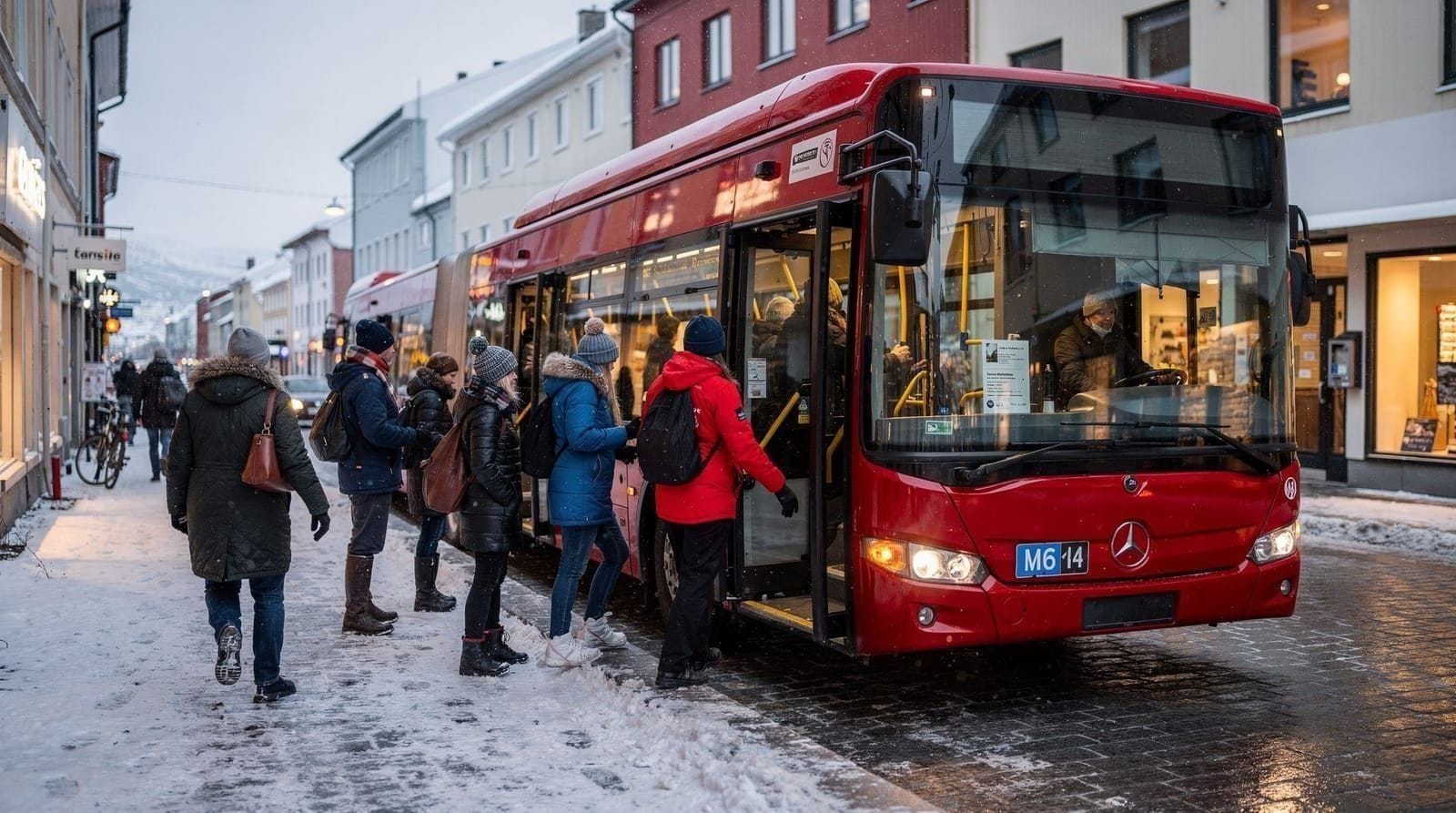
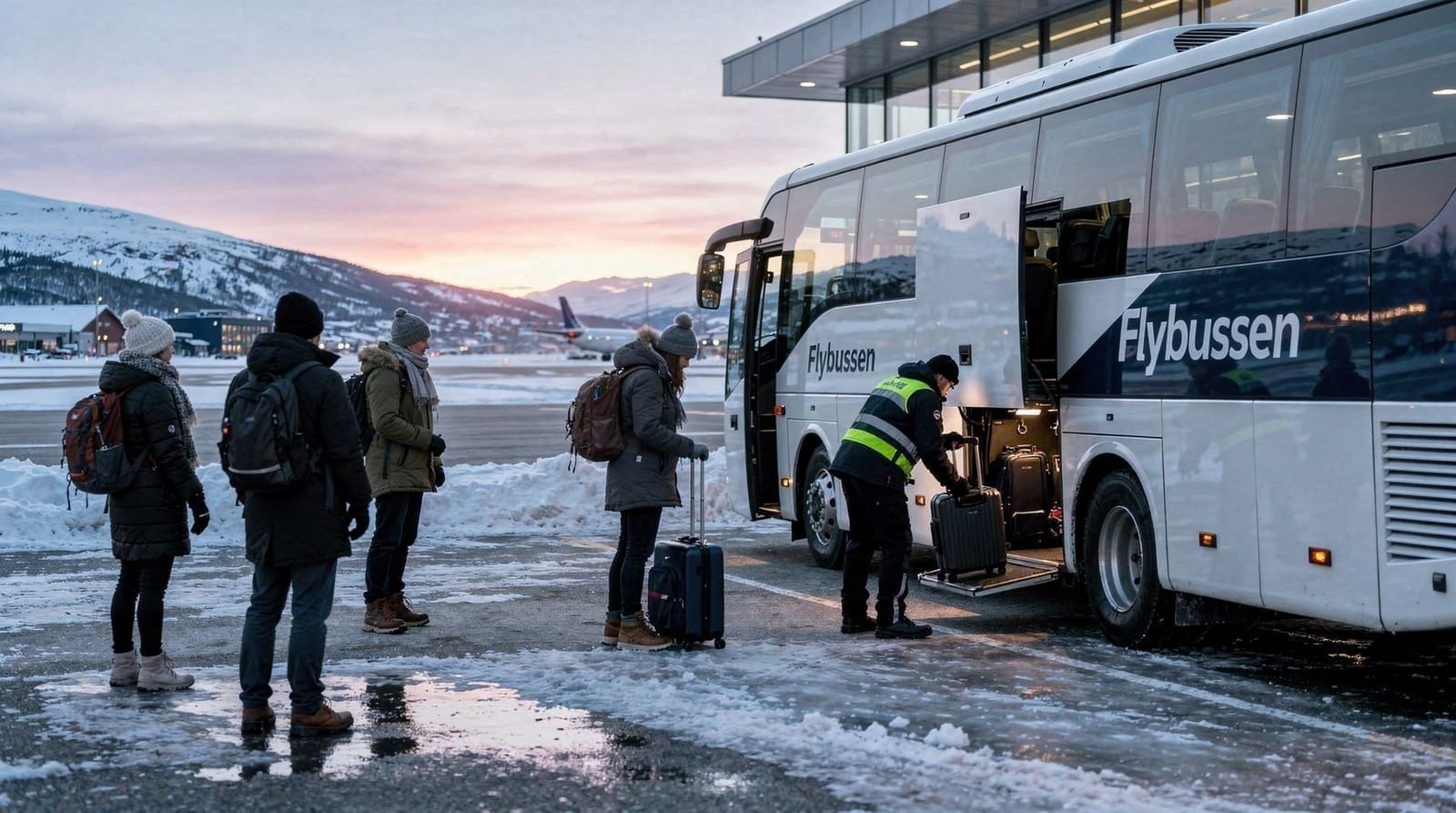
Skipping the rental car is a perfectly reasonable choice, especially on a short trip. Airport transfers, city buses and taxis cover the centre well — see the getting around Tromsø guide and the airport transfer guide for the practical options. For day trips beyond the city, guided tours to Senja, the Lyngen Alps and Sommarøy run year-round and include the driving, commentary and often lunch, which suits travellers who would rather not deal with icy roads at all.
Lyngen Alps sightseeing tour with lunch, no driving requiredPacking for a road trip in the Arctic
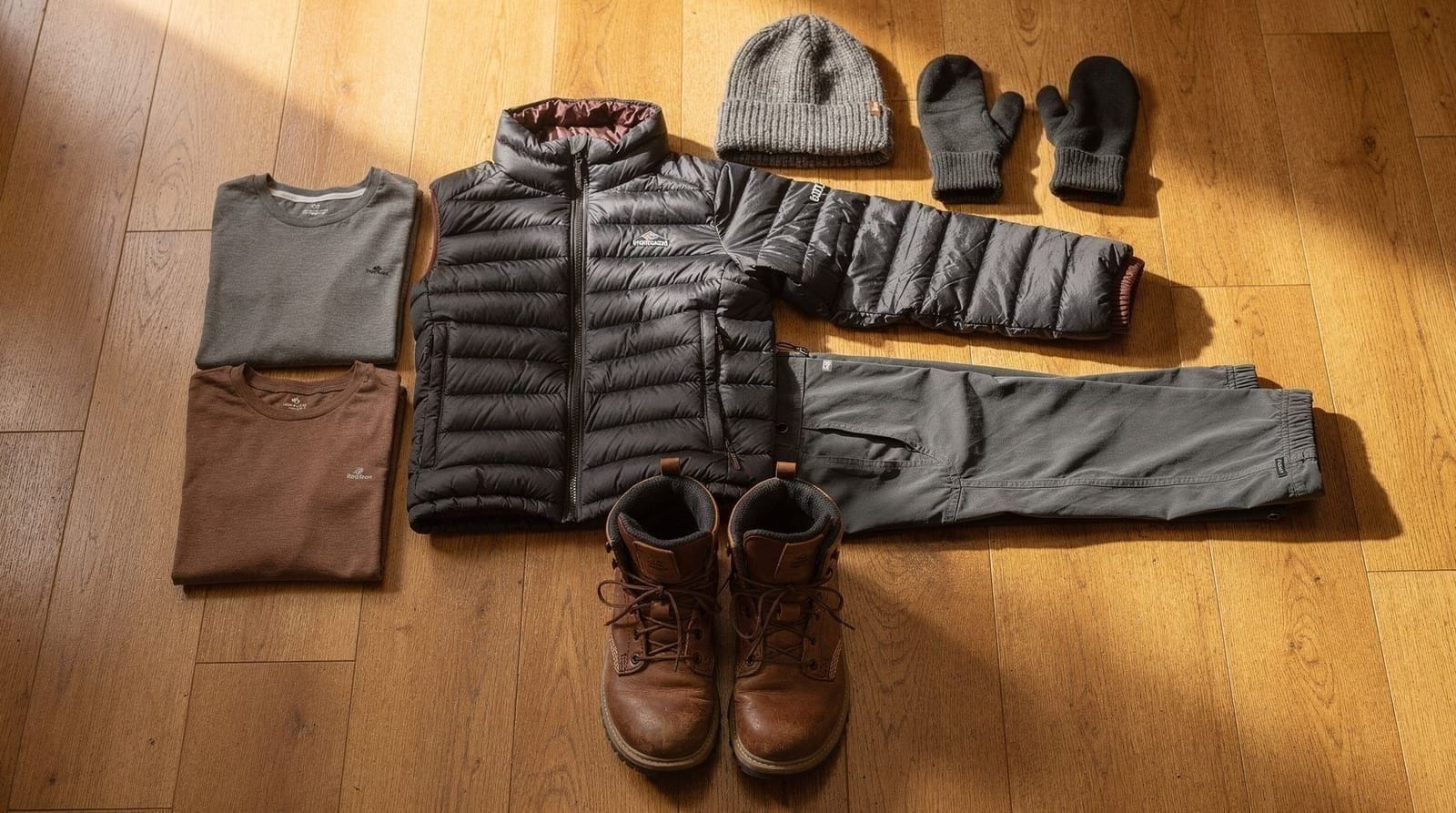
Cold-weather driving calls for more than warm clothes in the boot. Pack an ice scraper (rental cars usually include one, but check), sunglasses for the low winter sun glare off snow, and a phone charger, since navigation apps drain batteries fast in the cold. Our Tromsø packing guide covers clothing layers in detail, and the companion packing mistakes guide flags the most common gaps travellers leave behind. If your itinerary includes the ferries between Lyngen and Senja, build extra buffer time into the day — ferry queues and weather delays are common in winter.
Frequently asked questions about car rental in Tromsø
Can I drive to Nordkapp (North Cape) from Tromsø?
Yes — it is about 500 km one-way (5–6 hours in summer). The route is doable in 2–3 days as a one-way trip. The E69 to Nordkapp is typically open May to October; winter access requires a tour or snowmobile. Check with your rental company about cross-county driving — some limit you to Troms County.
Is there road tax for driving in northern Norway?
Some roads and bridges charge tolls (bompengen). These are handled electronically by the AutoPASS system. Rental cars generally have a transponder registered; tolls are billed directly to your card on file. Ask the rental company how tolls are charged — some add an administrative fee of 30–60 NOK per toll event.
Is petrol expensive in Tromsø?
Norwegian petrol is expensive by global standards — typically 20–23 NOK per litre (roughly €1.70–1.95/litre in 2026). Diesel is slightly cheaper. Remote petrol stations charge slightly more than city stations. Filling up in Tromsø before a long day trip is usually cheaper than filling in Finnsnes or Skjervøy.
Can I drive to the Lyngen Alps in a standard rental car?
The main road (E8 and Rv91) to Lyngen is fine for a standard car. Specific trailheads and viewpoints may be on minor roads that are better with an SUV in deep winter. If your plan is just the sightseeing drive and a stop at Lyngseide, a compact car is fine.
What happens if I break down in northern Norway?
All major rental companies provide 24-hour roadside assistance. Save the emergency number from your rental contract in your phone before you drive. In remote areas (deep Lyngen, Senja coastal roads), mobile signal can be patchy — note the last town with good signal as a reference point.
Top experiences
Bookable activities with verified prices and instant confirmation on GetYourGuide.