Whale watching ethics near Tromsø — how to choose a responsible operator
Tromsø: Whale Watching Tour by Hybrid-Electric Boat
How do I find an ethical whale watching operator near Tromsø?
Look for operators who maintain a minimum 50-metre approach distance, cut engines when whales are nearby, limit group size to 12 or fewer (for RIBs), and do not chase or corral animals. Ask specifically about their approach policy before booking.
The short version: Ethical whale watching keeps a minimum 50-metre distance, cuts engines near surfacing whales, never encircles animals, and uses smaller groups. Electric or hybrid boats are the gold standard. Red flags include operators who “guarantee” very close encounters, chase whales, or have no written approach guidelines.
| Minimum distance | 50m from individuals, 200m from feeding groups |
| Best vessel type | Hybrid-electric or electric-assist RIB |
| Group size (RIB) | 8–12 passengers preferred |
| Where | Mainly Skjervøy, Nov–Jan peak |
| Ask before booking | Written approach policy, research partnerships |
Why ethics matter here specifically
The orca population that winters near Tromsø is not infinitely robust. Norwegian Orca Survey research has tracked individual pods over decades and documented concerning population trends. These animals depend on the herring resource, and the tourist whale watching industry has grown dramatically since the late 2010s — from a handful of small operators to dozens running multiple boats per day at peak season.
The marine environment around Skjervøy in November–December can resemble a traffic jam. Boats from multiple operators converge on the same herring concentration from all directions. Even if each individual operator follows good practice, the cumulative acoustic and physical disruption from 10–15 vessels in a few square kilometres is something researchers take seriously.
This does not mean you should not go whale watching. It means you should choose carefully and encourage better industry standards with your booking choices.
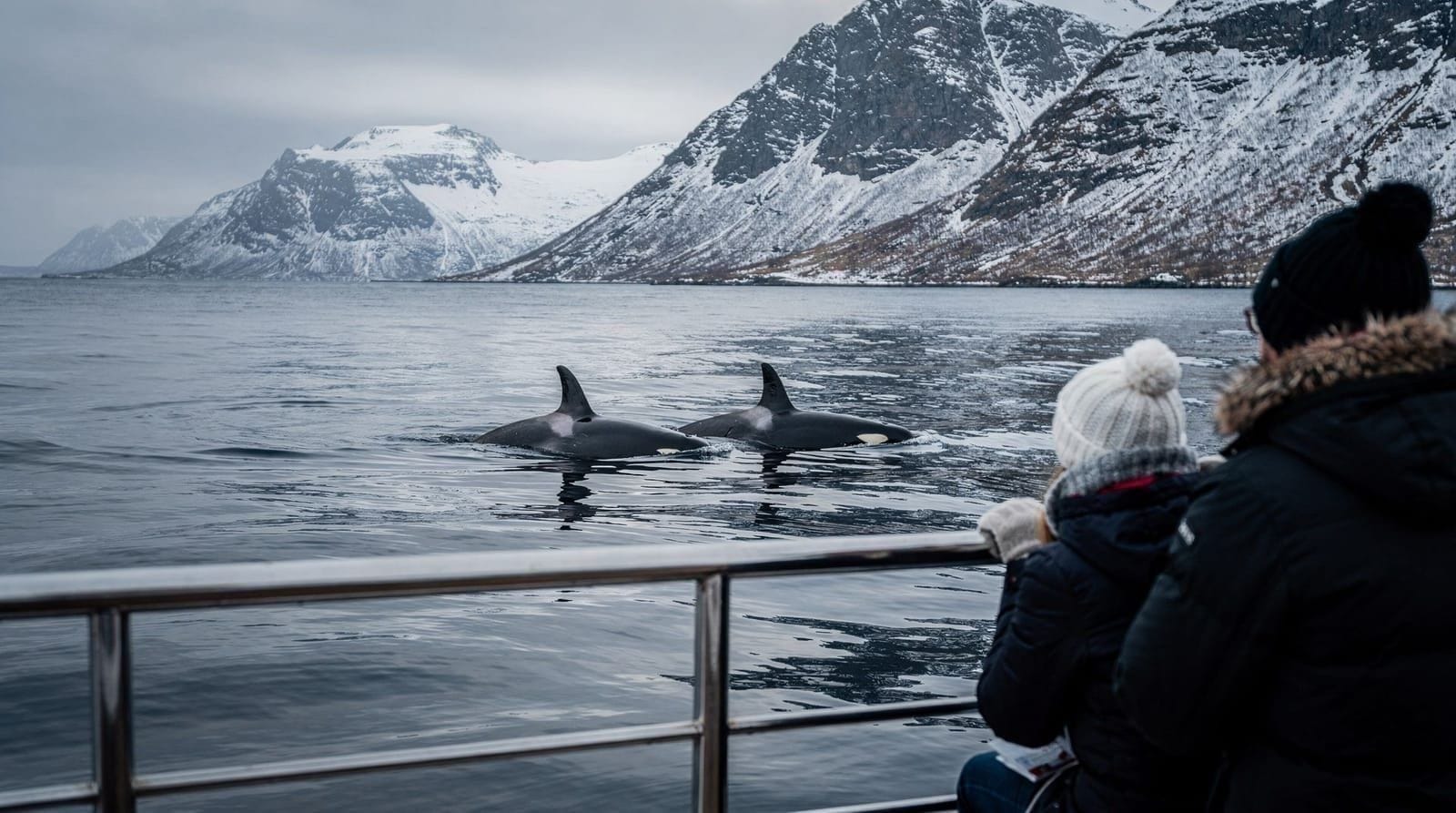
Electric-hybrid whale watching — quieter, lower-impact approachWhat responsible operators actually do
Approach distance and engine management
The Norwegian Orca Survey recommends a minimum 50-metre approach distance from individual whales, and 200 metres from feeding aggregations. Responsible operators brief guides on this before every trip and empower guides to overrule captain decisions when animals are too close.
Engine cut-off is particularly important. Diesel engines at close range create underwater noise that interferes with orca echolocation — the sonar system they use to find and herd herring. Cutting to neutral and drifting (or using electric motors at very low speed) when whales surface nearby is standard practice for responsible operators.
Encircling — surrounding a whale pod from multiple sides with boats to prevent them moving in their preferred direction — is explicitly prohibited by Norwegian guidelines. If you observe your boat participating in this, raise it with the guide immediately and note it in your post-trip review.
Group size
Smaller groups mean a less disruptive presence and often a more meaningful personal experience. RIBs with 8–12 passengers are preferable over large catamaran platforms with 60–100 passengers when animal proximity and responsiveness matter.
However, there is a trade-off: large catamarans have quieter engines relative to their passenger count, are more stable in rough seas, and are accessible to people who would struggle on a small RIB.
Research contribution
The best operators contribute to the Norwegian Orca Survey’s photo-identification database. Guides photograph dorsal fins and saddle patches (the grey area behind the dorsal) of every orca encountered, allowing researchers to track individual animals across seasons and years. This data is the foundation of everything we know about these animals’ social structure, health, and population dynamics.
Ask operators if they contribute photos to the Norwegian Orca Survey or any similar research body. Those who do are invested in the long-term health of the population they depend on commercially.
Electric and hybrid vessels
Diesel-powered vessels create sustained underwater noise that can persist for 30–60 minutes after they leave an area. Electric and hybrid-electric boats are dramatically quieter at low speed, which matters most during actual whale encounters.
Several Tromsø-area operators have invested in hybrid-electric catamarans and electric-assist RIBs specifically to reduce disturbance. See silent electric whale boats for a guide to these vessels.
How this compares to Sami tourism ethics
The same underlying principle — that the animal or culture on display must not be pressured for the sake of the visitor’s experience — runs through other Tromsø-area wildlife and cultural tourism too. See the Sami tourism ethics guide for how the same questions apply to reindeer-based experiences.
Choosing between Skjervøy and a Tromsø departure
Where you depart from affects the ethics conversation as much as which operator you choose. Tours departing directly from Skjervøy reach the feeding grounds within minutes, meaning less time spent at speed and more time drifting with engines cut. Tours departing from Tromsø itself spend a larger share of the trip in transit, though many operators use that transit time responsibly at low speed. See Skjervøy vs Tromsø whale watching for the practical trade-offs, and whale watching season in Tromsø for when the ethical considerations are most acute — boat density is highest, and therefore cumulative disturbance greatest, in peak December.
Red flags to avoid
“Guaranteed close encounter” marketing. No ethical operator guarantees proximity — that depends on the whales’ behaviour, not the operator’s willingness to press in close. If a company’s marketing revolves around “get right next to the orca,” treat this as a warning sign.
No written approach guidelines. Ask every operator you are considering for their written whale watching code of conduct or approach policy. Operators who cannot produce one, or who give vague verbal reassurances, should be avoided.
Chasing behaviour. If you observe your boat accelerating to keep pace with a fast-moving pod, or repositioning to stay in front of animals, this is chasing. It is stressful for the whales and prohibited under Norwegian guidelines.
“We always get amazing shots because we go close.” Photography incentives can drive irresponsible behaviour. Some guides take pride in getting passengers extremely close for photos. The whales pay the cost of this.
Very high passenger counts without size regulation. Large boats carrying 80–100 passengers in very small areas near feeding orca create significant wash and noise even with careful navigation.
Your role as a traveller
Booking with ethical operators is the most powerful thing you can do. Reviews are the second tool. If you observe irresponsible behaviour on a tour — chasing, engine running at close range, encircling — document it and write an honest review specifically mentioning what you witnessed.
Do not lean over the rail or extend objects toward surfacing whales. Avoid flash photography, which can startle animals (and is useless at 50-metre range anyway). Follow guide instructions without arguing.
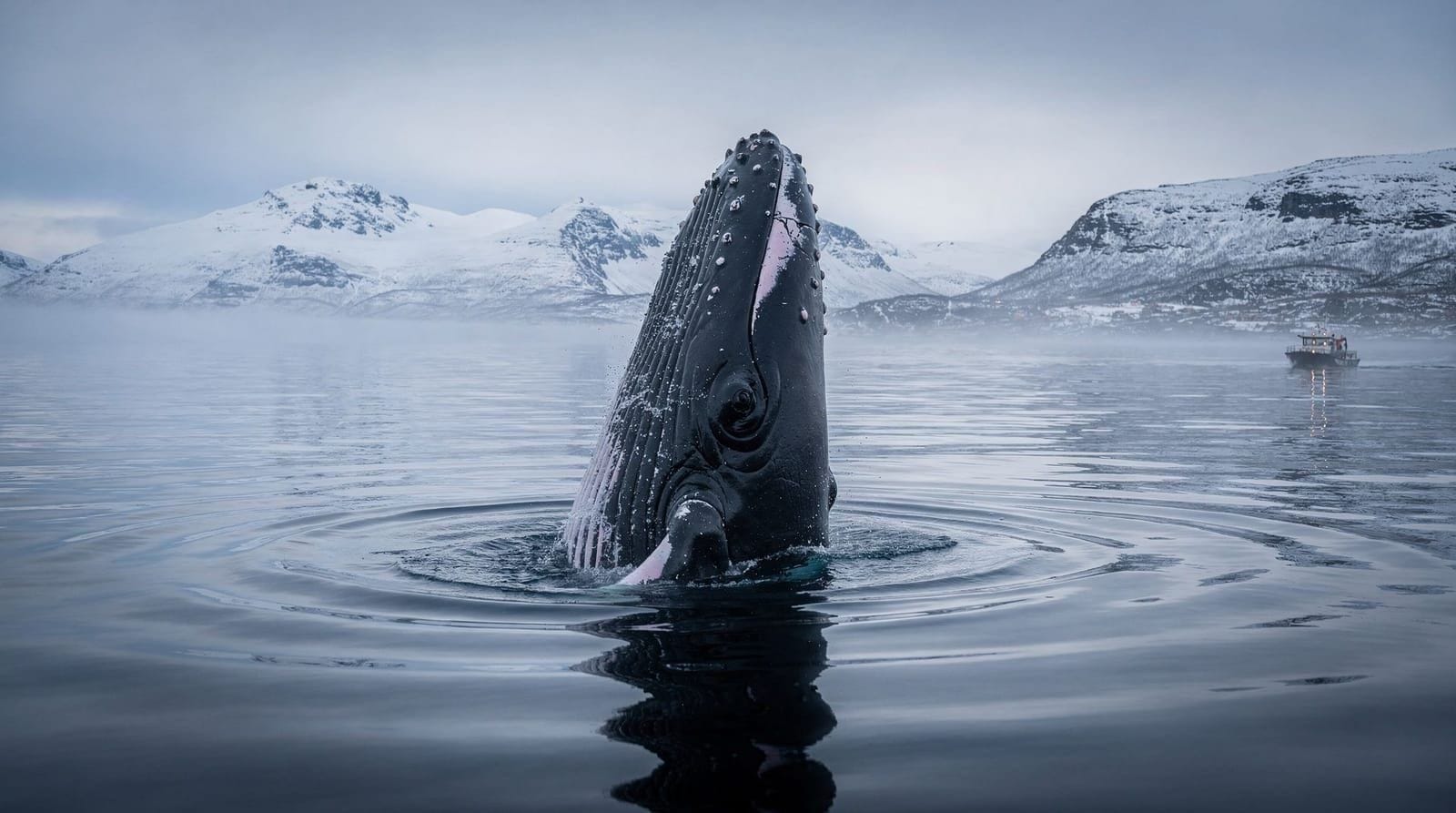
If a humpback or orca surfaces very close to the boat voluntarily — which happens — do not encourage the guides to move the boat closer. Let the encounter happen on the animal’s terms.
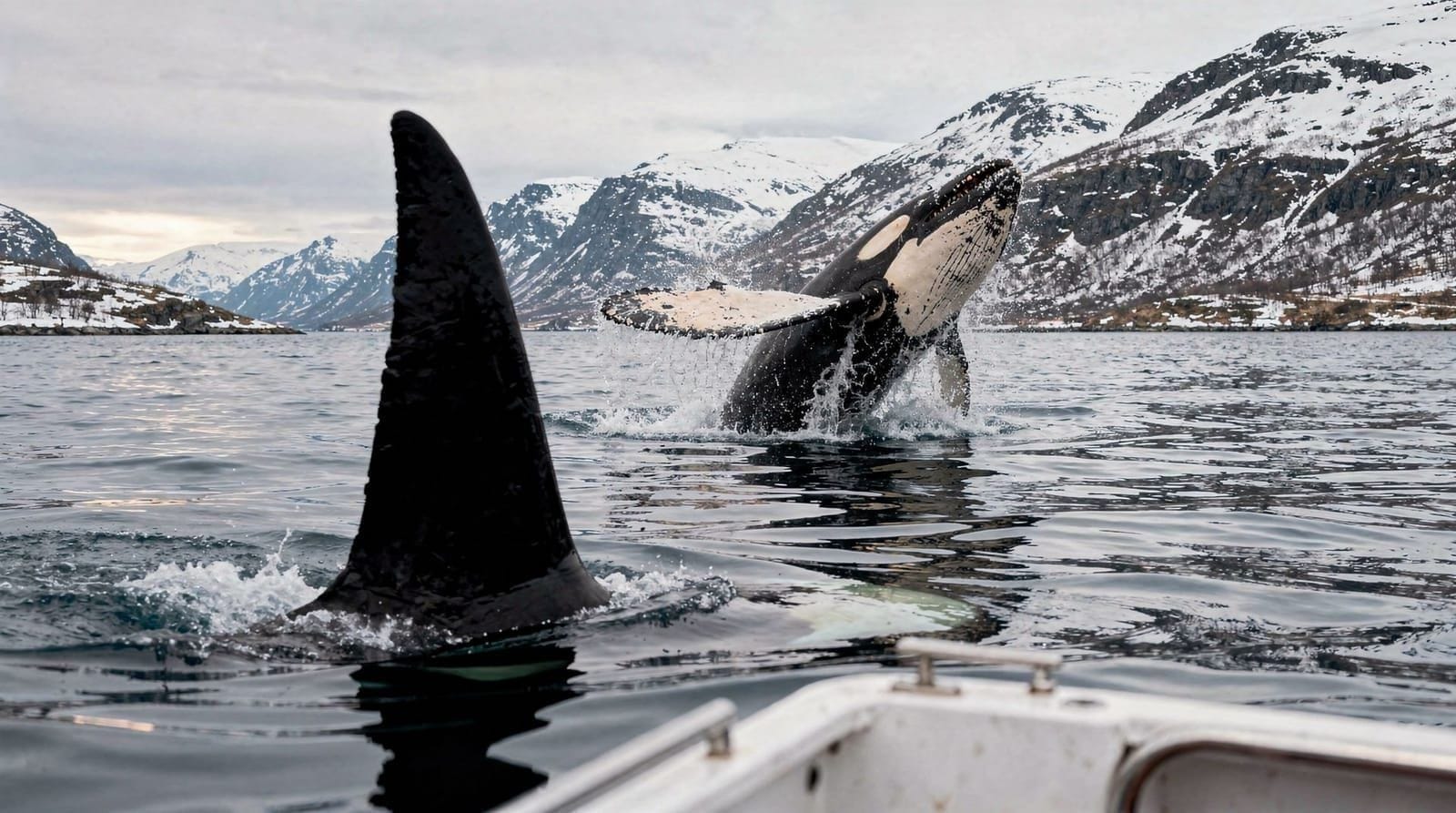
Small-group RIB tour with local guide and conservation-focused briefingComparing Norwegian whale watching standards to global benchmarks
Norway’s voluntary guidelines are broadly aligned with the International Whaling Commission’s “Be Whale Wise” guidelines but fall short of legally enforceable marine mammal protection laws that exist in places like New Zealand, the USA (Marine Mammal Protection Act), and Canada.
The absence of legal enforcement means that some Norwegian operators do ignore guidelines, particularly when multiple boats converge and competitive dynamics take over. Consumer choice and reputational pressure (via reviews and media) are the main mechanisms for compliance.
Environmental NGOs including WWF Norway have called for legally binding minimum distances and a cap on the number of boats permitted in feeding areas simultaneously. These have not yet been enacted.
How to actually vet an operator before booking
Practically, this means asking a short set of direct questions before you pay: What is your minimum approach distance in writing? Do you cut engines near surfacing whales? What is your maximum passenger count per trip? Do you contribute to the Norwegian Orca Survey or a similar research body? A genuine operator answers these plainly and often volunteers the information in their booking page already — see best whale watching operators in Tromsø for a ranked comparison that factors in exactly this.
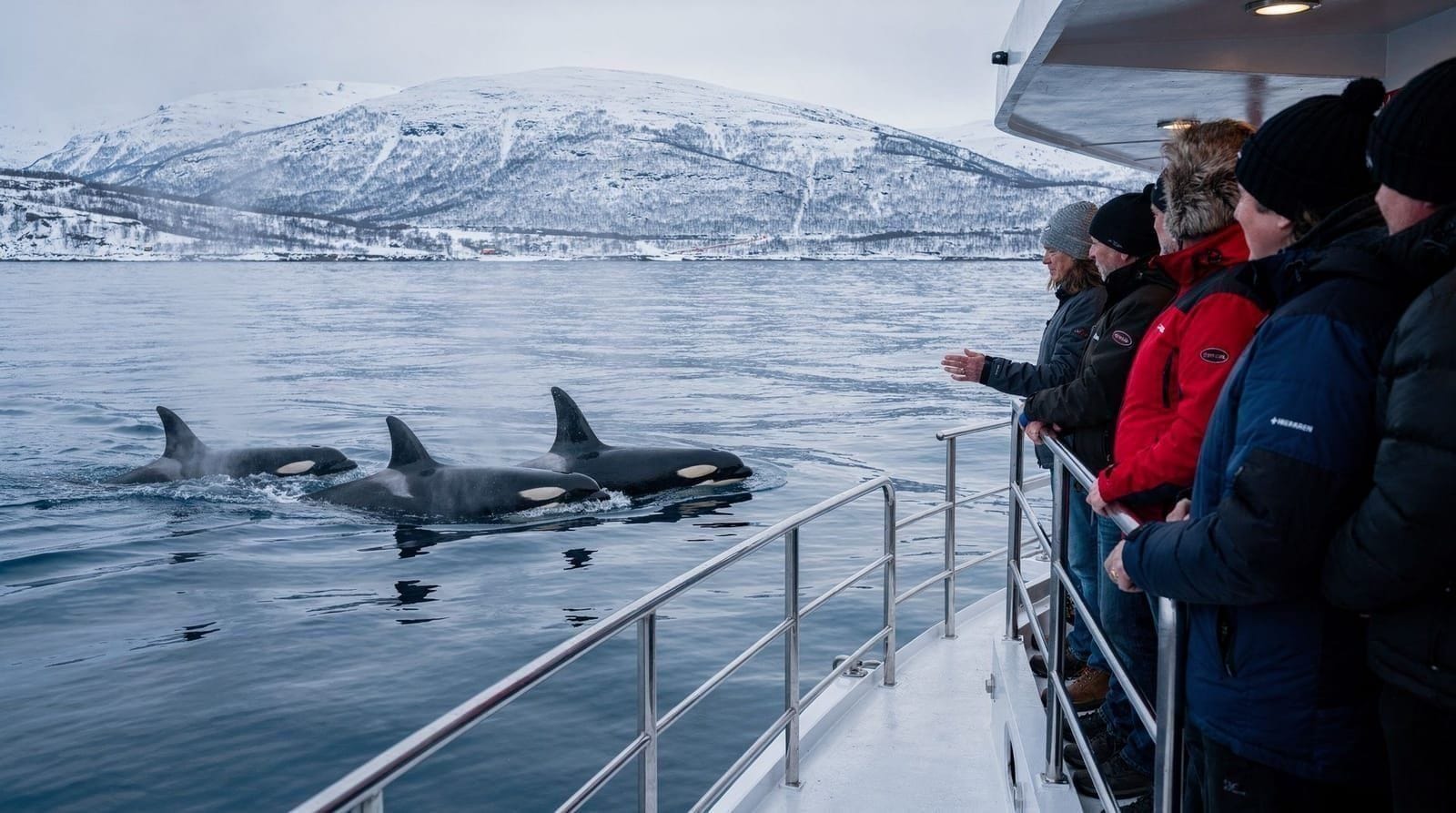
Orca whale watching on a heated boat with a conservation-minded crewFrequently asked questions about whale watching ethics in Tromsø
Is it ethical to go whale watching at all?
This is a legitimate question. The short answer is: yes, with the right operator. Whale watching generates economic incentive for the local community to protect rather than hunt whales. It funds research. It creates awareness. The alternative — no whale watching industry — has historically not protected whales; Norwegian commercial whaling continued regardless. Responsible, regulated tourism is net positive for the species.
Does being on a large catamaran mean my impact is lower?
Per-person impact on a large catamaran is lower, but the boat’s total acoustic footprint and physical displacement of water is larger. A hybrid-electric catamaran is better than a diesel catamaran. For aggregate impact: 60 people on one hybrid catamaran is better than 60 people on five RIBs.
Can whale watching tours affect the herring?
Orca carousel feeding is thought to be slightly less efficient when boats are present close by. This is an indirect impact — not on the herring, but on orca feeding success. Given the already pressured herring stocks, this matters.
How many whale watching boats operate near Skjervøy in peak season?
Estimates from local researchers suggest 15–20 boats can be on the water simultaneously near active feeding aggregations on busy December days. This is a significant number for a fjord environment. Some researchers have described conditions during feeding frenzies as “boat jams.”
Are Tromsø whale watching operators accredited?
There is no mandatory independent accreditation scheme for Norwegian whale watching. Some operators are members of Experience Tromsø or other industry bodies, but membership does not require audited compliance with wildlife guidelines. Self-assessment and customer review remain the main quality signals.
What is the Norwegian Orca Survey and can I support it?
The Norwegian Orca Survey (NOS) is a research organisation tracking individual orca via photo-ID. It accepts donations and produces annual population updates. Several whale watching operators partner with NOS guides who conduct research on commercial tours. Choosing one of these operators means your booking directly funds scientific monitoring.
Is a Skjervøy departure more ethical than a Tromsø departure?
Not automatically, but it tends to reduce cumulative disturbance, since less time is spent transiting at speed to reach the feeding grounds. See Skjervøy vs Tromsø whale watching for the full comparison including cost and convenience trade-offs.
Do orca and humpback whales require different ethical approaches?
The core principles (distance, no chasing, no encircling) apply to both, but humpbacks are generally less affected by boat presence during feeding than orca engaged in coordinated carousel feeding, which is more easily disrupted by underwater noise. See orca vs humpback in Tromsø for behavioural detail.
Top experiences
Bookable activities with verified prices and instant confirmation on GetYourGuide.