Skjervøy — Norway's best whale watching destination
Skjervøy is the orca and whale capital of northern Norway, 2.5 hours from Tromsø. Season, operators, RIB boats — what to actually expect.
From Tromsø: Skjervøy Whale Watching RIB Boat Tour
Duration: 12 hours
Quick facts
- Best time
- November–January (peak whale season); October and February also good
- How to get there
- Drive E6/E8 north 2.5 hours; or join a Tromsø day tour
- Drive time from Tromsø
- Approx. 2.5 hours (160 km)
- Ideal length
- Full day (from Tromsø); 1–2 nights for own-base whale watching
Quick answer: Skjervøy is a fishing island community in Troms county, about 160 km and 2.5 hours north of Tromsø on the E6. Between late October and early February, orcas and humpback whales congregate in the surrounding fjords to follow the herring spawning grounds — making this the single best place in Norway to see both species from a small boat. Whale watching tours from Tromsø typically drive to Skjervøy and back in a day (11–12 hours total); tours based in Skjervøy itself are shorter and often more intimate.
| Where | 160 km / 2.5 hrs north of Tromsø on E6 |
| Cost | 1 500–2 500 NOK depending on boat type and departure point |
| Time needed | Full day from Tromsø (11–12 hrs); shorter if based in Skjervøy |
| Getting there | Self-drive E8/E6, or a Tromsø-departing tour with bus transport |
| Best time | Mid-November to mid-January (peak); October and February also possible |
Why Skjervøy for whale watching
The herring migration determines the whale season. Each autumn, enormous schools of Norwegian spring-spawning herring move into the fjords of northern Troms — Kvaenangen, Reisafjord, and the waters around Skjervøy. Orcas hunt cooperatively in pods of 5–30 individuals, corralling the herring into tight balls (carousel feeding); humpbacks lunge-feed from below. The behaviour is extraordinary to witness.
Skjervøy is not always the epicentre — the herring move from fjord to fjord during the season, and the whales follow. In some years the main concentration is in Kvaenangen, closer to Alta; in others it is deeper in Reisafjord. Local operators track the herring by satellite buoy and report positions daily. The operator you choose should be checking conditions before departure, not just running fixed routes.
Whale watching tours based in Skjervøy
Tours based in Skjervøy (rather than Tromsø-departing tours that drive 2.5 hours to get there) are the best option if you are staying locally or can drive yourself. They depart within 20 minutes of the village, use smaller RIB boats that can follow the animals closely, and typically offer 4–6 hours on the water for less cost than a full-day Tromsø package.
Skjervøy whale watching RIB — orcas and humpbacks — 12 hours total from Tromsø, departs Skjervøy by RIB; the most popular option.
Skjervøy whale watching with local guide — smaller boat, local captain who has worked these waters for years; genuinely better sightings rate from locals who know the fjord.
Skjervøy whale and orca watching by RIB — operated directly from the island; good for guests overnighting in Skjervøy.
Whale watching tours from Tromsø
Most visitors buy a Tromsø-based whale watching package that includes bus transport north to Skjervøy and a boat trip. These are:
- Large catamaran tours: 150–250 person boats with heated cabins and full restaurant. Comfortable but the crowd and engine noise means less intimate encounters. Cost: 1 500–1 800 NOK from Tromsø.
- Minibus + RIB tours: Smaller group (8–16 people), RIB boat on arrival. More expensive (1 800–2 500 NOK) but closer to the animals.
- Hybrid-electric boat tours: Depart from Tromsø by catamaran but use low-noise electric propulsion when near the animals. Cost: 1 690 NOK approximately.
Whale watching in magic Skjervøy from Tromsø — full-day bus + boat package from Tromsø city centre.
Honest guide to sighting success
Sighting rate: Professional operators claim 95–99% sighting rates, which is roughly accurate during peak season (November–January) when herring are confirmed in the area. You will almost certainly see whales. “Not seeing any” usually means the herring has moved and the operator has not updated their route — a sign of a lazy operator.
What you see varies: On good days you will have orcas surfacing within 5–10 metres of the boat, coordinated carousel feeding, and possibly breach events. On average days you see dorsal fins and blows at 50–200 metres. On quiet days you see distant spouts and one or two surface moments.
RIB vs. catamaran: RIB boats get closer and are faster to reposition when the animals move. They are also colder and wetter — dress for spray. Catamarans are warmer and have toilets. For photography, the RIB wins. For comfort, the catamaran.
Season edges: October can be excellent if the herring arrive early; February can extend if they stay late. Mid-November to mid-January is the safest window to guarantee whale presence. Read our whale watching season guide for year-by-year patterns.
| Month | Whale presence | Sighting confidence |
|---|---|---|
| October | Variable, herring may not have arrived | Moderate |
| Nov–early Dec | Herring arriving, whales following | High |
| Mid Dec–mid Jan | Peak concentration | Very high |
| Late Jan–Feb | Herring beginning to move on | Moderate–high |
| March onward | Herring largely dispersed | Low |
Skjervøy village
The island village (population about 2 700) is a working fishing community. The fish processing factory is the economic backbone. There is nothing tourist-oriented about the village — no souvenir shops, no tourist infrastructure — which is part of the appeal. It is an honest Norwegian fishing community that happens to be surrounded by the best whale waters in the country.
Facilities: one hotel (Skjervøy Hotel, around 1 200–1 800 NOK/night), a Rema 1000 supermarket, a couple of local cafés, and a petrol station. The local Orca Hotell (a smaller guesthouse) is popular with whale watching groups and is often sold out weeks ahead during peak whale season.
Getting to Skjervøy independently
Drive E8 north from Tromsø, then E6 north to Storslett junction, north on E6 to Skjervøy junction, then across the bridge to the island. The road is well-maintained; winter tyres mandatory (November–April). From Tromsø: 160 km, about 2 hours 30 minutes. Allow for possible ferry waits or road closures in extreme weather.
The advantage of driving: you can arrive the evening before and join an early morning departure from the island, giving you more time on the water. Several guests combine Skjervøy with onward travel to Alta (1.5 hours further north).
What to wear on a RIB whale watching tour
Thermal preparation is essential — you are on the water in winter, moving at speed between whale sightings. The operator provides waterproof overalls, life jacket, and neoprene gloves, but you need serious base layers underneath. The ambient temperature in Skjervøy fjord in January is typically -5°C to -15°C, with wind chill on the moving RIB making it feel significantly colder.
A practical gear list for a Skjervøy RIB tour:
- Thermal base layer (wool or Merino, full body)
- Fleece mid-layer
- Warm hat and balaclava
- Neck gaiter
- Inner gloves under the neoprene ones provided
- Thick wool socks (two pairs if your feet run cold)
- Waterproof boots (the boat can take spray)
Camera users: keep your camera under the overalls until you need it. Battery drain at -10°C is 3–5 times faster than at room temperature — bring a spare battery kept warm against your body. See our whale watching photography guide.
The Skjervøy landscape and aurora
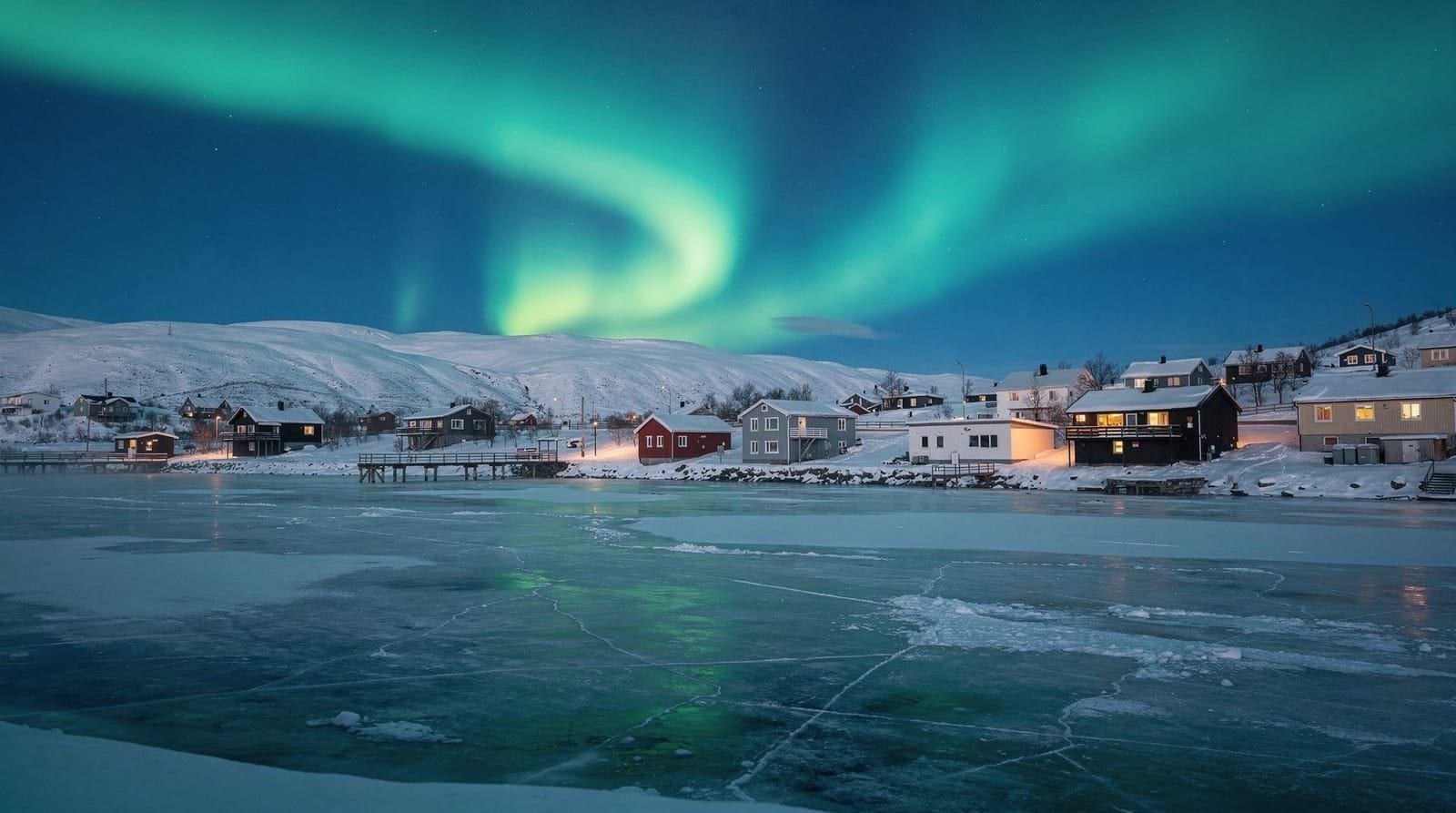
Skjervøy sits in a fjord system that is genuinely remote — the surroundings feel wilder than the Tromsø-area sites. The mountains above the fjord are steeper and less visited. In winter, the dark skyscape around Skjervøy produces excellent aurora viewing conditions, and several whale watching operators combine evening whale trips with aurora watching if conditions allow.
The island’s position — facing northeast across an open fjord corridor — means aurora displays to the north appear directly above the whale-watching waters. On the right night in January, watching orcas surface 50 metres from the boat with the aurora flickering above is an experience that is difficult to put a price on.
King crab in Skjervøy
Norwegian king crabs (Paralithodes camtschaticus) — the large red crabs imported from the Bering Sea in the 1960s and now an established population in northern Norway — are found in the Skjervøy area. Local fishing boats harvest them in winter. You can buy fresh cooked king crab at the quay from some fishing operations; the price is typically 250–400 NOK for a half-crab. This is substantially cheaper than the organised king crab safari tours sold from Tromsø (which charge 2 000+ NOK for a similar experience plus the boat ride).
If you are self-driving to Skjervøy for whale watching, ask at the village harbour whether any boats are selling fresh catch. It is not guaranteed, but when available it is the most authentic and affordable way to eat king crab in northern Norway.
Combining Skjervøy with Alta
Skjervøy is about halfway between Tromsø and Alta on the E6 road. A multi-day itinerary combining whale watching in Skjervøy with northern lights experiences in Alta is practical and rewarding. See our 7-day Arctic itinerary for a suggested route.
Skjervøy versus whale watching from Lyngen or Tromsø directly
Skjervøy is not the only place to see whales from a Tromsø base, and it helps to know how the alternatives compare. Lyngen Alps-based whale tours from Nordlenangen use smaller, more exclusive boats but see fewer animals overall since Skjervøy tends to hold the densest concentration during peak season. Some Tromsø harbour departures market themselves as “whale watching” without specifying that they still bus or sail to the Skjervøy area — always check the actual departure and viewing location before booking, since a short in-fjord boat trip near the city itself is not comparable to the Skjervøy-area experience.
For visitors deciding between a day trip and staying overnight, one further consideration: an overnight stay in Skjervøy lets you join the earliest RIB departure of the day, when the water is calmest and the light lowest — generally the best combination for both sightings and photography.
Frequently asked questions about Skjervøy
When exactly do the whales arrive at Skjervøy?
Arrival depends on the herring migration — typically late October to early November. Peak concentration is usually mid-November to mid-January. The whales leave when the herring does. Operators track herring movements with satellite buoys. Check with your chosen operator the week before travel to confirm conditions.
Do I need to book whale watching in Skjervøy in advance?
Yes — peak season (November–January) tours from both Tromsø and Skjervøy sell out. Book 2–4 weeks ahead minimum. Local Skjervøy-based operators have fewer spots than the large Tromsø packages and sell out faster. Last-minute availability is possible on weekdays but risky on weekends.
How rough is a RIB boat whale watching tour?
RIB boats in Skjervøy’s sheltered fjords are relatively stable. The rides out to find the whales can be fast and bumpy; near the animals they idle slowly. In poor weather (strong winds, >6 m/s) tours may be cancelled or switched to a larger vessel. If you are prone to seasickness, take prevention medication; the RIB motion is different from ocean swells but can still affect sensitive passengers.
Is whale watching ethical in Skjervøy?
The better operators follow strict approach guidelines: no engine above idle within 100 m, no cutting off the animals’ path, maximum one hour per pod per day. RIB operators with local guides tend to be more disciplined than large catamaran tours that process many people. See our whale watching ethics guide to know what to look for in an operator.
Can I see the northern lights at Skjervøy?
Yes — Skjervøy is at the same latitude as Tromsø (70°N) and has the same aurora season (September–April). Being on a northern fjord, away from city light pollution, the viewing can be even better than Tromsø. Many whale watching guests combine an afternoon/evening whale tour with aurora watching from the island that night.
What is the best Skjervøy whale watching operator?
The local Skjervøy-based operators — running RIB boats from the village harbour — consistently receive better reviews for sighting proximity and guide expertise than the large Tromsø catamaran packages. Compare our best whale watching operators guide for current ratings.
Should I choose orca vs. humpback whale watching, or does Skjervøy offer both?
Both species are typically present together in the same fjord waters during peak season, following the same herring. Skjervøy is unusual in that most tours see both orcas and humpbacks on the same trip rather than one or the other. See our orca vs. humpback comparison guide for the behavioural differences to look out for.
Is it worth combining Skjervøy whale watching with a night in the village?
Yes, if your schedule allows it. Staying overnight avoids the exhausting 11–12 hour round trip from Tromsø, lets you join the first boat of the day, and gives a chance to see the aurora over the fjord in the evening. Book the Skjervøy Hotel or Orca Hotell well ahead in peak season, as they sell out around whale season.
Top experiences
Bookable activities with verified prices and instant confirmation on GetYourGuide.