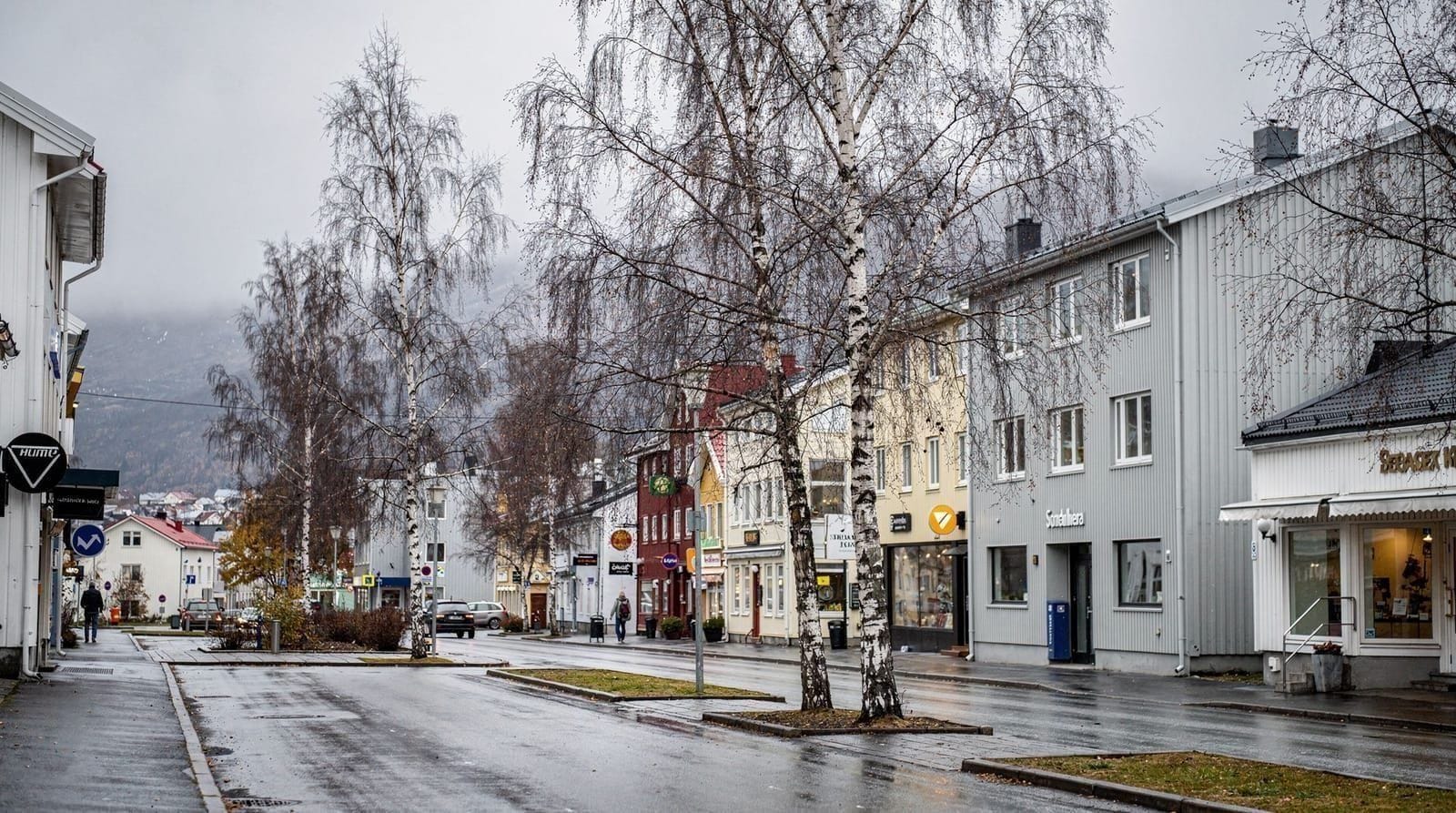
What polar night is actually like in Tromsø — no sun for 7 weeks
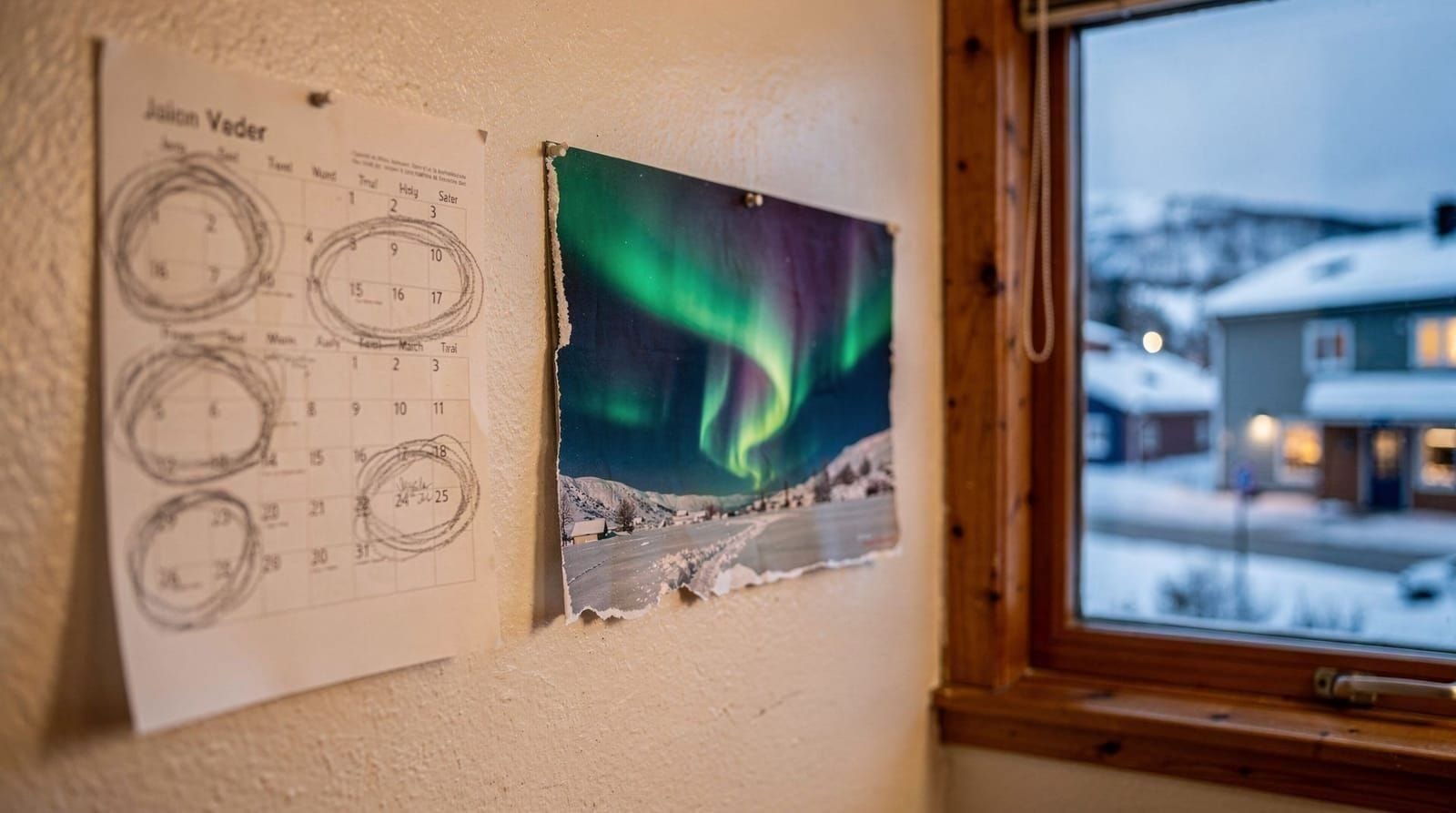
Tromsø’s polar night — called mørketid in Norwegian, literally “the dark time” — runs from 27 November to 15 January. For those 49 days, the sun never rises above the horizon. It is one of the things people ask me about most when I tell them I spent a midwinter in the Arctic. “Wasn’t it depressing? Weren’t you miserable?”
| Dates | 27 November – 15 January |
| Duration | 49 days |
| Usable light | ~10am–2pm civil twilight |
| Best for | Aurora hunting (peak season) |
| Minimum stay recommended | 5–7 nights to adjust properly |
The honest answer is more complicated than either yes or no.
What polar night actually looks like during the day
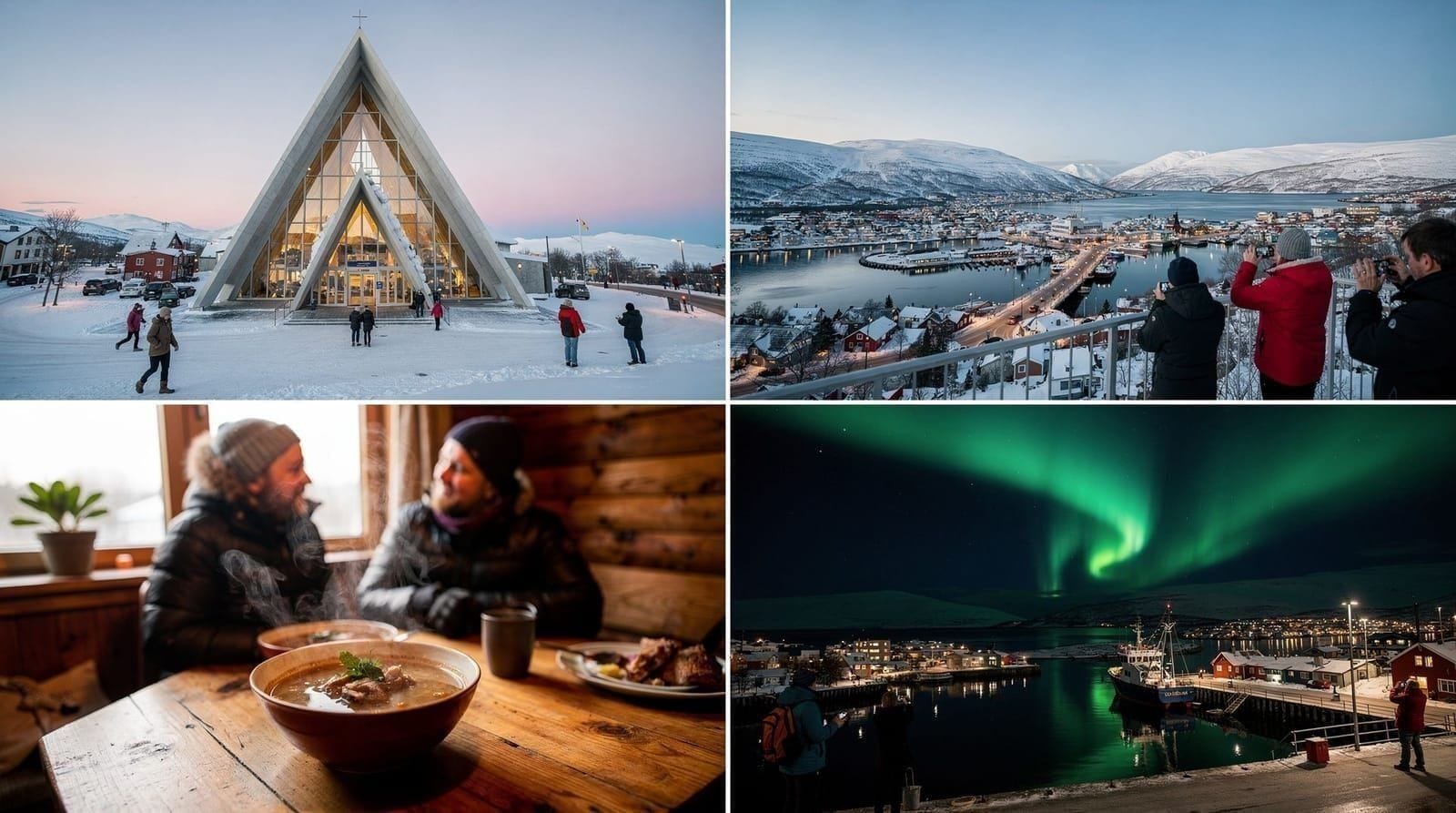
The most common misconception is that polar night means total darkness all day. It does not. The sun sits below the horizon, but it still approaches it — which means that from roughly 10 a.m. to 2 p.m., Tromsø receives a sustained, deep-blue twilight. Think of the light fifteen minutes after sunset on a clear day, but lasting four hours and suffused with a blue-purple quality unlike anything I had seen before.
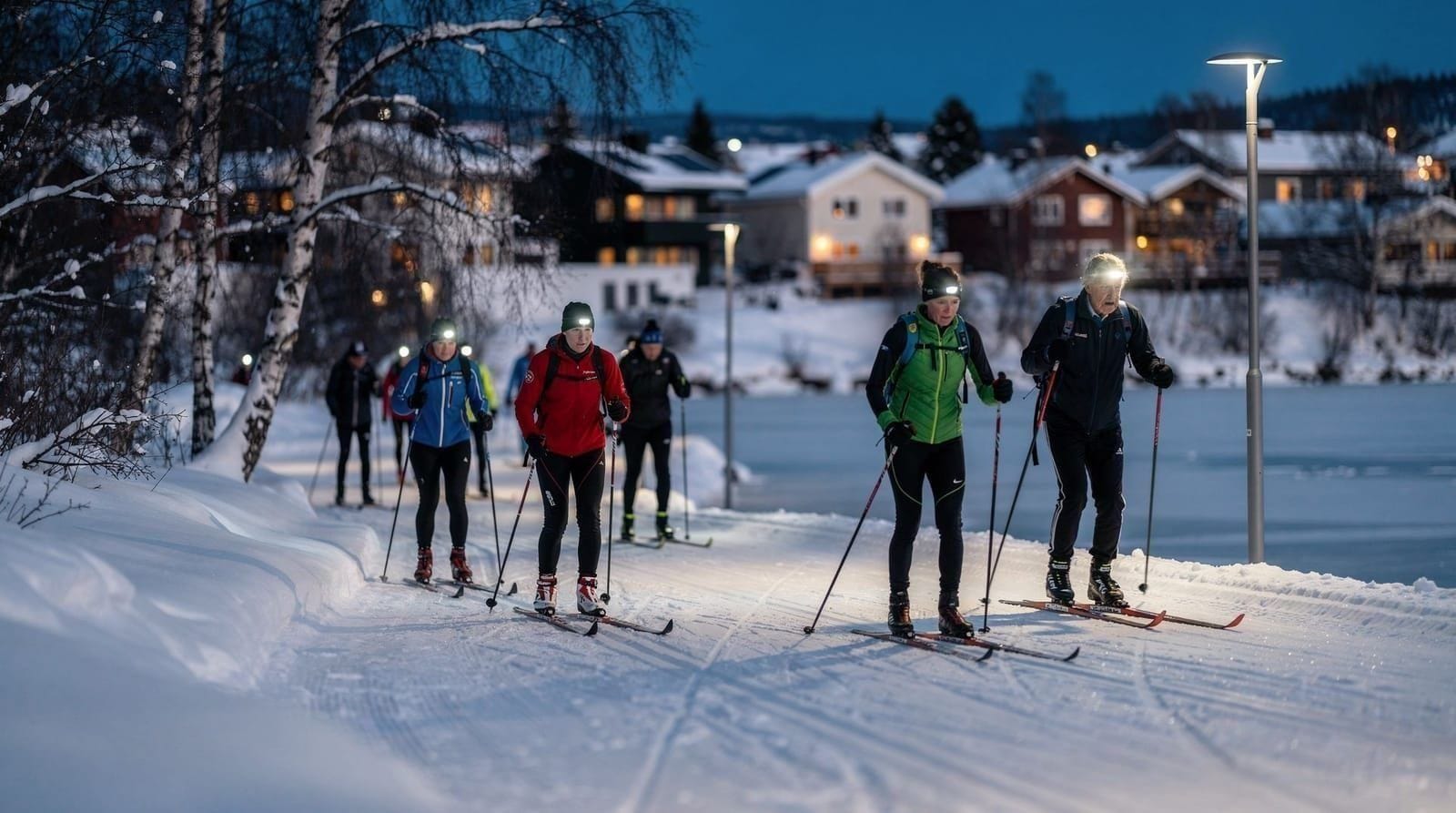
The mountain peaks around Tromsøya catch this light first — the upper snowfields turn faintly pink while the valleys below are still in shadow. Locals call this civil twilight, and they use it for outdoor activities: skiing, snowshoeing, walking the harbourfront. The Fjellheisen cable car becomes a priority during this window because the view from Storsteinen at 421 metres — the fjord, the mountains, the town below in a bowl of blue light — is unlike anything achievable at any other latitude in any other season.
By 2:30 p.m., the light is gone. The next ten hours are dark.
The psychological reality
I will not sugarcoat it: the darkness does affect your mood over time if you are not prepared. The critical factor is not the darkness itself but what you do with it.
Locals in Tromsø have developed an entire cultural relationship with mørketid that is almost the opposite of what outsiders expect. Rather than hibernating indoors, they intensify social activity. Coffee culture reaches its peak — Riso Kafé on Storgata and Smørtorget are full at 3 p.m. because that is when people need warm light and company. There are more concerts and events in December and January than at any other point in the year. The Tromsø International Film Festival takes place in January specifically because polar night is when people want to sit in a dark room and watch art together.
What hits hardest is the disruption to circadian rhythm. Your body clock is calibrated by light exposure, particularly morning light. Without a sunrise, the brain’s melatonin regulation gets confused. I found myself sleeping ten hours and still feeling tired until I started using a SAD lamp every morning at breakfast. If you are staying for more than a week, I genuinely recommend bringing one or buying it in Tromsø (the pharmacy on Storgata stocks them).
Aurora changes everything
Here is what travel articles usually leave out: polar night is when aurora hunting is most productive, and that reframes the entire experience. You are not simply in darkness — you are in an environment where, on the right night, the sky ignites in green and violet and white.
I caught two serious displays during my stay. The second one, on 7 January, lasted nearly three hours. Curtains of pale green shifted to vivid emerald, and at one point a pink fringe appeared along the lower edge that I had only ever seen in photographs. Standing in complete silence on the shore of Malangen at -17°C with that happening overhead is not something I have any comparison for.
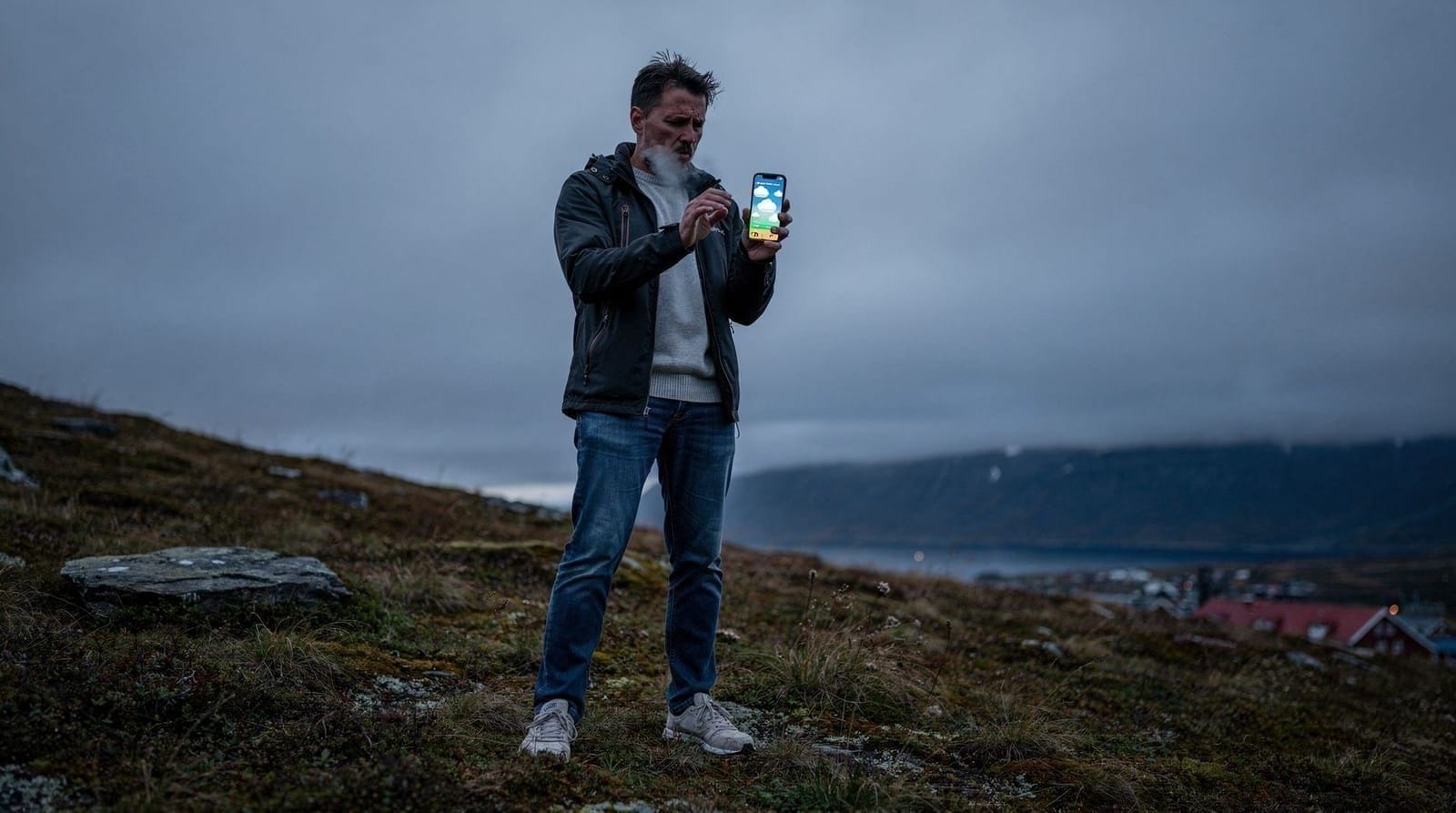
The best months for aurora article explains the seasonal patterns. Within the polar night window, late November and December tend toward cloudier skies; January is often clearer. I found myself checking forecast apps four times a day, which became its own rhythm — a reason to pay attention to the sky constantly, even though the sky showed nothing for most hours.
What to actually do during the dark hours
This is a practical question that most articles skip over. Here is what I filled my polar night days with:
Morning blue-light window (10 a.m.–2 p.m.): Outdoor activity. I snowshoed the Tromsdalstinden approach twice, cycled the harbourfront, and rode the cable car four times. This window is non-negotiable — get outside during it, regardless of temperature.
Afternoon and early evening (2–8 p.m.): The Polar Museum took me two visits to properly absorb. Polaria aquarium is modest but good for an afternoon. Ølhallen opens at noon and is genuinely the social hub of the city — a cavernous pub in the old Mack Brewery building where you can sit for three hours with a 80–90 NOK beer and talk to whoever is next to you.
Aurora window (9 p.m.–2 a.m.): Either chasing or monitoring. If the forecast was poor, I read, cooked, or watched films. If it showed promise, I drove out toward Breivikeidet or up the Kvaløya road.
The unexpected discovery: Sauna culture. Tromsø has several floating saunas on the harbour where you heat up, jump in the fjord, and repeat. In polar night, with steam rising off the black water and possibly a faint green aurora overhead, this is genuinely otherworldly. The arctic sauna experience deserves its own article — and it gets one.
A typical polar night day, at a glance
| Time block | What to do |
|---|---|
| 10am–2pm (blue twilight) | Outdoor activity: hike, cable car, harbourfront walk |
| 2–8pm (dark) | Museums, Ølhallen, cafés, indoor culture |
| 9pm–2am (dark) | Aurora chasing or monitoring the forecast |
How polar night compares to a normal short winter day elsewhere
Visitors sometimes assume polar night is simply “very short winter days,” similar to a northern European city in December. It is not the same thing. A city like London or Berlin still gets a genuine, if brief, sunrise and sunset — the sun crosses the horizon and casts direct light, however briefly. In polar night Tromsø, the sun does not cross the horizon at all for 49 days; the light you get is entirely twilight, diffuse and blue-toned, never direct. This distinction matters for planning: activities that rely on direct sun (certain photography, feeling genuinely “daylight-adjusted”) are not available at all, while the twilight itself becomes its own distinct attraction rather than a diminished version of normal daylight.
Light discipline: Keep indoor lights bright during daytime hours. Use your SAD lamp in the morning. Avoid blue-light screens after 9 p.m. if you want to sleep normally.
Vitamin D: Norway is prescription-culture about supplementation, but D3 drops are available without prescription at any pharmacy. Take them.
Temperature preparation: Polar night coincides with Tromsø’s coldest temperatures. January averages -5°C in the city but can drop to -15°C or colder in calm, clear conditions — which are also the aurora conditions. See the what to wear in winter Tromsø guide.
Transport: The city buses run normally through polar night. The Flybuss from TOS airport (125 NOK) operates on schedule. If you are renting a car for self-drive aurora hunting, winter tyres are mandatory and fitted to all rentals as standard from November.
Is polar night for everyone?
No. Travellers prone to seasonal depression, those who feel strongly regulated by daylight, or those visiting for only two to three days will find the relentlessness harder to bear. For a 2–3 night trip focused purely on aurora, you will simply not have enough time to adapt and may find the dark more oppressive than atmospheric.
For a 5–7 night stay with intentional structure — outdoor activity in the blue-light window, cultural programming in the evenings, aurora chasing at night — polar night in Tromsø is one of the stranger and more memorable travel experiences available anywhere on earth. You come back changed by it in ways that are hard to articulate.
Frequently asked questions about polar night in Tromsø
Does polar night mean it is dark for 24 hours?
No. The sun does not rise above the horizon, but civil twilight from roughly 10 a.m. to 2 p.m. provides several hours of deep blue-purple light. It is not pitch black all day.
When exactly is polar night in Tromsø?
From 27 November to 15 January — 49 consecutive days without a sunrise. Before and after these dates, there is briefly a sliver of sun on the horizon at noon.
How do Tromsø locals cope with polar night?
Through intensified social life, outdoor activity during the twilight window, and cultural programming. Mørketid is celebrated, not endured — there are concerts, markets, and events throughout December and January.
Do the northern lights appear during polar night?
Yes — polar night is peak aurora season in Tromsø. The complete darkness makes displays more vivid and extends the viewing window across more hours of the night.
Is polar night depressing?
It can be, particularly for those prone to seasonal affective disorder. A SAD lamp, vitamin D, structured outdoor activity in the twilight window, and social engagement all help significantly.
How many days should I plan for a polar night trip?
At least 5–7 nights if you want the experience to feel manageable rather than oppressive. Shorter trips (2–3 nights) concentrate entirely on aurora chasing without time to adjust to the darkness, which tends to make the dark feel more relentless rather than atmospheric. The how many days in Tromsø guide has the fuller breakdown by trip goal.