Polaria aquarium Tromsø — honest visitor guide
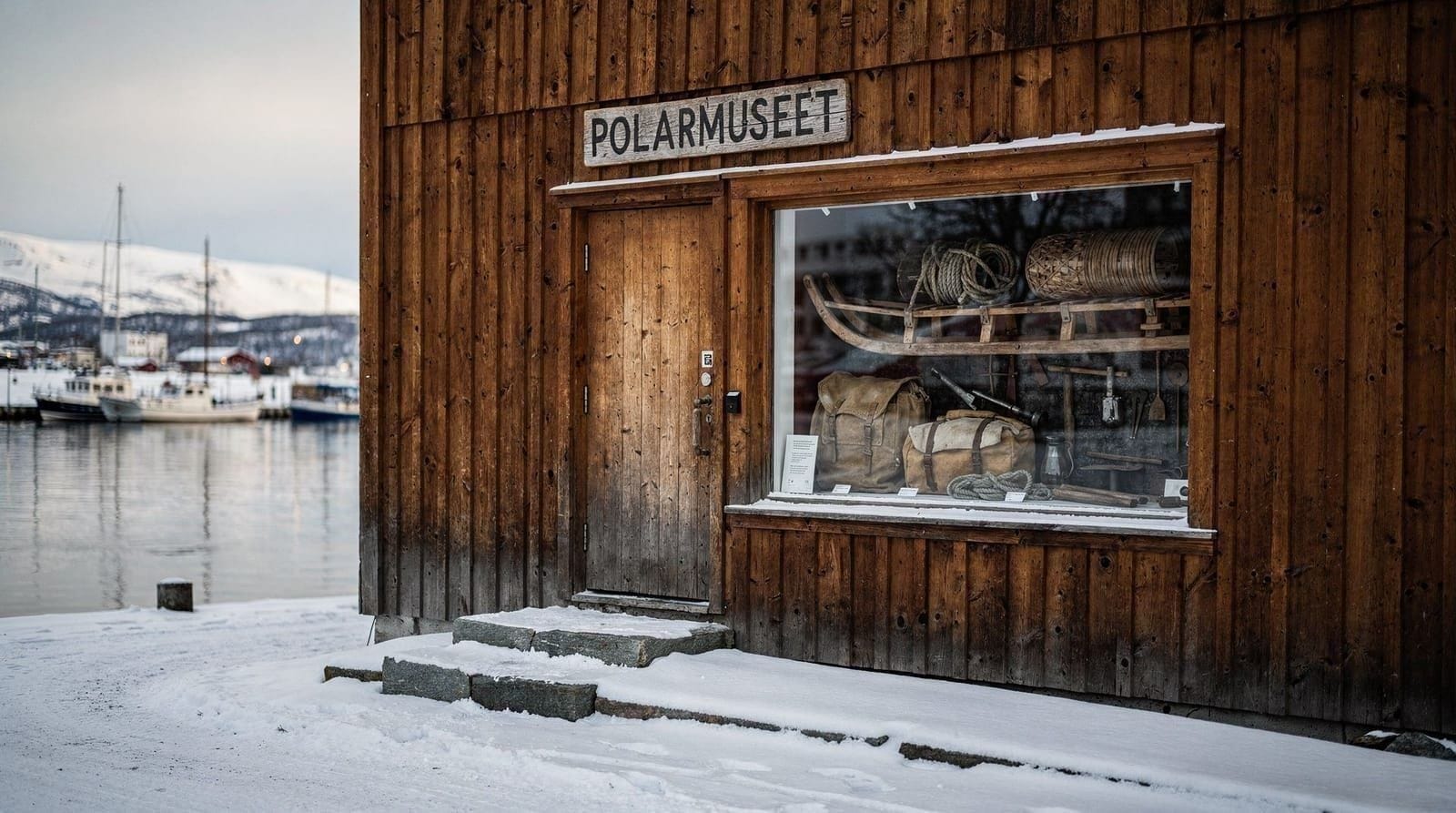
Tromsø: Guided Polar Bear Walk incl. Polaria & Polar Museum
Is Polaria worth visiting in Tromsø?
For families with children or anyone interested in Arctic marine life, yes. Plan 1–1.5 hours. Adults pay 175 NOK (2026); the bearded seal feeding at 12:30 and 15:30 is the highlight. Solo travellers may find it short for the price.
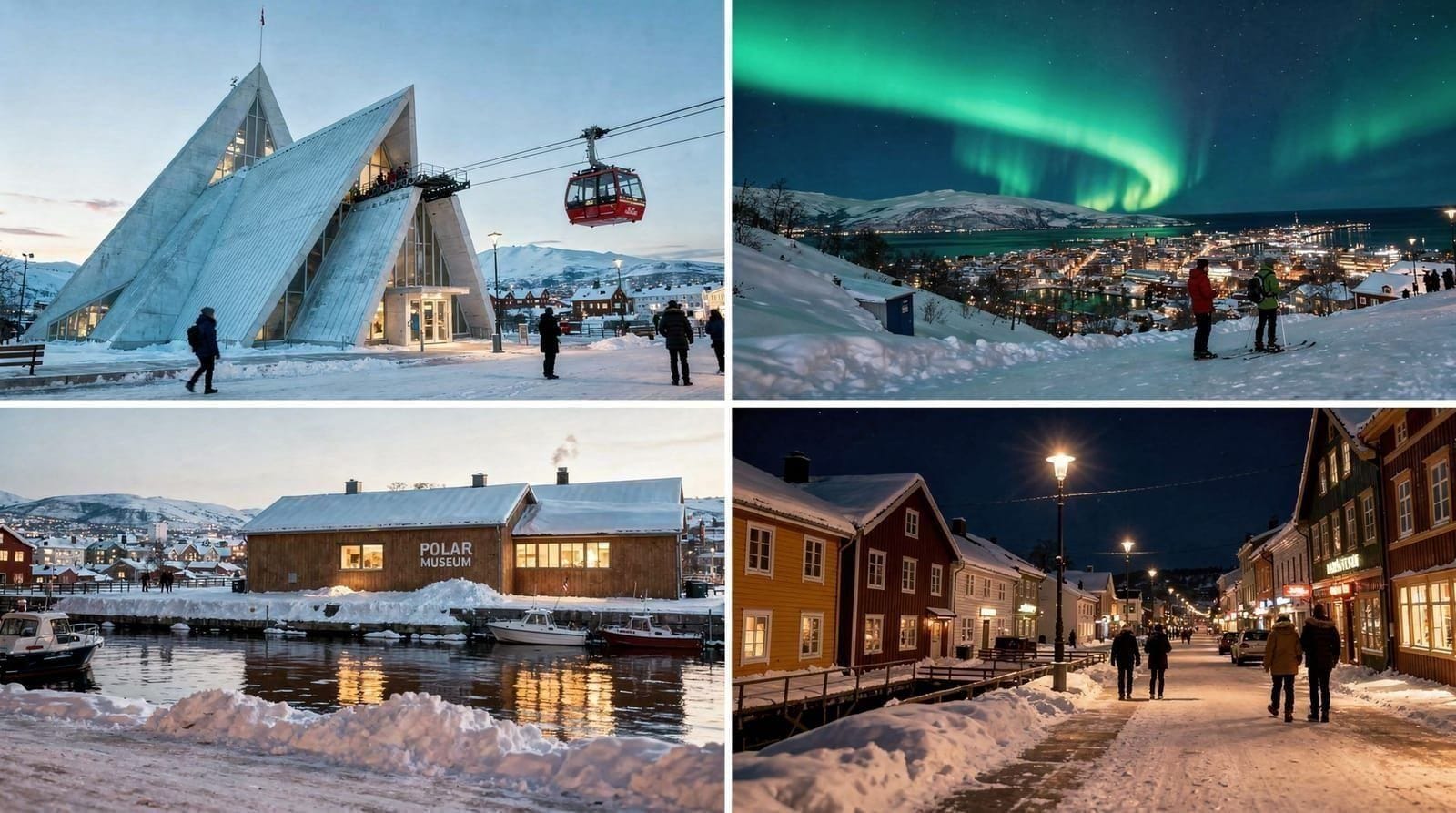
Polaria opened in 1998 as Norway’s northernmost aquarium and Arctic visitor centre. The building alone is worth a look even before you buy a ticket: five concrete slabs are arranged at angles to suggest ice floes that have been pressed up against each other by sea pressure. Inside, the focus is on Arctic and sub-Arctic marine life, with a particular emphasis on the Barents Sea ecosystem and the species that live along the Norwegian coast from Tromsø northward.
| Where | Hjalmar Johansens gate, southern harbourfront |
| Cost | 175 NOK adults (2026) |
| Time needed | 1–1.5 hours |
| Seal feeding | 12:30 and 15:30 daily |
| Best paired with | Polar Museum, harbourfront walk |
For exact current prices and how to buy tickets in advance, see the dedicated Polaria tickets guide. Travelling with children specifically? The Polaria for families guide covers age-by-age advice this page does not.
What you actually see at Polaria
The visit begins with a 360-degree panoramic film about the Arctic — Svalbard glaciers, sea ice, polar bears, walrus. It runs about 15 minutes and gives context for the rest of the exhibition. The screen wraps fully around you and the effect is better than a typical nature film on a flat wall.
The main aquarium section holds Arctic fish species: capelin, polar cod, and lumpfish among others — not dramatic, but accurately representative of what lives in the waters around Tromsø. There is informational material on fishing ecology, climate change in the Barents Sea, and the role of sea ice as habitat.
The bearded seals (Erignathus barbatus) in the outdoor tank are the main event. Polaria houses several individuals, and they are active and visible year-round. The feeding sessions at 12:30 and 15:30 are narrated, educational, and genuinely watchable. The keepers discuss seal biology, diet, and behaviour while the animals perform for fish. It is not a circus act — the seals behave naturally and the commentary is informative. Feeding takes about 20 minutes; position yourself near the underwater viewing window for the best angle.
Honest assessment of value
At 175 NOK for adults (2026), Polaria is not cheap for what it offers. The aquarium section is small compared to major city aquariums in Oslo or Bergen. If you have been to similar facilities in Scandinavia, the fish displays will feel familiar. The panoramic film and the seal feedings are genuinely specific to Polaria, and the Arctic-focused framing is done well.
For families with children under 12, it is clearly worth the entry. For solo travellers or couples with no particular interest in marine biology, it is honest to say you may feel the 1.5 hours and 175 NOK is a close call. Combine it with the Polar Museum nearby and the afternoon becomes substantive enough to justify both entry fees.
The tromso-in-one-day guide suggests Polaria as a morning stop before walking the harbourfront, which is a practical sequence: Polaria opens at 10:00 and the seals are active before the 12:30 feeding.
Pre-book your Polaria entry ticket through GetYourGuide — useful on days when you want to lock in your itinerary.
Practical details
Opening hours: Daily 10:00–18:00 in summer. Winter hours are shorter — typically 10:00–16:00. The Polaria website lists exact dates for seasonal changes.
Getting there: The building is on Hjalmar Johansens gate, at the southern end of the city centre waterfront. Walk south along the harbour from Stortorget for about 10 minutes; the tilted-slab building is unmissable.
Facilities: There is a small café inside selling sandwiches and hot drinks. There is a gift shop with polar-themed items. Toilets are available inside.
Accessibility: The ground floor is fully wheelchair accessible. The building has lifts. The outdoor seal enclosure has level viewing areas.
Photography: Photography is allowed throughout. The underwater seal viewing window is an excellent photography spot during feeding; bring a phone with good low-light performance as the tank is not brightly lit.
The Polaria building — architecture worth noting
The Polaria building at Hjalmar Johansens gate is itself worth a look. Designed by Sivark ARKM and opened in 1998, the structure consists of five concrete slabs arranged at sharp angles to suggest collapsed or wind-drifted ice sheets. The design concept — evoking the pack ice of the Barents Sea — works better when seen from a slight distance than up close, but it is one of the more architecturally considered buildings in Tromsø’s city centre. It was a significant commission when it opened and remains distinctive against the more conventional commercial architecture around it.
The building is located at the southern end of the main harbourfront promenade, and it serves as a natural anchor for the waterfront walk. Even visitors who do not go inside typically walk past and photograph the exterior — it is one of those buildings that looks different from every angle.
The Arctic experience in context
Polaria markets itself as an “experience centre” as much as an aquarium, and the distinction matters. It is not attempting to compete with large metropolitan aquariums like those in Bergen or Oslo on the basis of scale or variety. The focus is tightly on the Arctic — the ecosystems, species, and human relationship with the high north — and within that focus it is well-conceived.
The panoramic film that begins the visit frames the experience correctly: this is about Svalbard, the Barents Sea, and the ecological systems of the extreme north, not a general survey of marine biology. Visitors who enter expecting to see tropical fish or large tanks of Mediterranean species will be disappointed. Visitors who come with genuine curiosity about Arctic nature will find the content coherent and well-presented.
The bearded seals are the wild card. Erignathus barbatus is a large, thick-bodied seal that makes a distinctive groaning vocalisation — visitors often hear them before they see them. They are not performing animals in any entertainment sense; they are wild animals that have adapted to captivity, fed on schedule, and visible at other times swimming, sleeping on the rocks, and occasionally making the groaning call that echoes around the enclosure.
What the Polaria shop is good for
The gift shop is better than average for a museum shop. It focuses on Arctic-themed books, educational materials for children, and Norwegian nature-themed products. If you are looking for a quality gift related to Arctic nature — something beyond the generic tourist items sold around Stortorget — the Polaria shop is worth browsing. Books on Svalbard wildlife, bearded seal plush toys that are accurate to the actual animal, and regional natural history titles are among the better options.
Polaria versus the Polar Museum
These two attractions are often compared and are frequently visited together, which makes sense as they are 10 minutes apart. Polaria is the better option if you have young children or prefer experiential exhibits with live animals. The Polar Museum is the better option if you want historical depth — it covers Norwegian Arctic exploration, including the expeditions of Roald Amundsen and Fridtjof Nansen, in considerable detail.
If you are pressed for time and can only do one: families choose Polaria; history and culture visitors tend to prefer the Polar Museum.
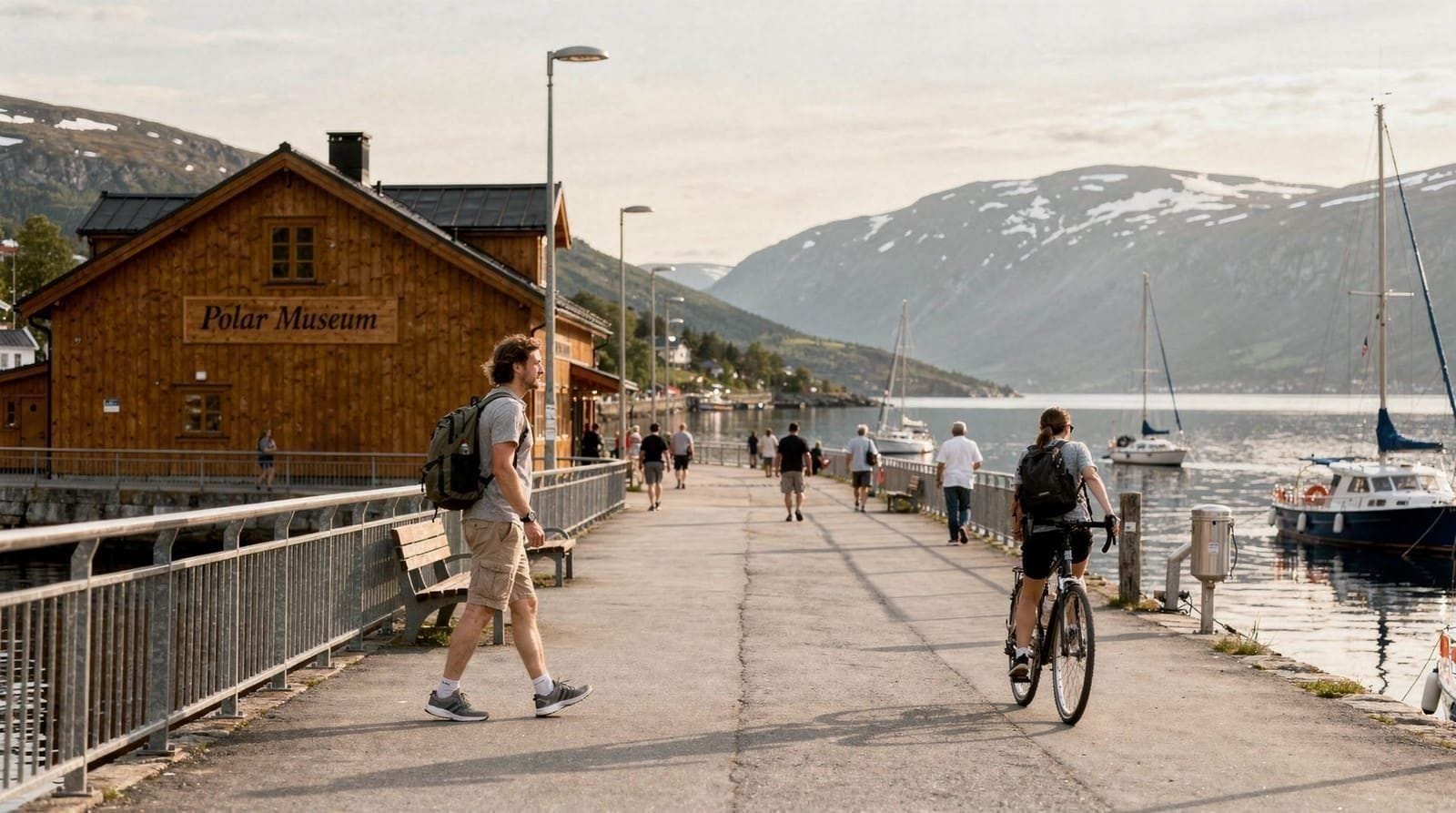
The two together make a coherent half-day programme at combined admission of 275 NOK for adults. The harbourfront walk between them (about 15 minutes) is a pleasant connector and passes the seasonal fish market, the main hotel strip, and the fishing boat moorings that give the waterfront its working character.
Getting the most from a Polaria visit
A few specifics that improve the experience:
Arrive early: The 10:00 opening sees smaller crowds than 11:00 or later on summer days. The panoramic film plays from opening and you will have the screen to yourself.
Coordinate with the feeding schedule: If you can arrange to arrive at 12:00 and see the film, tour the aquarium, and be at the outdoor tank at 12:30, you see everything in the best possible order.
Underwater window: The outdoor seal enclosure has an underwater viewing window that shows the seals swimming below the waterline. This is the best single vantage point for photography during the feeding.
Ask questions: The staff at Polaria are generally well-informed and accustomed to visitors with genuine questions about bearded seal biology and Arctic marine ecology. They are not merely ticket sellers.
This guided tour covers both Polaria and the Polar Museum with an English-speaking guide, useful for making sense of the connections between Arctic natural history and the exploration era.
Fitting Polaria into a wider Tromsø day
Polaria works well as the opening activity of a city-centre cultural morning. After the seal feeding and panoramic film, the natural continuation is a walk along the harbourfront to the Polar Museum, and from there to Perspektivet Museum on Storgata if you want a third stop (95 NOK). A storgata stroll afterward ties the whole morning together with shopping and cafés. If you are trying to structure a full day rather than just the morning, the tromso-in-one-day guide places Polaria first for good reason: it opens early, the seals are most active before the midday crowd, and the rest of the city’s attractions follow naturally from the harbourfront.
On a tight budget, note that Polaria is one of the few paid attractions in Tromsø without a genuinely free equivalent — the free things to do in Tromsø guide lists alternatives if 175 NOK per adult does not fit your day’s spending, though none replicate the live bearded seal experience.
Frequently asked questions about Polaria
Do the bearded seals perform tricks?
The seal feedings at Polaria are educational demonstrations, not performances. The keepers use positive reinforcement for health checks and to encourage natural behaviours, but there is no trained-circus element. The seals occasionally do unexpected things, which is part of the appeal.
Is Polaria open year-round?
Yes, Polaria is open every day of the year, including public holidays. Hours are shorter in winter (approximately 10:00–16:00). Polar night (late November to mid-January) does not affect the aquarium or indoor exhibits, but the outdoor seal enclosure has reduced lighting.
Are there any discounts for Polaria tickets?
Students and seniors often get a reduced rate — bring ID. There is no city pass for Tromsø that currently includes Polaria, though this is worth checking as the tourism offer in Tromsø changes year to year. Combination deals with the Polar Museum are sometimes available at the door.
Is the panoramic film included in the entry price?
Yes. The panoramic film is part of the general admission and runs on a loop throughout the day. You do not need to book a specific showing time.
How crowded does Polaria get?
Polaria is rarely crowded on weekdays in spring or autumn. On rainy summer days when outdoor activities are difficult, it can fill up around the 12:30 seal feeding. Arrive before 10:30 if you want a relaxed visit on a wet July day.
Can I buy Polaria tickets at the door?
Yes. Walk-up tickets are sold at the entrance. There is no timed-entry system and no requirement to book in advance. Pre-booking online may save a small amount of time in the entry queue on busy days.
Is there parking near Polaria?
There is street parking along Hjalmar Johansens gate and a car park at Stortorget about 10 minutes’ walk away. If you are already in the city centre, walking or bussing is more practical than driving specifically to Polaria.
Is Polaria better for adults or for children?
Both, though the balance shifts with age. Adults with an interest in Arctic marine ecology find the panoramic film and informational material genuinely worthwhile; children respond most to the bearded seal feeding and the tactile, close-up nature of the outdoor tank. Solo adult travellers without a specific marine-biology interest are the group most likely to find the 175 NOK entry a marginal call — see the honest assessment above.
Should I book Polaria tickets online or buy at the door?
Either works, since Polaria rarely sells out. Buying online through the Polaria tickets guide is convenient if you want to skip the entry queue on a busy day, but walk-up purchase is equally reliable most of the year.
Top experiences
Bookable activities with verified prices and instant confirmation on GetYourGuide.