Polar Museum Tromsø (Polarmuseet) — what to see and honest tips
Tromsø: Guided Tour of the City Including the Polar Museum
Is the Polar Museum in Tromsø worth visiting?
Yes, especially if you have any interest in Arctic exploration history. It covers the Amundsen, Nansen, and Svalbard hunting eras with original artefacts. Entry is 100 NOK (adults). Plan 1.5–2 hours. Less suited to young children than Polaria.
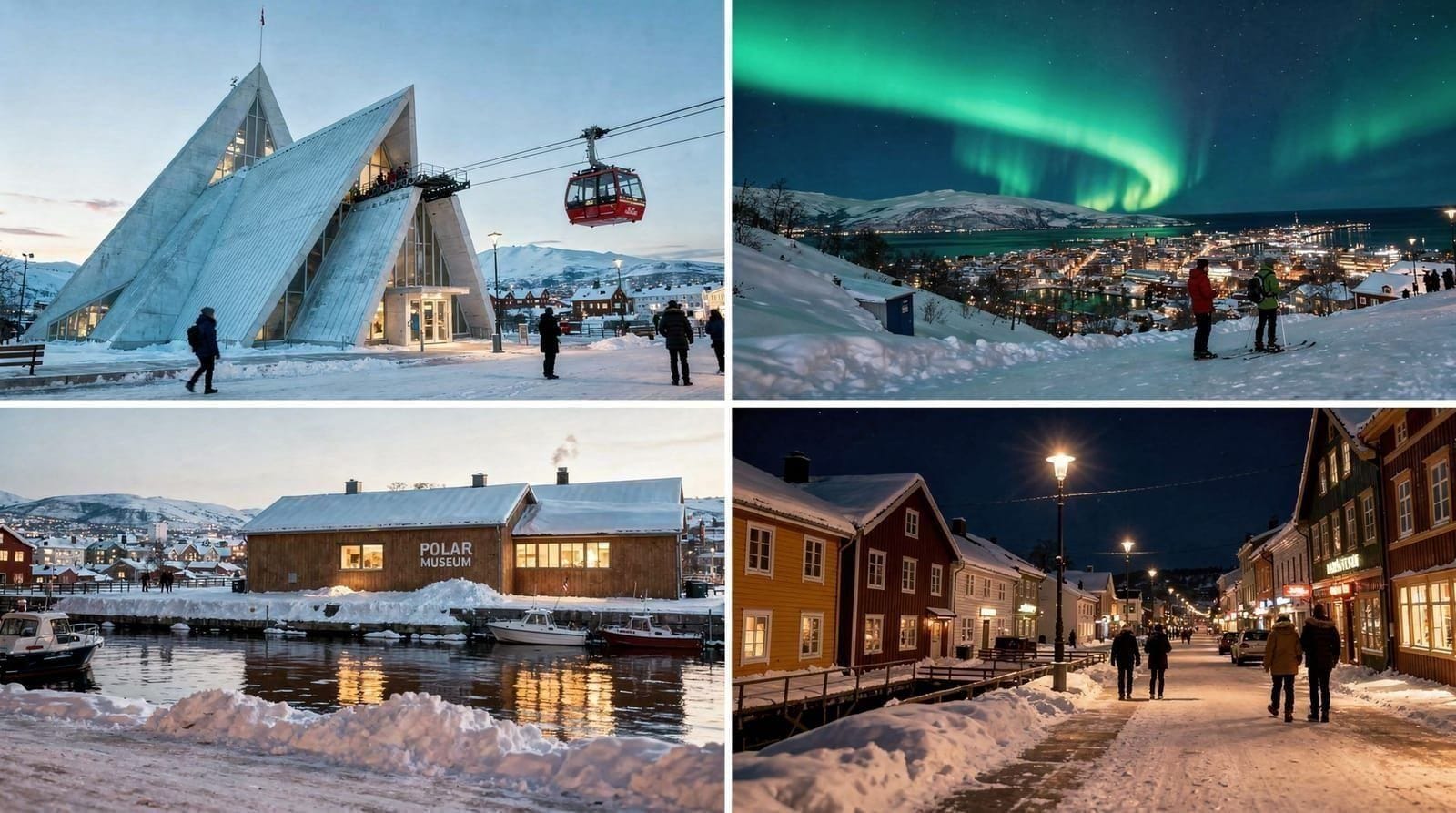
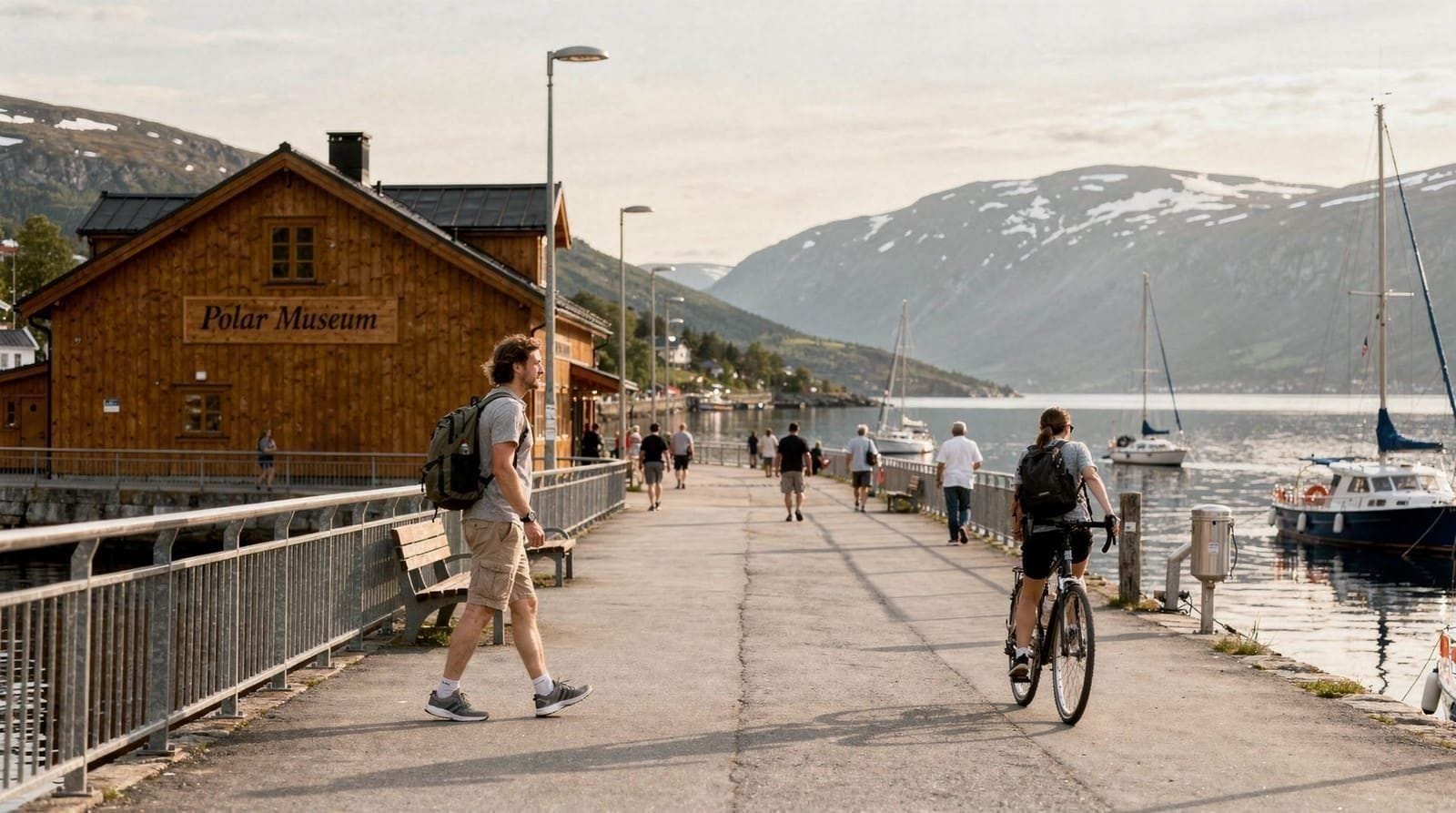
The Polar Museum (Polarmuseet) occupies a restored wooden customs warehouse from 1830 on the northern end of Tromsø’s harbourfront. This is a working-museum in the traditional sense: the displays are artefact-heavy, well-labelled, and not heavily digitised. You are looking at actual expedition equipment, actual boats, actual furs from actual trapping seasons in Svalbard — not recreations or touchscreen simulations.
| Where | Søndre Tollbodgate 11B, northern harbourfront |
| Cost | 100 NOK adults, 80 NOK students/seniors, free under 16 |
| Time needed | 1.5–2 hours |
| Hours | 09:00–18:00 summer, 11:00–17:00 winter |
| Best paired with | Polaria, Perspektivet Museum |
What the museum covers
The collection is organised around three periods of Norwegian engagement with the high Arctic:
The hunting and trapping era: From the 1600s onward, Norwegian hunters operated across Svalbard (Spitsbergen), hunting walrus, polar bear, and seal. The museum holds original trapping cabins, equipment, boats, and an extraordinary collection of furs and skins. Henry Rudi — who spent more winters in Svalbard than anyone before or since, and killed an estimated 713 polar bears in his lifetime — has a dedicated section. The museum handles the ethical tension of this history with reasonable honesty: it acknowledges the scale of the kill while contextualising it within the norms and economics of the time.
The Nansen and Fram expeditions: Fridtjof Nansen’s 1893–1896 Fram voyage attempted to drift across the polar sea. The ship is now at the Fram Museum in Oslo (worth a visit if you’re passing through), but the Tromsø museum has original equipment, diaries, and navigational instruments from the expedition, along with clear maps of the route.
Roald Amundsen: Amundsen used Tromsø as a base for several expeditions, including the 1926 Norge airship crossing of the Arctic. His life and expeditions are covered in depth — the South Pole race against Scott, the Northwest Passage, and his disappearance in 1928 while searching for the crashed Italia airship near Svalbard. The museum does not sanitise the rivalries or the personal complexity of Amundsen’s career.
Honest assessment
The Polar Museum is genuinely good for what it is. It does not try to be a modern interactive experience museum, and that is appropriate: the subject matter is history, the artefacts are rare, and the stories tell themselves.
The main limitation is scale: it is not a large museum, and if you have already read widely about this period, you may exhaust the new information relatively quickly. First-time visitors to the subject and anyone with a specific interest in Norwegian polar history will find it absorbing.
At 100 NOK for adults, it is fairly priced. The tromso-in-one-day guide recommends visiting the Polar Museum in the afternoon after Polaria and a harbourfront lunch, which is a sensible sequence — Polaria is livelier for a morning visit, and the Polar Museum benefits from a slower, reading pace that suits an afternoon.
A guided city tour that includes the Polar Museum — useful for situating the collection within the wider history of Tromsø as a staging post for Arctic expeditions.
Practical details
Location: Søndre Tollbodgate 11B, on the northern harbourfront. Walk north along the water from Stortorget; the wooden warehouse building is clearly signed.
Hours: Daily 09:00–18:00 in summer; 11:00–17:00 in winter. The museum website lists exact hours.
Entry: 100 NOK adults; 80 NOK students and seniors; free under 16. Cards accepted.
Facilities: There is a small museum shop selling books on Arctic exploration, Norwegian polar history, and Tromsø. There is no café in the building, but Rå Pizzabar and Emma’s Drømmekjøkken are within a few minutes’ walk for a lunch or coffee break.
Accessibility: The old warehouse has uneven floors in places. Most of the main exhibition space is accessible but some areas involve steps. Contact the museum directly for specific accessibility queries.
The building and its history
The museum occupies Søndre Tollbodgården, a customs warehouse built in 1830 on the northern waterfront of Tromsø. The building is one of the oldest surviving wooden structures in the city — most of Tromsø’s older timber buildings were lost to fire in the nineteenth and early twentieth centuries. The warehouse functioned as a commercial storage and customs facility until it was repurposed for the museum in the 1970s.
The choice of building is appropriate: the warehouse served the trade economy that made Tromsø significant in the region, and the trade in question was partly in Arctic goods — whale oil, seal skins, walrus ivory. The museum’s collection of hunting equipment and catches connects directly to what would once have been weighed and taxed in this building.
The exterior is worth examining before entering. The timber construction and proportions are typical of northern Norwegian commercial architecture from the early nineteenth century — functional, modest in decoration, built to last in a harsh climate. The wooden quayside beside the museum has been restored and gives a sense of the harbour as it was when the hunting boats returned from Svalbard.
Roald Amundsen — Tromsø’s most famous connection
Roald Amundsen is the most famous person associated with Tromsø, though he was born near Oslo. The city’s connection to him is operational: Tromsø was the staging post for multiple expeditions, and Amundsen returned here between journeys. The Polar Museum holds original equipment from the Northwest Passage expedition (1903–1906), the South Pole expedition (1910–1912), and the 1926 Norge airship crossing.
The South Pole material is the most historically significant in the collection. Amundsen’s team reached the South Pole on 14 December 1911, 34 days ahead of Robert Falcon Scott’s British expedition. The museum covers the preparation, the journey, and the famous tent and flag left at the pole — some of the navigational equipment displayed is from the actual expedition.
The story of Amundsen’s death is perhaps the most dramatic coda: he disappeared in June 1928 while flying a seaplane to search for survivors of the crashed Italia airship in the Barents Sea north of Svalbard. His body was never found. The museum treats this with appropriate gravity — the disappearance of someone who had survived so much is given its full weight.
Nansen and the Fram voyage
Fridtjof Nansen’s 1893 Fram expedition was an attempt to reach the North Pole by drifting across the polar sea in a specially constructed ship designed to withstand ice pressure. The Fram (now at the Fram Museum in Oslo) is considered the strongest wooden ship ever built. The Tromsø museum covers the Nansen voyage with original material — compasses, clothing, navigational equipment, and written accounts.
Nansen himself was a polymath: scientist, artist, diplomat, humanitarian (he won the Nobel Peace Prize in 1922 for his work with refugees). The museum presents him as a complex figure rather than a pure hero, which is the appropriate treatment of someone whose legacy spans exploration, science, and politics.
Combination visits
The Polar Museum pairs naturally with Polaria — together they present the living Arctic environment (Polaria) and the human history of engagement with it (Polarmuseet). Combined, they make a full half-day programme at reasonable cost. The Perspektivet Museum is another good pairing if you want a third museum — it focuses on Tromsø’s urban and social history and is only a few minutes’ walk away.
The Arctic Cathedral is across the bridge and does not combine as naturally geographically, though it is included in most city walking tours of Tromsø.
The tromso-in-one-day guide places the Polar Museum as an afternoon visit following Polaria and a harbourfront lunch — this is the most natural sequence and avoids the late-morning crowd that tends to build at Polaria.
A combined guided walk that takes in Polaria and the Polar Museum — saves planning time and provides English commentary for both collections.
Henry Rudi and the Svalbard trappers
One of the most compelling and least-discussed sections of the Polar Museum concerns the Svalbard trappers — men who spent winters alone or in small groups on the archipelago, hunting polar bear, fox, and seal in conditions of extreme isolation and cold. Henry Rudi (1889–1970) is the most documented of these. He spent more consecutive winters in Svalbard than anyone before or since and killed an estimated 713 polar bears over his career.
The museum addresses Rudi honestly: he was operating within the legal and economic framework of his time, and the hunting industry was the commercial backbone of Norwegian Svalbard activity for over a century. The polar bear populations have since recovered under protection, but the scale of the kill was enormous. The museum’s treatment of this history is more nuanced than either celebration or condemnation — it presents the trappers as skilled professionals in a now-extinct industry and leaves the ethical judgement to the visitor.
Rudi’s equipment — the overwintering cabin equipment, the traps, the clothing, the survival tools — is among the most arresting material in the museum. The isolation was real: weeks without another human, complete darkness for months, temperatures below -30°C, no radio contact until the late season for many years.
The Northwest Passage and Amundsen’s journey
Roald Amundsen completed the first full transit of the Northwest Passage between 1903 and 1906, in a vessel called Gjøa. The journey took three winters in the ice and required exceptional navigational and leadership skill. The museum holds original instruments from this voyage and covers the preparation in Tromsø in some detail — Amundsen used the city as his operational base.
The Northwest Passage success established Amundsen’s reputation and made possible the funding for subsequent expeditions. The museum’s coverage of the Gjøa voyage gives context for the South Pole expedition that followed — the methods, the discipline, and the approach to logistics that Amundsen developed in the Arctic ice were directly applied to the Antarctic.
The Gjøa is now on permanent display at the Norwegian Maritime Museum in Oslo, but the navigational equipment, charts, and personal documents at the Tromsø museum make this one of the best places to understand the voyage outside Oslo itself.
What the museum does not cover
For balance, it is worth noting what the Polar Museum does not address:
The museum does not cover Svalbard’s contemporary environmental and geopolitical status in any depth — the significant role it now plays in Arctic climate research, the military and geopolitical dimensions of Norwegian sovereignty, or the tourism industry that now brings over 100 000 visitors annually to Longyearbyen. This is a museum of the historical period of exploration and hunting, not of contemporary Arctic geopolitics.
The museum also does not cover the Russian presence in Svalbard in any depth, though Russian mining and habitation at Barentsburg has been continuous since the early twentieth century. This is a notable omission in the sense that Svalbard’s history is not only Norwegian.
For visitors interested in the contemporary Arctic, the tromso-library and the UiT research institution provide better resources.
How the Polar Museum compares to the other city museums
Tromsø has three main indoor cultural attractions in the city centre, and visitors with limited time often need a quick way to decide between them.
| Museum | Focus | Cost | Best for |
|---|---|---|---|
| Polar Museum | Arctic exploration history, Amundsen, Nansen, hunting | 100 NOK | History enthusiasts, ages 10+ |
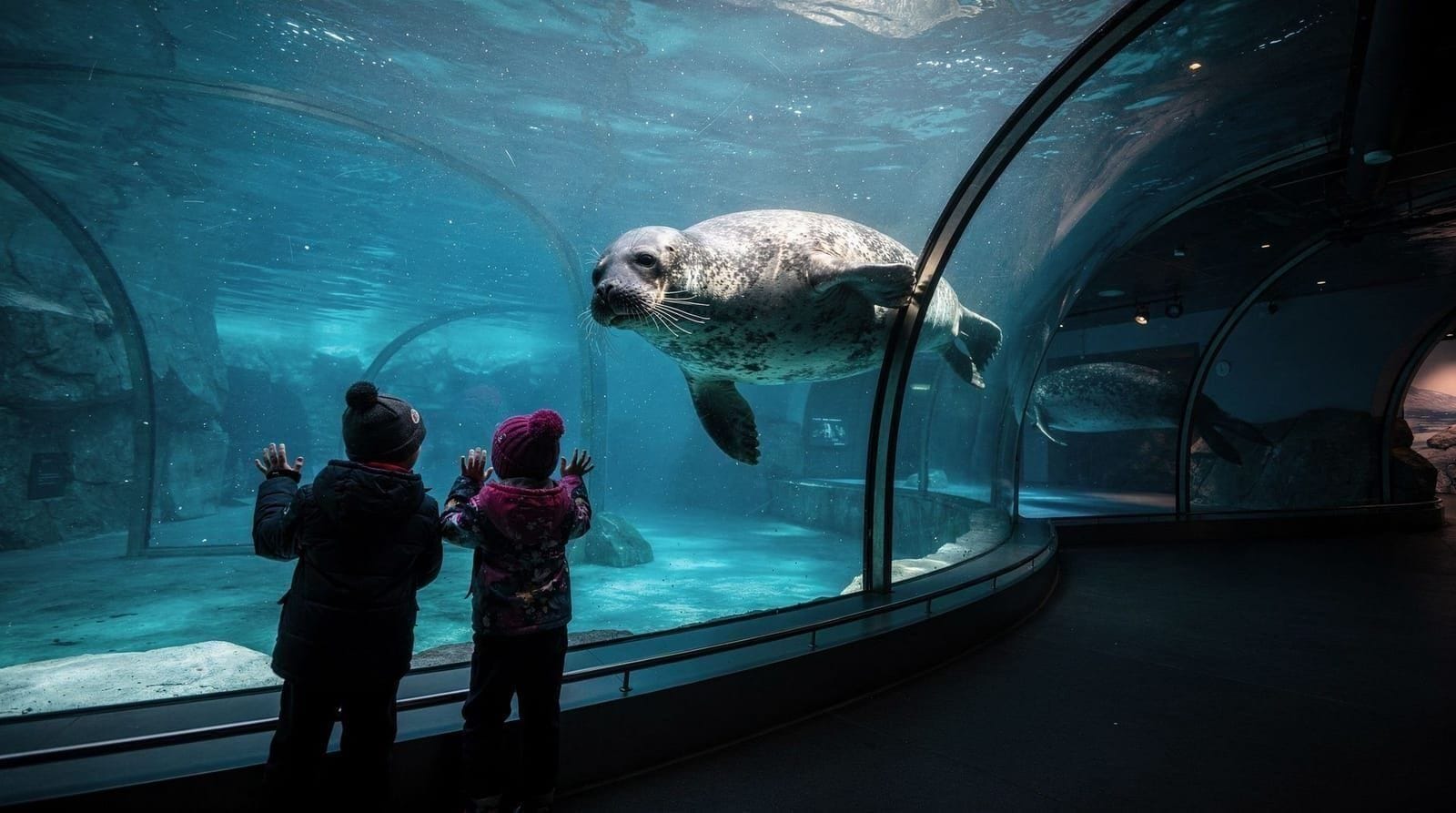
| Polaria | Living Arctic marine life, bearded seals | 175 NOK | Families with young children |
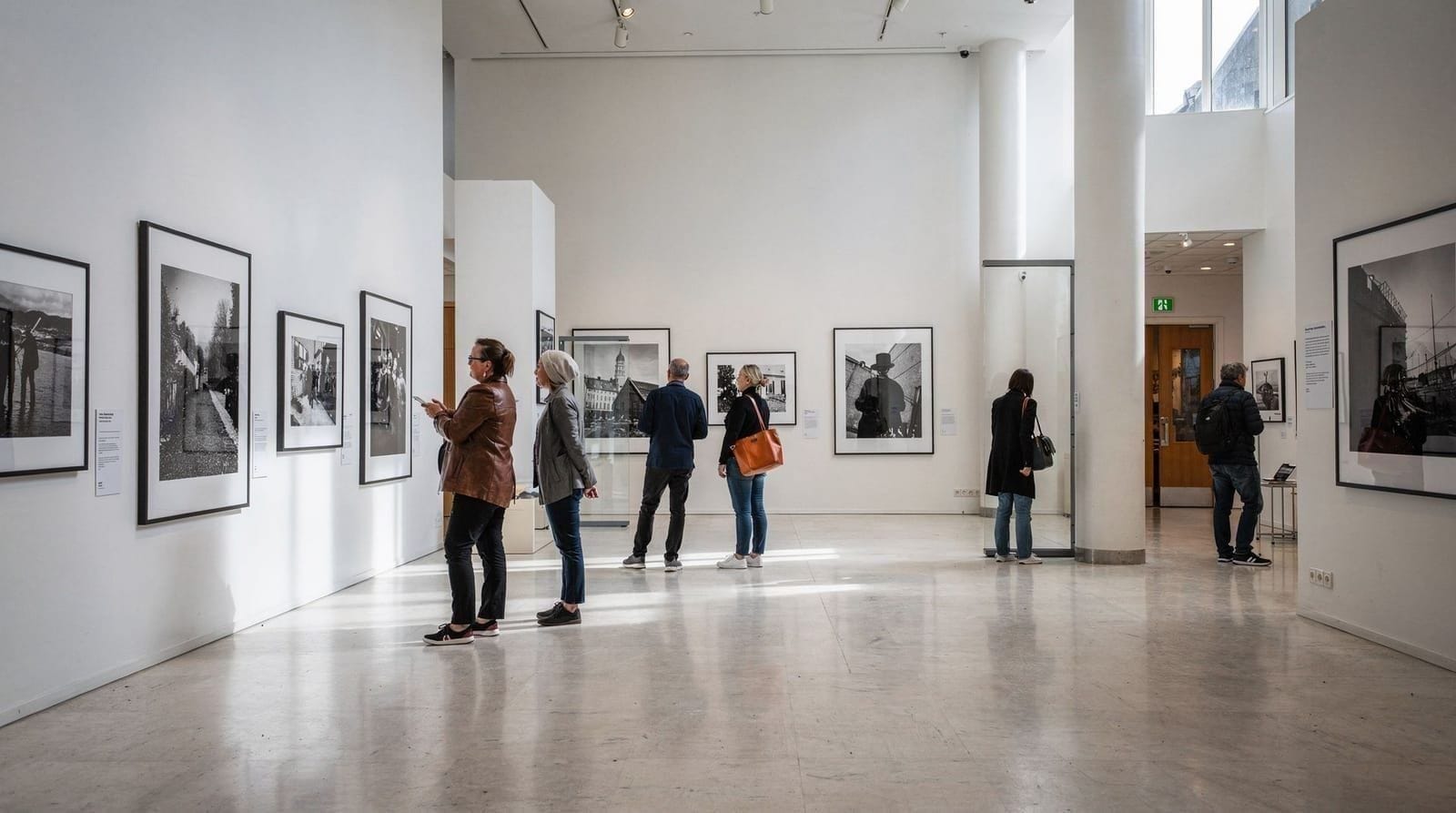
| Perspektivet Museum | Tromsø social history, photography | 95 NOK | Social history and photography interest |
If pressed for a single choice, families with young children generally get more from Polaria, while adults and older children with an interest in exploration narratives get more from the Polar Museum. Perspektivet is the natural third stop for anyone with time for a full city museum circuit.
Budget-conscious visitors sometimes ask whether two museums are worth it when both charge admission. The honest answer depends on your interests rather than your budget: Perspektivet’s cheaper 95 NOK ticket does not make it a substitute for the Polar Museum’s exploration history, and the Polar Museum’s artefact collection does not cover the social-history ground Perspektivet does. Visitors with a genuine interest in both subjects should budget for both; visitors with a narrower interest can safely skip whichever museum does not match it without missing much.
A realistic museum day in Tromsø
For visitors wanting to see all three city museums in a single day, a workable sequence is: Polaria at opening (10:00) for the seal feeding and panoramic film, lunch on the harbourfront, the Polar Museum in the early afternoon (13:00–15:00) when the reading pace suits post-lunch energy, then Perspektivet (95 NOK, 15:15–16:00) before it closes. This totals roughly 4–5 hours including lunch and walking time between venues, all within a 15-minute radius of central Tromsø. The tromso-in-one-day guide sets this out as part of a broader single-day itinerary if museums are only one component of your plan.
Frequently asked questions about the Polar Museum Tromsø
Is the Polar Museum the same as the Polaria aquarium?
No. These are two separate institutions about 10 minutes’ walk apart. Polaria (the aquarium) focuses on living Arctic marine life. The Polar Museum (Polarmuseet) focuses on historical Norwegian expeditions and Arctic hunting. Both are worth visiting, but they cover different subjects.
Does the Polar Museum have any connection to Roald Amundsen?
Yes — Tromsø was Amundsen’s operational base for several expeditions, and he departed from Tromsø harbour for the last time in 1928. The museum holds original equipment, photographs, and documents related to his expeditions, and his story forms a significant portion of the permanent collection.
Is there parking near the Polar Museum?
There is street parking along the harbourfront, though it can be limited in summer. The museum is easily walkable from the city centre; driving specifically there is rarely necessary if you are already in Tromsø centre.
Are guided tours available at the Polar Museum?
The museum does not run regular guided tours as standard, but self-guided audio guides are sometimes available. External guided city tours that include the museum are available through GetYourGuide and local tour operators; these provide useful narrative context.
Can children visit the Polar Museum?
Children over about 10 who enjoy adventure stories tend to engage well with the collection — Amundsen’s South Pole race and Nansen’s ice drift are compelling narratives at this age. For younger children, the exhibits are text-heavy and the stories are abstract. Polaria nearby is the better option for under-10s.
What language are the exhibits in?
The exhibits are primarily in Norwegian with English translations throughout. The English translations are comprehensive and clear — non-Norwegian speakers can follow the entire collection without difficulty.
Can I buy books about Arctic exploration at the Polar Museum?
Yes — the museum shop stocks books on Norwegian polar history, biographies of Amundsen and Nansen, Svalbard natural history, and Tromsø regional history. The selection includes Norwegian and English titles.
Is the Polar Museum too text-heavy for a casual visitor?
It is more reading-intensive than a typical interactive science museum, but the artefacts themselves — actual expedition equipment, boats, and furs — carry visual interest even without reading every label. A casual visitor can get a satisfying hour by focusing on the Amundsen and Rudi sections and skimming the rest.
How does the Polar Museum compare in price to the Polar Museum’s combination with Polaria?
Combined admission to Polaria and the Polar Museum is approximately 275 NOK for adults, a modest saving over buying each separately, and the two form a coherent half-day programme covering both the natural and human history of the Arctic.
Top experiences
Bookable activities with verified prices and instant confirmation on GetYourGuide.