Where to eat in Tromsø — restaurant guide with honest reviews
Tromsø: Food Walking Tour with Guide and Tastings
Duration: 3 hours
Where should I eat in Tromsø?
For Norwegian food at a fair price: Emmas Drømmekjøkken (mid-range, book ahead) or Rå Pizzabar (casual). For Arctic cuisine: Mathallen at the Scandic hotel. For budget eating: Stortorget fish market, kebab shops near the university, or supermarkets. Avoid the generic tourist restaurants clustered around the harbour.
Tromsø has a restaurant scene that is better than its size would suggest and more expensive than most visitors expect. The city of 75 000 has a university, a significant tourist industry, and a culture of eating out that sustains places of genuine quality. The challenge for visitors is separating those places from the mediocre tourist-facing options that cluster near the harbour and Stortorget.
| Mid-range main | Around 320–450 NOK |
| Splurge (king crab) | Around 500–700 NOK |
| Budget option | Fish market crab claw, around 100–200 NOK |
| Dinner hours | Kitchens open 17:00–18:00, close 21:00–22:00 |
| Booking | Recommended for Emmas Drømmekjøkken and Arctandria, especially summer |
Restaurants worth visiting
Emmas Drømmekjøkken — best mid-range Norwegian
Kirkegata 8, central Tromsø. Open Tuesday–Saturday for dinner, some weekday lunches. Booking essential in summer.
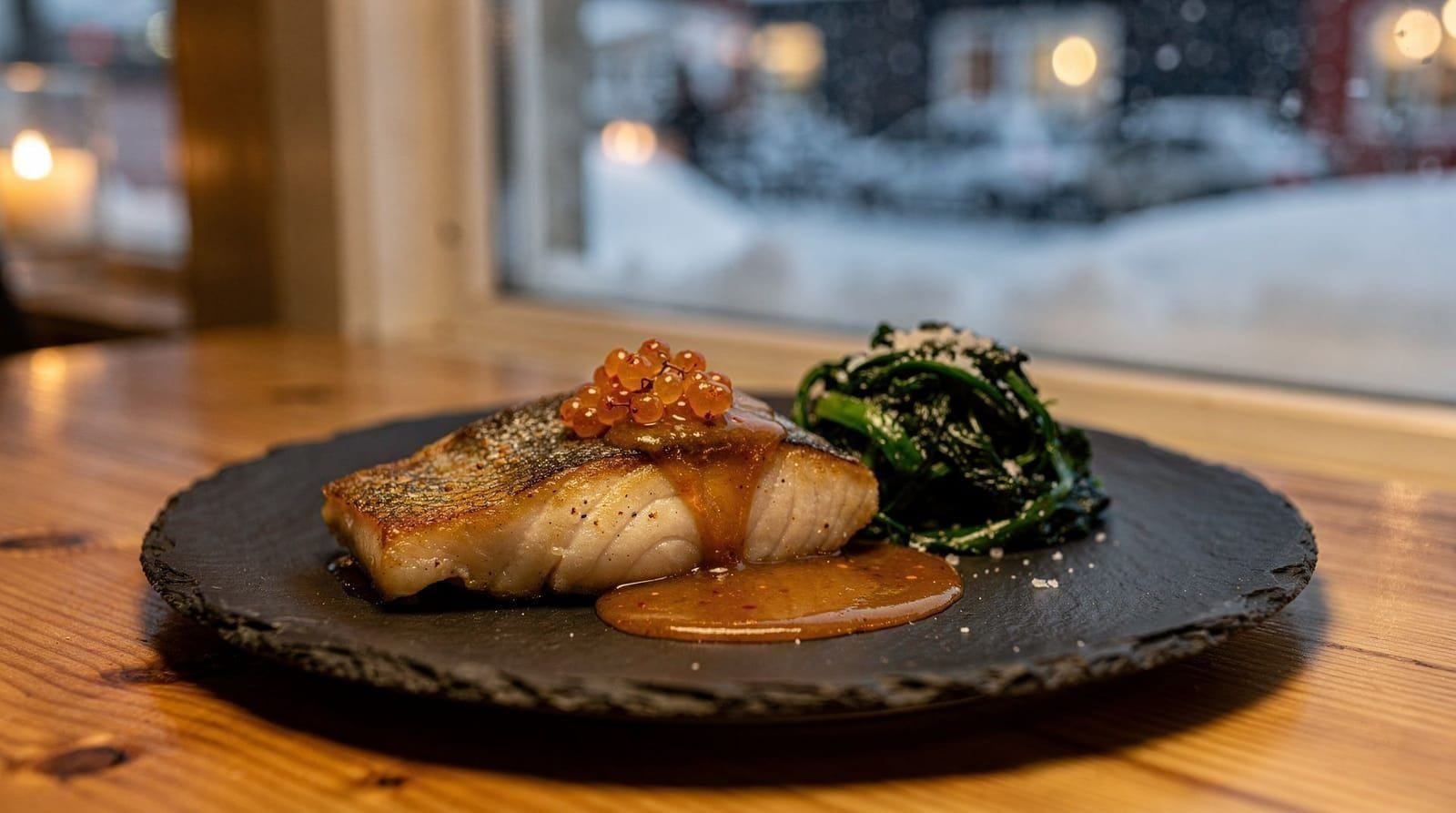
This is the most consistently recommended restaurant in Tromsø among locals and informed visitors. The cooking is modern Norwegian — reindeer, Arctic char, lamb from the island farms — made without the pretension that often accompanies “New Nordic” restaurants in bigger cities. The menu changes seasonally and the prices are realistic for the quality: 320–450 NOK for a main course, full dinner for two with drinks around 1 200–1 500 NOK.
The room is unpretentious and warm. Service is attentive without being overbearing. This is a reliable choice for a good dinner.
Rå Pizzabar — best casual
Sjøgata 6, on the harbourfront. Open daily from lunch through evening.
Rå makes genuinely good pizza — thin crust, quality toppings, a beer menu that includes craft options alongside Mack. A pizza and beer runs 250–350 NOK, which is about as relaxed and satisfying as Tromsø casual dining gets. It is also a good spot for a solo meal or a group that cannot agree on a restaurant.
Arctandria Sjømatrestaurant — seafood specialist
Strandtorget 1, waterfront. Evening dining; booking recommended.
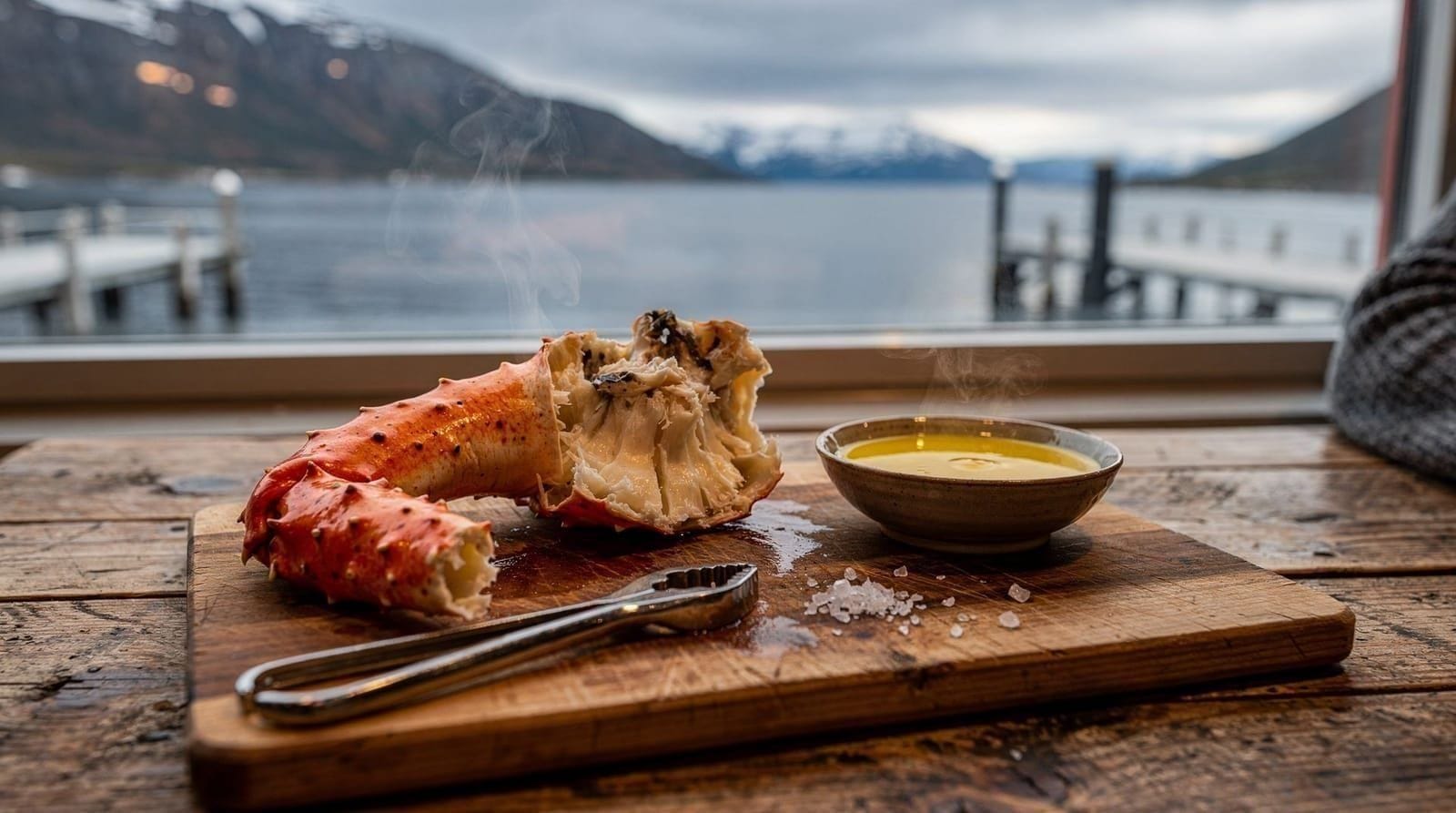
The focus here is Arctic seafood — king crab, stockfish, whale (on the menu; order it or don’t according to your own convictions), and seasonal catches. The setting is a converted boat-storage warehouse on the water. Prices are on the high side: king crab mains run 500–700 NOK. The quality justifies the premium if seafood is your priority.
Mathallen Tromsø — smart brasserie
Located in the Scandic Ishavshotel. The more upmarket option in Tromsø — Arctic ingredients handled with some ambition. The lunch menu is more accessible in price than dinner. Worth booking for a smarter meal.
Vertshuset Skarven — harbour view, consistent quality
Strandtorget, harbourfront. Open daily.
A long-established Tromsø institution with a harbour view and a menu that covers the Norwegian repertoire — fish, reindeer, local lamb. Not the most exciting cooking in the city but reliable and fairly priced by Tromsø standards (250–380 NOK for mains). Good choice if you need a restaurant that will not let you down.
The fish market at Stortorget — best cheap taste
A seasonal fish market operates at Stortorget (summer, variable hours). Fresh and smoked king crab, salmon, stockfish, and whale meat are sold directly. Buying a king crab claw and eating it standing at the market runs 100–200 NOK — the best-value Arctic seafood experience in the city and thoroughly authentic.
What to avoid
The row of tourist-facing restaurants immediately around the harbour and Stortorget — visually identifiable by plastic menu boards in multiple languages outside — consistently receive worse reviews than the places listed above and are not significantly cheaper. The food tends toward unspecific Norwegian-international blandness.
Similarly, restaurants that heavily advertise “Norwegian traditional” and have staff in period costume are tourist traps in most cases. The genuine Norwegian cooking is found in the quieter restaurant rooms away from the main tourist circuit.
A guided food walking tour of Tromsø covering local dishes and drinks with a guide who knows which producers and restaurants are worth your money.
Where to eat by budget
Very tight (under 150 NOK): Supermarkets (Rimi, Kiwi, Rema 1000) for self-catering. Kebab shops near the university. The fish market for a crab claw to eat standing.
Budget (150–250 NOK): Rå Pizzabar for a pizza. Asian restaurants near UiT campus. Cafés on Storgata for open sandwiches and soup. See the dedicated budget eats guide for a fuller list.
Mid-range (250–450 NOK for mains): Emmas Drømmekjøkken, Vertshuset Skarven, Rå Pizzabar dinner, Arctandria for a starter.
Splurge (450+ NOK for mains): Arctandria for king crab. Mathallen for Arctic brasserie. Private chef experiences through specialist operators.
Arctic dishes to seek out
The Arctic cuisine guide covers the full picture, but if you are only ordering one thing:
Reindeer (rein): Usually served as steak or slow-cooked, with cloudberry sauce, root vegetables, and sometimes flatbread. Lean, slightly gamey, genuinely unique to northern Norway.
King crab (kongekrabbe): Snow crab and king crab are both available; king crab is the larger, more dramatic option. The meat is sweet and clean. Expensive, but a legitimate reason to be in the Arctic. The king crab in Tromsø guide covers where to eat it and, separately, the king crab safari experience if you want to catch and eat your own on a fjord excursion.
Stockfish (tørrfisk): Dried unsalted cod from the Lofoten and northern Norway catch, a regional staple for centuries. The classic preparation is bacalao, but served simply reconstituted with butter and potatoes it is excellent.
The Tromsø food scene — context and honest assessment
Tromsø does not have a nationally famous restaurant scene in the way that Bergen (for seafood) or Oslo (for high-end Nordic) are known for food. The city is primarily on the map as an adventure and nature destination, and the restaurant industry reflects this — good-quality Norwegian cooking with Arctic ingredients, but not the cutting edge of Scandinavian gastronomy.
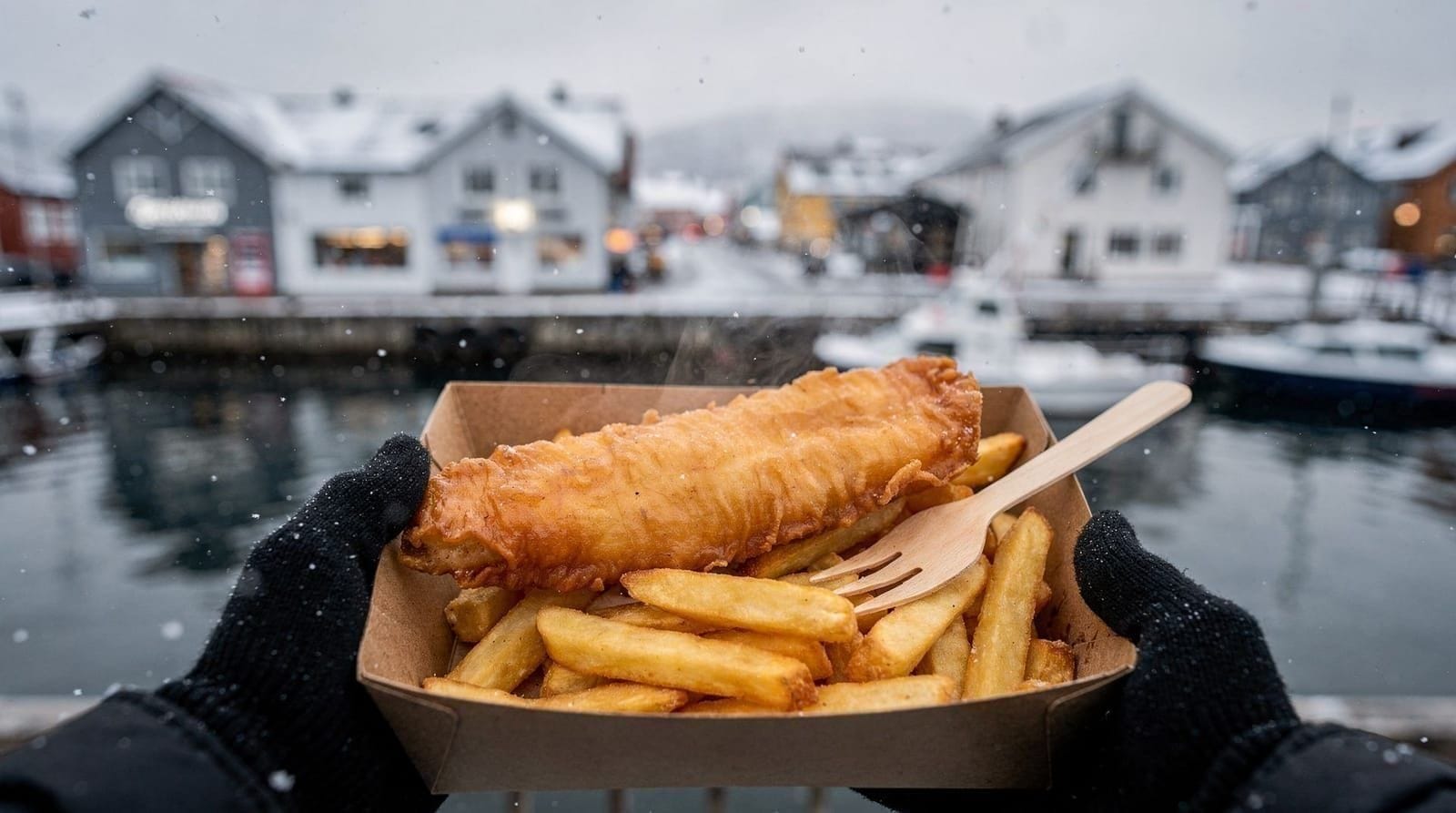
What Tromsø does well is the ingredients themselves. Reindeer is available here in a way it is not in southern Norway — not just as a menu oddity but as a regularly eaten local protein. The cod (particularly skrei in winter) is at the peak of quality directly from the fisheries. King crab is pulled from local waters. Cloudberries ripen on the surrounding mountains and bogs. The raw material is exceptional.
Where the city is less strong is in applying serious culinary ambition to those ingredients. Emmas Drømmekjøkken is the most consistently praised restaurant for this reason — it does the most with what it has. But Tromsø does not yet have the equivalent of Bergen’s Bare restaurant or Oslo’s Maaemo in terms of international recognition. For visitors coming primarily for food, this is worth knowing.
Breakfast in Tromsø
Norwegian hotel breakfasts are usually included in the room rate at mid-range properties and are substantial — bread, cheese, cold cuts, smoked salmon, eggs, fruit, and hot drinks. If your hotel includes breakfast, it is typically the best-value meal of the day.
Standalone breakfast spots outside hotels are limited. Kaffebønna on Storgata opens early and serves coffee and pastries from around 08:00. A few bakeries in the city centre (Bakerifaget is one) offer good bread and pastries.
The Norwegian breakfast culture revolves around bread with toppings (pålegg) — open sandwiches with cheese, salmon, or various cured meats. It is worth embracing this rather than looking for a cooked breakfast, which is uncommon outside hotels.
Tromsø food connected to its seasons
The seasonal rhythm of food in Tromsø is more pronounced than in most cities because several key ingredients are genuinely seasonal:
January–April (skrei season): Migrating cod from the Barents Sea spawning run. The best fresh cod of the year. Watch for skrei specifically labelled on menus.
June–August (midnight sun): Wild salmon (villaks) from Arctic rivers, fresh reindeer, cloudberry and berry seasons in August. Lighter preparations, more produce.
October–January (king crab quota season): Main wild king crab harvest from the Barents Sea. Freshest supply from the market; fish market stalls appear more reliably.
November–February (whale season): Minke whale most commonly available at Arctandria and occasionally elsewhere. This is also when whale watching tours run, creating the rather particular situation of a city where you can watch whales in the morning and eat one in the evening.
Tromsø’s cafés — more than coffee
Several of Tromsø’s cafés deserve mention beyond the restaurant category:
Kaffebønna (Storgata 39): The local chain that has remained the reference point for coffee in Tromsø through the specialty coffee wave. Good filter coffee and espresso, reliable food.
Driv (Nedre gate 4): Student café and cultural venue associated with UiT. Cheap food (120–160 NOK), reasonable coffee, a genuine local crowd, and occasional evening events. One of the more authentic spaces in the city.
Emmas Drømmekjøkken café: The lunch version of the evening restaurant is more accessible — soup, sandwiches, and lighter dishes in a quieter atmosphere than the dinner service.
Grocery shopping and self-catering
If your accommodation has any kind of kitchen access, self-catering for even a few meals meaningfully cuts the daily food budget — restaurant prices in Tromsø add up fast over a week. Rimi and Kiwi are the two most common supermarket chains in the city centre, both stocking a reasonable range of fresh Norwegian produce including salmon, reindeer mince, and root vegetables at prices well below any restaurant equivalent. Rema 1000 is a third common option, generally the cheapest of the three but with a slightly narrower selection. A simple pan-fried salmon dinner for two, bought at a supermarket, typically costs under 200 NOK total — a fraction of the 250–450 NOK a single restaurant main runs. Bread, cheese, and cold cuts from any of these chains also make a solid lunch to carry on a day trip to Tamok Valley or Lyngen, where food options are limited or nonexistent once you leave the city.
Drinks: beer, aquavit and the price reality
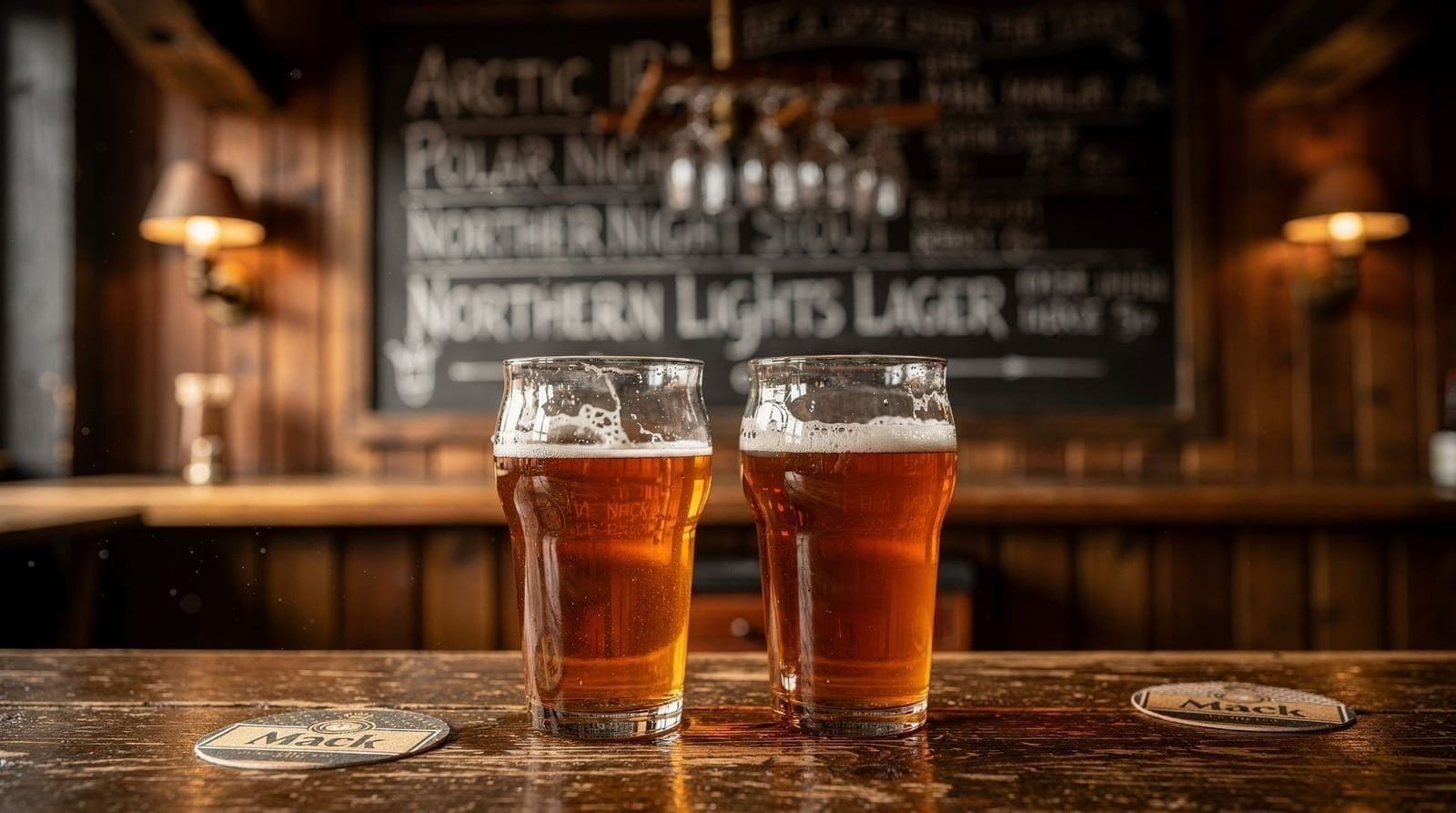
Alcohol in Norway is expensive by most visitors’ standards, and Tromsø is no exception — a pint of local Mack beer at a bar typically runs 90–130 NOK, and a glass of wine similarly. Mack is Tromsø’s own brewery (one of the northernmost in the world) and worth trying specifically for that reason, not just as a generic lager. The Mack Brewery and Ølhallen guide covers the brewery tour and its historic pub. For a broader look at where to drink beyond the big brand, the craft beer in Tromsø guide lists the smaller producers and bars worth seeking out. Aquavit, the caraway-spiced Norwegian spirit, pairs traditionally with the reindeer and fish dishes on most menus — worth one glass even if you do not order more.
Arctic flavours food walking tour with tastingsA short walk to work up an appetite
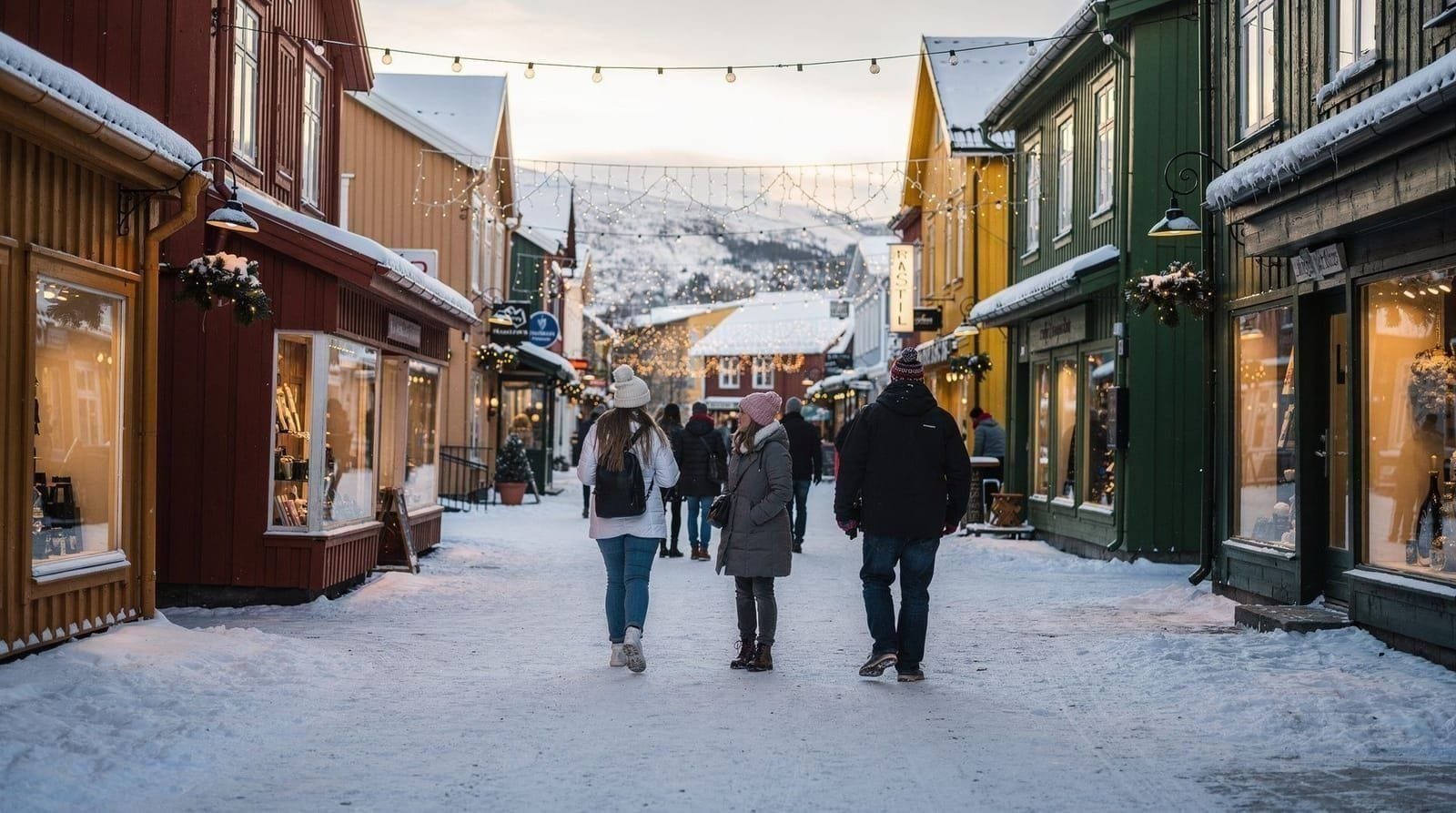
Storgata, Tromsø’s main pedestrian street, connects most of the restaurants and cafés listed above and is worth walking end to end rather than just passing through — the Storgata stroll guide maps out the route with stops for coffee, browsing, and people-watching before or after a meal.
Frequently asked questions about eating in Tromsø
Is tipping expected in Tromsø restaurants?
Tipping is not compulsory in Norway and service charge is included in most bills. Rounding up or leaving 10% for good service is common but not expected. Staff wages in Norway are set at living wages; tips are a bonus, not a necessity.
What time do restaurants in Tromsø serve dinner?
Most Tromsø restaurants open for dinner from 17:00 or 18:00. Kitchen closing time is typically 21:00–22:00, earlier on weeknights. The restaurant culture is earlier than in southern Europe.
Are there sushi or Japanese restaurants in Tromsø?
Yes — Tromsø has a few Asian restaurants including Thai and sushi options. These are concentrated in the city centre and near the university. Quality varies; they are not the reason to visit Tromsø but useful for variety.
Can I find vegetarian or vegan options in Tromsø?
Yes, though the options are more limited than in Oslo or Bergen. Most restaurants have at least one vegetarian main. A few cafés (particularly near the university) offer more extensive plant-based menus. Thai and Asian restaurants are the most reliable source of diverse vegetarian food.
Is it safe to drink the tap water in Tromsø?
Yes — Norwegian tap water is among the cleanest in the world. Do not buy bottled water in Tromsø; it is unnecessary expense and environmentally wasteful.
Are there restaurants open for breakfast in Tromsø?
Hotel restaurants and some cafés serve breakfast from 07:00–09:00. Kaffebønna on Storgata is one of the earlier opens for coffee and pastries. The city is not a late-morning brunch culture in the sense familiar to urban visitors from elsewhere.
Is it possible to eat whale in Tromsø?
Yes — minke whale is on the menu at some Tromsø seafood restaurants, primarily Arctandria. It has the texture of beef and a mild taste. The ethical and political dimensions of eating whale in Norway are well-known; this is a decision each visitor makes independently.
Top experiences
Bookable activities with verified prices and instant confirmation on GetYourGuide.