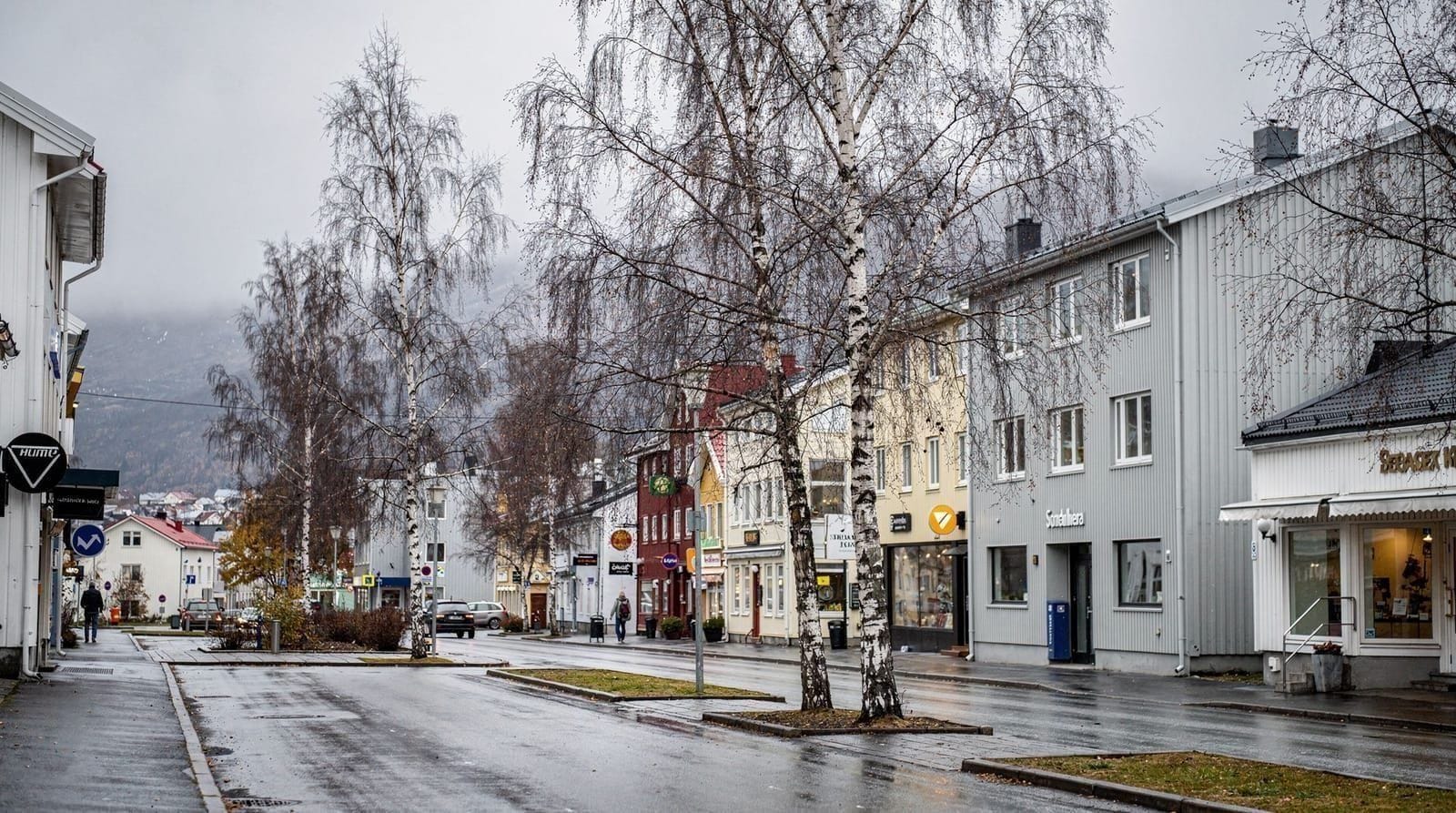
What locals actually do in Tromsø in winter (not the tourist version)
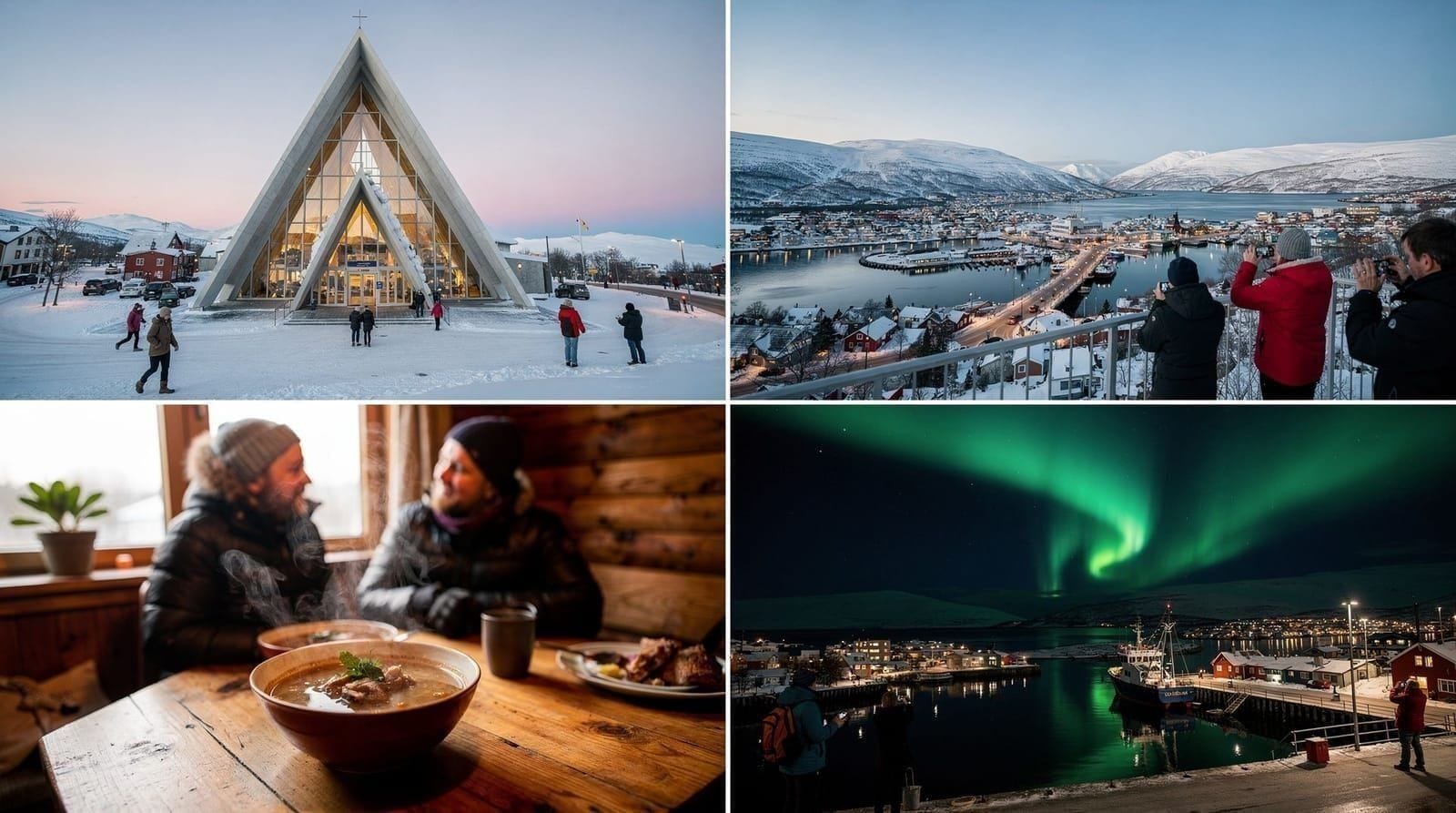
The gap between the tourist version of Tromsø and the lived version is wider than in most cities. The tourist version is: cable car, aurora tour, reindeer experience, Arctic Cathedral photo, departure. These are all real experiences, some of them genuinely good, but they occur in a separate economy from the one most residents inhabit.
| Where | Residential districts, university area, Ølhallen |
| Cost | Beer 80–90 NOK; sea bath 60–80 NOK; DNT membership around 400 NOK/year |
| Time needed | A few extra days beyond the standard tourist checklist |
| Getting there | On foot or by local bus; no special access needed |
| Best time | Any season, though the cabin/ski culture is most visible in winter |
After ten days staying in a residential district away from the harbourfront, walking to a local ski trail in the dark, eating at the university cafeteria, and spending evenings at Ølhallen, I can report what the other Tromsø looks like.
The morning: ski before work
Tromsø has a trail network that begins essentially at the edge of the residential areas and extends into the mountains behind the city. Locals ski these trails before work, during polar night, with headlamps. The university’s sports department maintains lit night trails. On a clear January morning at -8°C, you encounter dog walkers, XC skiers with poles, and the occasional trail runner in full winter kit.
This is not extreme — Tromsø residents grow up in this environment and treat it the way urban dwellers elsewhere treat a morning jog. The snowshoeing guide covers some of the accessible terrain, but the best trails are on the Tromsdalstinden approach, the ridge behind Tromsdalen, and the far side of Kvaløya near Kattfjord.
If you want to experience this rhythm: rent XC ski equipment from Intersport on Storgata (around 250 NOK per day), follow the lit trail markers behind Tromsdalen church, and go at 7 a.m. You will have a very different experience of the city than you get by sleeping until 10 a.m. and riding the cable car.
Ølhallen: the actual social centre
Ølhallen has been mentioned elsewhere on this site, but it deserves emphasis as the genuine community hub of Tromsø beyond the immediate tourist zone. It is a large, simply furnished pub in the basement of the old Mack Brewery building. It opens at noon. There is no music. There is no food beyond snacks. There are around 20 taps, including Mack’s own lager, Arctic Bryggeri selections, and rotating guests.
On a Tuesday evening in January, the clientele is: fishermen from the harbour talking to the university biologist in the next booth; a group of nurses from UNN hospital who finished day shift; two harbour masters discussing the ice conditions in Ullsfjord; a table of Sami herders in town for a meeting. These conversations happen in Norwegian, but English is universally spoken and tourists who engage genuinely (not performatively) are welcomed.
Beer costs 80–90 NOK for a 40cl glass. For 200 NOK, you can spend three hours in the most authentically Tromsø environment available to a visitor.
What they eat (and where)
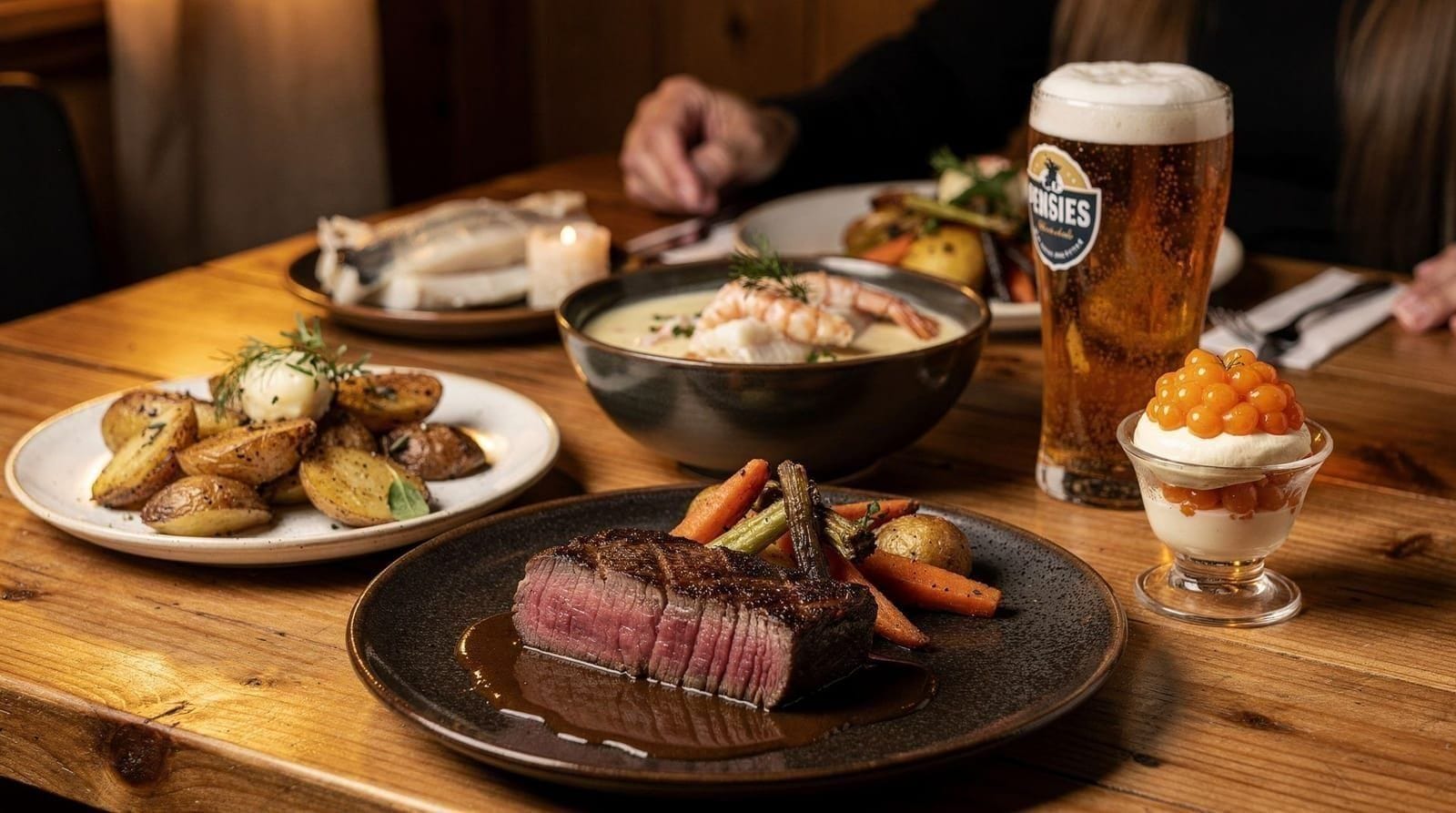
Locals do not eat at Arctandria or Skarven on a regular basis. The everyday food is: smørbrød (open-faced sandwiches from Rimi or Coop), pizza at Peppes or Gutta på Haugen, kebab from one of the university-area spots (90–120 NOK), and home-cooked lapskaus (meat and root vegetable stew). Fridays are for taco — this is a genuine Norwegian cultural phenomenon; taco has become the default Friday dinner across the country, including inside the Arctic Circle.
For a special occasion, locals go to Emma’s Drømmekjøkken or, more commonly, to a friend’s house for a home-cooked reindeer dinner sourced from a family that has connections to a Sami herd. This hospitality economy is not accessible to tourists but produces the best food in the region.
The Tromsø food scene covers the visitor options; this is the supplement.
The sauna and sea bath
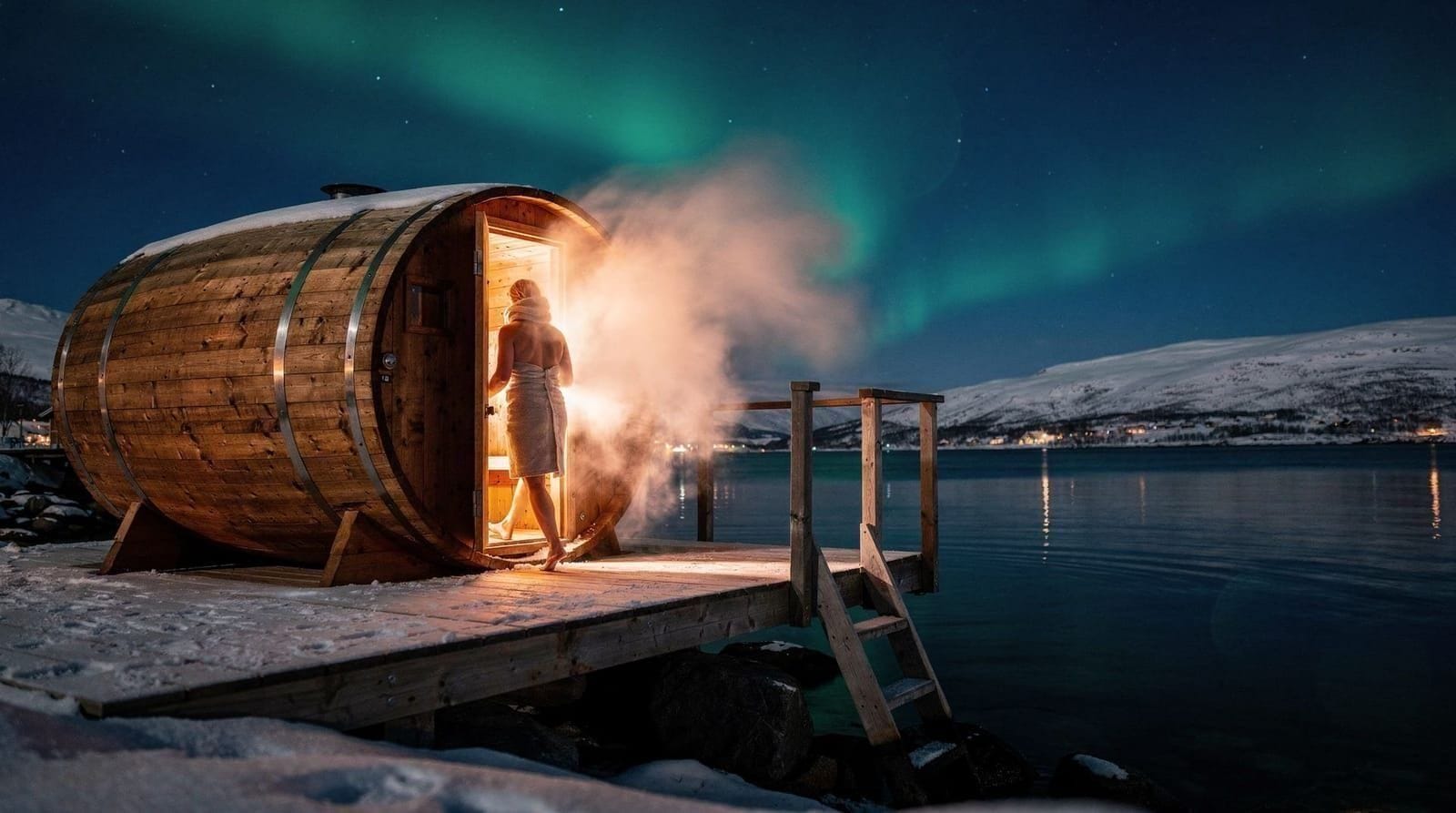
Arctic sauna culture is genuinely part of local life, not a tourism product. Sjøbadet on the northwest shore of Tromsøya is where residents go after work on winter evenings — heated sea bath, wood-fired sauna, fjord ladder, repeat. For 60–80 NOK, it is also one of the few truly local experiences that tourists can access without mediation.
The floating saunas on the harbour lean more touristy, but during weekday sessions they attract locals too. The key is to book weekday slots rather than weekend evenings.
How they handle aurora
This surprises visitors: most Tromsø residents almost never go on organised aurora tours. They watch the forecast apps, and when activity is high and skies clear, they drive for 15–20 minutes to a dark spot they already know and watch for however long the display lasts. Then they drive home and go to sleep.
Aurora is a background feature of winter life here, not a destination experience. Locals have been watching the northern lights since childhood. The response to a KP 4 display is approximately the reaction a city-dweller has to an impressive sunset — genuine appreciation, maybe a few minutes standing outside, then resuming whatever they were doing.
This is not a reason to avoid aurora tours as a visitor — organised tours offer legitimate value in the form of expertise, transport, and thermal gear. But it contextualises the experience: the locals are not experiencing aurora the way tourists expect them to be.
Weekend culture: the cabin
The single most characteristically Norwegian thing Tromsø residents do in winter is go to the hytte (cabin) on weekends. Many families have access to a mountain or fjord-side cabin — sometimes inherited, sometimes owned with friends, sometimes rented from the Norwegian Mountain Touring Association (DNT). These are simple structures — wood stove, basic kitchen, no wifi — in the mountains 30–90 minutes from the city.
A typical winter weekend: drive to the trailhead on Friday evening, ski or snowshoe to the cabin in the dark, spend Saturday on mountain terrain or relaxed at the cabin, ski back Sunday morning. The cabin culture is the deepest expression of the Norwegian relationship with the winter landscape and is essentially invisible to tourism infrastructure.
The closest visitors can get to this experience are the DNT staffed mountain huts in Lyngen — open to membership holders (400 NOK for annual membership, foreigners included) and accessible on daytrips or overnight stays. The Lyngen day hike guide covers trailhead access.
The university effect
Tromsø is a university city. UiT — The Arctic University of Norway — has around 16,000 students, making it a significant presence in a city of 77,000 people. The university area north of the city centre has cheaper food, a different social scene, and a younger demographic than the tourist-facing harbourfront.
The student venue Driv, the university’s main event space, hosts concerts, debates, and film screenings throughout the year. Tickets are inexpensive (100–200 NOK for concerts) and the programming is considerably more interesting than the harbour restaurants’ evening shows.
A note on language
Norwegian is the language of all the above. English is universally spoken and you will never be excluded for not speaking Norwegian — but the social dynamic shifts when you make an effort. Even three phrases (Hei / Takk / Unnskyld) change how locals respond to you in shops and pubs. At Ølhallen in particular, arriving as a genuine curious visitor rather than a tourist consuming an “authentic experience” is what actually produces an authentic experience.
Getting a taste of the local rhythm without a local connection
You do not need a Norwegian friend to experience a version of this. Rent XC skis and follow the lit trails behind Tromsdalen church at 7 a.m., the way described above. Book a weekday sauna session at Sjøbadet rather than a weekend one. Sit at the bar at Ølhallen rather than a table, and order in halting Norwegian even if you switch to English immediately after. None of this requires an invitation — it requires choosing the local version of an activity over the tour-operator version where one exists. The free things to do in Tromsø guide has more of this kind of low-cost, low-mediation activity.
Sea kayaking: the other local winter sport
Beyond skiing, a smaller but dedicated community does winter sea kayaking around Tromsøya and Kvaløya — cold-water paddling with a drysuit, usually at dawn or dusk when the light is best and the water is calmest. It is not beginner-friendly without guidance, but a guided winter sea kayaking trip gives visitors a genuine taste of this and is one of the more distinctive ways to be on the water in Tromsø outside the standard fjord cruise or whale watching formats.
Book a guided winter sea kayaking tourFrequently asked questions about local life in Tromsø
Do Tromsø locals go on aurora tours?
Almost never. They watch the forecast apps and drive to familiar dark spots independently. Organised aurora tours are a visitor product.
Is there a nightlife scene in Tromsø?
A modest one. Ølhallen closes at midnight on weekdays. A few clubs near the university stay open until 3 a.m. on weekends. The scene is small relative to the city’s size.
What sport do Tromsø residents do in winter?
Cross-country skiing is by far the most common. Nordic walking, snowshoeing, and sea kayaking also have dedicated communities. Downhill skiing requires a drive to Tromsø’s small alpine areas or further to Lyngen.
Can tourists access DNT mountain huts?
Yes, with a DNT membership (around 400 NOK/year for foreigners). The huts provide basic accommodation with cooking facilities. Staffed huts serve meals. See dnt.no for the booking system.
Is Tromsø friendly to solo travellers?
Very. The city is small, safe, and English-speaking. Ølhallen is unusually welcoming to solo visitors — sitting at the bar or sharing a table is normal.
Can visitors do winter sea kayaking?
Yes, with a guided tour and a drysuit — it is not a solo beginner activity but a genuinely distinctive way to experience Tromsø’s coastline outside the standard boat tours.
Is cabin (hytte) culture something tourists can experience?
Not directly — private cabins are a closed, family and friend-network experience. The closest equivalent for visitors is a DNT staffed mountain hut in Lyngen, accessible with a membership.