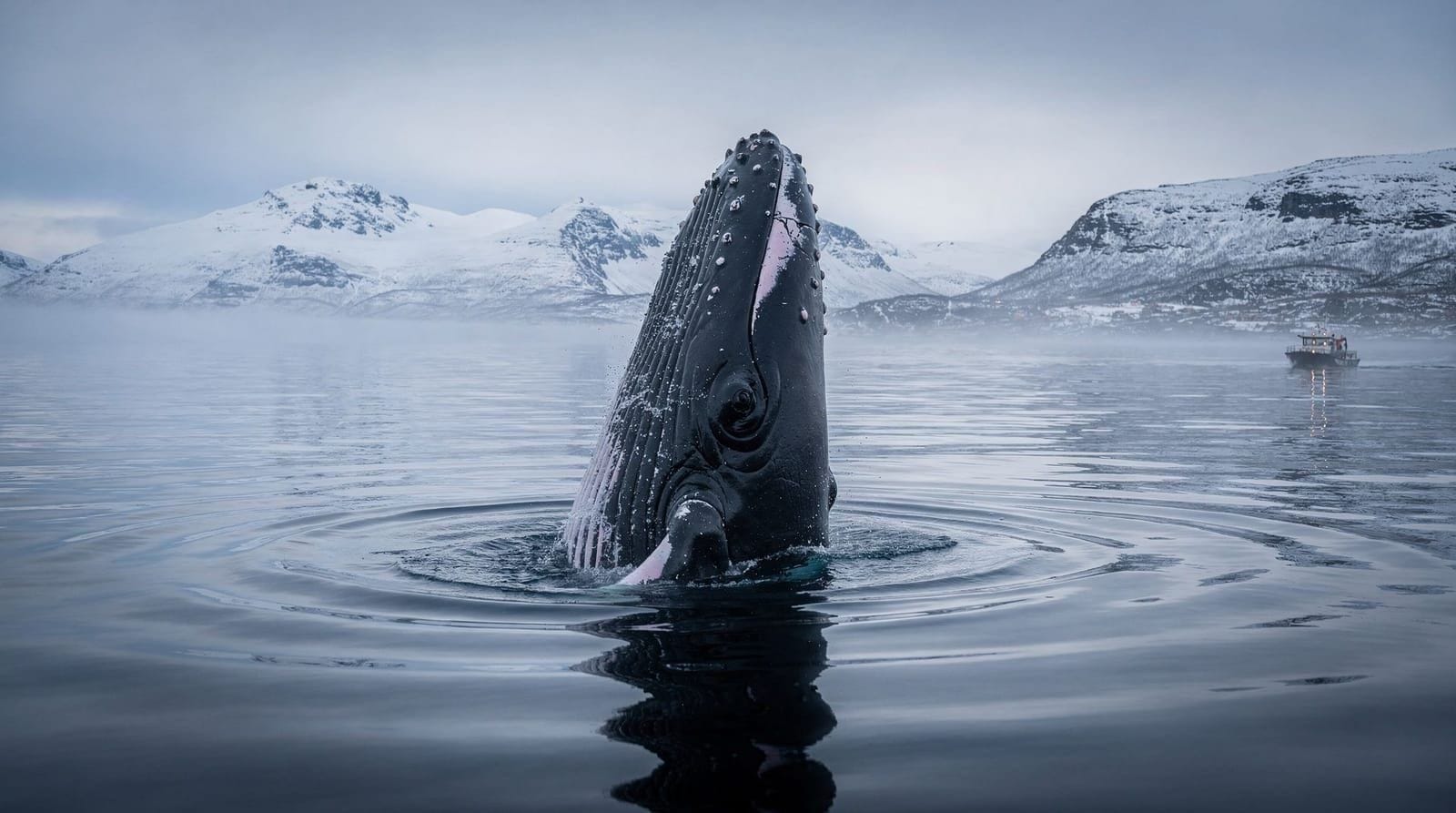
Polar fjord cruise in winter near Tromsø — what to expect
Tromsø: Arctic Fjord Cruise in Polar Landscapes
What is a winter fjord cruise from Tromsø like?
A winter fjord cruise operates in polar night or near-darkness from late November to mid-January. You see dramatic frozen Arctic landscapes, possible northern lights from the water, sea eagles, and near-silence on electric vessels. It is atmospheric rather than comfortable — prepare for cold deck time and bring warm layers.
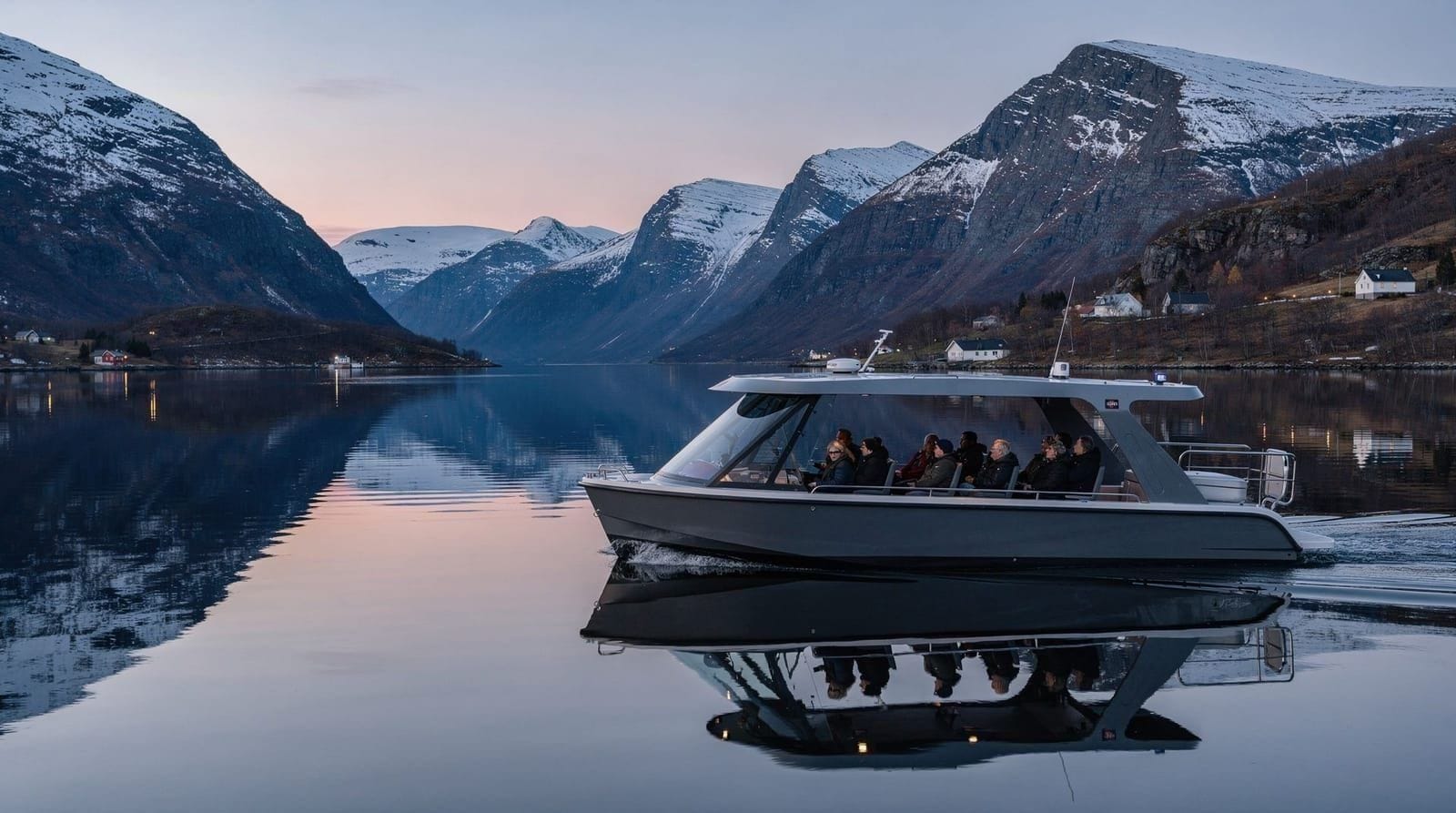
What winter fjord cruising actually is: Two to three hours in darkness or blue twilight, on a heated catamaran, moving through silent black water between snow-covered mountains. Some nights there are northern lights above. Some mornings there are sea eagles on the rocks. Always there is the profound quiet of the Arctic at its most extreme. It is not a comfortable sightseeing tour. It is something else.
| Season | Late November to mid-January (polar night) |
| Duration | 2–3 hours standard, up to 10–12 hours for combined whale + fjord days |
| Cost | 700–1,100 NOK standard; 1,500–2,200 NOK premium |
| Departure | Tromsø harbour, most operators |
| Book ahead | 2–3 weeks in peak November–December |
What makes winter fjord cruising different from any other season
Most fjord cruising in Norway is marketed for summer — the clichéd images of bright water and green valleys. Winter fjord cruising near Tromsø is a categorically different experience, one that a relatively small number of travellers seek out and that most who do found worth the effort.
The defining feature is polar night. From 27 November to 15 January, the sun does not rise above the horizon in Tromsø. What remains is a gradual brightening from absolute darkness to a twilight of intense blue and purple, lasting 2–3 hours around midday, before darkness returns. The mountains are white with snow. The water is black and still. The only sounds are wind, water, and occasionally the breathing of a sea eagle.
This is the context for a winter fjord cruise. It is not for everyone. Travellers expecting the bright light and clear visibility of a summer trip will be disappointed. Travellers who understand what they are entering will find it extraordinary.
Winter polar fjord cruise — book hereTypes of winter fjord cruise
Daytime scenic cruise (twilight window)
Departing around 10:00–11:00, these tours catch the midday civil twilight — the closest winter gets to daylight. The blue-purple glow on snow-covered mountains is genuinely beautiful for photography, even without direct sunlight. Sea eagles are active during this window. Duration: 2–3 hours.
Best for: Photography-focused travellers, those who want to see the landscape rather than the darkness.
Evening northern lights cruise
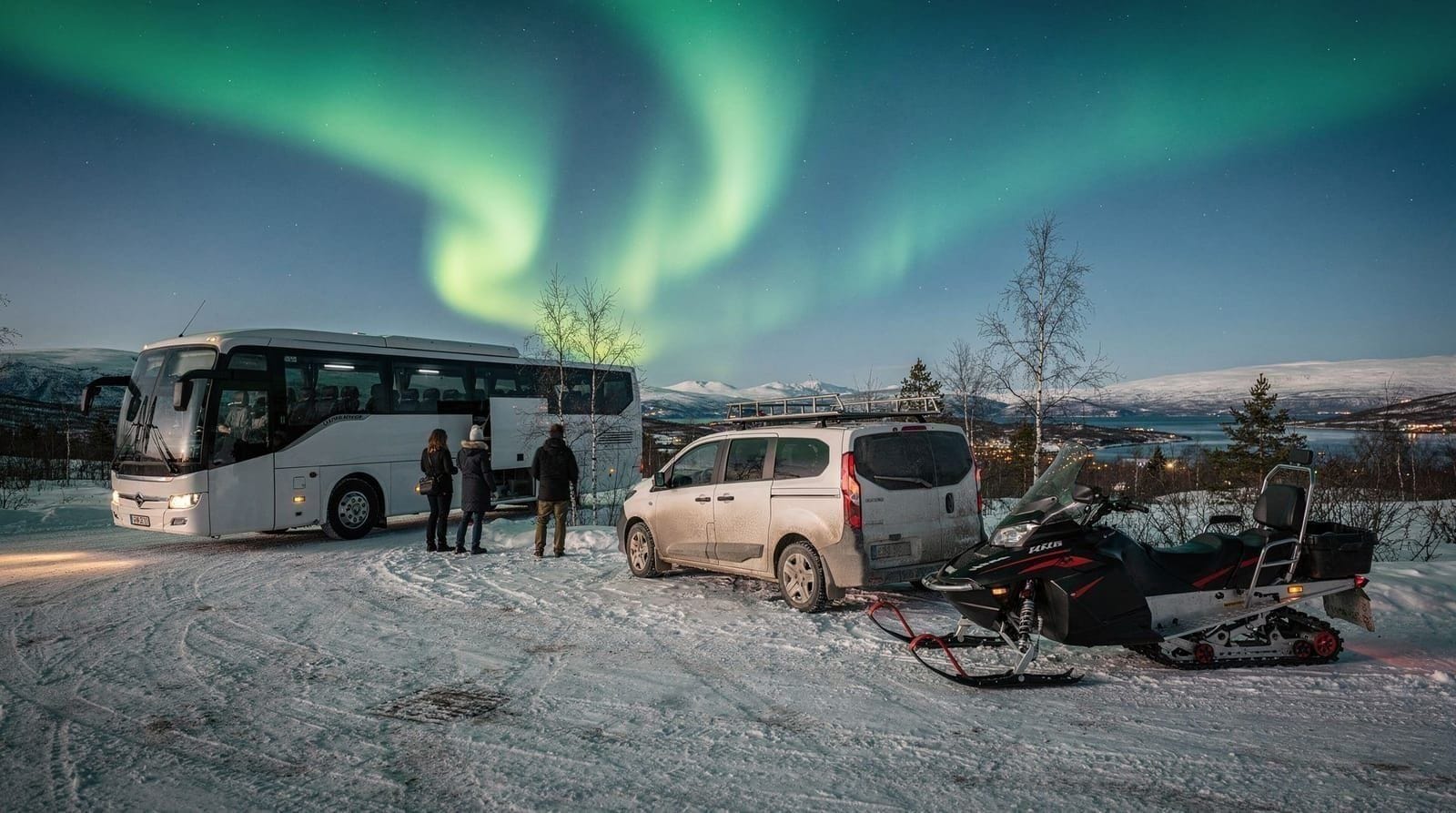
Departing 18:00–21:00, after full darkness. The goal is aurora, not landscape. The fjord provides open sky and minimal light pollution. When northern lights appear, the reflection in calm fjord water doubles the spectacle. Bring hot drinks — you will spend significant time on deck staring upward.
Best for: Aurora-seeking travellers who have already explored the landscape in daylight and want the night-water experience. See northern lights tours compared.
Luxury catamaran with hot tub or dining
Some operators offer premium evening experiences on well-equipped vessels — hot tubs on deck, three-course dinners, champagne. These prioritise atmosphere and comfort over wildlife or photography. If you are celebrating something or want a memorable evening rather than a nature tour, these are worth considering at 1,500–2,200 NOK per person.
Combined whale watching + fjord cruise
A few operators run day-long expeditions combining a morning whale watching component with afternoon fjord scenic cruising. These are long days (10–12 hours) but efficient use of limited winter daylight.
What you realistically see
Guaranteed in winter: Dark water, snow-covered peaks, dramatic Arctic sky, fish racks and traditional coastal infrastructure.
Very likely: Sea eagles in flight or perched on rocks, harbour seals on quiet outcrops, cormorant groups.
Possible: Northern lights (requires clear sky; not forecasted precisely more than a few hours ahead), harbour porpoise, occasional whale if tour passes near active herring areas.
Not expected: Puffins, Arctic terns, or summer migratory species (all absent in winter). Clear midday sunlight (polar night precludes this until mid-January).
The thermal reality: how cold is cold?
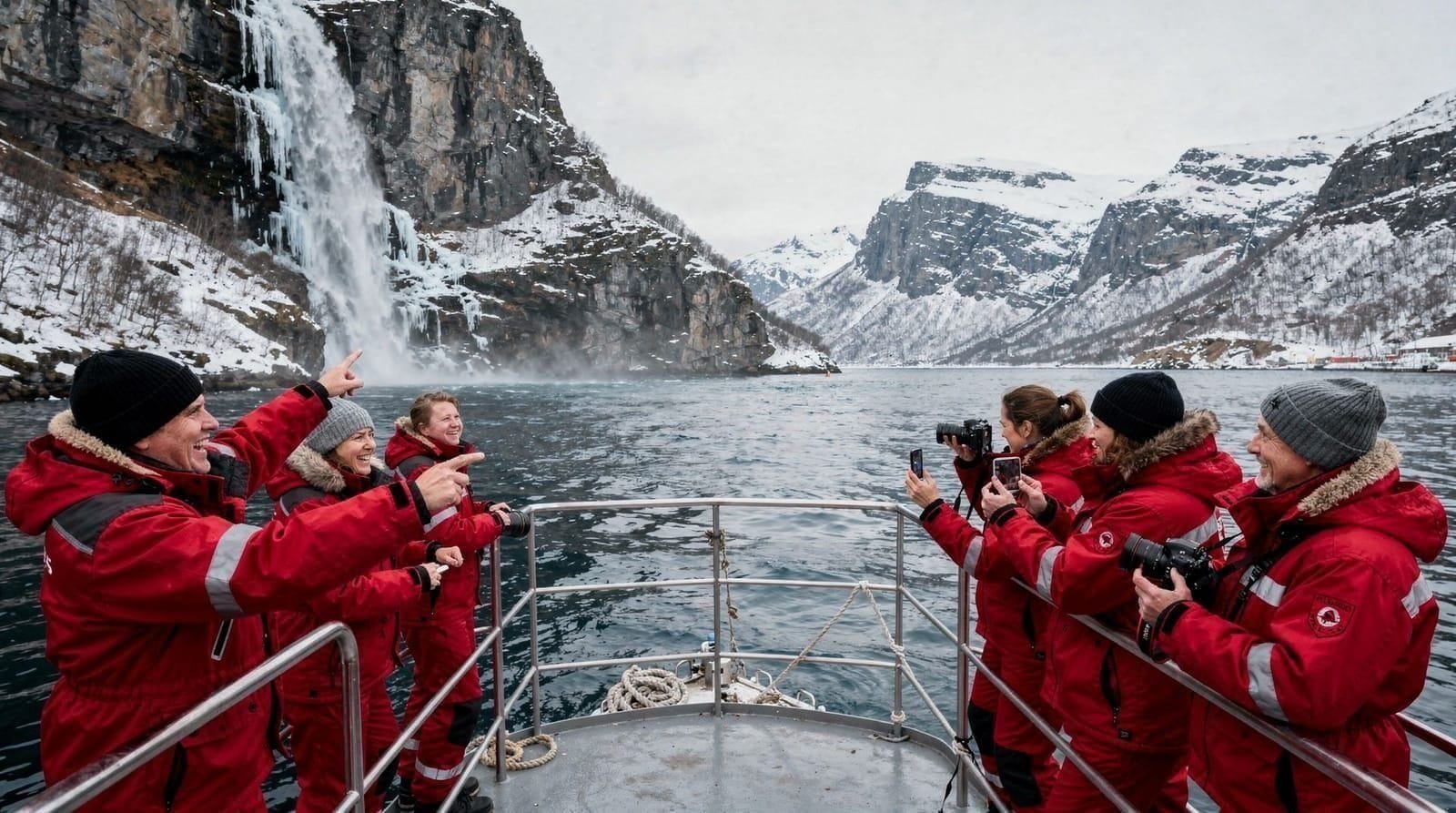
Temperatures in December–January on Tromsø’s waters run -5°C to -12°C air temperature. Wind from the north can add significant chill factor. Even brief periods on deck require proper thermal layering — see what to bring whale watching for the clothing breakdown, which applies equally here.
The catamaran’s enclosed cabin is heated and comfortable. Operators provide hot drinks (coffee, tea, occasionally hot chocolate or bouillon) during the cruise. The cabin vs. deck dynamic is the primary rhythm of the trip: warm inside watching the scenery through glass, then out on deck for specific moments (sea eagle sighting, aurora, narrow passage through rocks).
What to wear: Thermal base layers, insulating mid-layer, waterproof outer jacket and trousers, wool hat, waterproof gloves, warm boots. Over-dressing is impossible in these conditions.
Luxury catamaran winter sightseeing cruiseNorthern lights from the water: honest expectations
When aurora viewing from a fjord cruise works, it is spectacular. The dark water provides a reflection layer that makes even a moderate display look extraordinary — dancing green bands mirrored in the black surface below.
When it does not work: clouds cover the sky and you see nothing. This is common in November–January when weather systems move through regularly.
The advantage of a boat versus land-based aurora hunting is that the captain can, to some degree, navigate toward clearer sky. Experienced operators track cloud movements and position the vessel under gaps in cloud cover. This is not reliable — it cannot guarantee clear sky — but it is an advantage over standing on a fixed hilltop.
Do not book a winter fjord cruise primarily hoping for northern lights. Book it for the atmosphere, the landscape, and the unique experience of the polar fjord at night. If northern lights appear, that is a bonus.
Price and what is included
Standard winter fjord cruise (2–3 hours, enclosed catamaran): 700–1,100 NOK per adult.
Premium/luxury catamaran with hot tub or meal: 1,500–2,200 NOK per adult.
Combined whale + fjord day: 2,000–2,500 NOK per adult.
Most standard tours include: the boat trip, guide commentary, hot drinks. Most do not include: meals, hotel transfer, thermal gear (bring your own outer layers). Premium tours may include: a meal, a glass of wine, thermal blankets or ponchos.
Children (ages vary by operator): typically 50–70% of adult price, or free under 4.
See the planning guide for how to fit a winter fjord cruise into a broader Tromsø itinerary.
Winter versus summer fjord cruising
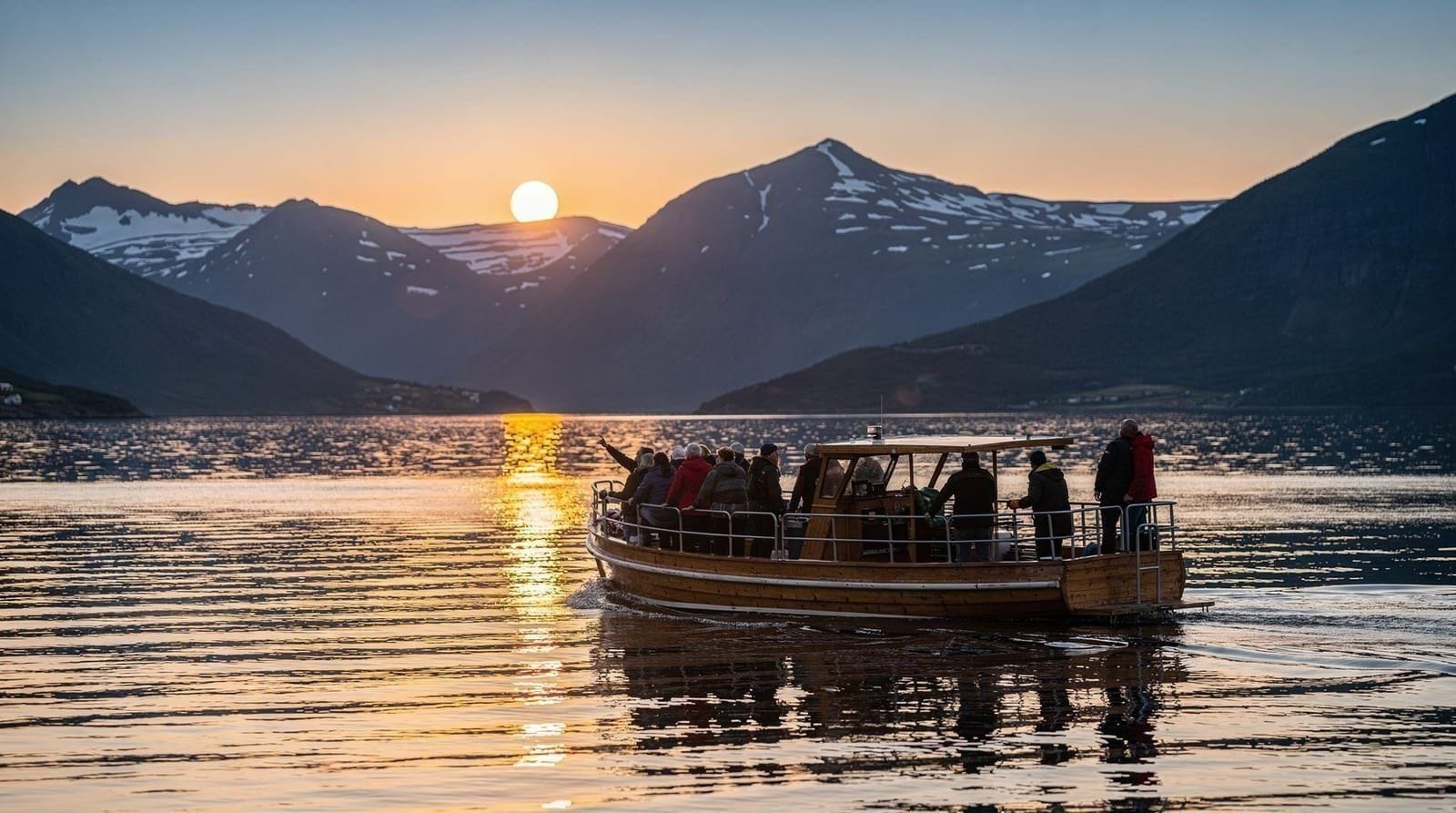
If you are choosing between a winter trip and revisiting in the brighter months, the two are genuinely different products rather than the same tour in different light. The midnight sun fjord cruise runs in near-endless daylight, with wildlife (puffins, terns) and green landscapes entirely absent from the winter version, while winter trades that for darkness, aurora potential, and the stark drama of snow-covered peaks against black water. Neither is objectively better — see what to expect on a fjord cruise for a season-neutral overview of what the boats and routes are actually like before deciding which season suits your trip.
Who should skip a winter fjord cruise
Not every visitor gets full value from a winter fjord cruise. Travellers prone to seasickness should be aware that winter swells can be more pronounced than summer’s calmer water, particularly on the open-water sections toward Skjervøy. Anyone who struggles with cold and darkness for extended periods, or who already has an evening aurora tour booked on land, may find a second dark, cold outing redundant rather than additive. For travellers whose primary goal is the northern lights and who are on a tight budget, a land-based northern lights tour generally offers a longer viewing window and lower cost than a fjord cruise, where cabin space and boat scheduling constrain how long you can wait for clear sky.
Frequently asked questions about polar fjord cruises in winter
Should I book a northern lights cruise or a daytime scenic cruise in winter?
If your priority is photography of the landscape: daytime (twilight window). If your priority is aurora viewing: evening. If you have time for both, do both on different days — they offer genuinely different experiences.
Is the fjord cruise cancelled if there are no northern lights?
No. Northern lights are a possible bonus on evening cruises, not the promised product. Cruises depart regardless of aurora forecast and are not cancelled for cloudy skies (only for genuinely dangerous sea conditions). Do not expect a refund for cloudy weather.
Can I do a fjord cruise and a whale watching trip on the same day?
With careful planning, yes. A morning whale watching trip (07:00–17:00) followed by an evening fjord/northern lights cruise (18:30–21:30) is physically achievable and popular. You will need to eat quickly in between and dress in layers for both. A long but memorable winter day.
How many passengers are typically on a winter fjord cruise?
Standard catamarans carry 40–80 passengers. During peak November–December, most cruises are full or nearly full. Book at least 2–3 weeks in advance for winter cruises.
Do winter fjord cruises offer photo opportunities?
Yes, especially during the midday twilight window on daytime cruises. The blue-purple light on snow is beautiful with a 16–35mm wide-angle. Sea eagle shots require telephoto (200mm+). Evening cruises for aurora require high-ISO performance and wide aperture lenses. See aurora photography settings for specific camera guidance.
What happens to the hot tub on a luxury cruise if it’s -10°C outside?
The hot tub is heated to 38–40°C regardless of outside temperature. Sitting in it while the air is -10°C and the fjord is black around you is the kind of uniquely Arctic experience that travel writers struggle to describe. Worth it if the price fits your budget.
Is a winter fjord cruise better than a land-based aurora tour for seeing the northern lights?
Not necessarily better, but different. A boat can navigate toward gaps in cloud cover to a limited extent, and the water reflection adds visual impact when aurora appears. A land-based tour typically offers a longer window and lower cost. If aurora is your sole goal and budget matters, book a land-based tour first and treat a fjord cruise as a separate, atmosphere-focused experience.
Do I need to book a fjord cruise and a whale watching trip separately, or is there a combined option?
Both exist. Standalone fjord cruises and standalone whale watching trips are the most common bookings, but a small number of operators offer combined day-long expeditions covering both — worth considering if your stay is short and you want maximum activity density in one day.
Top experiences
Bookable activities with verified prices and instant confirmation on GetYourGuide.