Northern lights myths and misconceptions — Tromsø reality check
Tromsø: Small-Group Northern Lights Tour by Minibus
What are the most common northern lights myths for Tromsø visitors?
The biggest myths are that you need KP 5+ to see aurora (false at 69°N), that cameras show exactly what your eyes see (cameras exaggerate colour), and that "aurora guarantee" tours provide refunds if you don't see dramatic displays (usually not). Here's the reality.
Quick answer: The biggest aurora myths: needing KP 5+ at Tromsø’s latitude (false), cameras showing true aurora colour (they exaggerate), “guarantee” tours providing refunds (usually false), and the aurora only appearing at midnight (substorms happen anytime). Here’s the honest science.
| Myth | Reality |
|---|---|
| Need KP 5+ to see aurora | KP 1–3 is often enough at Tromsø’s 69.6°N latitude |
| Photos show what you’ll see | Cameras exaggerate colour below KP 5; the naked eye sees pale green-white |
| ”Guarantee” tours refund a no-show | Usually a free second-night rebooking, not a refund |
| Cloud over Tromsø means no aurora | Aurora is above weather; clear sky often exists 50–200 km inland |
| A solar flare means good aurora tonight | The particles (CME) take 1–4 days to arrive; flares alone rarely do |
Why aurora myths persist
The northern lights attract intense tourism marketing, social media embellishment, and genuine misunderstanding of the science. Tromsø’s aurora tourism industry is competitive — operators want to attract bookings and photo-sharing drives tours’ social media exposure. The result is a layer of mythology over a genuinely wonderful natural phenomenon.
Clearing up the most common misconceptions makes your trip better: you’ll have realistic expectations, make better decisions, and appreciate what you actually see rather than feeling disappointed that it doesn’t match Instagram.
Myth 1: You need KP 5+ to see aurora in Tromsø
Reality: Completely false for Tromsø’s latitude.
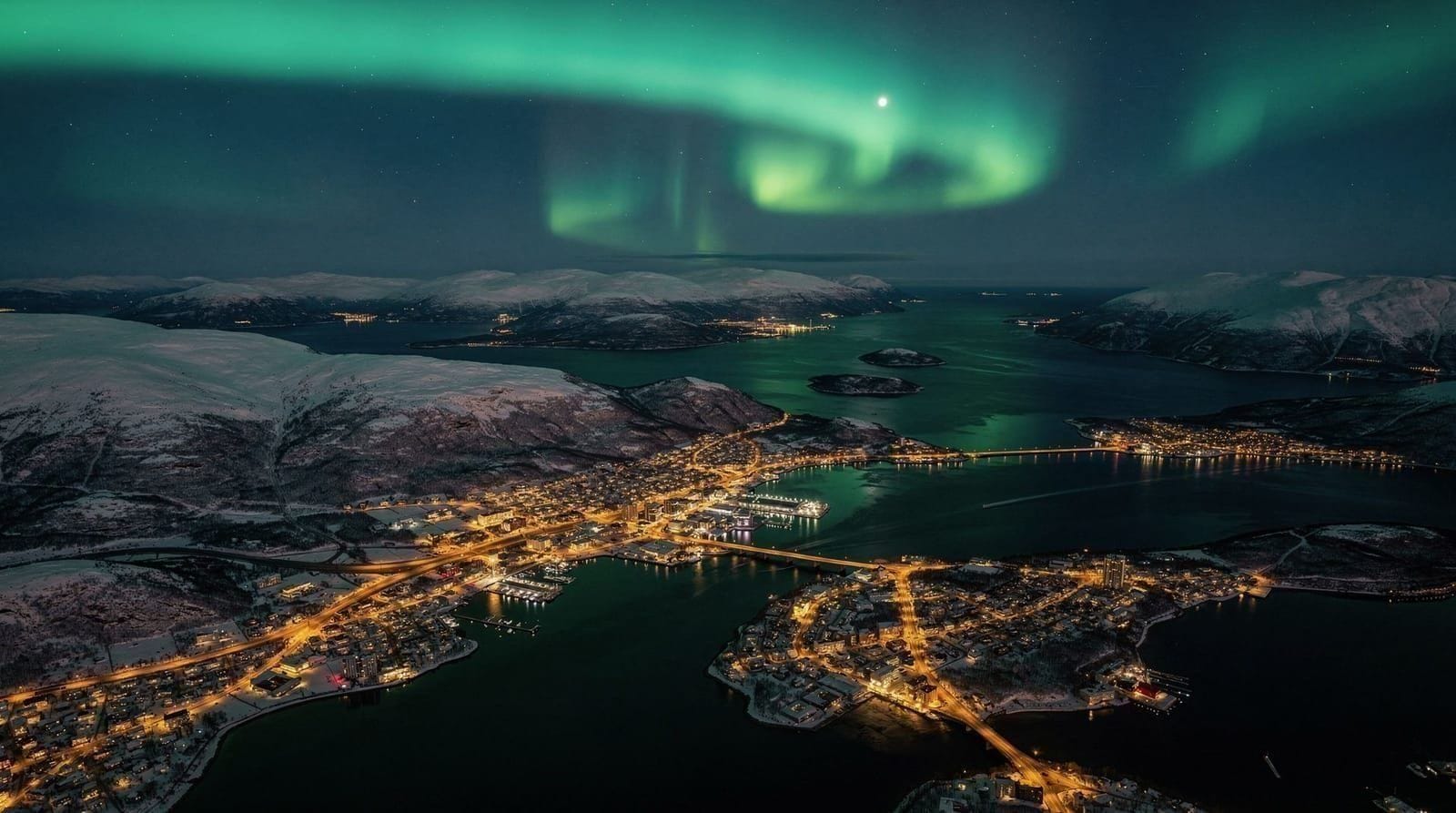
The KP index is a global average. At 69.6°N latitude, Tromsø sits inside the auroral oval — the ring around the magnetic pole where particle precipitation is most intense. The oval is typically centred around 65–70°N during moderate activity.
At KP 1–2, aurora is visible directly overhead in Tromsø on clear nights. At KP 3, you get structured curtains and possible movement. At KP 5 (minor geomagnetic storm), the display can be all-sky and visible from much of Norway.
The KP 5+ threshold applies to much lower latitudes — London (51°N) needs KP 7+ for a sighting. Central Europe needs KP 5–6. Northern Scandinavia can see aurora on routine KP 2 nights.
Where does the KP 5 myth come from? Most aurora enthusiasts in the world (mid-latitudes) are used to needing high KP, so travel articles written for that audience emphasise high KP as a requirement. When those articles are read by Tromsø visitors, they carry the wrong threshold.
Practical implication: Don’t write off a night forecast for KP 2. Go out, find clear sky, and look up. Some of the most photogenic displays happen at KP 2–3 with delicate structure and slow movement. KP 5 events can be visually overwhelming and structurally messy.
Myth 2: Aurora photos show what aurora looks like
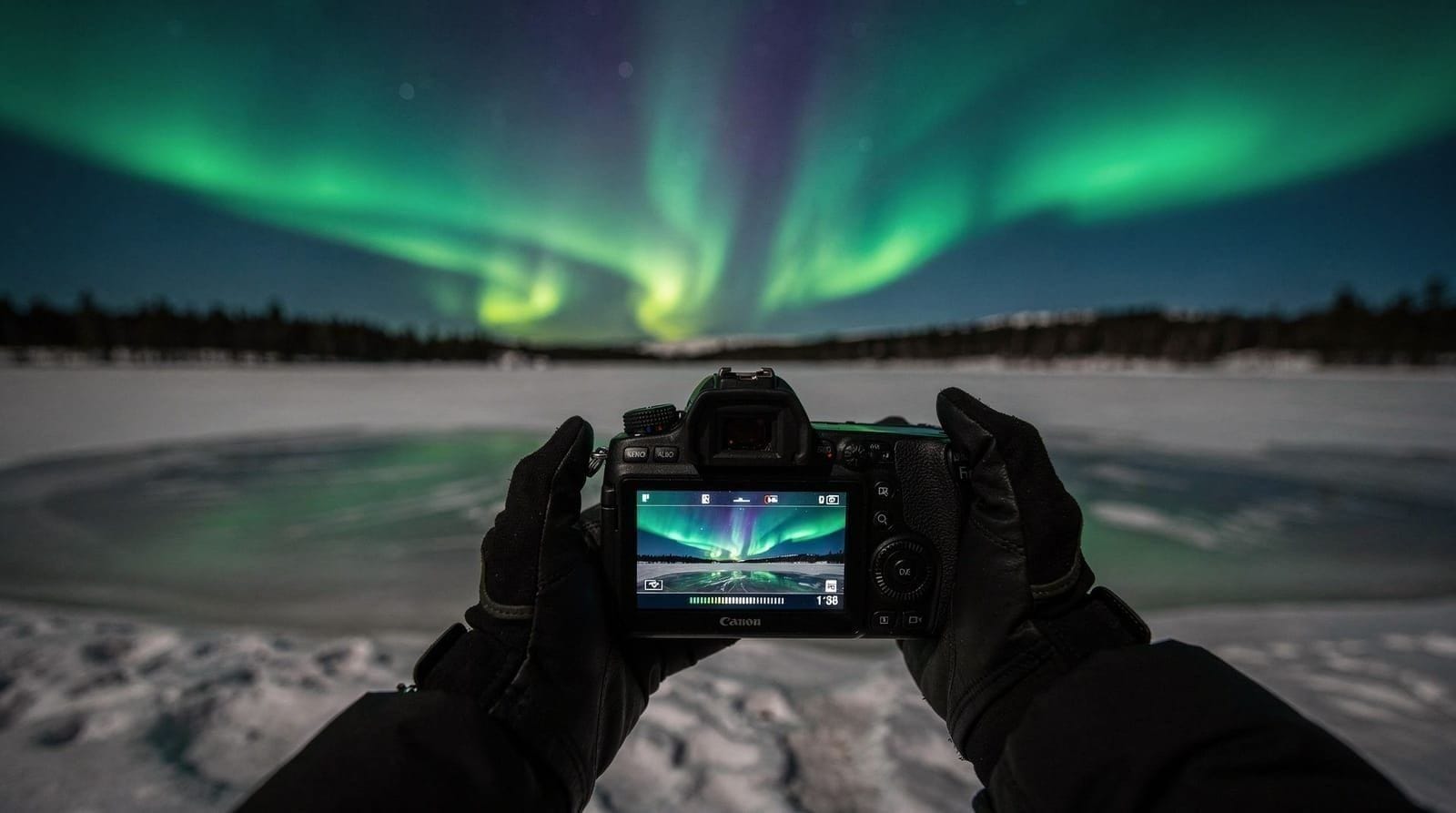
Reality: Camera sensors show a colour-enhanced version that significantly differs from what the eye perceives.
Human eyes have two types of light receptors: cones (colour, activated in daylight) and rods (monochrome, sensitive in low light). In darkness, the brain primarily uses rods — which cannot distinguish colour. Aurora at KP 2–3 appears as a pale green-white or white glow, occasionally with subtle greens if very active.
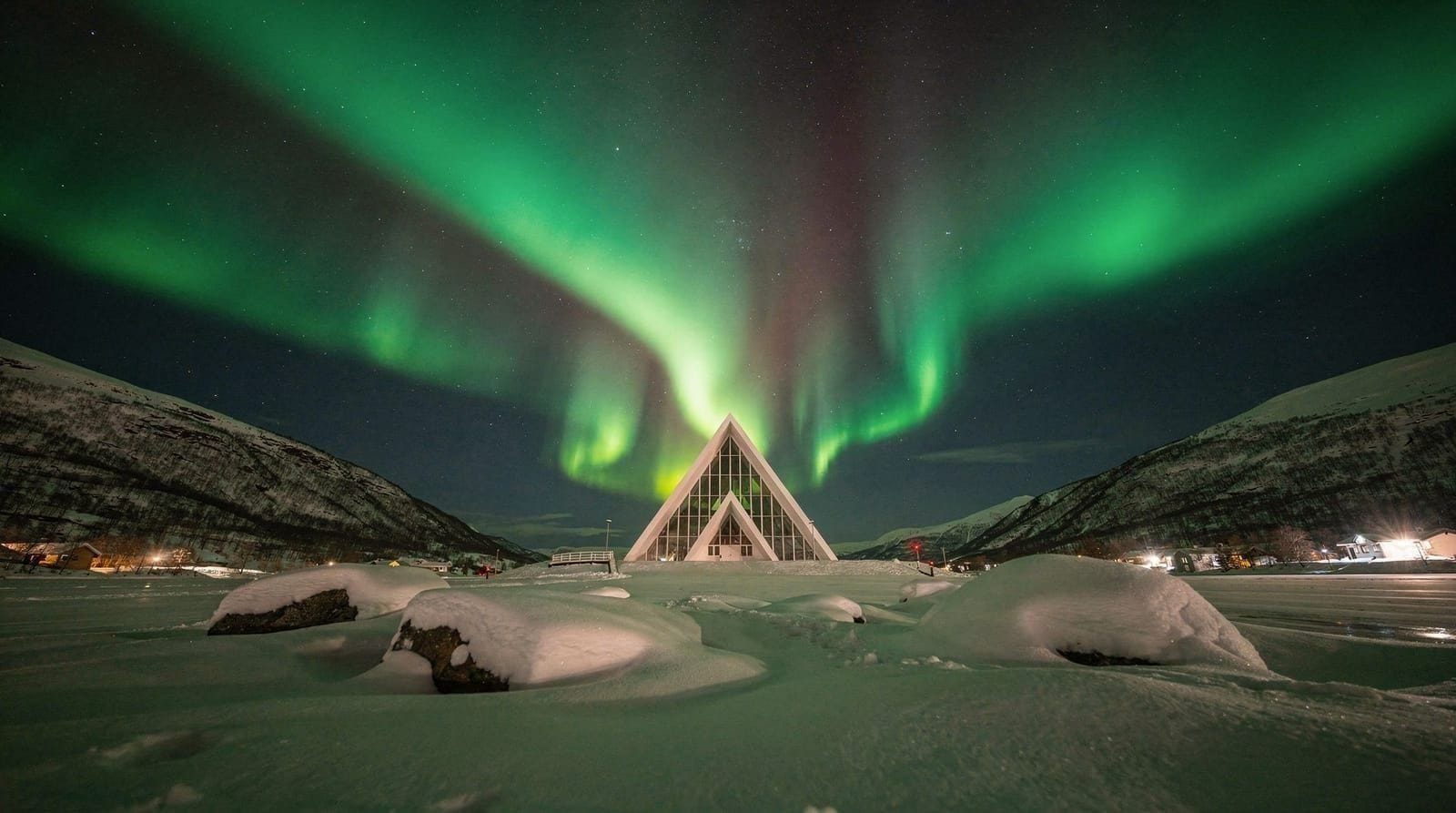
Camera sensors don’t have this limitation. A 10-second exposure at ISO 3200 accumulates the 557.7 nm oxygen emission wavelength (green) and displays it at full saturation. The result looks like an Instagram aurora — vivid green curtains in a star-scattered sky.
At KP 5+, the colours become visible to the naked eye — including the 630 nm red oxygen emission and occasional violet. These KP 5+ displays do look like the photos, more or less.
Practical implication: If you’ve never seen aurora before, expect the live experience to be paler and more subtle than photos suggest — except at high KP. This doesn’t make it less extraordinary; it’s just different. Your camera will produce more vivid shots than your eyes saw.
Myth 3: Aurora guarantees mean refunds for no display
Reality: Almost no Tromsø operators offer genuine money-back guarantees.
The standard policy is a free second-night rebooking if aurora was not seen. This is meaningfully different from a refund for several reasons:
- “Not seen” is defined by the operator. If a diffuse green glow was visible on a hilltop for 5 minutes — that’s often a “sighting” by the guarantee terms.
- A second night requires you to still be in Tromsø, which may not fit your travel itinerary.
- Some guarantees require booking directly with the operator (not via platforms) for the guarantee to apply.
- The guarantee doesn’t cover nights when a weather forecast causes cancellation — these vary by operator.
Honest advice: The guarantee is a marketing tool with genuine but limited value. If your trip is 2+ nights in Tromsø and you value the guarantee, confirm the exact definition of “sighting” and the rebooking process before booking. If you have only 1 night, the guarantee is worthless regardless.
Small-group tours often have clearer guarantee policies because they can accommodate rebookers more easily than large coach operations.Myth 4: The aurora is “alive” — you can interact with it
Reality: Aurora responds to geomagnetic forces, not human behaviour.
Various tourist activities are promoted around the idea of interacting with the aurora — whistling, clapping, waving white objects. Some derive from Sami folklore; some are entirely invented.
The physical mechanism of aurora (charged particle bombardment of oxygen and nitrogen at 90–300 km altitude) is entirely independent of noise or movement at ground level. Whistling does not cause aurora to dance. Clapping does not summon or dismiss it.
The Sami dimension: Some northern Sami communities historically held beliefs about aurora as a spiritual entity, treating it with caution. This is a real cultural tradition worth knowing. However, it’s not the same as the commercialised “clap to make aurora dance” promoted by some tours. Real Sami cultural experiences are discussed in our Sami culture guide.
Myth 5: More solar flares always means better aurora that night
Reality: The relationship between solar events and visible aurora in Tromsø is delayed and probabilistic, not immediate.
A solar flare produces an initial electromagnetic burst that arrives at Earth in 8 minutes (at light speed) — this can temporarily affect radio communications but rarely produces significant aurora. The physical particles (coronal mass ejection, CME) take 1–4 days to travel from the sun to Earth and are what produce the major aurora displays.
When a news article says “solar flare triggers aurora” it’s often mixing flare (immediate radio effects) with the CME following it. The aurora from a CME arrives 24–72 hours after the associated flare, not on the same night.
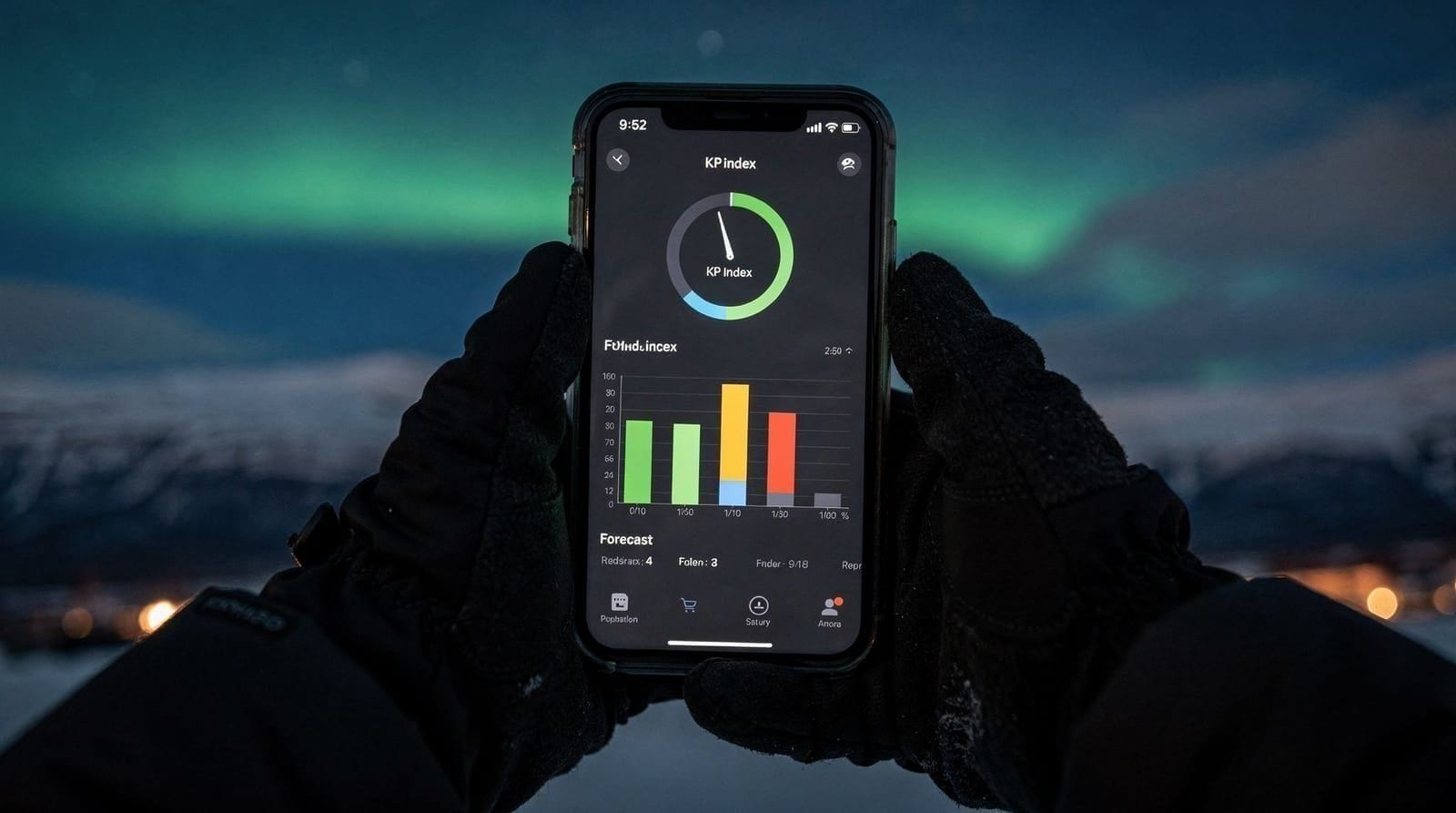
Practical implication: A solar flare event in today’s news doesn’t mean tonight’s aurora will be good. Check the NOAA 3-day CME forecast specifically for estimated arrival times of solar material. See our aurora forecast guide.
Myth 6: Cloud cover means aurora is cancelled
Reality: Cloud over Tromsø city is common; clear sky 50–200 km away is often available.
The myth is that a cloudy evening means no aurora. In fact, cloud is a local weather phenomenon. Aurora at 90–300 km altitude is above all weather. Driving inland 50–100 km from Tromsø regularly reveals clear sky when the coastal fjord is overcast.
The aurora is typically active above the cloud — you just can’t see it. Find the cloud’s edge and position yourself beyond it.
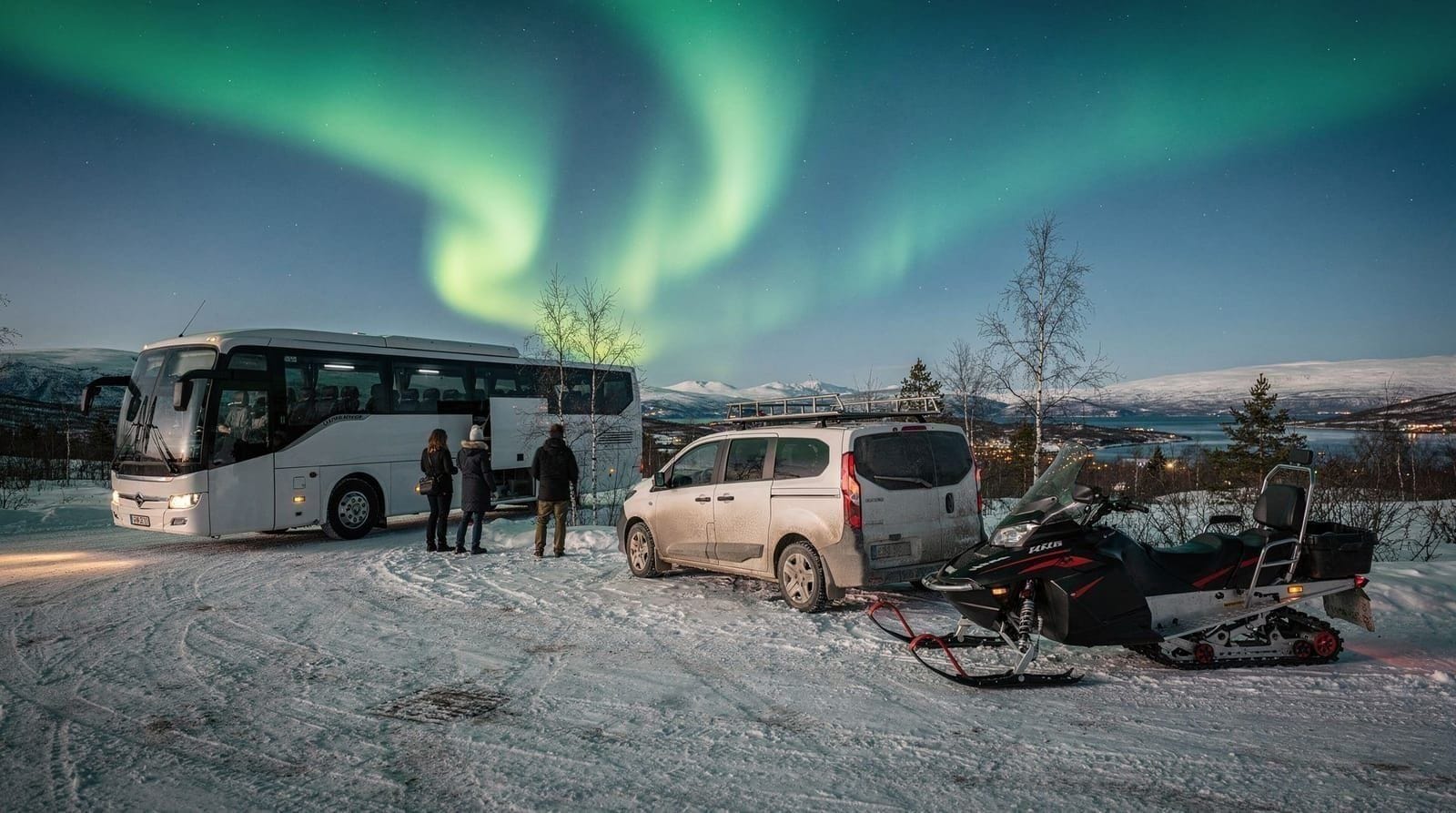
Guides on hunt tours specifically plan routes around cloud-escape — the difference between a good tour and a mediocre one is largely this skill.Myth 7: Photography tours guarantee better photos than standard tours
Reality: Photography tour guides improve your setup and technique but cannot control aurora brightness or cloud.
Photography tours are better than standard tours for photographers because: smaller groups reduce light interference, longer stops allow careful composition, and guides help with settings. However, a photography tour on a night with faint KP 1 aurora will produce paler photos than a standard tour on a KP 4 night. The best photos come from good aurora conditions + good technique — neither alone is sufficient.
Myth 8: Aurora is neon green in real life
Reality: At most KP levels, aurora appears pale green-white or white to the naked eye.
The vivid neon greens in every tour photo are genuine wavelengths (557.7 nm oxygen emission) but appear far more saturated on camera than to the eye. This is because camera sensors are more sensitive to 557.7 nm light than the human rod-cell system in low-light conditions.
At KP 5+, the green can be vivid to the naked eye. At KP 7+ events (rare, happening perhaps 5–10 times per year globally), the red and pink upper aurora are also clearly visible.
Myth 10: A “clear forecast” for Tromsø city means clear sky everywhere on the tour route
Reality: Weather forecasts for Tromsø city cover Tromsø city, not the fjord valleys 50–100 km inland where most chase tours actually end up.
Local topography around Tromsø creates highly variable microclimates. A forecast showing “partly cloudy” for central Tromsø can mean genuinely clear sky in Målselv or the Lyngen valleys, or the opposite. Experienced guides use multiple forecast sources and real-time satellite cloud imagery rather than a single city forecast, and adjust the route through the evening rather than committing to one destination at departure.
Practical implication: Don’t judge a tour’s prospects from the Tromsø city weather app alone, and don’t assume a guide “got it wrong” if the city sky was clear but the aurora appeared while you were 80 km away — that’s usually the guide correctly reading conditions the city forecast didn’t capture.
Myth 9: Tour guides know where the aurora will appear
Reality: No one can predict where aurora will be brightest in the sky.
The guide’s expertise is in predicting clear-sky locations and reading solar weather forecasts — not in predicting which part of the sky the aurora will appear in on a given night. Aurora appears along the auroral oval based on geomagnetic dynamics. The guide drives to find dark clear sky; where within that sky the aurora is active is determined by solar wind conditions, not local knowledge.
Where to go for the honest version of the basics
If these myths have left you unsure what actually matters for planning, our best time to see the northern lights guide and where to see the northern lights guide cover the fundamentals without the marketing gloss. For choosing between tour formats now that you know what a “guarantee” really means, see our northern lights tours compared guide, and for the cloud-escape logic behind Myth 6, our aurora cloud strategy guide explains how guides actually find clear sky. If photography is your main goal, aurora photography settings covers the camera side of Myth 2 and Myth 8 in full technical detail.
Frequently asked questions about northern lights myths
Is the aurora photographed in Tromsø real or edited?
The aurora is real and photos are genuine. The saturation, colour depth, and dramatic appearance are produced by camera exposure (not heavy editing) — long exposures at high ISO amplify colour. Aurora in Tromsø genuinely looks like the photos at KP 4–6, and somewhat paler than photos at KP 2–3.
Do apps that “predict tonight’s aurora” work?
They show you current and forecast solar wind conditions, which are real data. Whether you’ll see aurora depends on both the solar conditions AND clear sky. The apps don’t integrate cloud cover forecasting — you need to cross-reference with yr.no separately.
Is it true that more lakes mean better aurora reflection shots?
Reflections of aurora in calm water are beautiful and some photographers specifically seek frozen lakes or still fjord water for this effect. It’s not a myth — it’s a real photographic technique. But it requires both clear sky and wind-still water simultaneously. In winter, many lakes are frozen (no reflection) and many nights have wind that ripples the fjord surface.
Does the aurora affect radio or electronic equipment?
Strong geomagnetic storms (KP 5+) can affect HF radio communications and occasionally cause GPS positioning errors. Consumer electronics (phones, cameras) are unaffected by aurora. The “aurora disrupts my camera” belief has no scientific basis.
Is it true you can hear the aurora?
There are verified, peer-reviewed reports of crackling and hissing sounds associated with high-KP aurora events, believed to be caused by temperature inversion layers creating electrostatic discharge near the ground. The mechanism is debated. At typical KP 2–4 levels, hearing aurora is very unlikely. Most “aurora sounds” reports are from observers at extremely high KP events. You won’t hear anything on a standard Tromsø tour night.
Do northern lights occur in summer?
Physically yes — the solar wind and geomagnetic activity are year-round. In Tromsø’s midnight sun period (May 20–July 22), the sky never gets dark enough for aurora to be visible. In August, conditions gradually improve. There’s no summer aurora season for observers.
Will LED streetlights in Tromsø block aurora visibility?
LED streetlights are worse than the older sodium lamps in some respects (broader spectrum) but better in that they’re directional and reduce sky-ward scatter. Tromsø’s total light pollution is moderate — within city limits it reduces aurora visibility somewhat. 10–15 km outside city, light pollution drops to negligible. The city waterfront can still show strong aurora overhead at KP 3+.
Can I take photos of aurora with a smartphone from inside a tour bus window?
No. The window glass reduces light transmission, adds reflections, and vibration at idle creates motion blur in long exposures. You need to be outside, stationary, on a tripod. Get out of the bus.
Does a “high KP forecast” guarantee a good show in Tromsø?
No — a high KP forecast improves your odds but doesn’t guarantee anything, since cloud cover is a completely separate factor and forecasts themselves are probabilistic, not certain. Treat KP forecasts and cloud forecasts as two independent checks you need to combine, not one number that decides your night.
Top experiences
Bookable activities with verified prices and instant confirmation on GetYourGuide.