24 hours under the midnight sun in Tromsø: what actually happens to you
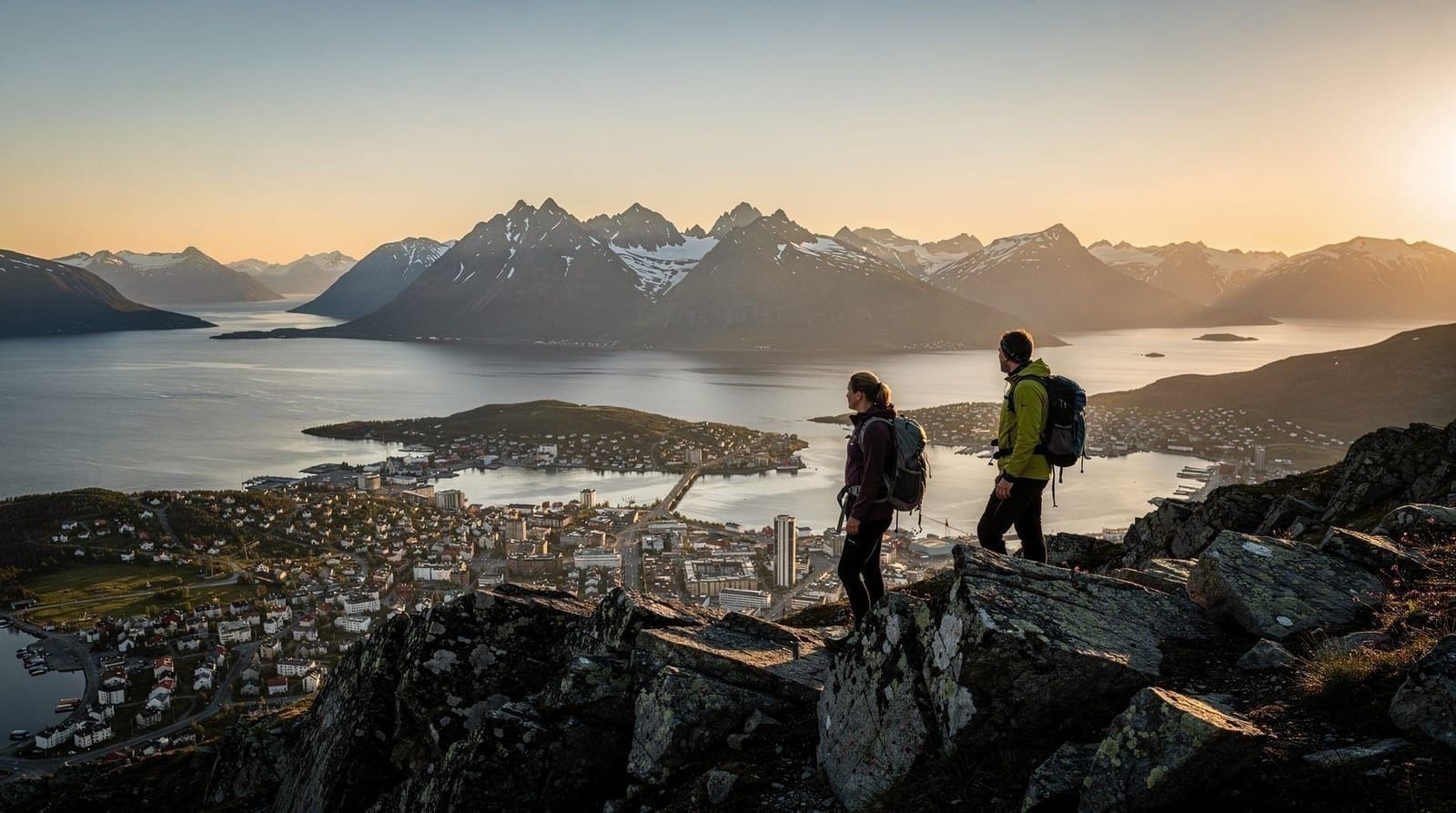
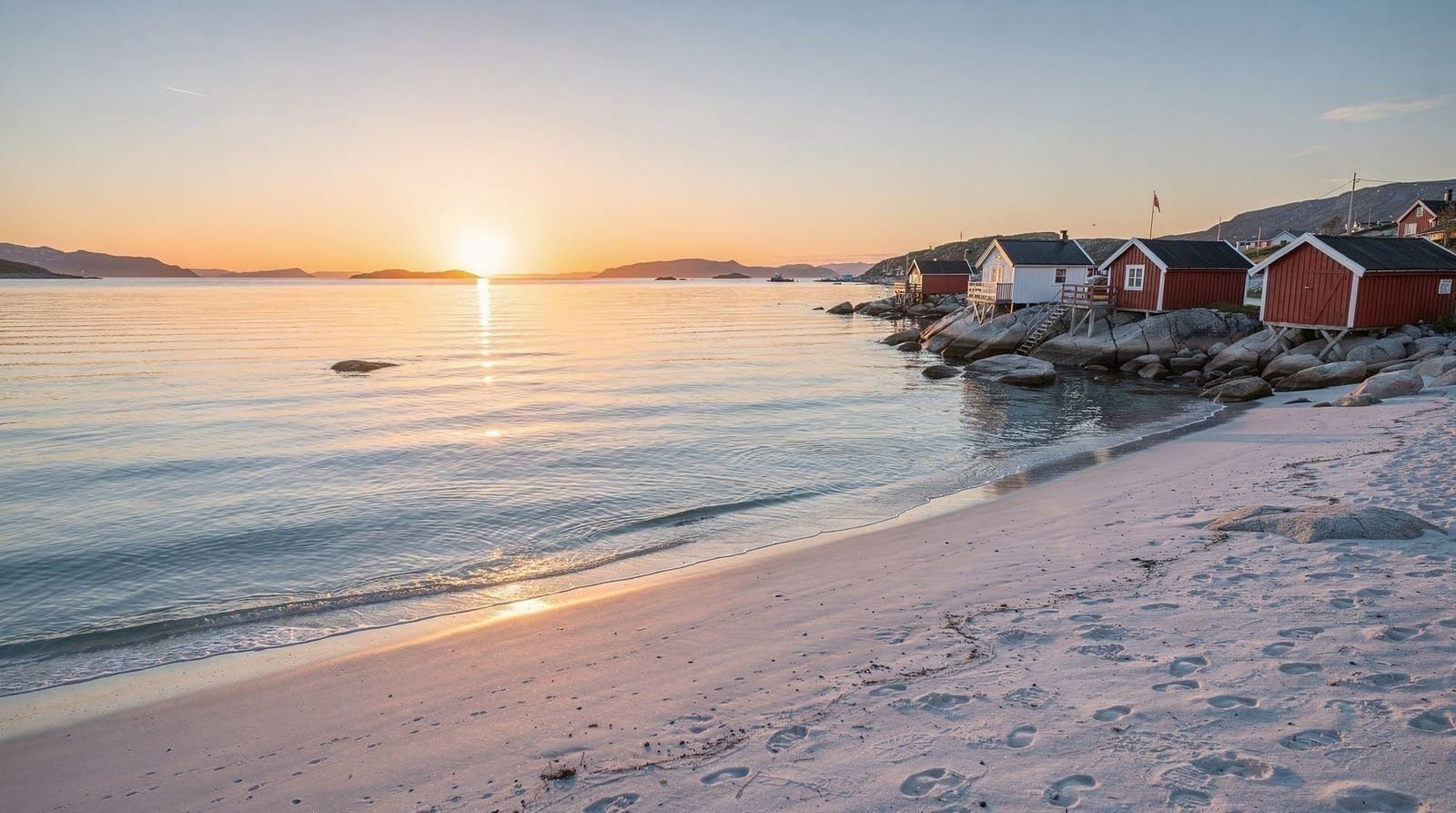
At 1:47 am I was sitting on a rock above Tromsøya watching what I can only describe as a suspension — the sun neither rising nor setting, just hanging above the horizon at the same angle it had occupied for the previous two hours. The city below was fully lit, not by streetlights, but by actual sunlight. A couple was walking a dog on the path below me. A man was fishing from a small boat in the channel.
| Midnight sun dates | ~20 May to 22 July |
| Peak | Around 21 June (summer solstice) |
| Cost | Free — no ticket needed to experience it |
| Best free spot | Telegrafbukta beach, Storsteinen summit |
| Sleep tip | Blackout curtains/sleep mask essential |
This is not unusual behaviour in Tromsø in June. This is simply Tuesday at nearly 2 am.
The midnight sun calendar
Tromsø experiences midnight sun from roughly 20 May through 22 July. During this window, the sun remains above the horizon for the entire 24-hour cycle. The exact dates vary slightly by year, but the peak is the summer solstice around 21 June, when the sun reaches its highest point at solar noon (about 12:15 pm local time) and its lowest point — still above the horizon — around midnight.
The midnight sun guide for Tromsø covers the dates and physics. What it cannot fully convey is what it does to you over a 24-hour period.
Hour by hour: what I did and what happened
6:00 am: Breakfast. It feels like mid-morning. The room is flooded with light through my inadequate curtains (more on this shortly). The hotel’s blackout blinds have a gap at the top that projects a perfect stripe of Arctic sunlight onto the wall.
9:00 am: Walk along the waterfront. The Tromsø fjord at 9 am in June is glassy and calm. Mountains reflecting. A few cruise ship passengers beginning their day. The light is already at full intensity — this is not the gentle morning light of the tropics; this is direct, clear Arctic light that makes colours very saturated.
12:00 noon: Solar noon. The sun reaches its daily maximum altitude — about 44 degrees above the horizon. If you want the most dramatic light for photography, this is not the time. The overhead-ish light flattens shadows and bleaches scenes.
3:00 pm: A hike up to Storsteinen, the mountain behind the city. The Fjellheisen cable car takes you most of the way; there is also a walking trail that adds about 90 minutes each way. From the top you can see the whole Tromsø archipelago, the fjord, and on a clear day, the beginning of the Lyngen Alps to the east. In June the visibility is frequently exceptional — the low Arctic humidity means distances look closer than they are.
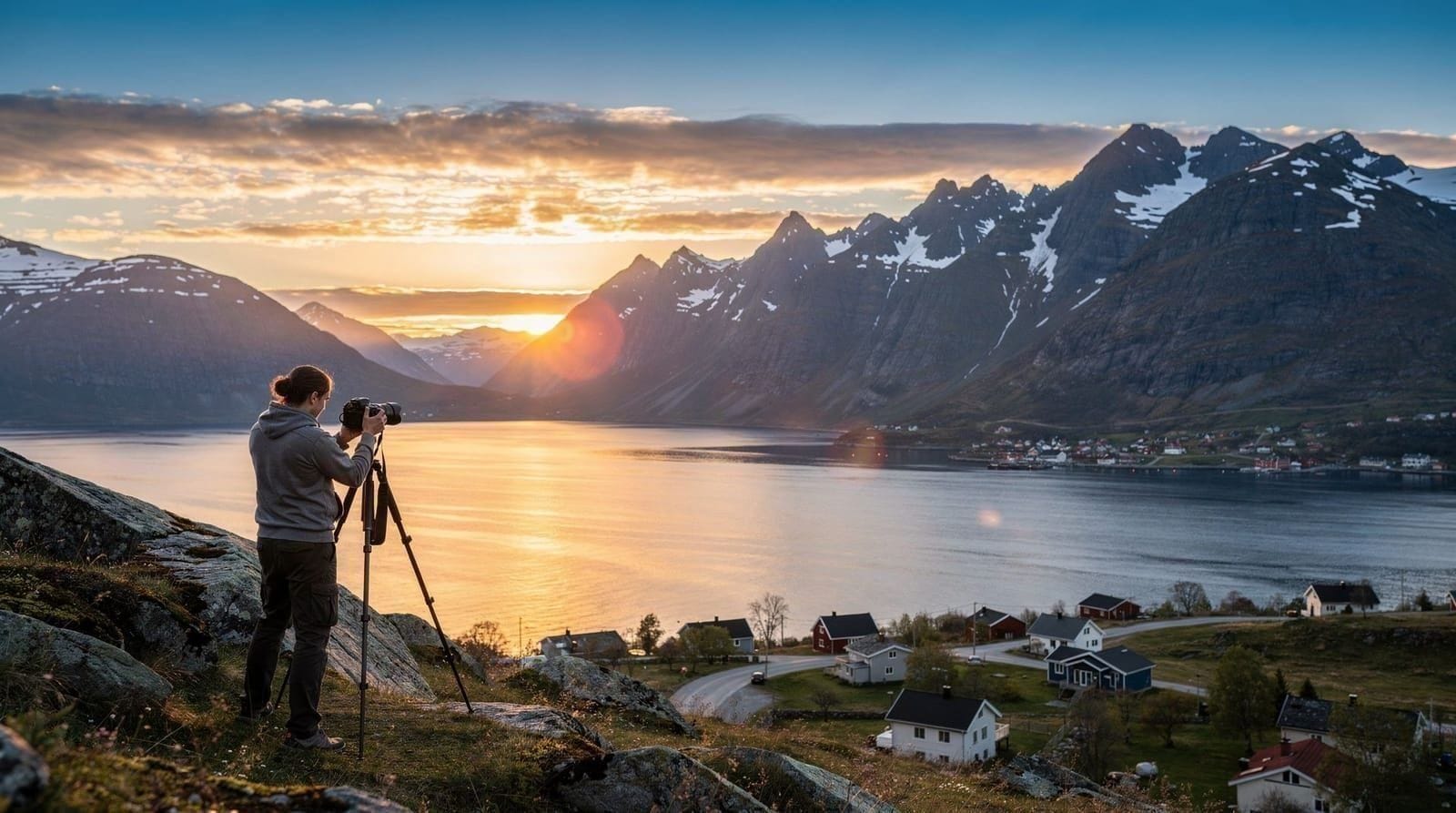
7:00 pm: Dinner at a waterfront restaurant. Around this time the light starts becoming what photographers call the “golden hour” — except in late June in Tromsø, the golden hour lasts approximately four to five hours because the sun descends so slowly toward the horizon. By 9 pm the light is warm, long-shadowed, and extraordinary. This is when the midnight sun photography guides become actually useful.
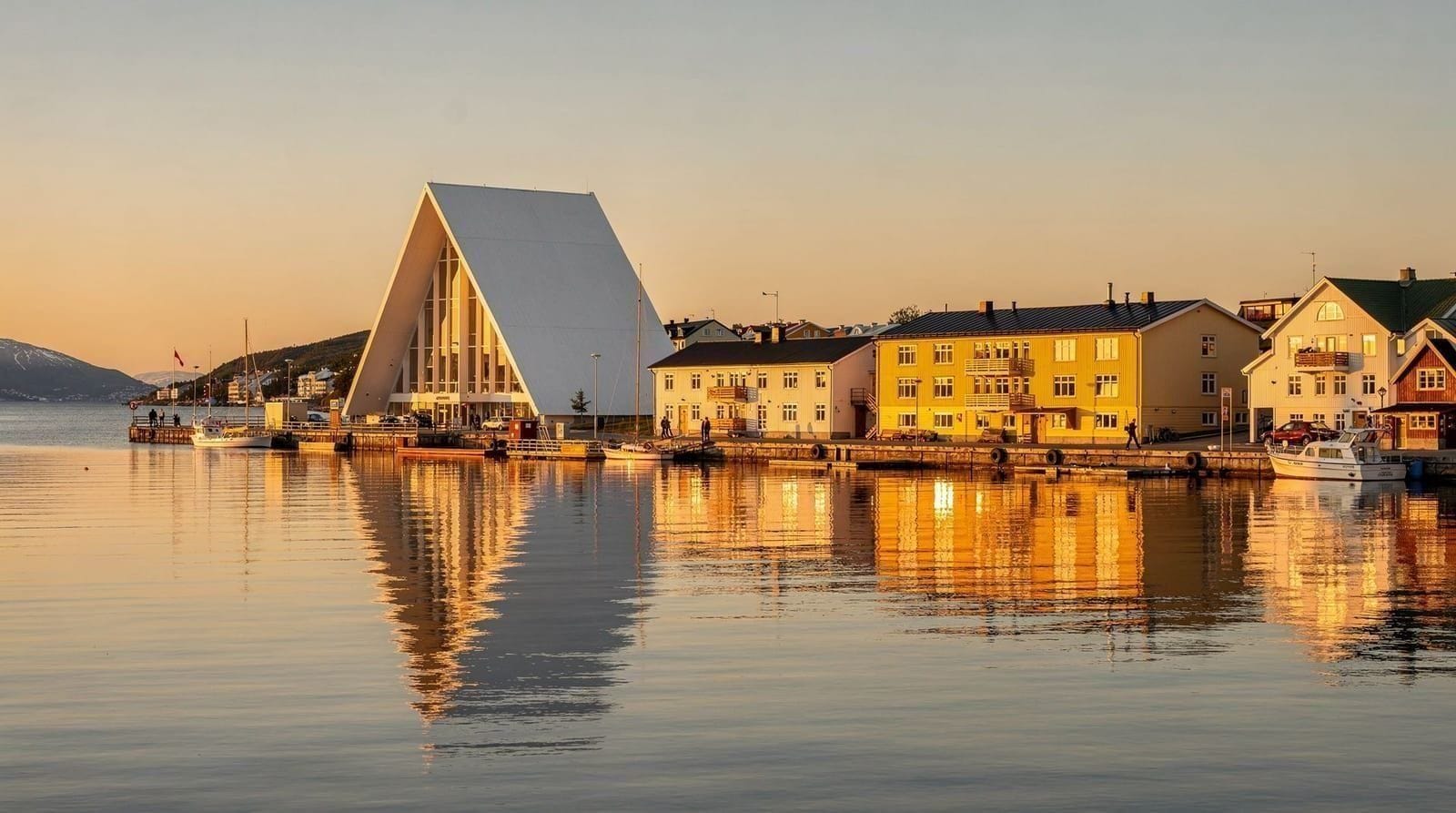
10:30 pm: Walk out to the Telegrafbukta beach on the southern tip of Tromsøya. This small bay is where locals go in summer evenings — families having barbecues, people swimming (the water is around 13–15°C in June, cold by any southern European standard but Norwegians treat it as pleasant), children running. At 10:30 pm it looks like 6:30 pm.
Midnight: The sun is low, orange-pink, sitting on the horizon. This is the moment most photographs try to capture. In person the colours are softer and longer-lasting than the camera renders them — the eye adjusts to the colour temperature in a way the camera does not. Sit still and watch rather than shooting frantically. You have the whole night.
1:47 am: See opening paragraph.
3:00 am: Walk back. I am tired but not in a way that feels right. The light says afternoon; my body says 3 am. This is the core physiological challenge of midnight sun — the circadian rhythm depends heavily on light cues, and when those cues say “it is still day” indefinitely, sleep becomes complicated.
4:30 am: Finally in bed, blackout curtains supplemented with a sleep mask. I sleep until about 9 am.
The day at a glance
| Time | What’s happening | What to do |
|---|---|---|
| 6:00–9:00am | Full sunlight, feels like mid-morning | Breakfast, waterfront walk |
| Noon | Solar peak, ~44° above horizon | Flat light — skip photography, do a hike |
| 3:00–7:00pm | Fjellheisen/Storsteinen views, dinner | Cable car or hike, waterfront dinner |
| 7:00–10:30pm | Extended golden hour (4–5hrs) | Photography, Telegrafbukta beach |
| Midnight–2:00am | Sun low, orange-pink, near-static | Sit still and watch; best light of the day |
| 3:00–4:30am | Wind-down, body confused by light | Blackout curtains, sleep mask, bed |
What midnight sun actually does to your sleep
Being honest: the first two or three nights in Tromsø during midnight sun are disorienting. The light is bright enough at 2 am to read by without a lamp. Your body keeps producing alertness hormones because the light signals say it is daytime. You feel tired but not sleepy, which is an unpleasant combination.
The solutions, in rough order of effectiveness:
- Blackout curtains or a sleep mask — essential, not optional. Most hotels in Tromsø have blackout blinds but they are often imperfect. Travel with a sleep mask.
- Melatonin (0.5–1 mg, taken about 30 minutes before your intended sleep time) helps recalibrate the signal.
- Strict schedule — decide you will be in bed at midnight and enforce it, regardless of what the sky looks like.
- Avoid screens in the two hours before bed — blue light on top of actual sunlight makes the circadian disruption worse.
By day 4–5 most visitors adjust naturally. The trick is not wrecking yourself in days 1–3.
The best midnight sun experiences near Tromsø
Sommarøy at midnight: The island of Sommarøy is accessible by car (about 1 hour from Tromsø) and has one of the most famous midnight sun views in the region — white sand beaches, turquoise water, the sun low and golden. The Sommarøy day trip guide covers the logistics. Going specifically at midnight in late June, when the beach is otherwise empty and the light is at its most amber, is genuinely spectacular.
Storsteinen summit at midnight: Either hike up or take the Fjellheisen cable car and stay until past midnight. The views from 421 metres with midnight sun light on the fjord are some of the best in Norway. Check the cable car last departure time — it typically runs until midnight in peak summer season.
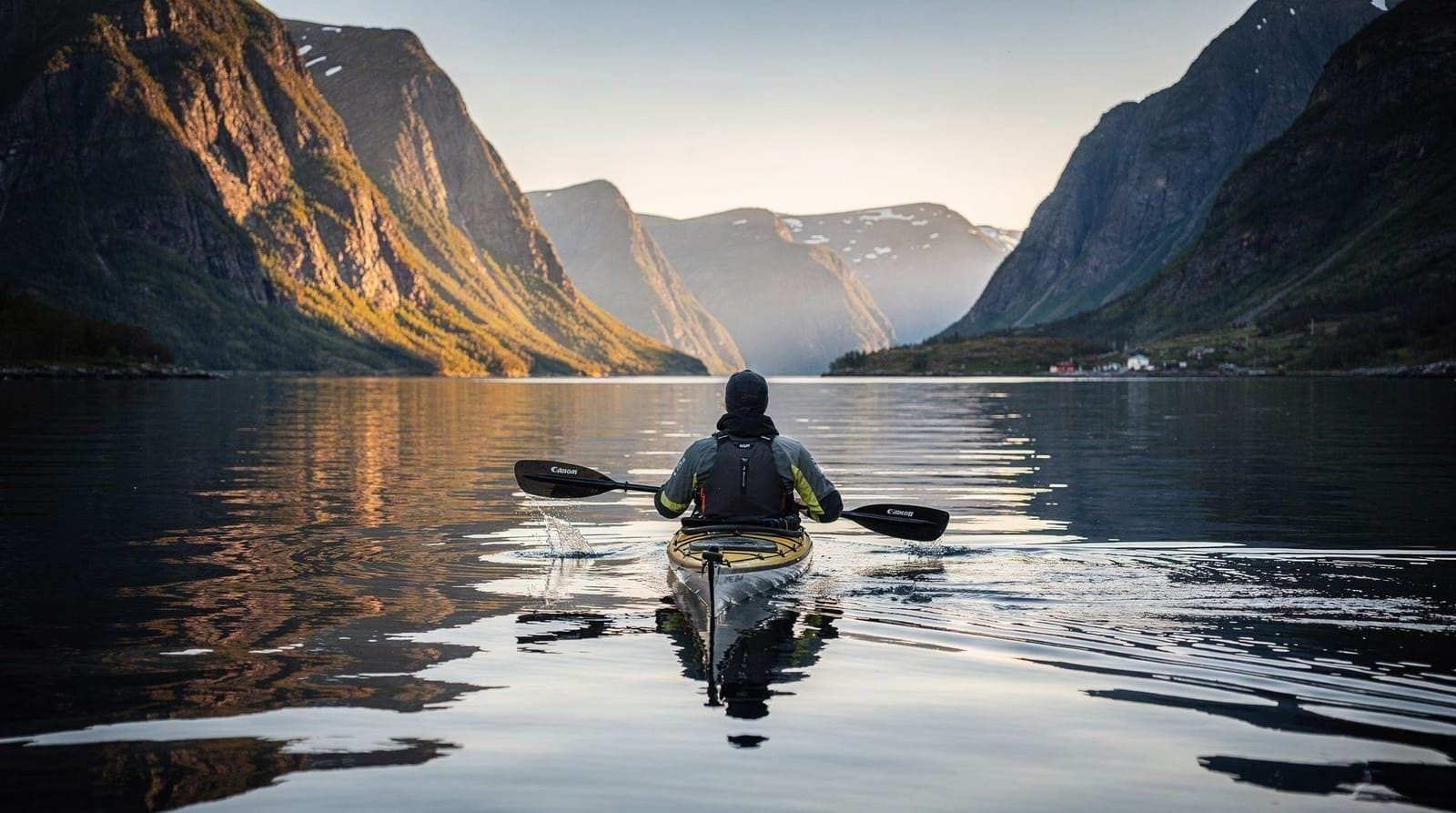
Midnight sun cruises: Several operators run dedicated midnight sun cruises — 2–3 hour catamaran trips specifically timed for the midnight hour. This puts you on the water, surrounded by reflections, at the lowest and most atmospheric sun angle. A better option than the shore if you are only there for one night.
The midnight sun activities guide covers all the practical options with pricing.
Midnight sun luxury catamaran cruiseHow this differs from a normal summer evening elsewhere
The strangest part is not the light itself but how ordinary it makes extreme hours feel. On a normal summer evening at temperate latitudes, 2 am is unambiguously night — dark, quiet, socially odd to be awake and out. In Tromsø during peak midnight sun, 2 am carries none of that signal. People fish, walk dogs, and sit on benches as if it were early evening, because as far as the light is concerned, it is. This is worth planning around: restaurants, some shops, and tour operators keep genuinely late hours in June, and the usual rhythm of “the day winding down” simply does not apply the way it does elsewhere.
Midnight sun versus polar night: the two extremes
Tromsø’s other defining light phenomenon is polar night — 49 days each winter with no sunrise at all. The two are opposites of the same latitude effect, and visiting both, even years apart, gives a genuinely fuller sense of what living this far north actually means. If you are choosing between a summer and a winter trip and light itself is the draw, midnight sun offers openness, warmth (relatively), and hiking access; polar night offers aurora, the psychological strangeness of extended dark, and a completely different, more introspective version of the city. Neither is objectively better — they are different experiments in the same place.
What it is like compared to what you expect
I expected it to be photogenic. I did not expect it to feel philosophically odd. There is something genuinely strange about the way midnight sun disrupts the normal relationship between time and light — the way it makes a 2 am walk feel ordinary and legitimate, the way the day never closes. Clocks stop feeling accurate. The concept of “nighttime” becomes purely nominal.
If you are interested in how places shape perception, midnight sun Tromsø is one of the more interesting two-week experiments available in Europe. Go in mid-June; plan your sleep; walk at 1 am; eat dinner at 10 pm; watch the fishermen at midnight. Let the city teach you a different relationship to time.
Frequently asked questions about the midnight sun in Tromsø
When exactly is the midnight sun period in Tromsø?
From approximately 20 May to 22 July each year. The sun does not set at all during this period. Outside these dates, Tromsø has very long days but the sun does set briefly — by mid-August you get real darkness again.
Can I see the midnight sun from the city centre?
Yes, the harbour and seafront of Tromsø have open northern views where the midnight sun is visible at its lowest point. For unobstructed panoramic views, the Storsteinen summit above the city is significantly better.
Is the midnight sun worth visiting in itself?
For most people, yes — but it works best as part of a broader trip that includes hiking, island exploration, and time on the water. Visiting purely to sit on the seafront for one night is underwhelming; building activities around the extended daylight is the real draw.
Does the midnight sun affect wildlife watching?
Significantly. Many Arctic species are most active during the normal night hours, and in midnight sun conditions they continue being active 24 hours a day. Birdwatching in particular is exceptional — species that normally feed at dawn or dusk are visible at any hour. White-tailed eagles over the Tromsø fjord at 2 am are a common sight in June.
How does midnight sun compare to Tromsø’s polar night?
They are opposite extremes of the same latitude: midnight sun means 24-hour daylight for roughly two months in summer, polar night means no sunrise at all for 49 days in winter. Midnight sun suits hikers and photographers who want open access and warmth; polar night suits aurora hunters. The polar night experience covers the winter version in the same first-hand detail.