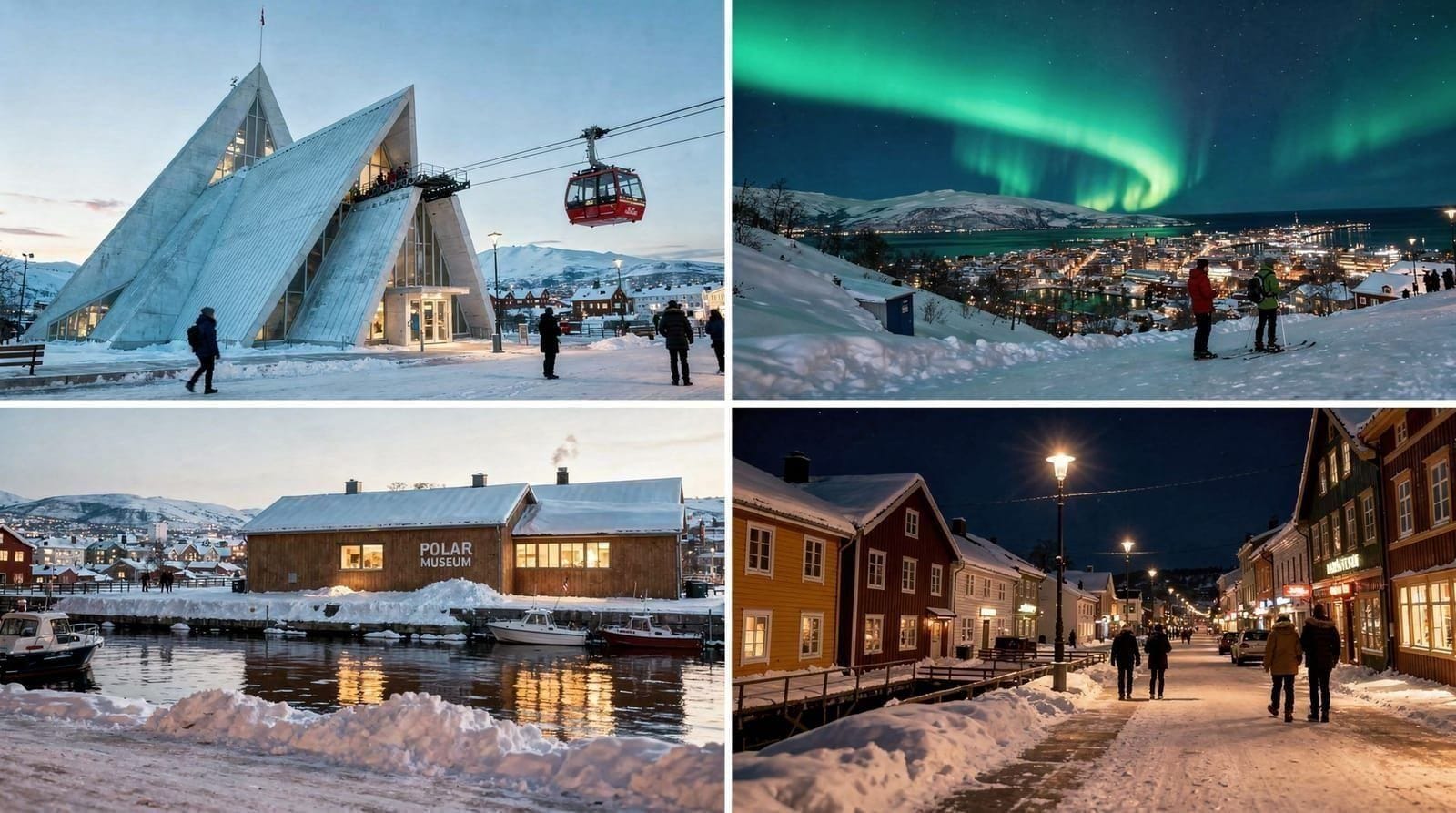
Storgata stroll — Tromsø's main street on foot
Tromsø: City Highlights Guided Walking Tour
What is Storgata in Tromsø?
Storgata is Tromsø's main pedestrian street, running north–south through the city centre. It has the city's highest concentration of cafés, shops, and historic wooden buildings. A full stroll from north to south takes about 20–30 minutes with stops.
Storgata — “the main street” in Norwegian — is exactly what it says it is. It runs through the centre of Tromsøya island from north to south, and virtually everything that defines central Tromsø is either on it or within a few minutes’ walk. Most visitors walk along some portion of it by accident on the first day. This guide makes the walk deliberate.
| Where | Central Tromsøya, north–south through the city centre |
| Cost | Free — the walk itself costs nothing |
| Time needed | Around 20–30 minutes end to end; 90 minutes with the harbour loop and café stops |
| Getting there | Walkable from any central Tromsø hotel; the city buses also stop nearby |
| Best time | Early morning for quiet, or a clear evening for the harbour light |
Starting point: the north end near Mack Brewery
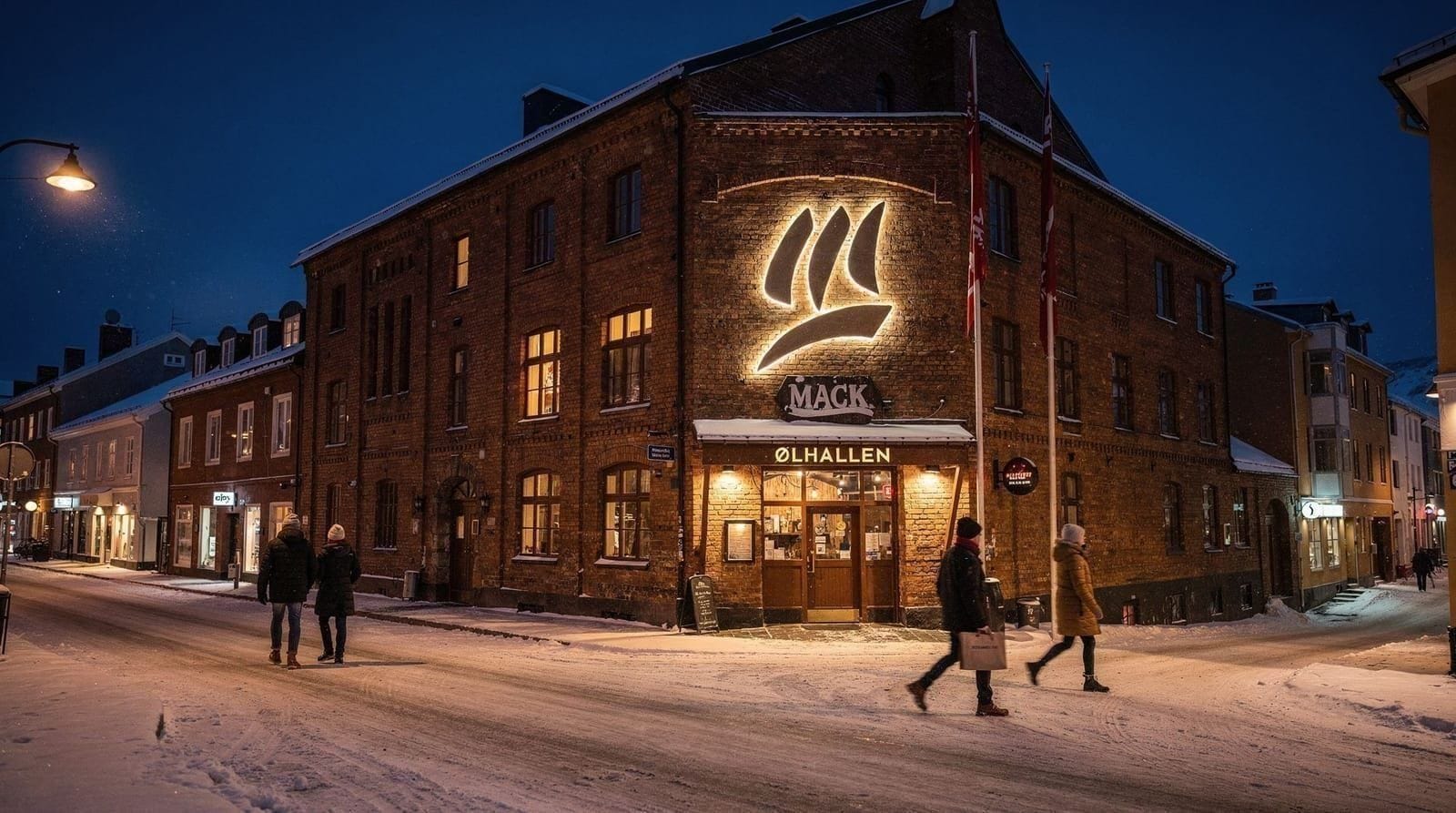
The logical starting point is the northern end of Storgata near the Mack Brewery and Ølhallen. The brewery building dates from the late nineteenth century and anchors this part of the street with a sense of industrial-civic architecture that characterises old Tromsø. Ølhallen is worth noting for a later stop; do not start your city walk in a pub at 10:00 unless that is your particular approach.
Walking south from here, the street widens into its pedestrianised core. The architecture along this stretch mixes Norwegian wooden buildings from the early twentieth century — some well-preserved, some rebuilt — with post-war concrete replacements. The wooden buildings, where they survive, give the best sense of Tromsø’s pre-boom appearance.
Mid-section: cafés, shops, and Perspektivet
The middle third of Storgata has the highest concentration of cafés. Kaffebønna at number 39 is a local Tromsø chain that predates the international coffee wave and has maintained quality. It is a common morning meeting point for local students and workers, which is a reliable indicator of value.
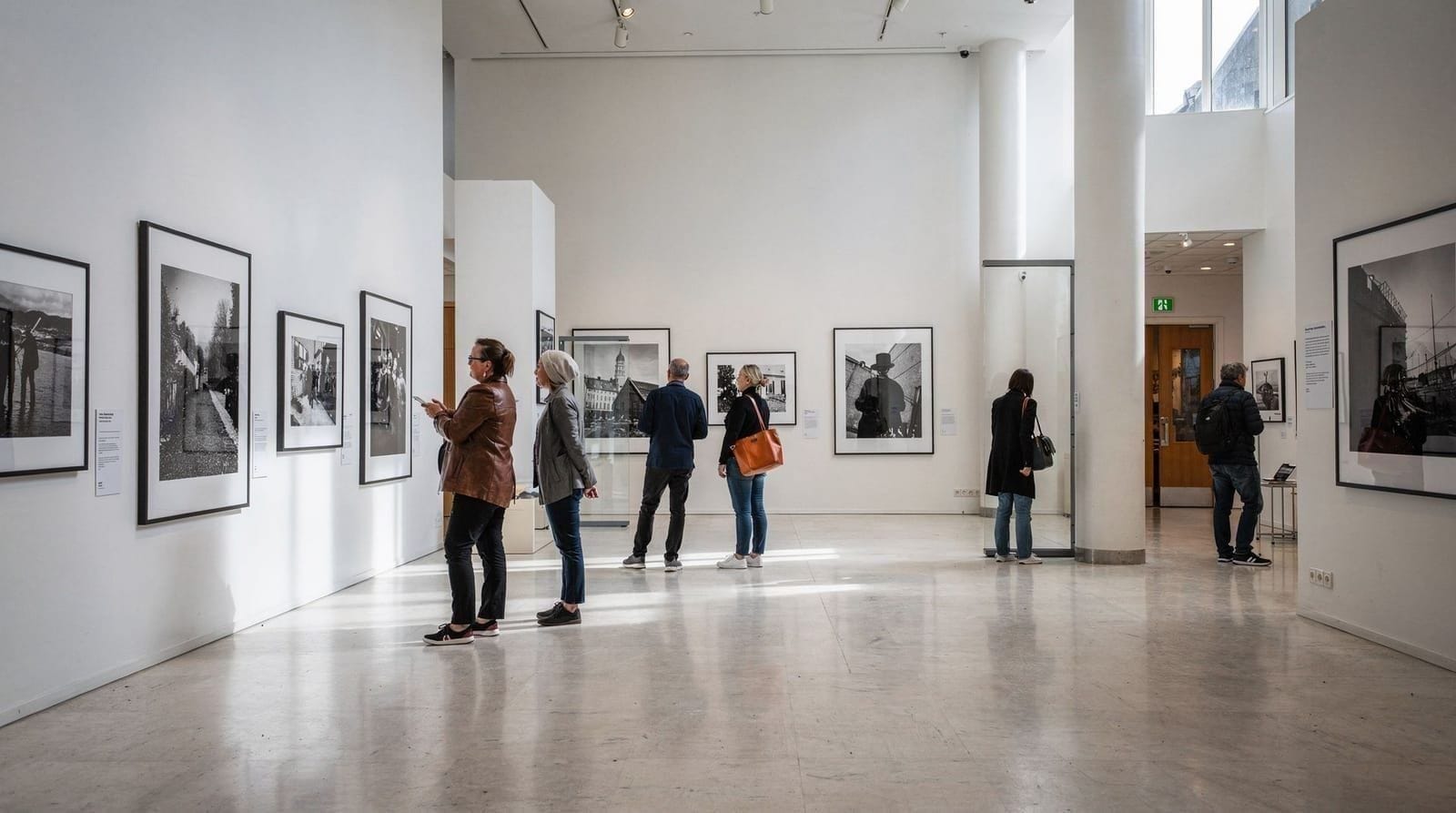
The Perspektivet Museum is on Storgata at number 95; entry is 95 NOK for adults — slot this into your walk rather than planning a separate trip. It gives context to the street you are walking and the buildings you are passing.
Shops worth noting in this stretch: Tromsø-based outdoor equipment retailers stock gear appropriate for Arctic conditions that you will not find in southern Norwegian cities — and prices here reflect local demand rather than tourist premium. Woollen products, reindeer skins, and Sami-influenced knitwear are available at several points; quality varies and knowing the difference between Norwegian-made and imported goods matters.
A guided walking tour covers Storgata and the surrounding streets with context on the architecture and city history — useful for a first visit.
South end: Stortorget and the harbourfront
Storgata meets Stortorget (the main square) near the southern end, which opens toward the harbourfront. This is the commercial heart of Tromsø — the bus stops, the tourist information, the main hotels. It is also where the quality of the street experience degrades slightly into mass retail.
From Stortorget, a left turn takes you to the harbourfront and Polaria beyond it. A right turn leads eventually toward Fjellheisen cable car (15-minute walk uphill). The seasonally operating fish market is a short detour along the harbour.
The return — along the harbour
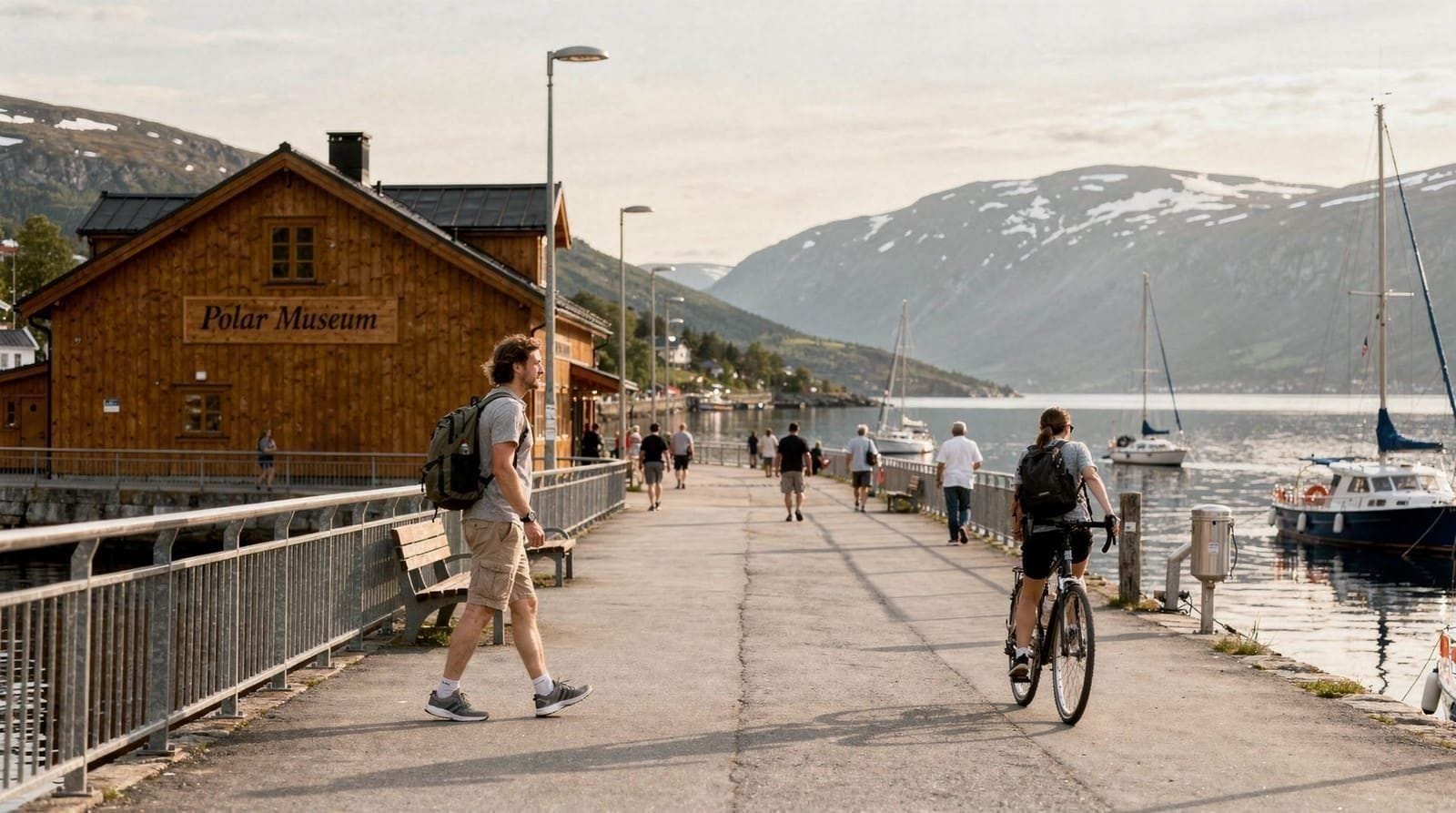
The best way to walk Storgata is as part of a loop that goes south along the street and returns along the western harbourfront. The harbour walk gives views out to Kvaløya, the long thin shape of the Tromsø Bridge, and the Tromsøysund strait. In clear weather the combination of water, mountain, and city makes for the most photographed views in Tromsø. The harbour walk is free and fully accessible.
This loop — Mack Brewery to Stortorget on Storgata, then north along the harbour back to the Polar Museum area — covers the essential texture of central Tromsø in about 90 minutes at a moderate pace with two café stops.
Architecture along the route
The mix of building types on and near Storgata tells the history of Tromsø’s growth. The older wooden structures — primarily from the late nineteenth and early twentieth century — are characterised by their tall, narrow proportions, painted timber facades, and steeply pitched roofs designed to shed the heavy northern snowfall. Several survive on side streets; they are less common on the main Storgata itself, which was widened and rebuilt after fires in the early twentieth century.
The Mack Brewery building at the north end is the most substantial surviving example of nineteenth-century commercial architecture in the centre. The brick construction distinguishes it from the wooden buildings and reflects the brewery’s status as an industrial enterprise rather than a domestic or small commercial structure.
Historic walking tour of Tromsø’s Arctic exploration heritageIf the layered history behind these facades interests you more than a self-guided pace allows, a guided walk covers the exploration-era buildings and the stories the plaques do not tell.
The more interesting architectural detail is often on the side streets off Storgata:
Skippergata: Runs parallel to Storgata toward the harbour. Some of the best-preserved wooden buildings in central Tromsø are here, and the street gives a more direct view of the Tromsøysund than Storgata itself.
Kirkegata: Contains the Tromsø Cathedral (Tromsø domkirke), a wooden church from 1861 that is the oldest major building in the city centre. It is not the Arctic Cathedral (which is across the bridge in Tromsdalen) — these are two separate churches often confused by visitors.
Grønnegt: The street leading to the library and inland toward the university district. Quieter than Storgata and gives a sense of the residential fabric of the inner city.
Food and drink stops
Beyond the cafés already mentioned, the Storgata walk connects to several specific eating options worth naming:
Kaffebønna (Storgata 39): The most reliable coffee on the main street. Local chain, good filter coffee and espresso, pastries, and a dagensrett lunch. Popular and frequently busy but efficient.
Risø Espresso: A smaller independent espresso bar with higher-end coffee equipment and a focus on single-origin and precise preparation. Less central but worth seeking out for coffee-focused travellers.
Emma’s Drømmekjøkken (Kirkegata 8, just off Storgata): The most consistently praised mid-range restaurant in Tromsø for Norwegian cooking. See the where to eat guide for context. Booking advisable.
The fish market at Stortorget: Seasonal (summer) and variable in days and hours, but one of the most authentic food stops in the city. Fresh and smoked Arctic fish, king crab claws to eat on the spot, reindeer jerky, dried fish.
Storgata in different seasons
| Season | Light | Street mood | Crowds |
|---|---|---|---|
| Summer (Jun–Aug) | Midnight sun, active past 21:00 | Terraces full, fish market busy | Highest |
| Autumn (Sep–Oct) | Days shortening fast | Quiet, aurora season begins | Low |
| Winter (Nov–Feb) | Polar night, artificial light | Christmas lights from mid-Nov | Moderate |
| Spring (Mar–May) | Sun returns, bright on snow | Celebratory, still snowy | Low–moderate |
Summer (June–August): The midnight sun and late northern evenings mean the street is active until 21:00 or later. The café terraces are in use through the night on clear evenings. The fish market at Stortorget is at its most active. Tourist volumes are highest.
Autumn (September–October): Shoulder season, fewer visitors, the start of aurora season. The light changes quickly — from the perpetual summer daylight to the first winter darkness — and the mood of the street changes with it.
Winter (November–February): Polar night from late November to mid-January means the street is lit artificially for most or all of the day. Christmas illuminations from mid-November give the commercial district a specific atmosphere. The temperature can fall below -15°C; Arctic-rated clothing is necessary for anything beyond a brief walk.
Spring (March–May): The return of the sun after polar night gives the spring weeks an atmosphere of genuine celebration. The snow typically persists on the streets through March and into April; the light on white snow in March can be extraordinarily clear.
Practical tips for the Storgata walk
Timing: Early mornings (08:00–09:00) see local foot traffic; quieter and more atmospheric than midday. Summer evenings are pleasant with midnight sun but shops close around 17:00–18:00.
Weather: Rain is common in Tromsø year-round. The street has enough covered arcades and café awnings to make an easy indoor-outdoor pattern. Do not wait for perfect weather to do the city walk.
Markets: A Saturday market operates seasonally at Stortorget with local food producers and crafts. Summer markets (June–August) are the most reliably active.
Side streets: Skippergata runs parallel to Storgata toward the harbour and has older wooden architecture including the Tromsø Cathedral (Tromsø domkirke) — not to be confused with the Arctic Cathedral across the bridge.
Souvenirs and shopping — what is worth buying
A brief honest guide to shopping on and near Storgata:
Worth buying: Norwegian wool products (Devold, Dale of Norway, Åsnes brands) are genuinely good quality and specifically Norwegian. Reindeer leather goods from producers who identify their source. Books on Arctic Norway from the Polar Museum shop or Perspektivet Museum shop (more curated than the tourist shops). Aquavit or cloudberry liqueur from Vinmonopolet. Cloudberry jam.
Avoid: Generic “Norway” tourist merchandise (trolls, Viking helmets, Nisse figurines) that is mass-produced and has no regional specificity. Mass-produced “Arctic” items sold near Stortorget at inflated tourist prices. Mack-branded merchandise that is available cheaper from the Ølhallen itself.
Outdoor equipment: If you need genuine Arctic cold-weather gear, the outdoor equipment shops on and near Storgata are the best place in Tromsø to find it. Bergans, Norrøna, and specialist brands appropriate for the conditions are available at local retail prices. These are not souvenirs but functional items.
The Tromsø outdoor gear market exists for people who actually use equipment in Arctic conditions, which means the range and quality is different from outdoor shops in cities further south. If you need microspikes for Fjellheisen in winter, or a specific type of merino base layer, this is the right place to buy it.
How Storgata fits into a Tromsø trip
For visitors with only one day in Tromsø, the Storgata-to-harbour loop is the single most efficient way to see the city centre’s essentials without a car or bus. It also works as the opening afternoon of a longer stay — see how many days in Tromsø for how a first walk fits around aurora or fjord activities booked for other days. If you are working from a 2-day stopover itinerary, plan the Storgata walk for the arrival afternoon, when energy is highest and the shops are still open, and save more demanding excursions like Fjellheisen for the following day.
Honest verdict
Frequently asked questions about the Storgata stroll
Is Storgata safe to walk at night?
Yes — Tromsø is one of the safest cities in Europe and Storgata is well-lit and regularly used at all hours. In winter during polar night, the city lighting is the only light; in summer, the midnight sun means it never really gets dark.
Where should I buy local souvenirs on Storgata?
Look for products made in Norway rather than tourist trinkets from elsewhere. Woollen goods from Norwegian brands (Dale of Norway, Devold), reindeer leather products from local producers, and books on Arctic Norway are the most region-specific purchases. The Perspektivet Museum shop and the Polar Museum shop have more curated selections than the generic tourist shops near Stortorget.
Are the restaurants on Storgata good?
Storgata itself has a mix — some good, some average tourist-facing restaurants. The better Tromsø dining options tend to be on the side streets or harbourfront. The where to eat in Tromsø guide covers specific recommendations with honest assessments.
How does Storgata connect to the Arctic Cathedral?
The Arctic Cathedral is across the Tromsø Bridge on the Tromsdalen side. From the north end of Storgata, walk east along the harbourfront to the bridge entrance — about 15 minutes — then cross the bridge (10 minutes) to reach the Arctic Cathedral. The walk is pleasant in good weather.
Is there parking near Storgata?
Tromsø centre has limited and metered parking. The main car parks are near Stortorget. Walking or taking the bus from accommodation on the edge of town is usually more practical than driving to Storgata.
What is the best season to walk Storgata?
All seasons have something to offer. Summer gives midnight sun and outdoor café seating. Winter (particularly November–January) has the polar night atmosphere, Christmas lights from mid-November, and the particular quality of Arctic urban darkness. Autumn and spring are quieter with fewer crowds.
Does Storgata have a Sunday market?
Occasional markets and events happen at Stortorget on Sundays, but these are not weekly fixtures. A regular Saturday market is more reliable in summer. Check Tromsø’s local event listings for specific market dates.
How long should I budget for Storgata on a one-day Tromsø visit?
Allow 60–90 minutes if you include the harbourfront loop and one café stop, or as little as 20 minutes if you are just passing through on the way to Fjellheisen or Polaria. See the one day in Tromsø guide for how it slots into a fuller schedule.
Can I walk Storgata with young children or a pushchair?
Yes — the pedestrianised core is flat, wide, and largely free of traffic, which makes it one of the easiest walks in Tromsø with a pushchair. Cobblestones on some side streets like Skippergata are less smooth, so stick to the main street if that matters. See the Tromsø with kids in summer or winter guides for season-specific family tips.
Top experiences
Bookable activities with verified prices and instant confirmation on GetYourGuide.