Eating king crab in Tromsø: what the experience is actually like
The red king crab (Paralithodes camtschaticus) was introduced to the Barents Sea by Soviet scientists in the 1960s. It was not there before. It has since spread across Norwegian Arctic waters, displacing native species with considerable ecological efficiency, and simultaneously becoming one of the most sought-after luxury ingredients in the Norwegian food economy. The Tromsø region catches several thousand tonnes annually.
| Where | Arctandria, Fiskekompaniet, or Mathallen (Storgata) |
| Cost | 200–1,100 NOK depending on venue and portion |
| Safari tour cost | 1,400–1,900 NOK per person, 3–4 hours |
| Season | Available year-round; best quality Oct–Feb |
| Booking | Restaurants: same-day usually fine; safari: book ahead in winter |
I mention this because if you are going to eat king crab in the Arctic, it is worth knowing that you are eating an invasive species that the Norwegian government actively wants harvested. No ethical ambiguity here. The fishery is managed and the quota system is designed to control the population. Eat enthusiastically.
What king crab tastes like
If you have eaten Atlantic or Dungeness crab, you have a reference point. King crab has a sweeter, more delicate flavour than those species — less briny, with a clean shellfish sweetness that does not require heavy seasoning. The claw and leg meat is firm and can be eaten cold or warm; the body meat is softer and better in soups or bisques.
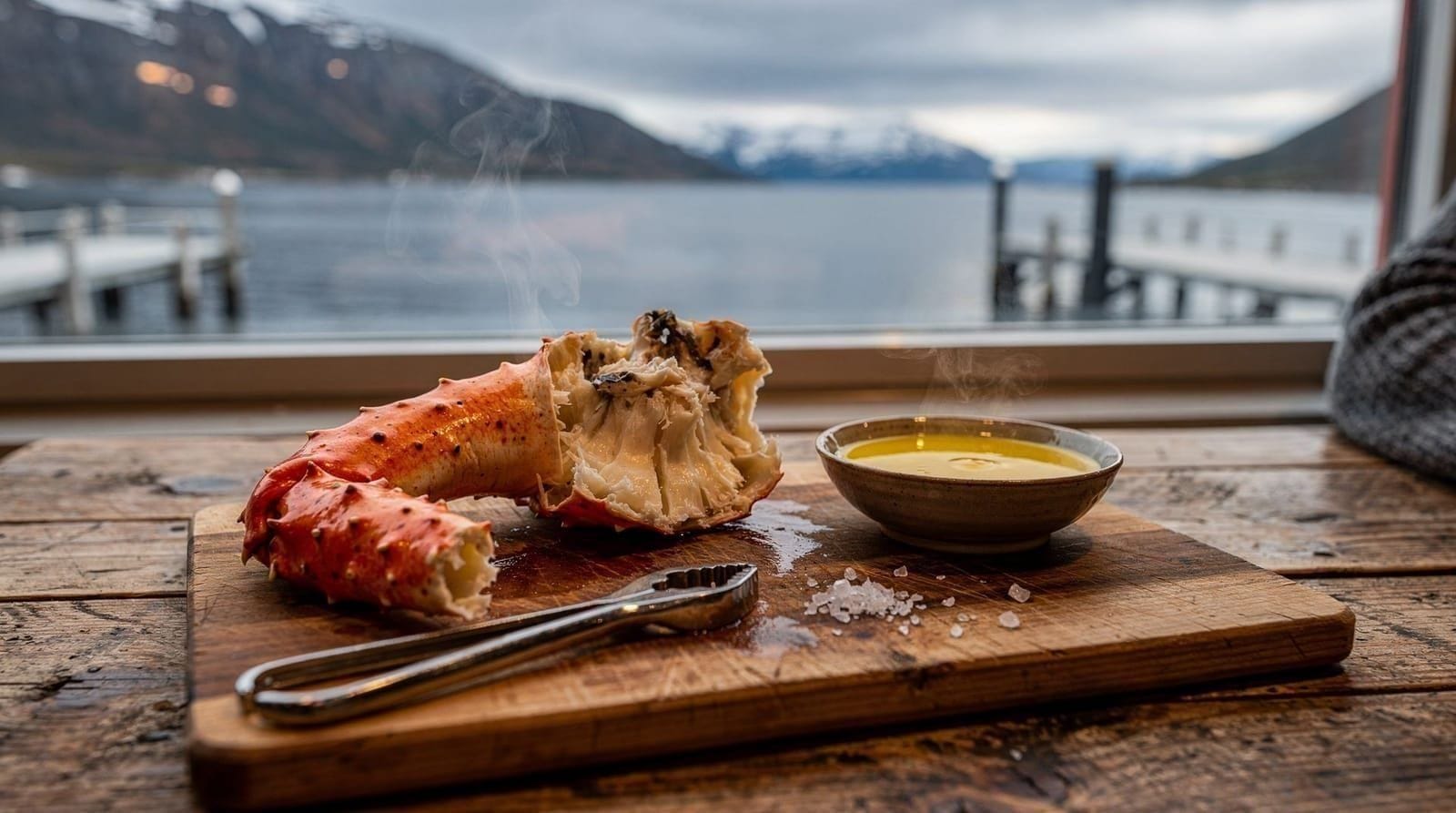
The simplest preparation is often the best: boiled or steamed legs, eaten with drawn butter, lemon, and bread. Most Tromsø restaurants serve it this way for the legs (which are the primary eating section) and make bisques or pasta dishes from the body meat.
Where to eat it in Tromsø
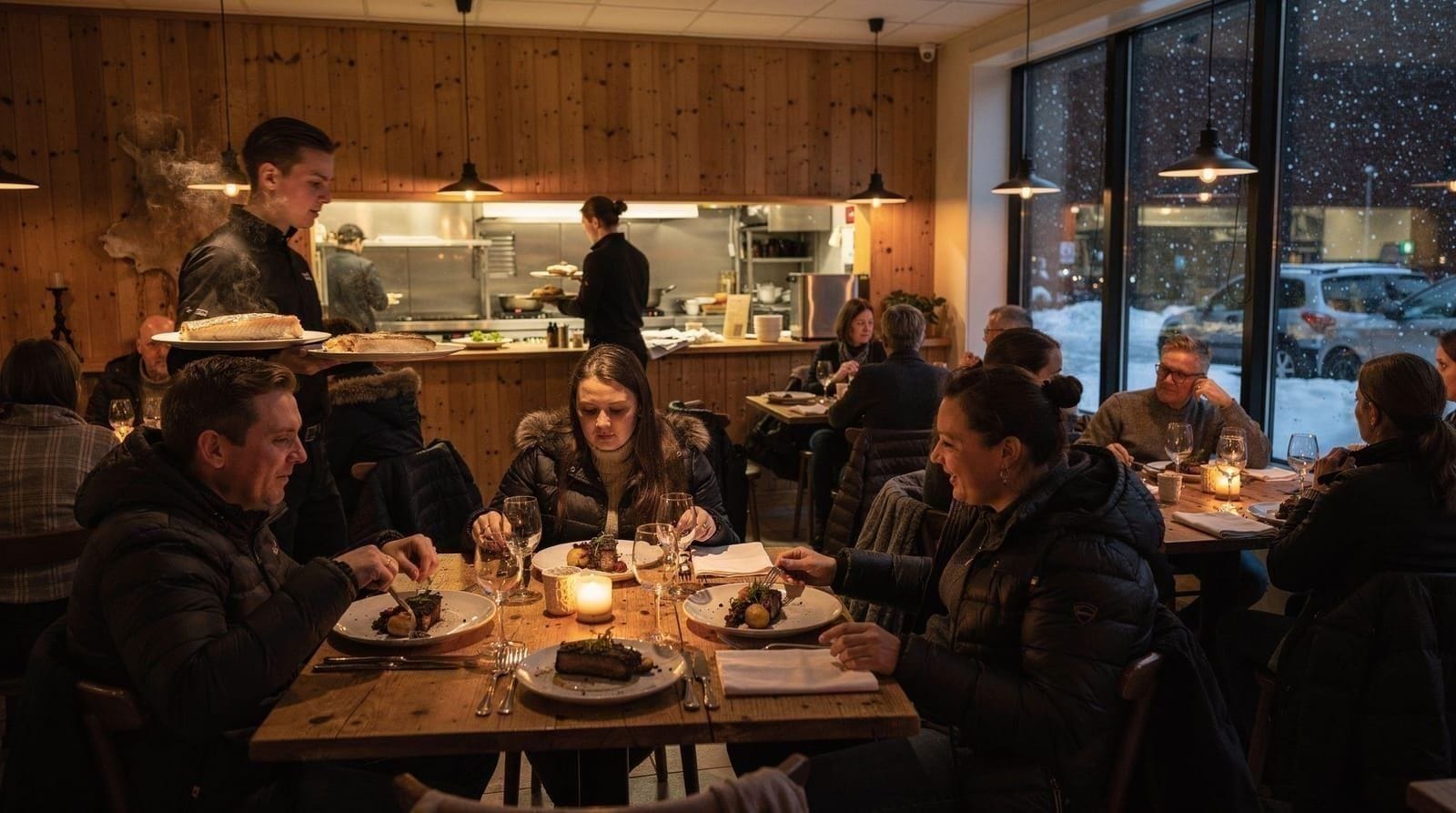
Arctandria Seafood Restaurant on Strandtorget is the traditional high-end option — they have served king crab since the early 2000s and the preparation is straightforward and excellent. Expect to pay 450–650 NOK for a half crab (two legs and claws), or 800–1,100 NOK for a whole. Not cheap, but the quality is consistent.
Fiskekompaniet (Fish Company) on the waterfront is somewhat more modern in its approach — crab legs appear in composed dishes rather than purely as a standalone, alongside other Arctic seafood. Mid-range price point for Tromsø: 350–500 NOK for a crab dish.
Mathallen Tromsø (indoor market hall on Storgata) has a stall selling cooked crab legs by weight. This is the most affordable option — roughly 200–300 NOK for a portion that constitutes a real meal. Quality is very good. You eat standing or on high stools; the atmosphere is informal.
The where to eat in Tromsø guide has a full restaurant listing with current pricing.
The king crab safari: is it worth it?
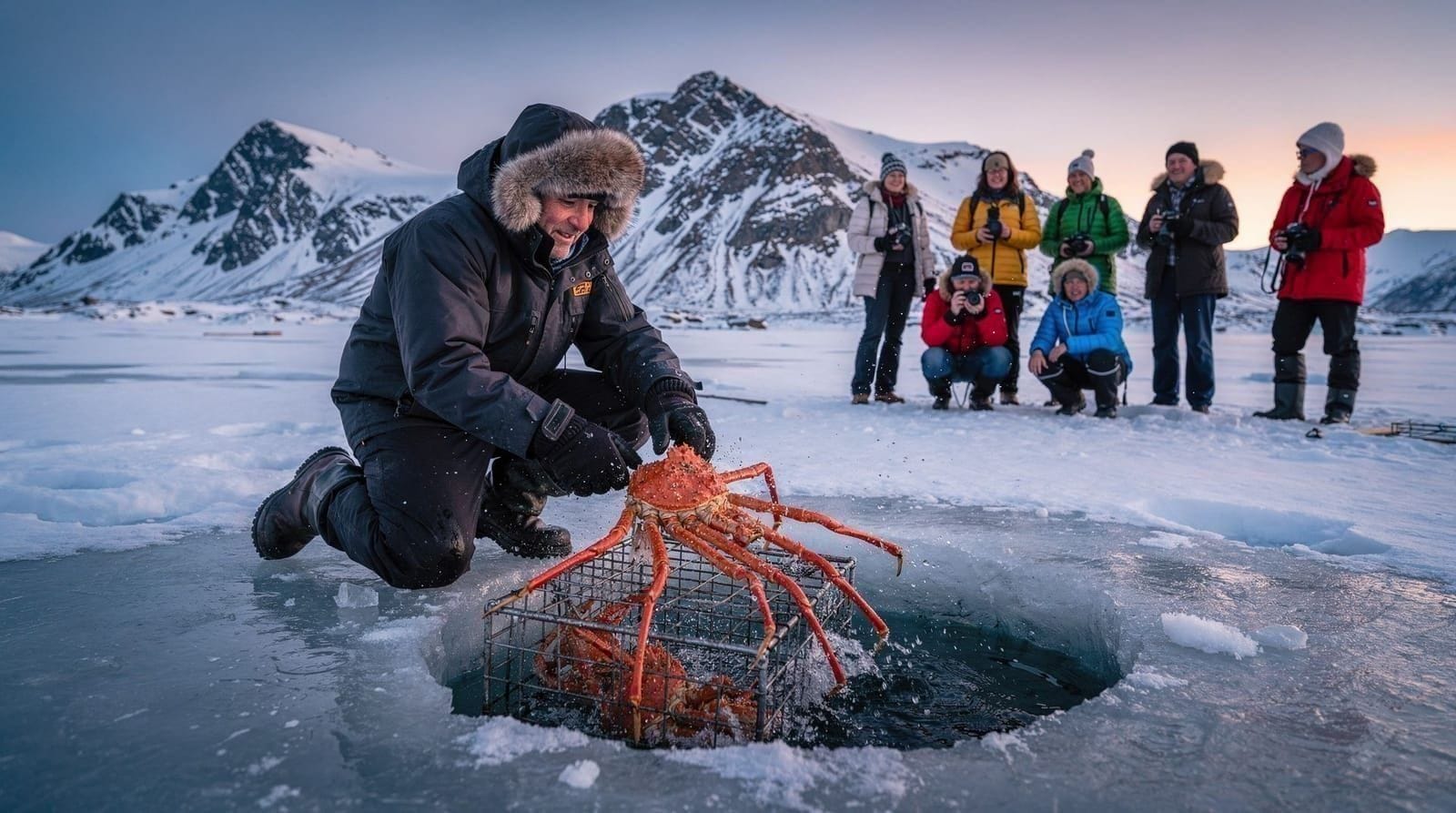
A king crab safari combines a boat trip on the fjord with the experience of pulling crab traps and then cooking and eating the catch onboard. This format has become one of the more popular Tromsø experiences, sitting at the intersection of food tourism and outdoor activity.
The honest assessment:
What it delivers: A genuine boat trip on Arctic waters, the experience of handling the crabs before cooking, freshly cooked crab eaten on the water with good views, and a guided explanation of the fishery and the crab’s ecological history. Duration: typically 3–4 hours total.
What it costs: 1,400–1,900 NOK per person. For reference, this is similar to a whale watching tour.
What the alternative costs: Eating at Arctandria or Fiskekompaniet, two solid restaurant dinners, costs 800–1,200 NOK for two people. The restaurant experience is more comfortable and the food preparation is often more refined.
Who the safari suits: People who want an outdoor experience integrated with the food, first-time Tromsø visitors who want the “full Arctic package,” and those who specifically enjoy the novelty of catching and cooking their own food. The boat trip itself, particularly in winter with the possibility of seeing seabirds and potentially the aurora on the return, adds value beyond just the crab.
Who the restaurant suits: People who prioritise comfort, want other menu options alongside crab, prefer the city experience to the boat trip, or are on a tighter budget.
The king crab safari guide covers the specific operators and what to look for when booking.
What you get for your money on the safari
Most safaris depart from the Tromsø harbour, sail for 20–30 minutes to the trap locations, pull 4–6 traps, return to the boat’s galley section, and cook the crabs simply — typically boiled, with butter, bread, and occasionally aquavit.
The “freshly caught” element is real and matters for flavour: king crab cooked within minutes of being pulled from the trap is noticeably better than cold-stored crab that has been held for 24 hours. The meat is firmer and the sweetness more pronounced.
The guides on the better operations explain the ecological history, the quota system, and the biology of the crabs in a way that adds context. The best safaris I have researched run groups of 8–12 people maximum, which allows real interaction rather than a crowd scenario.
Pairing with other Tromsø food experiences
King crab pairs well with a broader Arctic food experience. The other dishes worth ordering in Tromsø:
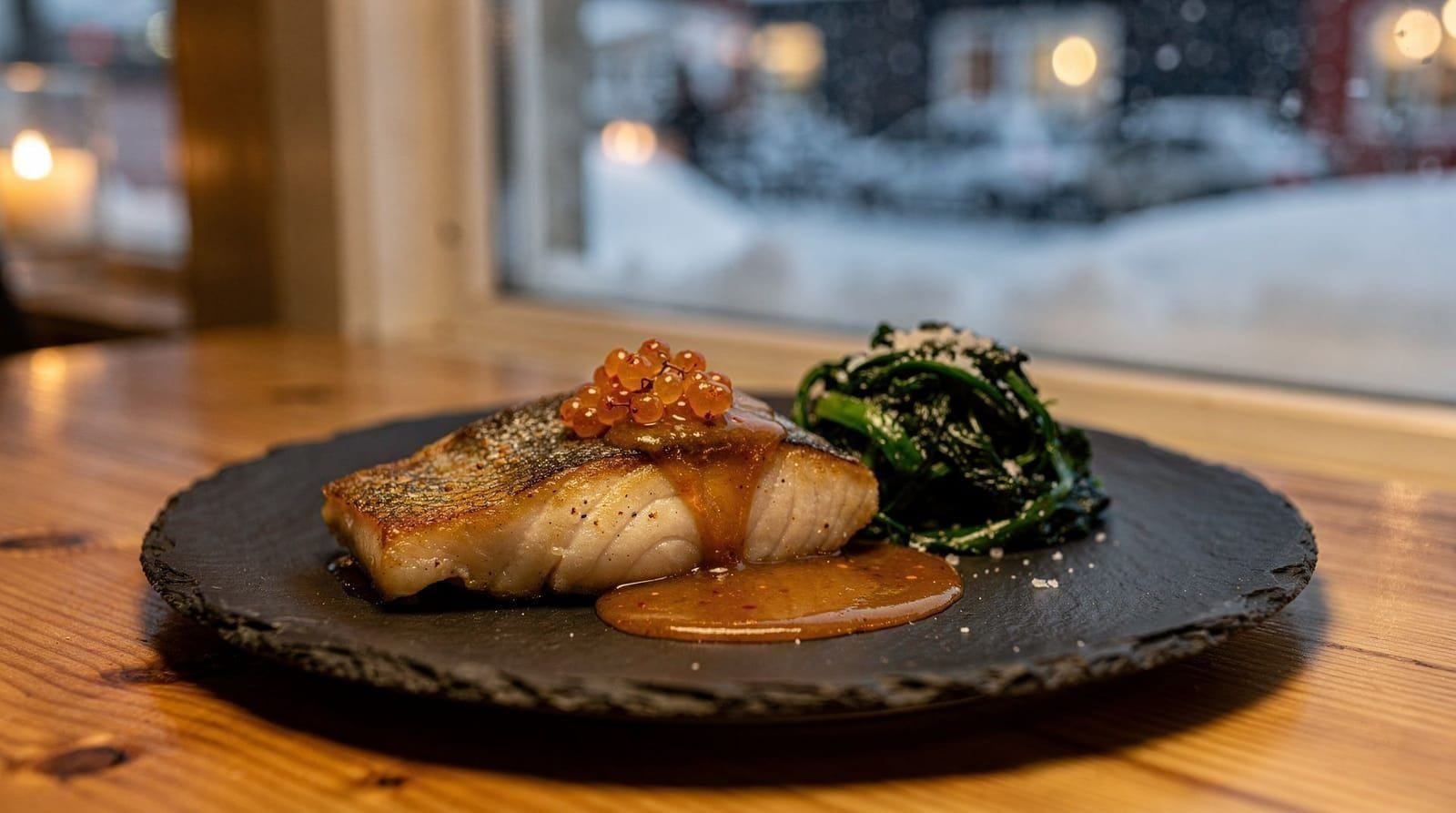
Arctic char: A freshwater fish related to salmon and trout. More delicate than salmon, less common internationally. Ask for it at any serious seafood restaurant.
Reindeer: Served as a steak, in stews, or dried (like jerky). The flavour is gamey in a clean way — closer to venison than to beef. Mathallen has good reindeer sausage.
Skrei (winter cod): A seasonal product, available roughly February through April, when the mature cod migrate south from the Barents Sea. It is what bacalhau (salt cod) is made from when it is dried and salted; fresh skrei has a firmer, sweeter flesh than year-round Atlantic cod.
Cloudberry jam (multekrem): A dessert staple. Cloudberries are golden-orange berries that grow on Arctic tundra; they have a complex, tart flavour that does not translate well to description but is immediately identifiable.
The Tromsø food and drink guide covers the full Arctic cuisine scene with specific recommendations.
The price of king crab: transparency
One thing worth knowing: king crab prices in Norway reflect both the logistics of Arctic fishing and the luxury branding that has developed around the product. Prices in Tromsø restaurants are real prices for a legitimately expensive ingredient that requires significant effort to catch and process.
What you are not seeing in most tourist menus is the Mathallen option, which delivers the same ingredient at market price rather than restaurant markup. If budget matters, the Mathallen stall is the honest answer: very good king crab, eaten informally, at about 40–50 percent of the sit-down restaurant price.
The three ways to eat it, compared
| Option | Typical cost | Setting | Best for |
|---|---|---|---|
| Arctandria (sit-down) | 450–1,100 NOK | Traditional, formal | A proper dinner, first-timers wanting the classic version |
| Fiskekompaniet (sit-down) | 350–500 NOK | Modern, composed dishes | Pairing crab with other Arctic seafood |
| Mathallen stall | 200–300 NOK | Informal, market hall | Budget, casual, quick |
| King crab safari | 1,400–1,900 NOK | Boat, fjord, self-cooked | The activity, not just the meal |
What locals actually order
Tromsø residents eating king crab tend to skip the tourist-oriented “crab feast” set menus and order it à la carte, often as a starter shared between two rather than a full main course — the meat is rich enough that a full portion per person is more than most people want in one sitting. If you are dining as a group, ordering one whole crab for two or three people to share, alongside other dishes, is both more affordable and closer to how it is actually eaten locally. The Tromsø food scene covers this ordering pattern across the city’s restaurants more broadly.
Combining king crab with other Tromsø experiences
The king crab safari pairs naturally with other winter activities on the same trip. Several visitors combine a safari morning with an aurora tour the same evening, since both are boat- or fjord-adjacent and the timing works — safaris typically run midday to early afternoon, leaving the evening free for aurora chasing. If you would rather keep the day purely food-focused, pair a Mathallen crab lunch with a Fjellheisen cable car trip up Storsteinen for the view, then a proper Arctandria dinner in the evening — a full but unrushed day built around eating well.
For a broader sense of what else is worth ordering across the city, what locals do in Tromsø covers the wider food and social scene beyond crab specifically.
Frequently asked questions about king crab in Tromsø
When is king crab season in Tromsø?
King crab is available year-round in restaurants (it is stored frozen or live-held), but the highest quality is from the autumn and winter fishing season (October–February). The safari tours run year-round.
How much crab can you actually eat in one sitting?
A half portion (one claw cluster and one or two legs from a large individual) is typically sufficient for one person as a main course. A whole crab is a feast — most people share one between two. The crabs caught in Norwegian waters are large: leg span of 1.2–1.5 metres is common, with meat weights of 3–4 kg per crab.
Is the king crab safari ethical to eat?
Yes. The red king crab is an invasive species in Norwegian waters, and the official Norwegian government position is that harvesting it is ecologically beneficial. Quotas are set annually to control, not sustain, the population.
Can I cook king crab myself?
If you are staying in an apartment with a kitchen, Mathallen sells live or freshly cooked whole crabs. Boiling a crab takes 15–18 minutes in well-salted water after the water returns to a boil. This is the most cost-effective way to eat it and produces excellent results.
Should I book the king crab safari or just eat at a restaurant?
Book the safari if the boat trip and hands-on trap-pulling are the point — it’s an activity with a meal attached, not the cheapest way to eat crab. If you simply want the best crab for the least money, skip the safari and go to Mathallen or Arctandria instead; you’ll eat better for less and can spend the saved time and money on a different Tromsø activity.