Arctic cuisine in Tromsø — what to eat and where to find it
Tromsø: Arctic Flavors Food Walking Tour
What is Arctic cuisine in Tromsø?
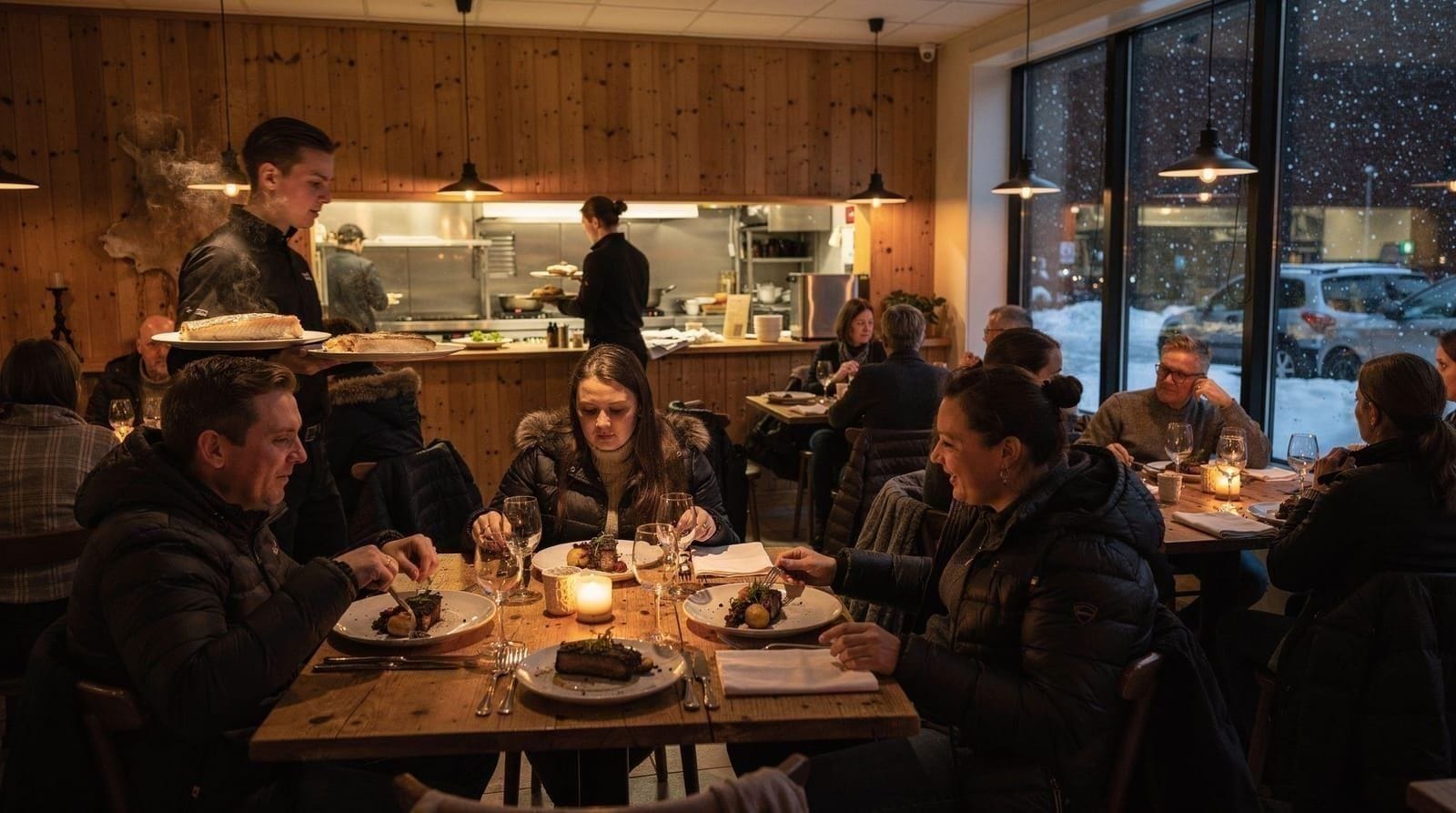
Arctic cuisine in Tromsø centres on reindeer, king crab, wild Arctic fish (cod, char, skrei), stockfish, whale, and foraged ingredients like cloudberries. These are genuinely regional — the same ingredients are not available in the same form in southern Norway or elsewhere.
Arctic cuisine is not a marketing construct invented for tourists. The food culture of Tromsø and northern Norway is genuinely distinct — shaped by centuries of subsistence fishing and reindeer herding, by Sami food traditions, and by the specific ecological conditions of the high north. The same ingredients are not available in this form in Oslo, Stockholm, or anywhere outside the Arctic circle zone.
| Where | Restaurants across Tromsø; freshest crab and fish at the summer fish market |
| Cost | around 180–800 NOK per main depending on ingredient |
| Must-try | reindeer steak, king crab, stockfish/bacalao |
| Best time | skrei Jan–Apr, cloudberries Aug–Sept, reindeer and king crab year-round |
| Booking | walk-ins usually fine; book ahead for Arctandria and Emmas on weekends |
Reindeer — the defining Arctic protein
Reindeer (rein) is the most distinctly Arctic meat on Tromsø menus. The animals are semi-wild, herded by Sami families across the high mountain plateaux and fjord-divided landscape of northern Norway. The diet is predominantly lichen, moss, and Arctic grass, which produces a lean, dark, slightly mineral-tasting meat — less fatty than beef, less gamey than venison in the British sense.
Common preparations:
- Reindeer steak (reinsdyrsteik): Pan-fried to medium-rare, served with cloudberry sauce, boiled potatoes, and root vegetables. This is the most accessible entry point.
- Slow-cooked reindeer (gryta or lapskaus): A stew prepared in the Sami tradition with root vegetables, often served with flatbread (flatbrød). More complex in flavour than the steak.
- Reindeer jerky (reinsdyrpemmikan): Available at the fish market and some shops as a dried snack, roughly equivalent to biltong. Better than it sounds.
Price: 280–400 NOK for a main course in a sit-down restaurant.
King crab — the expensive Arctic luxury
King crab (kongekrabbe) was introduced to the Barents Sea from the Pacific in the 1960s as part of a Soviet fisheries experiment and has since established itself in the northern Norwegian coastal ecosystem. The crab is now wild-caught by Norwegian fishermen and is a legitimate part of the regional food system, whatever one thinks of the original introduction.
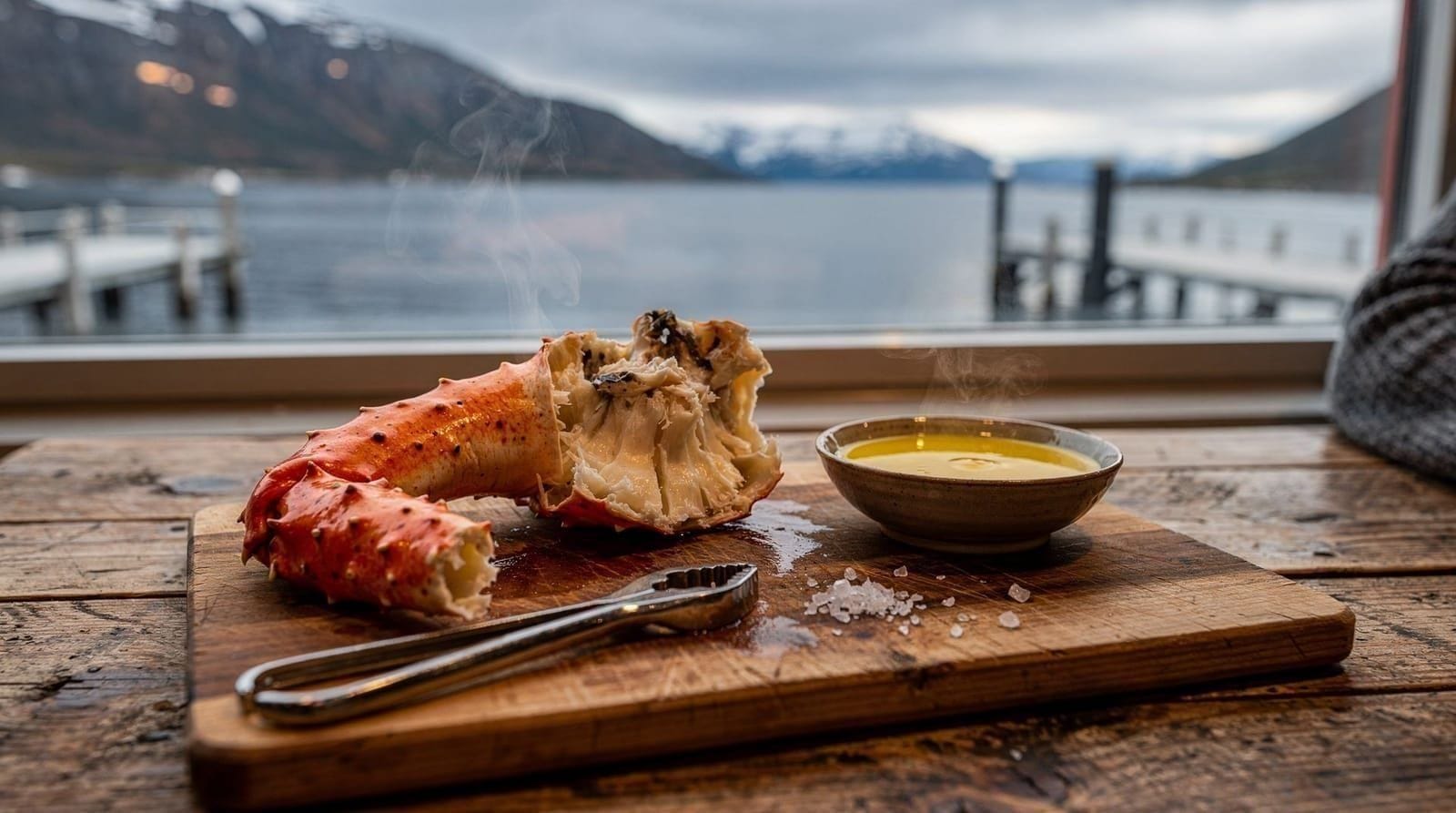
King crab is large — a single leg can span 1.5 metres across. The meat is sweet, clean, and texturally firm — closer to lobster than to blue crab. The legs are the most common serving format: grilled or steamed, split open at the table, with butter and lemon.
Prices in Tromsø restaurants: 350–600 NOK for a starter-sized portion, 500–800 NOK for a main. At the fish market at Stortorget in summer, cooked crab claws sell for 100–200 NOK, which is the most economical way to taste one.
The king crab guide covers the full experience including king crab safari tours.
Stockfish and bacalao — centuries of preservation
Stockfish (tørrfisk) is unsalted cod dried on wooden racks in the cold Arctic wind. The technique was developed in northern Norway and the Lofoten Islands over centuries — the specific combination of winter temperature (below freezing), wind, and low humidity produces a natural preservation that does not require salt.
Reconstituted stockfish has a specific texture and concentrated flavour that takes getting used to. In Tromsø it appears:
- As bacalao: reconstituted and cooked in olive oil, tomatoes, and potato — a preparation adopted from the Portuguese trade
- Simply reconstituted with potatoes and butter in the traditional Norwegian way
- As a tasting portion on Arctic tasting menus alongside other regional ingredients
Price at restaurants: typically 180–280 NOK for a bacalao main.
Skrei — the winter Arctic cod
Skrei is the name given to the migrating cod (Gadus morhua) that travels from Barents Sea feeding grounds to spawn off the Lofoten coast in winter (January–April). Skrei fishing is one of the oldest organised fisheries in the world. The flesh is white, firm, and clean-tasting — noticeably better than farmed or non-spawning cod.
In Tromsø, skrei appears on menus from January to April. Outside this window you may find other Norwegian cod preparations but not skrei specifically.
Arctic char and salmon
Arctic char (røye) is native to the cold, deep lakes of inland Arctic Norway. It is smaller than salmon, pink-fleshed, and has a delicate flavour that pairs well with simple preparations — butter, dill, lemon. It appears on better Tromsø menus as a year-round option.
Norwegian farmed salmon is available everywhere and needs no special mention — it is the same salmon sold globally. Wild salmon (villaks) from Arctic rivers is seasonal and premium-priced; when it appears in summer, it is worth trying.
Cloudberries and foraged ingredients
Cloudberries (multe) are small amber-coloured berries that ripen on Arctic bogs in late August. They are fragile, not commercially farmed at scale, and harvested by hand. In Tromsø, cloudberry jam (multesyltetøy) appears as a condiment with reindeer and as a dessert ingredient. Cloudberry liqueur (Moltebær akevitt or cloudberry-infused spirits) is available in shops.
Other foraged ingredients that appear in Tromsø restaurant cooking: birch bark and birch resin, various Arctic herbs and mushrooms, and wild juniper. These are seasonal and not consistently available — they appear on menus where chefs choose to use them.
Whale — the divisive option
Minke whale (vågehval) is legally caught in Norway and appears on some Tromsø menus, primarily at Arctandria. The flavour is like beef rather than fish; the texture is dense and dark. The ethical and political context is well-known. This guide does not advocate for or against ordering it; visitors make this decision according to their own values.
A guided Arctic food walking tour in Tromsø — the most efficient way to try reindeer, king crab, stockfish, and other regional ingredients without the cost of multiple restaurant main courses.
Sami food traditions
The Sami have inhabited northern Norway for millennia, and Sami food traditions are woven into the regional cuisine in ways that are not always labelled as such. Reindeer is the clearest example, but Sami methods of preservation (smoke-drying meat, fermenting fish, using animal fat in cold weather) also underpin some of what appears on northern Norwegian menus. The Sami culture guide provides more context.
Arctic ingredients to buy and take home
If you want to bring the cuisine home, practical choices available at Tromsø shops and the airport:
- Cloudberry jam (multesyltetøy) — widely available, shelf-stable
- Reindeer jerky — in vacuum-sealed packets
- Stockfish — sold dried in chip-bag form at fish shops and supermarkets
- Caviar in tubes (Kaviar) — the Norwegian breakfast staple, very packable
- Aquavit and cloudberry liqueur — from Vinmonopolet (the state alcohol shop)
Fermented and preserved foods — the tradition behind the cuisine
Before refrigeration, preservation was survival in the Arctic. The food culture of northern Norway developed around techniques that kept proteins edible through the dark winter months. Understanding these techniques gives the modern cuisine more depth.
Tørrfisk (stockfish): Air-drying on wooden racks in the cold, dry Arctic air is the oldest preservation technique. The specific climatic conditions of northern Norway — the right temperature range, the right wind, the right humidity — produce a different result from air-drying in other climates. Tørrfisk from Lofoten and the Tromsø region has been exported to southern Europe (particularly Portugal and Italy) for centuries.
Gravlaks (cured salmon): The word grav means “buried” — the original method involved burying salmon with salt and dill in the ground to cure. The modern version achieves the same result in a container without the burial. Norwegian gravlaks is among the best available anywhere.
Spekemat (cured meats): Cured and dried sausages and meats are part of Norwegian food culture. In the north, reindeer appears in cured form as jerky or thin dried slices.
Rakfisk: A fermented freshwater fish (typically trout or charr) that is specific to Norway. It is an acquired taste — the fermentation produces a strong smell and a particular flavour that is either compelling or deeply off-putting. Not widely available on Tromsø menus but occasionally present at traditional Norwegian food events.
The Sami food contribution in more detail
Sami culinary traditions are not well-documented in the academic sense — much knowledge has been transmitted orally and within communities rather than through cookbooks or published recipes. What can be said from the material record and from current Sami food culture:
Reindeer in full: Sami reindeer use is comprehensive — meat, blood, organs, bone marrow, tongue, and fat. The concept of using the whole animal is central to the tradition. What appears on Tromsø restaurant menus (reindeer steak, reindeer stew) represents a narrow slice of a more complete food culture.
Gutting and drying on the land: Reindeer caught on the plateau were traditionally prepared on-site — gutted, the organs eaten immediately, the carcasses transported or dried. The proximity of preparation to the landscape is part of what makes Sami food culture distinct from urban food culture.
Herbal and foraged ingredients: Sami food knowledge includes the use of specific Arctic herbs, roots, and berries that do not appear on most tourist menus. Some Sami-run cultural experiences (reindeer camp visits, Sami cultural tours) include food preparation using these traditional ingredients.
Where to find the best examples of each ingredient
A practical guide by ingredient:
| Ingredient | Best source | Price range |
|---|---|---|
| Reindeer steak | Emmas Drømmekjøkken, Arctandria | 280–400 NOK main |
| King crab | Fish market (summer), Arctandria | 100–700 NOK |
| Stockfish/bacalao | Arctandria, traditional cafés | 150–280 NOK |
| Skrei (winter cod) | Any good restaurant Jan–Apr | 220–350 NOK |
| Cloudberries | Dessert menus August–Sept; jam year-round | Varies |
| Arctic char | Emmas, Mathallen | 220–320 NOK |
| Gravlaks | Supermarkets, cafés | 80–200 NOK |
Seasonality — what’s at its best when
Arctic ingredients are not equally good year-round. This table complements the sourcing table above with a purely seasonal view:
| Month | At its best | Notes |
|---|---|---|
| Jan–Apr | Skrei | Peak migratory cod season; look for it specifically on menus |
| May–Jul | Wild salmon (villaks) | Seasonal, premium-priced, worth trying when it appears |
| Aug–Sept | Cloudberries | Fragile, hand-harvested, appears as jam and dessert |
| Year-round | Reindeer, king crab, stockfish | Consistently available, though king crab is freshest at the summer fish market |
Where to actually eat it — restaurants and budget options
Arctandria and Emmas Drømmekjøkken are the two names that come up repeatedly for Arctic cuisine done well, but they sit at the pricier end. For a broader view across budgets, the where to eat in Tromsø guide covers the full range, and the budget eats guide is useful if 300+ NOK mains aren’t in the plan for every meal — reindeer jerky and cloudberry jam from a supermarket are legitimate, cheap ways to taste the cuisine without a sit-down bill.
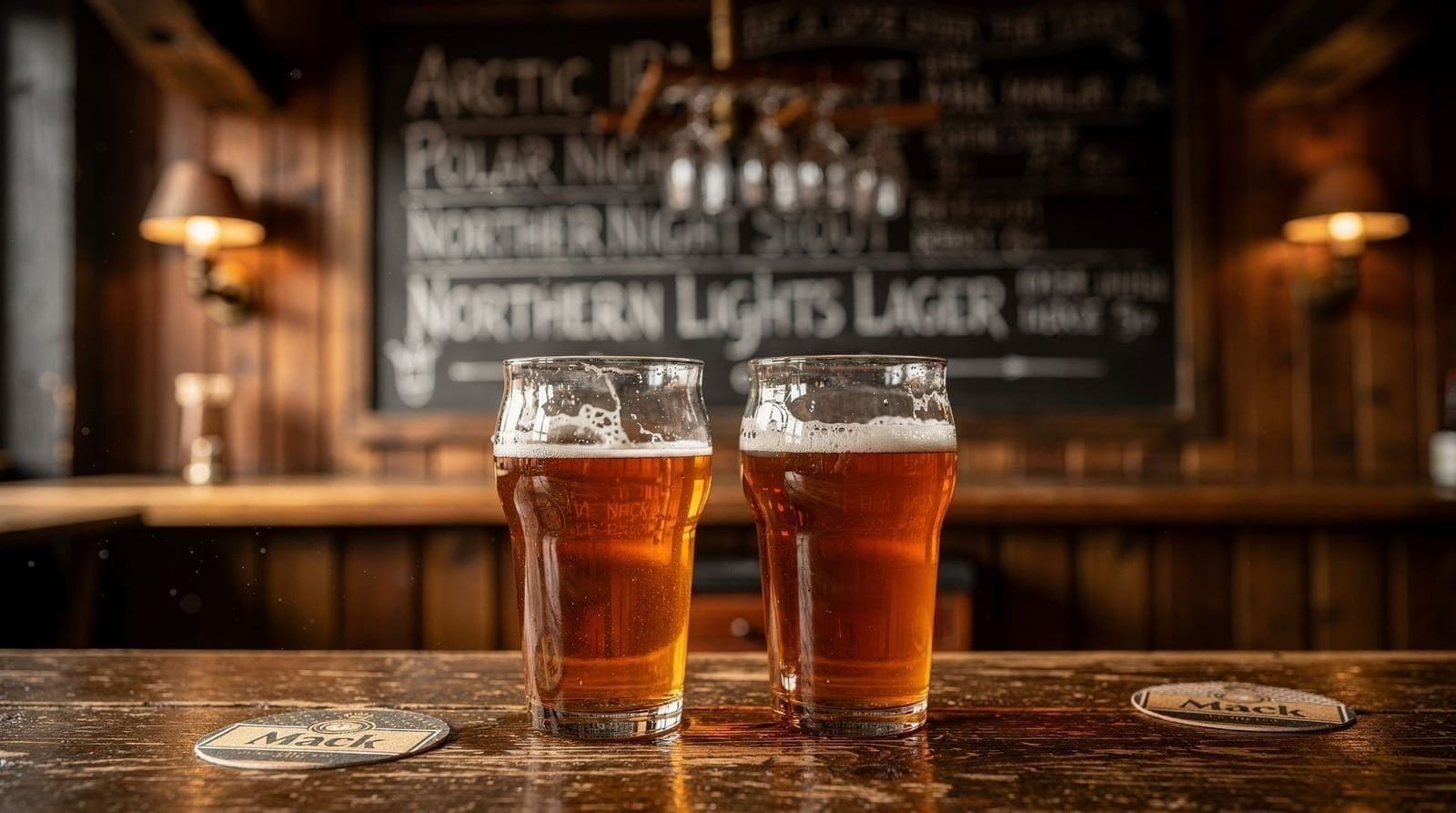
Pairing a meal with a drink matters here too. The craft beer guide and the Mack Brewery and Ølhallen guide cover Tromsø’s brewing scene, which increasingly positions itself alongside Arctic food rather than as a separate activity — several restaurants now pair their tasting menus with local beer flights instead of wine.
A guided food walk as an alternative to restaurant-hopping
A food walking tour with multiple tastings covers reindeer, stockfish, and other regional ingredients in one structured outing.
For visitors who don’t want to research restaurants individually or commit to a single big meal, a guided tasting walk solves the sampling problem directly — smaller portions of several dishes rather than one full plate, plus context on where each ingredient comes from. This is often better value than one expensive sit-down meal if trying breadth matters more than a single perfect dish.
Frequently asked questions about Arctic cuisine in Tromsø
Is reindeer farming cruel?
Norwegian reindeer are semi-wild animals herded by Sami families under a traditional and legally protected system. They are not factory-farmed. The practice has its critics in terms of sustainability, but the animal welfare context is different from industrial livestock farming.
Can I eat Arctic food on a vegetarian diet?
A few elements are available: cloudberry products, foraged mushrooms and herbs, root vegetables prepared in Arctic ways. The core Arctic cuisine is protein-centred. Tromsø restaurants accommodate vegetarians but the specifically Arctic elements are mostly meat and fish.
Is Norwegian food generally good?
Norwegian cooking has improved significantly since the 1990s. In Tromsø, the better restaurants use the extraordinary regional ingredients with genuine skill. The worst restaurants produce uninspired versions of generic European dishes. The Arctic ingredients themselves are exceptional; it depends on who is cooking them.
How do I know if a restaurant uses local ingredients?
Menus at good Tromsø restaurants typically identify where their reindeer, fish, and produce come from. “Lokal” or a specific farm/producer name is a positive sign. Vague descriptions and multi-language laminated menus near the harbour are a negative sign.
What drink goes with Arctic cuisine?
Aquavit (Norwegian spirit made from potatoes and caraway) is the traditional match for reindeer and stockfish. Norwegian craft beer and Mack Arctic Lager are good with fish. Natural wines are increasingly available at the better restaurants. Non-alcoholic: cloudberry juice is pleasant and appropriate.
Is there an Arctic food festival in Tromsø?
The Nordnorsk Matfestival and other seasonal food events occasionally take place in Tromsø. Timing varies by year — check the Tromsø tourism website for the current year’s programme.
Is a guided food tour worth it compared to just booking restaurants myself?
It depends on your priority. A guided tasting walk is better for sampling multiple ingredients in smaller portions without committing to one full-price meal, and it removes the research work of picking restaurants. Booking your own meals gives more control over pacing and lets you linger at a favourite spot — see the where to eat guide if you’d rather plan independently.
Can I try Arctic cuisine on a tight budget?
Yes. Reindeer jerky, cloudberry jam, and caviar in tubes are inexpensive supermarket items that represent genuine Arctic ingredients. The budget eats guide covers cheaper sit-down options too, and the summer fish market at Stortorget is the most affordable way to try king crab specifically.
Top experiences
Bookable activities with verified prices and instant confirmation on GetYourGuide.