King crab in Tromsø — eating, safaris, and honest prices
Tromsø: Arctic Flavors Food Walking Tour
Where can I eat king crab in Tromsø and how much does it cost?
At restaurants (Arctandria, fish market), king crab mains cost 400–700 NOK. At the Stortorget fish market in summer, cooked crab claws are 100–200 NOK. King crab safari tours (fishing, cooking, eating your catch) cost approximately 1 500–2 000 NOK per person.
King crab (kongekrabbe) is one of the most distinctive things to eat in the Norwegian Arctic. The animal is large — adult males can span nearly 1.5 metres leg-tip to leg-tip — and was introduced into the Barents Sea from the Pacific in the 1960s by Soviet marine biologists. It has since established a substantial wild population that Norwegian fishermen now catch under annual quotas. The combination of cold, clean water and a plentiful food supply produces some of the best king crab available anywhere in Europe.
| Where | Stortorget fish market, harbourfront restaurants, or a fjord safari |
| Cost | around 100–200 NOK (market claw) to 1,500–2,500 NOK (safari) |
| Time needed | 30 minutes (market) to 3–4 hours (safari) |
| Getting there | Central Tromsø on foot; safaris include transfer |
| Best time | October–February for peak freshness, available year-round |
What you get with Barents Sea king crab
The meat is in the legs — thick, firm, slightly sweet, and abundant in a large adult male. The preparation in Norway is deliberately simple: steaming or grilling, split open at the table with a small pick to extract the meat, served with melted butter, lemon, and bread. The point is not the cooking but the ingredient.
The difference between this and supermarket crab is material. Wild cold-water king crab tastes markedly better than farmed or warm-water alternatives. If you are going to spend money on one food experience in Tromsø, a king crab meal has a strong argument for being it.
Where to eat king crab in Tromsø
Fish market at Stortorget — most economical
The seasonal fish market (summer, variable days) sells cooked king crab claws for approximately 100–200 NOK, to be eaten standing at the market. This is the lowest-cost way to taste Barents Sea king crab and is entirely authentic — the vendors are local fishermen and fishmongers selling their own catch.
The market is not open every day; hours and days change. Ask at your accommodation or the tourist information for the current week’s schedule.
Arctandria Sjømatrestaurant — most dedicated
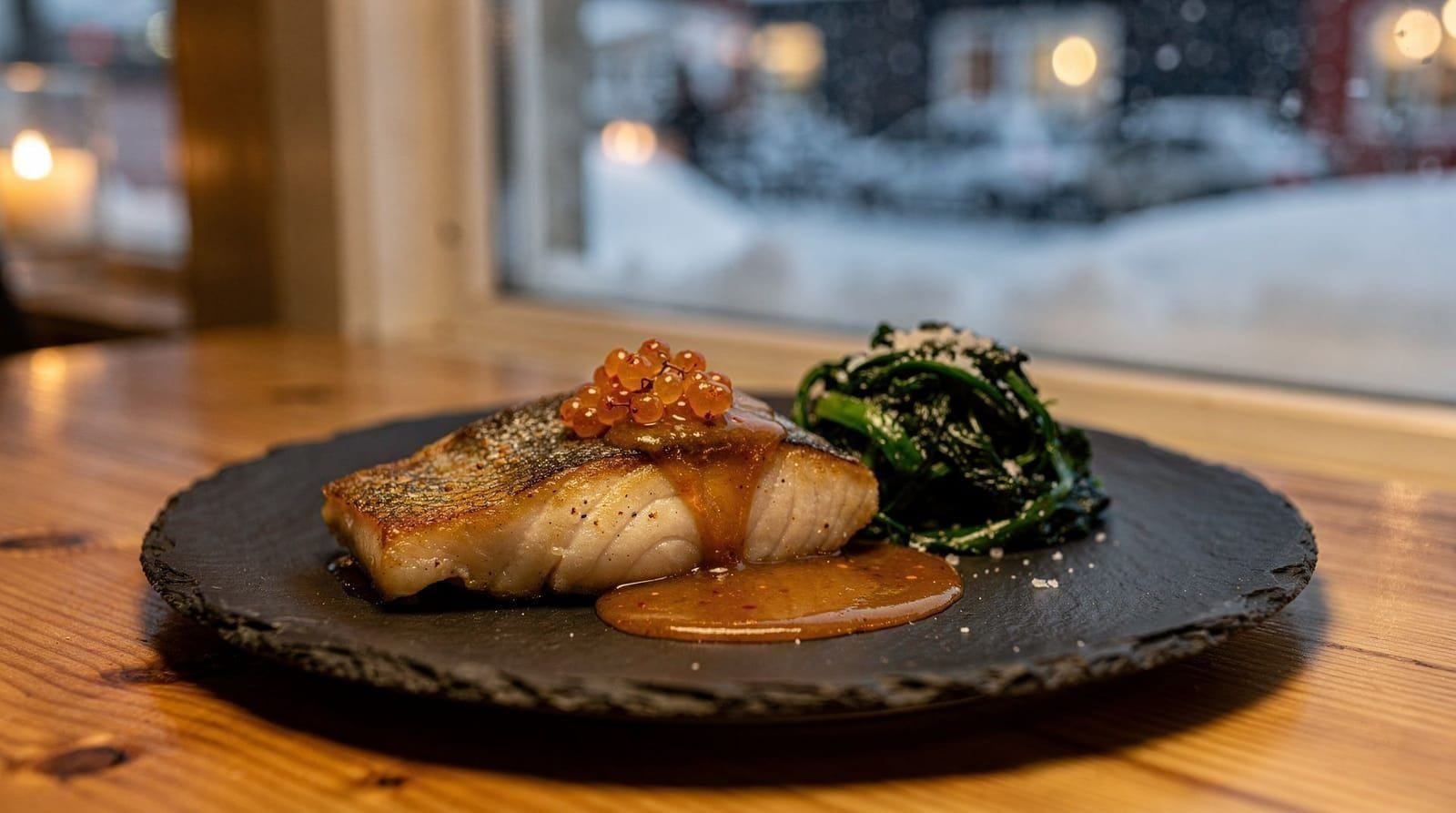
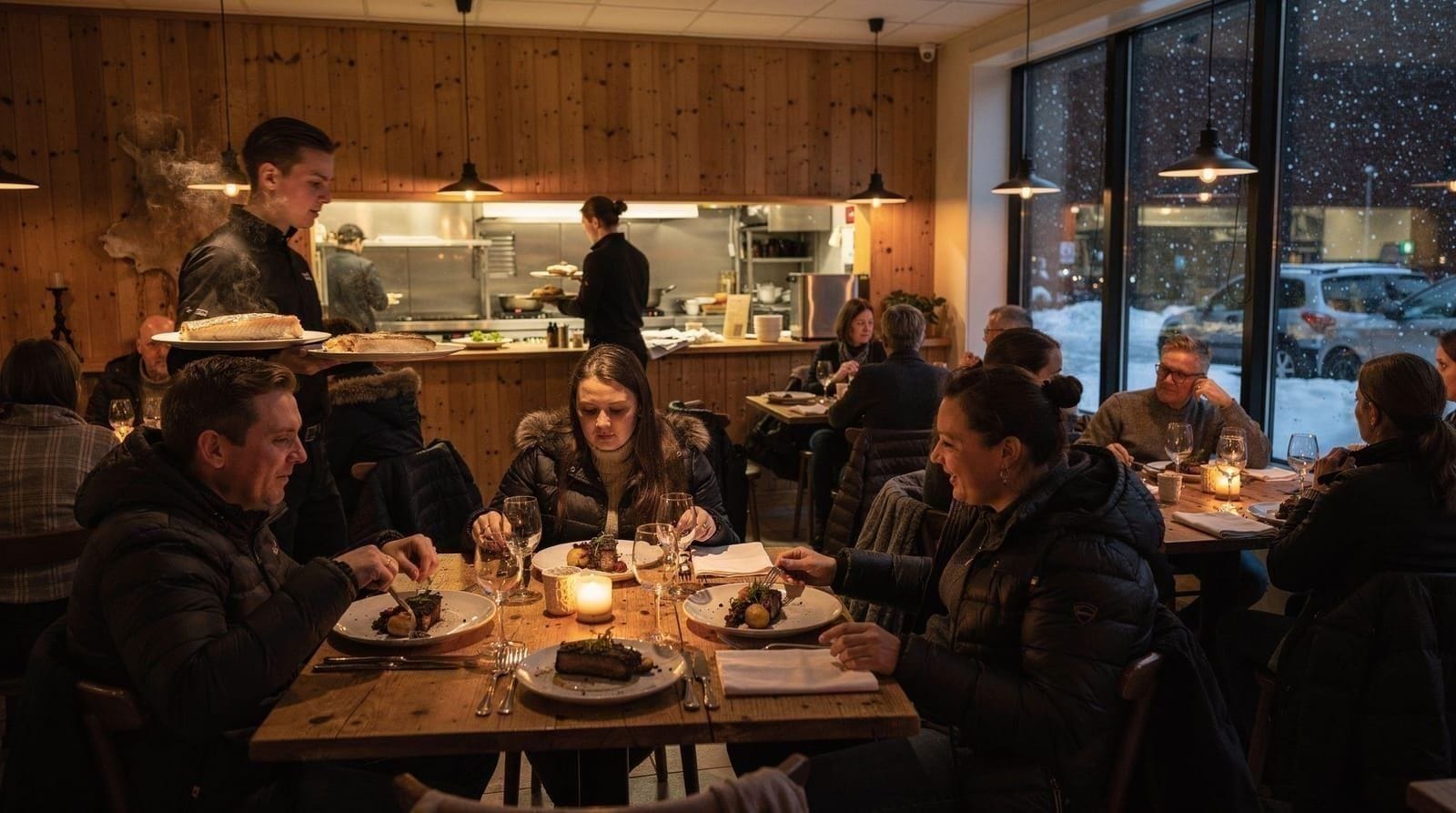
Strandtorget 1, on the waterfront. Arctandria is the most seafood-focused restaurant in Tromsø with the highest concentration of king crab options on the menu. Expect a king crab main course in the range of 500–700 NOK, a half-portion or starter at 300–400 NOK. The room is a converted boat warehouse and the atmosphere is appropriate to the seafood focus.
Booking is recommended in summer. Phone or book through their website.
Vertshuset Skarven — broad menu with crab
Strandtorget, harbourfront. Less specialised than Arctandria but reliable and usually has king crab on the menu in some form. Slightly more accessible pricing for a similar standard of ingredient.
Emmas Drømmekjøkken — modern Norwegian
Kirkegata 8. The menu here is seasonal and changes regularly. King crab appears when in season, handled with more culinary ambition than straightforward butter and lemon. Worth checking the current menu.
King crab safari tours — the experience version
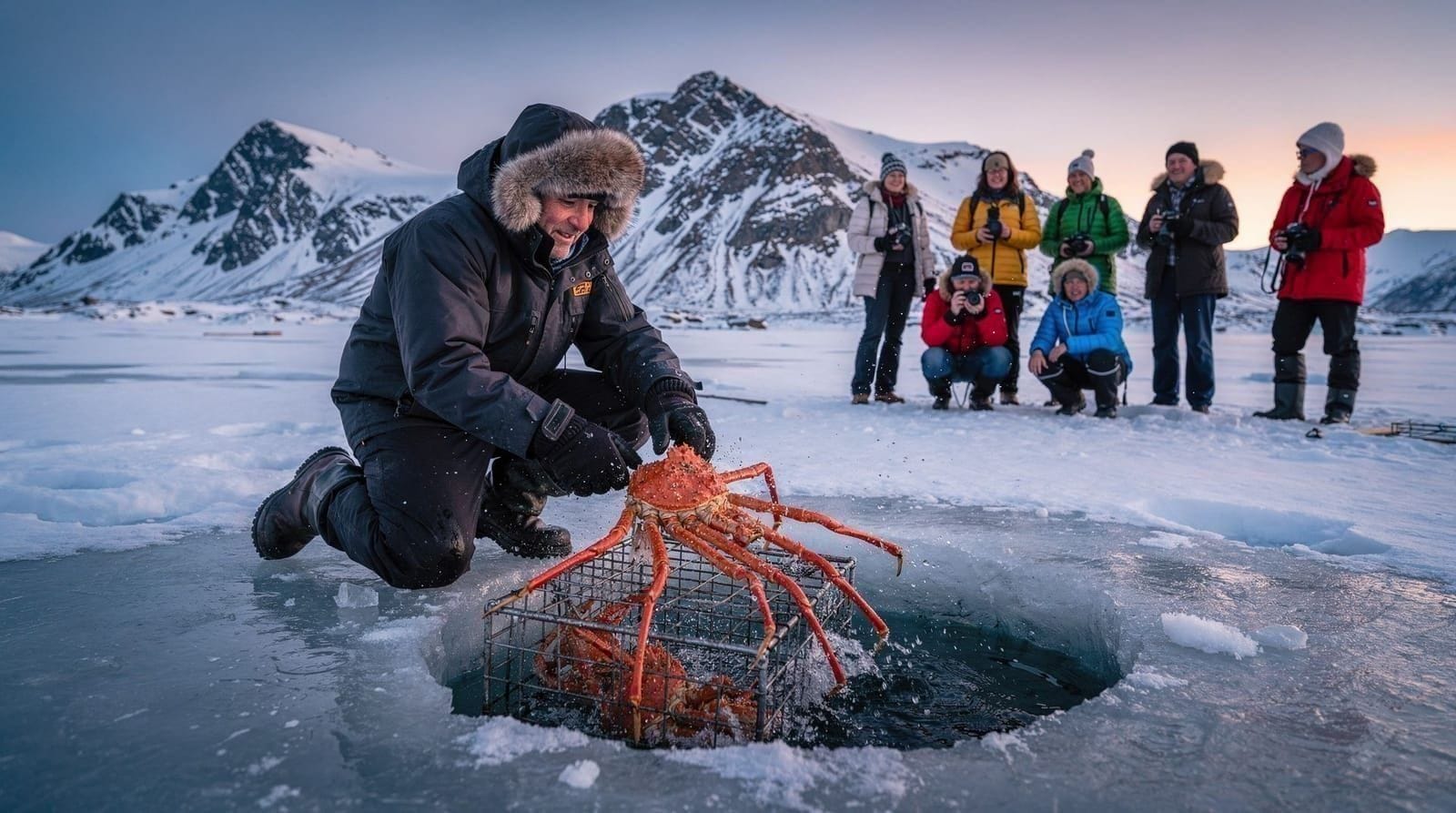
King crab safari tours take you out into the fjords by boat to pull the traps yourself, then cook and eat what you catch at a table by the water. The experience combines a short fjord cruise, some mild physical participation (pulling a heavy trap from depth), and the meal.
Tours run year-round and typically last 3–4 hours including transport. Prices are approximately 1 500–2 500 NOK per person. What you are paying for is the activity and setting as much as the crab itself — eating the same crab at a table in the fjords you just fished is a different experience from a restaurant meal, though the crab itself is equivalent quality.
A food walking tour that includes king crab tasting among multiple Arctic food stops — a more economical way to try it alongside other regional ingredients.
Whether a safari is worth the price depends on your appetite for the activity component. If you want to eat king crab without the boat trip and the pulling of traps, a restaurant is more efficient. If the fishing experience and outdoor setting matter to you, the safari is a legitimate Arctic activity with a meal built in. For the full breakdown of what a safari actually involves — the trap-hauling, cooking, and honest value assessment — see the king crab safari guide.
Cooking with king crab — if you have a kitchen
Some Tromsø apartments and guesthouses have kitchen access. The fish market sells whole king crab and crab sections. A cooked king crab from the market (800–1 200 NOK for a whole crab) serves 2–3 people and is significantly cheaper than a restaurant portion of the same quantity. The preparation is simple: steam for 15–20 minutes, crack the legs, serve with butter and bread.
Practical tips for eating king crab
Timing: The main king crab quota season runs October to January, but restaurants source from storage outside these months and supply is generally available year-round.
Size matters: Ask for a male crab if you want maximum leg meat — females are smaller and most fisheries target males for this reason.
Tools: The restaurant will provide picks and crackers. At the fish market, the vendor typically pre-cracks the legs for you.
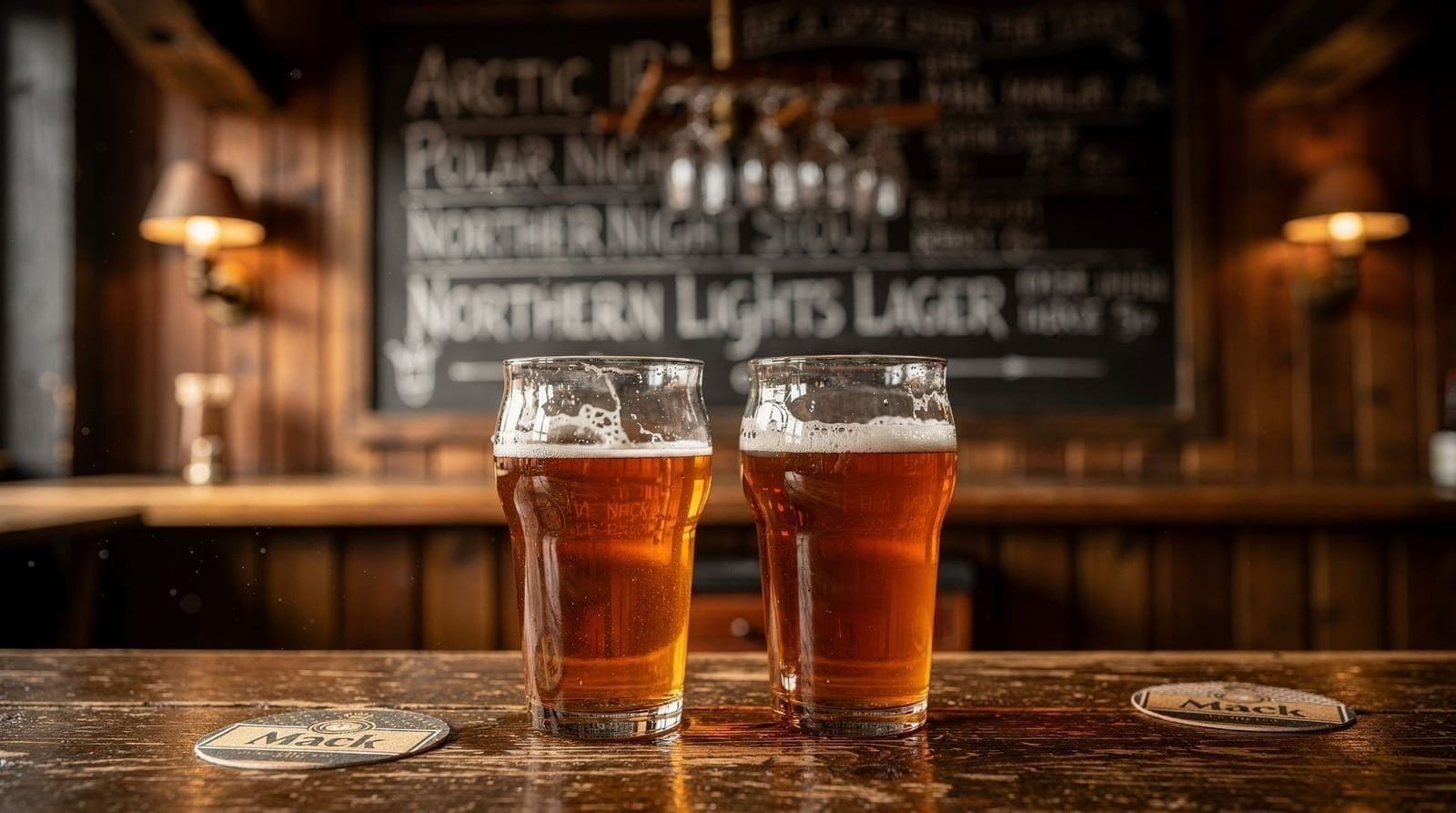
What to drink: Aquavit is traditional with crustaceans in Norway. Cold white wine (Norwegian white if available, or a crisp Chablis-style) is a natural match. Mack Arctic Lager from Ølhallen is a less traditional but pleasant pairing.
The king crab in the Barents Sea — ecological and ethical context
The king crab (Paralithodes camtschaticus) was deliberately introduced to the Barents Sea by Soviet marine biologists in the 1960s and 1970s. The goal was to establish a commercial fishery in Soviet waters. The crab spread beyond the intended area and is now well-established in the southern Barents Sea, including Norwegian and Russian waters.
From an ecological perspective, the king crab is a keystone introduced predator. It feeds on the seafloor — molluscs, sea urchins, polychaete worms, smaller crustaceans — and has disrupted the seafloor ecosystems where it has established in high density. Norwegian research institutions have documented changes in benthic (seafloor) community composition in areas of high king crab concentration.
The Norwegian government manages the fishery as both a commercial operation and a population control measure. The annual quota system is designed to prevent the crab from spreading further west and south along the Norwegian coast, where impacts on existing fisheries (cod, haddock) would be significant. The combination of commercial value and management need makes the Norwegian king crab fishery unusual among introduced species globally.
For visitors: eating Norwegian king crab is not straightforwardly “sustainable” in the way that MSC-certified herring or Norwegian farmed salmon might claim to be. It is also not clearly unsustainable — the fishery serves a management purpose and replaces populations that would be left to expand anyway. This is a more honest framing than either “invasive species you should feel guilty about eating” or “sustainable wild-caught Arctic seafood.”
The crab fishing season in detail
Norwegian king crab quotas are set annually by the Directorate of Fisheries. The main quota fishing period runs approximately October to January for most vessel categories. Outside this period, limited fishing continues for specific vessel types and local fisheries.
The main season timing means that king crab is freshest and most available in Tromsø from October through February — which happens to overlap with peak aurora and whale watching season. A November or December visit to Tromsø combines three reasons to be there: northern lights, whale watching from Skjervøy, and fresh king crab.
In summer, king crab is available in Tromsø restaurants from stored catches. The quality is good but not the immediate freshness of the main season catch. The fish market in summer sells stored king crab alongside the fresh fish; ask the vendor for the catch date if freshness matters to you.
Snow crab versus king crab — a comparison
Snow crab (Chionoecetes opilia) is a second invasive Barents Sea species that established after the king crab and is now harvested commercially. It is smaller than king crab and has thinner legs, but the meat flavour is comparable — sweet, clean, firm. In Norway it is sometimes called snøkrabbe.
The ecological story is similar: introduced, now managed, commercially valuable.
At Tromsø fish markets and restaurants, snow crab typically sells at a lower price than king crab. A half-shell of snow crab legs at the fish market runs 80–150 NOK versus 150–250 NOK for king crab of equivalent meat quantity. The flavour difference is subtle; the texture of king crab is denser and the legs are larger and easier to crack open.
If budget is a constraint, snow crab is a reasonable alternative and the eating experience is similar.
Restaurant vs market vs safari — which to choose
| Best for | Typical cost | |
|---|---|---|
| Fish market (Stortorget) | Budget travellers, quick taste | around 100–200 NOK/claw |
| Restaurant (Arctandria, Skarven) | A proper sit-down meal, no planning ahead | around 400–700 NOK/main |
| Cook it yourself | Groups with kitchen access, best value per gram | around 800–1,200 NOK/whole crab |
| Safari tour | The full activity plus meal | around 1,500–2,500 NOK/person |
None of these is objectively “better” — they answer different questions. If you only want to taste king crab once, the fish market is the cheapest honest introduction. If you want a memorable evening out, a restaurant does it without planning around boat schedules. If you have a kitchen and a group to feed, cooking your own is the best value. Only choose the safari if the activity itself — being on the water, hauling a trap — is part of what you’re paying for.
Pairing king crab with the rest of a Tromsø trip
King crab works naturally alongside several other Tromsø staples. A craft beer from Mack, brewed a short walk from the harbour, is a solid, unpretentious pairing if aquavit or wine isn’t your preference — see the Mack Brewery and Ølhallen guide for the full brewery visit. If you’re planning meals around a broader food budget, the Tromsø daily budget guide breaks down where a crab meal fits against other food costs. And for where to eat generally beyond crab, where to eat in Tromsø covers the wider restaurant scene.
Frequently asked questions about king crab in Tromsø
Is king crab season only in winter?
The main quota fishing period is October–January, but king crab is available in Tromsø restaurants year-round as the catch is stored and managed across seasons. The fish market is the most seasonal source; restaurants are more consistent.
Can I bring king crab home from Norway?
Bringing fresh crab on a plane is impractical. Some shops in Tromsø sell frozen or preserved king crab products that can be transported. The Norwegian food safety regulations apply to imports into other countries — check your destination country’s rules before buying to take home.
Are snow crab and king crab the same?
No. Snow crab (snøkrabbe) is a smaller species, also from the Barents Sea, with thinner legs and slightly different flavour. Both are available in Tromsø and both are good. King crab is larger and more dramatic; snow crab is often less expensive. Some menus offer both.
Is king crab invasive in the Barents Sea?
Yes — it was introduced by the Soviet Union in the 1960s and has since spread well beyond its originally intended range. The Norwegian fishery is partly a population management exercise. The environmental status is genuinely complex: the crab disrupts the seafloor ecosystem where it spreads, but it also supports a significant fisheries industry. This is a legitimate ethical question without a simple answer.
How much meat is in a king crab?
A large adult king crab leg contains 150–250 grams of edible meat. A full king crab (body + all legs) provides enough for 2–3 people as a main course. At a restaurant, a single large leg is typically a generous starter; two legs are a full main course.
Do children enjoy king crab?
The mild, sweet flavour is generally popular with children who eat seafood. The cracking and picking activity at the table is engaging for older children. The price of a restaurant portion may make it impractical for families; the fish market is the more child-friendly and economical introduction.
Is there a king crab restaurant in Tromsø specifically?
Arctandria Sjømatrestaurant is the most seafood-dedicated restaurant and consistently stocks king crab. No restaurant in Tromsø is exclusively a king crab venue in the way that some tourist-destination crab shacks operate elsewhere.
Should I do a safari or just eat it at a restaurant?
Depends on your priorities. If you specifically want the fjord boat trip and trap-hauling experience, the safari delivers that with a meal included. If you just want to eat excellent king crab efficiently, a restaurant or the fish market gives you the same quality crab for considerably less money and no weather dependency.
Top experiences
Bookable activities with verified prices and instant confirmation on GetYourGuide.