Tromsø food scene: what to eat, where to go, what to skip
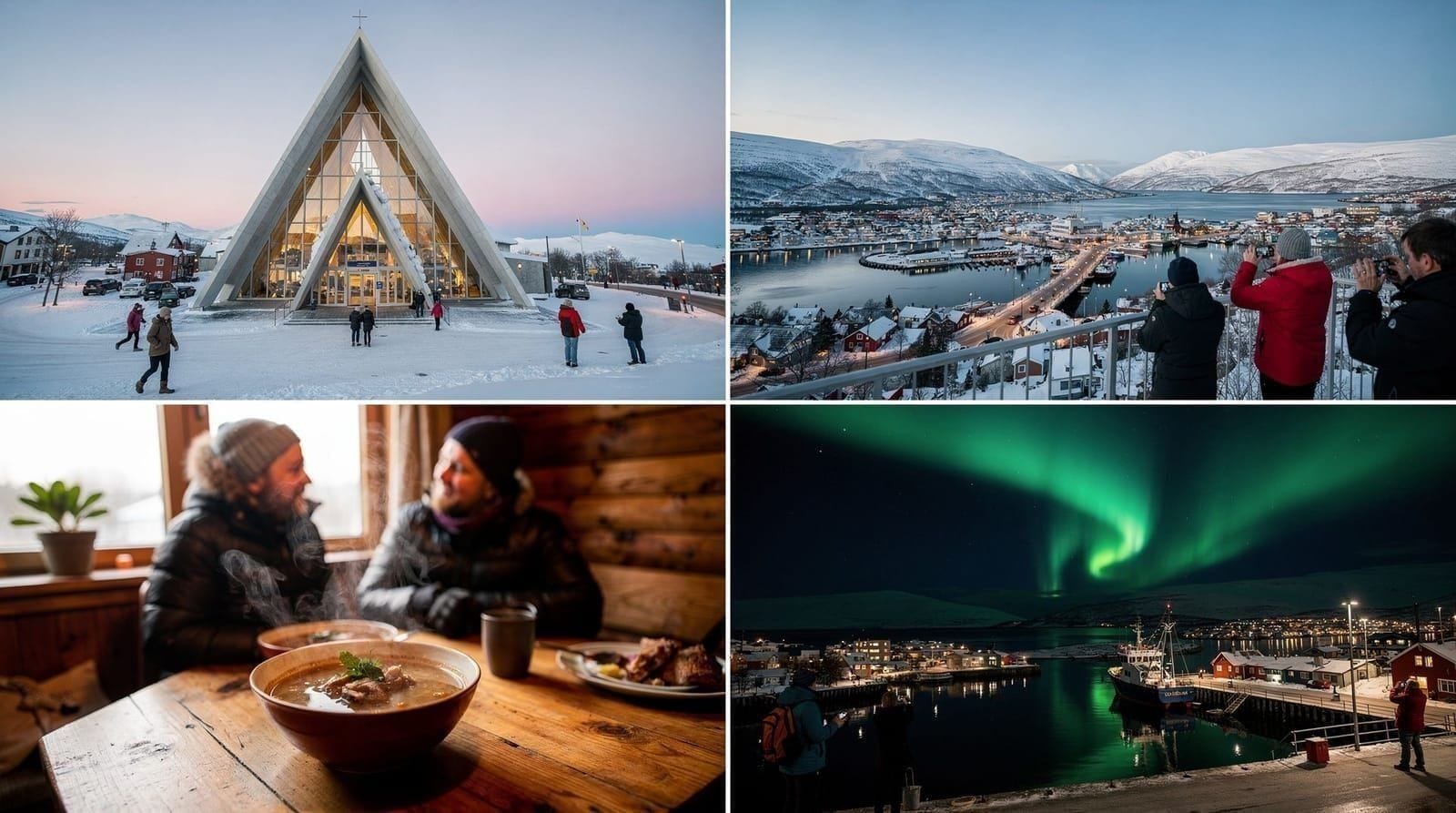
Tromsø is not a food city in the way that Oslo or Bergen are. There are fewer than a dozen genuinely good restaurants in the city, and the tourist-trap density along the harbourfront is high enough that you need a map before you wander in somewhere expensive and mediocre. But the raw ingredients — Arctic char from the fjords, reindeer from the Sami herds, king crab from the Barents Sea, cod that has been drying on Lofoten racks for centuries — are exceptional. The best eating in Tromsø is the best eating in Arctic Norway.
| Where | Storgata and the harbourfront, plus the university district for budget options |
| Cost | Mid-range dinner 250–450 NOK; budget meals 90–190 NOK |
| Splurge | Emma’s Drømmekjøkken tasting menu, 750–900 NOK |
| Book ahead | Yes, for Emma’s and Arctandria dinner in peak season |
| Best value | Self-catering breakfast/lunch, restaurant dinner |
The architecture of an Arctic menu
Most menus in Tromsø worth your attention follow the same logic: a landscape of cold-water fish (cod, halibut, Arctic char, wolffish), small portions of Sami reindeer meat, shellfish (king crab, langoustine, shrimp), and a dessert section heavy on cloudberries and brown cheese. Locally foraged herbs and mushrooms appear in serious kitchens.
The ingredients are typically excellent. The question is whether the kitchen is doing something interesting with them or serving a conventional preparation at a tourist premium.
Where to actually eat
Arctandria (Strandtorget 1) is the reliable baseline for traditional Arctic fish. The bacalao — salt cod in a Mediterranean tomato sauce, a dish with origins in the Hanseatic trade routes that once connected Tromsø to Portuguese markets — is the house speciality and worth ordering. Main courses run 250–350 NOK. The room is warm, the service is competent, and the clientele is a mix of locals and visitors who did their research. Reservation recommended for dinner.
Aunegården in the old timber building near Stortorget is my choice for reindeer burger (220 NOK) and cloudberry dessert (95 NOK) in a genuinely atmospheric setting. The building dates from the 1800s and has retained its wooden interior. It feels specifically like Tromsø rather than like a generic Nordic restaurant.
Skarven on the harbourfront: technically fine, but aimed squarely at tourists and priced accordingly. If you are paying 450 NOK for a king crab main, it should not be a crab that was frozen before reaching the plate. Skarven is not actively bad — it is just the expensive version of something you can eat better elsewhere.
Emma’s Drømmekjøkken (Emma’s Dream Kitchen) on Kirkegata is the most serious kitchen in Tromsø. The tasting menu (750–900 NOK) is genuinely good, showcasing Arctic produce with more technical ambition than any other kitchen in the city. If you have one proper dinner budget to spend, spend it here. Book two weeks ahead in peak season.
Risø Kafé on Storgata serves the best coffee in the city — proper filter coffee, good espresso, and a rotating bean selection from a Norwegian roaster — plus open-faced sandwiches (smørbrød) that serve as an excellent and inexpensive lunch. Expect 90–120 NOK for a coffee and smørbrød.
King crab: the economics
King crab is the premium luxury item in the Tromsø food economy, and it is genuinely excellent — massive claws with sweet, dense meat that requires no sauce. But the price gap between eating it in a restaurant and joining a king crab safari is significant.
In a restaurant, a king crab main costs 400–650 NOK depending on preparation and portion. On a king crab safari, you catch the crab yourself and eat it boiled on the boat — typically included in the 1200–1800 NOK tour price. The safari version is the better experience if you can afford the time; the restaurant version is fine if you just want to eat the crab.
What to avoid: the pre-portioned “king crab starter” served at tourist-adjacent restaurants, which is usually one small claw segment for 180–220 NOK. That is poor value by any measure.
Craft beer and the Mack Brewery legacy
Mack Brewery — the world’s northernmost brewery until it moved production south — still operates Ølhallen on Storgata, a large, unpretentious pub with perhaps twenty taps including Mack lager (80–90 NOK), Arctic Bryggeri’s seasonal offerings, and occasional guest taps from Norwegian craft producers. It is the social centre of Tromsø after dark and one of the few places in the city where you are sitting next to locals rather than tourists.
The Norwegian craft beer scene has reached Tromsø. Smørtorget and Verdensteatret bar both stock a decent selection. Prices are uniformly high by international standards — expect 80–130 NOK for a half-litre, with premium craft beers at the upper end.
Budget eating: the honest reality
Tromsø is expensive even by Norwegian standards. The cheapest sit-down meal you can reliably find is a burger at one of the central pubs (150–190 NOK), a pizza (160–220 NOK), or a kebab near the university area (90–120 NOK). The university district, a 20-minute walk north from the city centre, has a handful of cheaper café options serving students.
The practical budget hack: stock a significant portion of your meals from Coop or Rema 1000 supermarkets. Norwegian supermarket food is genuinely decent — smoked salmon, good bread, skyr (Icelandic-style yoghurt), brown cheese (brunost), and various ready-to-eat cold cuts. Breakfast and lunch assembled from a supermarket saves 200–400 NOK per day, which funds a proper dinner out. The Tromsø daily budget guide covers the full arithmetic.
The food tour option
A guided food walking tour is one of the most efficient ways to eat through the city in a short time. The arctic flavours food walking tour covers 5–7 stops across 3 hours and gives you context for what you are eating — the Tromsø food guide covers the cultural history. Price is typically 700–800 NOK per person, which is reasonable given what you consume.
The downside: food tours optimise for diversity rather than depth. If there is a specific dish you want to eat seriously — a proper king crab meal, Emma’s tasting menu — do that separately.
What locals actually eat
This is the question worth asking. The answer: not what is on the tourist menus. Locals eat pizza at Peppes, kebab from the late-night spots near Storgata, and home-cooked fiskegrateng (baked fish gratin). They eat the same open-faced sandwiches you do, made at home from supermarket rye bread. For a special occasion, they go to Emma’s Drømmekjøkken or perhaps up to Fjellstua restaurant at the top of Fjellheisen, where the 40-minute alpine bus service makes dinner theatrical.
Fjellstua (at the Fjellheisen cable-car summit) serves a reasonable traditional menu in an extraordinary room — floor-to-ceiling windows facing the fjord and the mountains of the mainland, darkness and aurora behind if you are lucky. Expect 280–380 NOK for mains. It is a tourist experience done well, and you can combine dinner with the Fjellheisen cable car itself for a single evening out.
Sami food and where to find it properly
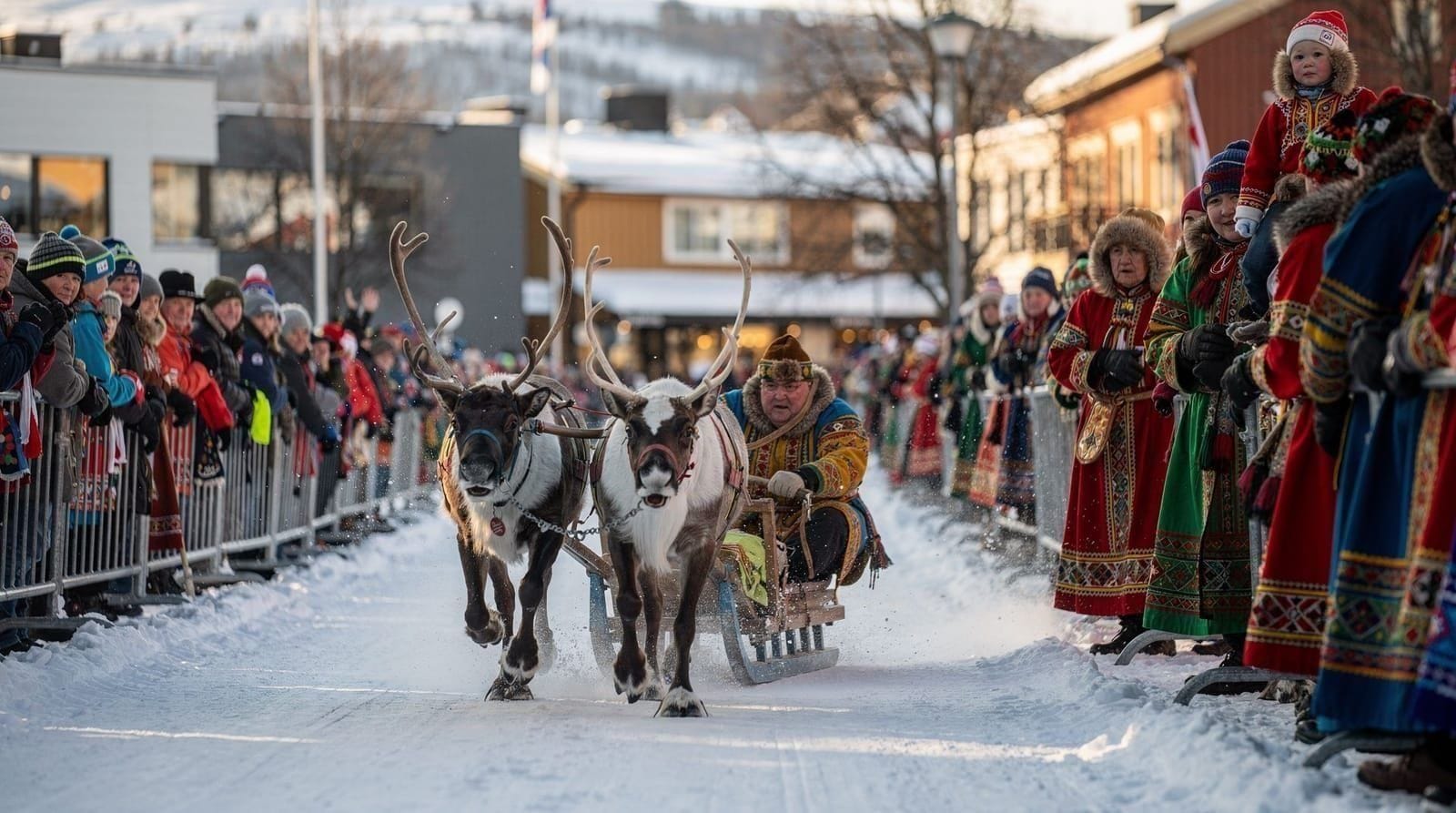
Reindeer appears on most menus, but a genuinely Sami culinary experience is a different thing from a reindeer main course in a city restaurant. The Sami food in Tromsø guide covers the distinction — bidos (reindeer stew), suovas (smoked reindeer), and the cultural context that a standard restaurant plate leaves out. A reindeer camp visit that includes a proper Sami meal, cooked over an open fire in a lavvo, is the closest most visitors get to this without a personal connection to a herding family, and it pairs naturally with a reindeer feeding experience.
Book a Sami reindeer camp visit with cultural lunchBreakfast and coffee culture
Tromsø’s café scene is small but genuinely good. Risø Kafé on Storgata has already been mentioned for its coffee; Smørtorget is the other reliable option, particularly for a slower breakfast with proper filter coffee and pastries. Hotel breakfast buffets are typically included and substantial enough to skip lunch — worth factoring into your daily food budget, since a hearty hotel breakfast can shift your only other real meal to dinner. If your hotel does not include breakfast, budget 90–150 NOK for a café breakfast rather than assuming it will be cheap.
Frequently asked questions about Tromsø food
What is the signature dish of Tromsø?
Arctic char (røye) and reindeer (reinsdyr) are the most distinctively northern dishes. King crab is the premium luxury item. Bacalao at Arctandria is the most historically interesting local dish.
How much should I budget for food per day in Tromsø?
A realistic mid-range budget: 150–200 NOK for breakfast (café), 100–150 NOK for lunch (smørbrød or supermarket), 300–450 NOK for dinner (mid-range restaurant). Total: 550–800 NOK per day. Budget options with more supermarket reliance: 300–400 NOK.
Is Tromsø vegan/vegetarian-friendly?
Moderately. The better restaurants offer at least one solid vegetarian main. Vegan options are less reliable outside cafés. Arctic cuisine is heavily animal-protein based.
When is the best time for fresh fish in Tromsø?
Winter cod season runs December–April and is when bacalao and salt-cod dishes are at their peak freshness. King crab is available year-round but tours operate most actively in winter.
Is Emma’s Drømmekjøkken worth the price?
For a special occasion dinner, yes. The tasting menu is the most ambitious cooking in Tromsø and the produce is genuinely excellent. Book well ahead.
Where can I try genuine Sami food, not just reindeer on a menu?
A Sami reindeer camp visit that includes a cultural lunch cooked in a lavvo is the closest most visitors get without a personal connection to a herding family. See the Sami food guide for the fuller picture, including which restaurant dishes are genuinely Sami-influenced versus generically “Arctic.”