Reindeer feeding experience near Tromsø — what it is and whether it's worth it
Tromsø: Reindeer Feeding and Sami Cultural Experience
What is a reindeer feeding experience near Tromsø?
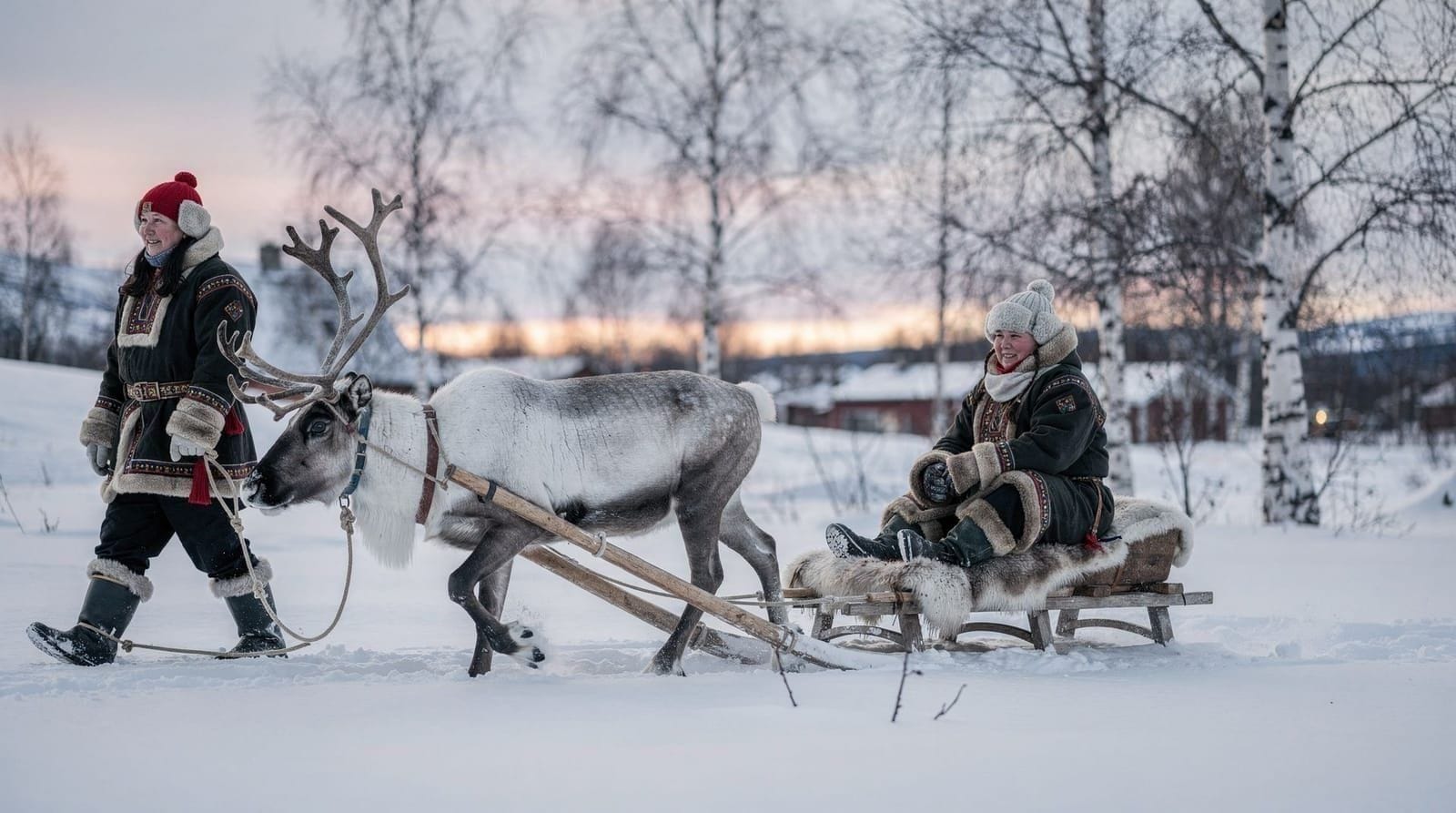
A structured visit to a Sami reindeer camp where you hand-feed reindeer with dried pellets or lichen, interact with the animals at close range, and learn about reindeer herding from a Sami guide. Most experiences last 1–2 hours and cost 600–1,200 NOK. Shorter and cheaper than full sledding packages, and suitable for all ages.
Bottom line: A reindeer feeding experience is the shorter, cheaper, and less physically demanding version of the full Sami reindeer experience. The interaction with the animals is the same; the sledding and extended lavvo meal are absent. At 600–1,200 NOK versus 1,500–2,500 NOK for full packages, it is the right choice for budget-conscious visitors or families with limited time.
| Where | Sami reindeer camps around 20–40 min from Tromsø centre |
| Cost | around 600–1,200 NOK per adult |
| Time needed | 1–2 hours on site |
| Getting there | Included transfer, or self-drive from Tromsø |
| Best time | November–March, though summer options exist |
What happens on a reindeer feeding experience
Unlike the full reindeer sledding package (which typically runs 2–4 hours), a pure feeding experience is usually 1–2 hours. Here is the realistic sequence:
Transfer and arrival (variable): Some experiences depart from Tromsø by transfer (15–30 minutes); others are walkable or easily reached by rental car from Tromsø.
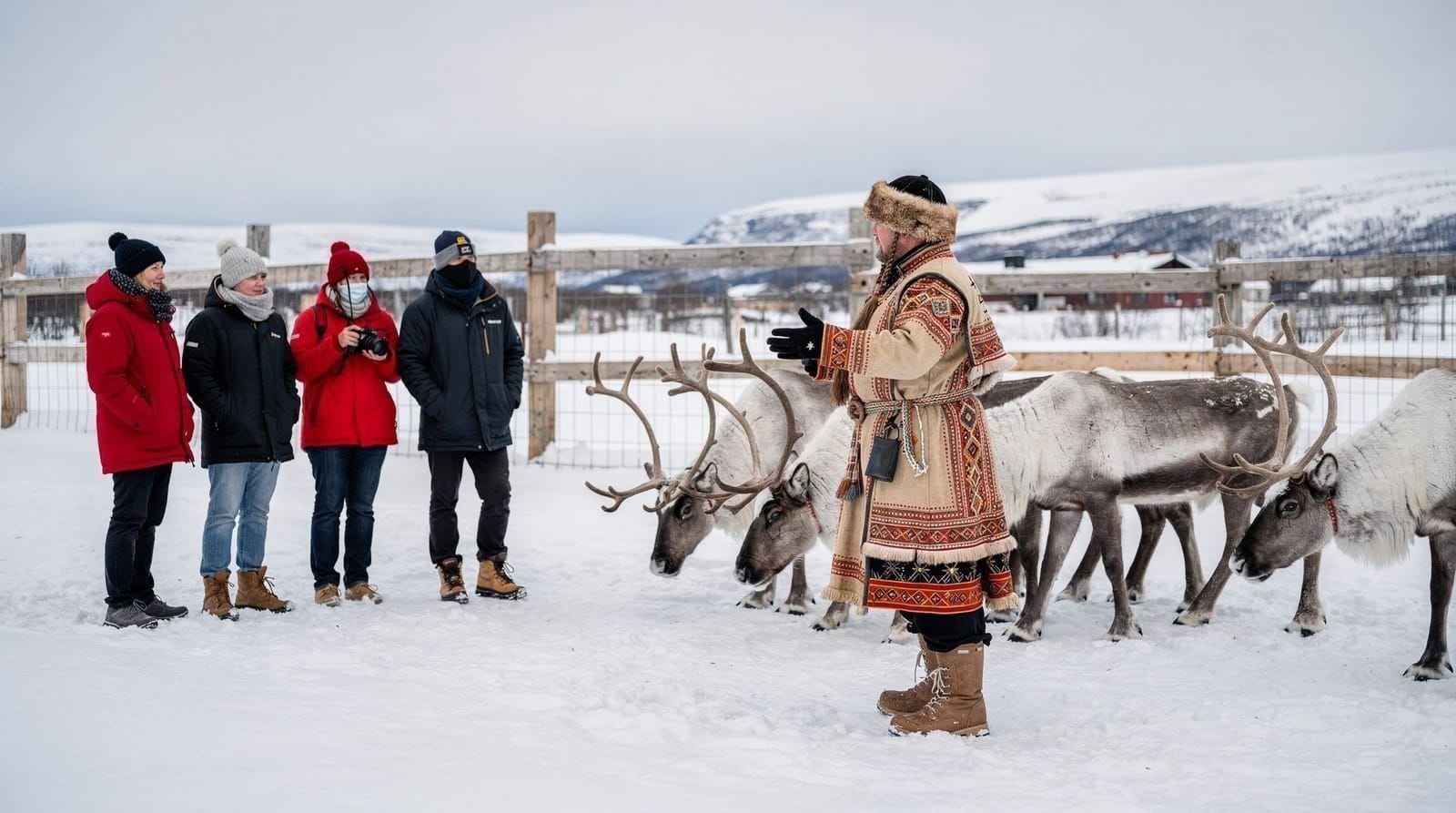
Introduction to the herd (15–20 minutes): The Sami guide introduces the reindeer — typically 5–15 animals are in the accessible enclosure or adjacent area. You learn the names, the age and sex of key animals, their role in the herd, and the basics of reindeer biology that make them adapted to Arctic conditions (dense, air-trapping fur; wide hooves that act as snowshoes; the ability to see UV light, which helps them find lichen under snow).
Feeding and interaction (30–45 minutes): Each participant receives dried feeding material (pellets, compressed lichen). Approach technique is demonstrated — slow movement, open palm, low voice. Reindeer approach in their own time; the guide shows how to position yourself to be non-threatening.
The tactile experience of a reindeer eating from your palm — the warm muzzle, the insistent nudging if your hand is slow — is something children and adults respond to genuinely, not just performatively for photos.
Photography and questions (15–20 minutes): Guides help with positioning for photos. Time for open questions about reindeer herding, Sami life, the specific animals in front of you.
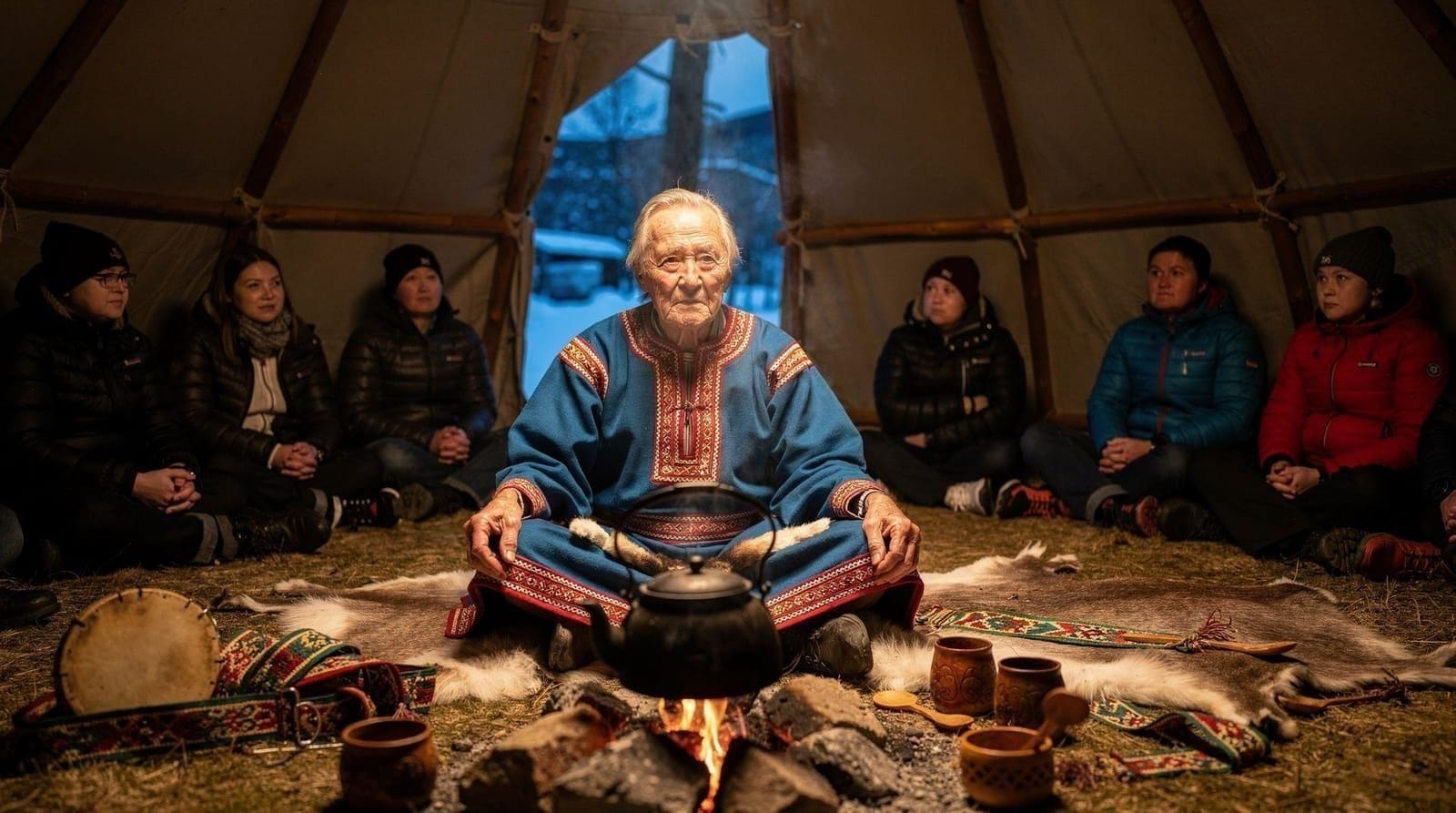
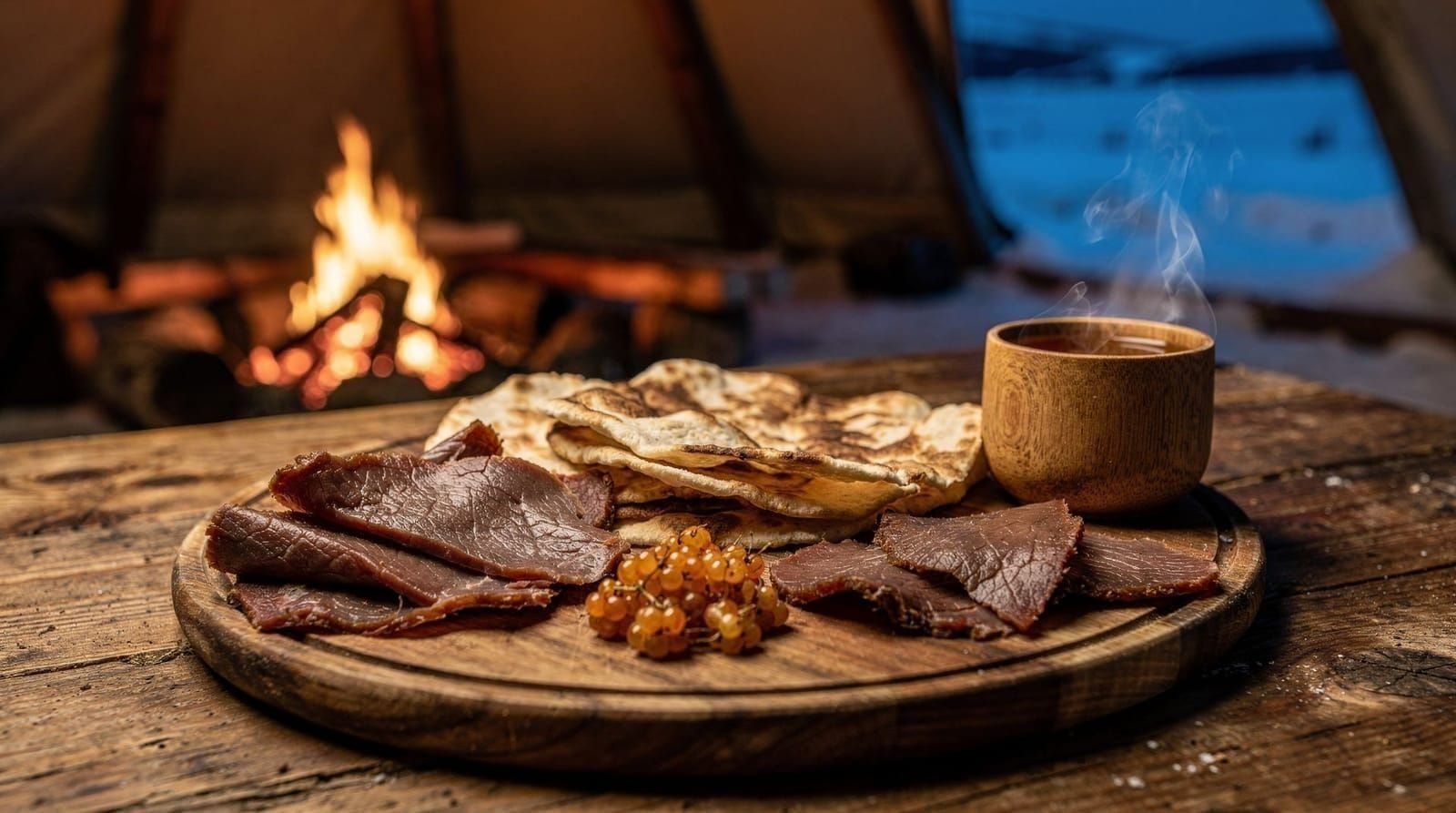
Lavvo refreshments (at some camps, 15–20 min): Many operators include brief time in a lavvo with coffee, tea, and simple food (dried reindeer meat, biscuits, flatbread). This is shorter than the full cultural tour but provides the lavvo atmosphere.
Reindeer feeding and Sami cultural experience — book hereThe animals themselves
Tromsø-area reindeer (Rangifer tarandus tarandus, the wild reindeer subspecies of northern Europe) are smaller and stockier than caribou of North America. They weigh 80–180 kg depending on sex and season; females are smaller. In winter their coats are thick and grey-brown, almost cream on the neck. The fur has a distinctive warm, slightly musty scent.
Antler presence in winter:
- Adult males: antlers shed in November–December. They are antlerless by the time most visitors arrive.
- Females: retain antlers through winter and shed them in spring after calving. The only antlered reindeer you see in November–February are typically females.
- Young males: shed antlers in late autumn, slightly later than adults.
The iconic Christmas image of a male reindeer with large antlers in winter is technically incorrect — adult males are antlerless in December. Real December reindeer antlers are on females.
Who this experience suits
Best for:
- Families with children of any age — the close animal interaction is extraordinary for children
- Budget-conscious visitors who want the Sami reindeer experience without the full package cost
- Visitors with limited time (1–2 hours fits more easily into a busy itinerary than a 3–4 hour sledding day)
- People who want genuine animal interaction without athletic activity
- Those combining with other Tromsø activities on the same day
Less suited:
- Those wanting a deep cultural learning experience (the full lavvo cultural tour is better for this)
- Anyone specifically wanting the sledding element (a non-negotiable part of the full package)
- Those in Tromsø for only one day who could fit in the more comprehensive experience instead
Price guide
- Pure feeding and interaction experience (60–90 min): 600–900 NOK per adult
- Feeding with brief lavvo refreshments (90–120 min): 800–1,200 NOK per adult
- Children under 4: free or minimal charge (operators vary)
- Children 4–12: 400–700 NOK typically
These prices are significantly lower than full reindeer sledding packages (1,500–2,500 NOK) and reflect the shorter duration and absence of the sledding element and full traditional meal.
What to wear
This is an outdoor winter experience. Dress appropriately for standing outside at -5°C to -15°C for 30–45 minutes:
- Thermal base layers
- Insulating mid-layer
- Windproof outer jacket and trousers
- Warm waterproof boots with good grip (you will be standing in snow)
- Hat, gloves, neck gaiter
The reindeer enclosure is typically on flat, snowy ground. You do not need specialist outdoor gear, but standard city winter clothing (thin coat, fashion boots) will not be warm enough.
See what to bring whale watching for a general cold-weather clothing reference that applies here too.
Ethical notes
The reindeer in feeding experiences live in managed conditions associated with working herds. This is not the same as reindeer in a petting zoo — these animals are typically part of functioning herding operations and are accustomed to human contact as a natural result of their role in the herd.
Responsible operators do not overcrowd enclosures, limit visitor numbers to avoid overwhelming the animals, and ensure animals can withdraw from human contact if they choose. These are indicators of good practice — not all operations are equally attentive.
See Sami tourism ethics for the broader ethical framework for choosing Sami cultural tourism operators.
Feeding vs sledding vs the full cultural tour
Three related experiences get confused with each other, and picking the wrong one for your priorities is the most common regret we hear about. Use this to match the experience to what you actually want:
| Experience | Duration | Typical price | Best for |
|---|---|---|---|
| Pure feeding | 1–2 hours | around 600–1,200 NOK | Families, tight schedules, budget |
| Reindeer sledding | 2–4 hours | around 1,500–2,500 NOK | Those who want the active, physical element |
| Full Sami cultural tour | 3–5 hours | around 1,800–2,800 NOK | Visitors prioritising cultural depth over activity |
If you are unsure, feeding is the safer choice for a first-time visit with young children, while sledding suits anyone who wants a more memorable, active outing. Combining both on separate days works well on a longer trip — see the 4-day Tromsø aurora itinerary for how that fits alongside northern-lights evenings.
Combining with other Tromsø activities
A reindeer feeding session is short enough to pair with a second activity the same day. Many visitors combine it with the Fjellheisen cable car for city views in the afternoon, or with traditional Sami food in town afterwards to extend the theme. Families travelling with children specifically should also check dog sledding for families, which has a similar low-intensity, high-payoff profile and is often booked as an alternative on the same trip.
Frequently asked questions about reindeer feeding near Tromsø
Can I do a reindeer feeding experience on a rainy or windy day?
Reindeer feeding happens outdoors and runs in most winter weather. Light snow, overcast skies, and moderate cold do not affect the experience. Genuine blizzard conditions (Beaufort 7+ wind, heavy horizontal snow) may lead to shorter sessions or schedule adjustment. Operators will notify you of changes.
Do reindeer behave differently in groups of visitors?
Some reindeer are curious about new visitors and approach confidently; others are more cautious and need more time. A good guide manages the group to avoid crowding individual animals and gives more cautious animals space to participate at their own pace. Do not crowd or follow a reindeer that is moving away from you.
Is there a best time of year for the reindeer feeding experience?
Winter (November–March) is the most atmospheric and practical for visiting the lowland winter camps where animals are accessible. Summer feeding experiences exist but the setting is different (mountain summer pastures) and access is sometimes more complex. The reindeer themselves are no more or less interesting in any season.
Can I buy reindeer products at the camp?
Some camps have small shops selling reindeer hide items, antler jewellery, dried reindeer snacks, and traditional Sami craft items (duodji). These are genuine craft items from working herding communities, not mass-produced souvenirs. Purchasing them directly supports Sami artisans.
Is there a difference between the feeding experience and the “reindeer ranch” tour?
Some operators use different names (camp, ranch, farm) for essentially similar experiences. The key differentiators are group size, cultural content, and whether a Sami guide explains the herding context. Ask these questions regardless of what the experience is called.
Are there combined northern lights + reindeer experiences?
Yes. Evening versions of reindeer experiences (departing at dusk, around 17:00–18:00 in winter) include time in the lavvo watching for potential northern lights after the reindeer interaction. These are popular and book quickly. See reindeer camp dinner and northern lights for the dedicated guide.
Should I choose feeding or full sledding if I only have time for one?
If your priority is the animal contact itself, feeding delivers nearly the same core moment for a lower price and shorter time commitment. Choose reindeer sledding instead if being pulled across snow by the herd is specifically what you came for — the sledding itself is not part of the feeding-only format.
Is booking in advance necessary for reindeer feeding?
Booking a day or two ahead is recommended, especially in the December–February peak season when camps run limited daily slots and transfers fill up. Spontaneous same-day booking sometimes works outside peak weeks, but it is not guaranteed.
Top experiences
Bookable activities with verified prices and instant confirmation on GetYourGuide.