Sami food near Tromsø — traditional dishes, where to eat, and what to try
Tromsø: Reindeer Camp and Sami Cultural Tour with Lunch
What is traditional Sami food and where can I try it near Tromsø?
Traditional Sami food centres on reindeer (prepared as stew, dried, or smoked), Arctic fish (particularly dried cod and arctic char), wild berries (cloudberries, crowberries), and fermented or preserved ingredients adapted for nomadic life. You can try it at Sami reindeer camps, some Tromsø restaurants, and at the Tromsø market.
Where to start: The best place to taste genuine Sami food near Tromsø is at a Sami reindeer camp during a cultural tour. The lavvo meal — bidos stew, flatbread, cloudberry jam, reindeer coffee — is served in the most appropriate context and is consistently good. Tromsø restaurants also serve reindeer dishes, but the camp setting adds something that plates alone cannot.
| Where | Reindeer camps (lavvo meal), Tromsø restaurants, Tromsø Mathall market |
| Cost | around 280–480 NOK for a restaurant reindeer main; lavvo meal included in tour price |
| Time needed | 30–60 min for a restaurant meal; included in a half-day camp tour |
| Getting there | Central Tromsø on foot; camps by included transfer |
| Best time | Year-round; mid-August for fresh cloudberries |
The foundations of Sami food culture
Sami cuisine developed over thousands of years in one of the world’s most demanding food environments. North of the Arctic Circle, where agriculture was impossible for most of history and the growing season (if it exists at all) is measured in weeks, food strategies focused on maximum nutrition density, long preservation, and using every part of available animals.
The primary protein sources in traditional Sami diet:
Reindeer: The most important. Every part of the animal was used — muscle meat, organs (liver, kidney, heart), blood, bone marrow, hide, and sinew. Preparation methods were adapted for a nomadic lifestyle: boiling (in bone broth), drying (in cold Arctic air), smoking, and fermentation.
Fish: Coastal Sami and fjord-dwelling Sami communities relied heavily on cod, arctic char (røye), salmon, and sea fish. Dried cod (stockfish) was a staple and an important trade good. Fresh-caught char from mountain lakes remains significant in summer herding culture.
Wild birds: Ptarmigan (fjellrype), grouse, and various waterfowl were hunted seasonally. Ptarmigan soup is a traditional Sami dish still made by some families.
Wild plants and berries: Cloudberries, crowberries (krekling), bilberries, and arctic raspberries were gathered intensively in late summer and preserved as dried berries or (more recently) jam. Some wild roots and greens were used in spring and summer.
This is not a cuisine of abundance or variety by agricultural standards. It is a cuisine of precision and depth — extracting maximum nutrition and flavour from a limited but specific set of ingredients.
Key dishes to know and try
Bidos (Northern Sami: biddus)
The signature Sami dish. A bone-based broth made from reindeer ribs, neck, or other fatty cuts, simmered for several hours until the meat falls from the bone. The broth becomes rich with marrow and collagen. Sometimes vegetables (onion, swede, carrot in modern versions) are added; traditional versions are meat and broth only.
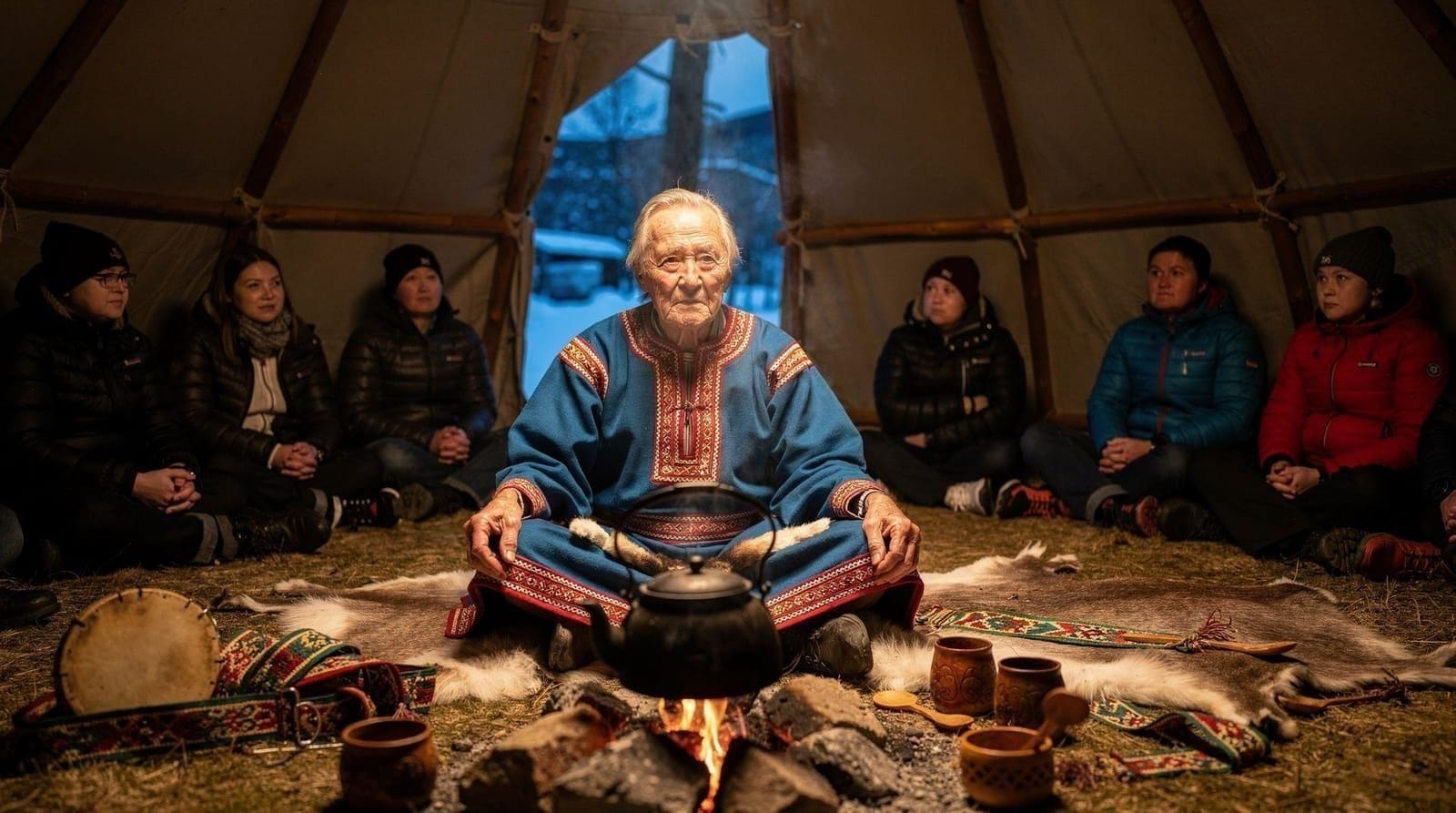
Bidos is served in a bowl, bone-in, with flatbread (gáhkku). The eating involves pulling meat from bones and drinking the rich broth. In a lavvo with an open fire in February, this is one of the most deeply satisfying meals you will encounter anywhere.
Sami cultural tour with traditional lavvo lunch including bidosSuovas (cold-smoked dried reindeer)
Suovas is reindeer meat preserved by cold-smoking and air-drying, traditionally done over birch wood. The flavour is intensely concentrated — smoky, slightly sweet, with the characteristic clean reindeer taste amplified. It is eaten sliced thin, often with flatbread and butter, or pan-fried briefly to warm it.
You can buy suovas at Tromsø’s market hall or at some Sami camp shops. It is an excellent travel food — dense, nutritious, and shelf-stable for several weeks.
Gáhkku (flatbread)
Traditional Sami flatbread, baked directly on a flat stone or pan over an open fire. Slightly chewy, not unlike a thick flour tortilla but with a faint smokiness from the open-fire baking. The everyday bread of traditional Sami nomadic life — quick to prepare, requiring only flour, water, and fat, and baked without an oven.
At lavvo meals, guides typically bake gáhkku fresh over the fire while the group gathers. It is served with butter and cloudberry jam.
Luossabiehtár (salmon cream)
A preparation of smoked or salted salmon blended with cream, traditionally used as a spread on flatbread. Found at some Sami cultural cafés and markets. The combination of fatty cured salmon with fresh cream is simple and very good.
Cloudberry preparations
Cloudberries (lakkabær in Northern Sami, multer in Norwegian) are the defining Arctic berry. Their season is brief — mid-August for most of the Tromsø area — and they cannot be commercially cultivated, which keeps them scarce and expensive.
At lavvo meals they appear as jam with flatbread. In restaurants they may appear as a dessert with whipped cream (multekrem in Norwegian), as a sauce with game meat, or in a cream tart. The flavour is complex — simultaneously sweet, sour, and floral, with no direct comparison in other fruit.
Reindeer liver and blood sausage
More challenging for uninitiated visitors but worth trying: reindeer liver is milder than beef liver, very tender, and traditionally prepared simply — sliced thin and quickly pan-fried with onion and butter. Blood sausage (blodpølse) made with reindeer blood is a traditional preservation food, similar in concept to European black pudding.
These are not typically the centrepiece of tourism meals but may be offered at more culturally substantive experiences or at specialist Tromsø restaurants.
Where to find Sami food in Tromsø
At reindeer camps (best option)
The most genuine and best-value Sami food experience is the lavvo meal at a reindeer sledding or cultural tour. The food is fresh, prepared by people connected to the herding culture, and eaten in the most appropriate context. The combination of bidos, gáhkku, cloudberry jam, and reindeer coffee (boiled coffee with dried reindeer meat added — a traditional Sami herder’s drink) is the correct Sami food experience.
Tromsø restaurants with Arctic/Sami menus
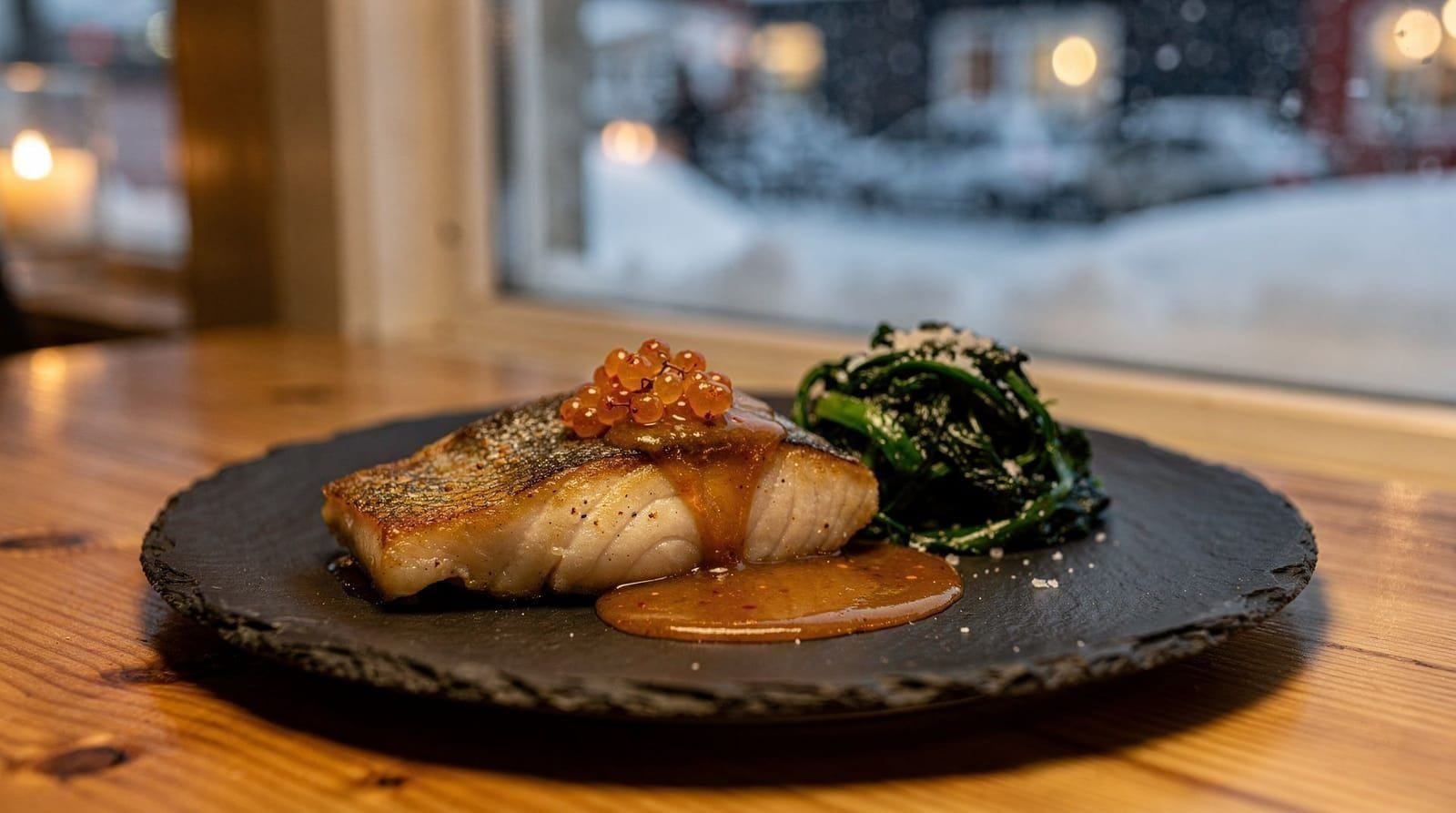
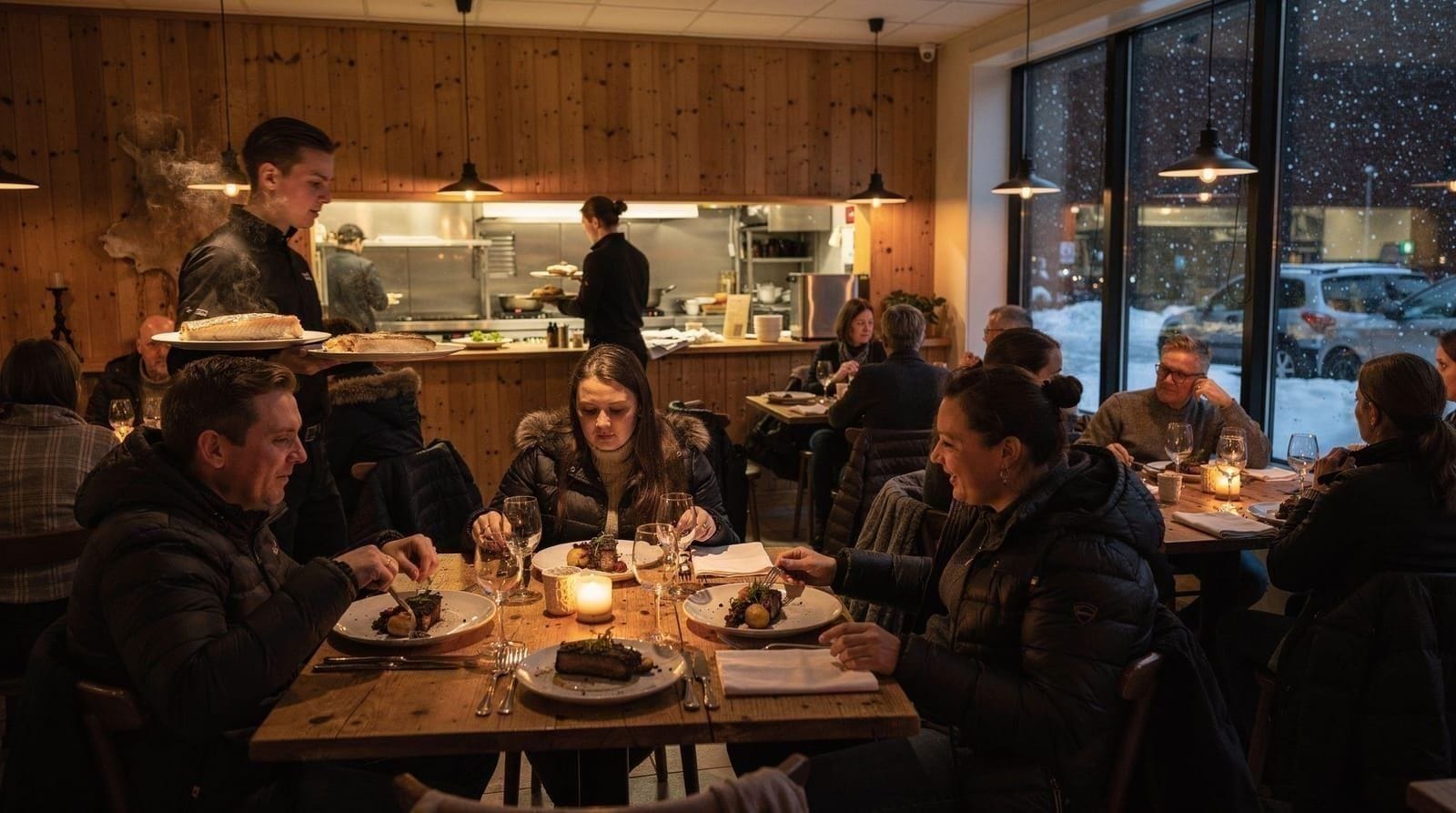
Several Tromsø restaurants serve reindeer and Arctic ingredients as part of their menu. Arctandria (Strandtorget) focuses on northern Norwegian and Arctic ingredients. Emma’s Dream Kitchen (Emma Drømmekjøkken), while no longer operating in its original form, influenced a generation of local cooking focused on northern ingredients. Ask at your hotel for current recommendations as restaurant turnover makes specific naming unreliable — the key criteria are “serves reindeer” and “uses local Arctic suppliers.”
Reindeer dishes in restaurants typically cost 280–480 NOK for a main course — not cheap, but reflecting the actual cost of a premium, locally-sourced, humanely-raised meat.
Tromsø market (Tromsø Mathall)
The market hall in central Tromsø sells suovas, dried reindeer products, cloudberry jam, arctic char, and occasionally fresh or frozen reindeer cuts. This is the best place to buy Sami food products to take home (within customs restrictions).
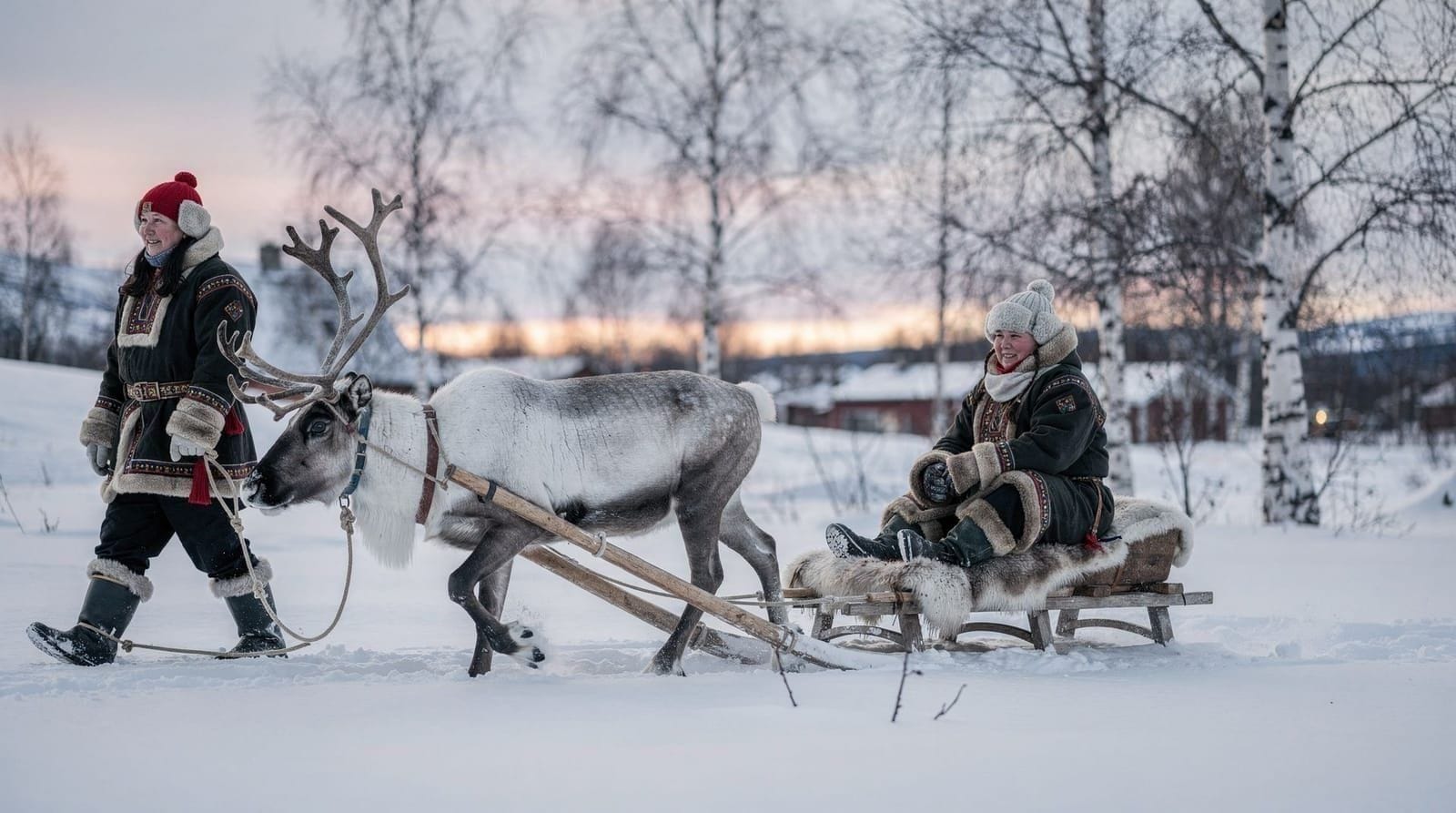
Reindeer sledding with evening dinner in lavvo — full Sami food experienceWhere to try it: camp vs restaurant vs market
| Option | What you get | Typical cost | Best for |
|---|---|---|---|
| Reindeer camp lavvo meal | Full bidos meal with cultural context, part of a tour | Included in tour price (around 1,500–2,800 NOK) | The most authentic single experience |
| Tromsø restaurant | À la carte reindeer dishes, no cultural framing | around 280–480 NOK per main | A quick, high-quality meal in the city |
| Tromsø Mathall market | Suovas, cloudberry jam, dried products to take home | Varies by product | Souvenirs and self-catering |
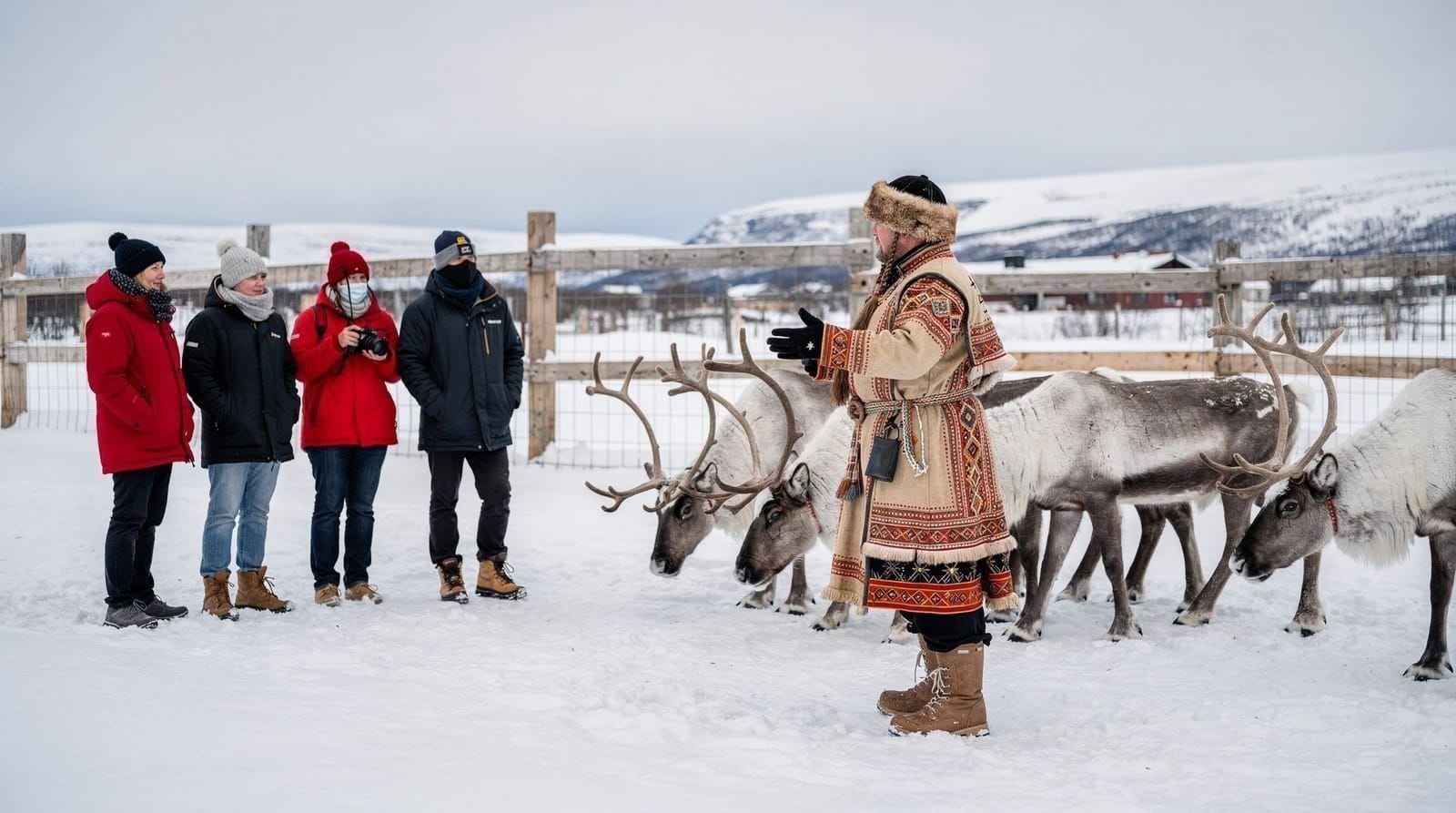
For a first visit, pairing a lavvo meal with reindeer sledding or the shorter reindeer feeding experience gives you the food in its proper cultural setting, which is worth the extra cost over a restaurant plate alone. Background on the culture behind the food is in the Sami culture near Tromsø guide, and Sami tourism ethics covers how to choose an operator whose lavvo meal is genuinely Sami-prepared rather than generic catering. If you are building a longer trip, the 4-day Tromsø aurora itinerary shows where a Sami food afternoon fits alongside other activities.
Food and foraging ethics
Cloudberry picking is a cultural institution in northern Norway and Sami communities. In Norway, the Allemannsretten (right to roam) allows free picking of wild berries on unfenced land. However, cloudberry picking rights are sensitive in some areas — in Finnmark, cloudberry fields on private or Sami-owned land have specific rules. Do not pick cloudberries on enclosed or clearly private land without asking.
Reindeer are the property of specific Sami herding families. Never approach, attempt to feed, or disturb reindeer you encounter on the road or in open landscape. Reindeer roadside encounters are common near Tromsø in winter — admire from inside your vehicle, do not exit to approach.
Frequently asked questions about Sami food near Tromsø
Is reindeer meat available in regular Norwegian supermarkets?
Yes. Frozen reindeer mince, reindeer steaks, and packaged suovas are sold in Rema 1000, Coop Mega, and other Norwegian supermarkets in the Tromsø area. Price is comparable to good-quality beef. This is a practical way to cook your own reindeer if you have access to a kitchen.
Can I import reindeer products home?
EU customs rules allow small quantities of commercially packaged reindeer products (canned, vacuum-sealed) from Norway. Fresh or frozen meat from Norway to non-EU countries is subject to customs inspection and may be prohibited. Suovas in a sealed package usually travels well within the EU; check your specific country’s import rules for meat products.
What is “reindeer coffee”?
A traditional Sami herder’s drink: strong boiled coffee with a piece of dried reindeer meat added during brewing. The meat adds a subtle savoury quality and some fat to the coffee. Guides at lavvo meals often prepare this. It sounds surprising; most visitors find it genuinely enjoyable.
Is there a Sami food festival in Tromsø?
Sami Week (around 6 February, Sami National Day) includes food stalls and market events in Tromsø with traditional Sami products. The Tromsø Mathall sometimes hosts Arctic food events. Ask at the tourist information centre about events during your visit.
Why is there so much emphasis on nose-to-tail eating in Sami cuisine?
Because historical necessity demanded it, and because it makes nutritional and ethical sense. When reindeer herding families slaughtered animals, full use was essential — both economically (nothing wasted) and because the organs contain nutrients (iron in liver, fat-soluble vitamins in marrow) that are not present in muscle meat. Contemporary Sami food culture maintains this ethos not just out of tradition but because it aligns with modern sustainable food values.
Is Sami food similar to Norwegian food?
They share some ingredients (fish, game, berries) and influence each other, but the preparation traditions are distinct. Norwegian cuisine is more influenced by agricultural and European cooking traditions; Sami cuisine emerged from nomadic Arctic life. The overlap is in the raw materials; the culinary grammar is different.
Is bidos always made with reindeer, or are there other versions?
Reindeer is the traditional and most common base, but some modern lavvo kitchens offer a fish-based bidos variant using arctic char for guests who prefer it or cannot eat reindeer. Ask when booking a cultural tour if you have a specific dietary need — most operators can accommodate it with notice.
Can vegetarians enjoy a Sami food experience?
It is more limited, since reindeer is central to the tradition, but gáhkku flatbread, cloudberry preparations, and some fish dishes work for pescatarians. Vegetarian and vegan visitors should contact the operator ahead of a lavvo meal booking, as most can prepare an alternative but need advance notice.
Top experiences
Bookable activities with verified prices and instant confirmation on GetYourGuide.