Sami tourism ethics near Tromsø — how to visit responsibly
Tromsø: Reindeer Camp and Sami Cultural Tour with Lunch
How do I engage with Sami culture ethically near Tromsø?
Choose Sami-owned and Sami-led operations, engage with genuine cultural content rather than decorative elements, ask respectful and informed questions, and understand that you are visiting a living culture that has experienced historical suppression. Buying directly from Sami artisans and choosing operators who reinvest in their communities is the most practical positive action.
The clearest guidance: Sami tourism is only beneficial — to the community, to cultural preservation, to your own experience — when it is Sami-led. Ask directly who owns and runs the operation. If the answer is unclear, look elsewhere. The best Sami cultural experiences near Tromsø come from Sami families who have chosen to open their herding culture to visitors on their own terms.
| What to check | Sami ownership, group size, cultural content depth |
| Typical cost | around 1,500–2,800 NOK for a substantive cultural tour |
| Time needed | Half a day for a genuine experience |
| Where to start | Sami culture near Tromsø for background |
| Best time | Year-round; early February for Sami National Day |
The context you need before visiting
Ethical engagement with Sami culture requires understanding some history. This is not an academic exercise — it directly affects what a visit means and what questions are appropriate.
From roughly the mid-19th century to the mid-20th century, Norwegian state policy actively suppressed Sami culture. The Norwegianisation (fornorskning) policy aimed at assimilation: Sami children were required to attend Norwegian-only boarding schools, where speaking their own language was punished. Sami names were replaced with Norwegian ones on official documents. Cultural practices were discouraged or prohibited. The policy was explicit, sustained, and effective at disrupting cultural transmission within families.
The consequences are still lived. Many Sami people in their 40s–60s grew up in families where grandparents spoke Sami but parents did not, because language transmission was interrupted. The process of language and cultural revitalisation — now actively supported by Norwegian policy — is the work of living generations. Cultural tourism can support this work or undermine it, depending on how it is structured.
Understanding this history is not about guilt. It is about approaching the experience with appropriate seriousness rather than as uncomplicated tourism entertainment.
What responsible Sami tourism looks like
Sami ownership and leadership
The single most important factor. A Sami family or cooperative running a cultural tourism business controls the narrative, keeps the revenue, and uses their own knowledge and identity as the foundation. This is fundamentally different from a non-Sami tourism company that hires Sami workers (or worse, uses Sami aesthetic elements without Sami staff at all).
Specifically look for:
- Named Sami families who own the operation (many list this explicitly)
- Guides who are Sami themselves and can speak from lived herding experience
- Operations that are members of the Sami tourism network (Sámi Tourism / NRL — the Norwegian Reindeer Herders Association’s tourism coordination body)
- Operations that reinvest in community — language programmes, cultural preservation, youth education
Substantive cultural content
The difference between a decorative experience and a meaningful one is in the content of the guide’s presentation. Indicators of substantive content:
- The guide speaks about specific family history, not generic “Sami tradition”
- Contemporary challenges facing reindeer herders (predator conflicts, climate change, land-use pressure from wind farms, roads, and recreation) are honestly addressed
- The Norwegianisation history is mentioned and its impact explained
- Language and language revitalisation are discussed — guides who can say a few sentences in Northern Sami (and explain what they mean) are demonstrating actual cultural connection
Appropriate use of cultural elements
Some practices that seem harmless are actually disrespectful:
Gákti dressing of tourists: Asking visitors to wear traditional clothing for photos treats a culturally significant garment as a costume. Decline politely.
Joik as background music: Joik is a deeply personal form of musical expression. Playing it as “atmosphere” while tourists eat or take photos misses the point. Good operators give context; the best operators include a short live joik and explain its personal and communal significance.
Reindeer as photo props primarily: When the guide’s main function is positioning tourists for optimal Instagram photos rather than explaining the animal’s role in Sami life, something has gone wrong.
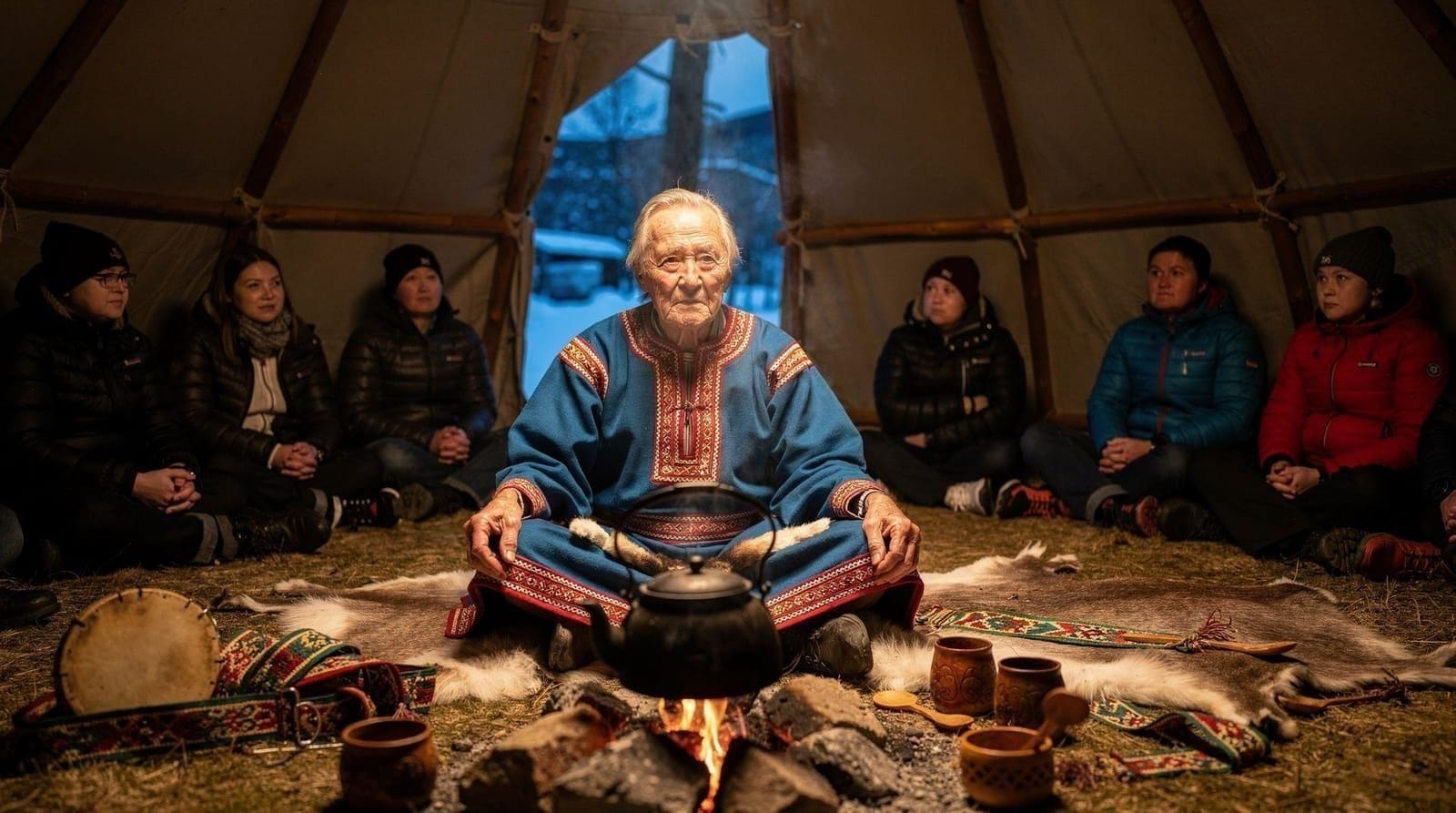
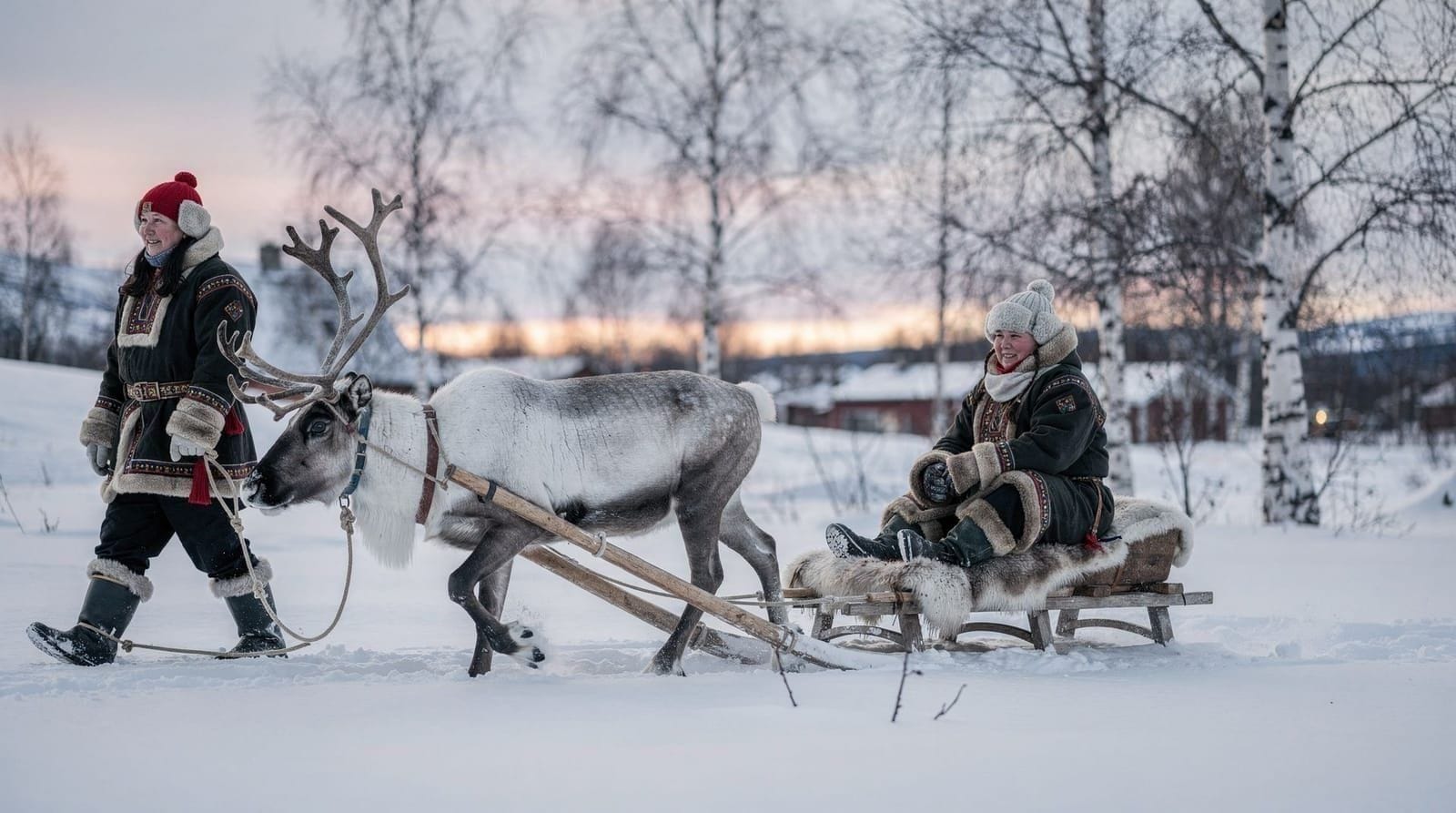
Sami cultural tour with reindeer sledding — culturally substantiveRed flags: what to avoid
“Authentic Sami experience” without any Sami people involved. This is not uncommon — Sami aesthetic elements (lavvo, reindeer, traditional clothing motifs) are used by non-Sami operators to attract bookings. Ask directly: “Is this operation owned by Sami people? Will our guide be Sami?”
Photo-first experiences. Experiences where the guide’s primary function is helping you take photos, with minimal cultural content, are shallow. They might still be enjoyable, but they do not constitute meaningful engagement with Sami culture.
Mass tourism scale. Large bus groups of 50+ at a reindeer camp can have the effect of reducing the animals to photo props and the guides to service staff. Smaller group sizes (6–15 people) allow genuine interaction. Ask about maximum group size per session.
Cheap operators with no cultural explanation. A reindeer feeding experience where no one explains what reindeer mean in Sami culture, the history of herding, or even the specific herd you are visiting is a missed opportunity. If the price is significantly below market average, cultural content has probably been cut.
Cultural items misrepresented as traditional: Mass-produced items sold as “authentic Sami handicrafts” — particularly if they are made outside Norway — are misrepresentation. Genuine duodji items take considerable time to make and are priced accordingly (a knife with antler handle might be 500–2,000 NOK; a leather bag 800–3,000 NOK). Items priced at tourist-souvenir levels are almost certainly not genuine.
Green flags: what to seek
- The operation is explicitly Sami-owned (named on their website)
- Guides speak Northern Sami or can communicate in Sami language
- Cultural content includes Norwegianisation history and its contemporary impact
- The experience emphasises genuine herding practice, not performance
- Duodji crafts are available and appropriately priced
- The camp is an actual working herding operation, not a purpose-built tourist facility
- The operator is a member of Sámi Tourism or similar Sami-controlled certification network
The duodji question: buying Sami crafts responsibly
Duodji — traditional Sami craft — covers a comprehensive range of objects: knives with antler and bone handles, leather goods (pouches, bags, belts), textiles (using specific Sami weaving traditions), jewellery, and decorated household objects. Each item type has regional variations and cultural coding in its design.
Genuine duodji is:
- Made by Sami artisans
- Time-intensive to produce
- Priced to reflect real labour (not cheap)
- Often signed or attributed to a specific maker
Where to buy genuine duodji near Tromsø:
- Directly at Sami herding camps during cultural visits
- The Sami shop and gallery in Tromsø centre (ask at tourist information for current address — these move periodically)
- The Tromsø market during Sami Week (around 6 February)
- Online from named Sami artisans (search “duodji” online with specific product type)
Avoid purchasing items described as “Sami-inspired” or “traditional Arctic” without Sami maker attribution, and especially avoid tourist shop merchandise priced far below craft production cost.
Quick operator checklist
Use this before booking any Sami-branded experience — reindeer sledding, the shorter reindeer feeding experience, or a Sami food lavvo meal:
| Question to ask | Good sign | Red flag |
|---|---|---|
| Who owns the operation? | Named Sami family or cooperative | Vague answer, or a generic tourism company |
| Are the guides Sami? | Yes, explained clearly | ”Culturally trained” without confirming Sami identity |
| What’s the group size? | 6–15 people | 25+ on a single session |
| Is Norwegianisation history discussed? | Yes, openly | Not mentioned at all |
| Is joik explained or just played as background? | Explained with context | Used as unremarked “atmosphere” |
This checklist works as well for a half-day Sami culture tour as it does for a full reindeer sledding package.
Land rights: the bigger picture
Sami reindeer herding rights in Norway are legally protected under the Reindeer Herding Act and the Finnmark Act, but conflicts continue. Wind farm development, roads, cabins and recreational snowmobile traffic, and government grazing quotas create ongoing tensions between herding families and other land users.
Several high-profile legal cases in the 2020s — including Supreme Court rulings on wind farm removal on Sami herding land — have brought these issues to mainstream Norwegian attention. Sami guides at well-run tourism operations often discuss these tensions openly. This is appropriate context for your visit, not a political problem to avoid.
If you are planning a longer stay, the 4-day Tromsø aurora itinerary shows one practical way to include a substantive Sami cultural afternoon without rushing it alongside northern-lights evenings.
Frequently asked questions about Sami tourism ethics near Tromsø
Is it OK to take photos of reindeer and the landscape?
Yes. Photographing reindeer, the landscape, and the camp environment is welcome and expected. Ask before photographing Sami guides, particularly in traditional clothing — permission is almost always granted but asking demonstrates respect.
Is the Norwegian government doing enough for the Sami?
This is a live political question on which Sami people hold varying views. The Sami Parliament (Sámediggi) argues for greater consultation rights and stricter protection of herding lands. Some Sami activists argue that current policies still fall short of meaningful indigenous rights. As a visitor, listening to your guide’s perspective with genuine interest is more appropriate than offering opinions.
How should I respond if I encounter a Sami person who is uncomfortable discussing their culture?
Respect it and move on. Not every Sami person is interested in being an informal cultural ambassador for tourists. Outside of structured tourism contexts, treat encounters with Sami people the way you would treat encounters with any person — brief polite conversation is fine, extended questioning about their identity and culture is not.
What is Sámi National Day and should I try to visit around it?
6 February is Sami National Day, commemorating the day in 1917 when the first cross-border Sami national assembly was held in Trondheim. In Tromsø it is marked with public celebrations, cultural events, joik performances, and market stalls. Visiting around this date gives you the densest opportunity for genuine Sami cultural experience. It is not a holiday requiring advance planning, but note that popular cultural events may book quickly.
Are there Sami tourism certification schemes?
Sámi Tourism (the tourism arm of the Sami organisation networks) has been working on certification criteria for Sami cultural tourism. These are not yet universally applied or enforced, but operators who are members of the network and who meet criteria are generally more reliable. Ask operators directly about their affiliation with Sámi Tourism or the Norwegian Reindeer Herders Association (NRL).
Is reindeer herding considered sustainable?
In its traditional form, yes — reindeer herding in Sápmi has been practised sustainably for thousands of years. Contemporary challenges include grazing quota conflicts, climate change affecting snow conditions and lichen availability, and infrastructure development in herding territories. The sustainability of specific herding operations depends on herd size, pasture access, and management practice. Operators who discuss these challenges openly are demonstrating genuine cultural knowledge.
What if I have already booked an operator and am unsure if it is Sami-led?
Contact the operator directly and ask plainly: is the business Sami-owned, and will the guide be Sami? A reputable operator answers clearly and without hesitation. If you get an evasive answer close to your visit, you can still ask thoughtful questions on the day and treat the experience with appropriate scepticism rather than cancelling outright.
Does paying more guarantee a more ethical experience?
Not automatically, but price is a useful signal: genuinely Sami-led operations with substantive cultural content and fair wages for guides rarely undercut the market significantly. A price far below the reindeer sledding or cultural tour average (1,500–2,800 NOK) is more often a sign that cultural content, group size limits, or guide quality have been cut, not that you have found a bargain.
Top experiences
Bookable activities with verified prices and instant confirmation on GetYourGuide.