Tromsø in February and March — aurora, ski, and returning light
From Tromsø: Northern Lights Experience
Are February and March good months to visit Tromsø?
Yes — February and March are arguably the best months for combining aurora chasing with daytime activities in actual daylight. By February you have 4–6 hours of light; by March up to 12 hours. Ski touring in Lyngen peaks in March. Prices start dropping from mid-February. Snow conditions are typically excellent through March.
Why February and March are the underrated sweet spot
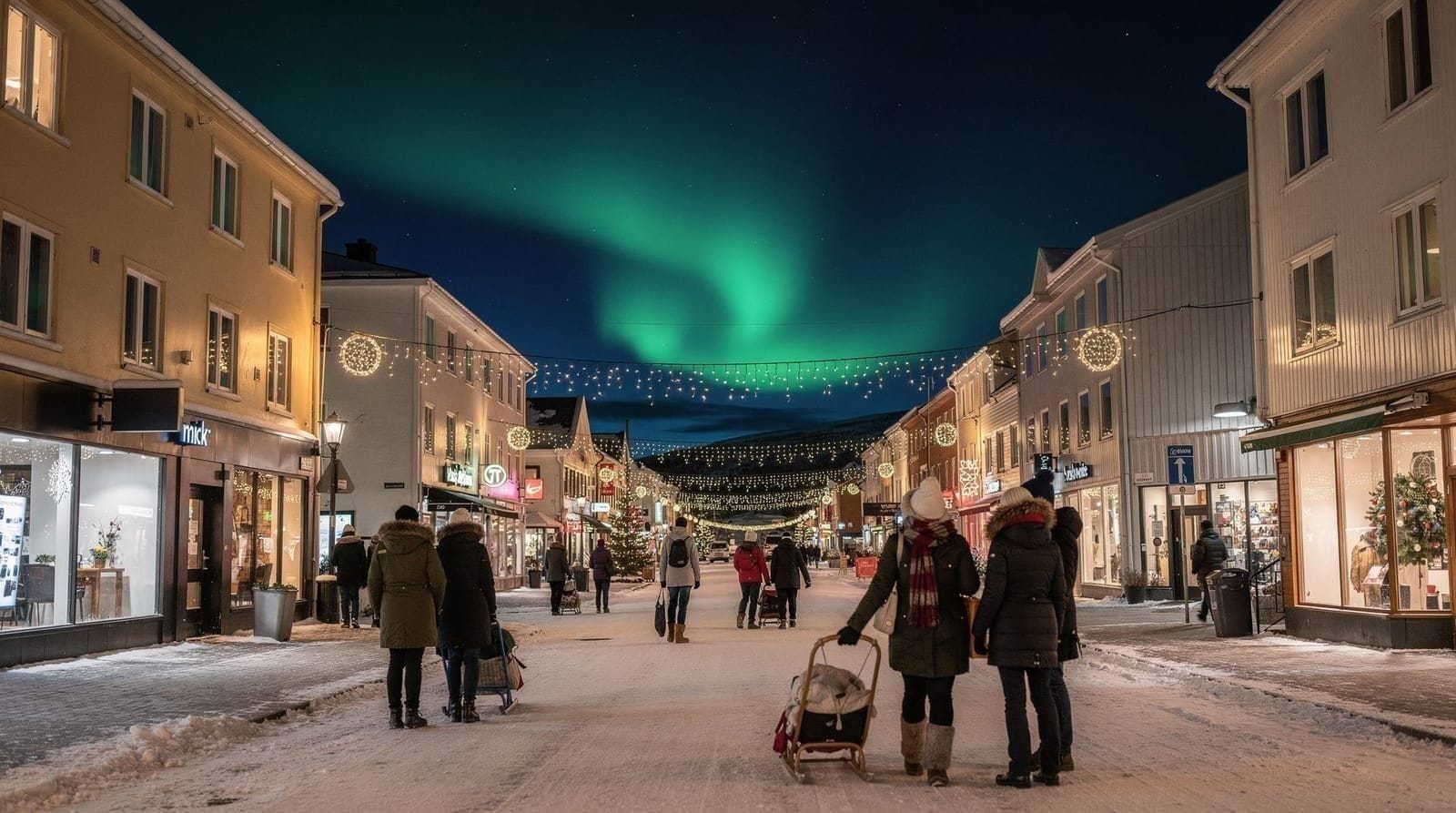
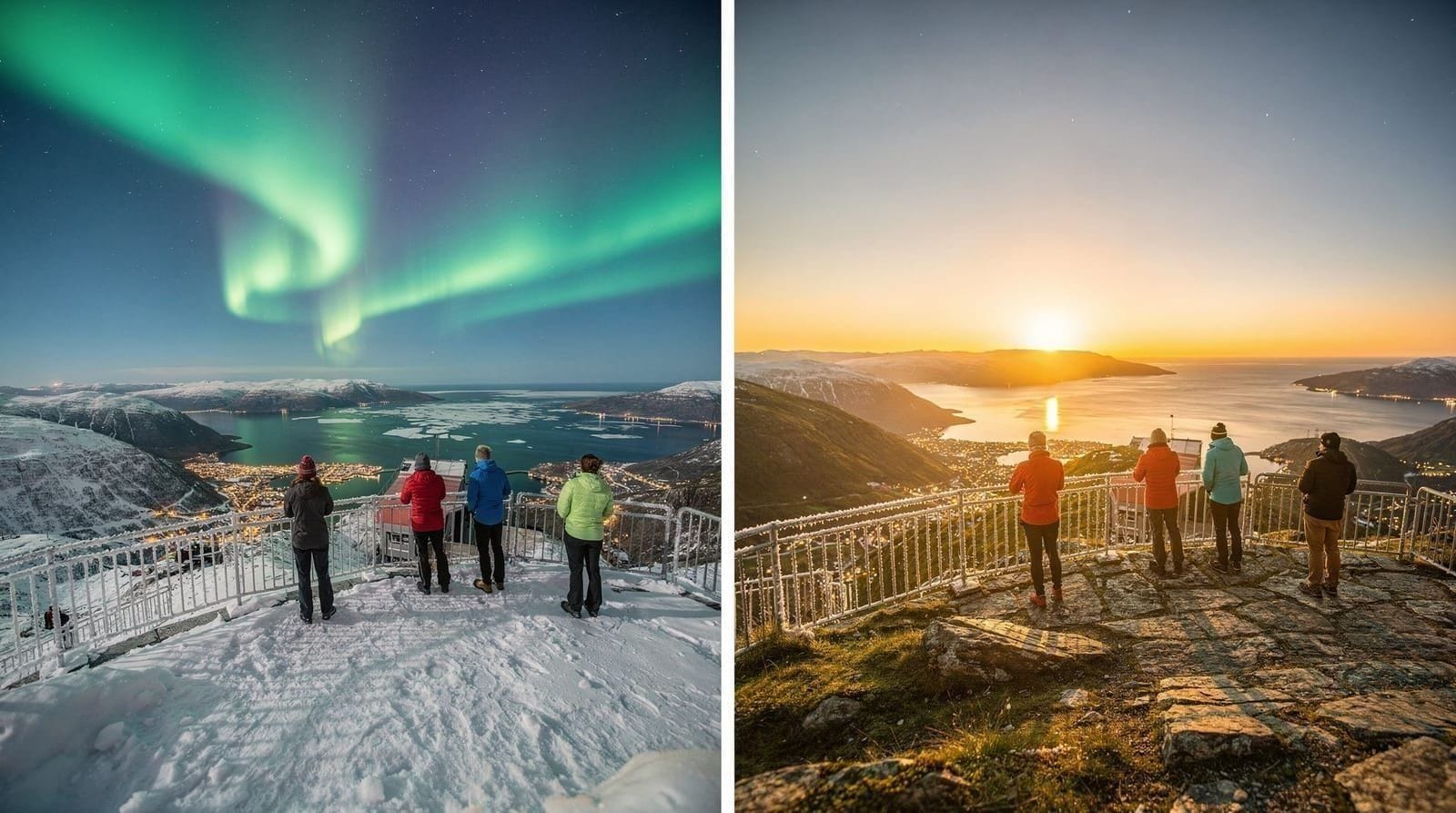
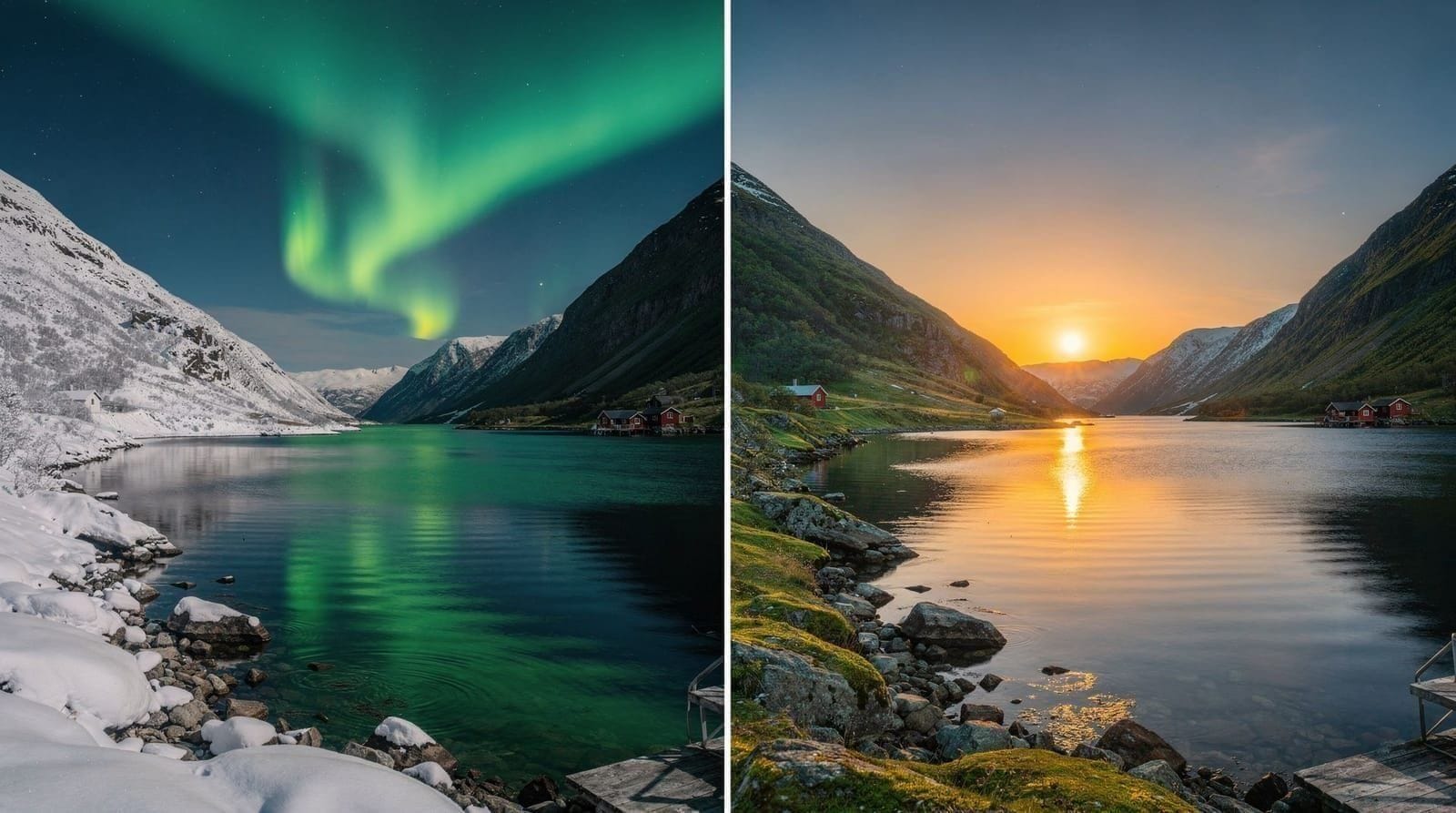
December and January get the marketing attention for Tromsø, but February and March offer something those months cannot: real daylight alongside excellent aurora conditions. By February, you have 4–6 hours of proper light each day. By late February, that extends to 8+ hours. You can do a dramatic dog sled through a snowy mountain valley in actual sunlight, then return to the city and head out for an aurora tour in the evening.
This combination — full-day winter activities in light plus multi-hour aurora chasing — is what makes February and March distinctive. December and January are darker and more dramatic; February and March are more comfortable and photographically rewarding for the full scope of Arctic activities.
| Where | Tromsø city, plus Lyngen Alps for skiing/snowmobile day trips |
| Cost | Aurora tours ~1,800–2,200 NOK; hotel doubles 1,200–1,800 NOK by late Feb/March |
| Time needed | 5–7 nights fits aurora, one snow activity, and a Lyngen day trip |
| Getting there | 1h45m from Oslo; airport bus 40/42 for 48 NOK |
| Best time within window | Late February for the equinox aurora boost; March for daylight and skiing |
February in Tromsø
February is typically the coldest month, with average temperatures between -8°C and +1°C. Snow cover is deepest and the landscape looks as pristine as it gets all year. The polar night ended in mid-January, but nights remain long — 6–8 hours of aurora-capable darkness per night early in the month, narrowing to 4–6 hours by month’s end.
Aurora in February
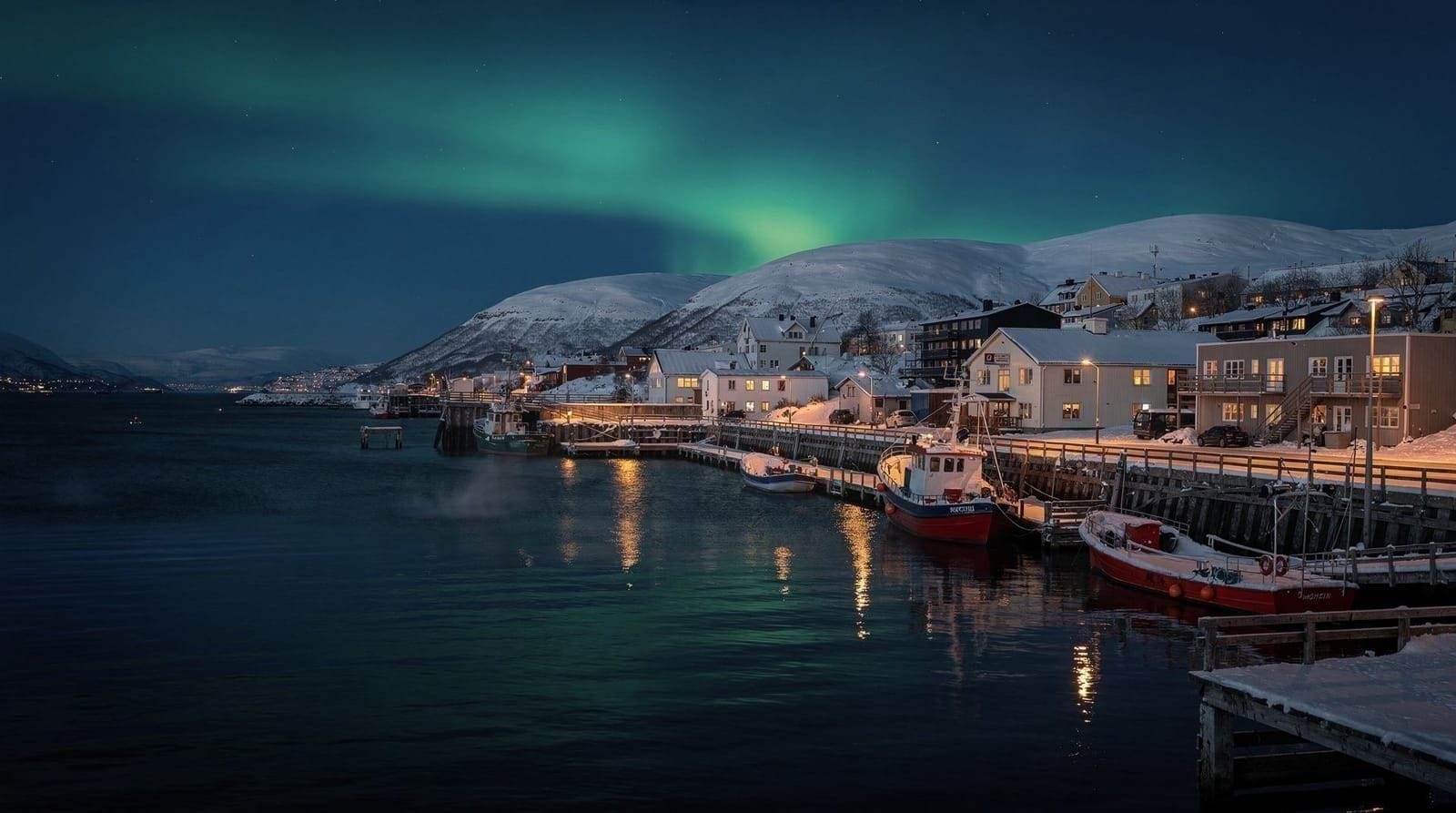
Excellent conditions. Clear winter nights in February regularly produce strong aurora displays. Cloud cover averages 45–55% — similar to January — but the increasing frequency of high-pressure systems (which bring cold, clear nights) helps. Many of the most photographed Tromsø auroras come from February, when the foreground shows snow and ice in clear moonlight.
Northern lights chase tour with expert guideEquinox effect: The March equinox (around 20 March) and the September equinox are periods of heightened geomagnetic activity, when Earth’s magnetic field alignment with the solar wind creates more frequent and stronger aurora events. This effect builds through late February — making the last 10 days of February statistically better than mid-February for aurora intensity.
Whale watching in February
The main whale watching season around Skjervøy is winding down by February. Orca pods begin moving north as herring shoals disperse. Some tours still run in early February; check with specific operators about current conditions and success rates before booking.
Events in February
The Northern Lights Festival (Nordlysfestivalen) straddles late January and early February — a classical and contemporary music event using polar night as its backdrop. Concerts take place in the Arctic Cathedral, Tromsø University, and other city venues. Book tickets months in advance via nordlysfestivalen.no.
Prices in February
The first half of February remains close to peak-season pricing. From mid-February, hotel rates begin declining as the January rush ends. By late February, mid-range doubles are commonly available in the 1,400–1,800 NOK range rather than 2,000–3,000 NOK. Activity prices remain stable year-round.
March in Tromsø
March is the transition month that surprises many visitors. Winter activities run at full pace, the landscape is spectacular under proper daylight, and the sense of an entire Arctic season wrapping up gives the month a distinctive atmosphere.
Daylight and aurora in March
At the start of March, Tromsø has roughly 9 hours of light per day. By the equinox (around 20 March), this reaches 12 hours. Aurora viewing is still practical in early March (dark hours from roughly 9 p.m. to 4 a.m.), but by late March only the darkest portion of the night (midnight to 3 a.m.) is dark enough for aurora, and only strong KP4+ events penetrate the brightening sky.
Last aurora month: Most aurora tour operators run through March. Late March is the last reliable aurora window each year. If you have flexibility, the first two weeks of March offer the best combination of remaining aurora potential and improving daytime conditions.
Dog sledding in March
One of the most rewarding dog sledding months. Snow depth is still excellent in the valleys; temperatures are manageable (-5°C to -12°C); and the longer daylight allows you to photograph the run in full light — a huge advantage over December or January, when you do the same run in total darkness.
Dog sledding adventure in Tamokdalen in March lightMost operators run through March. Book 2–4 weeks ahead; some popular March weekend dates sell out in advance.
Ski touring in the Lyngen Alps
March is peak month for ski touring in the Lyngen Alps, considered one of Norway’s premier backcountry skiing destinations. The combination of deep snowpack, reliable weather windows, and long daylight makes March the preferred time for the ski mountaineering community. Most guided ski tours run 5–7 days, based in Lyngseide or a lodge in Lyngen.
Day snowmobile tours from Tromsø into Lyngen also peak in March — the plateau is at its most dramatic under March light.
Lyngen Alps snowmobile safari from TromsøSnowshoeing in March
Guided snowshoe tours are popular in March and can be done in genuine daylight — a different experience from the January version. Routes on Kvaløya and around Tromsdalen offer stunning views under clear March skies. Cost: approximately 900–1,400 NOK including equipment.
Snowshoe hike with picnic lunch and photos — ideal for MarchMarch prices and booking
Late February and March see prices drop significantly versus peak winter. By mid-March, a central hotel double room may cost 1,200–1,700 NOK versus 2,000–3,000 NOK in January. Activity prices remain constant but availability improves — you can sometimes book aurora tours 3–5 days in advance rather than weeks ahead.
February vs. March: which to choose?
| February | March | |
|---|---|---|
| Aurora potential | Excellent (long dark nights) | Good early, declining late |
| Daylight for activities | 4–8 hours | 8–12+ hours |
| Snow conditions | Peak | Excellent |
| Dog sledding | Full season | Full season |
| Whale watching | Early Feb only | Very rare |
| Ski touring Lyngen | Good | Peak |
| Prices | Mid-peak dropping late Feb | Lower, best value |
| Crowds | Moderate (half-term busy) | Low-moderate |
For aurora as the primary goal: early February is excellent. For combining aurora with scenic daylight activities: late February. For best-value winter without aurora, with full activity range: March.
Getting to Tromsø in February and March
Flights from Oslo (SAS, Norwegian) are 1h45m, departing daily. See getting to Tromsø from Oslo. From the airport, bus routes 40/42 cost 48 NOK (see airport transfer guide).
For day trips to Lyngen and Senja in March, a rental car gives maximum flexibility — car rental from around 800 NOK/day. The roads are fully navigable with winter tyres in March.
How long to stay and what it costs
5–7 nights fits comfortably: an aurora tour or two, one big snow activity (dog sledding or a Lyngen day trip), and enough slack for a weather-cancelled aurora night. The how many days in Tromsø guide has trip-length recommendations tuned to different activity combinations, and the Tromsø daily budget guide shows how February–March pricing compares with December’s peak — generally a meaningful saving once you get past the first half of February.
Packing for the transition season
February still calls for full winter kit; March needs the same base layers but with more flexibility for warmer daytime hours and slushy pavements. The Tromsø packing guide and the winter clothing guide both cover this properly — do not assume March means you can pack lighter than February, since nights and mountain conditions remain genuinely cold.
Honest verdict
Frequently asked questions about Tromsø in February and March
Which is colder — February or March in Tromsø?
February is typically colder on average. March temperatures usually range from -5°C to +3°C versus February’s -8°C to +1°C. However, individual cold snaps in either month can push temperatures to -15°C or below in clear-sky conditions. Pack for -20°C outdoor exposure regardless of which month you visit.
Is the Northern Lights Festival worth attending?
Yes, if classical and contemporary music interests you. The concerts in the Arctic Cathedral under polar winter light are unlike any other concert setting. It is a small festival (roughly 20–30 events over 4–5 days) with an international reputation disproportionate to its size. Book concert tickets separately from accommodation — they sell quickly.
Can I see the aurora in late March?
It becomes increasingly difficult after mid-March. Sunset times move earlier and sunrise moves later each day — the darkness window needed for aurora narrows fast. Strong geomagnetic events (KP5+) can produce visible aurora even with a lightening sky, but in normal conditions late March aurora viewing is unreliable. Plan for early-to-mid March if aurora is your priority.
Is Tromsø in March good for photography?
Exceptionally so. March offers the full portfolio: aurora in the early part of the month, blue-hour twilight over snowy landscapes, dramatic winter light on the Lyngen Alps, dog sledding in proper daylight, and the first warm-toned sunrises of late March. Many professional Arctic photographers consider March their favourite month in northern Norway.
Do the ice domes at Camp Tamok stay open in March?
Typically yes — the ice domes at Camp Tamok remain operational through March and sometimes into early April, depending on temperatures. Check with the specific operator closer to your visit. March visits combine ice dome access with dog sledding and the daytime light that winter-only visitors miss.
What is the slush situation in Tromsø in late March?
By late March, city pavements can alternate between frozen in the morning and slushy by afternoon as temperatures swing above and below 0°C. Waterproof boots remain essential. Countryside routes and mountain access roads stay frozen and safer.
How many days should I plan for a February or March trip?
5–7 nights is realistic for aurora, one major snow activity, and a buffer day in case of poor weather. See the how many days in Tromsø guide for length recommendations by activity mix.
Is February–March cheaper than December for the same activities?
Yes, meaningfully so from mid-February onward — hotel rates drop as the January/early-February rush eases, while activity prices stay roughly constant. See the Tromsø daily budget guide for a fuller cost comparison across the winter months.
Top experiences
Bookable activities with verified prices and instant confirmation on GetYourGuide.