Reindeer sledding near Tromsø — honest guide with real NOK prices
Tromsø: Reindeer Sledding & Feeding with a Sami Guide
Can I go reindeer sledding near Tromsø and how much does it cost?
Yes. Reindeer sledding experiences run from camps near Tromsø from November through March. Expect to pay 1,500–2,500 NOK per person for a 2–4 hour experience including sledding, reindeer feeding, Sami cultural context, and a lavvo (traditional tent) meal.
What it actually is: A 2–4 hour experience combining a short reindeer sled ride (20–45 minutes), time feeding and interacting with reindeer, Sami cultural explanation from a guide, and a meal in a traditional lavvo tent. The sledding is not the main event — the whole experience is. Price: 1,500–2,500 NOK per person with transfer from Tromsø.
| Where | Sami reindeer camps around 20–45 min from Tromsø |
| Cost | around 1,500–2,500 NOK per adult |
| Time needed | 2–4 hours including transfer |
| Getting there | Transfer usually included from central Tromsø |
| Best time | December–February for the most reliable snow |
What reindeer sledding near Tromsø actually involves
Reindeer sledding is one of the most popular winter activities near Tromsø, and for good reason: it combines access to a genuine cultural practice (Sami reindeer herding) with a physically delightful activity (sitting on a low wooden sled while a reindeer trots through a snowy landscape) and a real meal in an authentic Arctic setting.
It is also frequently misunderstood. Many visitors imagine a long sled ride through vast wilderness. The reality is a shorter sled experience combined with richer cultural and social time. Understanding this beforehand lets you appreciate what is being offered rather than waiting for something different to begin.
The typical sequence at a Sami reindeer camp:
Arrival (transfer from Tromsø: 20–45 min): Most operators pick up at your hotel or a central Tromsø meeting point and drive to the camp. The drive itself passes through Norwegian Arctic countryside — worth watching from the window.
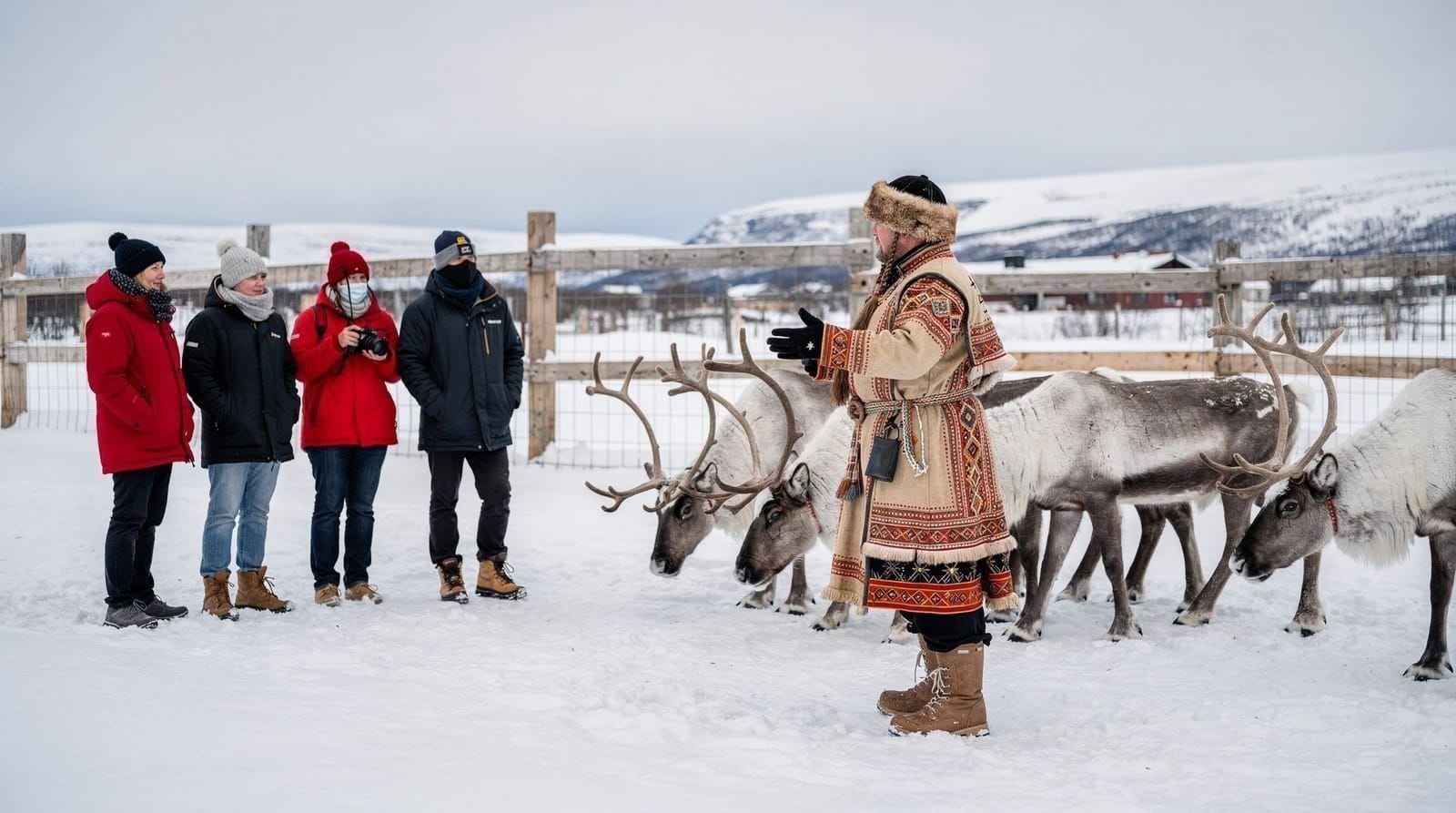
Meeting the reindeer (20–30 min): You arrive at the camp and are introduced to the reindeer. Guides (Sami herders or culturally trained staff) demonstrate how to approach the animals, how to hold pellets or lichen for feeding, and explain the role of reindeer in Sami life. The animals are accustomed to visitors and remarkably calm.
Sledding (20–45 min depending on the operator): The actual ride. You sit on a traditional wooden sled; a reindeer is harnessed and leads the sled across a prepared snow track. Guides walk alongside. The pace is a gentle trot — not fast, not alarming, genuinely enjoyable. Some camps allow you to guide the reindeer yourself for a portion; others are fully guided.
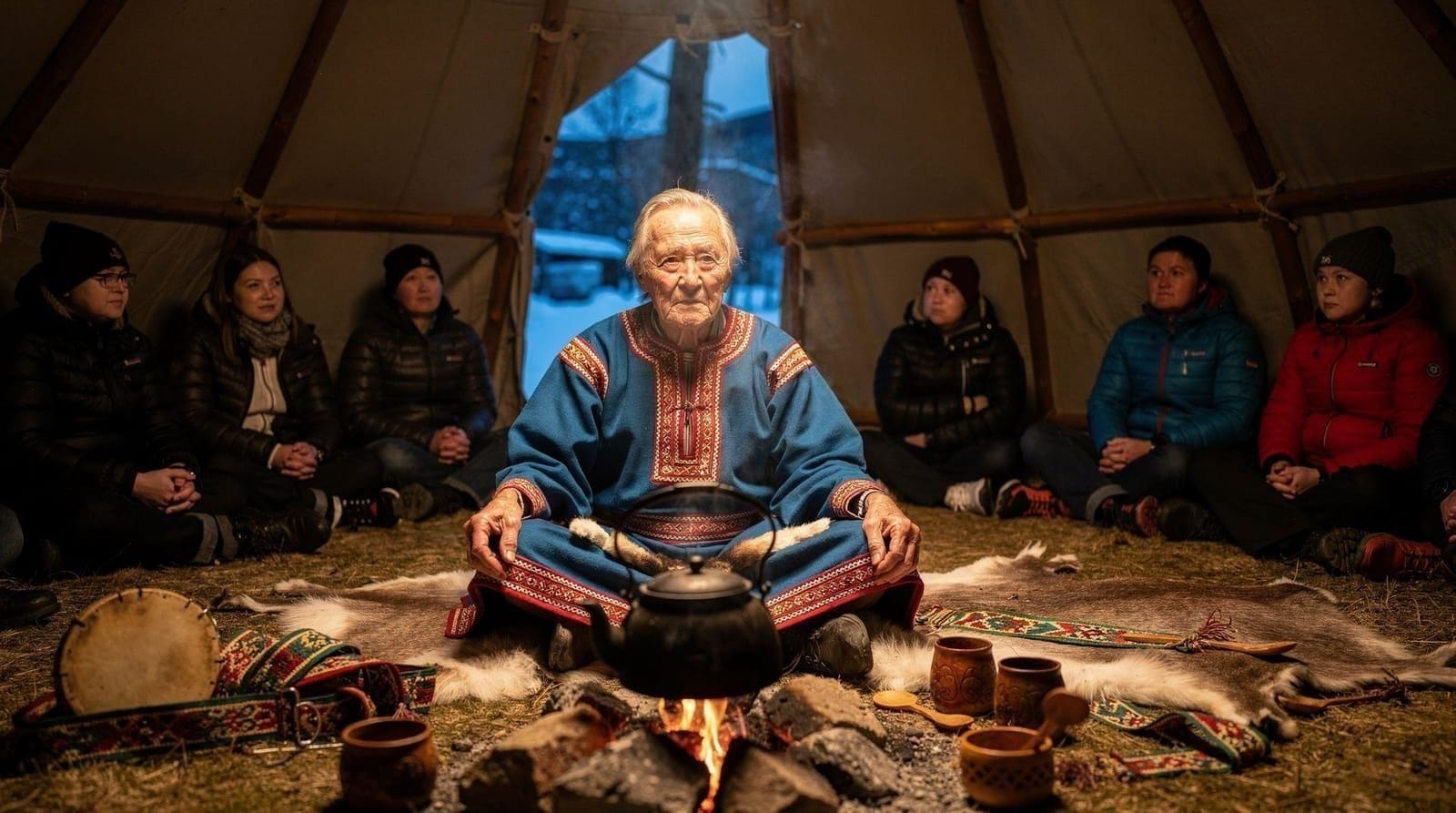
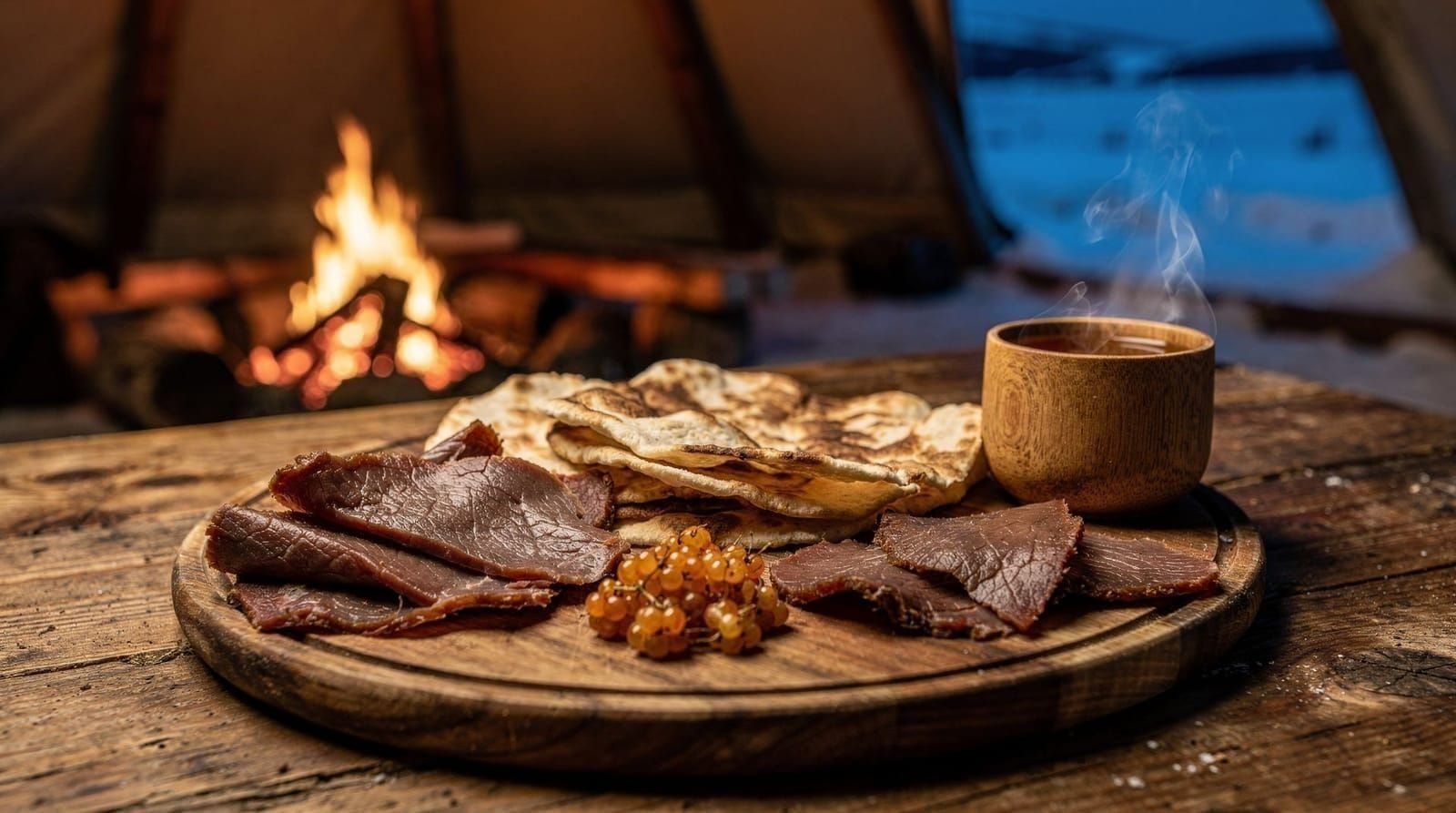
Lavvo time and meal (45–90 min): The group gathers in a large lavvo heated by an open fire. This is where the cultural substance of the experience typically happens — the guide speaks about Sami history, reindeer herding practices, the significance of gákti, joik traditions, and contemporary Sami identity. A meal is served: traditionally bidos (Sami reindeer stew), or reindeer prepared another way, with flatbread, berry jam, and coffee. This is the best food you will eat at a tour in the Tromsø area.
Aurora opportunity (if evening tour): Many camps offer an evening version where the timing includes potential northern lights viewing. See reindeer camp with dinner and northern lights for the dedicated evening experience guide.
Reindeer sledding with Sami guide — book hereReal NOK prices
- Standard 2–3 hour experience with transfer, sledding, feeding, lavvo meal: 1,500–2,000 NOK per adult
- Premium 3–4 hour experience with dinner and aurora element: 2,000–2,500 NOK per adult
- Children (typically ages 4–12): 800–1,300 NOK
- Under 4: often free or minimal charge
Prices have increased around 10–15% each season since 2022 due to high demand. Book early for November–February; this is not a last-minute activity during peak winter.
Choosing an operator: what actually matters
The most important factor in choosing a reindeer sledding operator is whether the experience is genuinely Sami-led or a non-Sami operation using Sami cultural elements for marketing. The experience is meaningfully better — more honest, more interesting, more respectful — when the guide is Sami and can speak from personal cultural knowledge rather than from a script.
Questions to ask:
- Is the operation Sami-owned?
- Are the guides Sami?
- What happens during the lavvo portion — is there cultural content or just food?
Beyond this:
- Transfer logistics: Some operators include return transfer from Tromsø in the price; others require you to meet at the camp. Clarify this before booking.
- Group size: Smaller groups (8–12 people) allow more genuine interaction with guides. Large groups (25+) feel more like mass tourism.
- Language of guiding: English guiding is standard for the Tromsø market. Ask if there is a naturalist or cultural historian aspect to the guide’s qualification.
Reindeer sledding vs dog sledding: which to choose?
A common question for winter visitors is whether to choose reindeer sledding or dog sledding near Tromsø.
Reindeer sledding advantages: Cultural depth (Sami context), more intimate and gentler experience, excellent meal at a lavvo, unique to the Sami cultural landscape of Arctic Norway.
Dog sledding advantages: More active participation (you can drive your own sled), faster pace, more physically engaging, longer routes possible, the extraordinary experience of working with a husky team.
If you have time for one, consider what you want more: cultural learning or physical engagement. Many visitors to Tromsø with 5+ days do both. A 4-day itinerary combining dog sledding in Tamok with reindeer sledding gives you the two sides of traditional Arctic travel.
Seasonal availability
Reindeer sledding requires snow on the ground and ideally snow still falling (for atmosphere). The season runs approximately November through March, with the most reliable snow conditions from December to February.
| Month | Snow conditions | Notes |
|---|---|---|
| November | Building, sometimes thin | Polar night begins late in month; book ahead |
| December | Good, often deep | Polar night; popular, book 2–3 weeks ahead |
| January | Best, most settled | Peak demand, coldest temperatures |
| February | Best, most settled | Peak demand, longer daylight returning |
| March | Good early, softening late | Spring melt can affect sled quality by late March |
| April–October | No sledding | Summer camps offer feeding/interaction without sleds |
January and February are often the best months for settled snow — earlier in winter, snow cover can be thin. Late March sometimes sees deteriorating conditions (spring melt) that affect sled quality.
Evening tours (with aurora potential) work in the polar night period (27 November–15 January) and in the darker evening windows of October–November and February–March.
Combining reindeer sledding with the rest of your trip
Because the full experience takes half a day including transfer, most visitors schedule it as a single dedicated afternoon or evening rather than stacking it with another activity the same day. On a longer stay, it pairs naturally with a Sami food experience in Tromsø the next day to deepen the cultural thread, or with the shorter reindeer feeding experience if you want to compare the two formats. The 4-day Tromsø aurora itinerary shows how a reindeer afternoon slots in alongside northern-lights evenings without overloading the schedule.
Reindeer camp with cultural lunch — traditional Sami experienceThe cultural dimension: why context matters
Reindeer sledding as a tourist activity works best when the operators ground it in genuine Sami knowledge rather than presenting it as a generic “Arctic” activity. The best experiences leave you knowing something about the Sami you did not know before — about herding logistics, about the impact of Norwegianisation on cultural transmission, about what it means to maintain an indigenous identity in a modern Scandinavian state.
The worst experiences are pleasant but shallow — a nice sled ride with a hot drink, cultural costume used decoratively rather than explained substantively. Both are enjoyable; one is more meaningful.
See Sami culture Tromsø for background context before your visit, and Sami tourism ethics for how to evaluate operators.
Frequently asked questions about reindeer sledding near Tromsø
Can I go reindeer sledding in summer?
No. Sledding requires snow. In summer, some Sami camps offer summer reindeer experiences without sledding — feeding, interaction, and cultural learning at a summer herding camp. These are less commonly offered but do exist. Ask operators if you are visiting in June–August.
Are there weight limits for reindeer sledding?
Some operators specify a maximum passenger weight of 100–120 kg per sled. This is about the reindeer’s capacity, not the sled’s. Check with your specific operator if you are concerned. In most cases, one reindeer pulls one adult; heavier individuals may be assigned a stronger reindeer.
Will I smell of campfire smoke after the lavvo?
Yes. Sitting around an open fire in an enclosed tent for an hour means your outer layer will carry smoke smell. This dissipates relatively quickly outdoors; bring a plastic bag to seal your outer jacket for the transfer back if you are going straight to a restaurant or event.
Is reindeer sledding suitable for elderly visitors?
Yes, for most. The activity involves sitting on a sled (getting down to and up from sled level — approximately 40 cm — requires some mobility), walking a short distance on snow (grippy boots essential), and sitting in a lavvo. It is not physically strenuous. Those with significant mobility limitations should ask operators about specific accommodation.
Can I book reindeer sledding the day before?
In peak season (November–February), most popular operators are booked weeks in advance. Booking day-before is unlikely to succeed. Book at minimum 2–3 weeks ahead for this period. Shoulder season (October, March) has more availability.
Is there an age minimum for children?
Most operators welcome children from age 3–4 upward. Very young children sit with a parent on the sled. The experience is generally child-friendly — children often respond strongly to the reindeer, the fire, and the food.
How does reindeer sledding compare to the shorter feeding experience?
Reindeer sledding includes the sled ride itself plus a longer lavvo meal and more cultural content, for roughly double the price and duration of the pure reindeer feeding experience. Choose feeding if budget or time is tight; choose sledding if the ride and a fuller cultural afternoon matter to you.
What if there is too little snow for sledding?
This is rare in the core December–February window but can happen in November or late March. Operators typically substitute a feeding-and-cultural format on the same day rather than cancel outright, or offer a full refund if no substitute is possible. Ask about the snow-contingency policy when booking in shoulder-season months.
Top experiences
Bookable activities with verified prices and instant confirmation on GetYourGuide.