Dog sledding ethics in Tromsø — how to choose a responsible operator
From Tromsø: Advanced Dog Sledding Tour at Camp Tamok
How do I know if a dog-sledding operator in Tromsø is ethical?
Look for dogs that appear eager and well-nourished, kennels that allow pre-tour visits, run distances matched to dog fitness levels, mandatory rest stops with water, and transparent kennel conditions. Avoid any operator who cannot describe their off-season care arrangements or who discourages questions about welfare.
Quick answer: At well-run operations, dog sledding is not cruel — huskies are bred for running and show genuine enthusiasm to work. The ethical risk lies with operators who overwork dogs, provide inadequate shelter, or neglect kennels in the off-season. The questions you ask before booking matter as much as the tour itself.
| Price floor for a legitimate tour | around 1,500–2,000 NOK |
| Acceptable runs per dog/day | 1–2, with rest periods |
| Ask before booking | summer care, vet relationship, kennel visit |
| Green flag | early kennel access, named dogs, visible shelter |
| Red flag | no fixed kennel address, discourages questions |
The honest case for and against husky tourism
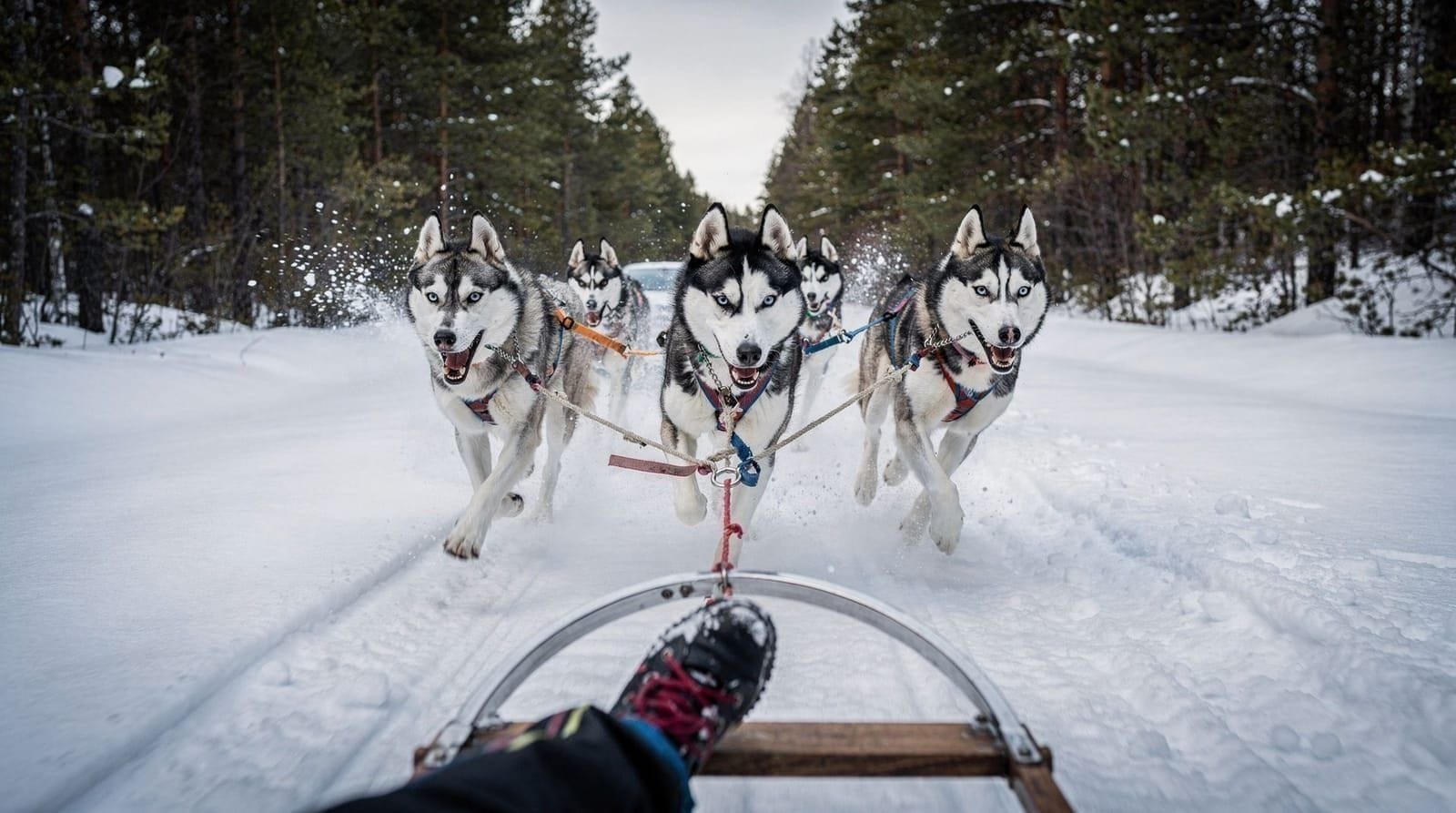
Siberian and Alaskan huskies are working dogs bred over generations for endurance running in cold conditions. Unlike many dog breeds pressed into human entertainment, well-kept sled dogs often appear miserable when not working — they are restless, vocal, and physically built for sustained activity. At a legitimate kennel, the pre-tour harnessing process is loud and chaotic because dogs are jumping and pulling to be included in the run.
This is the honest case for responsible dog-sledding tourism: it funds kennels that maintain breeds with specific working needs, and the dogs’ behaviour during tours suggests genuine engagement rather than coercion.
The honest case against irresponsible tourism is equally straightforward: demand pressure creates incentives to overwork dogs, cut costs on veterinary care and nutrition, and operate kennels primarily for revenue with animal welfare as an afterthought. The Arctic Norway tourism boom has produced more new operators in the last decade than the regional animal welfare infrastructure can systematically monitor.
The distinction between ethical and unethical operations largely comes down to questions you can ask before booking.
What to look for at the kennel
Before you get on a sled, the kennel itself tells you a great deal:
Positive signs:
- Dogs are alert, maintaining healthy weight, with clean fur and no obvious lameness
- Individual dog houses or covered shelter structures that protect from wind and precipitation
- Dogs can see and interact with other dogs (huskies are social — isolation causes stress)
- Handlers know individual dogs by name and temperament
- Fresh water is available at the kennel (critical even in winter — cold air dehydrates)
- Operators allow you to arrive 15–20 minutes early to observe the kennel before the tour
Warning signs:
- Dogs that appear apathetic, underweight, or are avoiding handlers
- Purely chain-tethered dogs with no shelter from wind
- Very large group sizes relative to apparent dog count (a legitimate 8-team operation needs 48–64 dogs)
- Handlers who discourage questions or pre-tour kennel observation
- No visible veterinary record keeping or welfare documentation
Questions to ask before booking
You do not need to be confrontational — frame these as a curious traveller:
- “How many tours does each dog do per day?” The acceptable answer is 1–2. More than that without clear rotation systems raises concerns.
- “What happens to the dogs in summer?” Legitimate operations have clear summer protocols — free running on larger properties, mushing on wheeled rigs, or specific summer exercise programmes. “We don’t run tours in summer” is not a complete answer.
- “Can I visit the kennel before the tour begins?” A 10–15 minute early arrival should be acceptable. Resistance to this is a yellow flag.
- “Do you work with a veterinarian?” Look for a specific name and practice, not a vague “of course.”
- “How many dogs work in your rotation?” A kennel offering 12 simultaneous self-drive tours should have substantially more than 12 teams — dogs need rest days.
The off-season problem
Tourism dog-sledding operates approximately November through April. What happens from May to October is less visible to tourists and is where the most serious welfare gaps often exist.
Some kennels maintain year-round activity programmes — summer sled camps on wheeled rigs, hiking with dogs, educational visits. Others reduce staffing and dog exercise significantly when revenue drops. The latter does not automatically mean cruelty, but it does mean the welfare bar during the off-season is harder to assess from the outside.
If you want to identify genuinely responsible operators, look for those with transparent social media or websites showing year-round activity, dog welfare updates, and summer programming. Operators who exist only as a booking interface with a phone number and a price list are harder to evaluate.
Scale and the industrialisation concern
The growth in Tromsø’s dog-sledding tourism from 2015 to 2025 has been significant. A single December in peak season sees hundreds of sled tours operating simultaneously across Breivikeidet, the Tamok Valley, and Kvaløya. The largest commercial operations run 20–30 simultaneous sleds daily during busy periods, which requires 200–300 dogs.
At this scale, genuinely knowing each dog becomes impossible. Some of the highest-rated tour operators are large commercial operations; some of the most welfare-conscious are smaller kennels with 40–80 dogs. Scale alone is not a welfare indicator, but it should prompt you to ask more specific questions about management systems.
When not to book
Avoid booking dog-sledding tours that:
- Advertise unrealistically low prices significantly below the 1 500–2 000 NOK floor (undercutting this much typically means cutting corners on animal care, staff training, or equipment quality)
- Have no cancellation or weather rescheduling policy
- Operate without physical kennel addresses (legitimate operations have a fixed location)
- Are offered by general transport or tourism brokers without specific kennel partnerships
Comparing to other animal activities in Tromsø
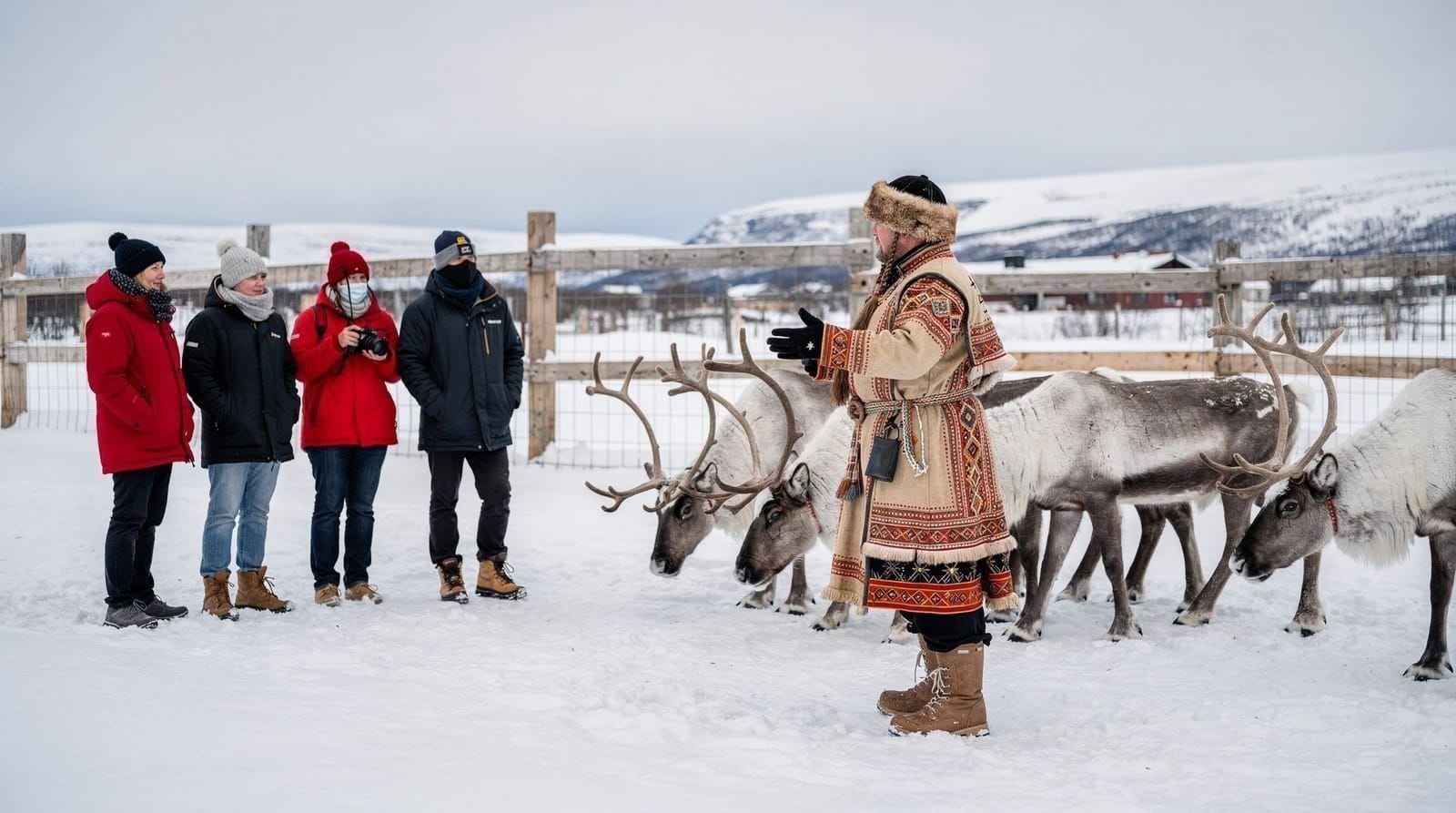
Reindeer sledding and feeding experiences raise overlapping but different welfare questions — the animals are semi-domesticated but primarily herd animals, and the concerns centre on habituation to human contact, appropriate grazing, and whether Sami guides are genuine rights holders or tourism proxies. Our Sami tourism ethics guide covers that context.
Dog sledding is distinctive in that the working relationship between dogs and humans is genuinely ancient (millennia in the Arctic) and the dogs are breed-specifically adapted to it. This makes the ethical threshold different from, say, elephant rides in Southeast Asia — but it does not eliminate welfare concerns at poorly run operations.
Reporting welfare concerns
If you witness what you believe are welfare violations:
- Mattilsynet (Norwegian Food Safety Authority / Veterinary section): this is the primary enforcement body for animal welfare in Norway. Reports can be filed online at mattilsynet.no.
- Detailed reviews on GetYourGuide, TripAdvisor, or Google with specific observations (not just “I felt sad for the dogs”) help future travellers.
- Your tour operator’s head office — if you booked through a large platform, their partner relations team can escalate to the operator.
Choosing well in practice
The kennels operating out of Breivikeidet and the Tamok Valley include genuinely responsible operations that have been running for decades alongside newer ones. The clearest practical filter: book through operators who include kennel meet-and-greet time in the tour description, not just “sled time.” Operators who hide the kennel phase behind immediate departure to the trail are making it harder for you to see what you are funding.
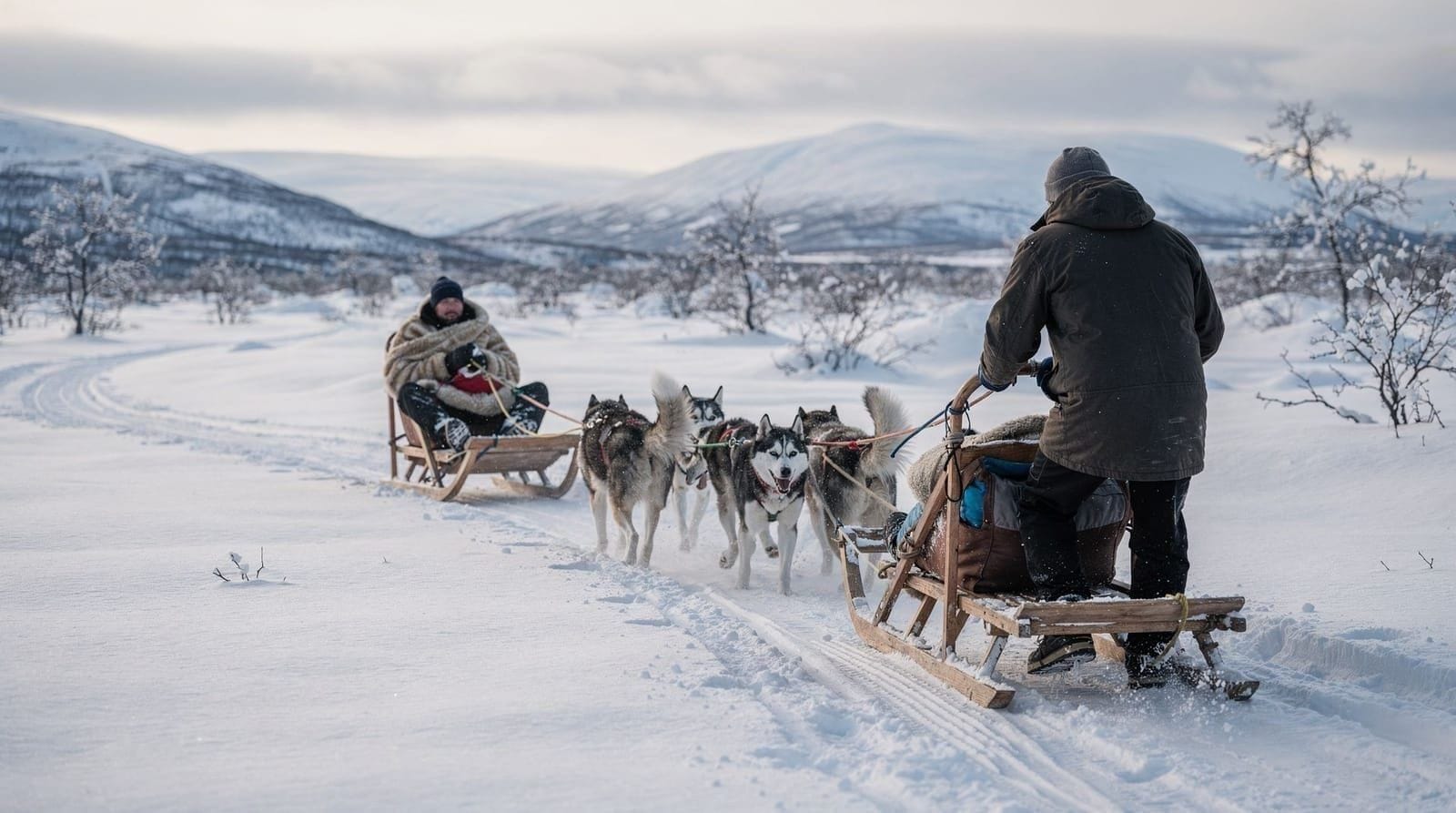
Tromsø self-drive husky dog sledding — established operator with transparent kennel access before the tourSelf-drive vs passenger sledding — an ethics angle too
The choice between mushing your own sled and riding as a passenger is usually framed as an experience question, but it has a welfare dimension too: self-drive tours put fewer people per dog team on the trail at once and tend to run smaller groups, which generally means calmer, less rushed handling. Our self-drive vs passenger dog sledding guide compares the two in full, including fitness requirements and cost.
Dog sledding with children
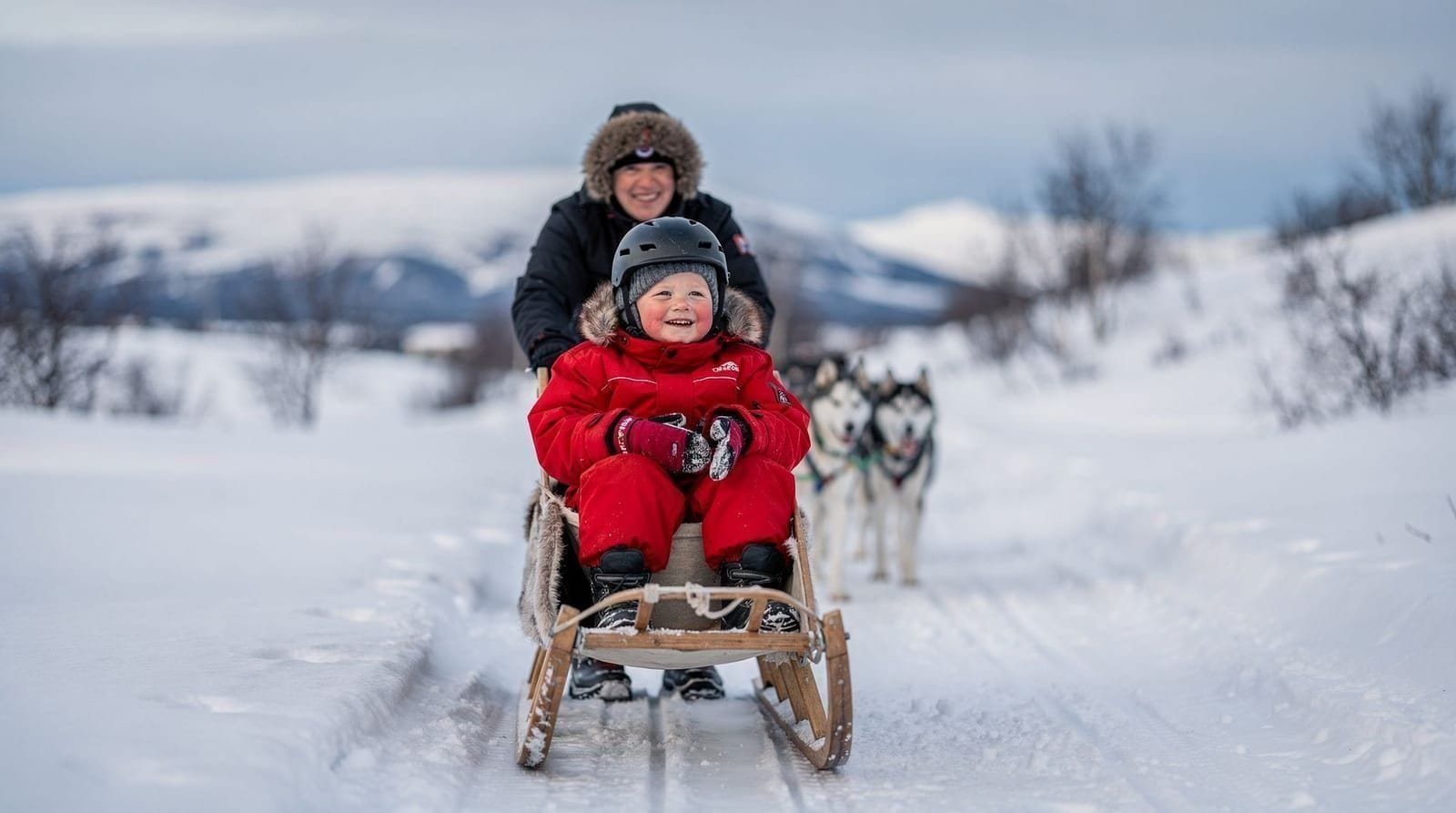
Families sledding with young children add another welfare consideration worth raising with the operator directly: excited children can be loud and unpredictable around working dogs, and a well-run kennel will brief kids on calm behaviour before they approach. See dog sledding with kids for age guidance and what a family-friendly, welfare-conscious operator looks like in practice.
Camp Tamok in more depth
Camp Tamok is one of the region’s larger and more established dog-sledding venues, combining sledding with reindeer and snowmobile activities. Our dedicated Camp Tamok dog sledding guide covers what a full day there involves, useful context if you are trying to judge whether a larger-scale operation like this maintains the welfare standards outlined above.
Summer dog sledding — a different picture
A smaller number of operators run summer programmes using wheeled rigs instead of snow sleds, which is actually a positive welfare signal — it shows the kennel keeps dogs active and exercised year-round rather than reducing activity when tourist revenue drops in the off-season. See summer dog sledding in Tromsø if your visit falls outside the winter months and you want to support an operator with visible year-round care.
What to wear (and why it matters for the dogs too)
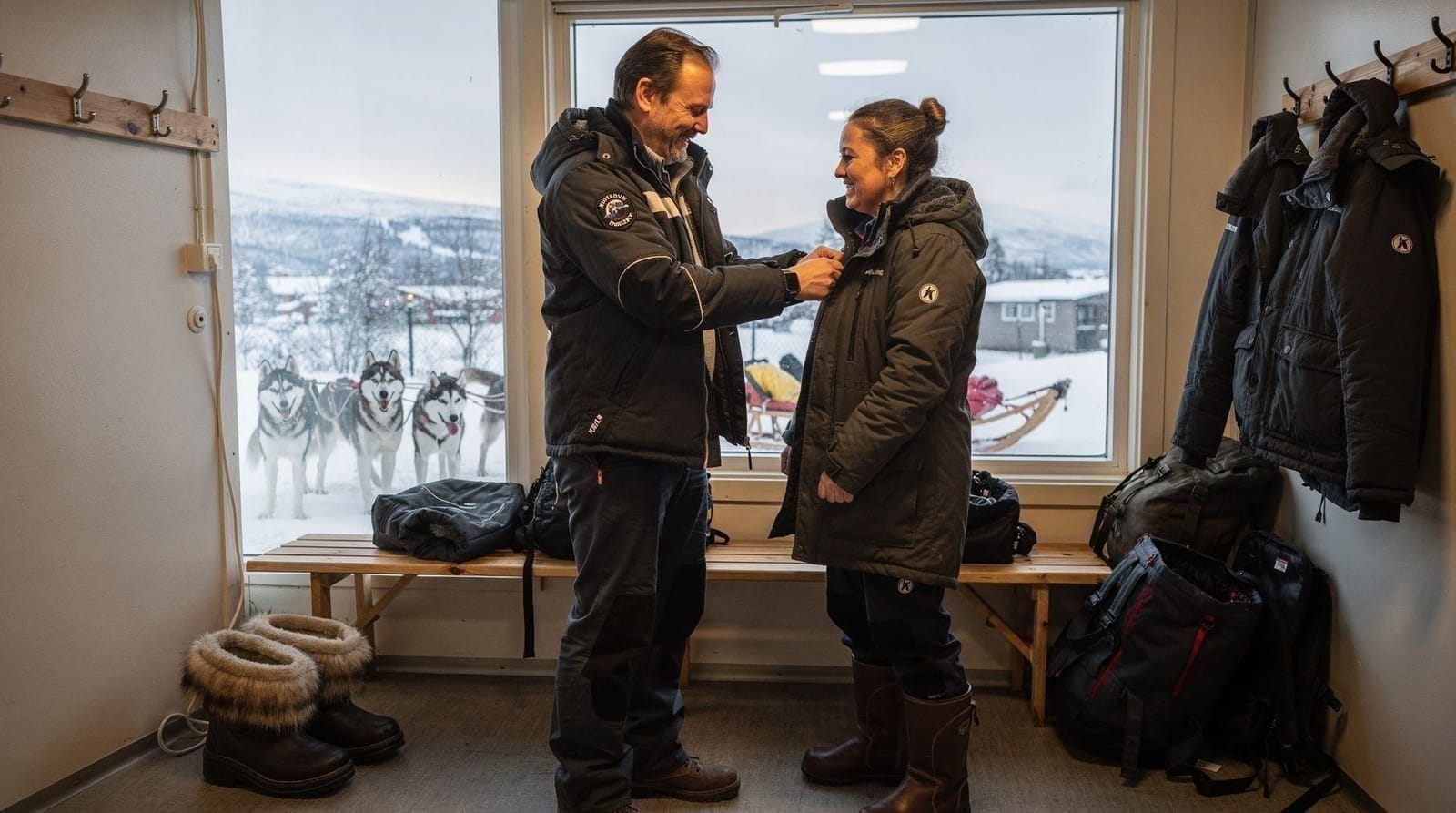
Being properly dressed is not just about your own comfort — a cold, uncomfortable participant who wants to cut the tour short can disrupt a dog team’s normal running rhythm and rest schedule. See what to wear dog sledding so you arrive prepared for the full tour length rather than needing to turn back early.
Frequently asked questions about dog sledding ethics
Is dog sledding cruel to huskies?
At well-run operations, no. Huskies are bred for endurance running and show genuine eagerness — barking and pulling at harnesses is normal enthusiasm, not distress. Welfare problems arise at kennels that overwork dogs or neglect off-season care.
What are the main welfare concerns?
Overwork, inadequate shelter, poor nutrition, social isolation, and off-season neglect when no revenue is coming in.
How many runs per day should a sled dog do?
Most welfare guidelines suggest 1–2 maximum, with mandatory rest periods. More than that without clear rotation systems is a concern.
What questions should I ask before booking?
How many tours per dog per day, what happens in summer, whether you can visit the kennel early, and which veterinarian they work with.
Are there certification schemes in Norway?
Not mandatory ones. The Norwegian Sled Dog Association sets voluntary standards. Due diligence falls to you as the consumer.
What should I do if I witness welfare problems?
Report to Mattilsynet (Norwegian Food Safety Authority) and leave specific, factual reviews on booking platforms.
Top experiences
Bookable activities with verified prices and instant confirmation on GetYourGuide.