Visiting Sami culture in Tromsø: how to engage respectfully
The Sami people have inhabited the Scandinavian Arctic for at least 2,000 years — probably much longer, with DNA evidence linking them to populations going back 10,000 years. Their territory, Sápmi, covers northern Norway, Sweden, Finland, and the Kola Peninsula of Russia. In Norway they number approximately 50,000–65,000 people (exact figures are contested, as the Norwegian government does not collect data by ethnicity). Tromsø sits within the southern reaches of Sápmi.
When visitors come to Tromsø seeking “Sami experience,” they are seeking contact with a living culture — not a historical artefact. The Sami are not a museum exhibit. They are a contemporary Indigenous people with ongoing legal and political claims, active cultural practices, and reasonable opinions about how their culture should be presented to outsiders.
Here is how to engage with that honestly.
| Who | Indigenous people of Sápmi (northern Norway, Sweden, Finland, Kola Peninsula) |
| Population in Norway | ~50,000–65,000 (exact figures contested) |
| Where near Tromsø | Reindeer camps, Sami market at Sami Week |
| Ask before booking | Is the guide Sami? Is it Sami-owned? |
| Avoid | Wearing gákti as a tourist, unpermitted photography |
What is genuinely available and what is theatre
The Tromsø region has several operators offering Sami-themed experiences, ranging from authentic cultural encounters run by actual Sami practitioners to generic “Arctic experience” camps with a few reindeer and some costumes. Telling the difference requires specific questions.
Authentic indicators:
- The guide is Sami (ask directly)
- The experience is on land associated with reindeer herding families, not a purpose-built tourist camp
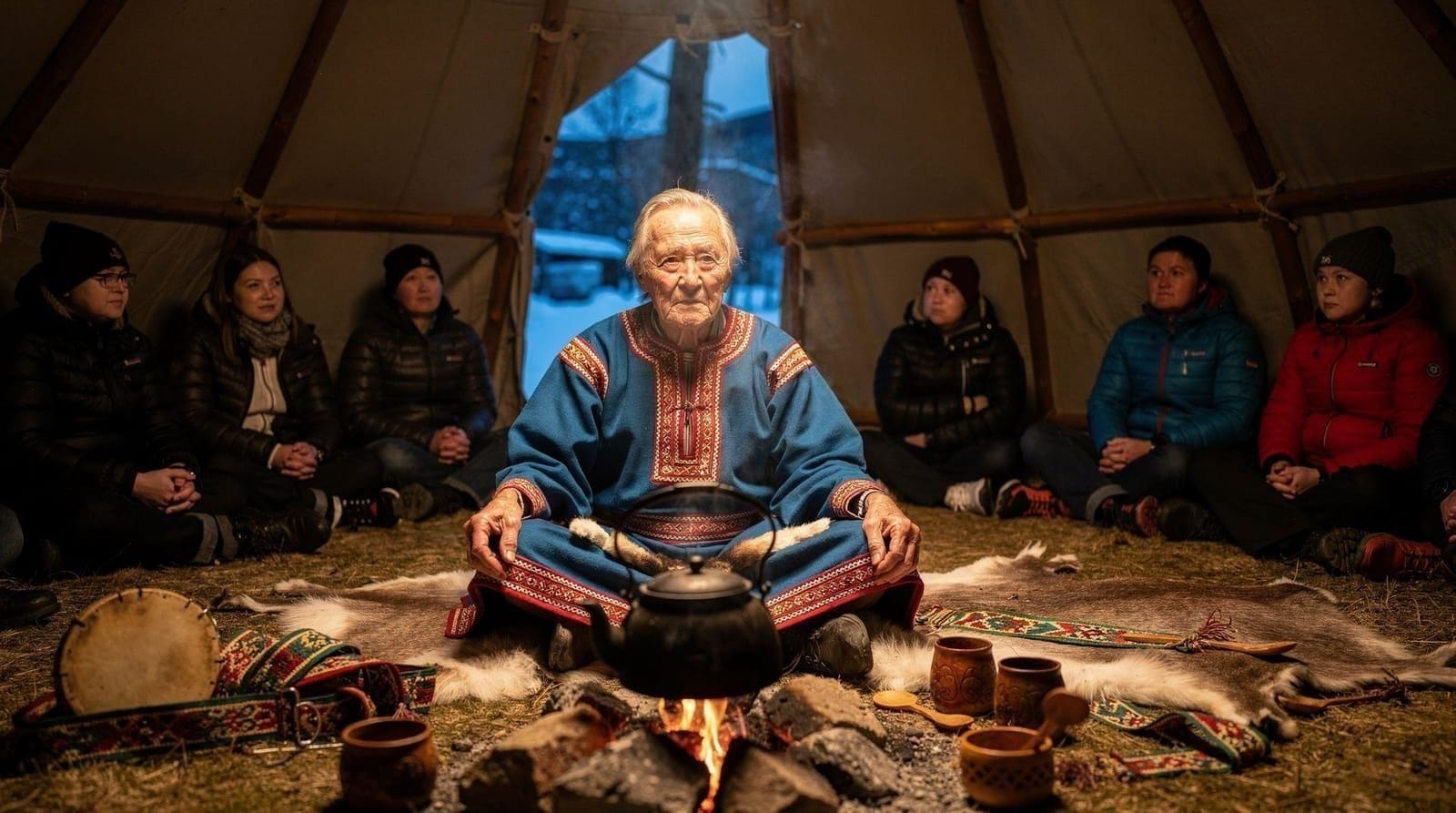
- The cultural content goes beyond “here are some reindeer, here is a lavvo (tent), here is joik (traditional song)” to include real explanation of land use, seasonal practices, legal context, and contemporary Sami life
- The operator can explain how the experience benefits the Sami community economically and whether it is owned and operated by Sami people
Indicators of generic Arctic packaging:
- The website’s “Sami” content is exclusively photographic (people in gákti/traditional dress with reindeer)
- The operator cannot answer questions about Sami ownership or who leads the cultural component
- The reindeer are present but there is no explanation of their role in the herding economy or the relationship between reindeer herding and Sami identity
- The “Sami dinner” features fish soup and bread rather than anything identifiably Sami in preparation (suovas smoked reindeer, bidos reindeer stew, gámaost cheese)
The Sami tourism ethics guide goes deeper on evaluating operators.
Authentic versus generic, side by side
| Authentic Sami operator | Generic “Arctic experience” packaging | |
|---|---|---|
| Guide | Sami, personally connected to herding | Often not Sami, hired seasonal staff |
| Setting | Working herding land | Purpose-built tourist camp |
| Content | Land use, legal context, contemporary life | Photos with reindeer, a lavvo, some joik |
| Ownership | Sami-owned or Sami-led | Often owned by non-Sami tour companies |
| Food (if offered) | Suovas, bidos, gámaost | Generic fish soup marketed as “Sami” |
Asking two or three direct questions before booking — is the guide Sami, is the operation Sami-owned, does the reindeer connect to active herding — sorts most operators into one column or the other within a few minutes.
Why it matters
Sami culture in Norway has a complicated history. The Norwegian state’s Norwegianisation (fornorskingspolitikken) policy — pursued from the mid-19th century through the 1960s — actively suppressed Sami language, dress, and cultural practice. Children were sent to boarding schools and punished for speaking Sami languages. Older Sami people in Tromsø today remember this directly.
This history makes the cultural commodification of Sami symbols and practices for tourist consumption a genuinely sensitive issue. Wearing a replica of the gákti (traditional dress) for a tourist photo, or being photographed “feeding a reindeer” in front of a lavvo, participates in a visual economy that can flatten and trivialise a culture with significant historical trauma.
None of this means you should not visit Sami-offered experiences. It means you should think about what the experience is designed to communicate, who benefits from it, and whether the encounter respects the Sami as contemporary people rather than props in an “Arctic wilderness” fantasy.
Specific practices to engage or avoid
Appropriate:
- Asking the Sami guide about their own life, community, and views — treating them as an expert on their culture, not a performer
- Buying handicrafts (duodji) directly from Sami artisans, or from shops certified by the Sami Duodji brand (a protected quality label)
- Learning a few words of North Sami (sámegiella) — even “buorre beaivi” (good day) is appreciated
- Asking questions about the legal and political situation — the Sami Parliament (Sametinget), the ongoing coastal Sami fishing rights disputes, the wind energy debates — demonstrates that you take their contemporary situation seriously
Inadvisable:
- Wearing a gákti or components of it — this is traditional dress with specific regional and family significance; wearing it as a tourist is broadly seen as disrespectful
- Photography of Sami people, their equipment, or their reindeer without explicit permission
- Referring to them as “Lapps” or “Laplanders” — these are outdated and considered pejorative by the community
- Treating the joik (traditional song form) as entertainment background music — it is a sacred or semi-sacred practice in many contexts
Reindeer-related experiences: the ethical landscape
Reindeer herding is central to Sami identity in a way that is difficult to overstate — the relationship between Sami communities and their reindeer herds is codified in Norwegian law, shapes seasonal migration patterns, and carries deep cultural meaning. About 10 percent of Norwegian Sami are involved in active reindeer herding.
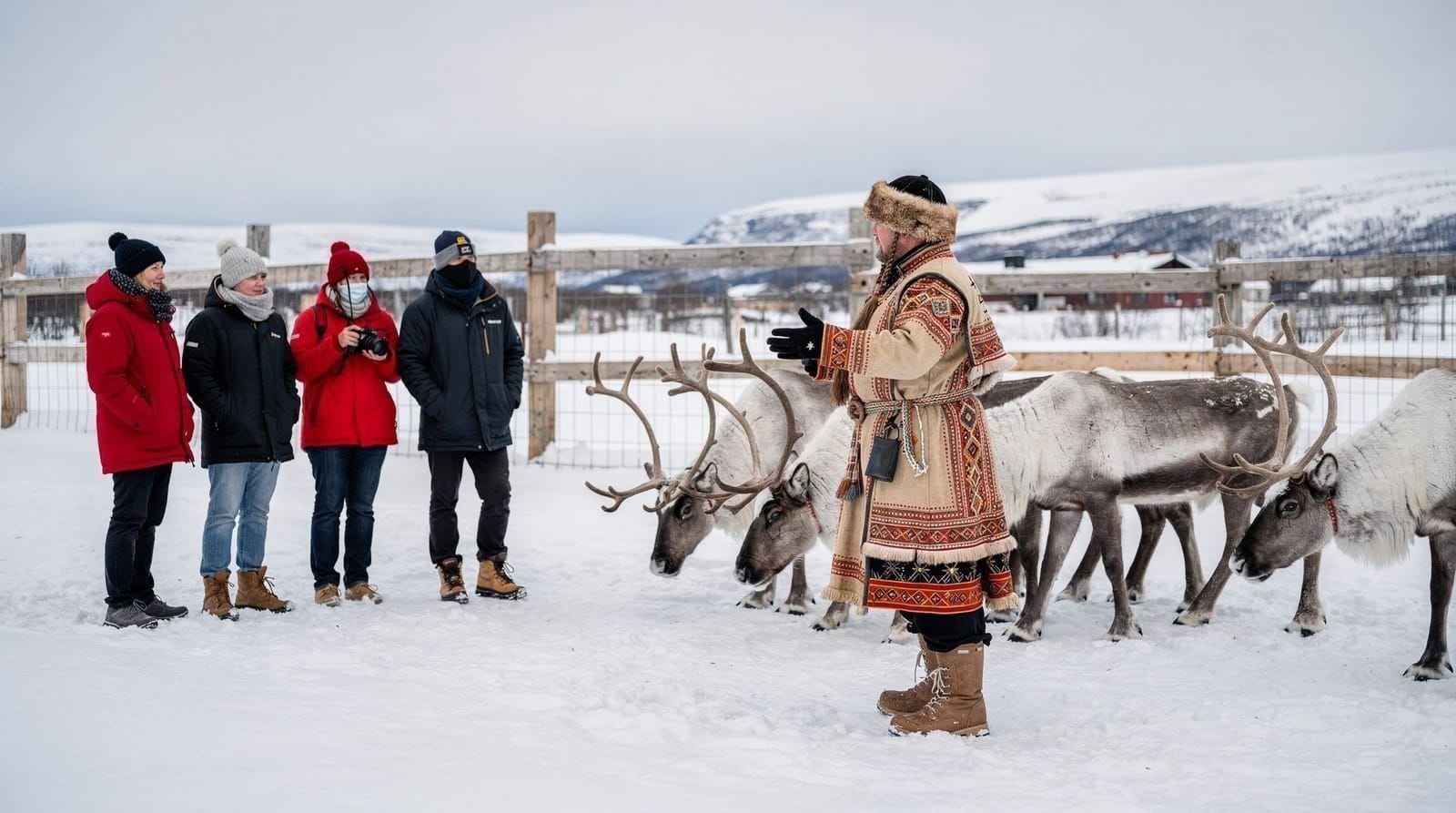
Reindeer experience tours near Tromsø range from operations where you are genuinely meeting a herding family on their winter grounds to purely commercial setups where a small group of reindeer is kept in an enclosure for tourist interaction with no connection to active herding.
The reindeer feeding experience guide covers how to evaluate specific operators. The key question is whether the reindeer belong to an active herding operation and whether the guide has personal connection to reindeer husbandry.
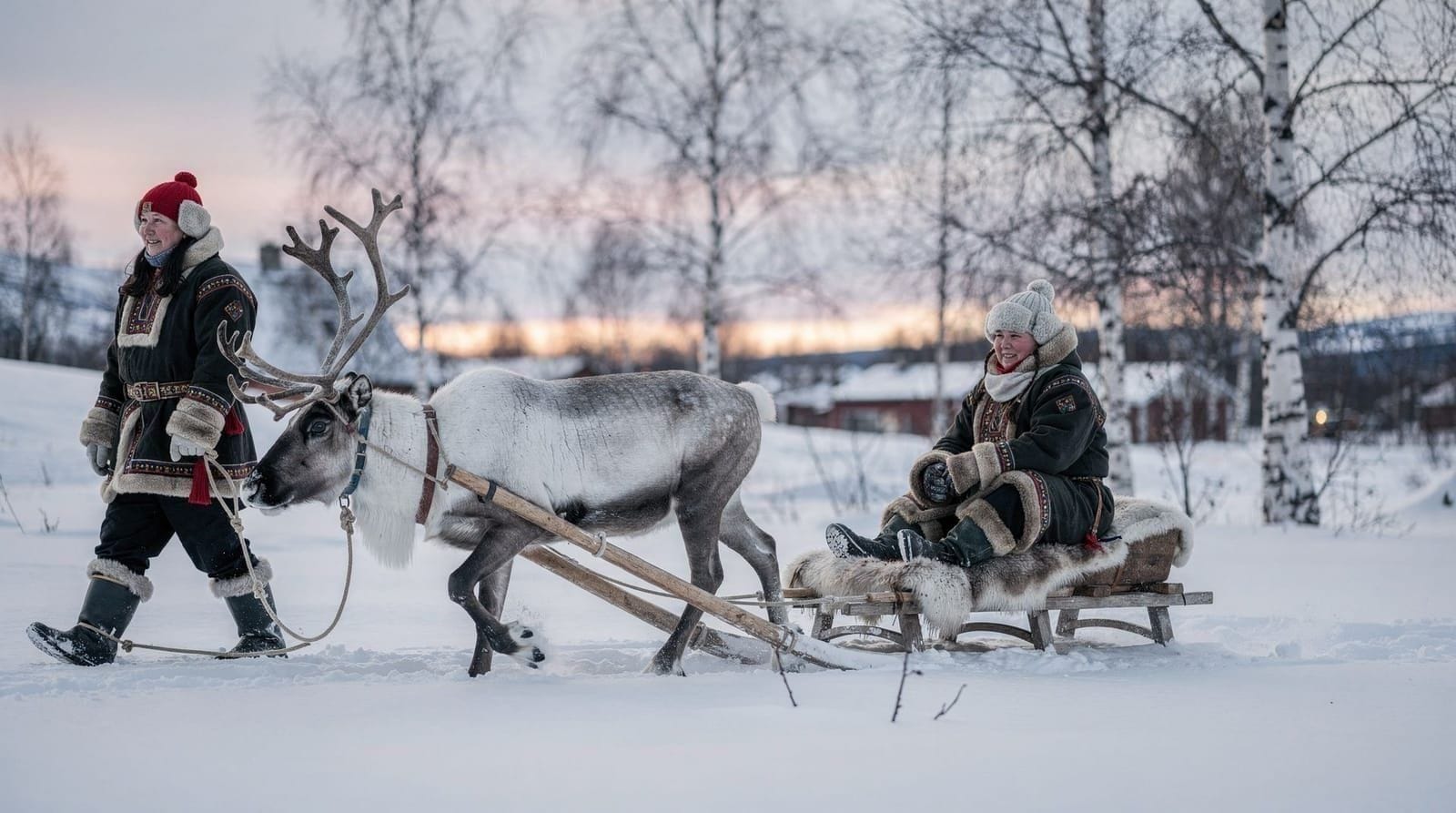
Reindeer sledding and feeding with a Sami guideThe experience itself — being around reindeer, understanding how the herds move, hearing about the relationship between the animals and the families who manage them — is genuinely worthwhile when the context is real. Reindeer are not cattle; the relationship between a Sami herder and a reindeer herd is closer to a trust-based management of semi-wild animals than to conventional livestock farming.
Sami food as cultural encounter
One of the more accessible and least-contested points of cultural engagement is Sami food. The Sami food guide covers the traditional cuisine specifically.
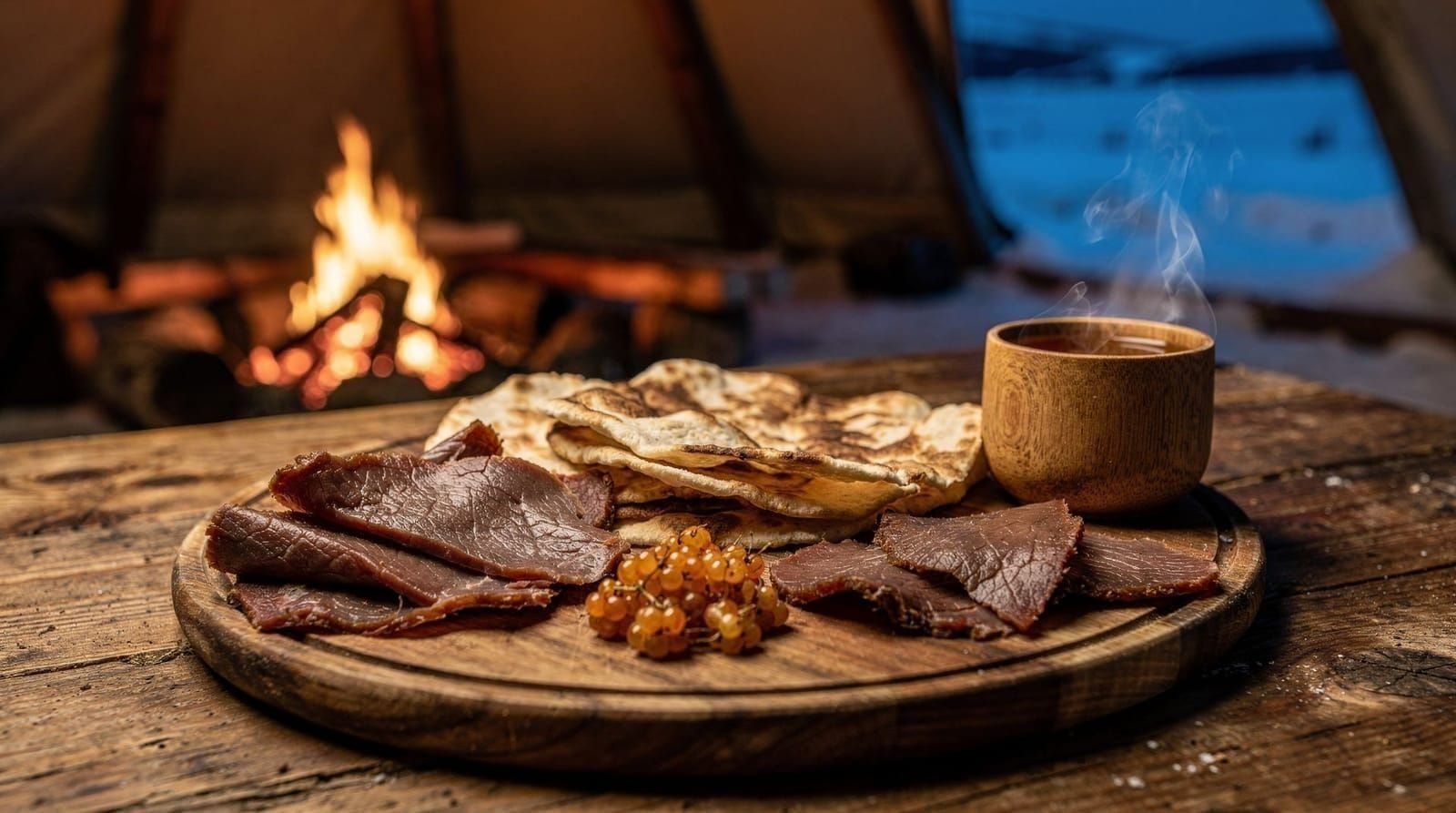
Suovas: Smoked reindeer meat, usually prepared over open fire. Intensely flavoured, with a smokiness that distinguishes it from ordinary dried reindeer. Available at Mathallen Tromsø.
Bidos: A reindeer stew that is the primary hot dish in traditional Sami cooking. Simple ingredients — reindeer meat, root vegetables, sometimes bone marrow for richness. Best eaten in a lavvo context.
Gámaost: A firm, slightly sour traditional cheese. Not easy to find in restaurants but available at specialist food shops. It pairs with flatbread and cloudberry jam.
Luosat: Salt-cured fish, especially salmon, prepared in a way that predates the Scandinavian gravlax tradition by centuries.
Ordering these specifically in Tromsø restaurants — rather than the generic “Arctic seafood” menu — shows food interest that extends beyond the obvious tourist options.
The Perspektivet Museum
One of the best places to engage with Sami culture in Tromsø is not a tour but the Perspektivet Museum — a photography and social history museum that has run extended exhibitions on Sami history, the Norwegianisation period, and contemporary Sami identity. Entry is low-cost (95 NOK for adults, 50 NOK students) and the content is thoughtfully curated. The museum does not romanticise or exoticise; it presents Sami history as Norwegian history, which it is.
Connecting the racing, the food, and the culture
Sami culture in Tromsø is most visible during Sami Week in late March, when the reindeer races down Storgata bring the duodji market and traditional food into the city centre for a concentrated week. Outside that window, engagement happens through individual operators, museums, and restaurants — the Sami food guide and the Perspektivet Museum work as a self-paced alternative any time of year. Combining a reindeer camp visit with a Sami Week trip, if your dates allow, gives both the community spectacle and the slower, hands-on encounter in the same visit.
Questions worth asking a Sami-experience operator directly
Before booking, a short conversation with the operator (by phone or email, or on their booking page) clarifies more than any marketing copy: Is the guide Sami? Is the land connected to an active herding operation, or is it a purpose-built enclosure? Who owns and profits from the tour? How does the operation support the wider Sami community? A genuine operator answers these plainly, often before you ask. Hesitation, vague answers, or a pivot back to photo opportunities are signs to look elsewhere.
Frequently asked questions about Sami culture in Tromsø
Are the reindeer experience tours genuine cultural encounters?
Some are, some are not. The key markers of authenticity are: Sami-operated, led by Sami guides, connected to active herding rather than a tourist-only enclosure. Ask directly before booking.
Can I visit a reindeer herding camp independently?
Not typically without an introduction. Reindeer herding camps are working operations, not tourist attractions. Organised experiences through legitimate operators are the practical route to access.
Is Sami culture very different in Tromsø vs. further north?
The coastal Sami of the Tromsø region have a distinct cultural tradition from the mountain/tundra Sami further north and inland. Coastal Sami practices emphasise fishing as much as herding. Some Tromsø-area experiences blend coastal and mountain Sami traditions, which is worth understanding when evaluating authenticity.
Where can I learn more before visiting?
The Tromsø University Museum’s permanent exhibition on indigenous cultures in the Arctic region is a good starting point. Online, the Sami Parliament website (sametinget.no) has English-language information about contemporary Sami political and cultural life.
How do I know if a “Sami experience” tour is actually Sami-run?
Ask directly whether the guide is Sami and whether the business is Sami-owned. Genuine operators answer this plainly, often before you ask, and can describe how the reindeer connect to an active herding operation. Vague answers or a pivot straight to photo opportunities are a sign the experience is generic Arctic packaging rather than a Sami-led one.