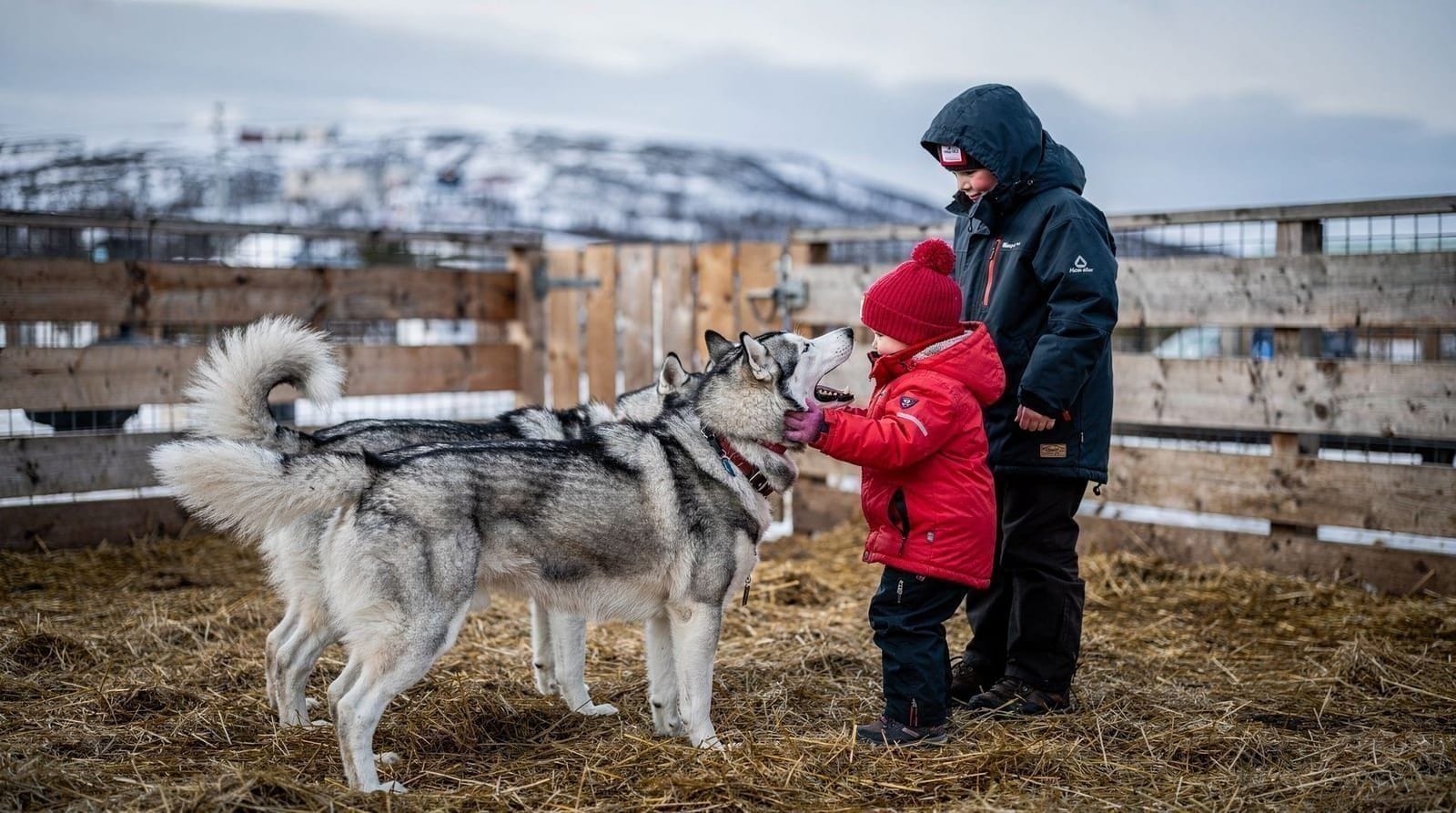
Self-drive vs passenger dog sledding in Tromsø
Tromsø: Self-Drive Husky Dog Sledding Adventure
Should I choose self-drive or passenger dog sledding in Tromsø?
Self-drive puts you on the runners steering your own team of 4–6 huskies — physically demanding and genuinely thrilling. Passenger means you sit in the sled basket while a guide drives. Self-drive costs around 2 950 NOK per person; passenger seats run 1 500–2 200 NOK. Both options operate from roughly November to late April.
Quick answer: Self-drive puts you on the runners steering your own team — physically engaging and genuinely memorable. Passenger means riding in the basket while a guide mushes. Expect to pay around 2 950 NOK for self-drive, 1 500–2 200 NOK for passenger. Both are worthwhile; the choice comes down to your confidence level and what you want to get out of the experience.
| Where | Breivikeidet, Tamok Valley, or Kvaløya kennels |
| Cost | around 1,500–4,500 NOK depending on format and location |
| Time needed | 3–7 hours including transfer |
| Getting there | Transfer usually included from central Tromsø |
| Best time | November–April, with February–March offering the most daylight |
What actually happens on each type of tour
Dog sledding in the Tromsø region runs from roughly November through late April, when reliable snow cover exists. The two formats feel quite different in practice.
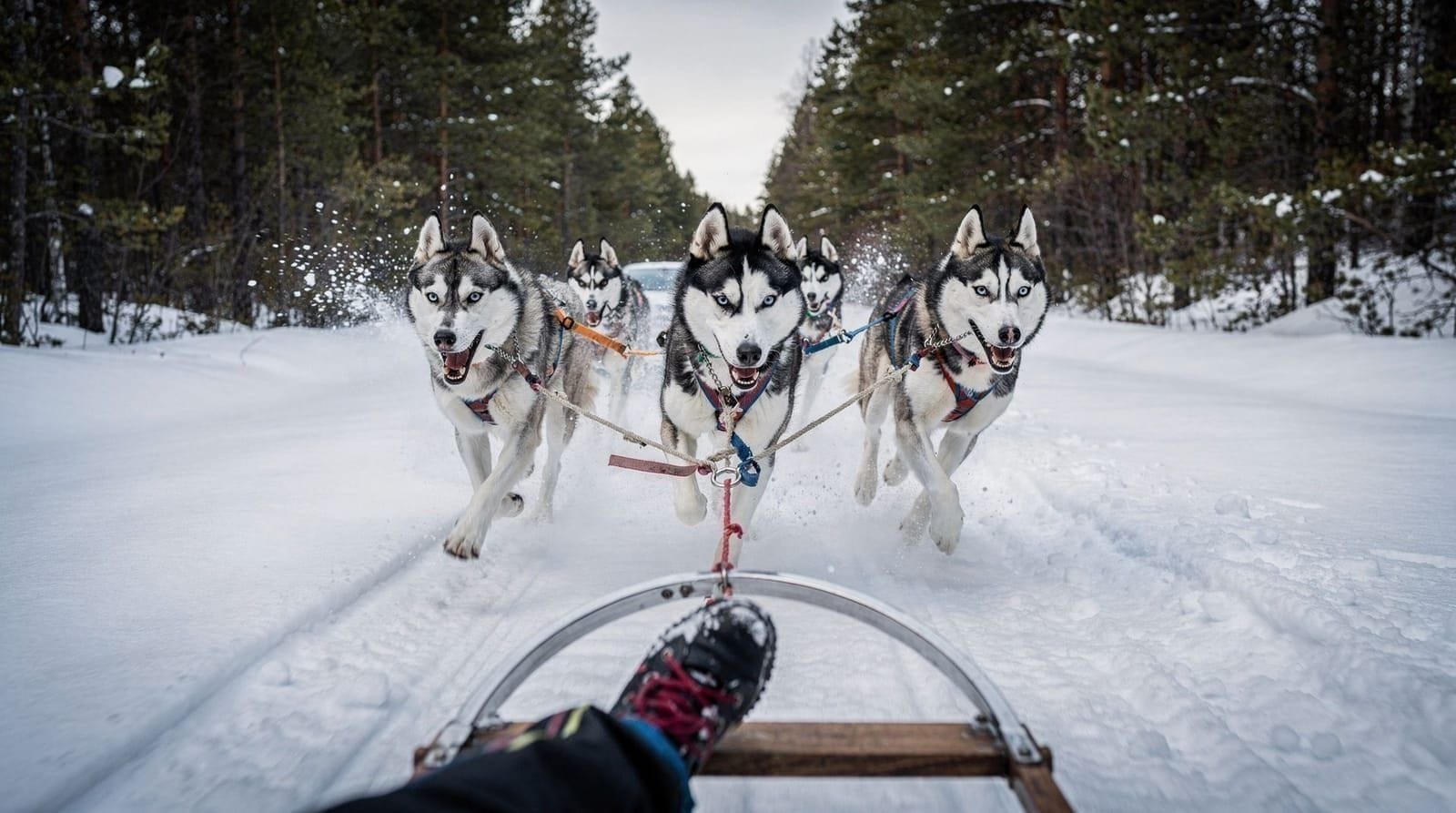
Self-drive tours put you behind a sled with a team of 4–6 Siberian or Alaskan huskies. After a briefing on commands (usually “hike” to go, “whoa” to stop, plus the foot brake), you join a convoy led by a professional guide. Most self-drive tours cover 10–20 km and last 3–5 hours including travel from Tromsø.
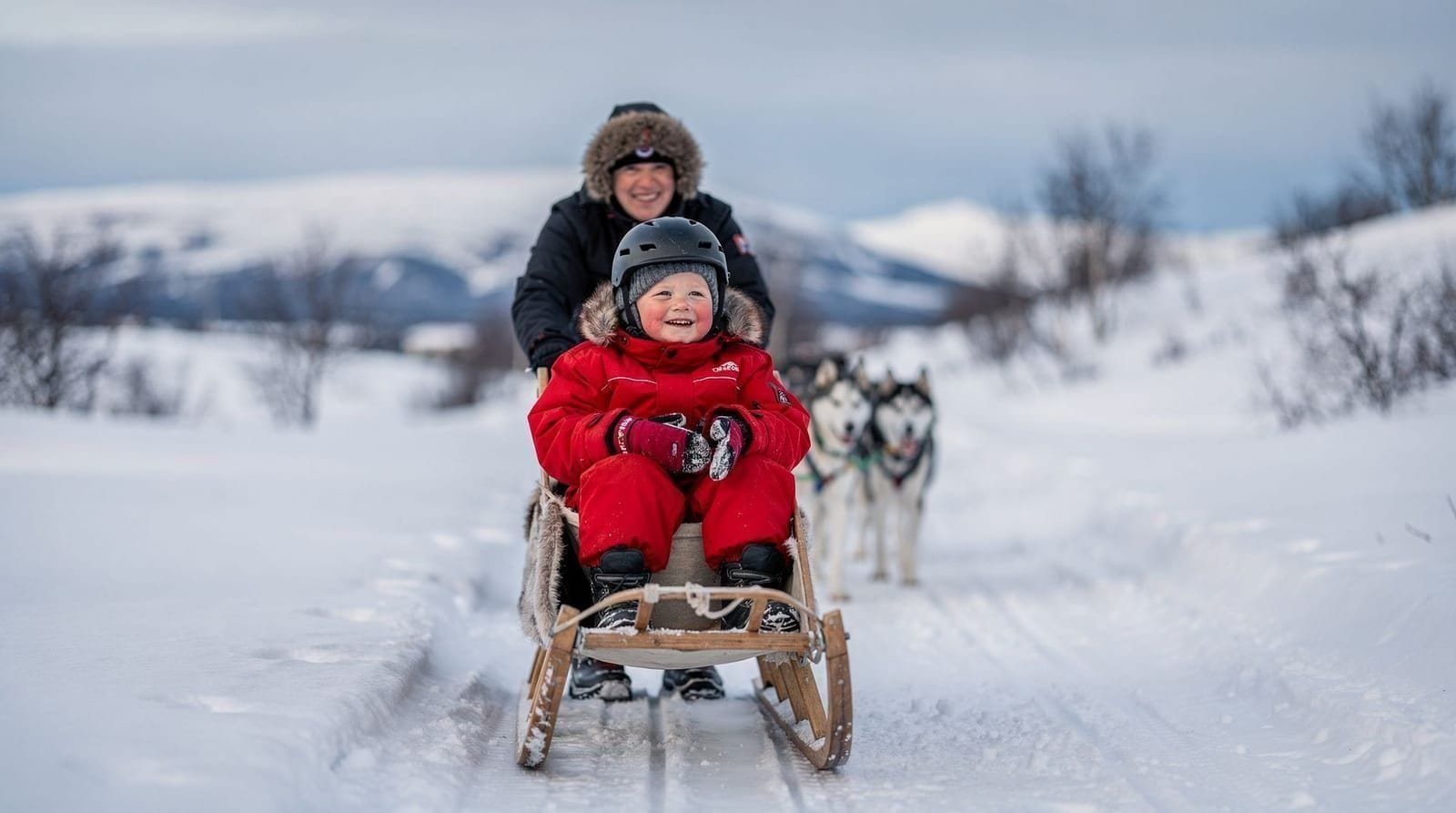
Passenger tours place you in a padded sled basket — sometimes covered with a reindeer hide for warmth — while a musher handles the dogs. You have nothing to do except watch the landscape, take photos, and stay warm. Several passenger options run in the evening specifically for aurora viewing.
The key honest caveat: in both formats, the dogs and terrain do most of the work. “Self-drive” is not white-knuckle extreme sport — it is more like guiding a very responsive toboggan through snowy forest trails.
Price comparison (2025–2026 season)
Prices in NOK per person, group tours:
| Format | Typical range | Duration |
|---|---|---|
| Self-drive, half day | 2 400–3 200 NOK | 3–4 hours |
| Passenger, half day | 1 500–2 200 NOK | 3–4 hours |
| Self-drive + Camp Tamok | 3 000–4 500 NOK | 5–7 hours |
| Passenger, evening aurora | 2 000–2 800 NOK | 3–5 hours |
Solo travellers sometimes pay a supplement if they cannot share a sled with another person.
Tromsø self-drive husky adventure — the city-closest self-drive option, departs from Tromsø with transport includedSkill and fitness requirements
Self-drive requires decent balance and the ability to stand for 1–2 hours while the sled moves. You will press a foot brake on downhills, lean into turns, and occasionally jog alongside the sled on flat terrain to rest the dogs. It is not strenuous in the gym sense, but people with bad knees, lower-back problems, or vertigo-related balance issues should stick to the basket.
Passenger seats have almost no physical demands beyond dressing warmly. Children as young as 2–3 can ride as passengers. Self-drive minimum ages vary by operator but typically sit at 10–16.
Which option suits which traveller
Choose self-drive if:
- You want an active, hands-on Arctic experience
- You are traveling as a couple who do not mind taking turns (some tours let pairs share one sled)
- Physical participation matters more than aurora visibility
- You are visiting the Tamok Valley and want to explore longer terrain
Choose passenger if:
- You are bringing children under 10 or elderly relatives
- You want to photograph or film the landscape without multitasking
- Aurora viewing is the main goal — see northern lights with kids for evening options
- You have physical limitations that make standing on runners for 2+ hours inadvisable
Choose the combination (some operators offer hybrid tours where everyone drives for one section and rides for another) if you want a taste of both without committing to either.
Location matters: Breivikeidet, Tamok, and Kvaløya
Most dog-sledding operators run from three main locations:
Breivikeidet (35 minutes north of Tromsø on the E8 highway) has the highest concentration of kennels and is the most accessible. Terrain is gentle rolling hills — ideal for first-timers.
Tamok Valley (about 80 km southeast) is where the serious terrain is. Longer routes through mountain valley corridors, fewer crowds, and better light in winter. The drive alone is scenic. Read more in our Camp Tamok dog sledding guide.
Kvaløya island (30 minutes west) offers coastal forest trails and occasional fjord views. The dog sledding on Kvaløya option tends to have smaller groups.
Advanced dog sledding at Camp Tamok — longer routes, more challenging terrain, includes transport from TromsøWhat to expect on the day
Regardless of format, tours follow a similar structure:
- Pickup from Tromsø city centre (most operators include hotel transfer)
- Drive to the kennel — 30 to 90 minutes depending on location
- Meet the dogs and briefing — handlers introduce you to the team; you learn commands and safety
- The run — 1–3 hours on trail
- Rest stop — usually at a wooden cabin or lavvo tent with hot drinks and sometimes a light meal
- Return and drop-off
At good kennels, the briefing is thorough and handlers stay alongside beginner mushers for the first kilometre. Be suspicious of operators who skip the briefing or rush the dog-meet phase.
Dog welfare: what to look for
Before booking any dog-sled tour, check these signals:
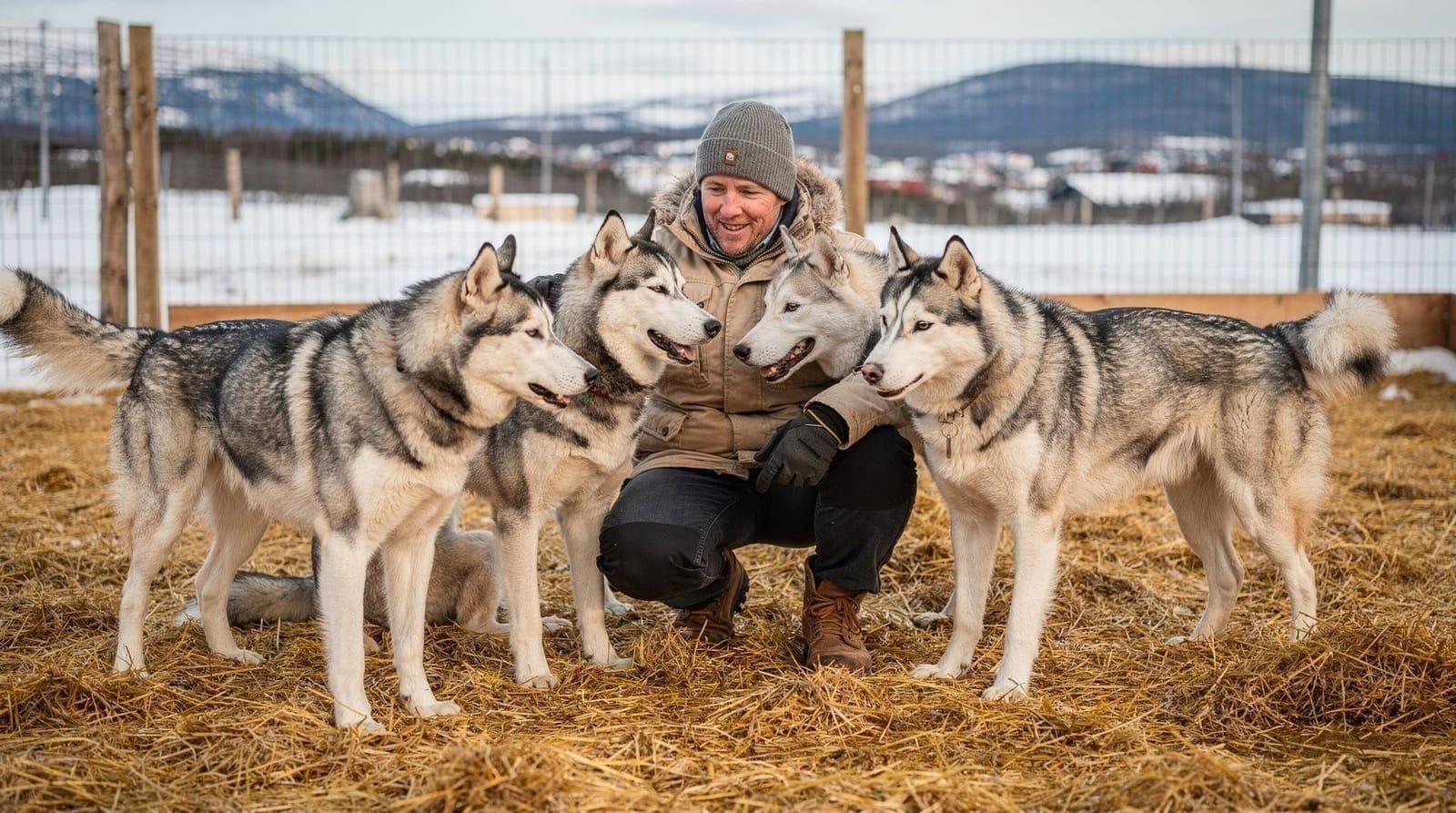
- Dogs appear healthy, active, and engaged (barking and jumping to be harnessed is normal husky behaviour — it means they want to run)
- Group size is matched to the number of available dog teams (a kennel offering 8 simultaneous self-drive tours needs 8 separate dog teams, typically 32–48 dogs)
- The rest stop is genuinely a rest: dogs are tethered, given water, and the pace of the next section is relaxed
Our full dog sledding ethics guide covers what legitimate operators look like versus the ones cutting corners.
Booking timing
Popular self-drive slots in December and January sell out 6–10 weeks in advance. Passenger tours have more capacity. If your trip is over Christmas or New Year, book as soon as your travel dates are confirmed.
Last-minute availability is better in February and March — snow is still reliable and daylight increases (up to 10+ hours by late February), making those months arguably the best combination of conditions.
Packing for the sled
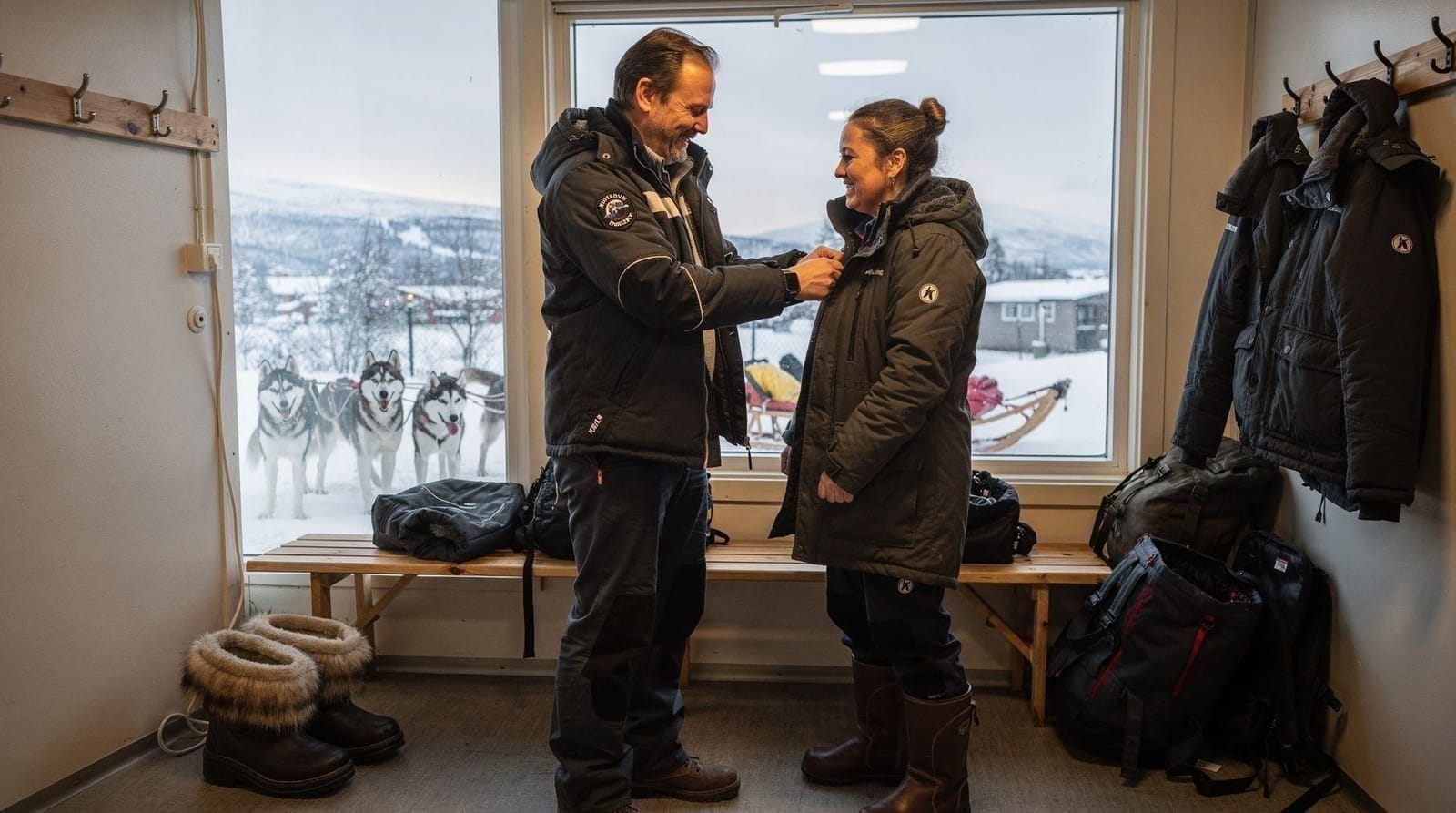
Both formats require serious cold-weather dressing — operators provide outer suits, helmets, and mittens, but the base and mid layers are your responsibility. A full breakdown is in our what to wear dog sledding guide.
The single most important item for self-drive: a balaclava or neck gaiter. Mushers face into the wind at 15–20 km/h; exposed skin at -15°C gets very cold very quickly.
Guided husky sledding with traditional Norwegian lunch — good for first-timers who want a local guide alongsideHow this compares to other Tromsø “self-drive” decisions
Dog sledding is not the only Tromsø activity where you choose between doing it yourself and letting a guide handle it. If you are also weighing self-drive vs guided aurora hunting, note the logic is different: aurora self-drive means driving a rental car, which rewards existing winter-driving experience, while dog-sled self-drive is taught from scratch in a 20–30 minute briefing and requires no prior experience at all. Do not let hesitation about one carry over to the other — they are genuinely different skill sets.
Frequently asked questions about self-drive vs passenger dog sledding
Is self-drive dog sledding safe for beginners?
Yes, with caveats. Every operator gives a 20–30 minute briefing on mushing commands, braking, and sled control. The dogs know the trail; your job is to stay upright and steer on curves. Falls happen — padded gear is provided. People with back or knee problems should choose the passenger basket instead.
How fit do I need to be to drive my own dog sled?
You need basic balance and the strength to press a foot brake and lean into corners. Most healthy adults aged 10 and up manage fine. The demanding part is maintaining stance for 1–2 hours, not speed or brute force.
Can I switch between self-drive and passenger mid-tour?
On most group tours, yes — guides rotate positions at the halfway rest stop. Always confirm when booking.
What happens if I fall off?
The guide stops the dogs. Huskies are trained to halt on command. The risk is a twisted ankle or wrist — wrist guards are recommended.
Which option gives a better aurora experience?
Passenger. You can look up at the sky without worrying about balance or trail hazards. Several operators offer evening aurora-focused tours with the passenger basket as the main design.
Do children have to ride as passengers?
Children under 10–12 typically ride with an adult. Teens aged 12–16 can often self-drive on gentler terrain. More detail in our husky for families guide.
Are group sizes different between self-drive and passenger tours?
Self-drive groups tend to be smaller — 6 to 12 mushers — so each person gets more individual attention. Passenger tours can accommodate larger groups.
Which option is better at Camp Tamok?
Camp Tamok specialises in longer self-drive expeditions with better terrain. For passengers, the valley landscape is spectacular regardless — but if you want the full mushing experience, this is the right venue.
Is passenger dog sledding worth it if I could just self-drive instead?
Yes, for the right traveller — it is not a “lesser” version of the experience, just a different one. If your priority is photographing the landscape, watching for aurora, or travelling with someone who cannot self-drive, the passenger basket delivers a genuinely good outing without the standing and steering.
How do I know if a dog-sledding operator treats its dogs well?
Look for healthy, visibly excited dogs at harnessing, a group size matched to the number of dog teams available, and a genuine rest stop with water and tethering partway through. See the dog sledding ethics guide for the full checklist before booking.
Top experiences
Bookable activities with verified prices and instant confirmation on GetYourGuide.