Tromsø with toddlers: what works, what does not, and what age makes it easier
We brought a two-year-old and a four-year-old to Tromsø in February, which is either adventurous or insane depending on your perspective. After ten days, I can tell you that it was both, often simultaneously.
| Where | City centre for logistics, day trips for the highlights |
| Cost | Family activities from 95–235 NOK/child; self-catering apartment 1,500–2,500 NOK/night |
| Time needed | Best over 5+ days to allow adaptation to the darkness |
| Getting there | TOS airport, smooth buggy check-in, small and low-stress terminal |
| Best age | 5+ meaningfully easier than under 5 for outdoor cold |
This is not the promotional version. This is the version that includes the toddler who refused to wear the outer layer at -12°C, the 4-year-old who was frightened by the darkness at 2 p.m., and the evening aurora tour that ended with two sleeping children and two exhausted adults who had seen approximately 45 seconds of pale green sky.
It was also, overall, extraordinary.
The cold: the real variable
Arctic winter with toddlers is a logistics problem above all else. A four-year-old who decides to remove a mitten at -15°C is a safety problem that resolves itself in under three minutes (cold hands, mitten back on, problem solved), but it is an illustration of the constant management involved.
What made cold weather manageable:
Merino wool everything. Start with Devold or Helly Hansen base layers (200–250g merino) that go on first and stay on all day. These are expensive — expect to pay 400–600 NOK per child per garment — but they work. Synthetic base layers trap moisture; merino dries faster and is more comfortable for a child who is alternately running and standing still.
The snowsuit calculus. Norwegian pufferdress (one-piece insulated overalls) are standard kit for local children from age 0–5. They are infinitely better than assembling a matching jacket and trousers, because there is no gap at the waist. Reima and Bergans make good ones in the 1000–1500 NOK range.
Carrier versus buggy. We had a baby carrier for the two-year-old (a Manduca with the winter cover, which encloses the child and shares body heat). This was one of the best decisions we made. A buggy on snow-covered uneven surfaces in -10°C is miserable. The carrier kept her warm, let us move freely, and kept her nap schedule intact because she simply fell asleep against a warm body.
The darkness: harder than the cold
Our four-year-old had never experienced persistent darkness, and the absence of daylight at 2 p.m. on day two produced genuine upset. He asked where the sun was. We explained. He cried. On day three, he asked if the sun was coming back. By day five, he had adapted and no longer noticed.
This adaptation process is real, it takes a few days, and it is much harder for toddlers who do not have the conceptual framework to understand what polar night means. If you are visiting with children under three, prepare them with books or videos about polar night before you travel. The Norwegian picture book “Vinter” by Maja Lunde has good illustrations of Arctic winter light, though it is in Norwegian — the images are self-explanatory.
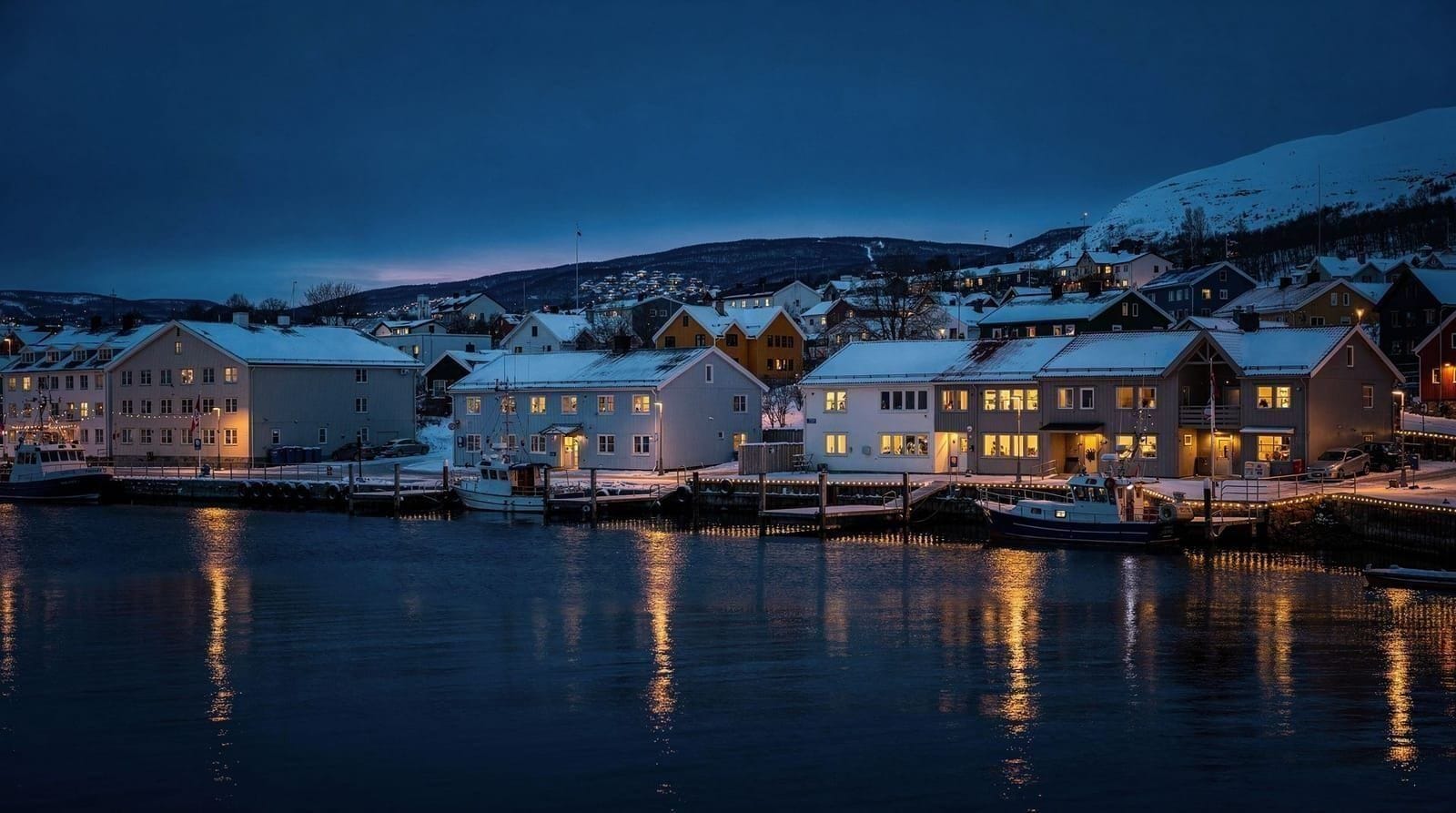
The blue twilight window (roughly 10 a.m.–2 p.m.) became sacred for us: all outdoor activities, all fresh air, all energy expenditure happened in this window. After 2 p.m., we moved to indoor activities, rest, and dinner. This rhythm actually suited the children very well once established.
What actually worked with toddlers
Polaria aquarium: 30–45 minutes of genuine child engagement. The bearded seal tank is at child-height viewing level. The Arctic environment film (in a tilting cinema) frightened our four-year-old slightly but was fine. Entry: 155 NOK adult, 95 NOK child 3–15, under 3 free. One of the few Tromsø attractions priced for families.
The cable car (Fjellheisen): Our two-year-old was delighted by the cable car ride. The summit view in blue twilight was legitimately awe-inspiring. We stayed 25 minutes. The restaurant at the top has hot chocolate. Entry: 235 NOK adult, 120 NOK child, under 5 free. Worth it.
Reindeer experience: The reindeer feeding experience was the undisputed highlight for both children. Reindeer at close range, feeding from outstretched hands, in a snow field with a Sami guide explaining the animals and the culture. The guide was experienced with young children and calibrated perfectly — not patronising, not overwhelming. Our four-year-old talked about this for weeks after returning home.
Snowshoeing for under-5s: We tried snowshoes for the four-year-old. This worked for about 400 metres before he wanted to be carried. Snowshoes for children in this age group are a nice idea in theory. In practice, toddlers run on snow just fine without them — they are light enough not to sink. Save the snowshoes for ages 6+.
What did not work
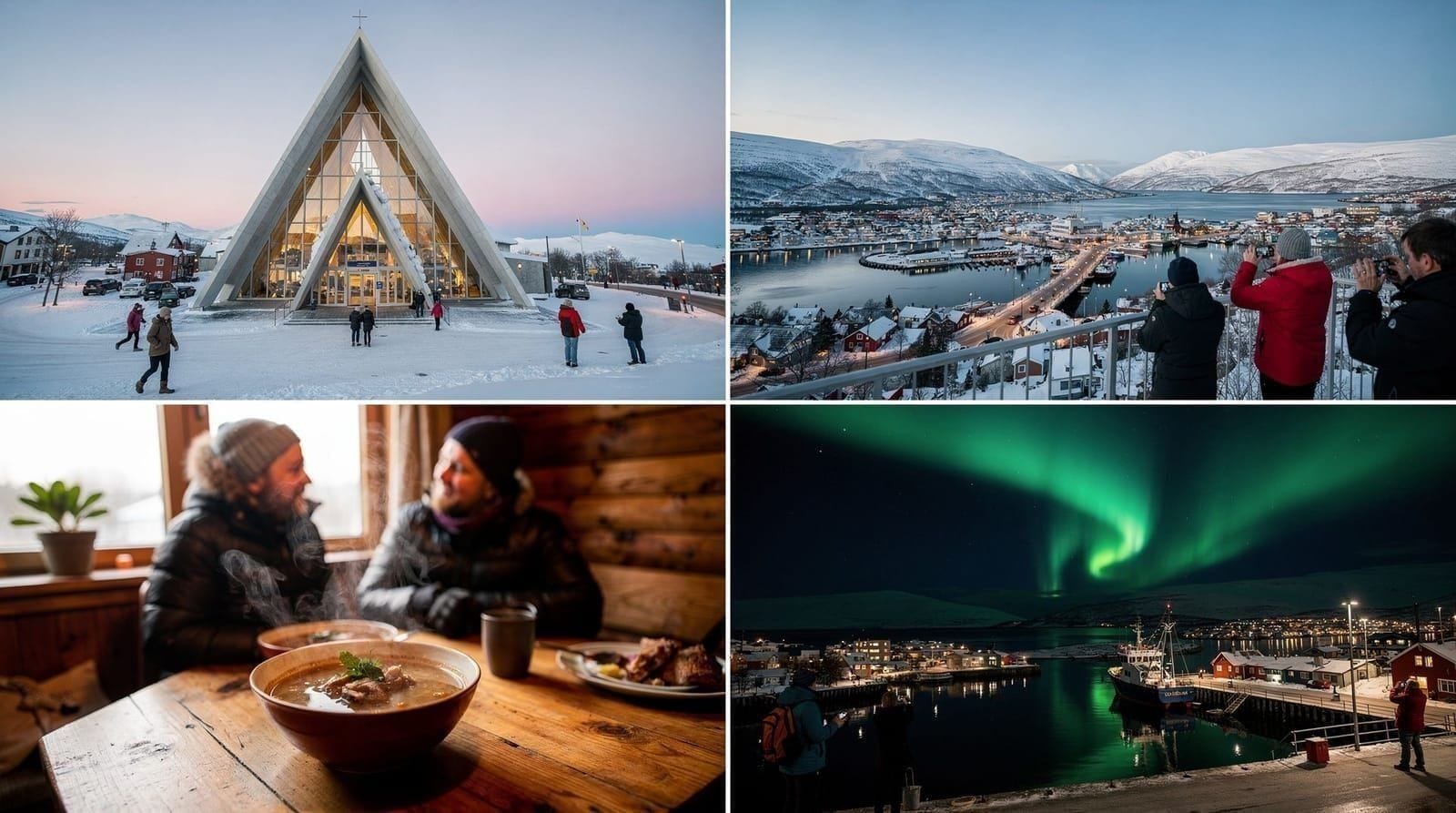
Aurora tour with small children after 9 p.m.: We tried once. The children were exhausted by 9:30 p.m. regardless of the afternoon nap. The tour ran until 1:30 a.m. Two sleeping children in sleeping-bag wraps in the minibus while parents alternately monitored children and looked at the sky is not the aurora experience you are imagining when you book. Next time: one parent goes on the tour, one stays at the hotel. We did this on night three and it was transformative for the parent who went.
Long car drives with wide-awake toddlers: The drive to Sommarøy takes about an hour. With a two-year-old who does not sleep in the car and a four-year-old who asks “are we there yet” starting at minute 12, it was hard. We managed it, but shorter excursions (30–40 minutes from the city) were more sustainable. Sommarøy is extraordinary — but consider whether the drive is something your specific children can manage.
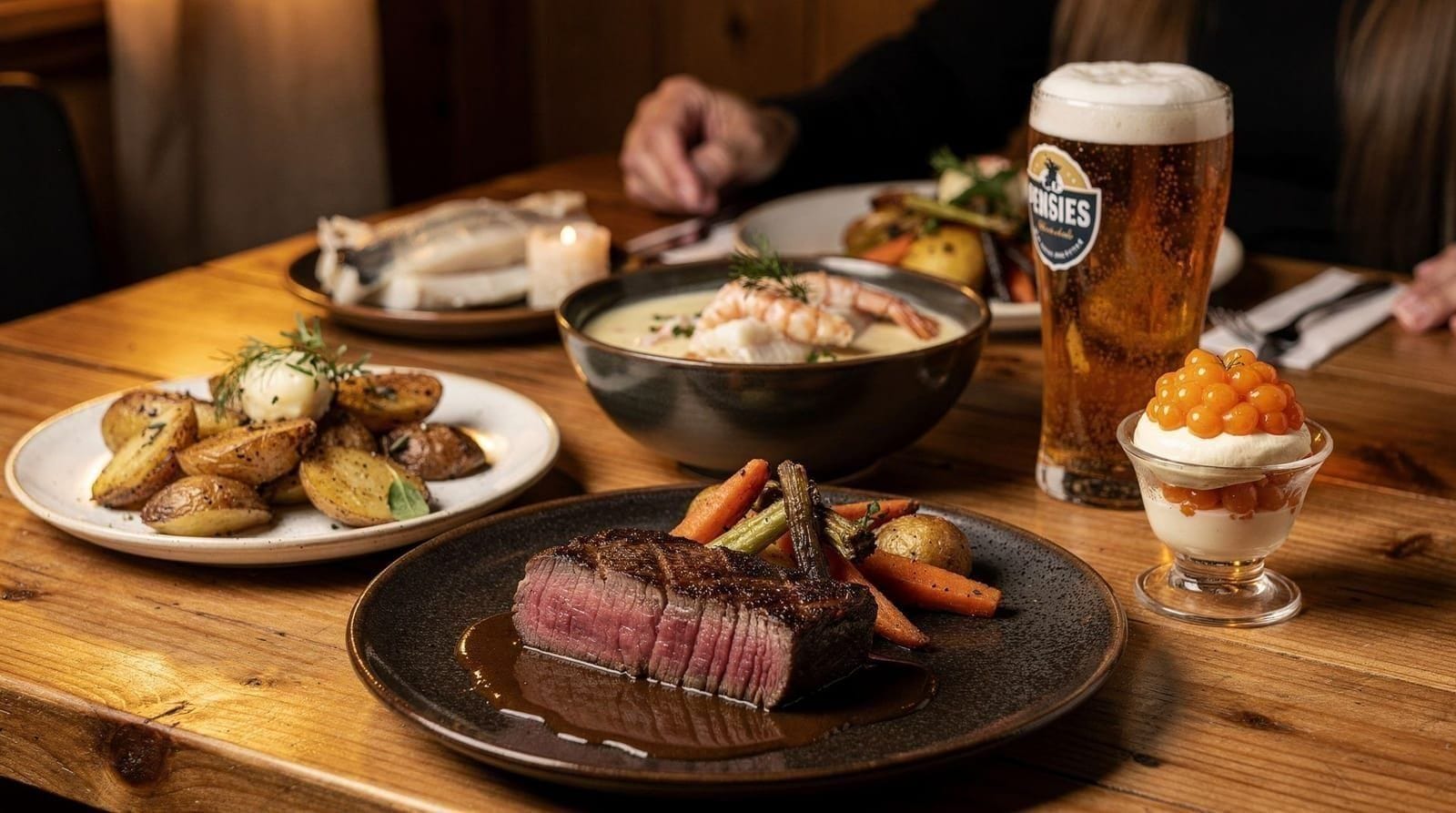
Restaurants with long waits and adult-oriented menus: Anywhere that does not seat you within 15 minutes and has no pasta option should be avoided with hungry toddlers. Peppes Pizza on Storgata became our toddler-reliable fallback: reliable, predictable, 150–200 NOK for a child portion, and they will seat you immediately. This is not the authentic Arctic food experience, but it preserves parental sanity.
Logistics worth knowing
What age makes the Arctic easier? Most parents I spoke with at the Polaria or on the cable car agreed: age 5+ is meaningfully easier than under 5 for sustained cold-weather outdoor activity. Age 7+ is the point where a child can genuinely participate in snowshoeing, simple skiing, and understand and appreciate the aurora experience.
Flying with small children to Tromsø: SAS and Norwegian both allow a free bag for infants. Buggy check-in at TOS is smooth. The airport is small and not stressful for families. The domestic terminal in Oslo (Gardermoen) has a reasonable family room, though it is harder to find than the signage suggests.
Accommodation: choose a self-catering apartment over a standard hotel if you are with toddlers. The ability to cook breakfast in the room, to heat up the toddler’s dinner without navigating restaurant timing, and to have a separate sleeping area for children is worth the price difference. Tromsø has several good apartment rental options in the city centre (look on Airbnb or direct booking sites — expect 1500–2500 NOK per night for a two-bedroom).
The family guides have more on the practical logistics. For a longer trip with older children, the family summer itinerary is worth reading even if you are visiting in winter — the structural approach to pacing applies across seasons.
Dog sledding and reindeer with young children
Both are genuinely toddler-compatible if you choose the right format. Passenger dog sledding (you ride in the sled rather than driving) works well from around age 3, and the huskies themselves are usually calm and used to children by the time they reach the sled. The dog sledding with kids guide covers age recommendations by operator. Reindeer feeding, as noted above, was our standout activity — check whether the operator allows very young children close to the animals, since some experiences are structured for slightly older kids to handle the feeding independently.
Book a reindeer experience at a Sami campWhat we would change next time
Looking back, the single biggest improvement would have been booking one fewer full-day excursion and adding one more unstructured half-day at the hotel or a nearby playground-equivalent (Tromsø has indoor play areas for exactly this purpose in winter). Toddlers on a trip need downtime that does not involve travelling, and we underestimated how much the transitions themselves — getting dressed in snow gear, getting undressed again, car seats, buggy folding — ate into the day. Budget more transition time than feels necessary; it always takes longer than you think with small children in winter layers.
Frequently asked questions about Tromsø with toddlers
What is the minimum age for a Tromsø winter trip?
There is no minimum — but under 18 months is genuinely difficult in Arctic temperatures. Most of the outdoor experiences are not suited to very young infants. Age 3+ is where children start to engage meaningfully with the environment.
Are aurora tours suitable for toddlers?
Only if you adjust expectations dramatically. Young children will fall asleep. One parent attending while the other stays at the hotel is the realistic solution.
What is the best toddler-specific attraction in Tromsø?
Polaria aquarium and the reindeer feeding experience are genuinely well-suited to ages 2–6. The cable car is exciting for any age that can appreciate heights and movement.
How do you keep a toddler warm in Arctic temperatures?
Merino wool base layer, mid-layer fleece, one-piece insulated snowsuit (pufferdress), mittens (not gloves) with liners, wool hat with ear flaps, insulated and waterproof boots. Baby carrier with winter cover for the youngest. The layering system matters — every layer earns its place.
Is Tromsø stroller-friendly?
In the city centre, mostly yes — main streets are ploughed and passable. On snow-packed residential streets and outdoor viewpoints, a stroller becomes difficult. A carrier is more versatile for toddlers in Arctic winter conditions.
Is dog sledding safe for toddlers?
Passenger dog sledding (riding in the sled, not driving) is generally suitable from around age 3, with the child wrapped in blankets alongside a parent. Confirm the operator’s minimum age policy, as it varies. See the dog sledding with kids guide for specifics.
How many days should a family with toddlers plan for Tromsø?
Five days or more if possible. It gives the darkness-adaptation process (typically 3–5 days) room to happen before the trip ends, and allows for the slower pace and extra rest days that young children need.