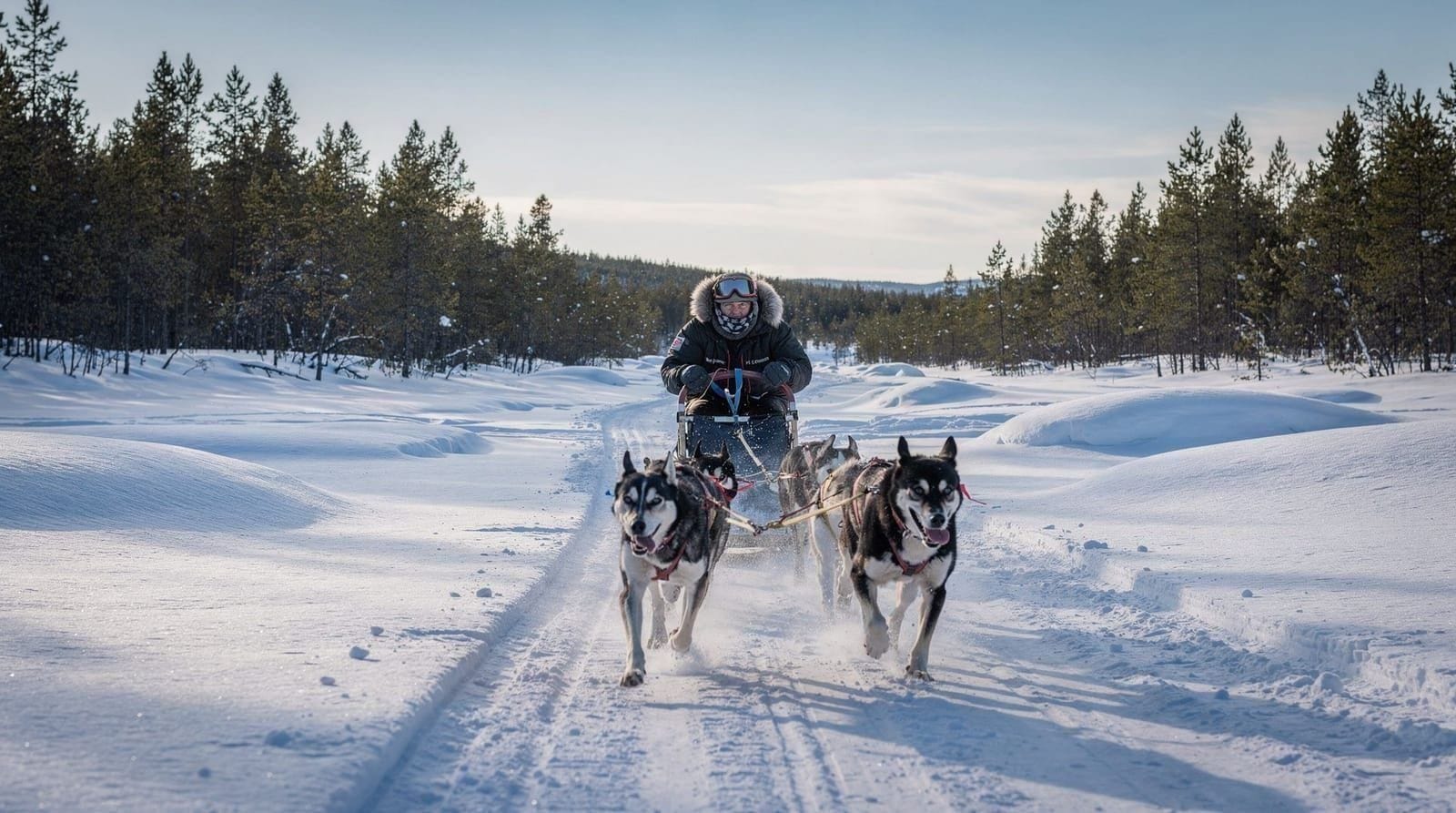
A diary of my husky sledding day in Tamok Valley
| Where | Camp Tamok, ~60 km east of Tromsø |
| Cost | ~2,950 NOK for the self-drive advanced tour |
| Time needed | Full day — ~90-minute drive each way, 4–5 hours at camp |
| Getting there | Included bus transfer, or self-drive with winter tyres |
| Best time | Any winter month; deep-season snow (Dec–Mar) is most reliable |
7:15 am. Bus from Tromsø city centre. I have eaten breakfast but I am nervous in a way I did not anticipate — I have never driven a dog sled and the pre-booking information said I would be driving my own team. Twelve dogs. Eight kilometres through the Tamok Valley.
The guide gave me a look that suggested she had seen this specific expression of mild panic many times before.
Getting there: the drive to Tamok
Camp Tamok sits roughly 60 km east of Tromsø, up into the valley behind Breivikeidet. In winter, the valley is a different world: white birch forests, a frozen river, mountains rising steeply on both sides. The drive takes about 90 minutes from the city on winter roads.
The bus picked up from several hotels before heading east. If you are self-driving — which is possible with a rental car with winter tyres — the roads in the valley are generally ploughed but can have ice in shadow sections. The camp itself has parking.
What happens before you actually drive
This was the part nobody wrote about when I was researching. There is roughly 45 minutes of orientation before anyone gets near a sled.
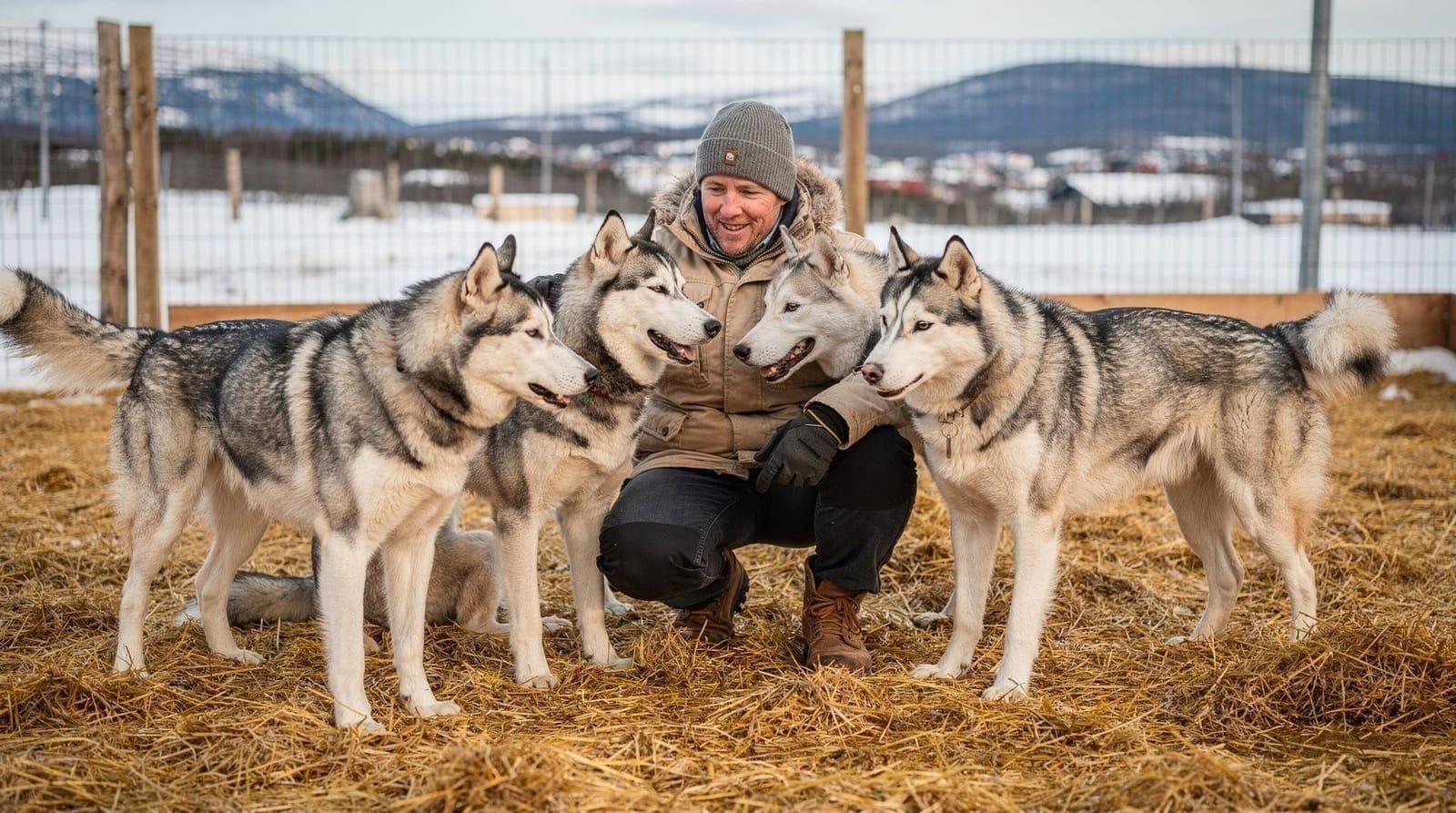
First, you meet the dogs. There are 80–100 at most camps during the season. These are Alaskan huskies, bred for running — compact, wiry, constantly moving. They are not soft pets. They are working animals who know exactly what the harnesses mean and start screaming (literally screaming) when the mushers begin gearing them up.
The orientation covers: how to stand on the sled runners, how to lean into corners, what to do if the dogs stop unexpectedly, how to use the drag brake. The guide was direct about this: if you fall off, the dogs will continue running. There is usually a handler on a snowmobile behind the group who retrieves runaway sleds, but the thirty seconds before that happens are your problem.
I fell off at the second corner. Went straight into a snowbank. Got back on. Continued.
The route
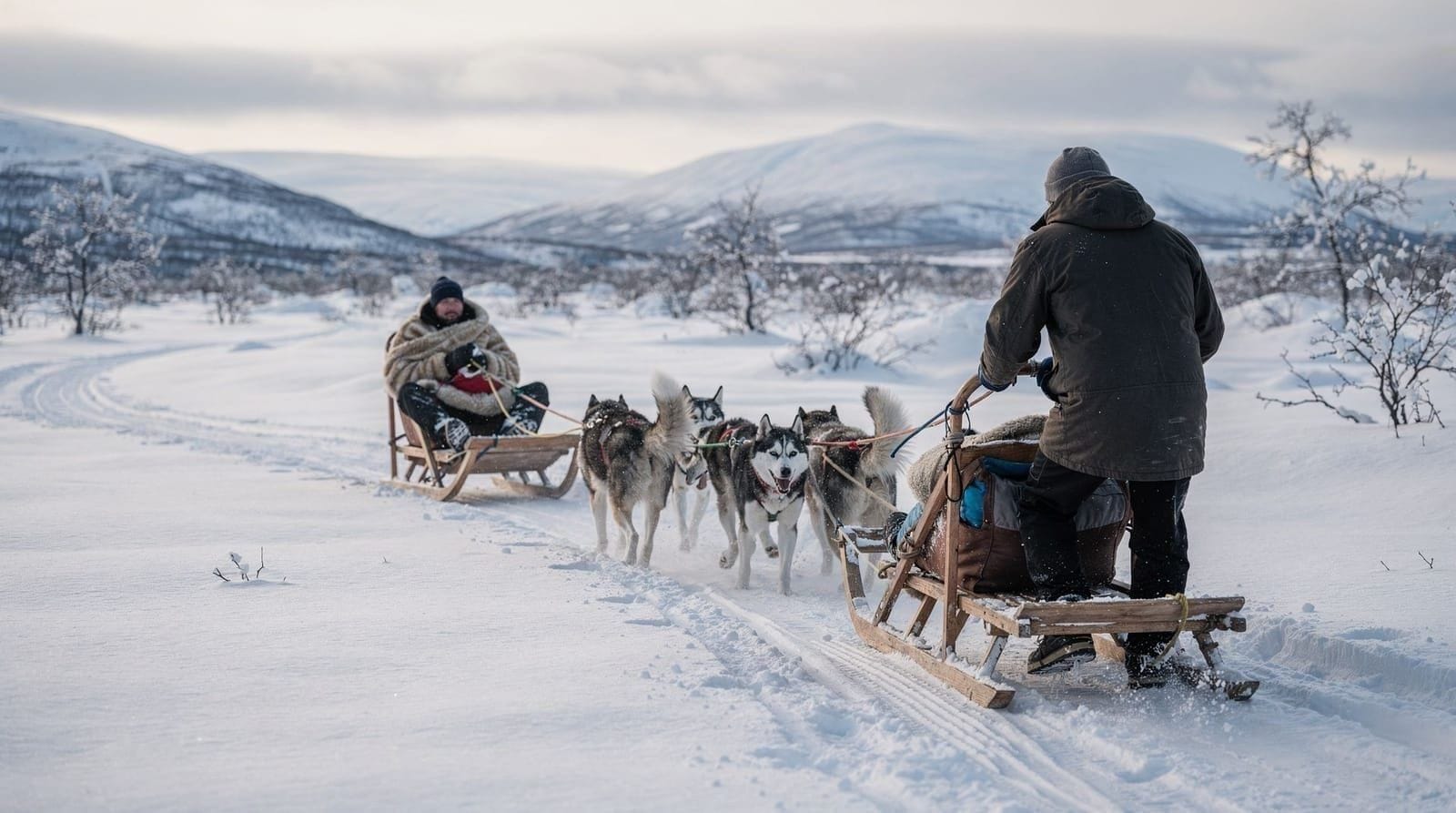
Eight kilometres through old-growth forest, frozen river crossings, open meadow sections. Duration: about 45–60 minutes of actual driving, plus stops. The dogs move at roughly 12–16 km/h depending on terrain.
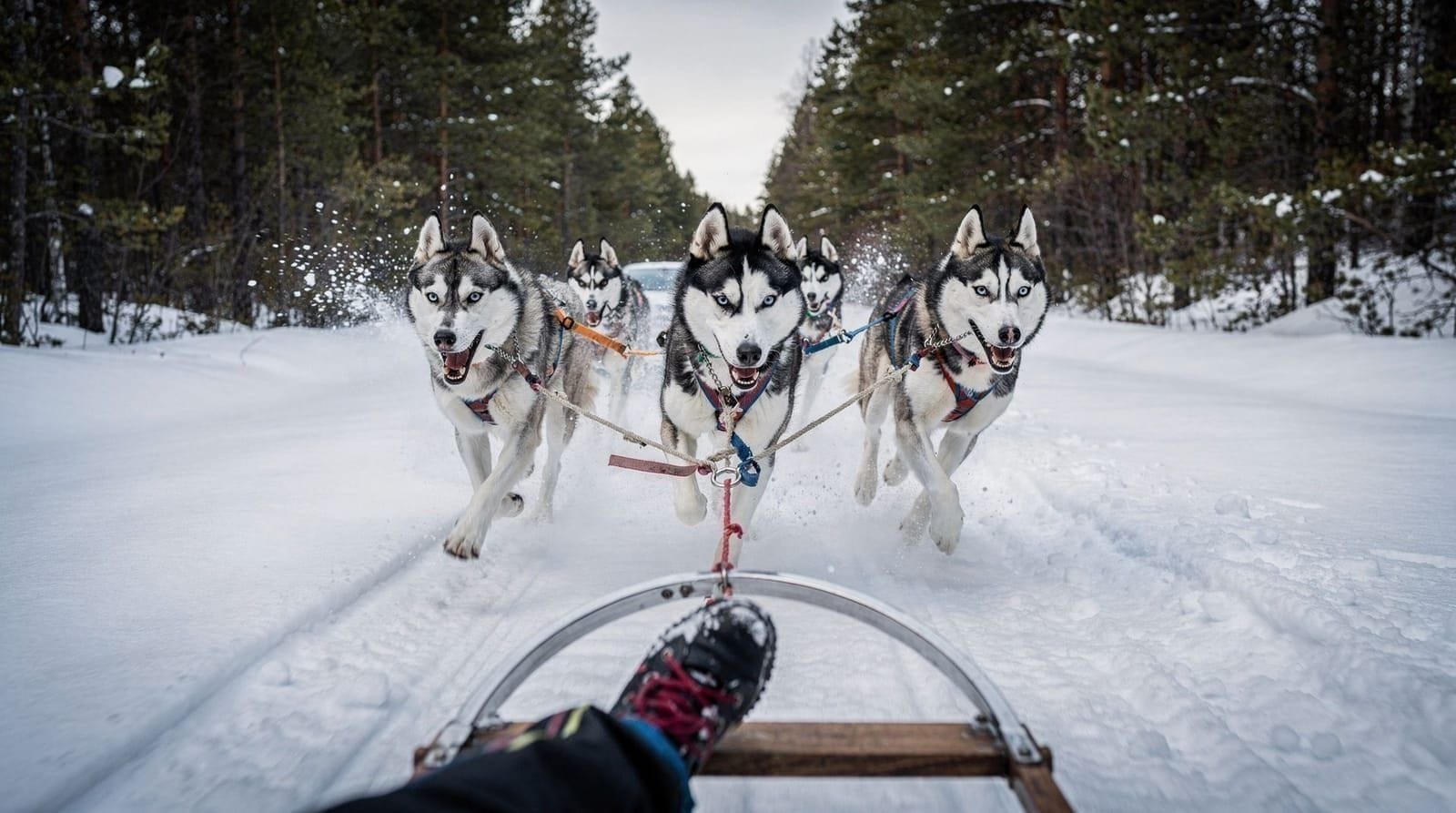
The silence when the dogs are running well is extraordinary. No motor sounds, just paws on snow and the runners hissing. The valley opens up on the meadow sections and you can see several peaks of what eventually becomes the Lyngen Alps beyond.
The dogs communicate constantly. Lead dogs take corners sharply; wheel dogs closest to the sled push hardest on inclines. Watching the team work is as interesting as driving it.
Self-drive vs. passenger: the real difference
I chose self-drive because the self-drive vs. passenger comparison guide suggested it was more engaging. It is — but it is also more physically demanding than the description implies. You are on your feet the whole time, shifting weight, using your legs as shock absorbers, actively managing the team.
The passenger sled is a more comfortable experience — you sit in a padded basket sled while a guide or handler drives. You see the same scenery and spend the same time with the dogs. It is also what the family dog sledding guide recommends for children under about 12.
If you have any knee or lower back issues, think carefully about self-drive. Two hours on sled runners is surprisingly physical.
What the day costs
The Camp Tamok advanced dog sledding tour with self-drive runs about 2,950 NOK (roughly €255 or £215). That includes the return transfer from Tromsø, the full route, a traditional Norwegian lunch at the camp (brown cheese on flatbread, warm soup, hot chocolate), and the orientation.
A shorter, passenger-only tour runs about 1,800–2,200 NOK. Budget tours operating closer to Tromsø (Breivikeidet, about 20 km from the centre) start around 1,400 NOK but cover shorter routes — typically 2–4 km — with smaller teams.
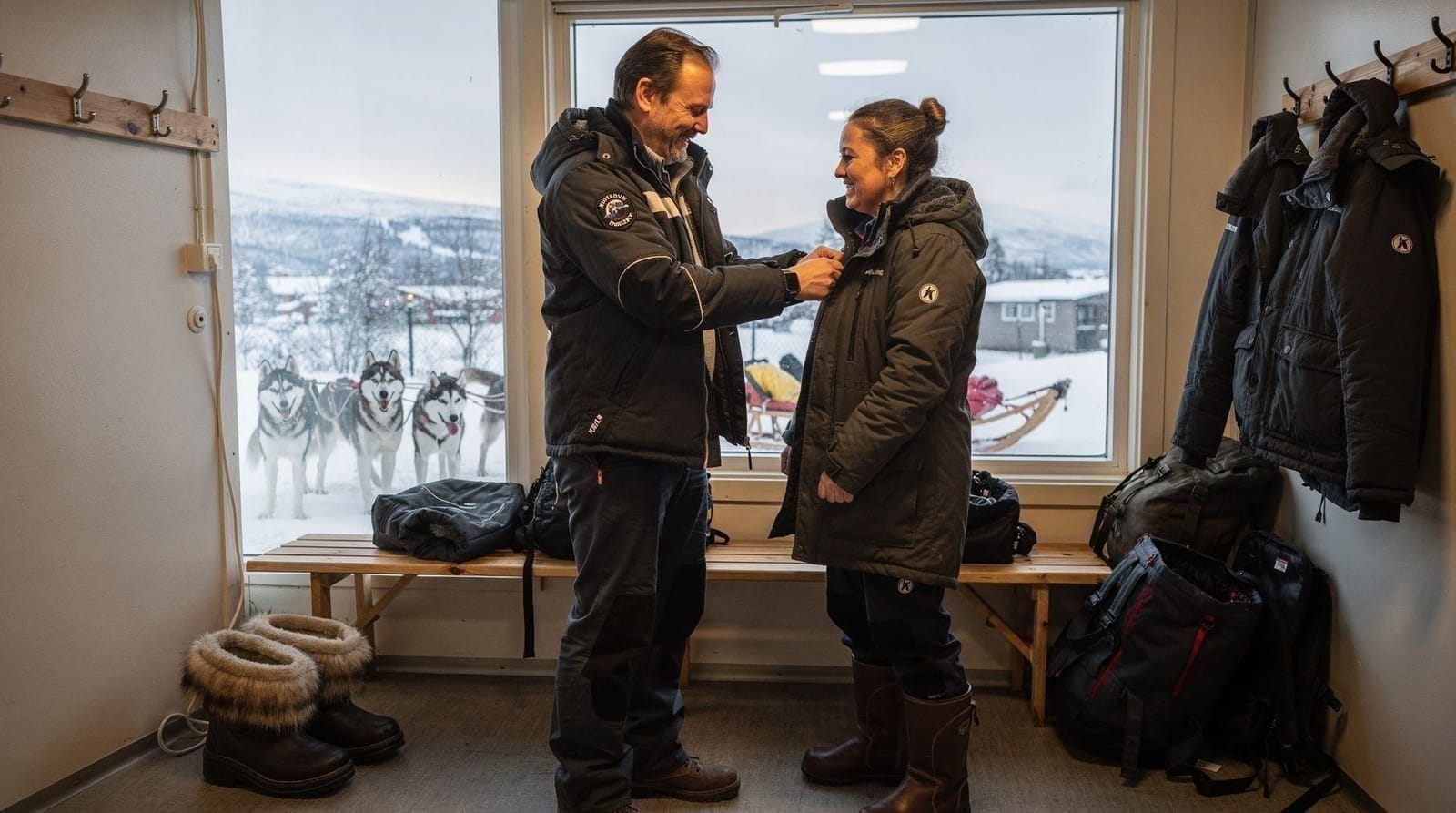
What to wear: the camp provides full thermal suits and boots, which helps. Underneath, wear a moisture-wicking base layer and avoid cotton (it holds sweat and cools fast). The dog sledding clothing guide has the full breakdown.
If you’d rather book the exact tour I did, it’s listed as the advanced dog sledding tour at Camp Tamok. For a shorter, budget alternative closer to the city, the Breivikeidet self-drive husky tour covers a shorter route without the 90-minute transfer.
Tamok vs. Breivikeidet: which to choose
| Camp Tamok (full day) | Breivikeidet (shorter) | |
|---|---|---|
| Distance from Tromsø | ~60 km, ~90 min | ~20 km, ~30 min |
| Route length | 8 km | 2–4 km |
| Cost | ~2,950 NOK | From ~1,400 NOK |
| Scenery | Full valley wilderness | Closer, less remote |
| Best for | A dedicated full-day experience | Tight schedules, budget travellers |
The lunch and the camp
The Camp Tamok main lodge is a large wooden building that does three things well: wood-burning stove, soup, and views down the valley. We sat for about an hour, ate, dried out our gloves, and talked to the mushers.
One thing worth noting: the full-day advanced tour includes more route distance and sometimes a night option. If you are choosing between the standard half-day and the full day, the full-day version is substantially more interesting — you cover different terrain and the team runs longer distances, which lets you see the dogs at their best rather than just at warmup pace.
Dog welfare — what I noticed
I went in with questions about this, having read some critical takes on Arctic dog sledding. The dog sledding ethics guide covers this honestly. At Camp Tamok specifically, the dogs live outside in kennel enclosures suited to their breed — Alaskan huskies are cold-weather dogs; indoor living is actually worse for them. They are fed a high-protein diet, have veterinary care on-site, and retire to sled dog sanctuaries when they are too old to run.
The thing that persuaded me most was watching the dogs during gearing up. Animals under stress display specific behaviours — flattened ears, lowered body position, attempts to avoid contact. These dogs do the opposite. When the harnesses come out, they jump, pull at their tethers, and vocalise at a volume that suggests enthusiasm rather than distress.
This does not mean all Arctic dog sledding operations are ethical. It means doing research before booking matters. Ask about kennel conditions, retirement policy, and veterinary care. The reputable camps will answer directly.
Would I do it again?
Yes, specifically the self-drive format and specifically in the Tamok Valley — the route and the scenery justify the longer transit. I would not do a shorter, closer-to-city tour because most of what makes the experience exceptional is the wilderness setting rather than the activity itself.
The dogs, the silence, the mountains, and the inevitable snowbank at corner two: genuinely worth 2,950 NOK.
Frequently asked questions about husky sledding near Tromsø
How fit do I need to be for self-drive dog sledding?
Moderately fit. You do not need to be athletic, but you will be standing for extended periods, using your legs for balance, and occasionally pushing on uphills. Most operators set a weight limit of around 100–110 kg for self-drive and recommend participants be in basic good health.
What age is suitable for dog sledding?
Children as young as 4–5 can join as passengers in the sled basket. Self-drive is typically for adults and older teenagers (16+). Family tours in Tamok Valley are well-designed for mixed groups.
Is Camp Tamok the only option?
No. Several operators run dog sledding near Breivikeidet (closer to Tromsø), on Kvaløya (island west of the city), and in Alta. Tamok is the longest-established premium experience; the Breivikeidet options are shorter and cheaper.
Can I visit the dogs without booking a sled tour?
Some camps offer husky meet-and-greet experiences separately from the full tour. These are typically 45–60 minutes and include handling and feeding the dogs. Check operator websites for availability.
Is the Tamok Valley tour worth the extra travel time over Breivikeidet?
If you have a full day and want the more immersive wilderness experience, yes — the scenery and longer route are noticeably better. If your schedule is tight or budget matters more, Breivikeidet’s shorter, closer option still delivers a genuine husky sledding experience.
What happens to the dogs in the off-season?
Reputable camps, including Camp Tamok, keep dogs active with training runs and give them rest periods when snow is unreliable; retired dogs typically move to dedicated sled dog sanctuaries. Ask directly about this when booking if it matters to you.