Perspektivet Museum Tromsø — what to see and tips
Tromsø: City Highlights Guided Walking Tour
What is the Perspektivet Museum in Tromsø?
Perspektivet is Tromsø's social history and photography museum. Admission is 95 NOK for adults, 65 NOK for seniors, 50 NOK for students and free for under-18s. It occupies a historic building in the city centre and runs rotating exhibitions alongside a permanent collection covering the city's everyday life from the 1800s to the present.
Perspektivet Museum sits on Storgata, Tromsø’s main pedestrian shopping street, in a building that previously housed a department store. It is run by the Tromsø municipality and focuses on the everyday social and cultural history of the city and its people — a counterpoint to the expedition glory of the Polar Museum and the natural history emphasis of Polaria.
Admission is 95 NOK for adults, which makes it one of the cheaper museum tickets in the city — the Polar Museum and Polaria both cost more. Note that Perspektivet is no longer free: it dropped free entry years ago, and a number of travel guides have never caught up.
| Where | Storgata 95, central Tromsø |
| Cost | 95 NOK adults · 65 NOK seniors · 50 NOK students · free under 18 · 300 NOK annual pass |
| Time needed | 45–90 minutes |
| Hours | Tue–Fri 10:00–16:00, Sat–Sun 11:00–17:00, closed Monday |
| Best paired with | Storgata stroll, Tromsø library, Polar Museum |
What the museum shows
The permanent collection is built around photography and material culture — tools, household objects, clothing, and furniture — that document ordinary life in Tromsø from the early 1800s to the late twentieth century. The collection covers several themes: the development of the city from a small trading post to an Arctic hub; immigration and the diversity of communities that have made Tromsø their home; working life in fishing, commerce, and administration; and the domestic sphere, including the role of Sami and Kven communities alongside the majority Norwegian population.
Photography is a recurring thread. The museum holds a significant archive of local documentary photographs, and exhibitions frequently draw on this collection to show Tromsø as it was lived from the inside — harbour workers, schoolchildren, market scenes, domestic interiors.
Rotating exhibitions change several times a year and cover contemporary social and cultural themes as well as historical ones. The quality of these varies; the best of them extend the permanent collection’s approach to living history. It is worth checking the museum’s website before visiting to see what is currently showing.
How it fits into a Tromsø city day
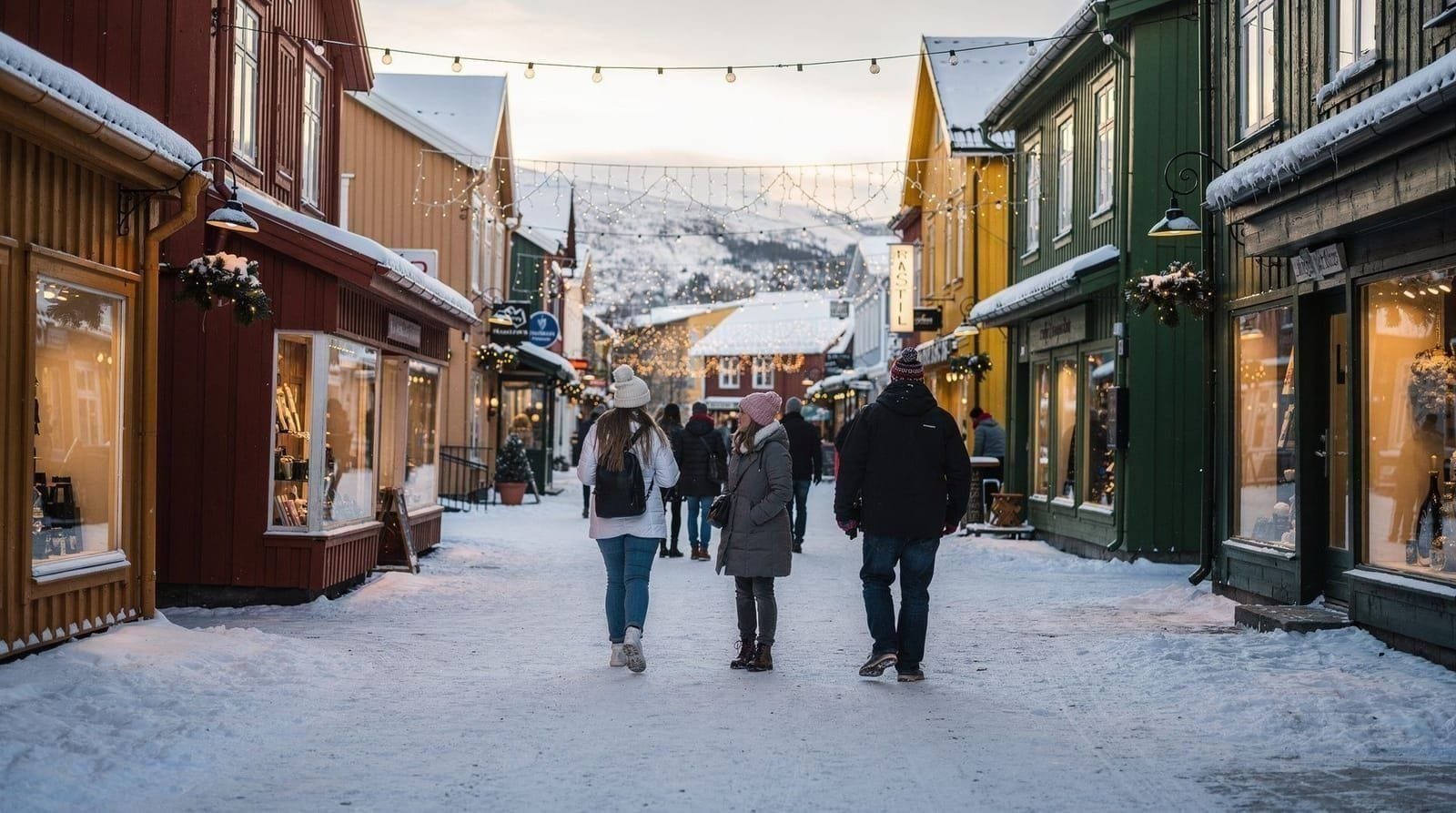
Perspektivet is a natural complement to the Storgata stroll — both are in the same part of central Tromsø, and the museum gives context to the architecture and street life you see outside. If you are doing the full city circuit described in the tromso-in-one-day guide, Perspektivet fits between Storgata and lunch without adding much travel time.
It is also one of the practical options for a rainy morning when you want an indoor hour without committing to a full-price attraction. If you are keeping the day to zero spending instead, the free things to do in Tromsø guide covers the genuinely no-cost stops — Perspektivet is not one of them, but at 95 NOK it is the cheapest of the city’s proper museums.
A guided walking tour that covers the city centre including the street and building context that Perspektivet’s collection extends — useful for joining the dots between the architecture and the social history.
Practical details
Address: Storgata 95, central Tromsø
Opening hours: Tuesday–Friday 10:00–16:00; Saturday–Sunday 11:00–17:00. Closed Monday. Check the museum’s website for public holiday adjustments.
Admission: 95 NOK adults; 65 NOK seniors; 50 NOK students; free for under-18s; 300 NOK annual pass. Prices as listed by the museum in July 2026 — verify on perspektivet.no before your visit.
Facilities: There is a small café area. The museum shop has locally produced books, maps, and art prints. Toilets are available.
Accessibility: The building is accessible; the main exhibition floors have lift access. Contact the museum directly for specific accessibility queries.
The permanent collection in more detail
The collection at Perspektivet is organised thematically rather than chronologically, which means you can enter at different points without needing to follow a prescribed sequence. The themes include:
Urban development: The growth of Tromsø from a small trading and ecclesiastical centre to a significant Arctic city is documented through maps, photographs, and material culture. The period from the late nineteenth century through the early twentieth century — when the city grew rapidly as a base for Arctic hunting and fishing — is particularly well-covered.
Immigration and diversity: Tromsø has had a more ethnically diverse population than its size would suggest, owing to its trading function. The collection includes material on Finnish and Kven immigration in the nineteenth century, Russian traders, and more recent immigration patterns. This thread gives the museum a dimension that the Polar Museum and Polaria do not have.
Sami presence: The relationship between the Norse/Norwegian population and the indigenous Sami of the Tromsø region is addressed directly. The collection includes objects related to Sami cultural practices and examines the historical policy of Norwegianisation (Fornorsking) — the attempt by the Norwegian state in the nineteenth and early twentieth centuries to assimilate Sami communities by suppressing the Sami language and culture. This is treated honestly and without sentimentality.
Domestic life: Kitchen equipment, furniture, clothing, and personal objects from Tromsø homes across different decades and social strata form a substantial part of the collection. The objects are mundane in the best sense — they are ordinary things from ordinary lives, which is the point.
Photography archive: The documentary photography collection is extensive and draws on both professional and amateur photographers who worked in Tromsø from the 1860s onward. The photographs range from formal studio portraits to spontaneous street scenes and industrial documentation. The archive is not fully digitised, and the selections on display rotate, meaning the photographic content varies between visits.
Events and programming
Perspektivet runs a programme of events beyond the permanent and rotating exhibitions. Lectures, film screenings, guided gallery walks, and community events appear throughout the year. Some of these are specifically for children and families; some are for adults. Most events are in Norwegian, though English-language events appear particularly when connected with UiT Arctic University of Norway or international programming.
The museum’s involvement in the Tromsø International Film Festival (January) sometimes generates exhibition-related content. Worth checking if your visit coincides with a festival period.
How it differs from the other Tromsø museums
The Polar Museum covers the high drama of Arctic exploration — expeditions, hunters, ice. Perspektivet covers the daily fabric of Tromsø life. Polaria is focused on living Arctic marine life. Perspektivet is the museum for visitors interested in social history, urban development, and documentary photography. For a complete sense of Tromsø as a place — not just as a launch point for Arctic adventure — it is worth an hour.
Taken together, three low-cost cultural stops — Perspektivet (95 NOK), the Tromsø library (free), and the Arctic Cathedral exterior (free) — give significant texture to the city for under 100 NOK in admissions. This is useful context when planning how to pace the genuinely expensive attractions and tours.
Visiting practically
The museum is on Storgata 95, at the northern end of the main pedestrian street. There is a tram-style entrance area with information leaflets in Norwegian and English. The staff at the desk are knowledgeable and can direct you to specific collection areas of interest. If you are particularly interested in the photography archive or the Sami history material, it is worth asking at the desk for the current layout.
Perspektivet and Arctic identity
There is a question that Perspektivet asks implicitly throughout its collection: what does it mean to be from Tromsø, and how has the answer to that question changed over the 200 years the museum covers? The answer in 1826 — when Tromsø received its town charter — involved fishing, small-scale trade, and a mixed Norwegian-Sami community. The answer in 1926 involved Arctic expeditions, a growing commercial port, and a city beginning to define itself in national terms. The answer today involves a university of 17 000 students, tourism, Arctic research, and a city that is changing faster than most.
This longitudinal question is what makes Perspektivet more interesting than a typical regional museum. It is not a collection of objects from the past; it is an argument about identity and change. The objects are the evidence, and the museum invites you to draw your own conclusions.
For visitors who spend a day walking Storgata, visiting the harbour, and looking at the mountains that frame the city on every side, Perspektivet provides a kind of footnote: here is what the people who built all of this were actually doing and thinking. That context costs 95 NOK, which makes it one of the better intellectual value propositions in Tromsø.
The surrounding Storgata context
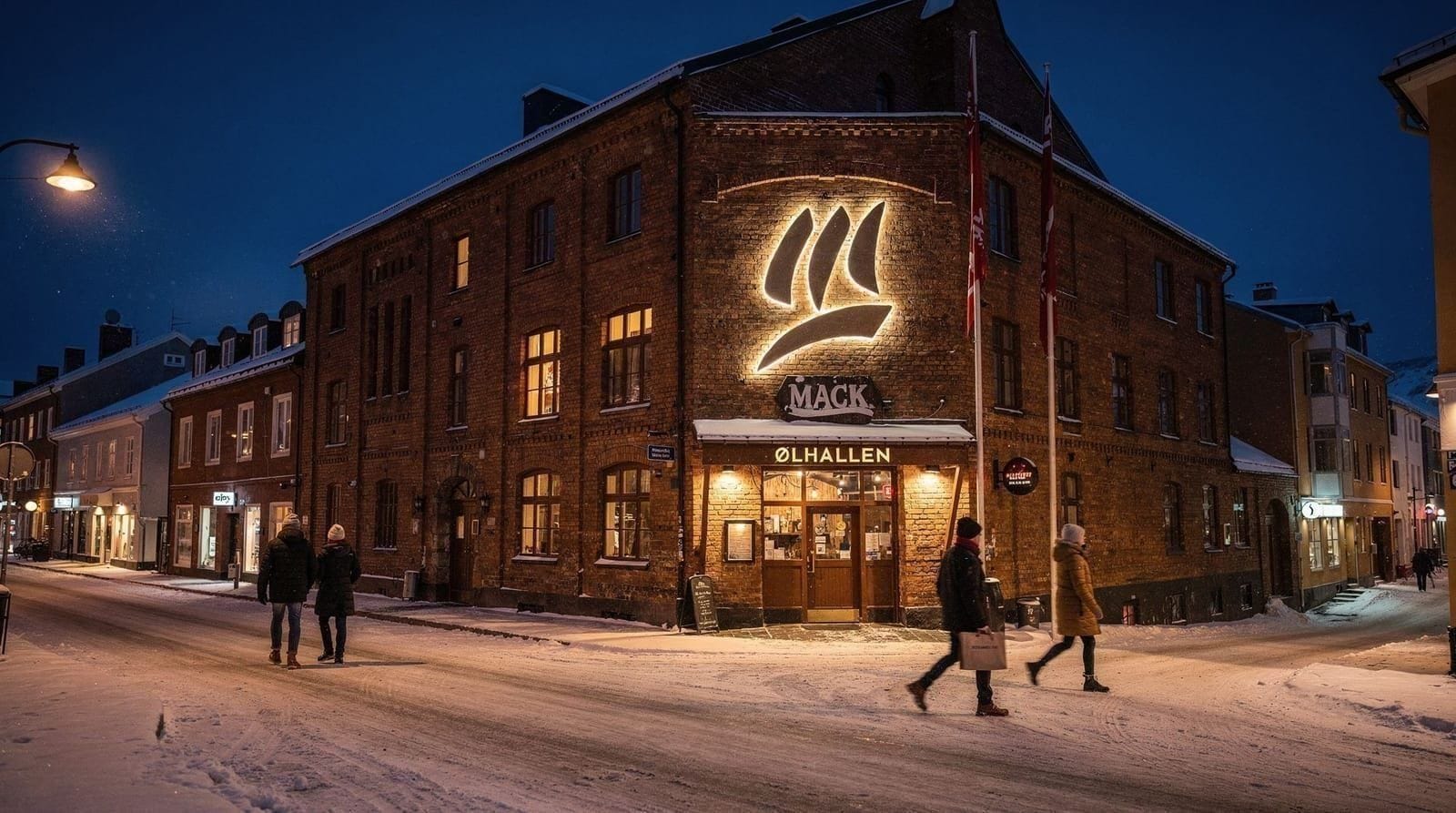
Because Perspektivet is on Storgata at number 95, a visit fits naturally into a storgata stroll. Walk north from Stortorget, stop at Perspektivet for 45–90 minutes, continue to Ølhallen at the top of the street. The combination — commercial street, social history museum, then the oldest active pub in the city — gives a compressed cross-section of Tromsø across time.
The Perspektivet building itself is typical of Norwegian urban architecture from the early-to-mid twentieth century: functional, not beautiful, but solid and well-maintained. The interior has been renovated to create appropriate gallery conditions while keeping some of the original building character. The light quality in the main exhibition rooms is good.
Who gets the most out of Perspektivet
Not every visitor to Tromsø needs to prioritise Perspektivet. Travellers with limited time and a strong interest in Arctic exploration are better served spending that hour at the Polar Museum instead — the two collections do not overlap much, and Perspektivet’s social-history focus rewards visitors who already have a broader curiosity about how ordinary people lived in a remote Arctic city. Families travelling with young children often find Perspektivet’s text-heavy exhibits less engaging than Polaria, though children aged 10+ interested in photography can find the archive genuinely interesting. If you only have time for one city-centre cultural stop and cost is not a factor, the Polar Museum offers more immediate drama; if Tromsø’s own social fabric interests you more — and a slightly cheaper ticket helps — Perspektivet is the better hour.
A realistic half-day around Storgata
Perspektivet works best as part of a short circuit rather than a standalone destination, given how compact central Tromsø is. A practical sequence: start at Stortorget and walk the length of Storgata, stopping at Perspektivet for 45–90 minutes, then continue to the Tromsø library for a free indoor stop, finishing with a coffee or beer at Ølhallen at the top of the street. The full circuit takes 2.5–3.5 hours and costs 95 NOK in admissions plus food and drink — a useful budget anchor if you are also paying for tours elsewhere in your Tromsø trip. See the free things to do in Tromsø guide for the activities that genuinely cost nothing.
Frequently asked questions about Perspektivet Museum
How much does Perspektivet Museum cost?
Adults pay 95 NOK, seniors 65 NOK and students 50 NOK; under-18s enter free and an annual pass is 300 NOK. Perspektivet has not offered free general admission for years, although plenty of guidebooks and travel sites still say otherwise. Check perspektivet.no for the current tariff before you go.
What language are the exhibits in?
Exhibits are bilingual — Norwegian and English throughout. The English translations are complete and clear.
Does Perspektivet have any exhibitions on Sami culture?
Yes — the museum includes material on the Sami and Kven communities of the Tromsø region within its broader social history coverage. This is not as extensive as the dedicated Sami cultural experiences available outside the city, but it provides useful historical context.
Is Perspektivet Museum suitable for a rainy day?
It is one of the better indoor options in central Tromsø on a wet day, and at 95 NOK among the cheapest. The tromso-library is a free indoor option nearby if you would rather not pay.
How close is Perspektivet to the Tromsø city library?
The Tromsø public library is approximately 5 minutes’ walk from Perspektivet, also on or near Storgata. Both are good rainy-day stops and can be combined easily in a morning circuit.
Are there events at Perspektivet Museum?
Yes — the museum runs lectures, guided gallery walks, and community events through the year. Programming is announced on their website and social channels. Some events are in Norwegian only; English-language programmes are usually flagged.
Can I take photographs inside Perspektivet?
Photography of the permanent collection for personal use is generally permitted. Individual rotating exhibitions may have different rules depending on the works involved. Check at the entrance.
Is Perspektivet worth visiting if I only have one day in Tromsø?
If your one day is tightly scheduled around paid attractions and tours, Perspektivet is easy to skip without regret — it rewards unhurried browsing more than a rushed stop. If you have a spare 45–60 minutes on a one-day Tromsø itinerary, it is a worthwhile 95 NOK addition, particularly on a wet or cold morning.
Does Perspektivet have a gift shop worth visiting even without touring the exhibitions?
Yes — the shop is accessible from the entrance area and sells locally produced books, maps, and art prints without requiring a full museum visit, useful if you are short on time but want a Tromsø-specific souvenir.
Top experiences
Bookable activities with verified prices and instant confirmation on GetYourGuide.