My first aurora hunt: what nobody tells you before you go
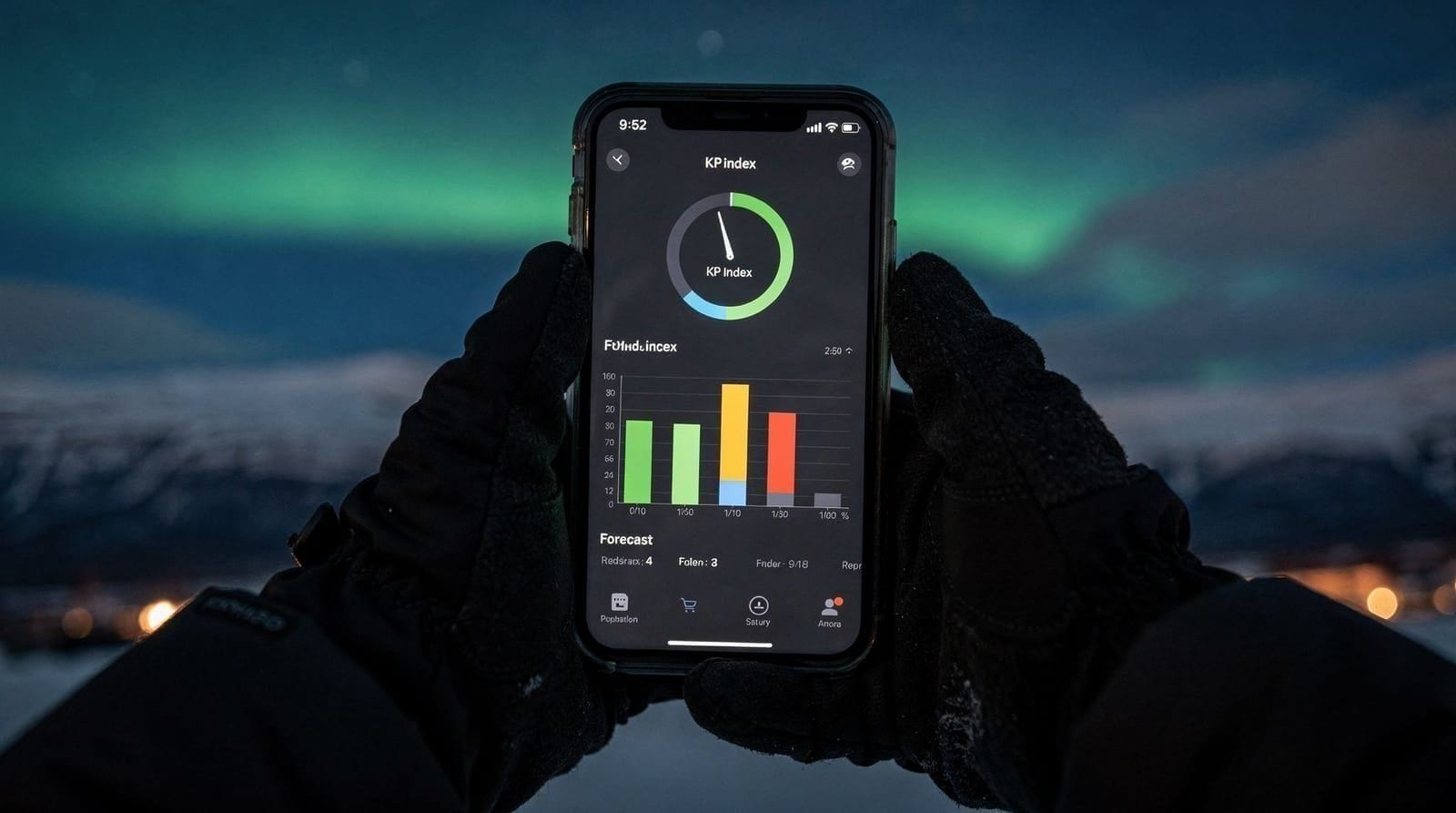
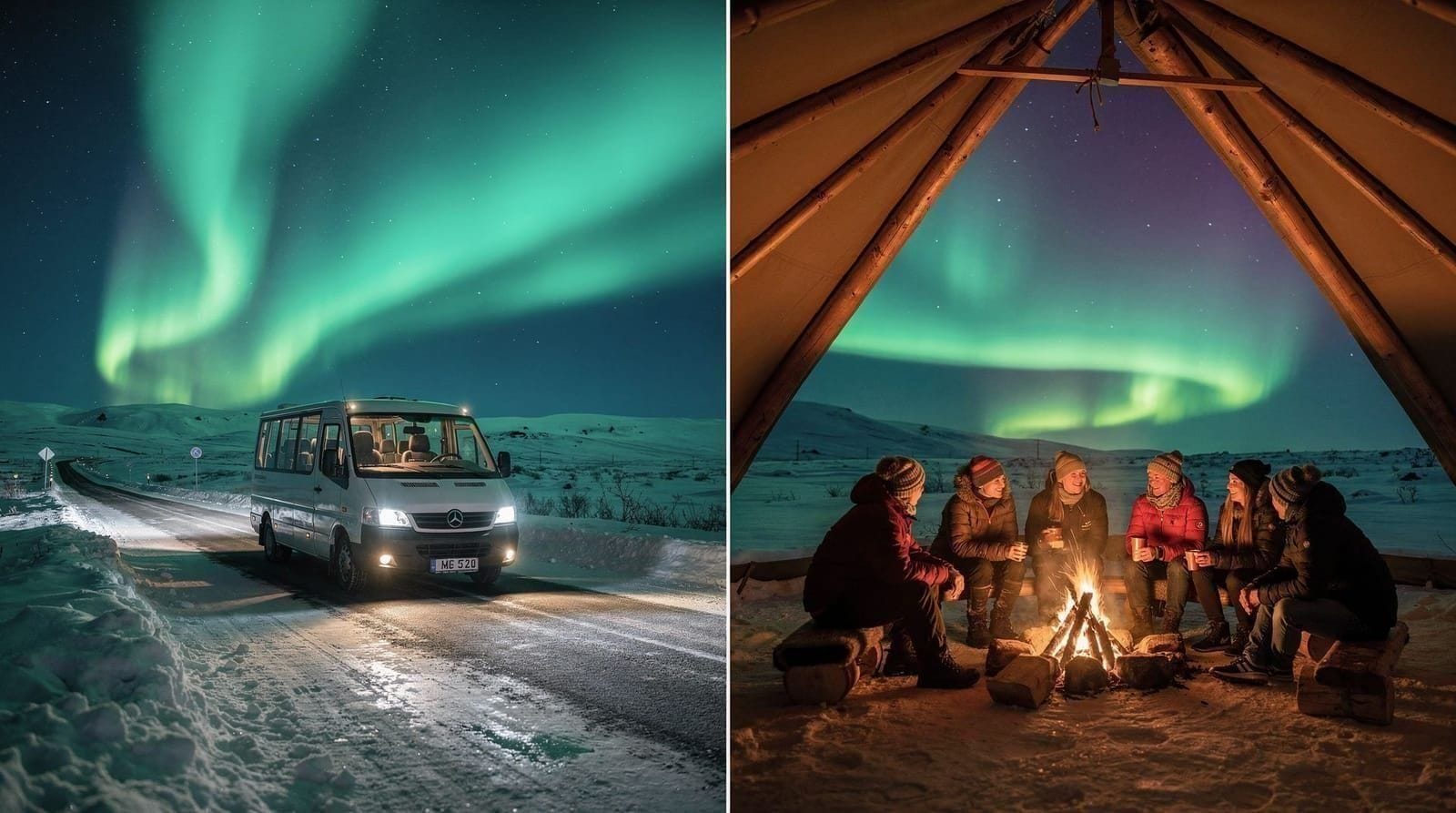
We left Tromsø at 9 pm in a minibus with eleven other hopefuls, heading south on E8. The guide, Erik, had been checking three separate forecast apps since noon. KP index: 2. Cloud cover: 60 percent at our target spot near Sjursnes. He was optimistic in that measured, Norwegian way — “conditions are possible” — which I would learn to translate as “no guarantees.”
| Where | Chased south of Tromsø on E8, toward Sjursnes and Breivikeidet |
| Cost | 1,690–2,800 NOK per person depending on tour type |
| Nights booked | 3, the minimum for a reasonable chance |
| Best months | November–February for darkness, January–March for clearer skies |
| Gear needed | Thermal suit (usually provided), insulated boots, tripod for photos |
That first night produced nothing. Thick cloud sat on the fjord like a lid. We drove for two and a half hours, stopped at a viewpoint above Malangen, drank thermos coffee, watched nothing, and drove back. I went to bed at 1 am having seen only my own breath in a car park.
I am telling you this not to discourage you, but because almost every aurora blog leaves this part out.
Why the first night often fails
The aurora season in Tromsø runs roughly September through April, with peak activity from November to February. But “peak season” does not mean guaranteed clear skies. Northern Norway sits at the edge of the North Atlantic, and weather systems move fast. A forecast showing KP 4 at lunchtime can be completely obscured by cloud by 10 pm.
What nobody explains clearly is that there are two separate variables: the aurora activity itself (measured by the KP index, solar wind data, and geomagnetic forecasts) and the cloud cover. Both have to cooperate simultaneously. On any given winter evening in Tromsø, that happens perhaps one night in three — sometimes less.
Understanding the KP index and how to read aurora forecasts was the single thing that changed my experience. Once I stopped treating aurora hunting as “will I see it tonight?” and started treating it as a probability game played across multiple nights, I relaxed.
Night two: driving into a gap
I had booked three nights specifically because I knew the odds. Tour operators in Tromsø offer a “free rebook” policy on most aurora chases — if skies are fully clouded, you join another departure at no charge. Check this before booking; it varies by operator.
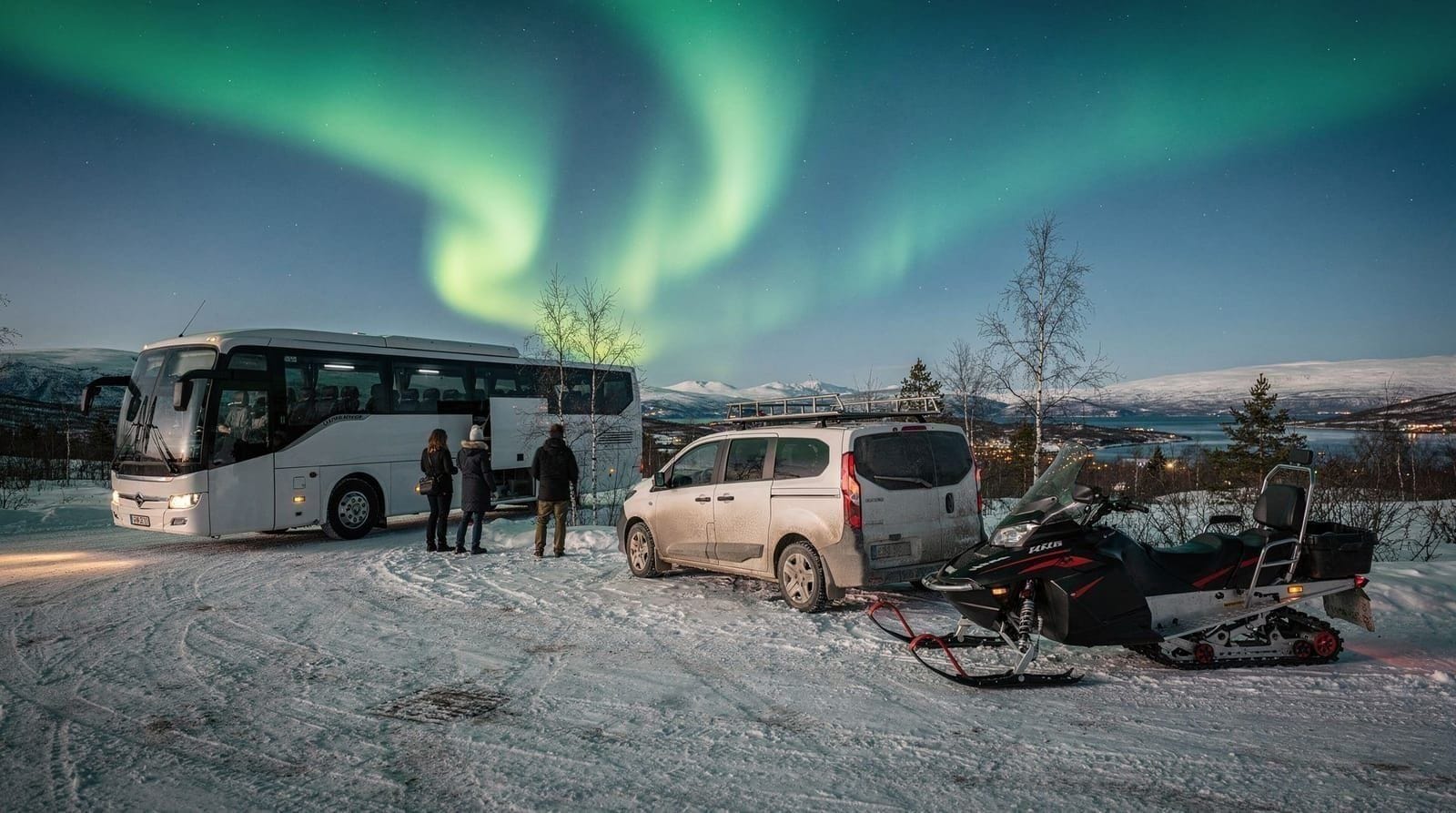
Night two, Erik drove us northwest on the Kvaløya bridge, then looped back east. He was watching a weather app that showed a cloud gap forming above Breivikeidet. We parked on a gravel pull-out at 10:40 pm, piled out, and stood looking north.
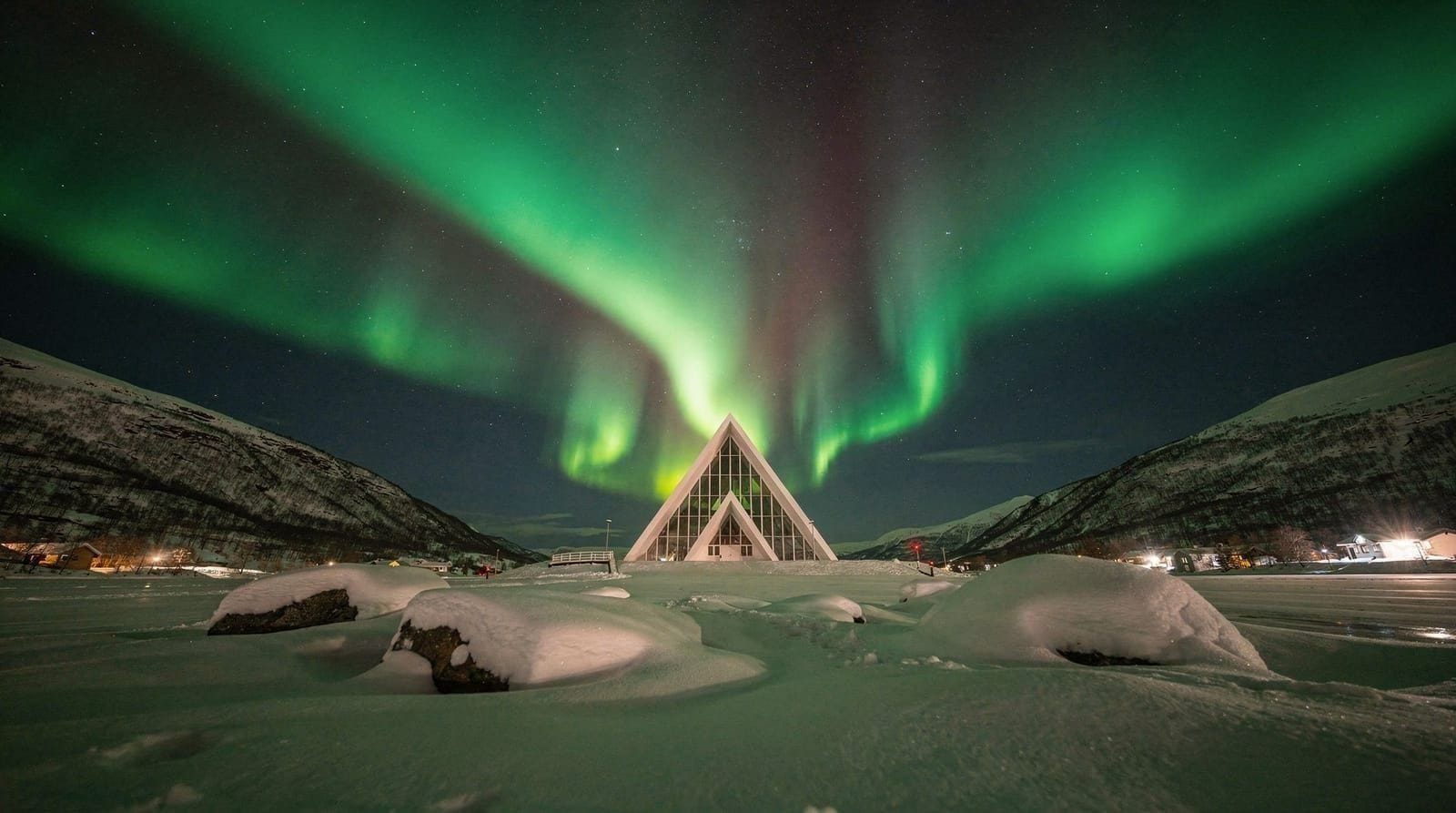
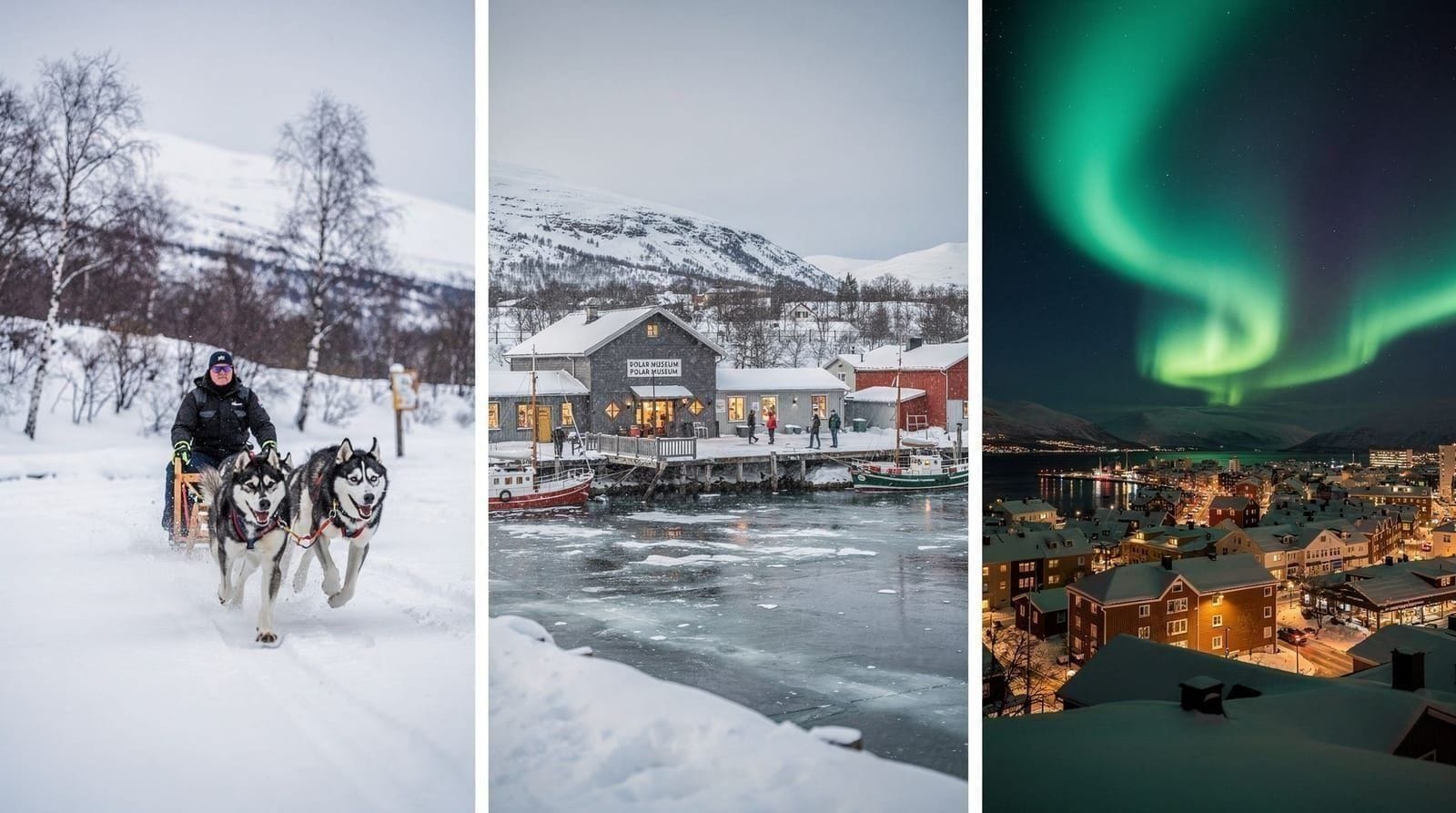
At first I wasn’t sure. A pale smear, slightly greenish, low on the horizon. “That’s it,” said the woman next to me. Then it moved. In about ninety seconds the smear became a curtain, then rippled, then stretched overhead into something that made everyone go silent.
I have seen photographs. I thought I knew what to expect. I didn’t. The movement is the thing — slow and liquid, like a very long silk scarf being shaken at one end. It lasted perhaps twelve minutes in that form, then dimmed, then flared again briefly before disappearing.
Twelve minutes. After two nights. Worth every second of waiting.
What I got wrong
I brought a compact camera. This was a mistake. The aurora is faint enough that a smartphone on “night mode” captures almost nothing useful unless you are shooting with a proper long exposure. I ended up with blurry, faintly green smears while the photographer next to me — running a Sony A7 IV on a tripod at ISO 3200, 15 seconds, f/2.8 — was pulling images that looked like magazine covers.
If aurora photography matters to you, either join a dedicated photography tour or bring a camera that can handle manual exposure on a tripod. Renting a tripod in Tromsø is possible — Bravida Foto on Storgata rents basic tripods for around 200 NOK per night.
I also underdressed. The tour provided thermal suits (most reputable operators do), but my feet were cold within forty minutes because I had worn city boots rather than proper insulated footwear. Read the what to wear for northern lights viewing guide before you go — it sounds trivial and matters enormously.
Choosing between tour types
There are two broadly different approaches to aurora hunting from Tromsø: small-group minibus tours that chase clear skies by driving, and boat-based aurora cruises.
The minibus approach covers more ground — experienced guides can reach spots 80–120 km away when cloud forces it. The boat cruise is more comfortable and atmospheric, but the fjord clouds are the same clouds the buses are chasing, and a boat cannot drive inland away from them. On nights with patchy cloud both can work; on fully overcast nights, the buses have a better escape route.
Small-group minibus aurora tours from Tromsø tend to run around 1,700–2,000 NOK per person for a standard 5–8 hour chase. Dedicated photography tours cost more — around 2,200–2,800 NOK — but include a proper guide who teaches you the camera settings on location. If I were rebooking today, knowing what I know now, I would go straight for the small-group aurora photography tour on night one rather than treating the camera as an afterthought on night two.
Minibus vs. boat: the trade-offs in practice
| Minibus chase | Boat cruise | |
|---|---|---|
| Range | 80–120 km inland when needed | Limited to the fjord the boat is on |
| Comfort | Standing outside in the cold, brief warm-ups in the van | Heated cabin, deck access |
| Escape from cloud | Best — can drive to a different valley entirely | Weaker — same weather system as the coast |
| Typical cost | 1,700–2,000 NOK | 900–1,500 NOK (daytime), more for dedicated aurora cruises |
| Best for | Serious chasers, photographers, longer stays | First-timers who want comfort over odds |
Erik’s minibus won on our second night specifically because it could reach a gap in the cloud that a boat, tied to the fjord, never could have found.
Practical notes from three nights out
Start on your first evening. I met several people who planned their aurora night for night four of a five-night stay “to have time to recover from jet lag.” That’s rational but risky. Aurora chases run late and leave you tired; book the first available night and rebook if needed.
Check multiple forecast sources. The Norwegian Meteorological Institute’s Yr app (free) gives cloud cover; Space Weather Live and Spaceweather.com give solar activity. Learn to cross-reference both. The aurora cloud strategy guide explains which layers of cloud block aurora and which don’t — thinner cirrus sometimes allows a faint aurora through; thick stratus does not.
Stay flexible on timing. The strongest displays often occur between 10 pm and 2 am, when geomagnetic activity tends to peak. Book a tour that departs around 9–9:30 pm to get the full window.
Skjervøy is genuinely better for serious chasers. About 2.5 hours north of Tromsø, Skjervøy sits in a different micro-climate — clearer on average, and closer to where the aurora band sits. Some operators run dedicated Skjervøy overnights. The logistics are harder but the payoff rate is higher.
Consider building your trip around the Tromsø 4-day aurora itinerary if you have flexibility in your dates — it accounts for weather-dependent rescheduling in a way a single-night booking cannot.
What it actually costs
A standard aurora chase tour in Tromsø: 1,690–2,100 NOK (roughly €145–180 or £125–155). A small-group photography tour: 2,200–2,800 NOK. If you are self-driving, fuel for 200 km, thermal gear rental if needed, and coffee along the way might total 400–600 NOK per night out.
The Tromsø daily budget guide puts the average visitor spend at around 3,200 NOK per day for a mid-range trip. An aurora tour is a significant chunk but also the primary reason most people make the journey in winter.
The honest summary
Aurora hunting involves luck, patience, and consecutive nights. One night is a lottery ticket; three nights are a reasonable bet. Go in January or February for the longest dark windows. Learn the forecast tools. Dress for standing still in sub-zero temperatures. Bring a real camera if you care about photos.
The moment it works — and for most visitors who stay more than two nights, it does eventually work — there is nothing quite like it. Twelve minutes above a frozen fjord changed how I think about what the word “spectacle” means.
Frequently asked questions about aurora hunting in Tromsø
How many nights do I need to see the northern lights?
Three to four nights gives you a reasonable probability — around 70–80 percent chance under average winter conditions. One night is a gamble; two nights improves odds significantly. Extended polar night (late November through early January) gives the longest viewing windows.
Can I see the aurora from the city centre?
Occasionally, during a very strong display (KP 5 or above), yes. But light pollution washes out fainter shows. Even a short drive to the edge of the Tromsøya island removes enough light pollution to see KP 3 displays clearly.
What is the best month for northern lights in Tromsø?
January and February combine strong aurora activity, long polar nights, and statistically clearer skies than November or December. September and late March also offer good aurora with more daylight.
Are aurora tours worth the cost?
For a first-time visitor without a car, yes. Local guides know where cloud gaps tend to form and can drive to clear spots quickly. If you have a rental car and are willing to drive at night, self-drive aurora hunting is viable but requires understanding the forecast tools.
Should I choose a minibus tour or a boat cruise for my first night?
If comfort matters more than maximum odds, a boat cruise is a gentler introduction. If you specifically want the best chance of seeing something, a minibus tour that can chase 80–120 km inland has a real advantage on cloudy nights, since it is not limited to a single fjord.
Does a free rebooking policy actually matter?
Enormously. Operators without one will run the same fixed route regardless of cloud cover, meaning a fully overcast night is simply wasted. Confirm the rebooking terms before you pay, not after your first tour is clouded out.