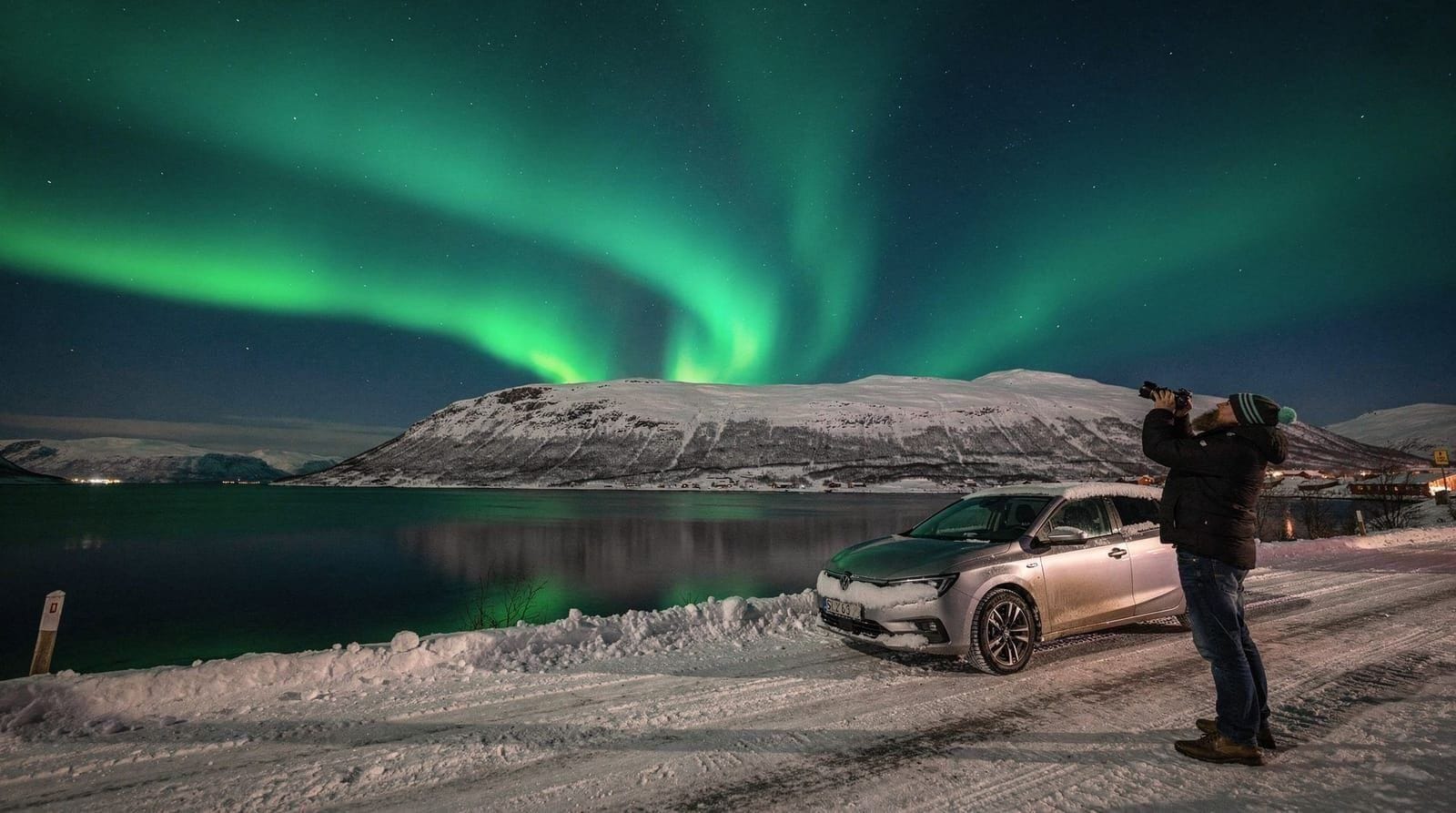
Northern lights chase tours in Tromsø — honest review 2026
Tromsø: Northern Lights Chase with Local Guide & Free Photos
| Format | Minibus or 4x4, drives toward clear-sky windows |
| Duration | 4–6 hours, departs 18:00–20:00 |
| Cost | around 1,400–3,200 NOK depending on group size |
| Best for | Aurora-focused visitors, repeat trips, photographers |
| Best months | October, November, March for clearer skies |
What a northern lights chase tour actually involves
The premise is straightforward: you board a vehicle after dark, an operator monitors real-time weather satellite data, and the driver heads toward the nearest clear-sky window. In reality the experience ranges from excellent to deeply mediocre depending entirely on which operator you choose.
Most tours depart between 18:00 and 20:00 from central Tromsø, return by midnight or 02:00, and cover anywhere from 40 to 250 km depending on where the clouds are. You spend most of the night either driving or standing on a roadside, hillside, or frozen lake — not in a warm cabin.
That distinction matters: standing outside in Arctic darkness at -10°C for two hours is genuinely cold. Operators who hand you a thin fleece blanket are not the same as operators who issue proper Arctic thermal overalls.
The key differences between operators
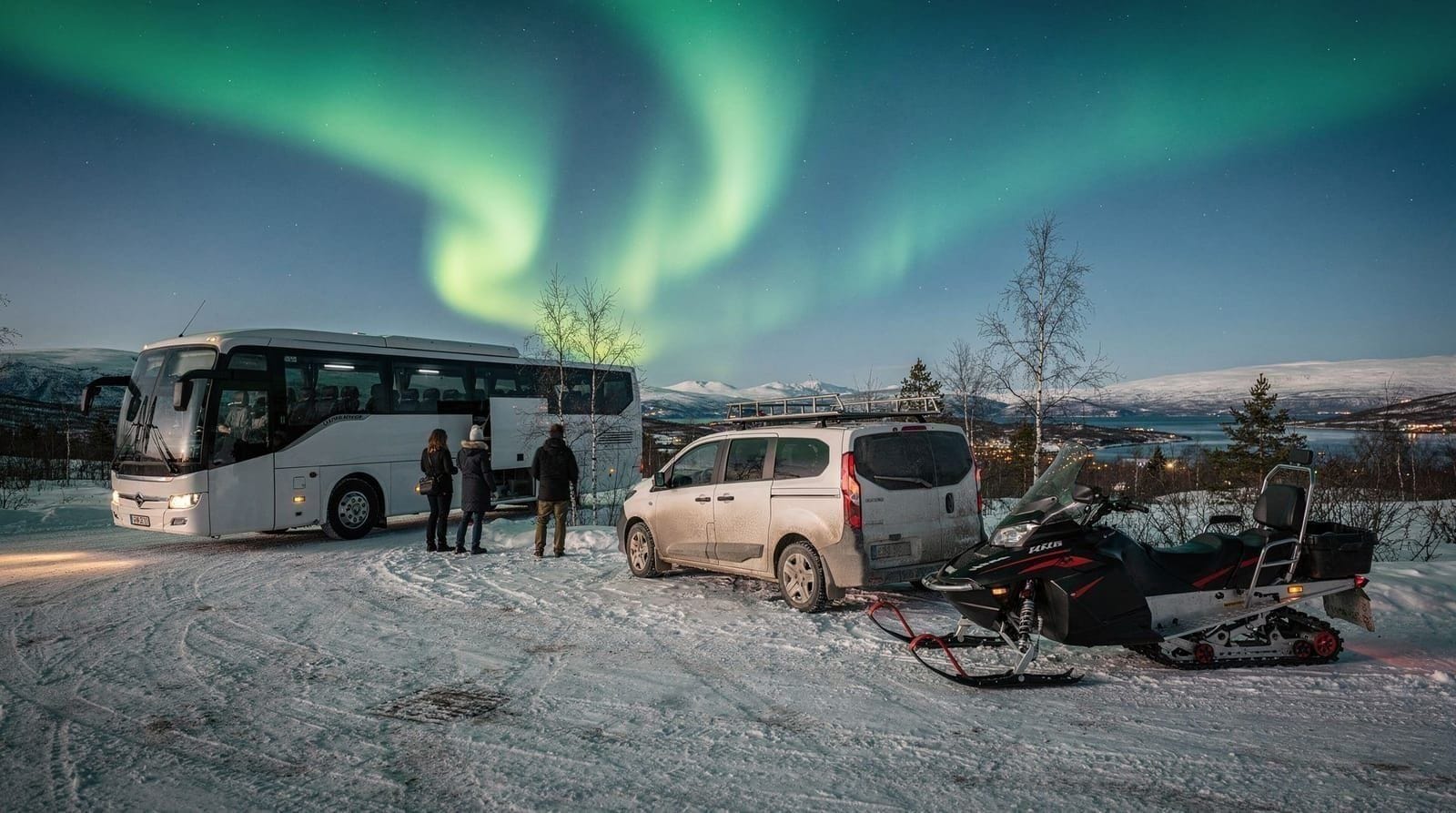
Group size is the single most reliable proxy for quality. Bus tours carry 30–50 people and are priced around 1,500 NOK. The logistics of stopping, parking, and getting 40 people out of a bus with headlamps and cameras takes 15 minutes of your prime viewing window every time. Small-group minibus tours (8–14 people) at 1,900–2,300 NOK are noticeably better.
Vehicle capability separates the tours that actually reach clear skies. Minivans and 4x4 vehicles can take mountain roads that coaches cannot. In November and December, when the coast around Tromsø is frequently socked in, the ability to drive 150 km inland toward Tamok Valley or across Lyngen can mean the difference between seeing aurora and seeing fog.
Chase radius is rarely stated explicitly in tour descriptions. Ask the operator directly: “How far will you drive if the clouds don’t clear near Tromsø?” A serious answer names specific regions — Tamok Valley, Lyngen Alps, Skibotn corridor — not just “as far as needed.”
Second-chance policy matters more than price. Operators confident in their chase success offer free rebooking if you see nothing; this tells you they believe in their own operation. Budget operators often have none.
See northern lights chase with photos includedPrice breakdown: what you get at each level
1,400–1,700 NOK — large bus tours (30–50 pax) These tours cover their costs by volume. The guide is competent but spread thin. You get hot drinks from a thermos, maybe a campfire stop, and a brief aurora explanation. Fine if budget is tight, frustrating if the bus parks behind a ridge and the aurora appears elsewhere.
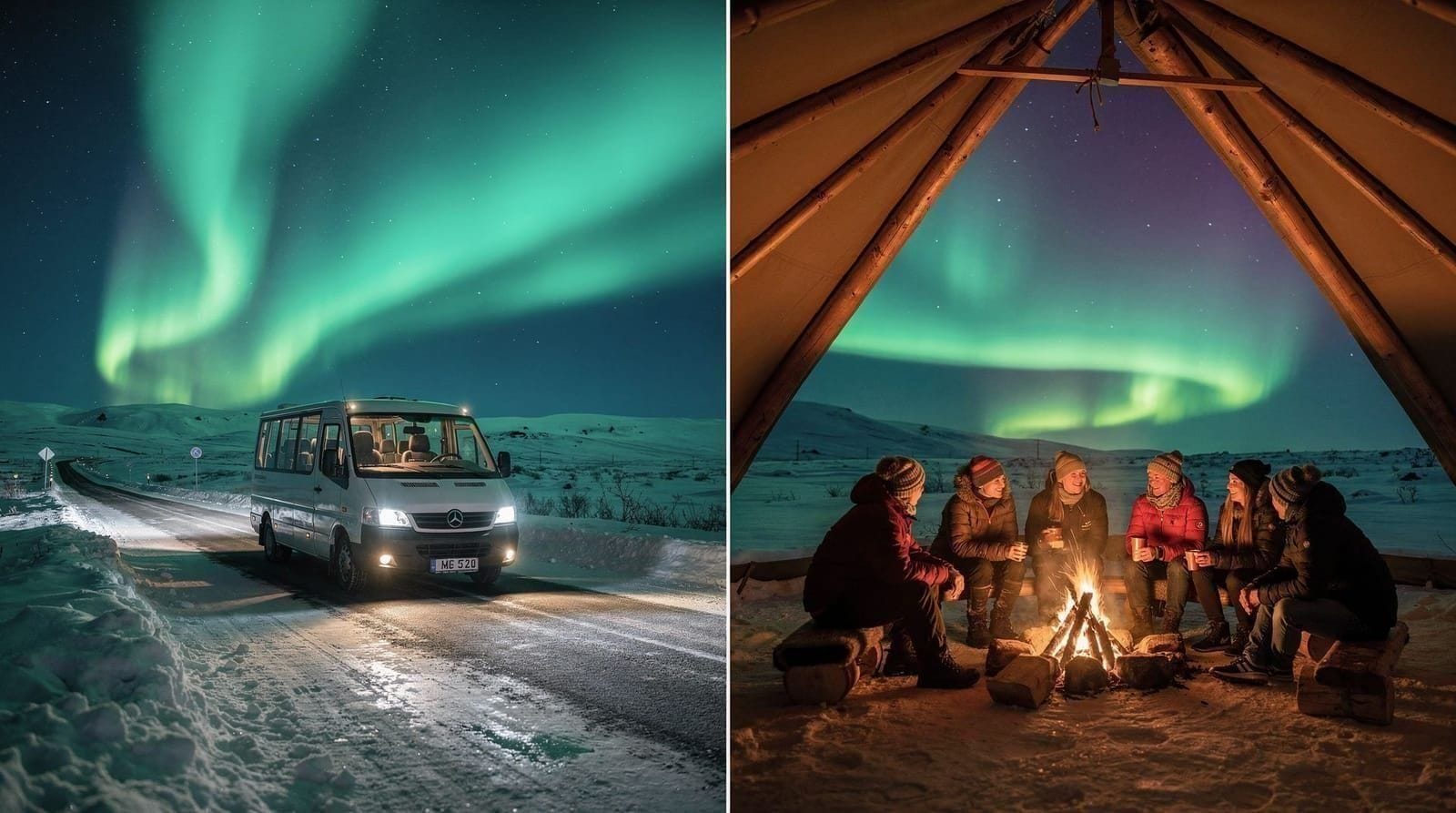
1,800–2,300 NOK — small-group minibus (8–16 pax) The sweet spot for most visitors. These tours use 9-seat Mercedes Sprinters or similar. Guide attention is personal, the vehicle is nimble enough to reposition quickly when a cloud gap opens, and thermal suits are usually provided. Check whether the “free photos” are high-resolution or Instagram-cropped.
2,400–3,200 NOK — 4x4 expedition format (4–8 pax) Some operators run true expedition tours in Land Cruisers or large 4x4 SUVs. Maximum flexibility, deepest into the fjords, and genuinely personalized photography instruction. Worth it for photographers or those on short trips who cannot afford a second-chance night.
Small-group minibus northern lights chaseWhat to wear and bring
Tour operators who issue thermal Arctic suits are taking this seriously; those that don’t require you to dress yourself, which means:
- Base layer: merino wool, not cotton
- Mid layer: down or synthetic puffer
- Outer layer: waterproof and windproof shell
- Hands: liner gloves inside heavy mittens (not gloves — you cannot operate camera controls with numb fingers anyway)
- Feet: wool socks inside insulated boots rated to at least -20°C
- Head: balaclava plus hat
Handwarmers are worth every krone. Bring extra batteries for cameras — cold drains lithium cells fast. A headlamp with a red-light mode prevents your night vision adapting back to white light every time you need to see where you’re walking.
For camera gear, the aurora photography settings guide has full specifications. The short answer: tripod, manual mode, ISO 800–3200, f/2.8 or faster, 10–25 second exposures.
The cloud problem: what “cloud strategy” actually means
Tromsø sits on a coastal island. Maritime weather moves fast and unpredictably. The northern lights forecast (KP index) can be excellent while the entire region is under cloud — and that scenario happens frequently in November through January.
A genuine cloud-chase strategy means the operator has a meteorologist or uses professional weather tools (not just yr.no), contacts other guides in the field to report conditions from different locations, and commits to driving 2–3 hours if needed. Some operators have bilateral information-sharing agreements with other local guides — this is a competitive advantage worth asking about.
For a deeper understanding of how forecasts work, see the KP index explanation guide.
Red flags to watch for
“Guaranteed northern lights” — no operator can guarantee a natural phenomenon. This claim signals either dishonesty or that they define “northern lights” so loosely that a faint green smear counts.
Hotel pickup only from major hotels — operators who only collect from the Radisson and Clarion are serving their own logistics, not yours. Confirm your exact pickup point at booking.
No mention of group size — if the listing doesn’t state maximum participants, assume it’s a bus tour until proven otherwise.
Photos “extra” — legitimate tour photography services are either included or priced transparently at booking, not sprung on you at the end of the night.
No second-chance policy — see this as a signal that the operator knows their success rate is low.
Comparing the main options
The comparison below covers four regularly-run formats available through the GYG catalog. None involves driving to Alta (a separate 6–8 hour expedition category):
| Format | Pax | Thermal suit | Chase radius | Approx. NOK |
|---|---|---|---|---|
| Large bus | 30–50 | Sometimes | ~50 km | 1,500 |
| Small-group minibus | 8–16 | Usually | ~150 km | 2,000 |
| 4x4 small group | 4–8 | Yes | ~200 km | 2,700 |
| Unlimited-chase (border crossing) | varies | Yes | 300+ km | 2,500+ |
The “unlimited chase” format crosses into Sweden or Finland if Norwegian skies are fully overcast — a genuine advantage in bad-weather weeks but irrelevant on a clear forecast night when any competent operator will find aurora.
Northern lights hunt with thermal gear includedSelf-drive versus guided tour
If you have a rental car with winter tyres and a passenger who can navigate, self-driving for the aurora is a serious option once you understand the forecast tools and have done one guided tour to orient yourself. You gain complete flexibility and pay nothing per night of chasing. The disadvantage is you’re alone if the car gets stuck on an icy mountain road.
For a full comparison see the self-drive vs guided aurora guide.
Chase tour versus a camp-based aurora night
The alternative to a pure chase tour is an activity camp such as Camp Tamok, which anchors you at one inland location and pairs aurora watching with dog sledding, reindeer, or snowmobiling. The camp format trades some chase mobility for a richer evening and a genuinely warm base to retreat to between sky checks; the chase format trades the activity for maximum mobility toward whatever patch of clear sky exists that night. Neither is objectively better — it depends on whether you’ve already done an activity tour and just want the sky, or want both in one outing. The chasing vs camp aurora guide walks through the decision in more detail.
Making the most of a single chase night
If you only have one night for aurora, a few habits improve your odds beyond simply picking a good operator. Dress as if you’ll be standing still for two hours, not walking briskly — inactivity outdoors at -10°C is the real test of your layering, not the drive itself. Ask your guide, before departure, what their personal read of the night’s conditions is; guides who’ve been checking satellite imagery all afternoon often have a more current view than the app on your phone. If your first night is a bust, most operators with a genuine second-chance policy let you try again for free or a small top-up fee, which is worth factoring into the price comparison between operators from the start. For a broader look at how the main chase formats stack up side by side, the northern lights tours compared guide is a useful companion to this page.
Frequently asked questions about northern lights chase tours
Are chase tours worth it compared to staying near Tromsø city?
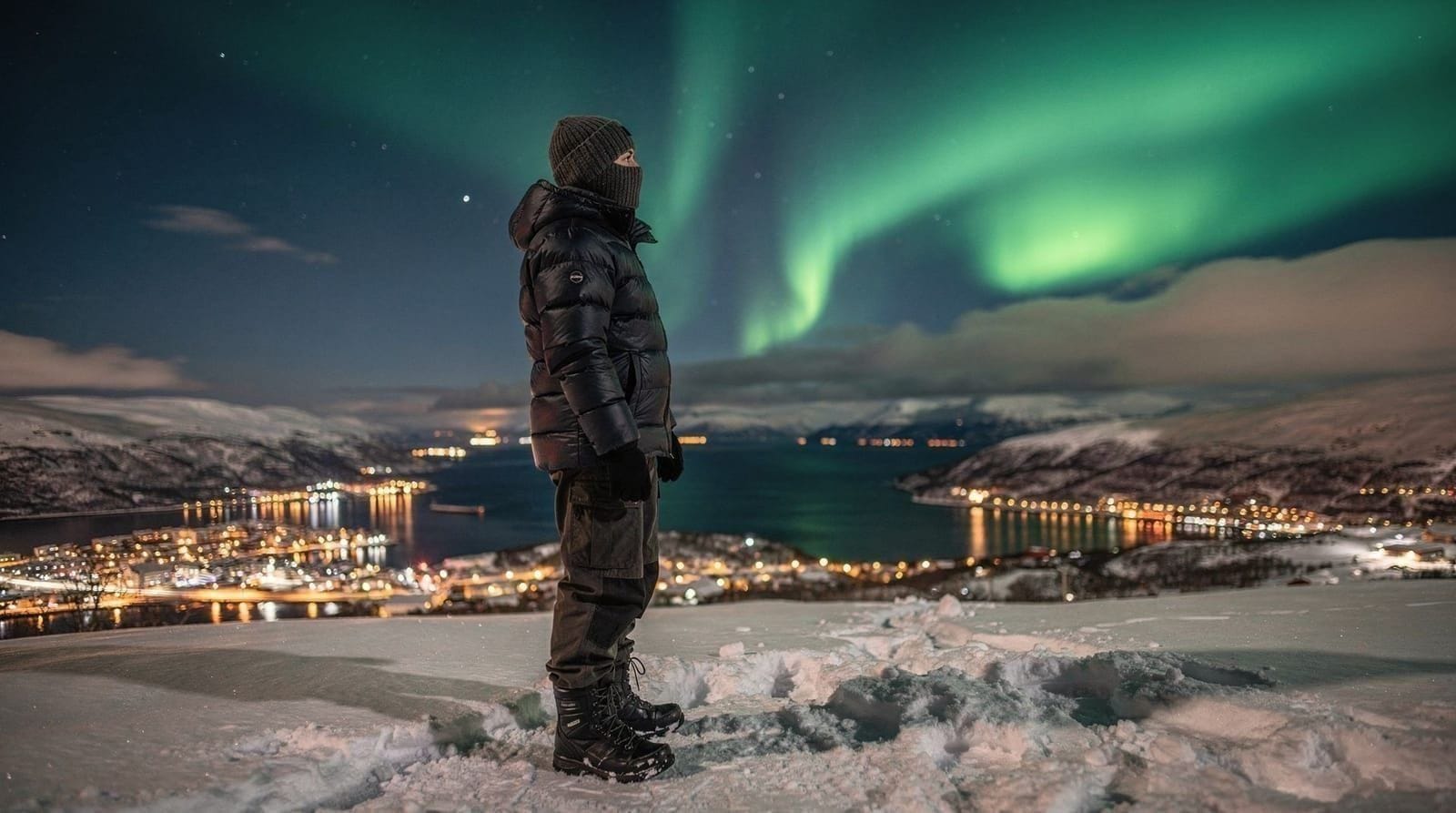
In most cases yes, particularly between October and February when coastal cloud is frequent. The Tromsø city waterfront and nearby Fjellheisen offer aurora views on clear nights — but a professional chase tour gives you the mobility to escape cloud cover. If the forecast is excellent and locally cloud-free, a stationary viewpoint works fine.
What happens if the tour is cancelled due to weather?
Reputable operators cancel only in extreme conditions — heavy snowstorm, road closures — not merely because the aurora forecast is low. A tour running in poor conditions with no sightings is typically rebookable. Full cancellations should include a full refund.
Which months have the longest aurora windows?
December has the longest polar nights (Tromsø enters polar night on 27 November, returning 15 January), meaning darkness from mid-afternoon. However, December and January are also the months with highest cloud frequency. September, October, and March often offer better odds of clear skies.
Is the northern lights chase tour suitable for children?
Most operators accept children aged 5 and up, but staying outside at -10°C until 01:00 is demanding. For families, a reindeer camp with northern lights chance offers a warmer, more structured experience with aurora viewing as a bonus rather than the primary goal.
Can I combine a chase tour with whale watching?
One operator runs a combined 24-hour tour that includes both. Logistically it’s demanding (very little sleep), but it works if you have only one or two nights. The whale and aurora combined tour is worth reading before booking anything combined.
How do I know if my specific tour date has good aurora conditions?
Check Space Weather Prediction Center for KP index (≥3 is useful for Tromsø’s latitude) and yr.no for local cloud cover. The aurora forecast guide explains what the numbers mean in practical terms. Most operators send a weather update on the day of your tour.
Do I need to tip the guide?
Tipping is not customary in Norway and is never expected. If your guide was exceptional — drove 180 km in a blizzard to find you a clear patch, stayed two hours past scheduled end, or edited your photos overnight — a voluntary tip of 100–200 NOK is appreciated but entirely optional.
Should I book a chase tour on my first night or wait for a better forecast?
Book your first available night rather than waiting, especially if you have three nights or fewer. Forecasts more than 24–48 hours out are unreliable for cloud cover specifically, and a mediocre-KP clear night regularly outperforms a high-KP night under cloud. Booking early also secures a small-group departure before it sells out, and a genuine second-chance policy protects you if the first attempt fails.