Reindeer sledding and Sami culture tours near Tromsø — 2026 review
Tromsø: Reindeer Sledding & Feeding with a Sami Guide
| Format | Feeding visit, sledding, or evening cultural package |
| Duration | 2–7 hours depending on format |
| Cost | around 800–2,800 NOK; combo with dog sledding 3,500–4,500 NOK |
| Best for | Families, cultural interest, low-intensity activity days |
| Season | Year-round; winter (Nov–Mar) is the classic snow format |
What these tours actually involve
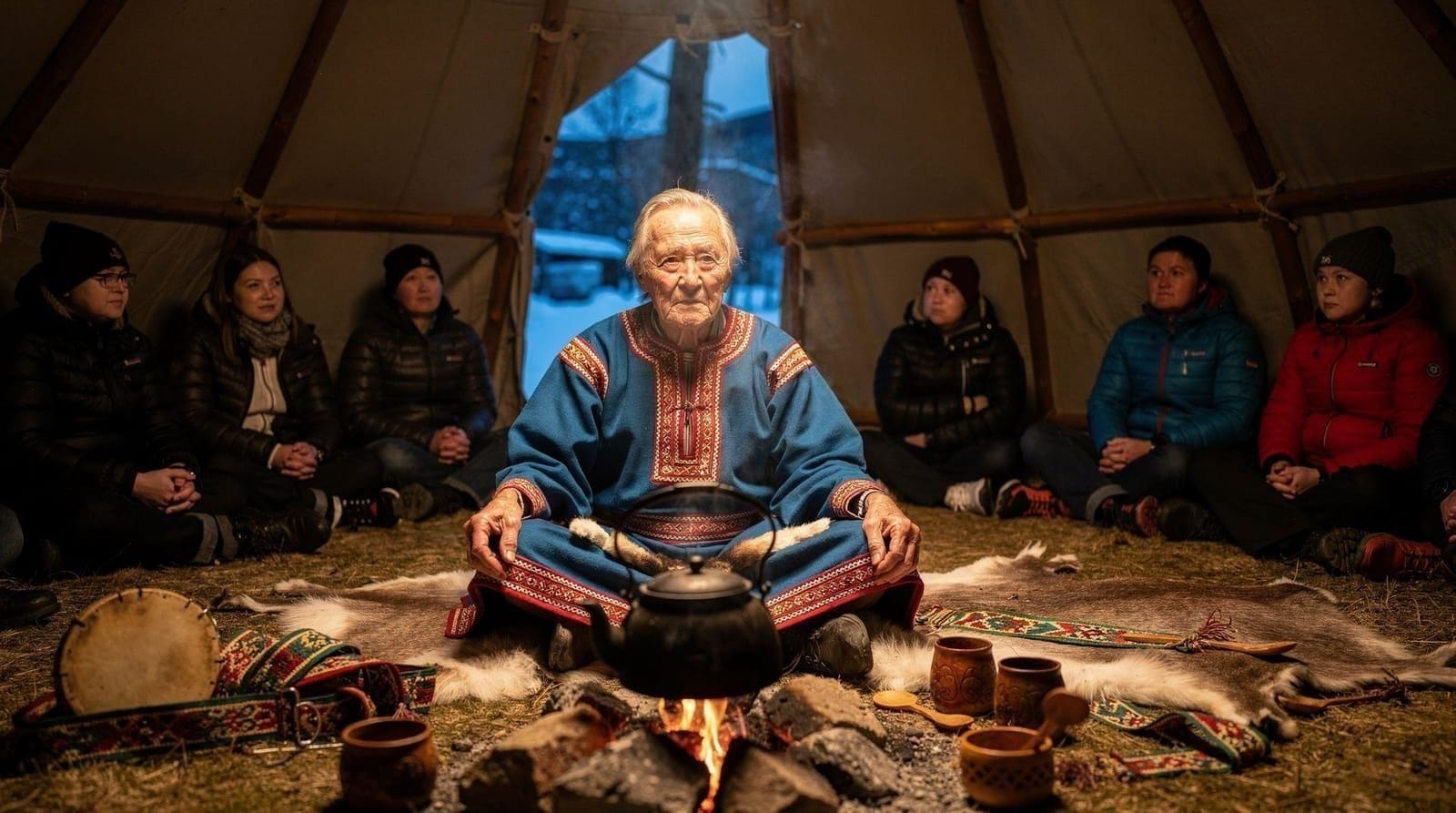
Reindeer and Sami cultural tours near Tromsø occupy a broad spectrum. At one end are genuine experiences run by Sami families — the Skolt Sámi, Northern Sámi, and Lule Sámi peoples all have traditional territories in northern Norway — where the cultural content reflects lived practice. At the other end are commercial setups with rented costumes, purchased reindeer, and a “joik” (Sami song) played over speakers.
This is not a trivial distinction if authenticity matters to you. Norway has been slowly improving accountability in Sami cultural tourism, but the verification falls to individual visitors. The most reliable proxy: is the operator or lead guide Sami, and do they speak Sámi? If the listing doesn’t say, ask before booking.
That said, even tours that are not Sami-run can be respectful, educational, and enjoyable if the animal welfare is good and the cultural information is presented honestly. The problem is specifically with operators who actively misrepresent themselves as traditional when they are not.
The three main formats
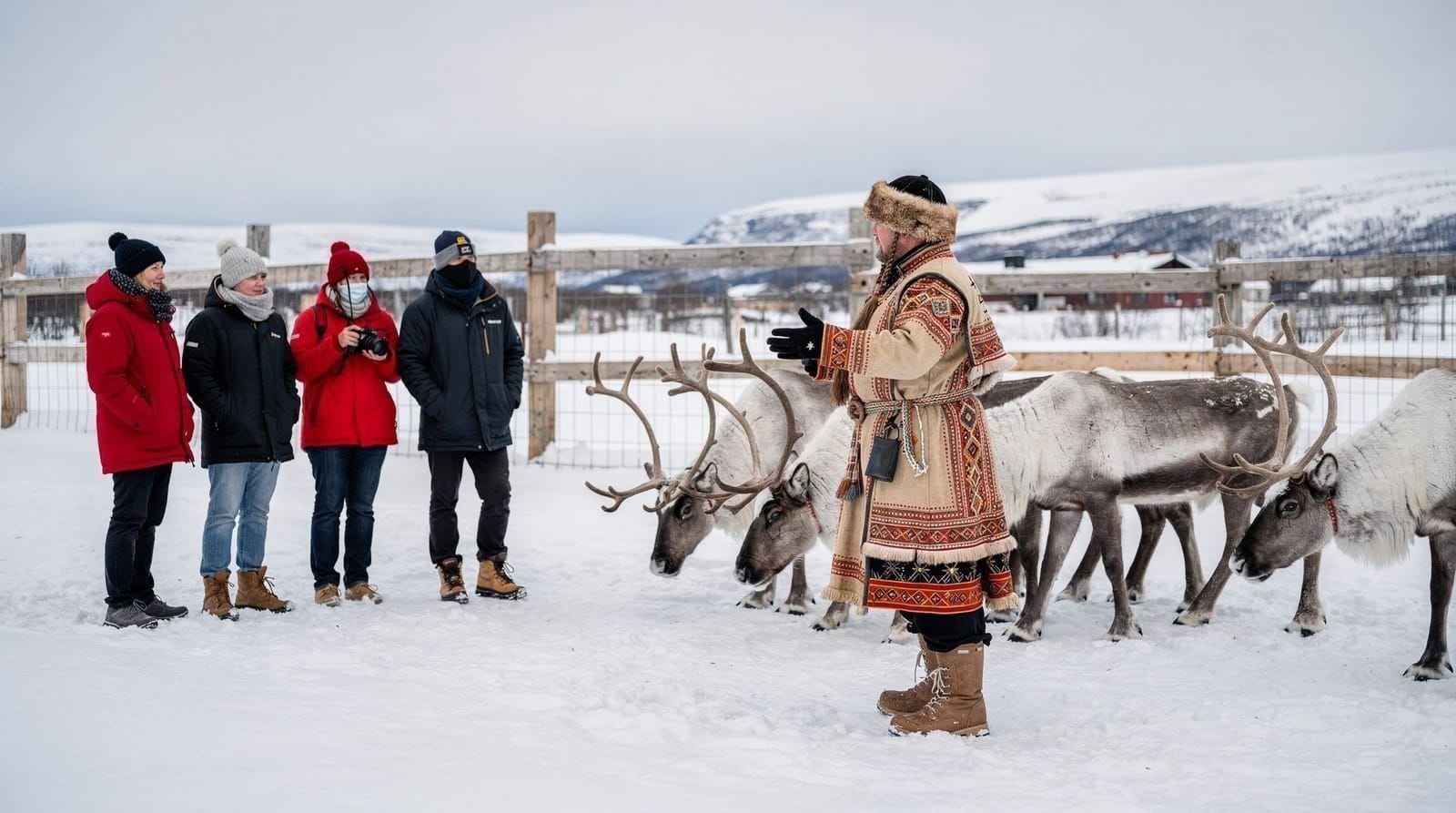
Feeding and cultural visit (no sledding) Duration: 2–3 hours. You visit a camp, receive hot drinks and traditional food, hear stories about the Sami way of life, and feed reindeer from your hand. Price: 800–1,200 NOK. Good for families with small children, visitors on short timelines, or anyone more interested in the cultural context than the activity.
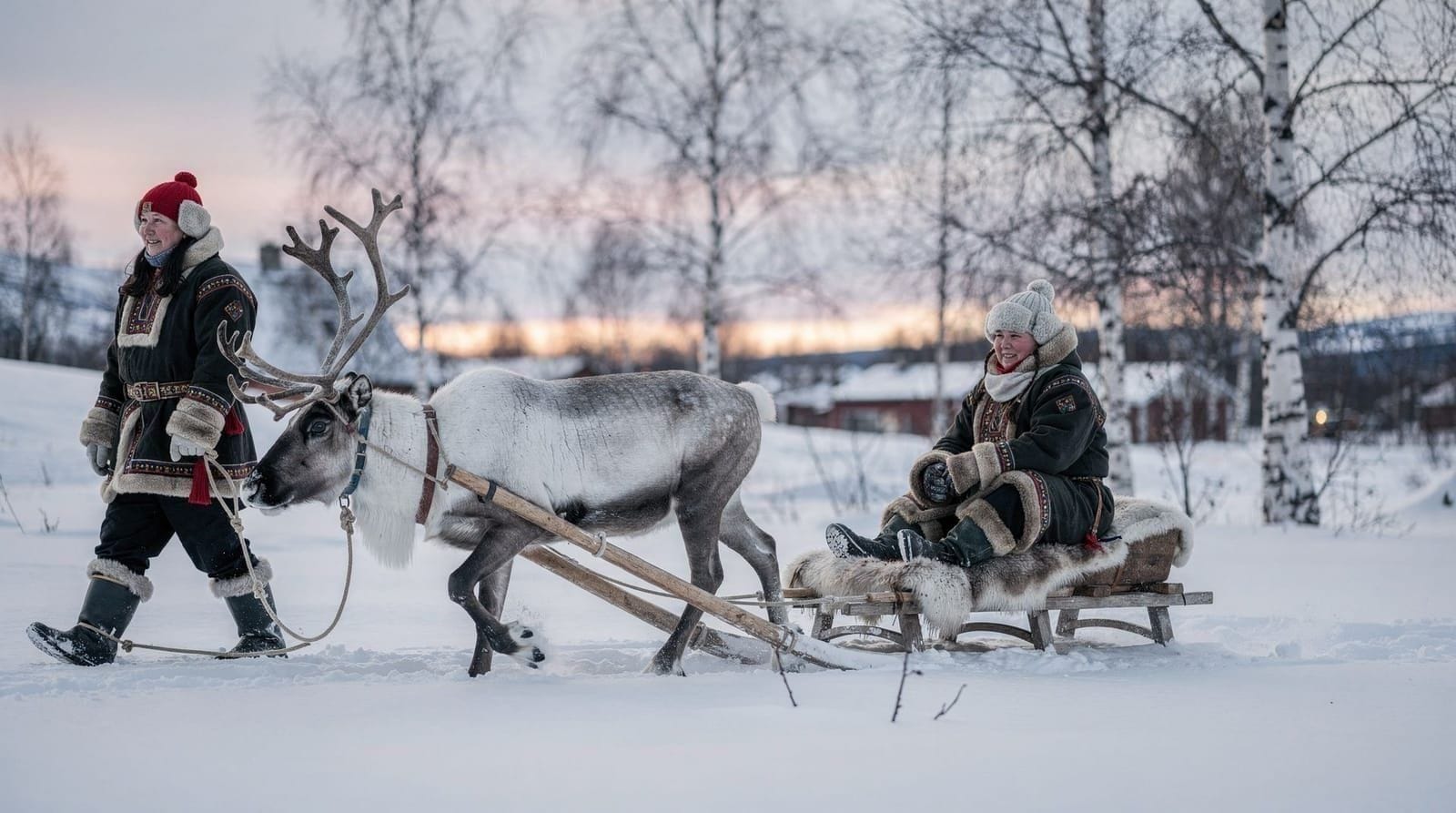
Reindeer sledding with cultural component Duration: 3–5 hours. Adds a sled ride behind a reindeer across a snowy paddock or short trail — typically 1–3 km. This is less physically demanding than husky sledding and much calmer. Price: 1,400–2,000 NOK. The sled ride component is memorable for the novelty and for photographs, but it is brief.
Evening package with dinner and northern lights Duration: 5–7 hours. Combines the cultural visit and feeding with a lavvo dinner and aurora watching opportunity. Best of the three formats if time and budget allow. Price: 2,000–2,800 NOK. The aurora component is weather-dependent.
Reindeer sledding and feeding with Sami guideComparing the main operators
The Tromsø area has several distinct reindeer/Sami experiences operating concurrently. They differ most in location, group size, and cultural depth.
Camp Tamok reindeer sledding Run within the larger Camp Tamok complex in Tamok Valley, 60 km from Tromsø. This is a multi-activity commercial facility — efficient, well-organized, good for combining with dog sledding or snowmobile in a single day. The Sami cultural component here is lighter than at family-run operations. Good value if you’re already going to Tamok for other activities.
Sami-run family camps (Sjursnes, Breivikeidet area) Smaller operations, fewer guests per session, more personal stories. Sjursnes and Breivikeidet both have Sami-associated cultural tourism operations. These typically have a 6–16 guest maximum and require advance booking in peak season.
Malangen reindeer ranch Malangen hosts a well-regarded reindeer experience that combines coastal fjord scenery with cultural programming. The ranch is approximately 70 km south of Tromsø. Less frequented than Tamok, worth considering if you want to avoid groups from the city-side tour circuit.
Sámi reindeer sledding and cultural tourWhat to expect from the reindeer themselves
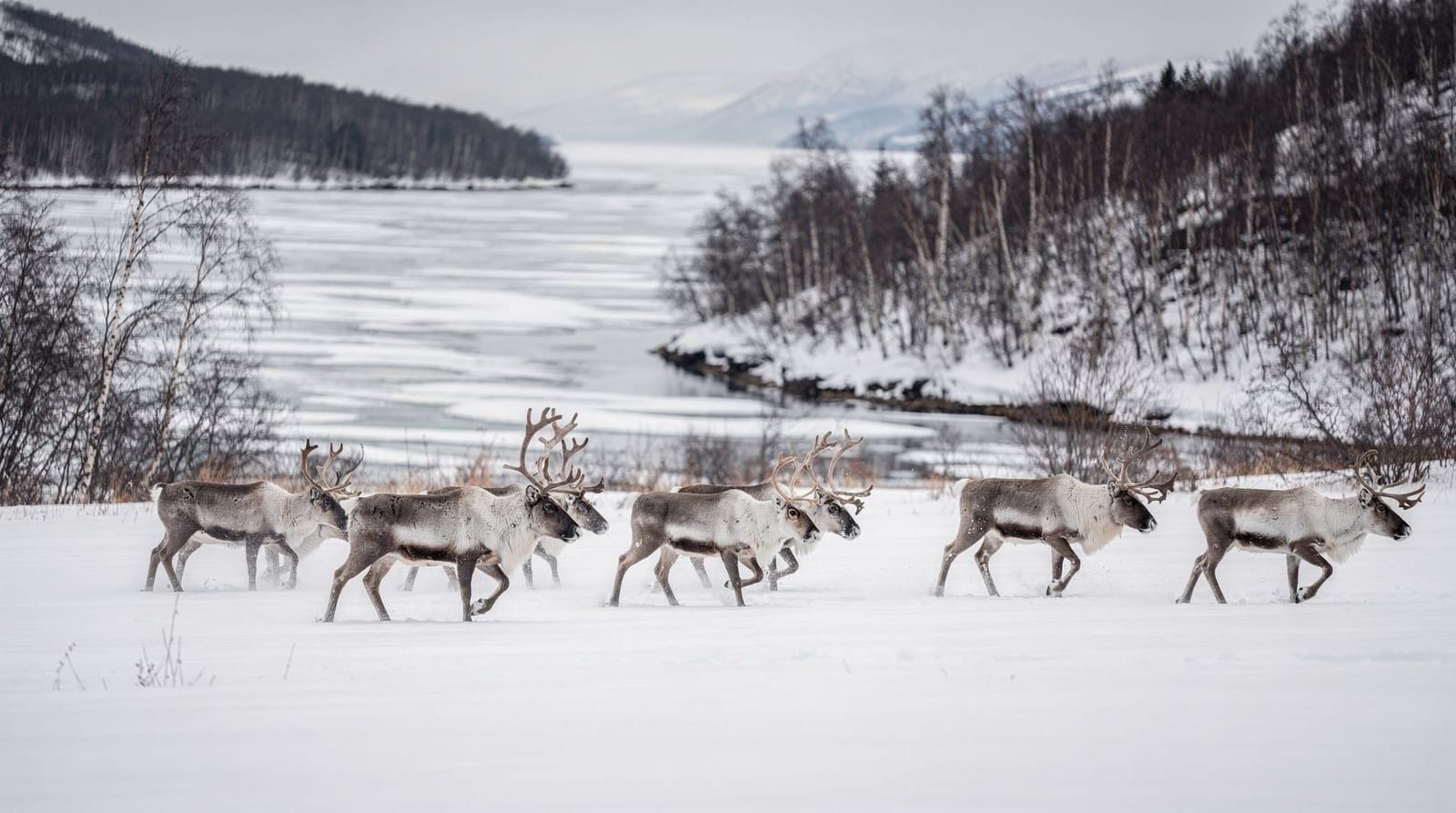
Semi-domesticated reindeer in a tourist camp context have grown up around people. They are calm, curious, and will approach food readily. A reindeer pulling a sled is trained for it and managed at walking pace — there is no risk of bolting at speed.
The animals are significantly smaller than you might expect if your reference is wild caribou. Norwegian reindeer average 80–120 kg. They smell strongly of fur and woodland. The experience of feeding them directly from your palm — feeling the velvet lip and the surprisingly warm breath — is tactile in a way that photographs don’t capture.
The best operations introduce you to specific named animals and explain their individual characters, which is how Sami herders actually relate to their animals. Generic “just put your hand out for the deer” stops are a lesser version.
The Sami cultural education component
Good Sami cultural tours cover:
- The distinction between the different Sami groups (Northern, Lule, Southern Sámi — these are distinct cultures with distinct languages)
- Traditional land use and reindeer herding cycles (seasonal migration, calving, slaughter)
- Sami food traditions — dried reindeer meat (bidos), blood sausage, various preparations
- Craft traditions — duodji (Sami handicraft) including knife sheaths, belts, and garments
- Joik — the traditional Sami vocal form, distinct from Western song
Less good versions: a brief “this is a lavvo, this is traditional clothing, here is a souvenir shop.”
If Sami culture specifically interests you, the Sami culture guide provides context before your visit, and the Sami tourism ethics article helps identify which operations genuinely support the communities they present.
What to wear and practical logistics
Tours in this category are less physically intense than dog sledding or snowmobiling, but you will still be outside in Arctic conditions for 1–3 hours. Most operators provide thermal suits; confirm at booking.
The critical item often forgotten: proper boots. Even with a thermal suit, thin fashion boots in -10°C snow will make you miserable within 20 minutes. Insulated, waterproof footwear rated for cold is essential. The winter packing guide covers what to bring.
Most tours depart from central Tromsø. Transport to the camp (30–60 minutes depending on location) is included in the package.
Reindeer camp and Sami cultural tour with lunchReindeer sledding versus husky sledding
Visitors deciding between the two most common Tromsø sled activities should know the experiences are genuinely different, not just interchangeable “sled ride” options. Husky sledding is faster, louder, and more physically involved — the dogs pull hard and the ride covers real distance, sometimes with a self-drive option. Reindeer sledding is slower, quieter, and shorter, with the cultural and educational component doing more of the work than the ride itself. Families with young children or anyone who finds the noise and energy of a husky yard overwhelming often prefer the calmer reindeer format. Visitors who want an adrenaline-adjacent Arctic activity should look at reindeer sledding in Tromsø for context, or dog sledding with kids if speed matters more than culture.
Frequently asked questions about reindeer sledding and Sami tours
How long is the actual sled ride?
Most reindeer sled rides cover 1–3 km over 15–30 minutes. Unlike dog sledding, reindeer move at a calm walking pace. The sled ride is a short component of a longer cultural visit — not the primary activity. If you want an extended sledding experience, husky dog sledding is the right choice.
Are children welcome on these tours?
Yes, and they are typically the most enthusiastic participants. Feeding reindeer by hand is accessible to children from toddler age, and the calm nature of reindeer (compared to the excitement of husky teams) suits young children well. Most operators accommodate children of all ages.
What is a lavvo?
A lavvo (also spelled “lavvu”) is a traditional Sami dwelling resembling a wide teepee. It is structured with wooden poles and covered in canvas or hides, with an open fire at the center and seating on reindeer skins around the fire. Most Sami cultural tours include time in a lavvo for food, drinks, and storytelling. The open fire makes the interior warm even in -20°C outside temperatures.
Can I buy authentic Sami handicrafts on these tours?
Some operations sell duodji — genuine Sami handcraft items. Prices for authentic duodji are not low: a hand-sewn leather belt costs 800–2,000 NOK; a decorated knife sheath, 1,500–4,000 NOK. Mass-produced “Sami” souvenirs from China are unfortunately common in tourist areas. Ask whether items are certified duodji (the Sami Parliament maintains a quality certification scheme).
Is the reindeer camp experience available year-round?
Both winter and summer formats exist. Winter (November–March) is the iconic snowy sled experience. Summer (June–August) is the midnight sun feeding and herding demonstration — no snow, no sleds, but the midnight sun and the green plateau landscape have their own atmosphere. The Tromsø seasonal guide compares what each season offers.
What is the difference between a reindeer feeding visit and a full cultural tour?
A feeding visit is 1–2 hours focused primarily on the animals — approach, feeding, photographs. A full cultural tour adds: lavvo time with traditional food and stories, craft demonstrations, joik if a Sami performer is present, and often a sled ride. The extra cost (typically 400–800 NOK) for the full cultural version is usually worth it.
Can I combine a reindeer tour with dog sledding in the same day?
Yes — Camp Tamok specifically offers combined packages that include both. Timing can be tight (plan 7–9 hours total) and the cost rises to 3,500–4,500 NOK for the combo. If you have two separate days, booking each activity independently gives more breathing room and usually a better experience of each.
Do these tours interact respectfully with a working reindeer herd, or are the animals kept purely for tourism?
It varies by operator. At family-run camps, the reindeer are typically part of a working herd with a genuine herding cycle — calving, seasonal grazing migration, and eventual use for meat — and the tourism activity is layered onto that existing practice rather than replacing it. At some larger commercial facilities, reindeer are kept primarily for visitor interaction. Neither model is inherently unethical, but if it matters to you, ask directly whether the herd has a herding purpose beyond tourism — a Sami-run operation will usually explain this readily and in detail. The Sami tourism ethics article covers the welfare and cultural questions in more depth.
Booking practical notes
Most reindeer and Sami cultural tours operate year-round, but the winter format (November–March) is the one most visitors want. Peak demand falls in January–February on weekends, particularly during major aurora forecast nights when visitors are combining the reindeer visit with an evening aurora experience.
Lead time: Book at least 1–2 weeks in advance for January–February weekends. Mid-week bookings often have same-week availability. Christmas period (December 20–January 5) is particularly busy and books months in advance.
Group size: Smaller operations (family-run camps, 6–12 guests per session) require advance booking and sometimes have minimum group requirements mid-week. The larger Camp Tamok format accommodates individual bookings at any time.
What to do if it’s raining or there’s no snow: Most reindeer/Sami cultural tours operate regardless of snow conditions — the cultural and feeding component is weather-resilient. The sled ride requires snow; if snow conditions are poor, operators sometimes substitute a guided walk through the reindeer paddock. Check with your operator if booking in October or late March when snow is less reliable.
Photography and filming: All reputable operators allow personal photography during the experience. Some ask that you not post images of specific Sami individuals to social media without consent — a reasonable and respectful request. Commercial filming requires advance permission and sometimes a fee. Ask at booking if this applies to you.