Sjursnes — the Ullsfjord ferry and aurora escape south of Tromsø
Sjursnes is a small community 45 minutes south of Tromsø with a ferry across Ullsfjord and some of the darkest skies for aurora watching near the city.
Tromsø: All-Inclusive Northern Lights Hunt
Duration: 7.5 hours
Quick facts
- Best time
- Sep–Apr (aurora); year-round as ferry crossing
- How to get there
- Drive E8 south then Fv866 west to Sjursnes ferry terminal
- Drive time from Tromsø
- 45–55 min (55 km)
- Ideal length
- Evening stop for aurora; or transit for Lyngen peninsula
Quick answer: Sjursnes is a ferry terminal and small settlement on Ullsfjord’s western shore, about 55 km and 45–55 minutes south of Tromsø on E8 then Fv866. The main visitor purposes are: (1) catching the Ullsfjord ferry to Lyngseidet on the Lyngen peninsula — an alternative crossing point to the Breivikeidet–Svensby route; and (2) driving here for aurora watching in genuinely dark conditions away from Tromsø’s light pollution. There is nothing else in Sjursnes for tourists — it is a fjord landscape with minimal infrastructure.
| Where | Ullsfjord western shore, 55 km / 45–55 min south of Tromsø |
| Cost | Free to self-drive; ferry around 135–155 NOK/car; guided aurora tours from around 1 000 NOK |
| Time needed | Evening trip, or a half day if combined with the Lyngen ferry |
| Getting there | Self-drive only — no public bus |
| Best time | September–April for aurora; June–July for midnight sun |
Getting to Sjursnes
Drive E8 south from Tromsø for 40 km to the Fv866 junction (signed Sjursnes/Ullsfjord), then west for 10–15 km down to the fjord shore and terminal. Total: 45–55 minutes. The minor road in (Fv866) is a single-track road in places — be prepared to use passing places in winter. No public bus serves this route.
The Sjursnes–Lyngseidet ferry
A passenger and car ferry crosses Ullsfjord between Sjursnes and Lyngseidet (on the Lyngen peninsula). Crossing time: approximately 20 minutes. The ferry runs from early morning to late evening; check Norled timetables for current schedule. Price for a car and driver: approximately 135–155 NOK.
This crossing lands in Lyngseidet — the main village on the Lyngen peninsula and a good starting point for snowmobile or hiking access on the Lyngen side. It is slightly longer than the Breivikeidet–Svensby crossing but lands in a more central position on the peninsula. Some travellers prefer this route for reaching the southern Lyngen Alps.
Aurora watching at Sjursnes
The Sjursnes area is notably dark for aurora viewing — only small settlements in the area, and the fjord provides an open northern sky. Aurora tour minibuses occasionally route through this corridor, but most self-drive aurora chasers come here because it is less frequently trafficked than the main Tamok Valley and Breivikeidet routes.
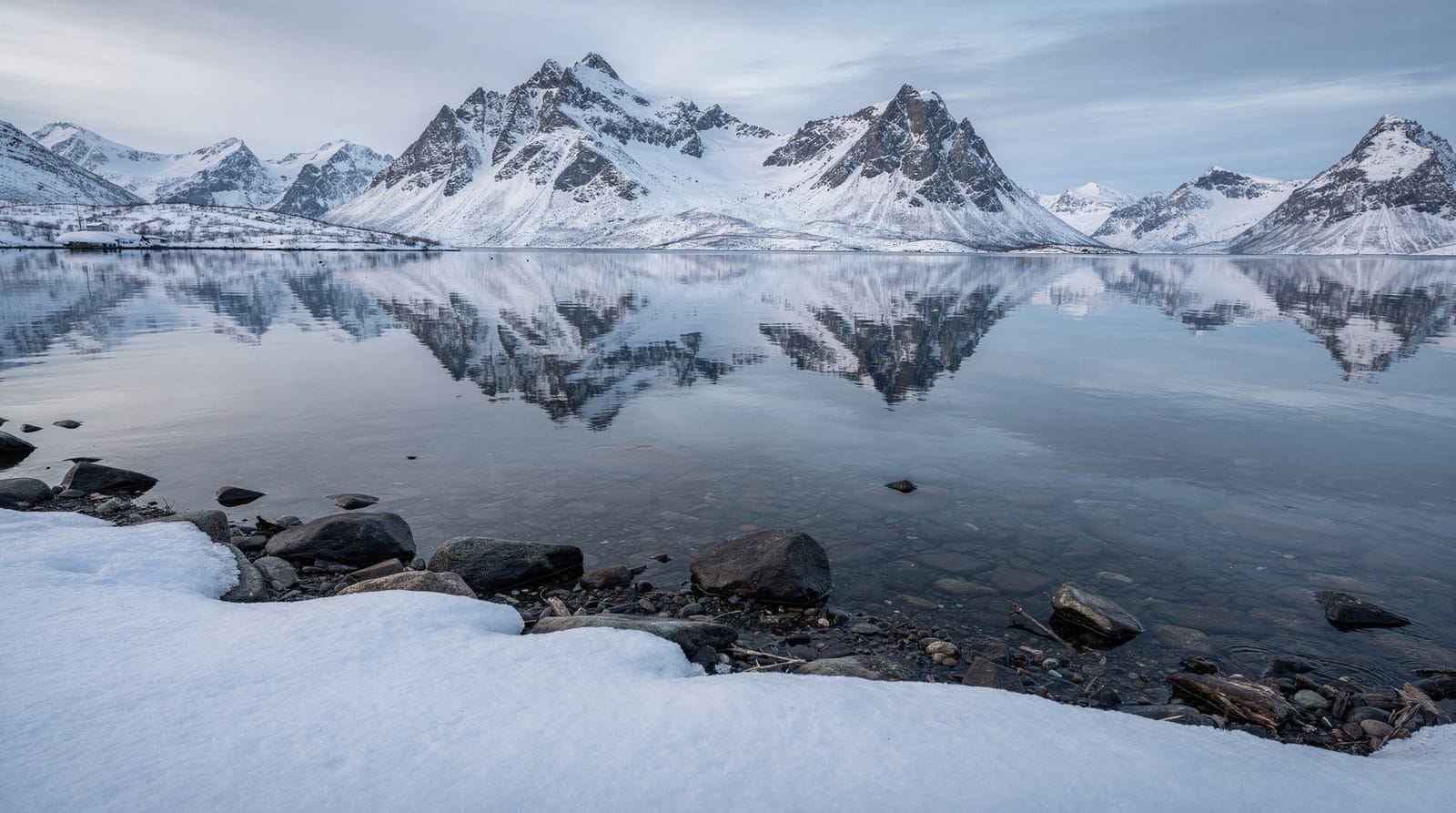
Parking along the Fv866 road as it descends to the fjord gives good open-sky aurora views. The fjord itself, viewed from the terminal, gives a reflection effect on still nights that doubles the visual impact of the display.
Conditions: in deep winter (November–January), expect -10°C to -20°C on clear nights. Dress for extended outdoor waiting — the aurora may not be visible for an hour after arrival, then suddenly erupt. Thermal layers, a balaclava, and good gloves are essential. See our what to wear for northern lights guide.
If you would rather not navigate the Fv866 in the dark yourself, several Tromsø-based aurora hunts route through this and similar corridors depending on where the clear-sky forecast points that night.
Northern lights all-inclusive hunt from Tromsø — a guided minibus chase that adapts its route nightly to the clearest forecast, sometimes including the Sjursnes/Ullsfjord corridor; thermal suits and hot drinks included.
Northern lights small group minibus tour — smaller vehicle, fewer guests per guide, useful if the large-coach aurora tours feel too crowded for a quiet corridor like this one.
Landscape in other seasons
In summer, the drive down Fv866 is a pleasant scenic road through birch forest and mountain meadow to the fjord. The fjord view from the terminal is quiet and largely unvisited — the kind of place locals know but tour itineraries do not include. For photography, the reflections of the Lyngen peaks across the fjord are clearest in June and July on still mornings.
The area has no established hiking trails. The terrain above the fjord road is open mountain for those comfortable with unmarked routes in summer.
Combining Sjursnes with Malangen
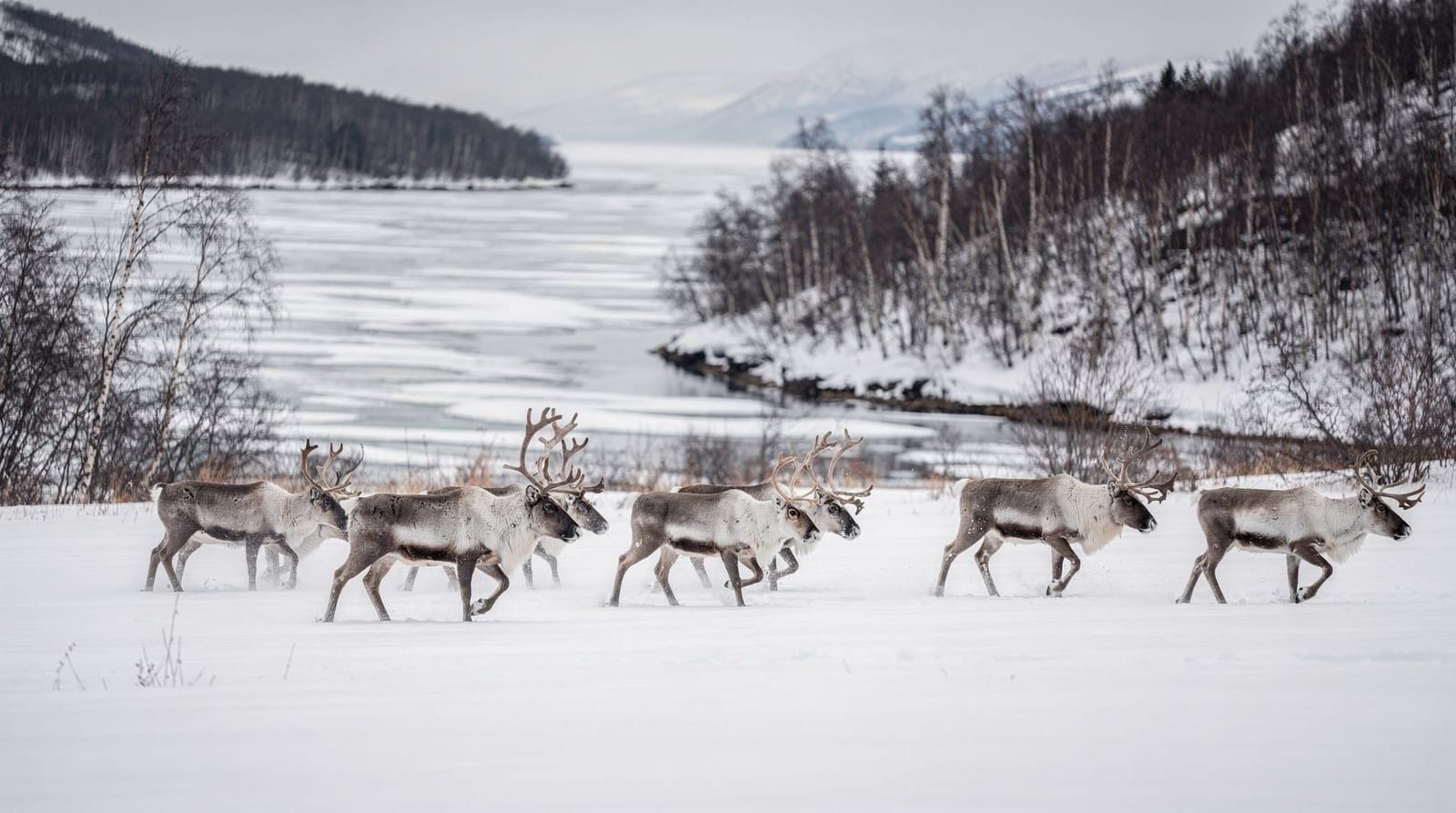
Malangen is 15–20 minutes east of the Sjursnes junction (back on E8 and then west on Fv91). A day combining a Malangen reindeer farm visit in the afternoon with aurora watching at Sjursnes in the evening makes sense geographically. Both are in the same southeast-of-Tromsø corridor.
The Lyngen Alps are 20 minutes away across the ferry — so Sjursnes works as a same-day transit into Lyngen for snowmobile, with aurora watching on the return drive.
The Ullsfjord in winter and spring
The stretch of Ullsfjord visible from Sjursnes changes dramatically through the year. In January and February, the fjord surface can partially freeze in the shallow inner sections, creating intricate ice patterns that are excellent for abstract photography. The mountains on the Lyngen side rise to over 1 500 m and are snow-covered from October to June.
In March and April, the light quality around Sjursnes reaches its annual peak — the sun is back above the horizon for several hours, the snow on the Lyngen peaks is bright and sharp, and the angle of light along the fjord produces long golden shadows on still mornings. This is arguably the best season for landscape photography from this side of Ullsfjord.
Spring is also when the birch forest above the Fv866 road starts to green, providing a contrasting foreground for mountain shots. The visual shift from ice-and-snow to mixed spring tones happens quickly in April — often within a 2-week window — and the roadside viewpoints above the ferry terminal capture this transition well.
Self-drive aurora strategy from Sjursnes
If you are self-driving for aurora and Tromsø’s urban glow is frustrating faint displays, the Sjursnes corridor is one of three recommended escape routes southeast of the city (alongside the Tamok Valley road and the Malangen fjord road). The critical difference from the Tamok road is direction: the Sjursnes route opens sky to the northwest and directly north above Ullsfjord, which is particularly good when the aurora is active in the north-northwest quadrant.
Practical aurora-chasing approach from Sjursnes:
- Check the Norwegian Meteorological Institute’s cloud forecast (yr.no) before leaving Tromsø — look for clear sky over Troms county inland areas.
- Leave Tromsø around 21:00 in winter (full dark by this point from November–January).
- Park at the fjord viewpoint about 3 km above the terminal on Fv866 — wide unobstructed northern sky, no roadside lighting.
- If clouds push in from the coast, the valley behind Sjursnes (east on Fv91) is sometimes shadowed under the cloud band while the fjord corridor stays partially clear.
See our aurora cloud strategy guide for the full technique on reading satellite imagery before you drive.
Midnight sun over Ullsfjord
In June and July, the midnight sun viewed from Sjursnes is an atmospheric and uncrowded experience. The sun travels north along the horizon from around 23:30 to 00:30, and from the fjord shore — looking north-northeast across the water toward the Lyngen peaks — the combination of orange light on snow, reflections in the fjord, and the sheer silence of the place is extraordinary.
The Lyngseidet ferry landing, across the fjord, is visible from Sjursnes in clear conditions. The sight of a car ferry crossing the fjord in golden midnight light is one of those incidental travel images that sticks.
Practical guide for a self-drive visit
If you are driving to Sjursnes independently (for aurora, for the ferry, or for the landscape), here is what to bring:
- Full petrol tank from Tromsø (no petrol on the Fv866 road)
- Food and hot drinks in a thermos — no facilities en route
- Winter tyres mandatory in winter; the Fv866 is a minor road with less frequent gritting
- Offline map downloaded — mobile signal is unreliable on the western section of Fv866
- Tripod and camera if you are going for aurora or landscape photography
- A sleeping bag or warm blanket in the boot — if you are planning to wait outdoors for 2+ hours at -15°C and need to warm up
The drive from Tromsø centre takes 45–55 minutes. The junction with Fv866 from E8 is signed but small — look for “Sjursnes” on the road signs at approximately km 40 south of Tromsø. The road then descends through forest to the fjord over 10–12 km.
Comparing the two Ullsfjord crossings
Two ferry routes cross Ullsfjord between the Tromsø side and the Lyngen peninsula:
| Route | Drive from Tromsø | Crossing time | Lyngen landing |
|---|---|---|---|
| Breivikeidet–Svensby | 35–40 min | 15 min | South Lyngen shore |
| Sjursnes–Lyngseidet | 45–55 min | 20 min | Lyngseidet village |
For most snowmobile and skiing visitors, the Breivikeidet route is faster. The Sjursnes route suits visitors heading specifically to Lyngseidet or the northern Lyngen activities, or those who want to avoid the often-busier Breivikeidet queue.
What Sjursnes is not
Sjursnes is not a tourist destination in the conventional sense. There are no cafés, no shops, no accommodation, no organised activities. The ferry terminal has a shelter but no facilities for tourists. Visitors who come expecting infrastructure will be disappointed. This is a working Norwegian fjord community — functional, atmospheric, but not set up for tourism.
Sjursnes as part of a wider aurora strategy
Sjursnes is one option among several dark-sky corridors around Tromsø, and understanding how it fits the bigger picture helps set expectations. Kvaløya is the closest dark-sky option if you don’t want a 45-minute drive; the Tamok Valley road is the most heavily used by tour operators and therefore the busiest with other chasers; Malangen offers a similarly quiet fjord corridor a short distance east. Sjursnes’ advantage over all three is the near-total absence of settlements along the Fv866, which means genuinely dark skies rather than just “darker than the city.” Its disadvantage is the same isolation — no backup plan, no facilities, and a minor road that needs real winter driving confidence.
Serious aurora hunters treating a Tromsø trip as a multi-night chase often rotate between two or three of these corridors depending on the nightly cloud forecast, rather than committing to one location for the whole stay. Read our aurora forecast guide for how to read the KP index and cloud cover together before choosing a direction each evening.
Frequently asked questions about Sjursnes
Is the Sjursnes aurora viewing better than staying in Tromsø?
Clearer — the absence of urban light pollution makes a significant difference for fainter aurora displays. If the KP index is below 2 (weak aurora), you will see more from Sjursnes than from the city. If the aurora is active (KP 3+), it is visible from Tromsø city itself. The tradeoff is the 45-minute drive each way; see our self-drive aurora guide.
How does the Sjursnes ferry compare to Breivikeidet for reaching Lyngen?
Sjursnes–Lyngseidet is 5 minutes longer crossing (20 vs. 15 min) and 10–15 minutes further from Tromsø. It lands in Lyngseidet (the main village) rather than Svensby (the south Lyngen shore). For the northern Lyngen plateau (snowmobile start points), Sjursnes may be marginally better positioned. For the southern Lyngen skiing terrain, Breivikeidet–Svensby is slightly shorter.
Is there accommodation at Sjursnes?
No tourist accommodation. The nearest accommodation is at Malangen Resort or back in Tromsø. Sjursnes is best visited as an evening or day trip, not as a base.
Can I take a bus to Sjursnes from Tromsø?
No regular public bus serves Sjursnes. You need a car. Organised aurora tours sometimes route through this area — check the itinerary description when booking.
What time does the Sjursnes ferry stop running?
The ferry typically runs until 22:00–23:00 on weekdays and Saturdays. Check the Norled website for current last-crossing times before planning a late Lyngen return via Sjursnes — missing the last ferry adds a significant detour via Nordkjosbotn.
Is the road to Sjursnes (Fv866) difficult in winter?
It is a minor road with occasional steep and winding sections. In fresh snow or ice, extra caution is required. Gritting is less frequent than on the E8. Winter tyres mandatory; 4WD or chains recommended after heavy snowfall. Check road conditions at vegvesen.no before driving in January–February.
Should I self-drive to Sjursnes or book a guided aurora tour instead?
Self-driving gives you full control over timing and the option to leave the moment the aurora activates, but requires confidence on a minor, poorly-lit winter road and no backup if you get stuck. A guided tour removes that risk and often adapts its destination to the best forecast of the night, which may or may not include Sjursnes specifically. If you are not confident driving unlit rural Norwegian roads in winter, choose the guided option.
Is Sjursnes safe to visit alone at night?
Yes, in the sense that it is not dangerous from a crime perspective — this is rural Norway. The real risks are practical: getting stuck on ice, running low on fuel with no nearby station, or being underdressed for extended outdoor waiting at -15°C or colder. Prepare as described in the practical guide above and you will be fine.
Top experiences
Bookable activities with verified prices and instant confirmation on GetYourGuide.