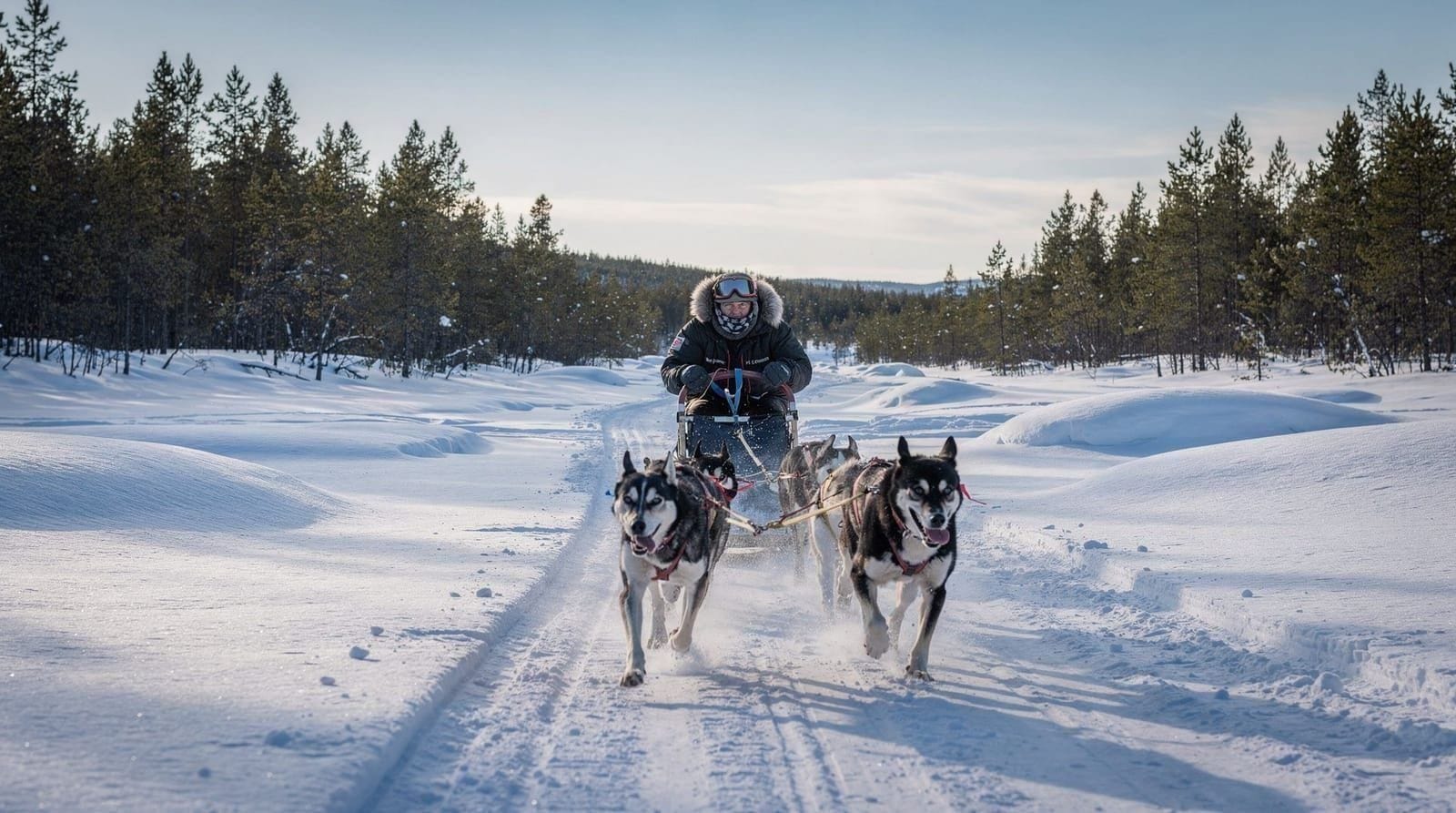
Husky self-drive dog sledding in Tamok — honest review 2026
From Tromsø: Advanced Dog Sledding Tour at Camp Tamok
Self-drive dog sledding is the more physical, more memorable version of a Tromsø classic, and Tamok Valley is where most of the best routes for it are. This review covers what “self-drive” actually involves, how it compares to the passenger format and to sledding closer to the city, real prices in NOK, and what a well-run kennel looks like.
| Where | Tamok Valley, ~60 km / 55 min from Tromsø |
| Cost | around 2,500–3,500 NOK per person |
| Time needed | Full day, 7–9 hours door to door |
| Season | Late November–late March |
| Best for | Physically able adults and teens over ~40–45 kg |
Self-drive dog sledding at Tamok: the real experience
Tamok Valley — called Tamokdalen in Norwegian — is one of the primary hubs for dog sledding near Tromsø. Several operators run kennels in the valley, and the landscape is well-suited: wide frozen river beds, forest trails, and long flat stretches where a dog team can run at pace without technical difficulty.
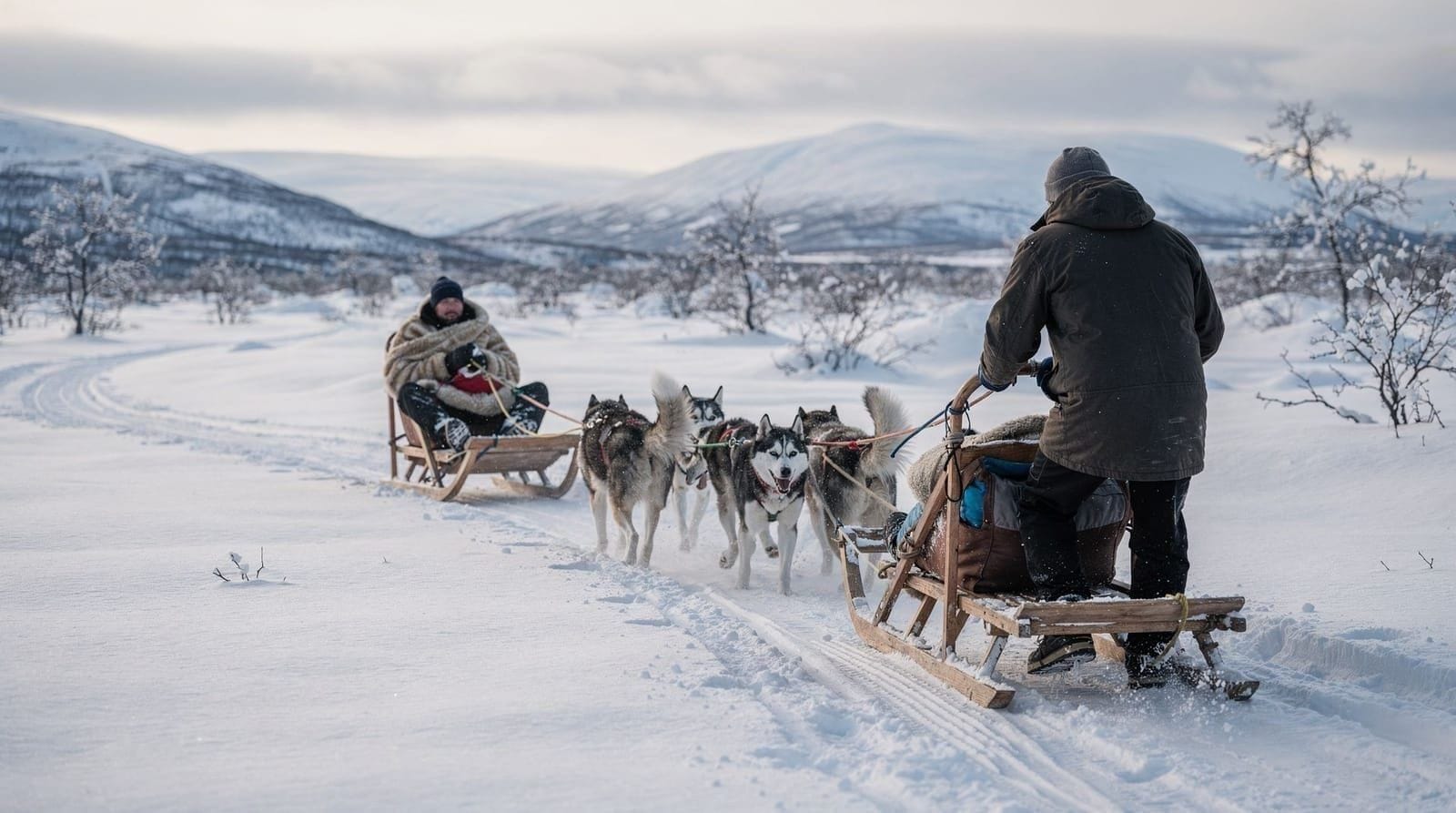
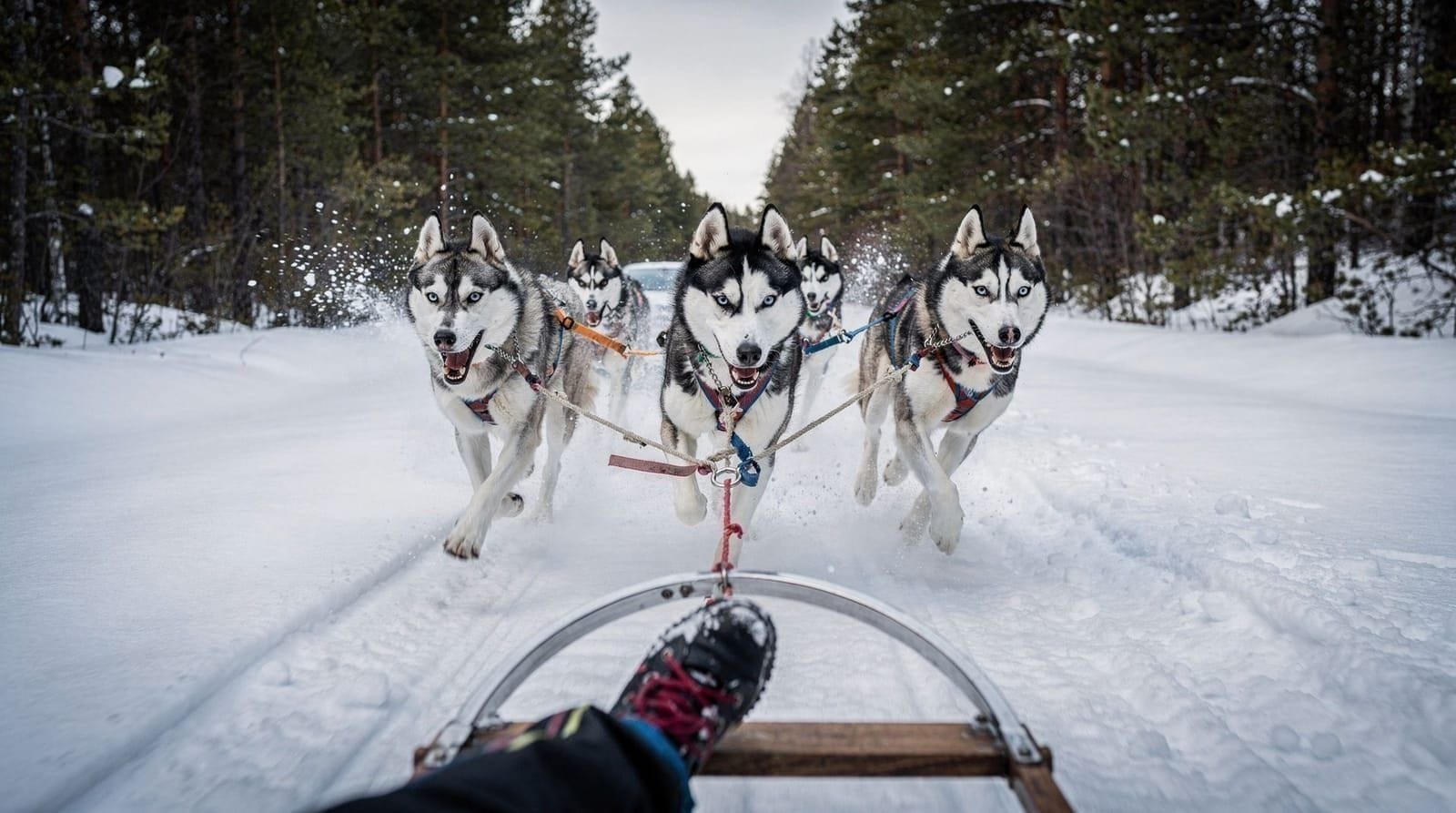
“Self-drive” is the key term to understand before booking. In the passenger format, you sit inside a low sled basket under a blanket while a guide drives from the back. In the self-drive format, you stand at the back of the sled on footboards (called “runners”), and you are responsible for braking, steering around bends, and keeping pace with the lead sled. The dogs do the work — you manage the machine.
For most visitors, self-drive is dramatically more engaging. The sensation of a 6-dog team pulling you across a frozen landscape at 15–20 km/h, with only a metal brake claw between you and a runaway sled, is not theoretical — it is visceral and memorable. It also requires some physical coordination and a brief but genuine training session.
The training and what beginners actually need to know
Reputable operators build 20–30 minutes of training into the schedule before you leave the kennel. The guide demonstrates braking (dragging the claw into the snow with body weight), turning (shifting your weight), and the “anchor” — a second brake that you can slam into the snow to stop completely when the team is stationary.
The most common beginner mistake is not braking early enough on downhill sections. Dog teams do not have reverse. Once momentum builds on a slope, stopping requires committed weight on the brake. Guides on the lead sled can circle back to help a stalled or crashed team, but it’s mildly chaotic.
People who find self-drive difficult:
- Children under roughly 40–45 kg (not enough weight to hold the brake effectively)
- Anyone with knee, hip, or lower back issues (braking requires crouching weight distribution)
- Very tall people on narrow sleds (some operators have wider sled options — ask)
Everyone else, including people who have never done any winter sport, typically manages within the first kilometer.
Advanced dog sledding at Camp TamokTamok versus other dog sledding locations near Tromsø
The main alternative location for husky sledding near Tromsø is the area around Breivikeidet and Kvaløya island, roughly 30 km west of Tromsø. These operators tend to run shorter routes (1–2 hours) suited for large groups and cruise ship passengers. The terrain is pleasant but less wild than Tamok.
Tamok Valley operators typically offer longer routes (2–4 hours of actual sledding) and more technically interesting terrain — including river crossings, birch forest sections, and longer straights where the dogs really run. The extra 30 minutes of drive time from Tromsø is worth it for anyone wanting a genuinely immersive experience rather than a tick-box activity.
For a detailed comparison, see the self-drive vs passenger dog sledding guide and the Camp Tamok dog sledding guide.
| Factor | Tamok operators | Breivikeidet/Kvaløya operators |
|---|---|---|
| Distance from Tromsø | ~60 km, 55 min | ~25–35 km, 30–40 min |
| Route length | 2–4 hours sledding | 1–2 hours sledding |
| Terrain | Varied — river, forest, hills | Mostly flat coastal |
| Group sizes | Usually 6–16 | Can be 30+ (cruise groups) |
| Price | 2,500–3,500 NOK | 1,800–2,800 NOK |
What’s included in a Tamok self-drive dog sledding tour
Standard packages at 2,500–3,200 NOK include:
- Return transport from Tromsø
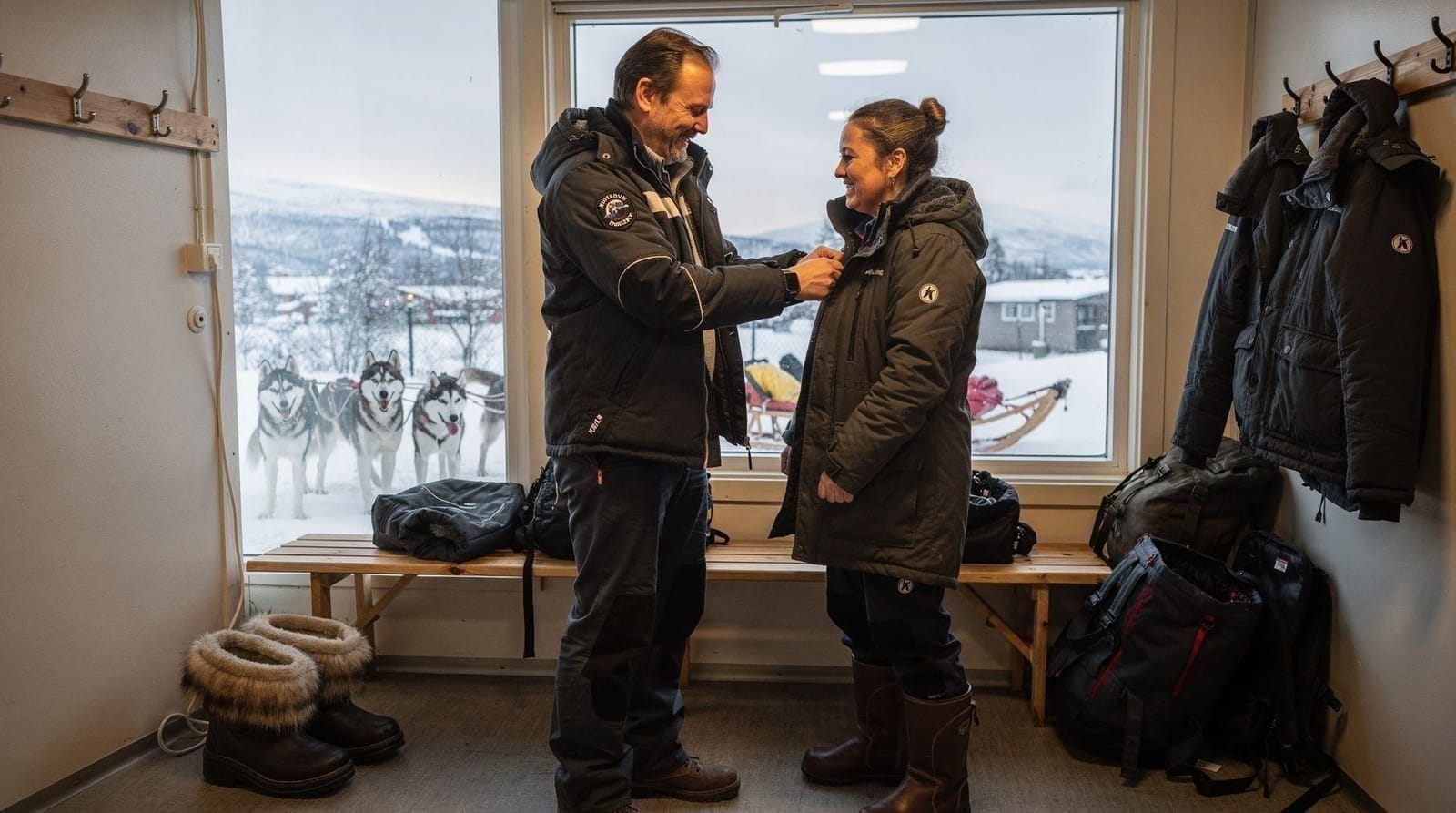
- Arctic thermal suit for the duration
- Training session at the kennel (20–30 min)
- 2–4 hours of actual dog sledding
- Hot drinks after (usually coffee, tea, hot chocolate)
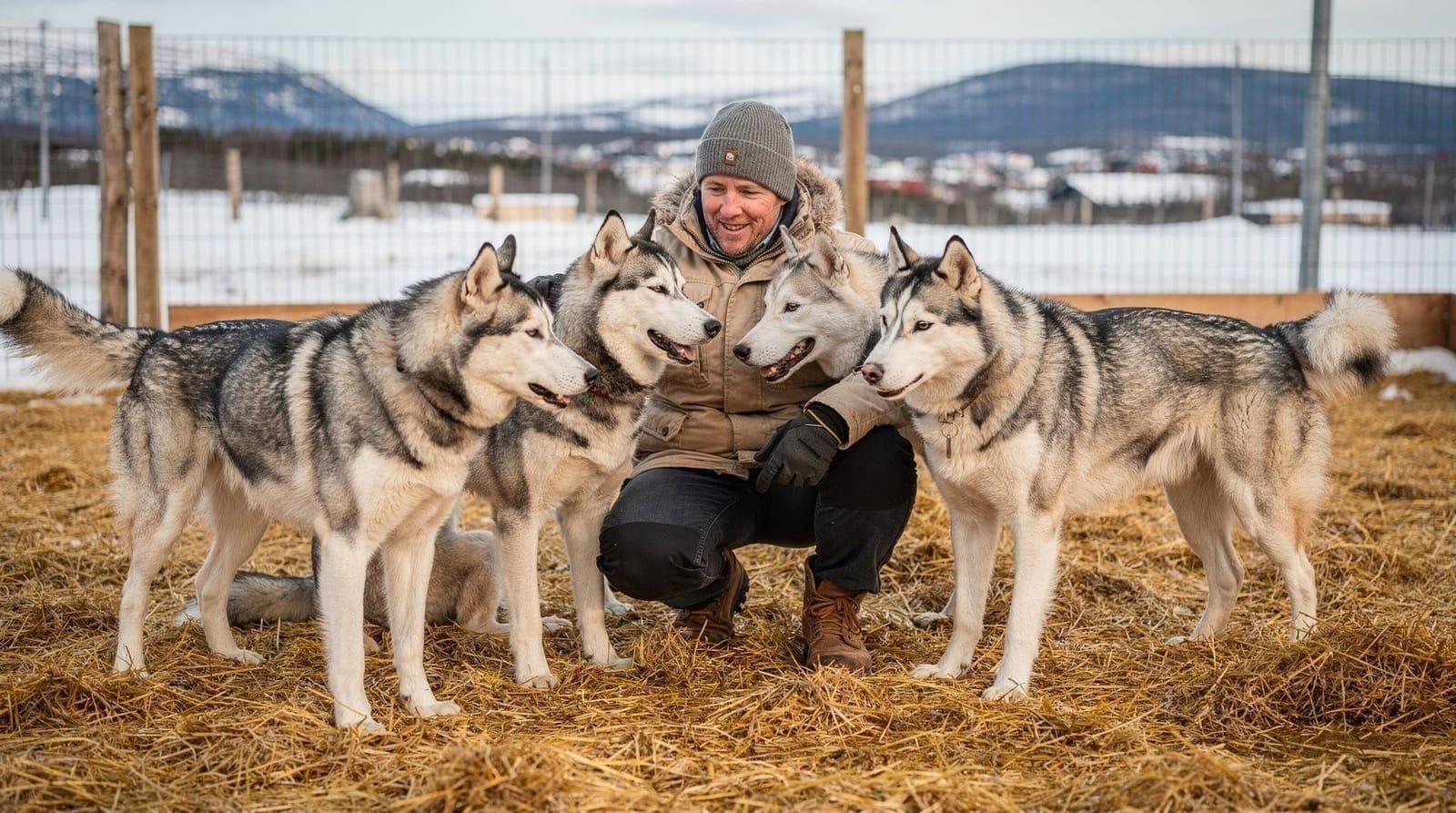
- Time to interact with the dogs after the run
Not typically included:
- Professional photos (extra, usually 300–600 NOK)
- Additional activities (reindeer, snowmobile) — need separate booking or combo package
- Meals (most half-day tours don’t include food beyond hot drinks)
The combo tours that add ice domes visits or reindeer sledding run 3,500–4,500 NOK and represent good value if you want multiple activities in one day.
Dog sledding and ice domes visit comboWhat to wear for self-drive sledding
Self-drive is more physically active than the passenger format — you’re working your legs and core to brake and balance rather than sitting still under a blanket — but you’re still standing exposed to wind chill at 15–20 km/h. The what to wear for dog sledding guide covers the layering that works under the provided thermal suit: warm boots with room to wiggle toes, liner gloves you can remove for the post-run dog interaction, and a hat that fits under a helmet if one is provided.
If you’re travelling with a mixed-ability group
Self-drive doesn’t suit everyone in a group — smaller children, anyone with mobility limitations, or a nervous first-timer may prefer the passenger basket. Rather than force the whole group into one format, ask about mixed bookings: many Tamok operators can put some sled pairs in self-drive and others in passenger mode on the same tour. The husky sledding for families guide has more on choosing the right format by age and confidence level, and the Camp Tamok day trip guide covers what else is available on-site if part of your group wants to skip sledding entirely.
Season, conditions, and what happens in low snow years
The dog sledding season at Tamok runs from late November through late March. Snow cover in the valley is generally reliable — it sits at higher altitude than the coast and accumulates more. Operators typically need a minimum of 20–30 cm of packed snow for trail safety.
In low-snow years (2024–25 saw below-average snowfall in parts of Troms county), operators sometimes delay season opening or run shortened routes. If you’re visiting in November or early March, call ahead to confirm conditions. Reputable operators will tell you honestly rather than run substandard tours.
Dogs at Tamok kennels — what the animals are actually like
Alaskan huskies (the working type used in Arctic races) are lean, medium-sized dogs with extraordinary cardiovascular endurance. They are not the fluffy Instagram huskies you may expect. At a Tamok kennel you’ll typically see 60–200 dogs in a yard, howling before departure (they know they’re going for a run and are excited), and completely calm afterward.
Signs of a well-run kennel:
- Dogs are lean but not thin — ribs not visible through coat
- Dogs are active and alert, not apathetic
- Yard is clean, water bowls visible
- Dogs are not chained in isolation but in groups or pairs
Signs that warrant concern:
- Underweight dogs, visible wounds, lethargy
- Staff who discourage interaction before or after the run
- Sleds in poor repair
The dog sledding ethics guide gives a fuller framework for evaluating any kennel.
Frequently asked questions about husky self-drive at Tamok
Can children do the self-drive format?
Children over approximately 40 kg and age 10+ can usually manage self-drive with an adult on the same sled (two-person sled configuration some operators offer). Under that weight, the passenger basket is safer. The dog sledding with kids guide covers age-appropriate formats.
Is the Tamok area accessible without a tour?
Yes by rental car — the valley is accessible on E8 east from Tromsø. Several kennels in Tamokdalen can be booked directly without using a Tromsø-based intermediary. Booking directly is usually cheaper; the package tour price includes the transport markup.
What is the difference between Tamokdalen and Camp Tamok?
“Tamokdalen” refers to the broader valley. “Camp Tamok” is a specific commercial facility within the valley that runs multiple activities — dog sledding, reindeer, snowmobile, ice domes — under one brand. Independent dog kennels also operate in the broader valley area. Both options are solid; Camp Tamok has better facilities (lavvo, restaurant); independent kennels sometimes offer more personal experiences.
How long does the full excursion take?
Plan for a full day: 50–60 minutes drive each way, 20–30 minutes training, 2–4 hours sledding, 30–45 minutes post-run (dogs, drinks, photos). Total from Tromsø pickup to return: 7–9 hours.
Can I go dog sledding in summer near Tromsø?
Some operators offer summer dog cart experiences — wheeled sleds on forest trails — from June through September. The dogs still run and the pack dynamics are the same, but the snow experience is absent. See the summer dog sledding guide for details.
Is the Tamok dog sledding experience different from the Alta region?
Alta offers some of Norway’s most established dog sledding kennels and race training operations (it borders the Finnmarksløpet race route). Alta experiences tend to be longer, wilder, and more expensive. Tamok is better suited as a day trip from Tromsø. See the Alta day trip guide if you’re considering the longer option.
Booking and what to expect on the day
Confirmation and pickup: Most Tamok dog sledding packages include a printed or digital confirmation stating the exact pickup address in Tromsø (usually your hotel lobby or a nearby central meeting point). Pickup is typically 08:00–09:00 for morning tours or 13:00–14:00 for afternoon tours. Confirm the exact time and location with your operator the day before.
What to do on the drive out: The 55-minute drive to Tamok is through attractive fjord and valley scenery. Some guides use this time for a briefing; others let passengers settle. Bring headphones if you want to listen to something, but a guide who briefs during the drive is a good sign of an organized operation.
Post-run dog interaction: Most kennels allow — and encourage — 15–30 minutes with the dogs after the sled run. This is when the animals are relaxed and most interested in human contact. Do not skip this if it’s offered. Remove your heavy outer mitts and use only liner gloves for better tactile contact with the dogs.
Photography during the run: Helmet visors and speed make in-run photography difficult. The best shots are taken at the start before departure (dogs harnessed and eager), during brief stops on the route, and post-run in the kennel. A GoPro or similar action camera mounted on the sled handlebars can capture the in-run perspective. Hand-held phone photography is difficult above 20 km/h with thick mittens.
What your companions will remember: First-time dog sledders almost always cite the moment the brake is released and the dogs lunge forward as the most memorable physical sensation of the whole tour — that sudden acceleration from stationary, the noise of 20-odd paws on snow, and the immediate realization that you are genuinely in control of something powerful and willing.
If you’re building a full Tamok day around this, the Camp Tamok snowmobile guide and the reindeer sledding options nearby are worth checking for a combo booking rather than a single-activity day.